Downloaded 11 times
![Geographical Analysis of Foreign Immigration and Spatial Patterns in Urban Areas. Density Estimation and Spatial Segregation Dr. Giuseppe Borruso Department of Geographical and Historical Sciences University of Trieste Email. [email_address] Ph. +39 040 558 7008 Fax. +39 040 558 7009 / 7005 GeogAnMod ‘08 The International Conference on Computer Science and its Applications ICCSA 2008 Perugia 30 June – 03 July 2008](https://image.slidesharecdn.com/borrusoiccsa2008-1215689400645210-9/85/Borruso-Iccsa-2008-1-320.jpg)
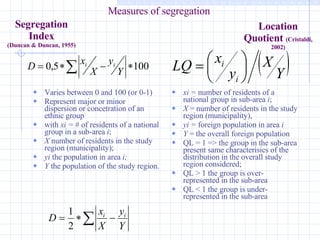
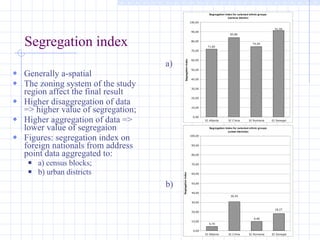
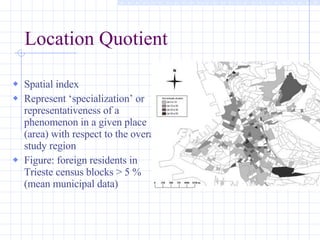
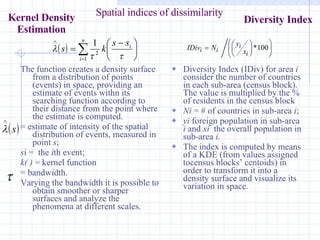
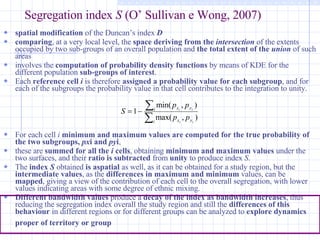
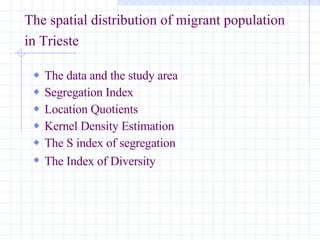
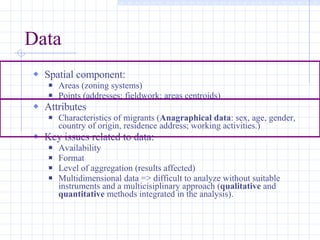
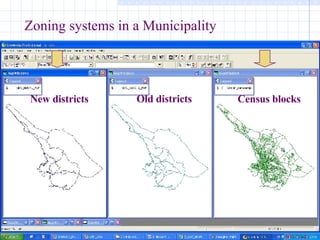
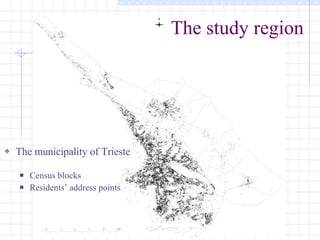
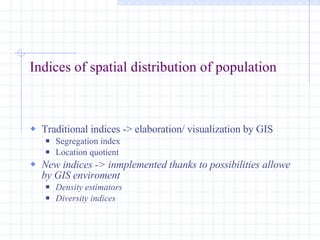
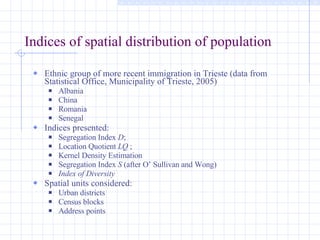
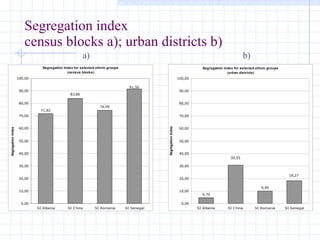
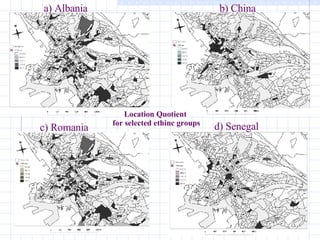
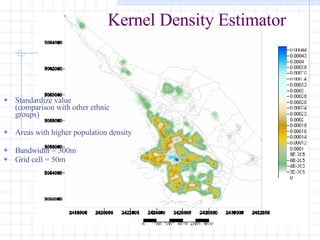
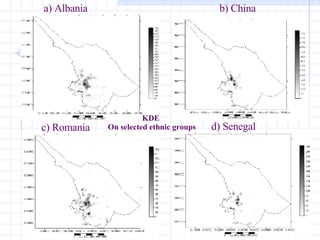
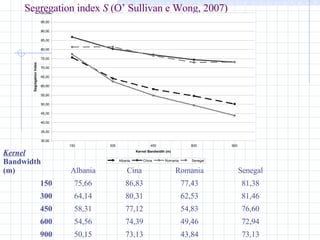
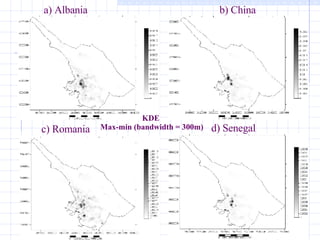
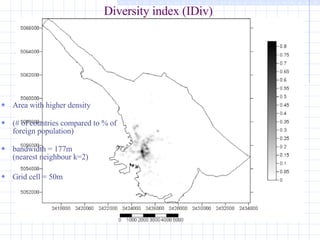
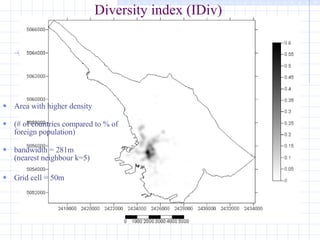
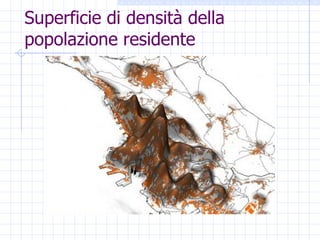
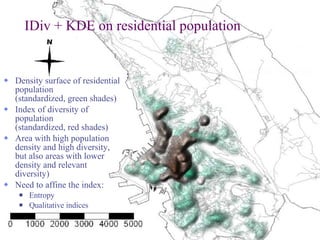
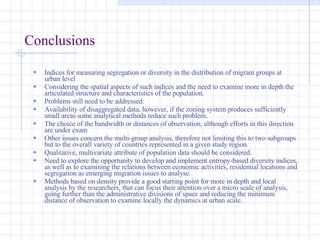

The paper examines the spatial distribution and segregation of immigrant populations in urban areas, specifically focusing on Trieste, Italy. It critiques traditional aspatial methods and proposes the use of density-based and spatial indices to better analyze immigrant clustering and segregation trends. The study highlights the need for a mixed-method approach to effectively interpret complex spatial dynamics in migration research.


![Migrazioni i nput [modalità compatibilità]](https://cdn.slidesharecdn.com/ss_thumbnails/migrazioniinputmodalitcompatibilit-100919071132-phpapp01-thumbnail.jpg?width=640&height=640&fit=bounds)


