Photos and information’s   Click to continue
Bora Bora


French Polynesia
Bora Bora

• Bora Bora is an island in the Leeward group of the Society Islands of
  French Polynesia, an overseas collectivity of France in the Pacific Ocean.
  The original name of the island in the Tahitian language might be better
  rendered as Pora Pora, meaning "First Born"; an early transcription found
  in 18th- and 19th-century accounts, is Bolabolla or Bollabolla. The island,
  located about 230 kilometres (140 mi) northwest of Papeete, is
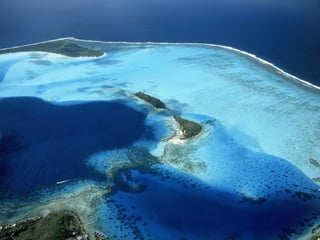
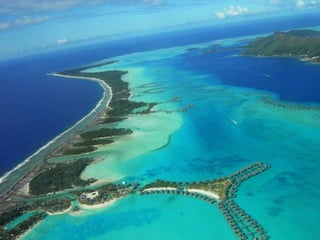
  surrounded by a lagoon and a barrier reef. In the center of the island are
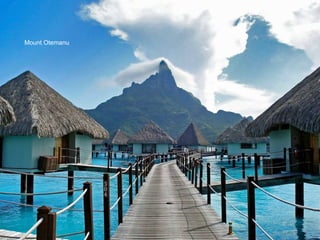
  the remnants of an extinct volcano rising to two peaks, Mount Pahia and
  Mount Otemanu, the highest point at 727 meters (2,385 ft).

• Bora Bora is a major international tourist destination, famous for its aqua-
  centric luxury resorts. The island is served by Bora Bora Airport on Motu
  Mete in the north, with Air Tahiti providing daily flights to and from
  Papeete on Tahiti. The major settlement, Vaitape is on the western side of
  the main island, opposite the main channel into the lagoon. Produce of
  the island is mostly limited to what can be obtained from the sea and the
  plentiful coconut trees, which were historically of economic importance
  for copra. According to a census performed in 2008, the permanent
  population of Bora Bora is 8,880.
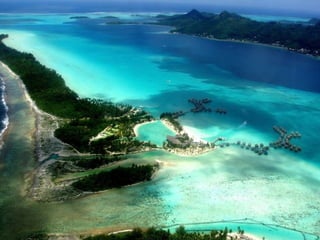
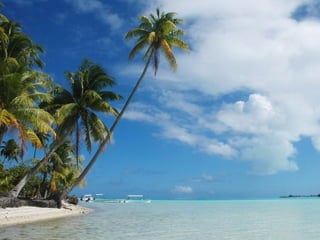
Matira Beach and Lagoon
Administration


• The island is administratively part of the commune
  (municipality) of Bora-Bora, itself in the administrative
  subdivision of the Leeward Islands. The commune of Bora-
  Bora is made up of the island of Bora Bora proper with its
  surrounding islets emerging from the coral reef, 29.3 km²
  (11.3 sq mi) in total, and of the atoll of Tupai (11 km2/4.2 sq
  mi), located 20 kilometres (12 mi) north of Bora Bora. The
  atoll of Tupai has no permanent population apart from about
  50 workers in the coconut plantations. President of French
  Polynesia Gaston Tong Sang is the current mayor of Bora Bora
  in addition to being the President.
Maohi Protestant Church in Anau
History


• The island was first inhabited by Polynesian settlers around
  the 4th century. Its previous Polynesian name was Vava'u. As
  there is no B in the Tahitian language, it is actually called Pora
  Pora, but early visitors misheard it. The first European sighting
  was made by Jakob Roggeveen in 1722. James Cook sighted
  the island in 1770 and landed that same year. The London
  Missionary Society arrived in 1820 and founded a Protestant
  church in 1890. Bora Bora was an independent kingdom until
  1888 when its last queen Teriimaevarua III was forced to
  abdicate by the French who annexed the island as a colony.
Mount Otemanu
World War II

• Following the 7 December 1941 attack on Pearl Harbor by Japan, the
  United States entered World War II. The U.S. chose Bora Bora as a South
  Pacific military supply base, and an oil depot, airstrip, seaplane base, and
  defensive fortifications were constructed. Known as "Operation Bobcat",
  it maintained a supply force of nine ships, 20,000 tons of equipment and
  nearly 7,000 men. Seven massive naval cannons were set up at strategic
  points around the island to protect it against potential military attack.

• However, the island saw no combat as the American presence on Bora
  Bora went uncontested over the course of the war. Although the base was
  officially closed on June 2, 1946, many American personnel chose to
  remain on the island.[citation needed] The World War II airstrip, which
  was never able to accommodate large aircraft, was French Polynesia's
  only international airport until Faa'a International Airport was opened in
  Papeete, Tahiti in 1960.
Mount Otemanu
Commune of Bora Bora

• The commune of Bora-Bora is made up of the island of Bora Bora proper
  with its surrounding islets emerging from the coral reef, 29.3 km² (11.3 sq
  mi) in total, and of the atoll of Tupai (11 km2/4.2 sq mi), located 20
  kilometres (12 mi) north of Bora Bora. The atoll of Tupai has no
  permanent population apart from some workers in the coconut
  plantations.

• The surrounding islets include: Motu Tapu, Motu Ahuna, Tevairoa, Motu
  Tane, Motu Mute, Motu Tufari, Motu Pitiaau, Sofitel Motu, Motu Toopua
  and Toopuaiti.

• The commune is in the administrative subdivision of the Leeward Islands
  and divided into 3 districts: Vaitape, Faanui and Anau.

• The administrative centre of the commune is the settlement of Vaitape,
  on the island of Bora Bora.
Tourism
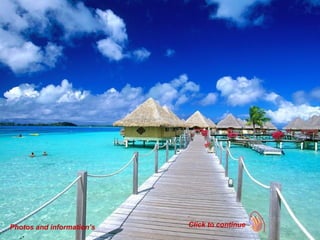
•   Today the island is almost entirely dependent on tourism. Over the last few years
    several resorts have been built on motu (small islands, from Tahitian) surrounding
    the lagoon. Thirty years ago, Hotel Bora Bora built the first over-the-water
    bungalows on stilts over the lagoon and today, over-water bungalows are a
    standard feature of most Bora Bora resorts. The quality of those bungalows ranges
    from comparably cheap, basic accommodations to very luxurious and expensive
    places to stay. Most of the tourist destinations are aqua-centric; however it is
    possible to visit attractions on land such as WWII cannons. Air Tahiti has five or six
    flights daily to the Bora Bora Airport on Motu Mute from Tahiti (as well as from
    other islands).

•   Although French and Tahitian are the main languages spoken by the inhabitants,
    people in contact with tourists generally have some command of English. Most
    visitors to Bora Bora are American, Japanese, or European.Public transport on the
    island is non-existent. Rental cars and bicycles are the recommended method of
    transport. There are also small fun-cars for hire in Vaitape. Snorkeling and scuba
    diving in and around the lagoon of Bora Bora are popular activities. Many species
    of sharks and rays inhabit the surrounding body of water. There are a few dive
    operators on the island offering manta ray dives and also shark-feeding dives.

•   In addition to the existing islands of Bora Bora (called motu), the new man-made
    motu of Motu Marfo has been added in the north-eastern corner of the lagoon on
    the property of the St. Regis Resort.
Mount Otemanu
Mount Otemanu
Mount Otemanu
Mount Otemanu
Nikos


COPYRIGHTS TO ALL PHOTOS AND MUSIC BELONG TO THE ORIGINAL AUTHORS.

Bora Bora. ( Nikos)

  • 1.
    Photos and information’s Click to continue
  • 2.
  • 4.
    Bora Bora • BoraBora is an island in the Leeward group of the Society Islands of French Polynesia, an overseas collectivity of France in the Pacific Ocean. The original name of the island in the Tahitian language might be better rendered as Pora Pora, meaning "First Born"; an early transcription found in 18th- and 19th-century accounts, is Bolabolla or Bollabolla. The island, located about 230 kilometres (140 mi) northwest of Papeete, is surrounded by a lagoon and a barrier reef. In the center of the island are the remnants of an extinct volcano rising to two peaks, Mount Pahia and Mount Otemanu, the highest point at 727 meters (2,385 ft). • Bora Bora is a major international tourist destination, famous for its aqua- centric luxury resorts. The island is served by Bora Bora Airport on Motu Mete in the north, with Air Tahiti providing daily flights to and from Papeete on Tahiti. The major settlement, Vaitape is on the western side of the main island, opposite the main channel into the lagoon. Produce of the island is mostly limited to what can be obtained from the sea and the plentiful coconut trees, which were historically of economic importance for copra. According to a census performed in 2008, the permanent population of Bora Bora is 8,880.
  • 5.
  • 6.
    Administration • The islandis administratively part of the commune (municipality) of Bora-Bora, itself in the administrative subdivision of the Leeward Islands. The commune of Bora- Bora is made up of the island of Bora Bora proper with its surrounding islets emerging from the coral reef, 29.3 km² (11.3 sq mi) in total, and of the atoll of Tupai (11 km2/4.2 sq mi), located 20 kilometres (12 mi) north of Bora Bora. The atoll of Tupai has no permanent population apart from about 50 workers in the coconut plantations. President of French Polynesia Gaston Tong Sang is the current mayor of Bora Bora in addition to being the President.
  • 7.
  • 8.
    History • The islandwas first inhabited by Polynesian settlers around the 4th century. Its previous Polynesian name was Vava'u. As there is no B in the Tahitian language, it is actually called Pora Pora, but early visitors misheard it. The first European sighting was made by Jakob Roggeveen in 1722. James Cook sighted the island in 1770 and landed that same year. The London Missionary Society arrived in 1820 and founded a Protestant church in 1890. Bora Bora was an independent kingdom until 1888 when its last queen Teriimaevarua III was forced to abdicate by the French who annexed the island as a colony.
  • 9.
  • 10.
    World War II •Following the 7 December 1941 attack on Pearl Harbor by Japan, the United States entered World War II. The U.S. chose Bora Bora as a South Pacific military supply base, and an oil depot, airstrip, seaplane base, and defensive fortifications were constructed. Known as "Operation Bobcat", it maintained a supply force of nine ships, 20,000 tons of equipment and nearly 7,000 men. Seven massive naval cannons were set up at strategic points around the island to protect it against potential military attack. • However, the island saw no combat as the American presence on Bora Bora went uncontested over the course of the war. Although the base was officially closed on June 2, 1946, many American personnel chose to remain on the island.[citation needed] The World War II airstrip, which was never able to accommodate large aircraft, was French Polynesia's only international airport until Faa'a International Airport was opened in Papeete, Tahiti in 1960.
  • 11.
  • 12.
    Commune of BoraBora • The commune of Bora-Bora is made up of the island of Bora Bora proper with its surrounding islets emerging from the coral reef, 29.3 km² (11.3 sq mi) in total, and of the atoll of Tupai (11 km2/4.2 sq mi), located 20 kilometres (12 mi) north of Bora Bora. The atoll of Tupai has no permanent population apart from some workers in the coconut plantations. • The surrounding islets include: Motu Tapu, Motu Ahuna, Tevairoa, Motu Tane, Motu Mute, Motu Tufari, Motu Pitiaau, Sofitel Motu, Motu Toopua and Toopuaiti. • The commune is in the administrative subdivision of the Leeward Islands and divided into 3 districts: Vaitape, Faanui and Anau. • The administrative centre of the commune is the settlement of Vaitape, on the island of Bora Bora.
  • 14.
    Tourism • Today the island is almost entirely dependent on tourism. Over the last few years several resorts have been built on motu (small islands, from Tahitian) surrounding the lagoon. Thirty years ago, Hotel Bora Bora built the first over-the-water bungalows on stilts over the lagoon and today, over-water bungalows are a standard feature of most Bora Bora resorts. The quality of those bungalows ranges from comparably cheap, basic accommodations to very luxurious and expensive places to stay. Most of the tourist destinations are aqua-centric; however it is possible to visit attractions on land such as WWII cannons. Air Tahiti has five or six flights daily to the Bora Bora Airport on Motu Mute from Tahiti (as well as from other islands). • Although French and Tahitian are the main languages spoken by the inhabitants, people in contact with tourists generally have some command of English. Most visitors to Bora Bora are American, Japanese, or European.Public transport on the island is non-existent. Rental cars and bicycles are the recommended method of transport. There are also small fun-cars for hire in Vaitape. Snorkeling and scuba diving in and around the lagoon of Bora Bora are popular activities. Many species of sharks and rays inhabit the surrounding body of water. There are a few dive operators on the island offering manta ray dives and also shark-feeding dives. • In addition to the existing islands of Bora Bora (called motu), the new man-made motu of Motu Marfo has been added in the north-eastern corner of the lagoon on the property of the St. Regis Resort.
  • 30.
  • 31.
  • 33.
  • 38.
  • 41.
    Nikos COPYRIGHTS TO ALLPHOTOS AND MUSIC BELONG TO THE ORIGINAL AUTHORS.