BOOTH’S ALGORITHM
E.g.: Binary Multiplication of two Positive Numbers (+13 X +7)
Mr. C.KARTHIKEYAN,
ASSISTANT PROFESSOR,
ECE , RMKCET
BOOTH’S ALGORITHM
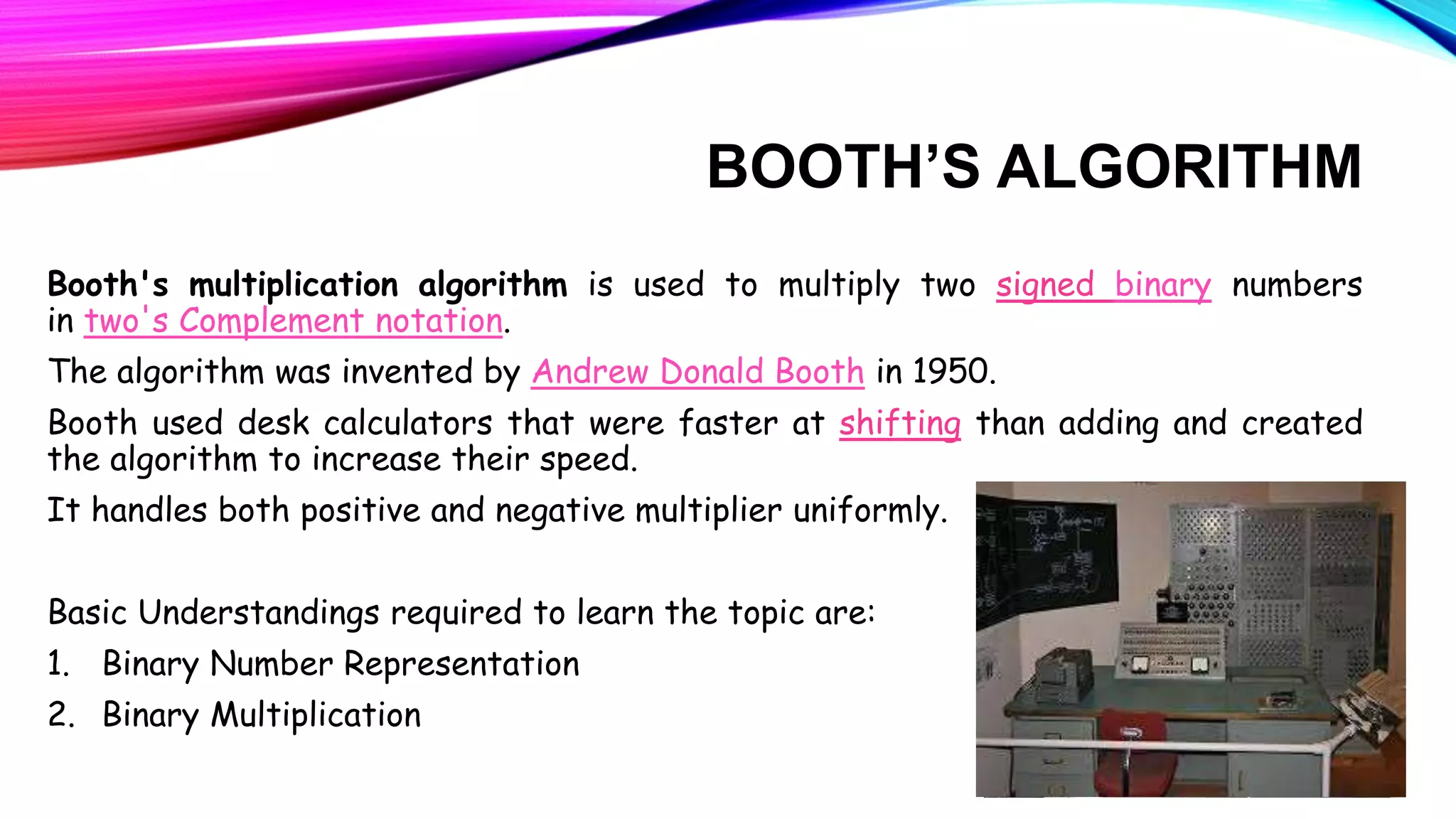
Booth's multiplication algorithm is used to multiply two signed binary numbers
in two's Complement notation.
The algorithm was invented by Andrew Donald Booth in 1950.
Booth used desk calculators that were faster at shifting than adding and created
the algorithm to increase their speed.
It handles both positive and negative multiplier uniformly.
Basic Understandings required to learn the topic are:
1. Binary Number Representation
2. Binary Multiplication
EXPLANATION WITH AN
EXAMPLE
Binary Multiplication of two Positive Numbers (+13 X +7)
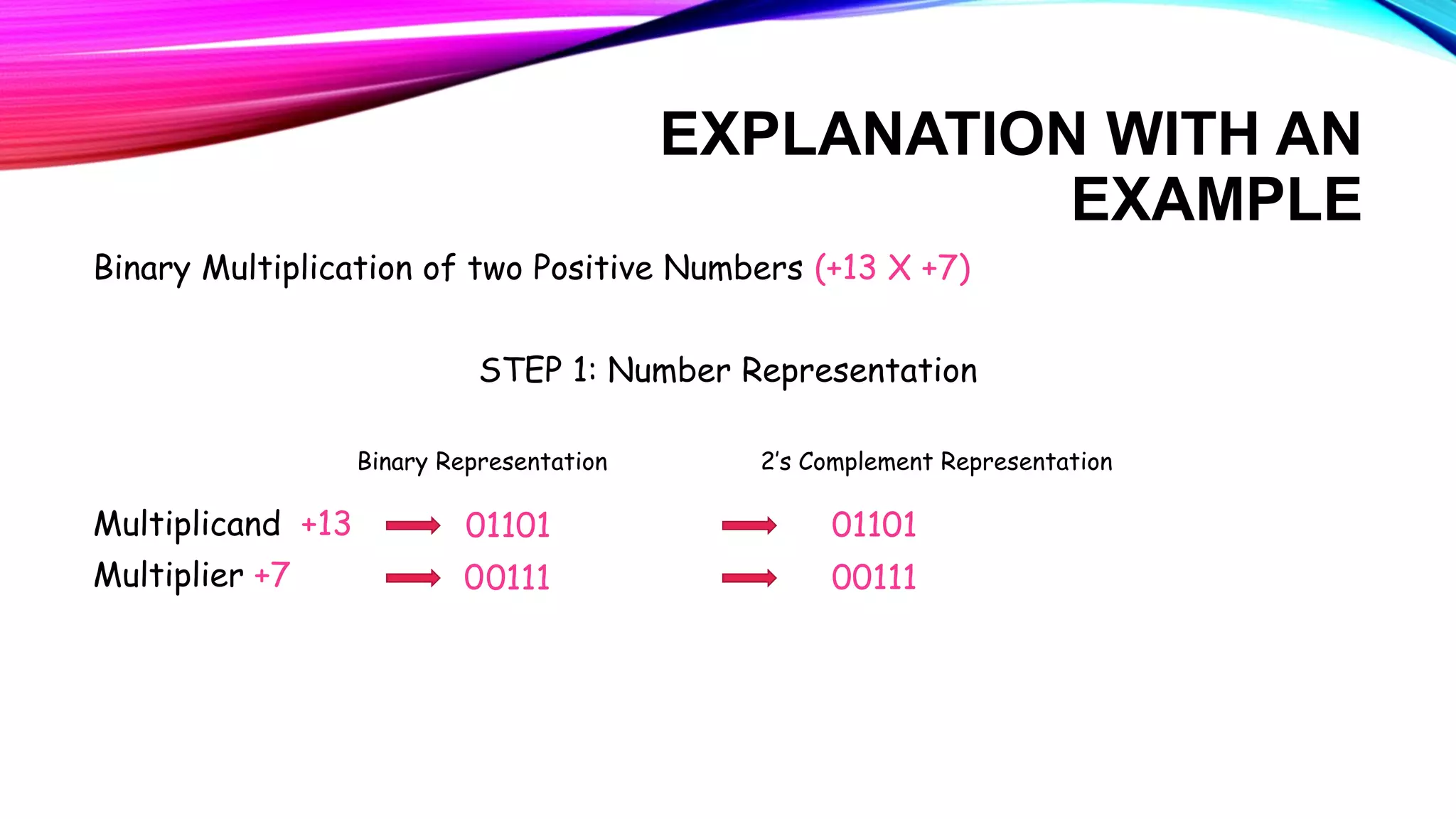
STEP 1: Number Representation
Multiplicand +13
Multiplier +7
1101
111
0
0
0
Binary Representation 2’s Complement Representation
01101
00111
BINARY MULTIPLICATION OF TWO POSITIVE NUMBERS (+13 X +7)
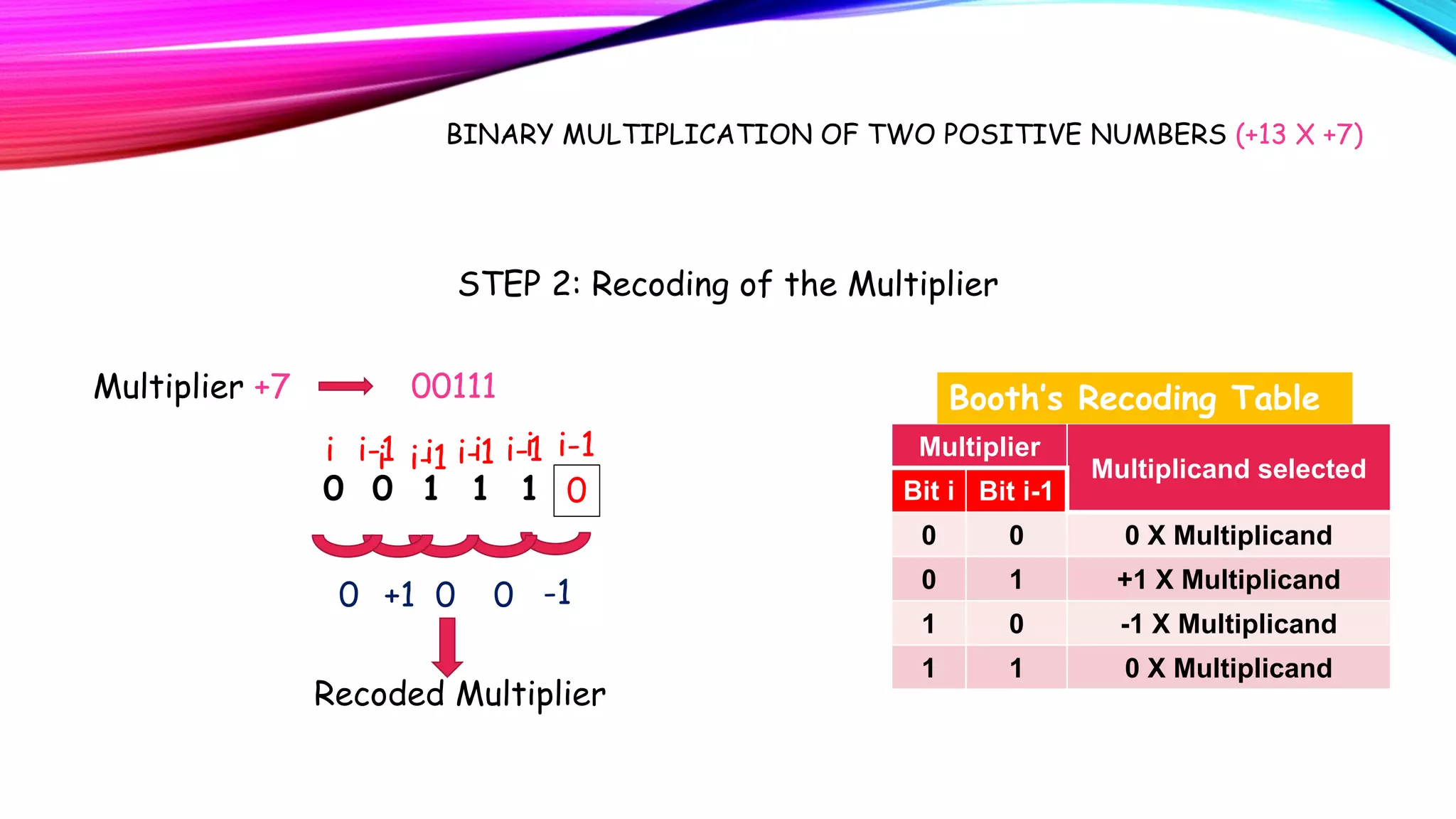
STEP 2: Recoding of the Multiplier
Multiplier +7 00111
0 0 1 1 1
Recoded Multiplier
Multiplier
Multiplicand selected
Bit i Bit i-1
0 0 0 X Multiplicand
0 1 +1 X Multiplicand
1 0 -1 X Multiplicand
1 1 0 X Multiplicand
Booth’s Recoding Table
i
0
i-1
-1
0
i i-1
0
i i-1
+1
i i-1
0
i i-1
BINARY MULTIPLICATION OF TWO POSITIVE NUMBERS (+13 X +7)
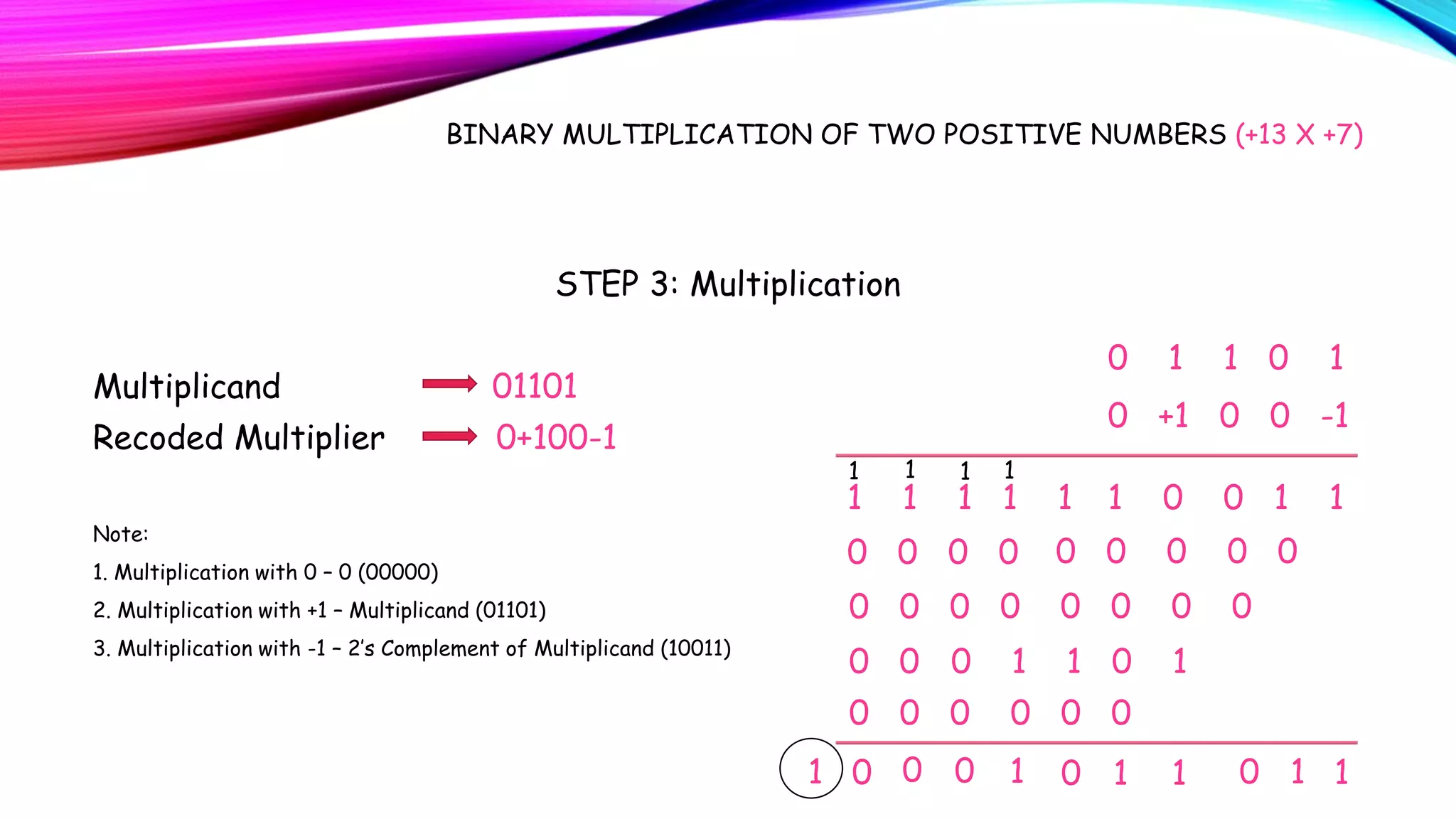
STEP 3: Multiplication
Multiplicand 01101
Recoded Multiplier 0+100-1
Note:
1. Multiplication with 0 – 0 (00000)
2. Multiplication with +1 – Multiplicand (01101)
3. Multiplication with -1 – 2’s Complement of Multiplicand (10011)
0 1 1 0 1
0 +1 0 0 -1
1 0 0 1 1
1 1 1 1 1
0 0 0 0 0
0 0 0 0
0 0 0 0 0
0 0 0
0 1 1 0 1
0 0
0 0 0 0 0
0
1
1
0
1
1
0
1
1
1
0
1
0
1
0
1
BINARY MULTIPLICATION OF TWO POSITIVE NUMBERS (+13 X +7)
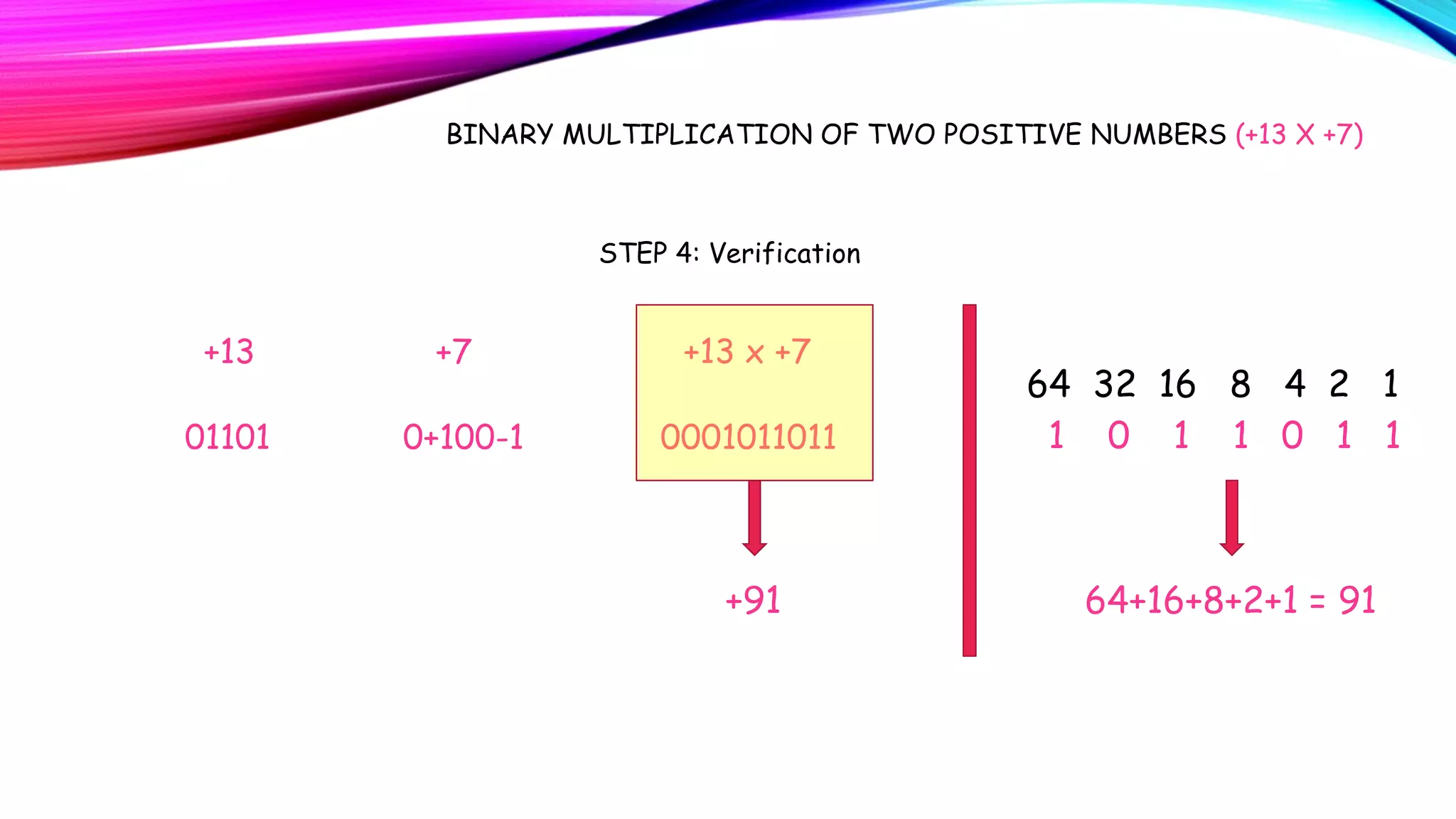
0001011011
+13 +7
01101 0+100-1
+13 x +7
1 0 1 1 0 1 1
64 32 16 8 4 2 1
64+16+8+2+1 = 91
+91
STEP 4: Verification

BOOTH’s ALGORITHM Part 1.pptx

  • 1.
    BOOTH’S ALGORITHM E.g.: BinaryMultiplication of two Positive Numbers (+13 X +7) Mr. C.KARTHIKEYAN, ASSISTANT PROFESSOR, ECE , RMKCET
  • 2.
    BOOTH’S ALGORITHM Booth's multiplicationalgorithm is used to multiply two signed binary numbers in two's Complement notation. The algorithm was invented by Andrew Donald Booth in 1950. Booth used desk calculators that were faster at shifting than adding and created the algorithm to increase their speed. It handles both positive and negative multiplier uniformly. Basic Understandings required to learn the topic are: 1. Binary Number Representation 2. Binary Multiplication
  • 3.
    EXPLANATION WITH AN EXAMPLE BinaryMultiplication of two Positive Numbers (+13 X +7) STEP 1: Number Representation Multiplicand +13 Multiplier +7 1101 111 0 0 0 Binary Representation 2’s Complement Representation 01101 00111
  • 4.
    BINARY MULTIPLICATION OFTWO POSITIVE NUMBERS (+13 X +7) STEP 2: Recoding of the Multiplier Multiplier +7 00111 0 0 1 1 1 Recoded Multiplier Multiplier Multiplicand selected Bit i Bit i-1 0 0 0 X Multiplicand 0 1 +1 X Multiplicand 1 0 -1 X Multiplicand 1 1 0 X Multiplicand Booth’s Recoding Table i 0 i-1 -1 0 i i-1 0 i i-1 +1 i i-1 0 i i-1
  • 5.
    BINARY MULTIPLICATION OFTWO POSITIVE NUMBERS (+13 X +7) STEP 3: Multiplication Multiplicand 01101 Recoded Multiplier 0+100-1 Note: 1. Multiplication with 0 – 0 (00000) 2. Multiplication with +1 – Multiplicand (01101) 3. Multiplication with -1 – 2’s Complement of Multiplicand (10011) 0 1 1 0 1 0 +1 0 0 -1 1 0 0 1 1 1 1 1 1 1 0 0 0 0 0 0 0 0 0 0 0 0 0 0 0 0 0 0 1 1 0 1 0 0 0 0 0 0 0 0 1 1 0 1 1 0 1 1 1 0 1 0 1 0 1
  • 6.
    BINARY MULTIPLICATION OFTWO POSITIVE NUMBERS (+13 X +7) 0001011011 +13 +7 01101 0+100-1 +13 x +7 1 0 1 1 0 1 1 64 32 16 8 4 2 1 64+16+8+2+1 = 91 +91 STEP 4: Verification