Let’s refresh ourselves of our
aims and goals of doing this
work
Our Aim
By December 2015 we will have a tool kit that will provide
the basis of a marketing plan – a route map by which you can
bring your product / service directly to market.
Our Goal
For 2016 it is to lower the cost of getting
customers by 50% and
increase the rate of keeping them by 50%
Review on what’s we have
discussed so far?
The Marketing Audit – what we are
doing or planning to do
Setting out some goals based around
numbers including break-evens. The
difference between activity and
strategy
Customer buying behaviours – getting to
grips with customer value. Boston
Matrix and a customer audit
This Months BIG session
Understanding what’s at the heart of a
product or service. – using this to create
the difference from your competitors
The aims
• Take a service and productise it!
• The three levels of a product – an analysis
• Creating a Unique Proposition
• Competitor analysis – a positioning map
Taking a service and creating a
product
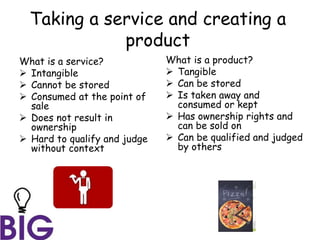
What is a service?
 Intangible
 Cannot be stored
 Consumed at the point of
sale
 Does not result in
ownership
 Hard to qualify and judge
without context
What is a product?
 Tangible
 Can be stored
 Is taken away and
consumed or kept
 Has ownership rights and
can be sold on
 Can be qualified and judged
by others
Taking a service and making a
product
Why do we do that? Because it:
Provides Clarity – appears almost tangible
Can be delivered over a specified time and not
immediately consumed
Ownership can be transferred part way
through
Benefits and features articulated as a single
offer
It can be ‘augmented’ and ‘pro-actively priced’
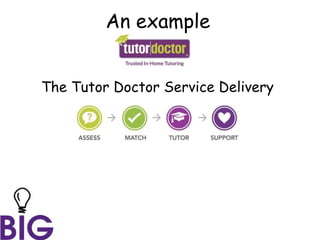
The Tutor Doctor Service Delivery
An example
On the face of it We Sell
Tutoring Services
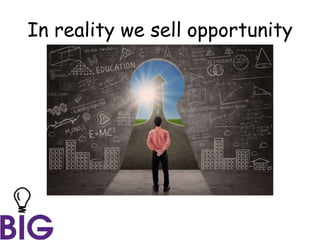
In reality we sell opportunity
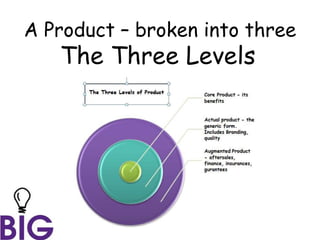
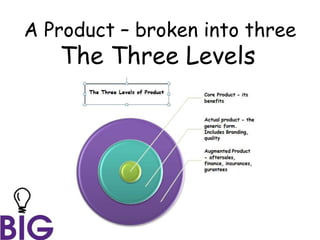
A Product – broken into three
The Three Levels
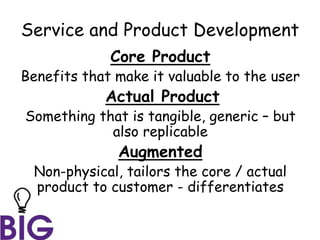
Service and Product Development
Core Product
Benefits that make it valuable to the user
Actual Product
Something that is tangible, generic – but
also replicable
Augmented
Non-physical, tailors the core / actual
product to customer - differentiates
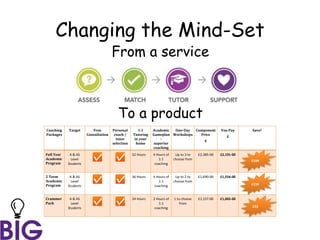
Changing the Mind-Set
From a service
To a product
Coaching
Packages
Target Free
Consultation
Personal
coach /
tutor
selection
1:1
Tutoring
in your
home
Academic
Gameplan
–
superior
coaching
One-Day
Workshops
Component
Price
£
You Pay
£
Save!
Full Year
Academic
Program
A & AS
Level
Students
52 Hours 4 Hours of
1:1
coaching
Up to 3 to
choose from
£2,385-00 £2,191-00
2 Term
Academic
Program
A & AS
Level
Students
36 Hours 4 Hours of
1:1
coaching
Up to 2 to
choose from
£1,690-00 £1,554-00
Crammer
Pack
A & AS
Level
Students
24 Hours 2 Hours of
1:1
coaching
1 to choose
from
£1,157.00 £1,065-00
£194
£136
£92
Take 10 minutes
List the ‘core’ of your product / service -
benefits
Write down its generic form
Write one thing that you do or could do to
augment this
Could you create a package and bring in
proactive pricing?
Your Unique Proposition
5-steps to define it!
1. Profile your customer
2. Identify the problem and how you solve
it
3. Look at what ‘benefits’ you can deliver
4. Set out your ‘promise’ and how you
intend to keep it
5. Write down a paragraph that says it all
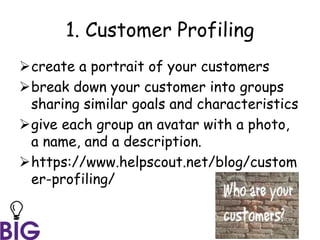
1. Customer Profiling
create a portrait of your customers
break down your customer into groups
sharing similar goals and characteristics
give each group an avatar with a photo,
a name, and a description.
https://www.helpscout.net/blog/custom
er-profiling/
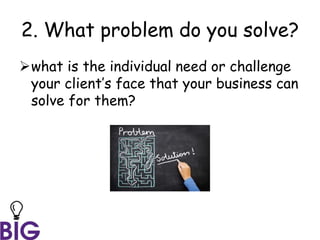
2. What problem do you solve?
what is the individual need or challenge
your client’s face that your business can
solve for them?
3. What benefits do you want to
deliver?
What are the biggest benefits a client
gets from choosing to work with you?
What sets you apart from someone
else?
From the clients’ perspective explain
why your services are important to
them
List why they would choose you over
another provider
4. Your Promise – implied in
everything you do
Not a description of what you do
It is partly ‘your mission’
It is the ‘character’ of your business
It is the means of providing value to
your customers
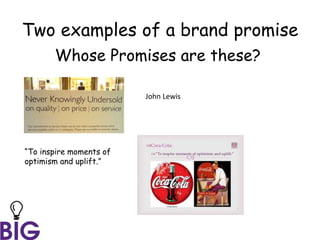
Two examples of a brand promise
Whose Promises are these?
“To inspire moments of
optimism and uplift.”
John Lewis
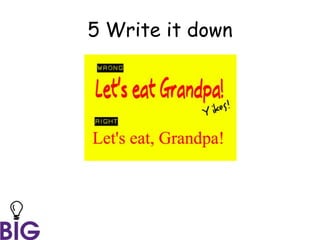
5 Write it down
Remember
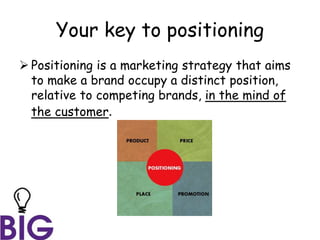
Your key to positioning
 Positioning is a marketing strategy that aims
to make a brand occupy a distinct position,
relative to competing brands, in the mind of
the customer.
A Product – broken into three
The Three Levels
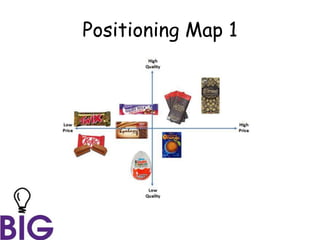
Positioning Map 1
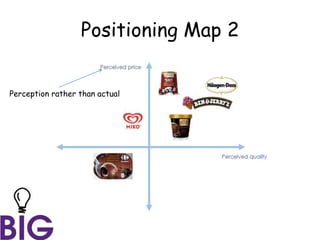
Positioning Map 2
Perception rather than actual
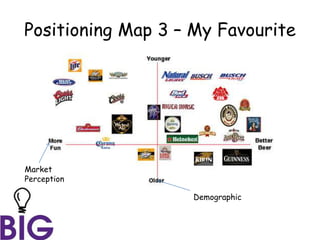
Positioning Map 3 – My Favourite
Market
Perception
Demographic
Take 10 Minutes
Think of your product / service and its
market place
What needs does your product / service
satisfy?
What features does it have?
How would you rate the quality?
On a positioning map with Price on the
horizontal and a Benefit / Feature on the
vertical position your offering
Any questions?

Bootcamp presentation 4 differentiation

  • 2.
    Let’s refresh ourselvesof our aims and goals of doing this work
  • 3.
    Our Aim By December2015 we will have a tool kit that will provide the basis of a marketing plan – a route map by which you can bring your product / service directly to market. Our Goal For 2016 it is to lower the cost of getting customers by 50% and increase the rate of keeping them by 50%
  • 4.
    Review on what’swe have discussed so far? The Marketing Audit – what we are doing or planning to do Setting out some goals based around numbers including break-evens. The difference between activity and strategy Customer buying behaviours – getting to grips with customer value. Boston Matrix and a customer audit
  • 5.
    This Months BIGsession Understanding what’s at the heart of a product or service. – using this to create the difference from your competitors The aims • Take a service and productise it! • The three levels of a product – an analysis • Creating a Unique Proposition • Competitor analysis – a positioning map
  • 7.
    Taking a serviceand creating a product What is a service?  Intangible  Cannot be stored  Consumed at the point of sale  Does not result in ownership  Hard to qualify and judge without context What is a product?  Tangible  Can be stored  Is taken away and consumed or kept  Has ownership rights and can be sold on  Can be qualified and judged by others
  • 8.
    Taking a serviceand making a product Why do we do that? Because it: Provides Clarity – appears almost tangible Can be delivered over a specified time and not immediately consumed Ownership can be transferred part way through Benefits and features articulated as a single offer It can be ‘augmented’ and ‘pro-actively priced’
  • 9.
    The Tutor DoctorService Delivery An example
  • 10.
    On the faceof it We Sell Tutoring Services
  • 11.
    In reality wesell opportunity
  • 12.
    A Product –broken into three The Three Levels
  • 13.
    Service and ProductDevelopment Core Product Benefits that make it valuable to the user Actual Product Something that is tangible, generic – but also replicable Augmented Non-physical, tailors the core / actual product to customer - differentiates
  • 14.
    Changing the Mind-Set Froma service To a product Coaching Packages Target Free Consultation Personal coach / tutor selection 1:1 Tutoring in your home Academic Gameplan – superior coaching One-Day Workshops Component Price £ You Pay £ Save! Full Year Academic Program A & AS Level Students 52 Hours 4 Hours of 1:1 coaching Up to 3 to choose from £2,385-00 £2,191-00 2 Term Academic Program A & AS Level Students 36 Hours 4 Hours of 1:1 coaching Up to 2 to choose from £1,690-00 £1,554-00 Crammer Pack A & AS Level Students 24 Hours 2 Hours of 1:1 coaching 1 to choose from £1,157.00 £1,065-00 £194 £136 £92
  • 15.
    Take 10 minutes Listthe ‘core’ of your product / service - benefits Write down its generic form Write one thing that you do or could do to augment this Could you create a package and bring in proactive pricing?
  • 17.
    Your Unique Proposition 5-stepsto define it! 1. Profile your customer 2. Identify the problem and how you solve it 3. Look at what ‘benefits’ you can deliver 4. Set out your ‘promise’ and how you intend to keep it 5. Write down a paragraph that says it all
  • 18.
    1. Customer Profiling createa portrait of your customers break down your customer into groups sharing similar goals and characteristics give each group an avatar with a photo, a name, and a description. https://www.helpscout.net/blog/custom er-profiling/
  • 19.
    2. What problemdo you solve? what is the individual need or challenge your client’s face that your business can solve for them?
  • 20.
    3. What benefitsdo you want to deliver? What are the biggest benefits a client gets from choosing to work with you? What sets you apart from someone else? From the clients’ perspective explain why your services are important to them List why they would choose you over another provider
  • 21.
    4. Your Promise– implied in everything you do Not a description of what you do It is partly ‘your mission’ It is the ‘character’ of your business It is the means of providing value to your customers
  • 23.
    Two examples ofa brand promise Whose Promises are these? “To inspire moments of optimism and uplift.” John Lewis
  • 24.
  • 25.
  • 26.
    Your key topositioning  Positioning is a marketing strategy that aims to make a brand occupy a distinct position, relative to competing brands, in the mind of the customer.
  • 27.
    A Product –broken into three The Three Levels
  • 28.
  • 29.
    Positioning Map 2 Perceptionrather than actual
  • 30.
    Positioning Map 3– My Favourite Market Perception Demographic
  • 31.
    Take 10 Minutes Thinkof your product / service and its market place What needs does your product / service satisfy? What features does it have? How would you rate the quality? On a positioning map with Price on the horizontal and a Benefit / Feature on the vertical position your offering
  • 32.