Body language
True or false?
1. Body language is largely instinctive, thus difficult to
change.
2. While delivering a speech, you shouldn’t look at people
individually; look at something that is behind them to
„take all of them in” at the same time.
3. Where the members of the audience are seated is of
no importance as long as they can hear you.
4. The closer you stand to your audience, the friendlier
you seem.
5. Body language signals may mean different things in
different contexts.
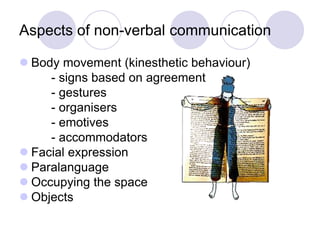
Aspects of non-verbal communication
 Body movement (kinesthetic behaviour)
- signs based on agreement
- gestures
- organisers
- emotives
- accommodators
 Facial expression
 Paralanguage
 Occupying the space
 Objects
Nature or nurture?
Nature
- fear,anger, surprise, disgust
- smile
- emotions – eyes!
- mirror
Nurture
- personal space
- touching
- signals of yes/no
- gender differences
Eye contact
 Dilated pupils reflect emotional involvement
 Pupil movement reflects thinking processes
 Eye contact – control
 Audience should be facing
Never
- look at the ceiling
- fix your stare at one enthusiastic face
- wear dark glasses
Facial expression
Avoid a poker face
Identify with your message:
Reflect emotions related
to the content
Keep smiling (?)
Gestures
Free your arms and hands
Gestures - extensions of thoughts
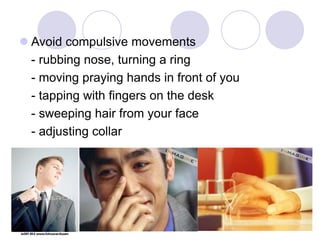
 Avoid compulsive movements
- rubbing nose, turning a ring
- moving praying hands in front of you
- tapping with fingers on the desk
- sweeping hair from your face
- adjusting collar
Body position
 Plant yourself firmly on the ground
 Avoid
Crossed legs
Bent legs with closed knees
Swaying to and fro
Putting your weight from one leg to another
Stiffness (closed legs, closed arms/hands)
 Establish your space bubble
- Move-occupy your space bubble
- Sitting
- Do not hide behind barriers
(pulpit, desk, papers)
- Avoid finding support on
table, blackboard, tc.
- Don’t stand too close
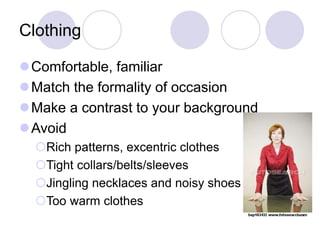
Clothing
Comfortable, familiar
Match the formality of occasion
Make a contrast to your background
Avoid
Rich patterns, excentric clothes
Tight collars/belts/sleeves
Jingling necklaces and noisy shoes
Too warm clothes
Openness
Do not cross your arms and legs
The act of opening
Open hands – nothing is concealed (vs.
clutched fists – nerves)
Relaxed, prolonged
eye contact
Mirror
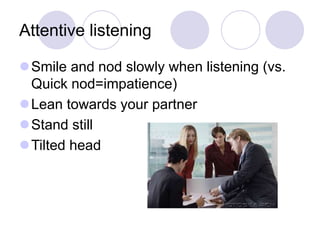
Attentive listening
Smile and nod slowly when listening (vs.
Quick nod=impatience)
Lean towards your partner
Stand still
Tilted head
Deceptive and nervous body language
 A lack of eye contact
 Excessive hand movements
 Biting fingernails
 Chewing the inside of the mouth
 Drying mouth
 Control (stiffness,
hands in pockets)
 Rubbing nose
Dominant body language
Making the body large and high
Hands on hips
Legs apart
Chin up
Erect position
Standing on a pulpit
Keeping a distance
Breaking social rules
- Imposing informal terms or talking down
- Invasion of personal space
- Interruption or never waiting for a response
- Dismissive gestures, facial expressions
Eyes
- Prolonged staring
- Avoiding looking
at partner
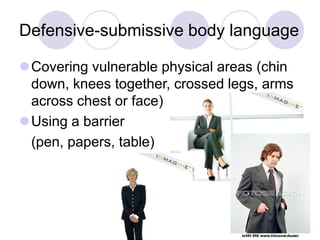
Defensive-submissive body language
Covering vulnerable physical areas (chin
down, knees together, crossed legs, arms
across chest or face)
Using a barrier
(pen, papers, table)
Seeking escape (flicking the eyes side to
side, leaning away)
Keeping small
Rigidity
Control your body language
 Establish your personal space
 Practise speaking while walking
 Strive for an open position
 Keep your hands free to
emphasise message
 Watch yourself – look out
for compulsive acts
 Practise eye movement
 Learn to listen

Bodylanguage.ppt

  • 1.
  • 2.
    True or false? 1.Body language is largely instinctive, thus difficult to change. 2. While delivering a speech, you shouldn’t look at people individually; look at something that is behind them to „take all of them in” at the same time. 3. Where the members of the audience are seated is of no importance as long as they can hear you. 4. The closer you stand to your audience, the friendlier you seem. 5. Body language signals may mean different things in different contexts.
  • 3.
    Aspects of non-verbalcommunication  Body movement (kinesthetic behaviour) - signs based on agreement - gestures - organisers - emotives - accommodators  Facial expression  Paralanguage  Occupying the space  Objects
  • 4.
    Nature or nurture? Nature -fear,anger, surprise, disgust - smile - emotions – eyes! - mirror
  • 5.
    Nurture - personal space -touching - signals of yes/no - gender differences
  • 6.
    Eye contact  Dilatedpupils reflect emotional involvement  Pupil movement reflects thinking processes  Eye contact – control  Audience should be facing
  • 7.
    Never - look atthe ceiling - fix your stare at one enthusiastic face - wear dark glasses
  • 8.
    Facial expression Avoid apoker face Identify with your message: Reflect emotions related to the content Keep smiling (?)
  • 9.
    Gestures Free your armsand hands Gestures - extensions of thoughts
  • 10.
     Avoid compulsivemovements - rubbing nose, turning a ring - moving praying hands in front of you - tapping with fingers on the desk - sweeping hair from your face - adjusting collar
  • 11.
    Body position  Plantyourself firmly on the ground  Avoid Crossed legs Bent legs with closed knees Swaying to and fro Putting your weight from one leg to another Stiffness (closed legs, closed arms/hands)
  • 12.
     Establish yourspace bubble - Move-occupy your space bubble - Sitting - Do not hide behind barriers (pulpit, desk, papers) - Avoid finding support on table, blackboard, tc. - Don’t stand too close
  • 13.
    Clothing Comfortable, familiar Match theformality of occasion Make a contrast to your background Avoid Rich patterns, excentric clothes Tight collars/belts/sleeves Jingling necklaces and noisy shoes Too warm clothes
  • 14.
    Openness Do not crossyour arms and legs The act of opening Open hands – nothing is concealed (vs. clutched fists – nerves) Relaxed, prolonged eye contact Mirror
  • 15.
    Attentive listening Smile andnod slowly when listening (vs. Quick nod=impatience) Lean towards your partner Stand still Tilted head
  • 16.
    Deceptive and nervousbody language  A lack of eye contact  Excessive hand movements  Biting fingernails  Chewing the inside of the mouth  Drying mouth  Control (stiffness, hands in pockets)  Rubbing nose
  • 17.
    Dominant body language Makingthe body large and high Hands on hips Legs apart Chin up Erect position Standing on a pulpit Keeping a distance
  • 18.
    Breaking social rules -Imposing informal terms or talking down - Invasion of personal space - Interruption or never waiting for a response - Dismissive gestures, facial expressions Eyes - Prolonged staring - Avoiding looking at partner
  • 19.
    Defensive-submissive body language Coveringvulnerable physical areas (chin down, knees together, crossed legs, arms across chest or face) Using a barrier (pen, papers, table)
  • 20.
    Seeking escape (flickingthe eyes side to side, leaning away) Keeping small Rigidity
  • 22.
    Control your bodylanguage  Establish your personal space  Practise speaking while walking  Strive for an open position  Keep your hands free to emphasise message  Watch yourself – look out for compulsive acts  Practise eye movement  Learn to listen