Prepared By : Osama Abubakir
Bilal Abdulla
Ahmad Rauof
Ahmad Burhan
KEY OBJECTIVES
 Why have we chosen this subject?
 What is the body building supplement?
 When has it used for the first time? And where?
 What are the types of nutritional supplements?
 What are the advantages and disadvantages?
 Recommendation
 A visit to the health food store can be an
overwhelming experience.
 It's tough to figure out what to choose from among
the all of dietary and nutritional supplements on the
shelf. From vitamins to minerals to weight loss pills,
there are thousands of options to choose from.
 But do you really need any of them? Do they really
work, and if so, which ones are best?
What is the dietary Supplement ?
 According to FDA :
A dietary supplement is a product intended for
ingestion that contains a "dietary ingredient" intended
to add further nutritional value to (supplement) the
diet.
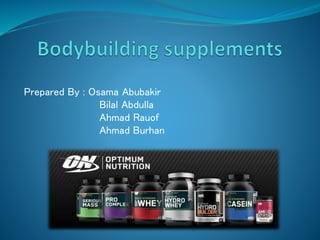
What are Bodybuilding supplements ?
 are dietary supplements specifically marketed to those
involved in bodybuilding, weightlifting and athletics.
Among the most widely used are :
vitamins, protein, branched-chain amino
acids (BCAA), glutamine, essential fatty acids, meal
replacement products, creatine, weight loss products
and testosterone boosters.
History
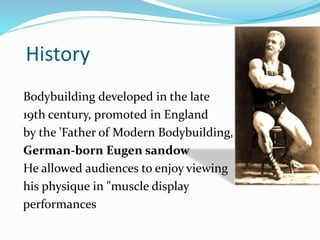
Bodybuilding developed in the late
19th century, promoted in England
by the 'Father of Modern Bodybuilding,
German-born Eugen sandow
He allowed audiences to enjoy viewing
his physique in "muscle display
performances
 In October 1994, the Dietary Supplement Health and
Education Act (DSHEA) was signed into law in the USA.
 Under DSHEA, responsibility for determining the safety of
the dietary supplements changed from government to the
manufacturer and supplements no longer required
approval from the U.S
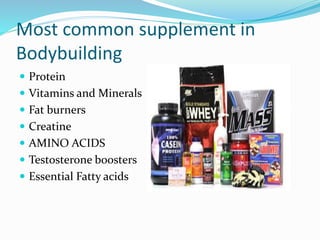
Most common supplement in
Bodybuilding
 Protein
 Vitamins and Minerals
 Fat burners
 Creatine
 AMINO ACIDS
 Testosterone boosters
 Essential Fatty acids
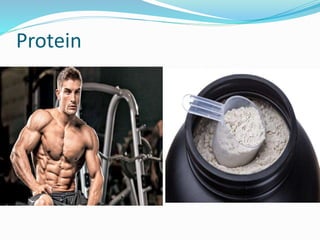
Protein
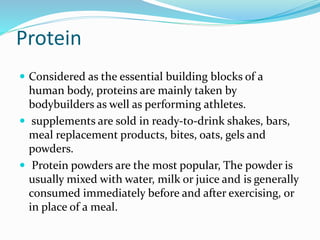
 Considered as the essential building blocks of a
human body, proteins are mainly taken by
bodybuilders as well as performing athletes.
 supplements are sold in ready-to-drink shakes, bars,
meal replacement products, bites, oats, gels and
powders.
 Protein powders are the most popular, The powder is
usually mixed with water, milk or juice and is generally
consumed immediately before and after exercising, or
in place of a meal.
Protein
The sources of protein are as
follows:
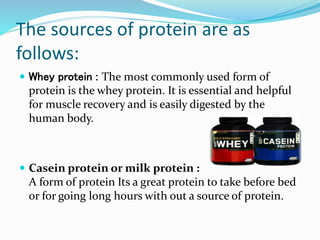
 Whey protein : The most commonly used form of
protein is the whey protein. It is essential and helpful
for muscle recovery and is easily digested by the
human body.
 Casein protein or milk protein :
A form of protein Its a great protein to take before bed
or for going long hours with out a source of protein.
 Soy protein :The third form of protein is soy and it
also contains all the essential amino acids that prove to
be a suitable alternative for pure vegetarians.
 Egg-white protein : is considered to be lactose- and
dairy-free protein.
Advantages of protein supplements
 Grab & Go.
 No Refrigeration & very portable.
 Can save your money.
 Proper protein timing is
essential to maximizing
muscle gains.
 Protein supplements provide you with the ability to
have a fast digesting or slow digesting protein meal
whenever you need it.
Advantages
 Weight gainers offer high calorie foods that are
easily broken down, and less filling.
 Protein supplements are often fortified with
vitamins and minerals, making them a multi-
dimensional protein food.
Possible side effect of protein
supplement using
 increased bowel movement
 bloating, cramps
 reduced appetite,
 kidney stone and renal failure
 Gain Fat
 Have Digestive Trouble
 Develop Gout
 Breathe odor
Vitamins :
 Vitamins function in the human body as metabolic
regulators, influencing a number of physiological
processes important to exercise or sport performance .
 Supplementation is important for the treatment of
certain health problems but there is little evidence of
benefit when used by those who are otherwise healthy
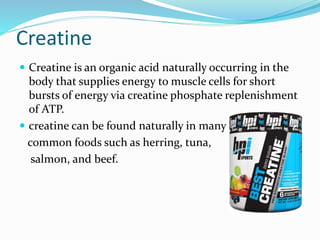
Creatine
 Creatine is an organic acid naturally occurring in the
body that supplies energy to muscle cells for short
bursts of energy via creatine phosphate replenishment
of ATP.
 creatine can be found naturally in many
common foods such as herring, tuna,
salmon, and beef.
Benefits of creatine
 A number of scientific studies have shown that
creatine can :
 improve strength
 energy
 muscle mass
 recovery times.
 In addition, recent studies have also shown that
creatine improves
 brain function.
 and reduces mental fatigue.
Possible side effect of creatine
supplement
 Creatine causes kidney and liver damage
 Creatine causes gastrointestinal distress
 Increase muscle swelling
 Cramping
 Leads to weight gain
Fat Burners
 Fat Burners supplements are used in various
bodybuilding products with the main aim of
increasing the existing metabolism, heart rate, the
body temperature reducing feeling of pain and
tiredness which in turn allows the human body to
burn it’s fat content at warp speed.
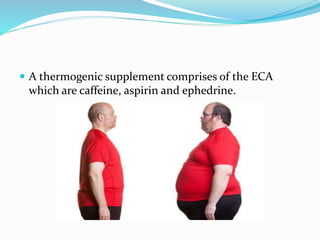
 A thermogenic supplement comprises of the ECA
which are caffeine, aspirin and ephedrine.
Fat Burners side effect
 taking high doses of ephedrine can have serious
effects, including palpitations, anxiety, insomnia,
vomiting and dizziness.
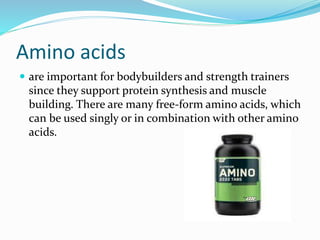
Amino acids
 are important for bodybuilders and strength trainers
since they support protein synthesis and muscle
building. There are many free-form amino acids, which
can be used singly or in combination with other amino
acids.
Types of amino acid :
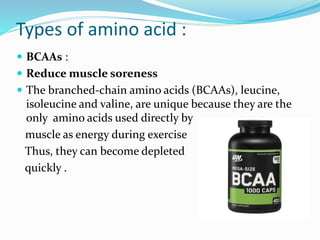
 BCAAs :
 Reduce muscle soreness
 The branched-chain amino acids (BCAAs), leucine,
isoleucine and valine, are unique because they are the
only amino acids used directly by
muscle as energy during exercise
Thus, they can become depleted
quickly .
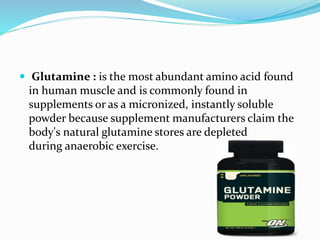
 Glutamine : is the most abundant amino acid found
in human muscle and is commonly found in
supplements or as a micronized, instantly soluble
powder because supplement manufacturers claim the
body's natural glutamine stores are depleted
during anaerobic exercise.
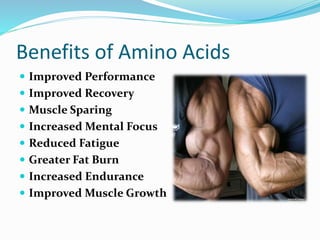
Benefits of Amino Acids
 Improved Performance
 Improved Recovery
 Muscle Sparing
 Increased Mental Focus
 Reduced Fatigue
 Greater Fat Burn
 Increased Endurance
 Improved Muscle Growth
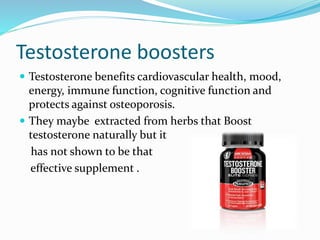
Testosterone boosters
 Testosterone benefits cardiovascular health, mood,
energy, immune function, cognitive function and
protects against osteoporosis.
 They maybe extracted from herbs that Boost
testosterone naturally but it
has not shown to be that
effective supplement .

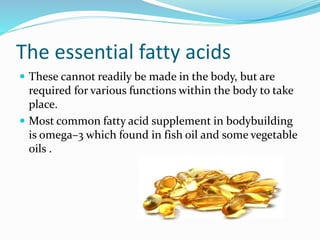
The essential fatty acids
 These cannot readily be made in the body, but are
required for various functions within the body to take
place.
 Most common fatty acid supplement in bodybuilding
is omega–3 which found in fish oil and some vegetable
oils .
Benefits of Omega - 3
 Enhance stamina by 40 - 60%
 Improve muscular development
 Allow more frequent training
 Speed recovery from training sessions.
 Speed healing of injuries
 Improve concentration
 Improve cardiovascular function
 Lower the insulin requirements in people with type 1
diabetes.
Does Omega-3 have an side effects?
 Although very rare, Omega-3 may have some side
effects including
 allergic reaction,
 bleeding,
 diarrhea
Do they really work ?
 In addition to being potentially harmful, some have
argued that there is little evidence to indicate any
benefit to using bodybuilding supplements. For
example, according to the IOC, no results had been
reached in determining whether or not an individual
in exercise training benefits from protein and amino
acid supplements.
 The U.S. Food and Drug Administration (FDA) does
regulate dietary supplements; however, it treats them
like foods rather than medications. Unlike drug
manufacturers, the makers of supplements don’t have
to show their products are safe or effective before
selling them on the market.
 The US FDA reports 50,000 health problems a year due
to dietary supplements and these often involve
bodybuilding supplements.
Can I take Supplement with out
prescription ?
 Yes , as we mention it before supplements
are considered as a food not drug so it doesn’t need
any prescription .
 however , we need to be cautious about using
some supplement like fat-burners and creatine
for possible side effects .
How much Supplements should I
take?
 Optimal doses of all types of the supplements have not
been established for any condition. Quality and active
ingredients in supplements may vary widely from
maker to maker. This makes it very hard to establish a
standard dose.
Refrences
 www.bodybuilding.com
 http://www.webmd.com/
 http://www.fda.gov/
 http://healthyeating.sfgate.com/
 http://www.livestrong.com/
 ConsumerLab.com
Body building supplements

Body building supplements

  • 1.
    Prepared By :Osama Abubakir Bilal Abdulla Ahmad Rauof Ahmad Burhan
  • 2.
    KEY OBJECTIVES  Whyhave we chosen this subject?  What is the body building supplement?  When has it used for the first time? And where?  What are the types of nutritional supplements?  What are the advantages and disadvantages?  Recommendation
  • 3.
     A visitto the health food store can be an overwhelming experience.  It's tough to figure out what to choose from among the all of dietary and nutritional supplements on the shelf. From vitamins to minerals to weight loss pills, there are thousands of options to choose from.  But do you really need any of them? Do they really work, and if so, which ones are best?
  • 4.
    What is thedietary Supplement ?  According to FDA : A dietary supplement is a product intended for ingestion that contains a "dietary ingredient" intended to add further nutritional value to (supplement) the diet.
  • 5.
    What are Bodybuildingsupplements ?  are dietary supplements specifically marketed to those involved in bodybuilding, weightlifting and athletics. Among the most widely used are : vitamins, protein, branched-chain amino acids (BCAA), glutamine, essential fatty acids, meal replacement products, creatine, weight loss products and testosterone boosters.
  • 6.
    History Bodybuilding developed inthe late 19th century, promoted in England by the 'Father of Modern Bodybuilding, German-born Eugen sandow He allowed audiences to enjoy viewing his physique in "muscle display performances
  • 7.
     In October1994, the Dietary Supplement Health and Education Act (DSHEA) was signed into law in the USA.  Under DSHEA, responsibility for determining the safety of the dietary supplements changed from government to the manufacturer and supplements no longer required approval from the U.S
  • 8.
    Most common supplementin Bodybuilding  Protein  Vitamins and Minerals  Fat burners  Creatine  AMINO ACIDS  Testosterone boosters  Essential Fatty acids
  • 9.
    Protein  Considered asthe essential building blocks of a human body, proteins are mainly taken by bodybuilders as well as performing athletes.  supplements are sold in ready-to-drink shakes, bars, meal replacement products, bites, oats, gels and powders.  Protein powders are the most popular, The powder is usually mixed with water, milk or juice and is generally consumed immediately before and after exercising, or in place of a meal.
  • 10.
  • 11.
    The sources ofprotein are as follows:  Whey protein : The most commonly used form of protein is the whey protein. It is essential and helpful for muscle recovery and is easily digested by the human body.  Casein protein or milk protein : A form of protein Its a great protein to take before bed or for going long hours with out a source of protein.
  • 12.
     Soy protein:The third form of protein is soy and it also contains all the essential amino acids that prove to be a suitable alternative for pure vegetarians.  Egg-white protein : is considered to be lactose- and dairy-free protein.
  • 13.
    Advantages of proteinsupplements  Grab & Go.  No Refrigeration & very portable.  Can save your money.  Proper protein timing is essential to maximizing muscle gains.  Protein supplements provide you with the ability to have a fast digesting or slow digesting protein meal whenever you need it.
  • 14.
    Advantages  Weight gainersoffer high calorie foods that are easily broken down, and less filling.  Protein supplements are often fortified with vitamins and minerals, making them a multi- dimensional protein food.
  • 15.
    Possible side effectof protein supplement using  increased bowel movement  bloating, cramps  reduced appetite,  kidney stone and renal failure  Gain Fat  Have Digestive Trouble  Develop Gout  Breathe odor
  • 16.
    Vitamins :  Vitaminsfunction in the human body as metabolic regulators, influencing a number of physiological processes important to exercise or sport performance .  Supplementation is important for the treatment of certain health problems but there is little evidence of benefit when used by those who are otherwise healthy
  • 17.
    Creatine  Creatine isan organic acid naturally occurring in the body that supplies energy to muscle cells for short bursts of energy via creatine phosphate replenishment of ATP.  creatine can be found naturally in many common foods such as herring, tuna, salmon, and beef.
  • 18.
    Benefits of creatine A number of scientific studies have shown that creatine can :  improve strength  energy  muscle mass  recovery times.  In addition, recent studies have also shown that creatine improves  brain function.  and reduces mental fatigue.
  • 19.
    Possible side effectof creatine supplement  Creatine causes kidney and liver damage  Creatine causes gastrointestinal distress  Increase muscle swelling  Cramping  Leads to weight gain
  • 20.
    Fat Burners  FatBurners supplements are used in various bodybuilding products with the main aim of increasing the existing metabolism, heart rate, the body temperature reducing feeling of pain and tiredness which in turn allows the human body to burn it’s fat content at warp speed.
  • 21.
     A thermogenicsupplement comprises of the ECA which are caffeine, aspirin and ephedrine.
  • 22.
    Fat Burners sideeffect  taking high doses of ephedrine can have serious effects, including palpitations, anxiety, insomnia, vomiting and dizziness.
  • 23.
    Amino acids  areimportant for bodybuilders and strength trainers since they support protein synthesis and muscle building. There are many free-form amino acids, which can be used singly or in combination with other amino acids.
  • 24.
    Types of aminoacid :  BCAAs :  Reduce muscle soreness  The branched-chain amino acids (BCAAs), leucine, isoleucine and valine, are unique because they are the only amino acids used directly by muscle as energy during exercise Thus, they can become depleted quickly .
  • 25.
     Glutamine :is the most abundant amino acid found in human muscle and is commonly found in supplements or as a micronized, instantly soluble powder because supplement manufacturers claim the body's natural glutamine stores are depleted during anaerobic exercise.
  • 26.
    Benefits of AminoAcids  Improved Performance  Improved Recovery  Muscle Sparing  Increased Mental Focus  Reduced Fatigue  Greater Fat Burn  Increased Endurance  Improved Muscle Growth
  • 27.
    Testosterone boosters  Testosteronebenefits cardiovascular health, mood, energy, immune function, cognitive function and protects against osteoporosis.  They maybe extracted from herbs that Boost testosterone naturally but it has not shown to be that effective supplement .
  • 28.
    The essential fattyacids  These cannot readily be made in the body, but are required for various functions within the body to take place.  Most common fatty acid supplement in bodybuilding is omega–3 which found in fish oil and some vegetable oils .
  • 29.
    Benefits of Omega- 3  Enhance stamina by 40 - 60%  Improve muscular development  Allow more frequent training  Speed recovery from training sessions.  Speed healing of injuries  Improve concentration  Improve cardiovascular function  Lower the insulin requirements in people with type 1 diabetes.
  • 30.
    Does Omega-3 havean side effects?  Although very rare, Omega-3 may have some side effects including  allergic reaction,  bleeding,  diarrhea
  • 32.
    Do they reallywork ?  In addition to being potentially harmful, some have argued that there is little evidence to indicate any benefit to using bodybuilding supplements. For example, according to the IOC, no results had been reached in determining whether or not an individual in exercise training benefits from protein and amino acid supplements.
  • 33.
     The U.S.Food and Drug Administration (FDA) does regulate dietary supplements; however, it treats them like foods rather than medications. Unlike drug manufacturers, the makers of supplements don’t have to show their products are safe or effective before selling them on the market.  The US FDA reports 50,000 health problems a year due to dietary supplements and these often involve bodybuilding supplements.
  • 34.
    Can I takeSupplement with out prescription ?  Yes , as we mention it before supplements are considered as a food not drug so it doesn’t need any prescription .  however , we need to be cautious about using some supplement like fat-burners and creatine for possible side effects .
  • 35.
    How much Supplementsshould I take?  Optimal doses of all types of the supplements have not been established for any condition. Quality and active ingredients in supplements may vary widely from maker to maker. This makes it very hard to establish a standard dose.
  • 38.
    Refrences  www.bodybuilding.com  http://www.webmd.com/ http://www.fda.gov/  http://healthyeating.sfgate.com/  http://www.livestrong.com/  ConsumerLab.com