Case Studies in
 Modern Board
Game Conversion
     Martin Grider
Outline: What is this?
What are “modern” board games? & Why
do we care?
Case Study: Carcassonne
Case Study: Ascension
Case Study: For The Win
UI/UX Concerns
Digital Enhancements
What are “modern”
  board games?
Board game industry ↑ 50% in last 10
years1

Hobby vs. Mainstream market segment
(German Boardgames, or “Euro” games)

BoardGameGeek.com

Increasingly blurry line between video
games and “Tabletop” games.
Why should you care?

Existing IP commands a higher price point

Potential for cross-promotion IRL

Digital enhancements can improve
tabletop game experiences. (More later.)

Easier to implement than traditional video
games (!?)
Case Studies:
        Overview
Carcassonne - Often held up as the
shining example of a digital board game
conversion.

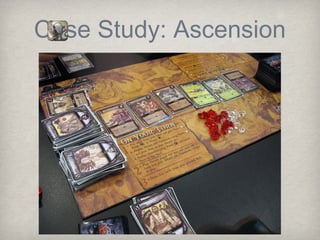
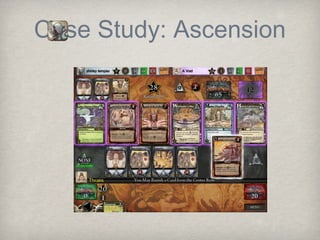
Ascension - Especially “polished” example
of a mobile card game.

For The Win - Only included here because
I did the iOS implementation.
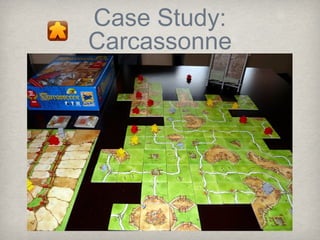
Case Study:
     Carcassonne


Tile laying game for 2-6 players
Case Study:
Carcassonne
Case Study:
      Carcassonne
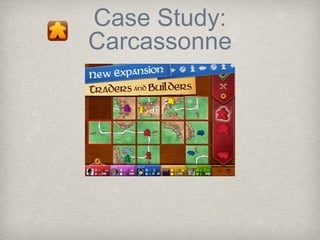
iOS features:

 Local Play vs human or AI Players
 Asynchronous and real-time Multiplayer
 Solitaire variant
 Tutorial / manual
 Achievements / Leaderboards
 Universal app
Case Study:
      Carcassonne

Digital enhancements:
 Showing possible tile locations.
 No downtime in asynchronous play.
 Automatic scoring.
 No setup.
Case Study: Ascension
 iOS features: (look familiar?)

   Local Play vs human or AI Players
   Asynchronous and real-time Multiplayer
   Solitaire variant
   Tutorial / manual
   Achievements / Online Profile
   Universal app
Case Study:
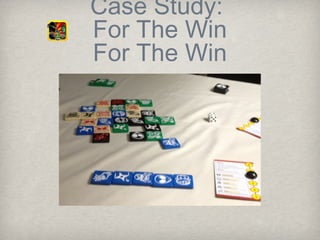
For The Win
For The Win
Case Study: For The
       Win
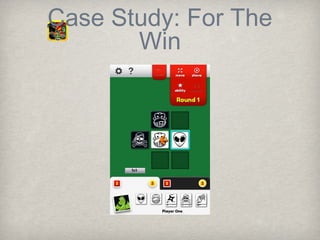
Case Study: For The
       Win
iOS features:
 Local Play vs human or AI Players
 Tutorial / Rules
 Leaderboards

Missing features:
 iPhone only
 No online multiplayer
 No Achievements
Common UI/UX
      Concerns
Q: Should you present the game as the
physical game does?

 Ideally, try to use the physical art from
 the original game. (Some don’t.)

 Showing numbers. (counters, score
 tracks)

 Some UI is simply undefined. New art is
 always needed.
Common UI/UX
      Concerns
Q: Assuming you want to, how do you
represent physical objects to be
manipulated on a touchscreen?

 A: Drag vs Tap (Actually, both!)

 A: False depth (importance of shadows)

 A: Animate actions as they happen

 A: Highlight actions when available
Common UI/UX
      Concerns
Common pitfalls:

 Always animate the AI turns.

 Clearly show whose turn it is.

 All public information should be readily
 available.

 Reduce clicks whenever possible.
 (Ideally load external data in the
 background.)
Common UI/UX
      Concerns
Suggestions for best presenting the
multiplayer lobby.

 Simplify, simplify, simplify. (As few
 screens as possible.)

 It’s not a bad idea to use (or copy) an
 already existing UI. (Apple’s
 GameCenter, for example.)

 Pick good defaults, and make sure “Start
 Game” is clearly identifiable.
Digital Enhancements
Menial tasks can be eliminated.

  Counting tiles remaining in the bag.

  Remembering what someone did on
  their last turn.

  Cumbersome scoring can be done
  instantly.

Less potential for cheating. (Or accidental
rules mistakes.)
Digital Enhancements

A game’s interesting choices can be
brought into focus or made more apparent.

 Carcassonne’s showing possible tile
 locations.

No downtime in asynchronous play.

No game setup.
Footnotes & Sources
    1. Estimated industry figures were 400MM
    for 2003, and over 800MM for 2008
    according to PurplePawn.
    (PurplePawn.com)

    Physical game images sourced from
    BoardGameGeek.com


Martin Grider ~ @livingtech ~ http://chesstris.com/
           martin@abstractpuzzle.com

Case Studies in Mobile Board Game Conversion

  • 1.
    Case Studies in Modern Board Game Conversion Martin Grider
  • 2.
    Outline: What isthis? What are “modern” board games? & Why do we care? Case Study: Carcassonne Case Study: Ascension Case Study: For The Win UI/UX Concerns Digital Enhancements
  • 3.
    What are “modern” board games? Board game industry ↑ 50% in last 10 years1 Hobby vs. Mainstream market segment (German Boardgames, or “Euro” games) BoardGameGeek.com Increasingly blurry line between video games and “Tabletop” games.
  • 4.
    Why should youcare? Existing IP commands a higher price point Potential for cross-promotion IRL Digital enhancements can improve tabletop game experiences. (More later.) Easier to implement than traditional video games (!?)
  • 5.
    Case Studies: Overview Carcassonne - Often held up as the shining example of a digital board game conversion. Ascension - Especially “polished” example of a mobile card game. For The Win - Only included here because I did the iOS implementation.
  • 6.
    Case Study: Carcassonne Tile laying game for 2-6 players
  • 7.
  • 8.
    Case Study: Carcassonne iOS features: Local Play vs human or AI Players Asynchronous and real-time Multiplayer Solitaire variant Tutorial / manual Achievements / Leaderboards Universal app
  • 9.
    Case Study: Carcassonne Digital enhancements: Showing possible tile locations. No downtime in asynchronous play. Automatic scoring. No setup.
  • 10.
  • 11.
  • 12.
    Case Study: Ascension iOS features: (look familiar?) Local Play vs human or AI Players Asynchronous and real-time Multiplayer Solitaire variant Tutorial / manual Achievements / Online Profile Universal app
  • 13.
    Case Study: For TheWin For The Win
  • 14.
  • 15.
    Case Study: ForThe Win iOS features: Local Play vs human or AI Players Tutorial / Rules Leaderboards Missing features: iPhone only No online multiplayer No Achievements
  • 16.
    Common UI/UX Concerns Q: Should you present the game as the physical game does? Ideally, try to use the physical art from the original game. (Some don’t.) Showing numbers. (counters, score tracks) Some UI is simply undefined. New art is always needed.
  • 17.
    Common UI/UX Concerns Q: Assuming you want to, how do you represent physical objects to be manipulated on a touchscreen? A: Drag vs Tap (Actually, both!) A: False depth (importance of shadows) A: Animate actions as they happen A: Highlight actions when available
  • 18.
    Common UI/UX Concerns Common pitfalls: Always animate the AI turns. Clearly show whose turn it is. All public information should be readily available. Reduce clicks whenever possible. (Ideally load external data in the background.)
  • 19.
    Common UI/UX Concerns Suggestions for best presenting the multiplayer lobby. Simplify, simplify, simplify. (As few screens as possible.) It’s not a bad idea to use (or copy) an already existing UI. (Apple’s GameCenter, for example.) Pick good defaults, and make sure “Start Game” is clearly identifiable.
  • 20.
    Digital Enhancements Menial taskscan be eliminated. Counting tiles remaining in the bag. Remembering what someone did on their last turn. Cumbersome scoring can be done instantly. Less potential for cheating. (Or accidental rules mistakes.)
  • 21.
    Digital Enhancements A game’sinteresting choices can be brought into focus or made more apparent. Carcassonne’s showing possible tile locations. No downtime in asynchronous play. No game setup.
  • 22.
    Footnotes & Sources 1. Estimated industry figures were 400MM for 2003, and over 800MM for 2008 according to PurplePawn. (PurplePawn.com) Physical game images sourced from BoardGameGeek.com Martin Grider ~ @livingtech ~ http://chesstris.com/ martin@abstractpuzzle.com