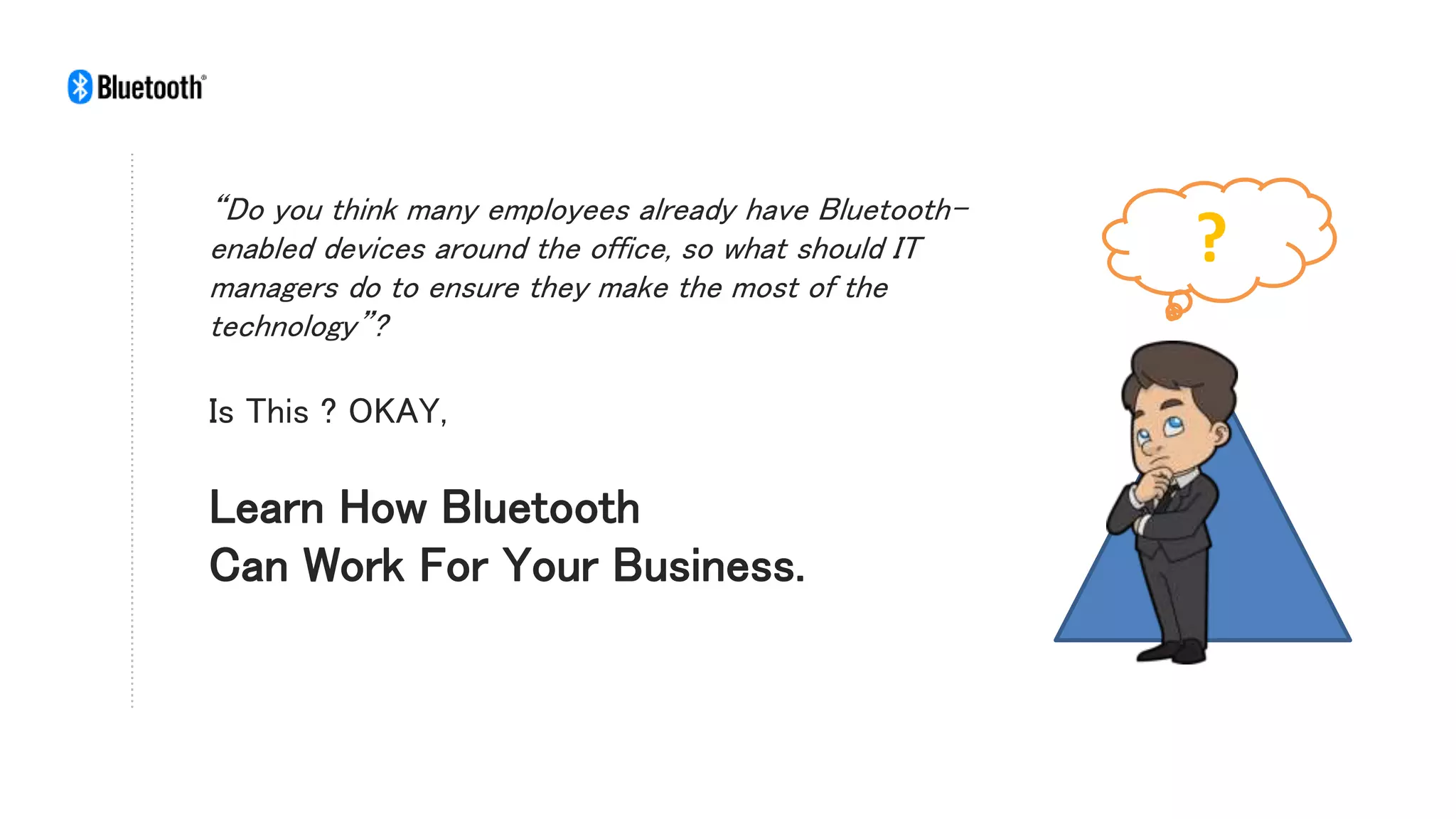
“Do you think many employees already have Bluetooth-
enabled devices around the office, so what should IT
managers do to ensure they make the most of the
technology”?
Is This ? OKAY,
Learn How Bluetooth
Can Work For Your Business.
?
Course Highlights / Index
• What is Bluetooth Low Energy (BLE) ?
• Bluetooth classic Vs Bluetooth Low Energy ?
• What are the benefits of BLE ?
• BLE Hands-On training
• Who should attend ?
• Your benefits, achievement.
• Course topics and agenda.
• Workshop, case-studies.
P 0
What is Bluetooth Low Energy (BLE) ?
Overview:
 Bluetooth Low Energy (BLE) is used for low-power industrial IoT,
M2M and home automation.
 The Bluetooth Low Energy (LE) radio is designed for very low power
operation.
 Bluetooth LE is now also widely used as a device positioning
technology
P 1
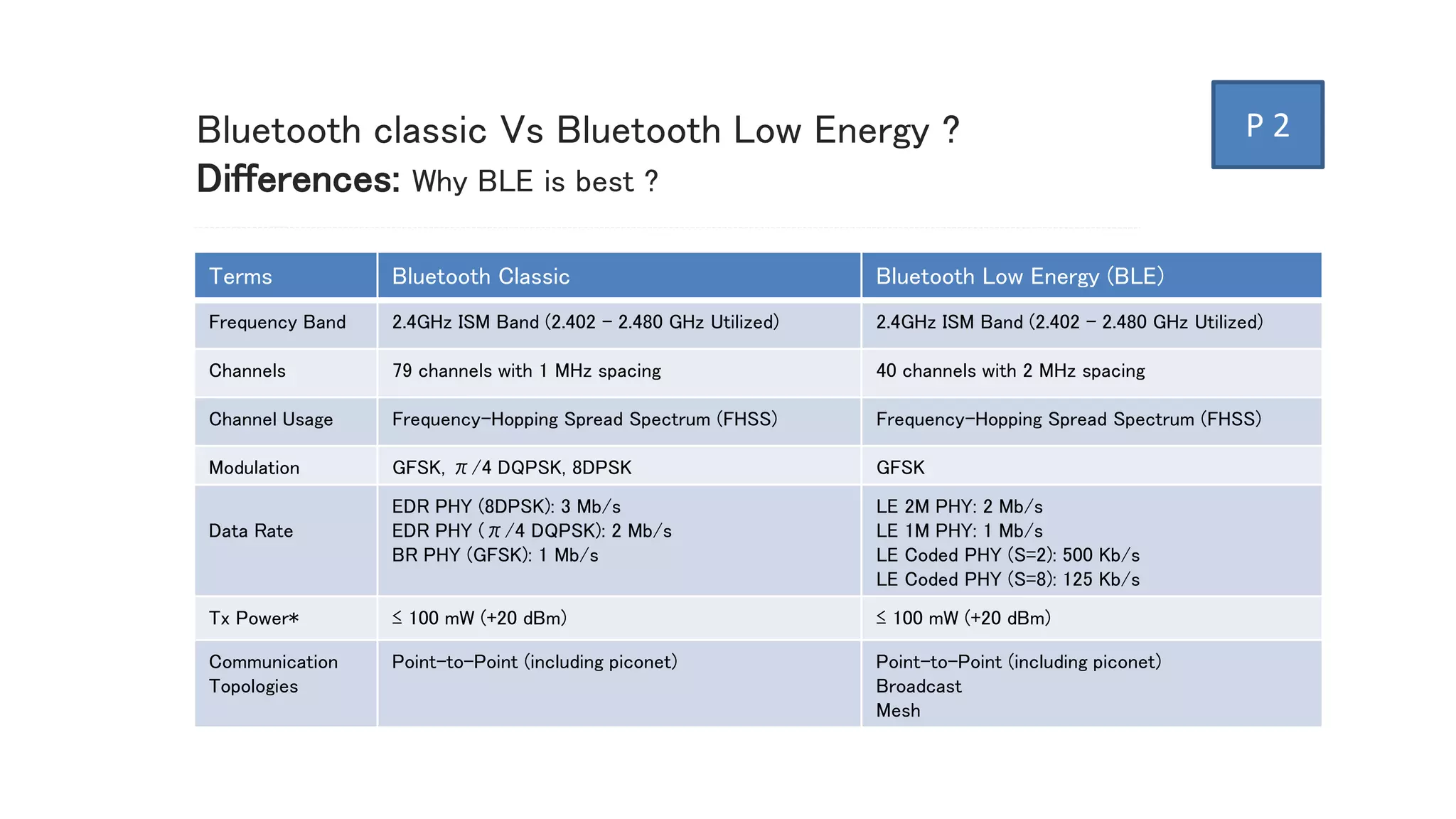
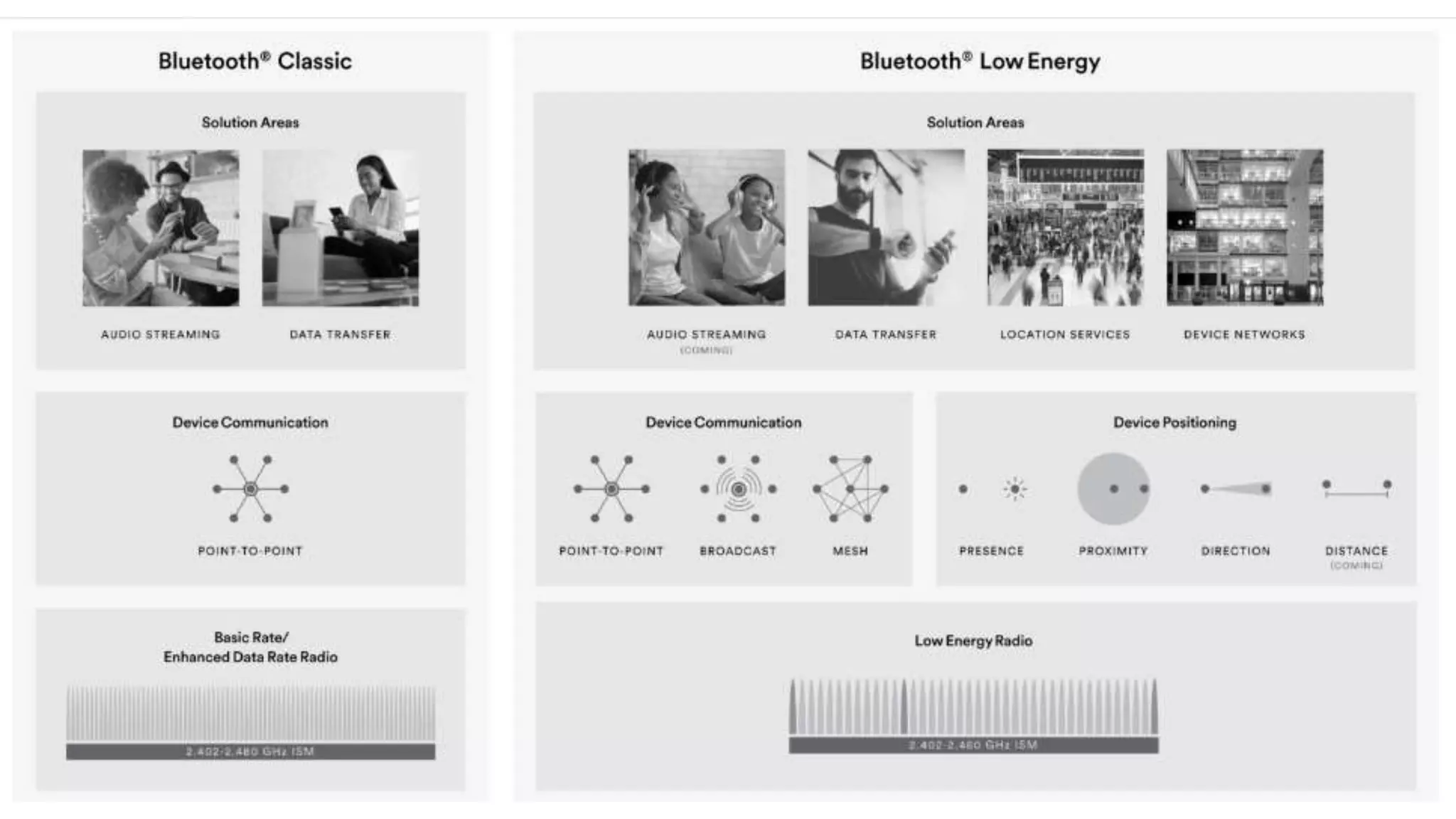
Bluetooth classic Vs Bluetooth Low Energy ?
Differences: Why BLE is best ?
Terms Bluetooth Classic Bluetooth Low Energy (BLE)
Frequency Band 2.4GHz ISM Band (2.402 – 2.480 GHz Utilized) 2.4GHz ISM Band (2.402 – 2.480 GHz Utilized)
Channels 79 channels with 1 MHz spacing 40 channels with 2 MHz spacing
Channel Usage Frequency-Hopping Spread Spectrum (FHSS) Frequency-Hopping Spread Spectrum (FHSS)
Modulation GFSK, π/4 DQPSK, 8DPSK GFSK
Data Rate
EDR PHY (8DPSK): 3 Mb/s
EDR PHY (π/4 DQPSK): 2 Mb/s
BR PHY (GFSK): 1 Mb/s
LE 2M PHY: 2 Mb/s
LE 1M PHY: 1 Mb/s
LE Coded PHY (S=2): 500 Kb/s
LE Coded PHY (S=8): 125 Kb/s
Tx Power* ≤ 100 mW (+20 dBm) ≤ 100 mW (+20 dBm)
Communication
Topologies
Point-to-Point (including piconet) Point-to-Point (including piconet)
Broadcast
Mesh
P 2
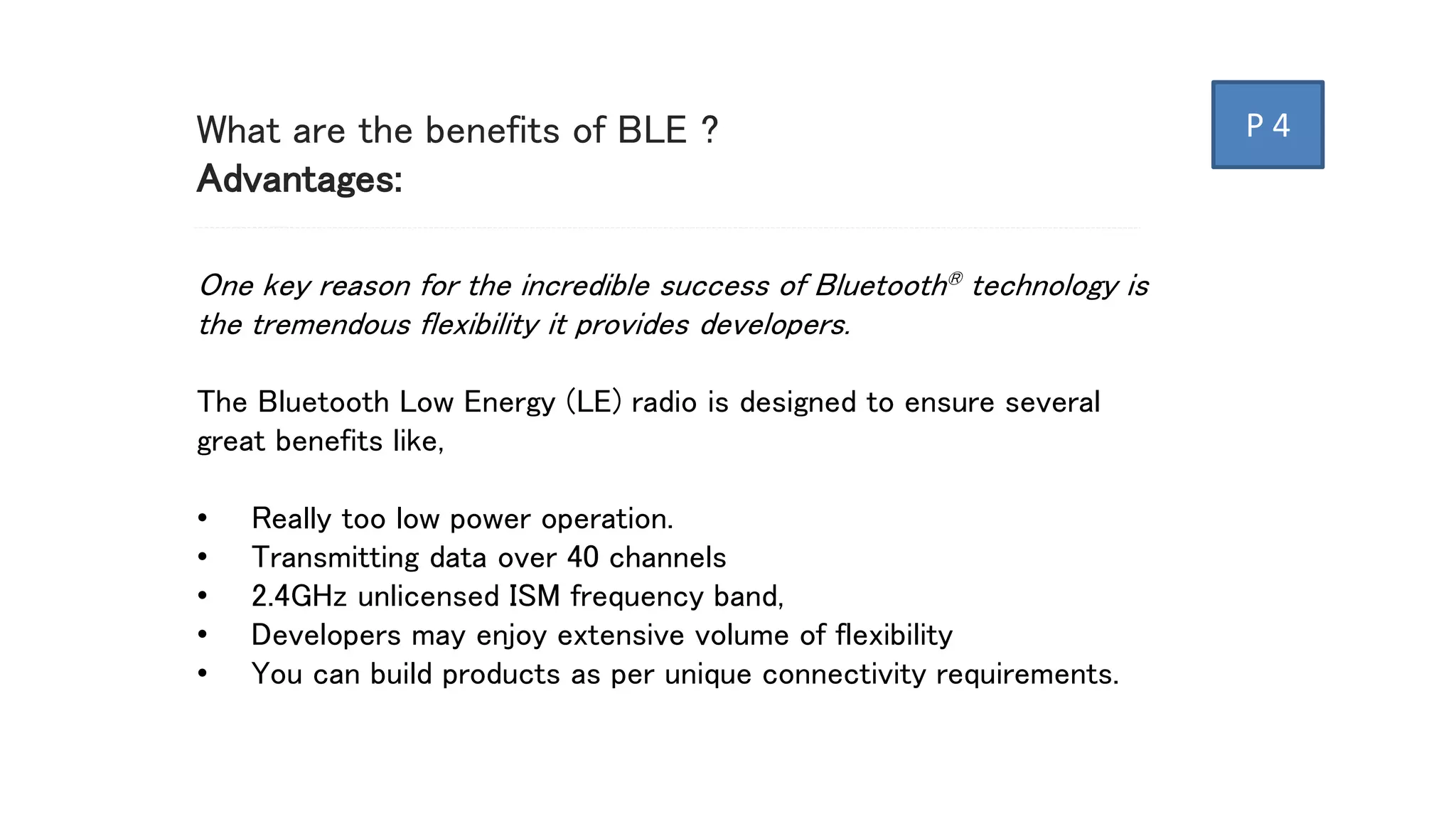
What are the benefits of BLE ?
Advantages:
One key reason for the incredible success of Bluetooth® technology is
the tremendous flexibility it provides developers.
The Bluetooth Low Energy (LE) radio is designed to ensure several
great benefits like,
• Really too low power operation.
• Transmitting data over 40 channels
• 2.4GHz unlicensed ISM frequency band,
• Developers may enjoy extensive volume of flexibility
• You can build products as per unique connectivity requirements.
P 4
BLE Hands-On Training
Duration: 3 Days
Tonex Training offers 3 days hands-on training on Bluetooth Low
Energy (BLE).
 Enjoy equal opportunity.
 Professional but friendliest environment.
 Industries most successful professionals as your instructor
 Topics tailoring facilities.
 All the participants will enjoy most advanced, latest and innovative
approaches to gain proficiency in their required field.
P 6
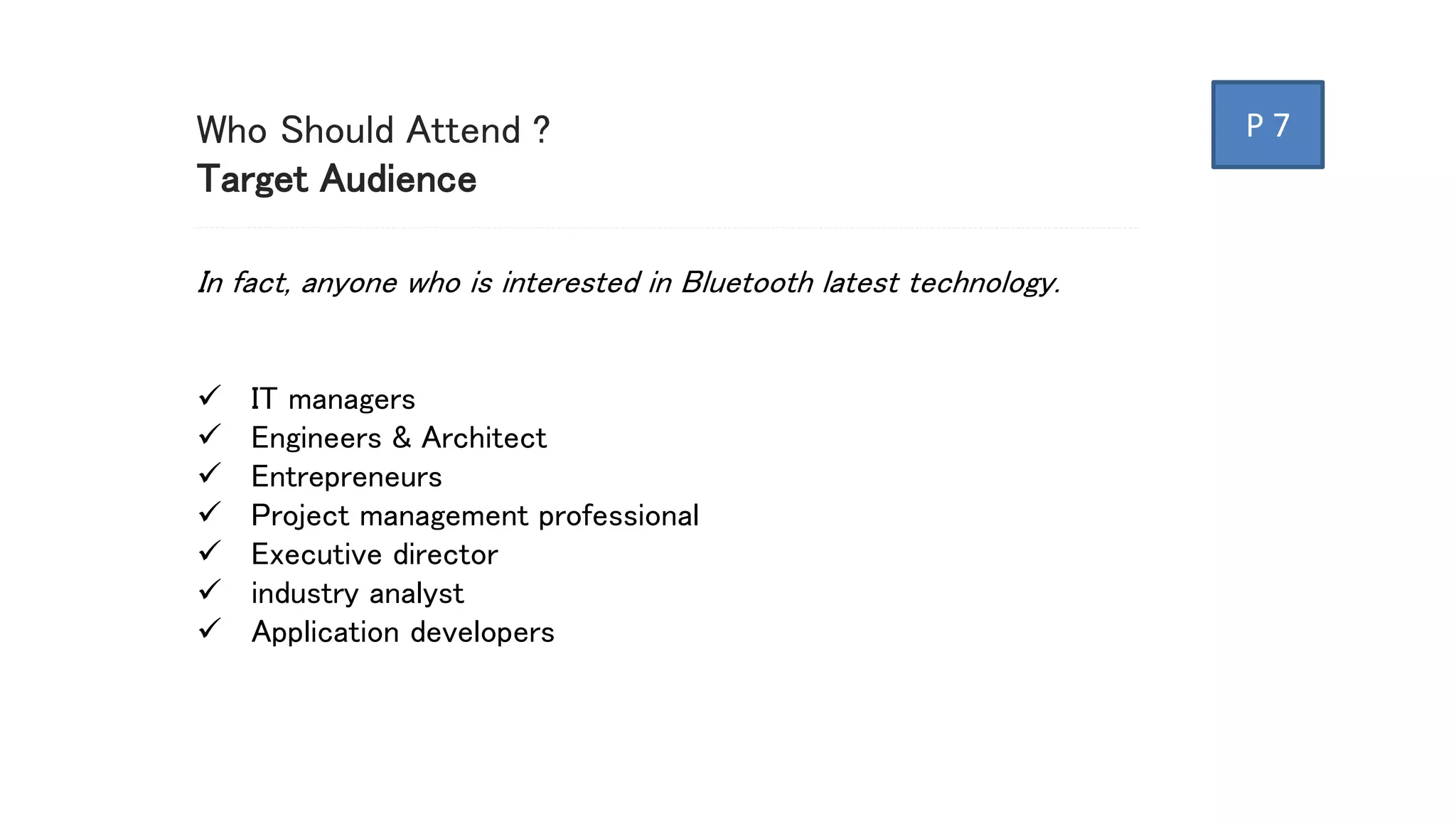
Who Should Attend ?
Target Audience
In fact, anyone who is interested in Bluetooth latest technology.
 IT managers
 Engineers & Architect
 Entrepreneurs
 Project management professional
 Executive director
 industry analyst
 Application developers
P 7
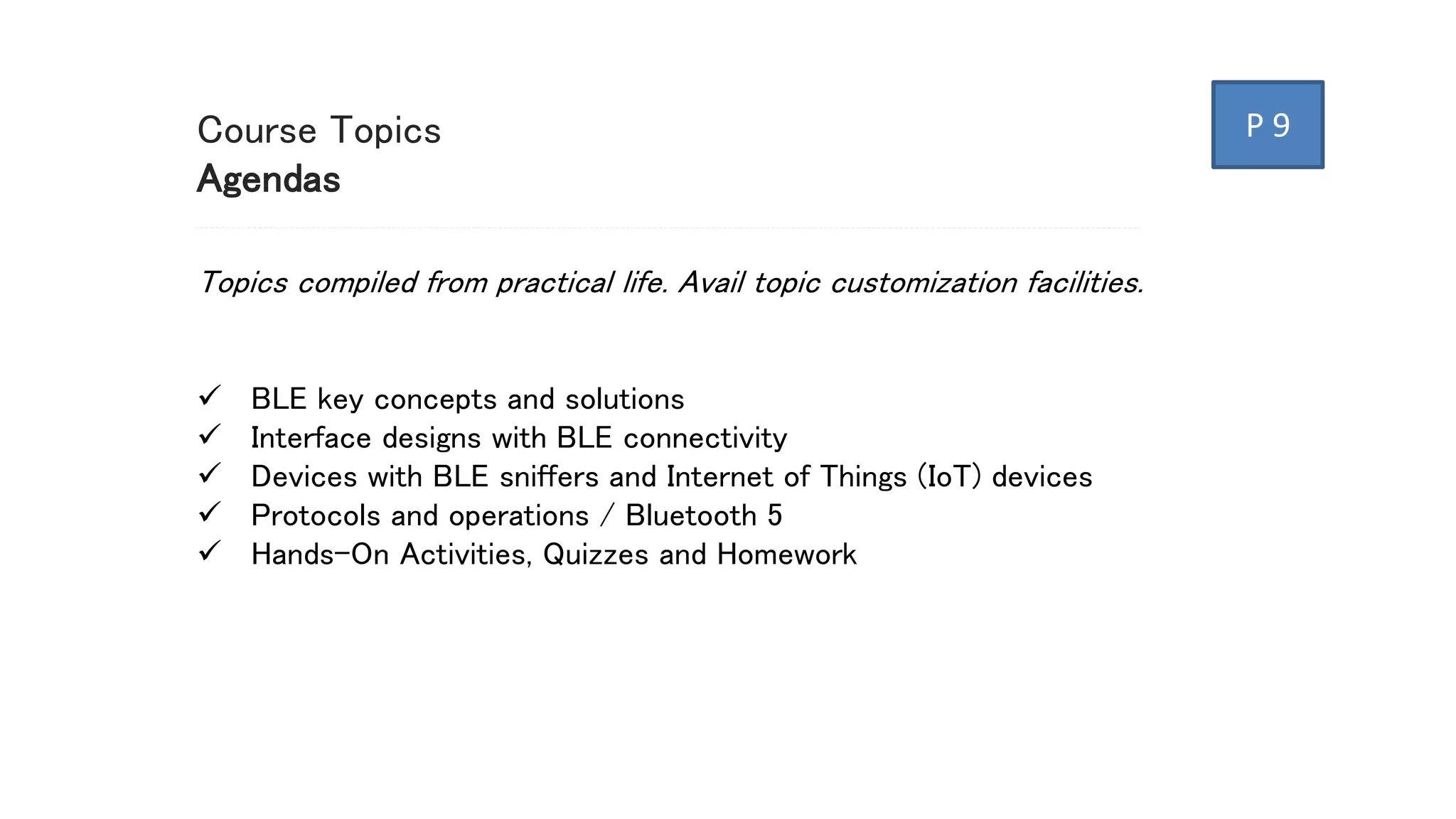
Course Topics
Agendas
Topics compiled from practical life. Avail topic customization facilities.
 BLE key concepts and solutions
 Interface designs with BLE connectivity
 Devices with BLE sniffers and Internet of Things (IoT) devices
 Protocols and operations / Bluetooth 5
 Hands-On Activities, Quizzes and Homework
P 9
Request More Information
Sign Up For Courses
https://www.tonex.com/training-courses/bluetooth-low-energy-
training-hands-on-ble-training/
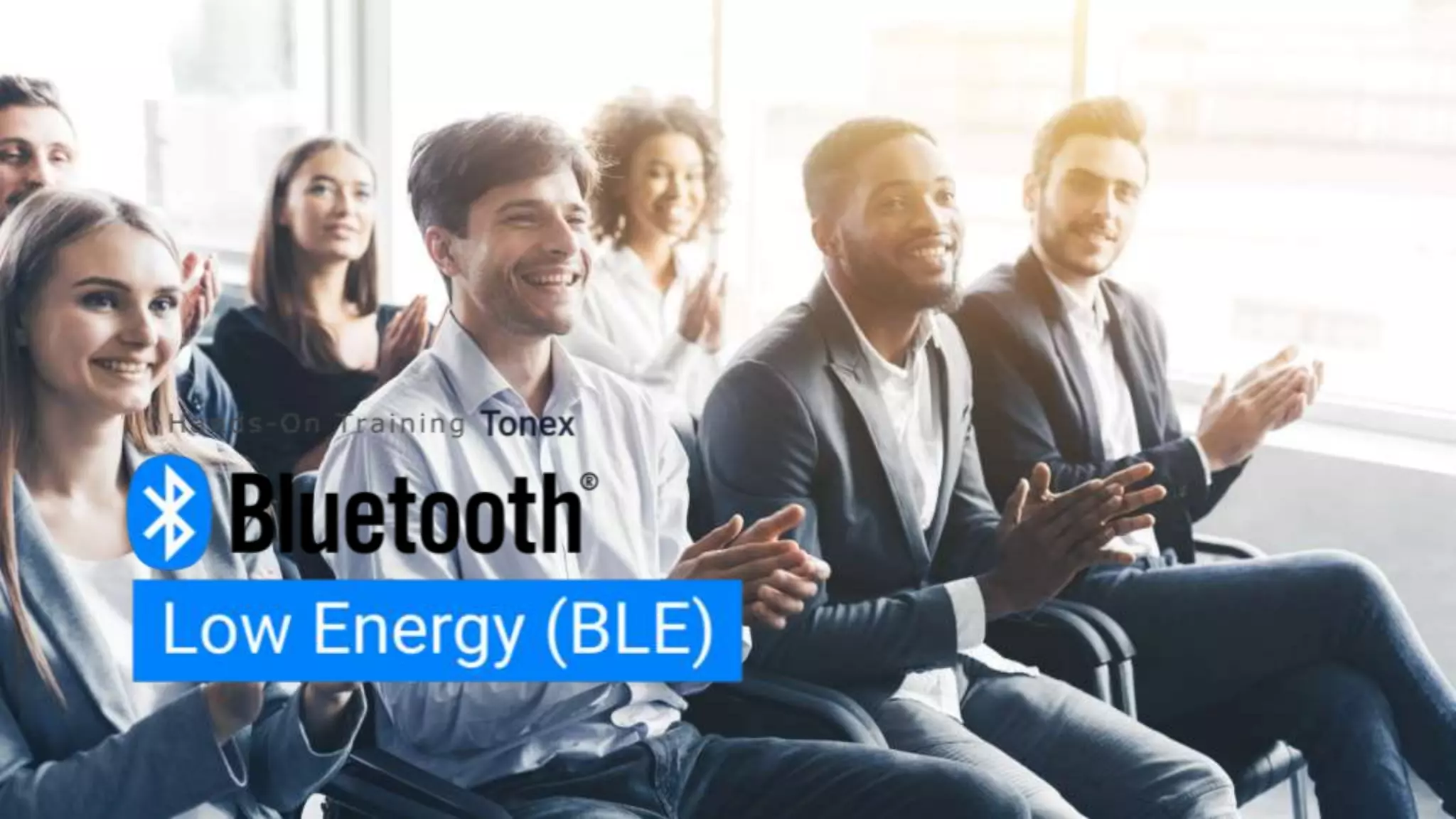
Bluetooth Low Energy BLE, Hands-On Training

Bluetooth Low Energy BLE, Hands-On Training

  • 2.
    “Do you thinkmany employees already have Bluetooth- enabled devices around the office, so what should IT managers do to ensure they make the most of the technology”? Is This ? OKAY, Learn How Bluetooth Can Work For Your Business. ?
  • 3.
    Course Highlights /Index • What is Bluetooth Low Energy (BLE) ? • Bluetooth classic Vs Bluetooth Low Energy ? • What are the benefits of BLE ? • BLE Hands-On training • Who should attend ? • Your benefits, achievement. • Course topics and agenda. • Workshop, case-studies. P 0
  • 4.
    What is BluetoothLow Energy (BLE) ? Overview:  Bluetooth Low Energy (BLE) is used for low-power industrial IoT, M2M and home automation.  The Bluetooth Low Energy (LE) radio is designed for very low power operation.  Bluetooth LE is now also widely used as a device positioning technology P 1
  • 5.
    Bluetooth classic VsBluetooth Low Energy ? Differences: Why BLE is best ? Terms Bluetooth Classic Bluetooth Low Energy (BLE) Frequency Band 2.4GHz ISM Band (2.402 – 2.480 GHz Utilized) 2.4GHz ISM Band (2.402 – 2.480 GHz Utilized) Channels 79 channels with 1 MHz spacing 40 channels with 2 MHz spacing Channel Usage Frequency-Hopping Spread Spectrum (FHSS) Frequency-Hopping Spread Spectrum (FHSS) Modulation GFSK, π/4 DQPSK, 8DPSK GFSK Data Rate EDR PHY (8DPSK): 3 Mb/s EDR PHY (π/4 DQPSK): 2 Mb/s BR PHY (GFSK): 1 Mb/s LE 2M PHY: 2 Mb/s LE 1M PHY: 1 Mb/s LE Coded PHY (S=2): 500 Kb/s LE Coded PHY (S=8): 125 Kb/s Tx Power* ≤ 100 mW (+20 dBm) ≤ 100 mW (+20 dBm) Communication Topologies Point-to-Point (including piconet) Point-to-Point (including piconet) Broadcast Mesh P 2
  • 7.
    What are thebenefits of BLE ? Advantages: One key reason for the incredible success of Bluetooth® technology is the tremendous flexibility it provides developers. The Bluetooth Low Energy (LE) radio is designed to ensure several great benefits like, • Really too low power operation. • Transmitting data over 40 channels • 2.4GHz unlicensed ISM frequency band, • Developers may enjoy extensive volume of flexibility • You can build products as per unique connectivity requirements. P 4
  • 9.
    BLE Hands-On Training Duration:3 Days Tonex Training offers 3 days hands-on training on Bluetooth Low Energy (BLE).  Enjoy equal opportunity.  Professional but friendliest environment.  Industries most successful professionals as your instructor  Topics tailoring facilities.  All the participants will enjoy most advanced, latest and innovative approaches to gain proficiency in their required field. P 6
  • 10.
    Who Should Attend? Target Audience In fact, anyone who is interested in Bluetooth latest technology.  IT managers  Engineers & Architect  Entrepreneurs  Project management professional  Executive director  industry analyst  Application developers P 7
  • 12.
    Course Topics Agendas Topics compiledfrom practical life. Avail topic customization facilities.  BLE key concepts and solutions  Interface designs with BLE connectivity  Devices with BLE sniffers and Internet of Things (IoT) devices  Protocols and operations / Bluetooth 5  Hands-On Activities, Quizzes and Homework P 9
  • 13.
    Request More Information SignUp For Courses https://www.tonex.com/training-courses/bluetooth-low-energy- training-hands-on-ble-training/