BLUEPRINT FOR SUCCESS
Claire Sewell
Research Support Skills Coordinator
Office of Scholarly Communication
Cambridge University Library
ces43@cam.ac.uk
@ces43
Developing a Library Research Support
Strategy
CAMBRIDGE LIBRARIES
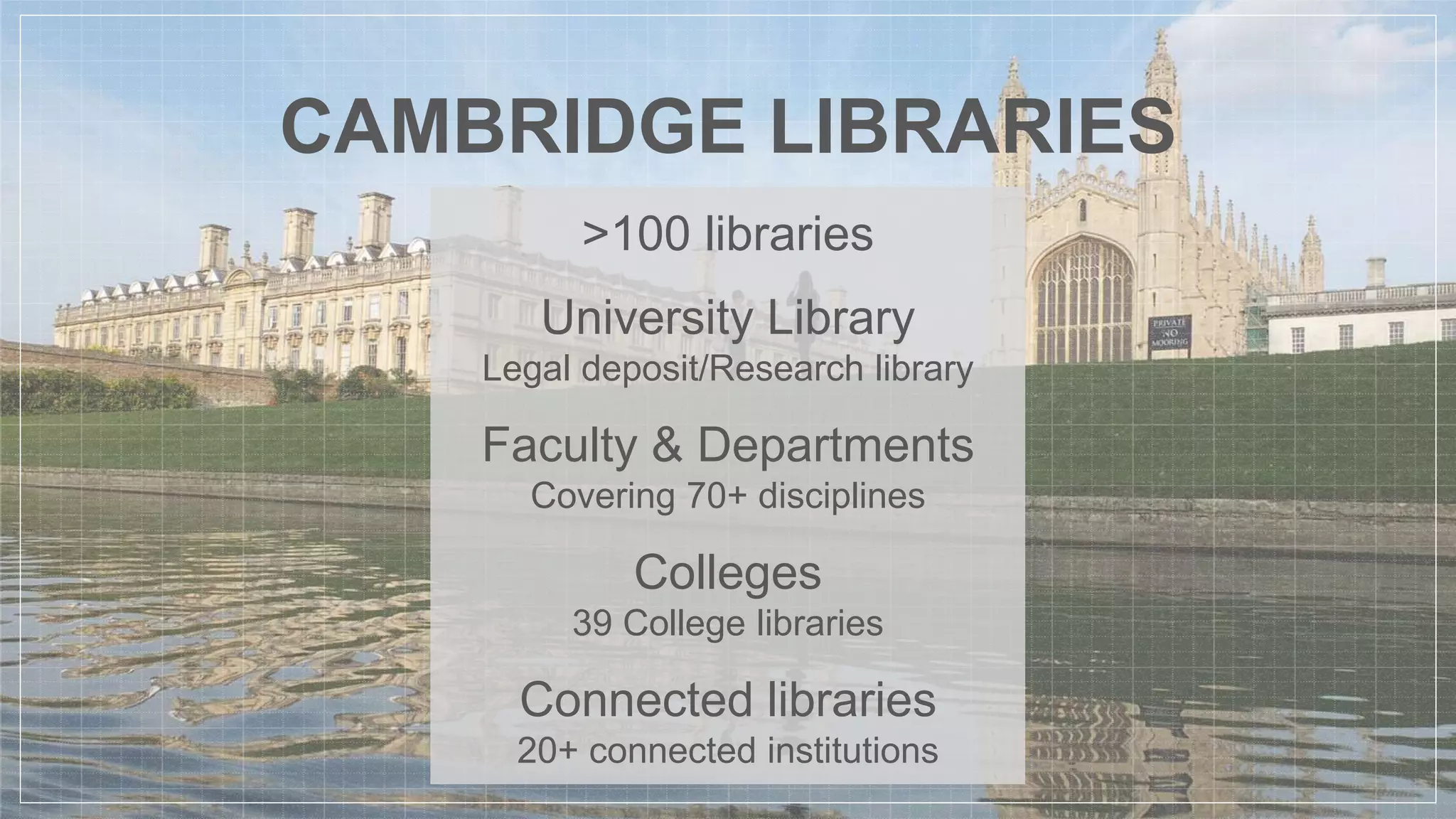
>100 libraries
University Library
Legal deposit/Research library
Faculty & Departments
Covering 70+ disciplines
Colleges
39 College libraries
Connected libraries
20+ connected institutions
WHO IS THE CAMBRIDGE
RESEARCHER?
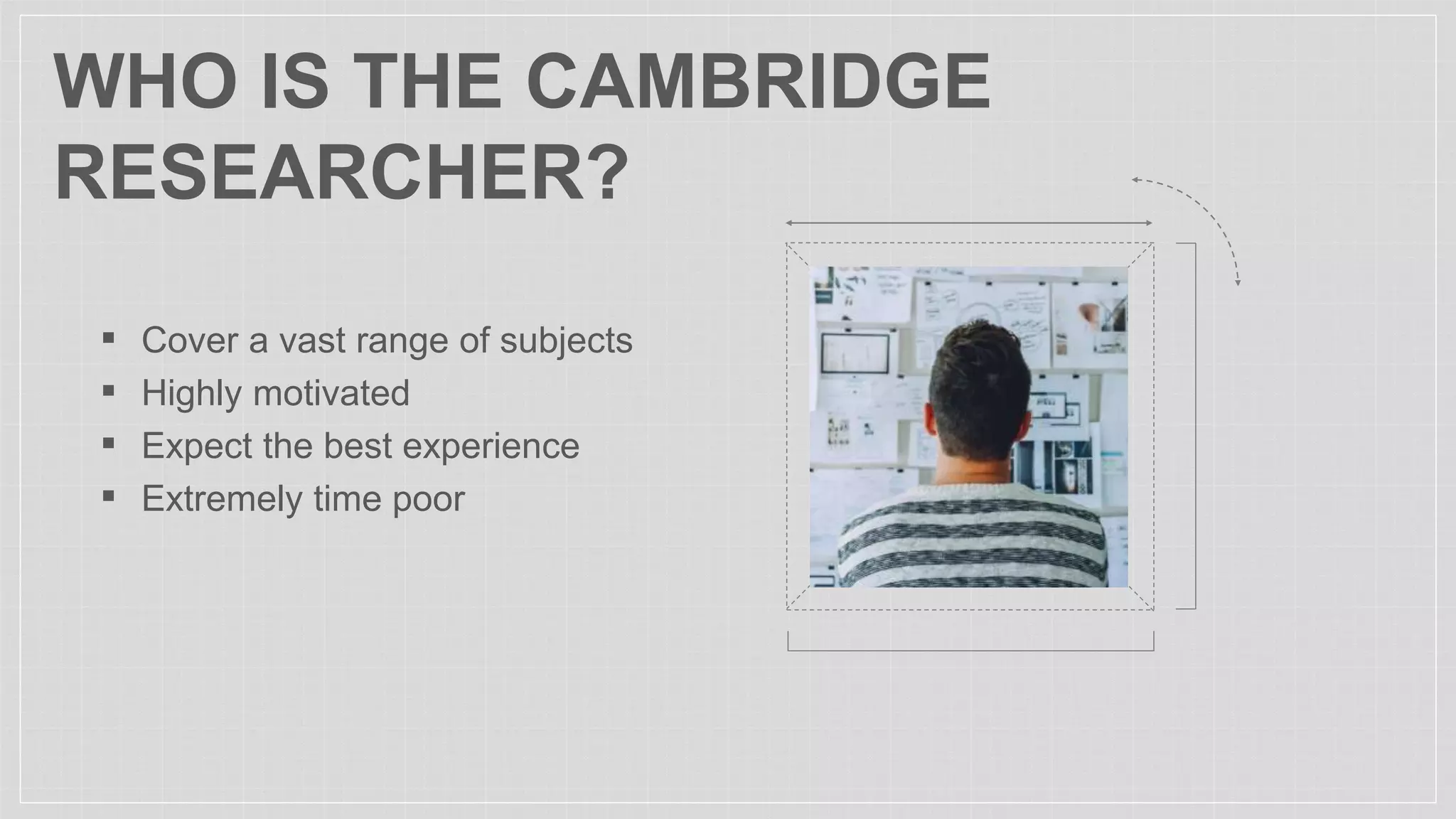
▪ Cover a vast range of subjects
▪ Highly motivated
▪ Expect the best experience
▪ Extremely time poor
CAMBRIDGE EXPERIENCE
OSC est. 2015
University Library &
Research Office
Growing team
Large Open Access team and
several specialist roles
Diverse user base
Researchers, librarians,
academics, support staff
STEPS TO BUILD YOUR
STRATEGY
FIND OUT ABOUT YOUR RESEARCH
COMMUNITY
▪ Who are they?
▪ What do they need from you?
▪ What do they want from you?
REMEMBER THAT THESE MAY
NOT BE THE SAME THING
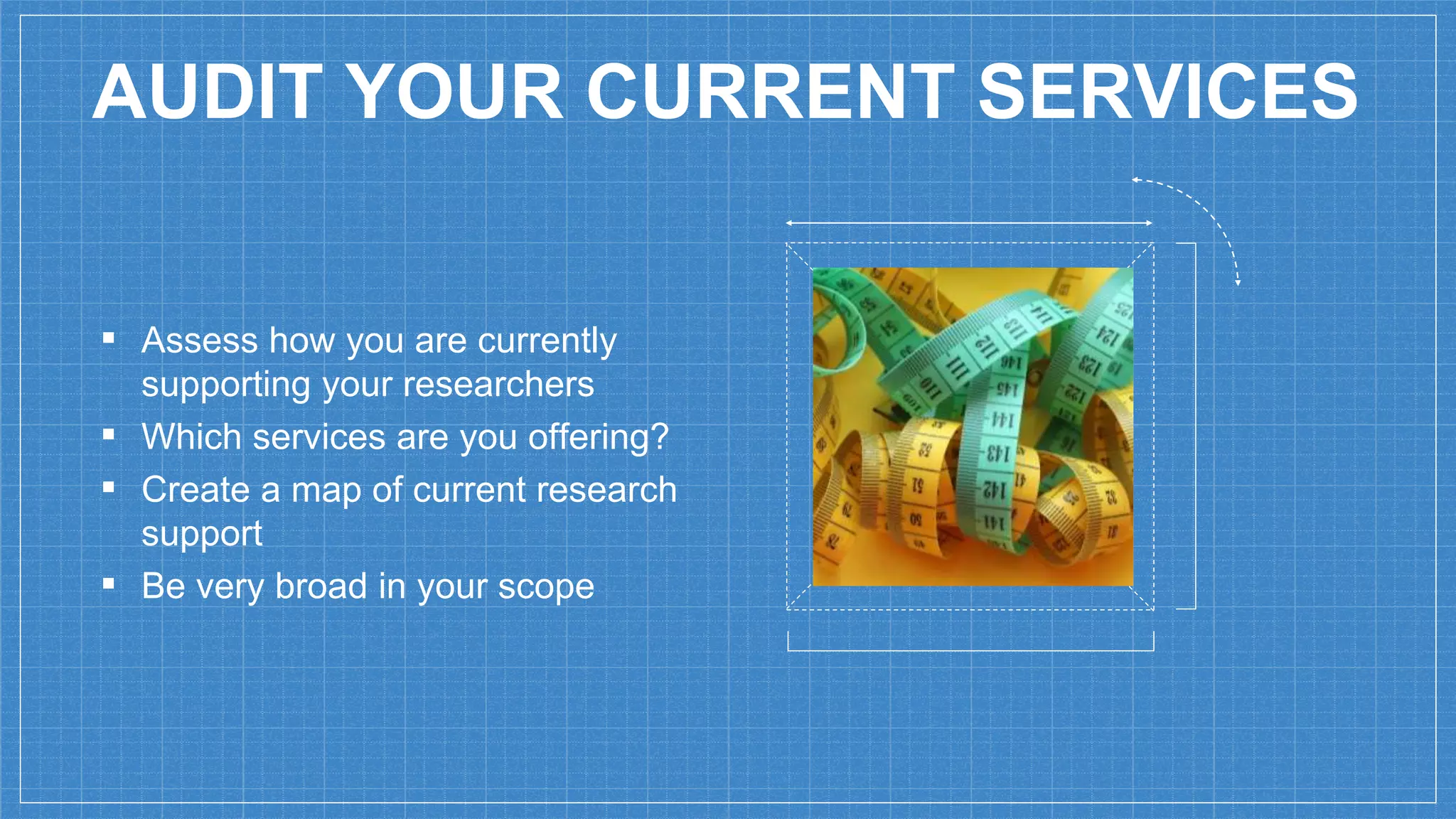
AUDIT YOUR CURRENT SERVICES
▪ Assess how you are currently
supporting your researchers
▪ Which services are you offering?
▪ Create a map of current research
support
▪ Be very broad in your scope
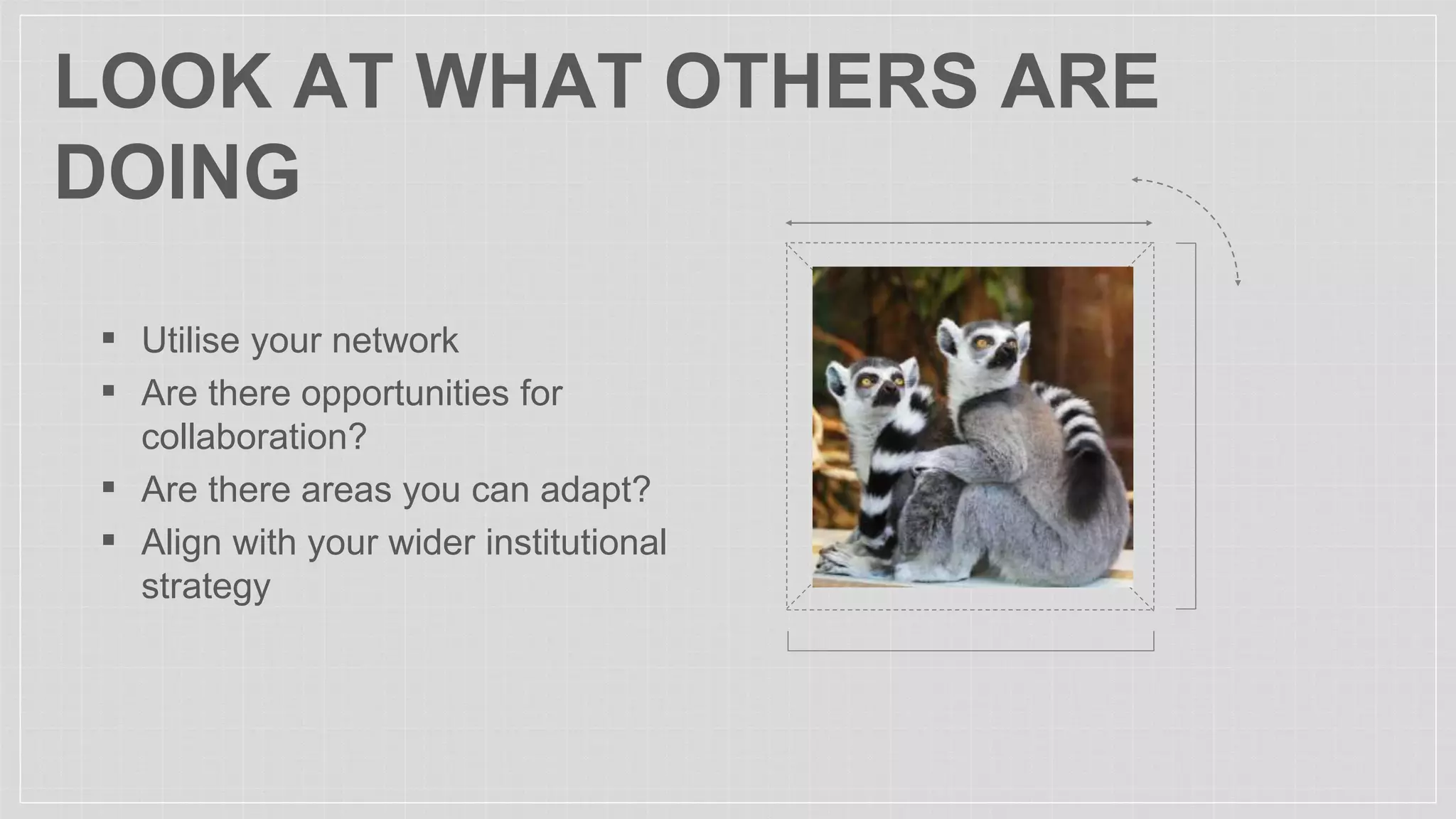
LOOK AT WHAT OTHERS ARE
DOING
▪ Utilise your network
▪ Are there opportunities for
collaboration?
▪ Are there areas you can adapt?
▪ Align with your wider institutional
strategy
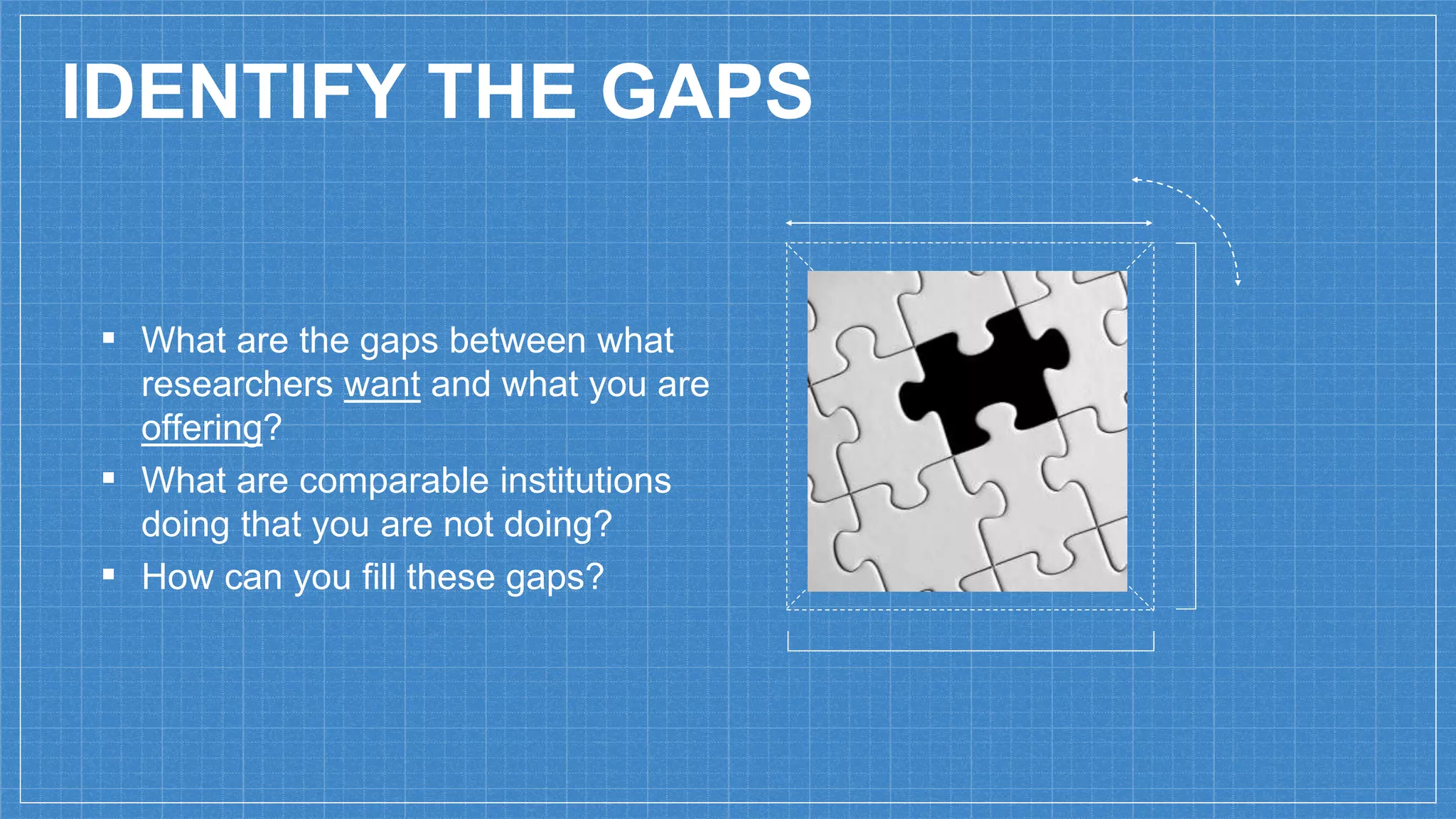
IDENTIFY THE GAPS
▪ What are the gaps between what
researchers want and what you are
offering?
▪ What are comparable institutions
doing that you are not doing?
▪ How can you fill these gaps?
UPSKILL YOUR STAFF
▪ Your staff are your most important
resource
▪ Look at local expertise
▫ Both within the library and outside
▪ Right people in the right roles
▫ Aptitude and skill
DISCOVER YOUR USP
▪ What can the library bring to
research support that no one else
can?
▪ How can you solve the problems of
your research community?
▪ How can you help your library
stand out?
SHOUT ABOUT IT!
▪ Tell your research community
▪ Tell your colleagues around the
institution
▪ Tell those at other libraries
▪ Tell everyone!
HORIZON SCAN
▪ Keep up to date with the latest
changes
▪ What are the likely factors
influencing your services and your
users?
▪ How can you address these?
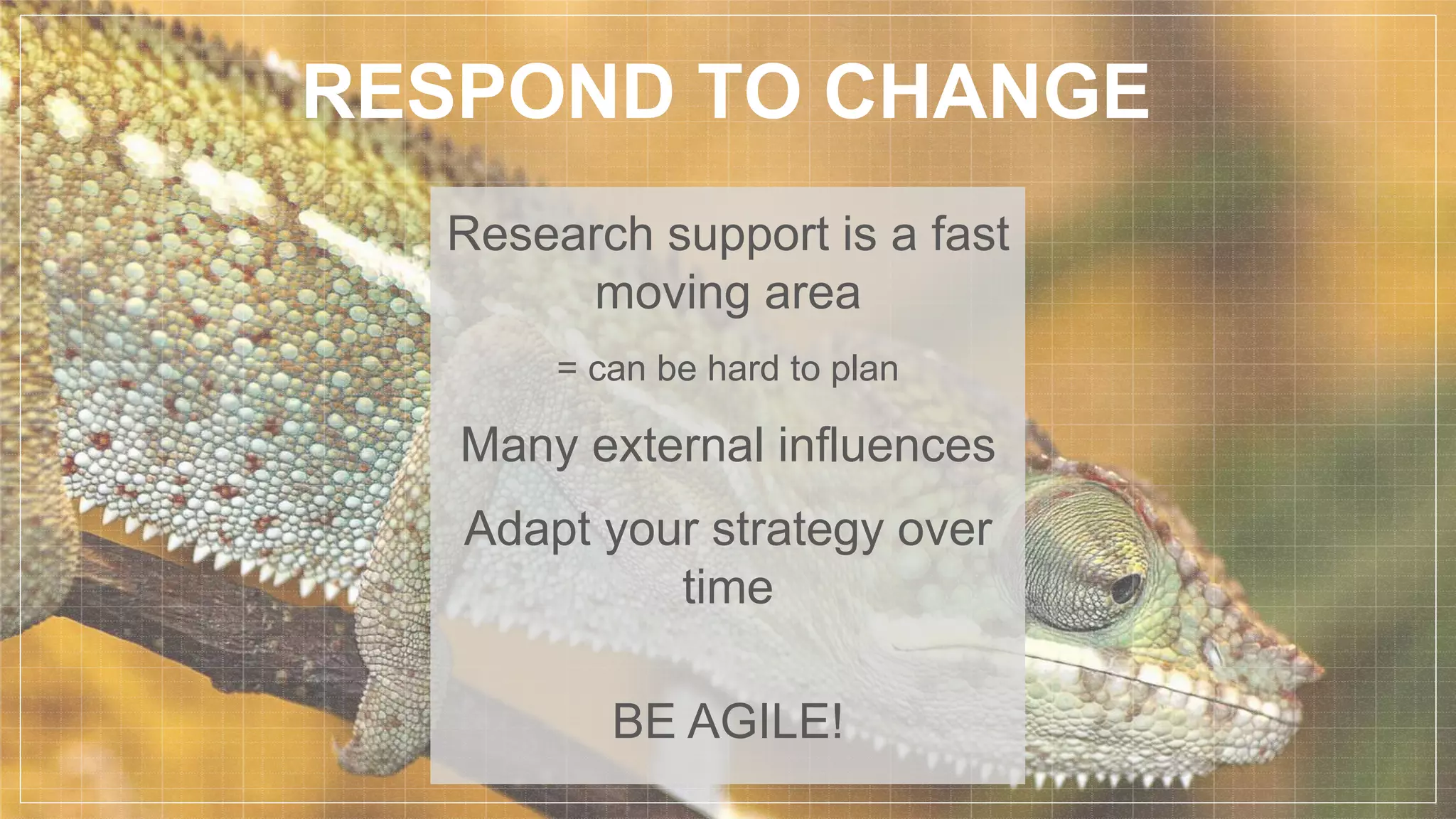
RESPOND TO CHANGE
Research support is a fast
moving area
= can be hard to plan
Many external influences
Adapt your strategy over
time
BE AGILE!
QUESTIONS
Thanks
for
listening
You can find me at:
ces43@cam.ac.uk
@ces43

Blueprint for Success: Building a Research Support Strategy

  • 1.
    BLUEPRINT FOR SUCCESS ClaireSewell Research Support Skills Coordinator Office of Scholarly Communication Cambridge University Library ces43@cam.ac.uk @ces43 Developing a Library Research Support Strategy
  • 2.
    CAMBRIDGE LIBRARIES >100 libraries UniversityLibrary Legal deposit/Research library Faculty & Departments Covering 70+ disciplines Colleges 39 College libraries Connected libraries 20+ connected institutions
  • 3.
    WHO IS THECAMBRIDGE RESEARCHER? ▪ Cover a vast range of subjects ▪ Highly motivated ▪ Expect the best experience ▪ Extremely time poor
  • 4.
    CAMBRIDGE EXPERIENCE OSC est.2015 University Library & Research Office Growing team Large Open Access team and several specialist roles Diverse user base Researchers, librarians, academics, support staff
  • 5.
    STEPS TO BUILDYOUR STRATEGY
  • 6.
    FIND OUT ABOUTYOUR RESEARCH COMMUNITY ▪ Who are they? ▪ What do they need from you? ▪ What do they want from you? REMEMBER THAT THESE MAY NOT BE THE SAME THING
  • 7.
    AUDIT YOUR CURRENTSERVICES ▪ Assess how you are currently supporting your researchers ▪ Which services are you offering? ▪ Create a map of current research support ▪ Be very broad in your scope
  • 8.
    LOOK AT WHATOTHERS ARE DOING ▪ Utilise your network ▪ Are there opportunities for collaboration? ▪ Are there areas you can adapt? ▪ Align with your wider institutional strategy
  • 9.
    IDENTIFY THE GAPS ▪What are the gaps between what researchers want and what you are offering? ▪ What are comparable institutions doing that you are not doing? ▪ How can you fill these gaps?
  • 10.
    UPSKILL YOUR STAFF ▪Your staff are your most important resource ▪ Look at local expertise ▫ Both within the library and outside ▪ Right people in the right roles ▫ Aptitude and skill
  • 11.
    DISCOVER YOUR USP ▪What can the library bring to research support that no one else can? ▪ How can you solve the problems of your research community? ▪ How can you help your library stand out?
  • 12.
    SHOUT ABOUT IT! ▪Tell your research community ▪ Tell your colleagues around the institution ▪ Tell those at other libraries ▪ Tell everyone!
  • 13.
    HORIZON SCAN ▪ Keepup to date with the latest changes ▪ What are the likely factors influencing your services and your users? ▪ How can you address these?
  • 14.
    RESPOND TO CHANGE Researchsupport is a fast moving area = can be hard to plan Many external influences Adapt your strategy over time BE AGILE!
  • 15.
  • 16.
    Thanks for listening You can findme at: ces43@cam.ac.uk @ces43

Editor's Notes

  • #2 Presentation will look at some of the steps to take when building a research support strategy – something which is still quite new for a lot of academic libraries Will include case study of the Cambridge experience and some of the lessons we have learnt along the way over the last three years
  • #3 Background for those who don’t know about Cambridge libraries – it’s very complicated! We have over 100 libraries in Cambridge ranging from the large legal deposit University Library (> 9 million items) to small, niche subject libraries Each faculty/department has its own library, as does each college Several institutions which are connected in some way with the university (e.g. Cambridge Assessment) Each library has a role in supporting researchers (whether they realise it or not!) but this is a very diverse user base – each one with slightly different needs. What works for one will not work for another Result is a very complex environment to try and tie together under one strategy
  • #4 When building a research support strategy it’s obviously important to know who it is that you’re supporting This was one of the first things we did in the OSC – looked at who the Cambridge researcher actually is Did a lot of in-depth work on this but it doesn’t have to be this extensive Researchers at Cambridge are covering a vast range of subjects – anything from astronomy to zoology. This means we need to provide the full range of research support to people studying vastly different things – this can impact things like the terminology we use Can’t pretend that the reputation of the university isn’t a factor They are very highly motivated – they WANT that research degree from Cambridge Because it’s Cambridge they expect the very best of everything, including support for their research. Puts a lot of pressure on us when we are still finding our feet in this area Like every other researcher they are extremely time poor. As well as the demands of their degree they now have all these extras to comply with (OA, data sharing, REF) and all they hear are multiple voices telling them different things As research support we get a limited number of chances to give them our message(s) before they switch off so we need to make the most of it
  • #5 Background to the OSC Established in January 2015 as a joint initiative between the University Library and the University Research Strategy Office Aims to support researchers in undertaking projects and sharing the results Recognised that researchers are (becoming) the primary audience for an academic library Team started small but has grown to a large department with most of the team dedicated to OA Serve a diverse user base including researchers, academics, support staff and the 400+ librarians at Cambridge
  • #6 Many ways to talk about how to build a strategy Perhaps the best way is to share some of the steps we have taken at Cambridge to develop a strategy from the ground up (still a work in progress) Will look at how to make the most of what you do have and how to develop what you don’t
  • #7 Already touched on the first step – get to know the community you are supporting Something we did as an important first step at Cambridge Even if you think you know them – look again Who are your researchers? What are they like? How do they work? What are their lives like? All of these factors can influence which services you offer and how you do this Think about what the community needs from you – what are the fundamental things the library can help them with? How can the library contribute to their experience? Think about what the community want from you – this may not be the same as what they need. We need to frame our messages carefully to avoid alienating researchers. You might know they need to hear a certain message but they may not be receptive at this point Find out if these differences exist and what they are = solid basis for the rest of your plan
  • #8 Once you know who you’re supporting you need to think about how you are already doing this Look at the services currently available – what are you already doing? Create a map of your current offering – how does this fit together, is there any overlap in services, how are things connected? Be broad in what you include in this analysis – you may find that you are already doing more than you think When we started assessing the landscape at Cambridge we found lots of little pockets of research support already happening. We never would have known if we hadn’t looked Avoided treading on toes Were able to incorporate this and build a more cohesive service – still a work a progress!
  • #9 Once you have a better idea of what you’re offering look around and see what others are doing Use your networks – talk to people and you will be surprised what you can find out Talking to others can provide opportunities to collaborate on projects/services or adapt ideas from those working in similar places Cambridge has a lot of interaction with our counterparts at Oxford – similar complex library system, similar burden of expectation Look at other departments within your institution – you don’t want to reinvent the wheel if things are happening already Important to align with the wider institutional strategy If you’re lucky research support is already on there but if not then you may have to use powers of persuasion If research support strategy is linked to achieving wider institutional goals this is key to achieving your objectives
  • #10 When you know who you are supporting, what you’re doing and what others are doing you can start to identify gaps Look at the gaps between what researchers want and what you currently can or are offering WANT is used specifically here – this is where knowing what they want from you comes in handy Look at the gap between what you are doing and what comparable institutions are doing Important to focus on institutions like yours to avoid over/under reaching Who has a similar user base/service level to you When you have a list of gaps you can start planning how you could fill them = forms the basis of your strategy Prioritise according to factors such as importance and resource level
  • #11 The most important step = to make your strategy work you need to make sure you have the right staff with the right skills Staff are your most important resource and they need to be factored into any strategy Look at the local expertise you have available to you You may be surprised Do people within your department have skills/knowledge in this area? Don’t restrict yourself to the library – there are others in your wider institution you could partner with to deliver or teach skills = good collaboration opportunity Make sure you have the right people in the right roles Working in research support is as much about attitude and aptitude as skills (which can be taught) Hire people with the right attitude for this work e.g. comfortable with change Don’t forget about so-called legacy staff – they may not realise they can do this work as there are barriers such as terminology but they need to be encouraged Staff need to be on board with any strategy to make it a success Research support can be scary and intimidating if you are not used to it but library staff at all levels have a lot of knowledge and experience – it may just need to be drawn out
  • #12 One thing that can help you to ensure the success of your strategy is to find out your unique selling point – what can the library bring to research support that no one else can? Is it the staff, their knowledge base or connections (to publishers, wider institution, academic networks) How can the library solve the problems of your research community? You know your users and how best to meet your needs Leverage this knowledge This is where the previous steps start to pay off How can you make the library stand out? Research support is a complex area with lots of people competing for attention – how can you ensure that your support stands out?
  • #13 With this in mind it’s a good idea to tell people what you’re doing! Tell your target audience It’s good to provide research support but your research community need to know that you’re doing it Library is not always the place they automatically look for help with this Need to reach out to colleagues within the institution They may be able to pass on the message/reinforce through their contact with researchers Also helps to ensure a consistent message. Something we have struggled with is mixed messages coming from multiple sources. Reaching out with a consistent message has helped this Talk to other libraries about what you’re doing Still an emerging area and sharing best practice is both useful and a good way to get feedback. We try to make everything open – including our strategy. Helps us to practice openness, demonstrate how we support the university, stick to it and acts as advertising Basically – tell everyone!
  • #14 Work out how you can address these changes as a library and help your research community to stay informed – can really help to build your research support brand Important to look forward when developing strategy Can be proactive instead of reactive Often isn’t time to be reactive Fast paced environment = can be hard to keep up Horizon scanning can help you to anticipate the services your research community are likely to need and then you can be there offering these at the point of need Will there be a change in the REF requirements or funder policies? Is there a local change which could influence practice? Working out how to address these changes helps to build your research support brand
  • #15 Brings us to the final point = make sure that you and your strategy are responsive to change Strategy should be a living document – not just put in a drawer and forgotten about. Will need to be adapted This is a fast moving area which can make it hard to plan but that doesn’t mean you get away with not doing it Have struggled with this at Cambridge. Everything changes so fast it can be hard to know where you are. You have just finished implementing a change and something changes again. Keeping the strategy open helps us to respond as we know people are looking – we try and respond even if it’s just a blog post outlining our position Many internal and external influences over your service – you will need to learn to adapt your service accordingly We have regular away days and other conversations to make sure we’re staying up to date – team effort to collaborate and talk about strategy – helps the team to stay informed IMPORTANT TO BE AGILE IN RESEARCH SUPPORT – BE THE RESEARCH SUPPORT CHAMELEON! This is not a sector where you can stand still for long but that’s what makes it exciting, challenging and fun!