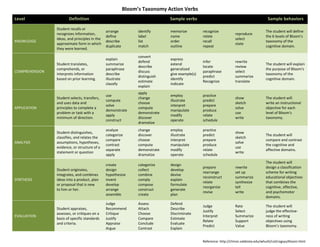
Bloom’s Taxonomy Action Verbs
Level Definition Sample verbs Sample behaviors
KNOWLEDGE
Student recalls or
recognizes information,
ideas, and principles in the
approximate form in which
they were learned.
arrange
define
describe
duplicate
identify
label
list
match
memorize
name
order
outline
recognize
relate
recall
repeat
reproduce
select
state
The student will define
the 6 levels of Bloom's
taxonomy of the
cognitive domain.
COMPREHENSION
Student translates,
comprehends, or
interprets information
based on prior learning.
explain
summarize
paraphrase
describe
illustrate
classify
convert
defend
describe
discuss
distinguish
estimate
explain
express
extend
generalized
give example(s)
identify
indicate
infer
locate
paraphrase
predict
Recognize
rewrite
review
select
summarize
translate
The student will explain
the purpose of Bloom's
taxonomy of the
cognitive domain.
APPLICATION
Student selects, transfers,
and uses data and
principles to complete a
problem or task with a
minimum of direction.
use
compute
solve
demonstrate
apply
construct
apply
change
choose
compute
demonstrate
discover
dramatize
employ
illustrate
interpret
manipulate
modify
operate
practice
predict
prepare
produce
relate
schedule
show
sketch
solve
use
write
The student will
write an instructional
objective for each
level of Bloom's
taxonomy.
ANALYSIS
Student distinguishes,
classifies, and relates the
assumptions, hypotheses,
evidence, or structure of a
statement or question
analyze
categorize
compare
contrast
separate
apply
change
discover
choose
compute
demonstrate
dramatize
employ
illustrate
interpret
manipulate
modify
operate
practice
predict
prepare
produce
relate
schedule
show
sketch
solve
use
write
The student will
compare and contrast
the cognitive and
affective domains.
SYNTHESIS
Student originates,
integrates, and combines
ideas into a product, plan
or proposal that is new
to him or her.
create
design
hypothesize
invent
develop
arrange
assemble
categorize
collect
combine
comply
compose
construct
create
design
develop
devise
explain
formulate
generate
plan
prepare
rearrange
reconstruct
relate
reorganize
revise
rewrite
set up
summarize
synthesize
tell
write
The student will
design a classification
scheme for writing
educational objectives
that combines the
cognitive, affective,
and psychomotor
domains.
EVALUATION
Student appraises,
assesses, or critiques on a
basis of specific standards
and criteria.
Judge
Recommend
Critique
Justify
Appraise
Argue
Assess
Attach
Choose
Compare
Conclude
Contrast
Defend
Describe
Discriminate
Estimate
Evaluate
Explain
Judge
Justify
Interpret
Relate
Predict
Rate
Select
Summarize
Support
Value
The student will
judge the effective‐
ness of writing
objectives using
Bloom's taxonomy.
Reference: http://chiron.valdosta.edu/whuitt/col/cogsys/bloom.html

Blooms Level.pdf

  • 1.
    Bloom’s Taxonomy ActionVerbs Level Definition Sample verbs Sample behaviors KNOWLEDGE Student recalls or recognizes information, ideas, and principles in the approximate form in which they were learned. arrange define describe duplicate identify label list match memorize name order outline recognize relate recall repeat reproduce select state The student will define the 6 levels of Bloom's taxonomy of the cognitive domain. COMPREHENSION Student translates, comprehends, or interprets information based on prior learning. explain summarize paraphrase describe illustrate classify convert defend describe discuss distinguish estimate explain express extend generalized give example(s) identify indicate infer locate paraphrase predict Recognize rewrite review select summarize translate The student will explain the purpose of Bloom's taxonomy of the cognitive domain. APPLICATION Student selects, transfers, and uses data and principles to complete a problem or task with a minimum of direction. use compute solve demonstrate apply construct apply change choose compute demonstrate discover dramatize employ illustrate interpret manipulate modify operate practice predict prepare produce relate schedule show sketch solve use write The student will write an instructional objective for each level of Bloom's taxonomy. ANALYSIS Student distinguishes, classifies, and relates the assumptions, hypotheses, evidence, or structure of a statement or question analyze categorize compare contrast separate apply change discover choose compute demonstrate dramatize employ illustrate interpret manipulate modify operate practice predict prepare produce relate schedule show sketch solve use write The student will compare and contrast the cognitive and affective domains. SYNTHESIS Student originates, integrates, and combines ideas into a product, plan or proposal that is new to him or her. create design hypothesize invent develop arrange assemble categorize collect combine comply compose construct create design develop devise explain formulate generate plan prepare rearrange reconstruct relate reorganize revise rewrite set up summarize synthesize tell write The student will design a classification scheme for writing educational objectives that combines the cognitive, affective, and psychomotor domains. EVALUATION Student appraises, assesses, or critiques on a basis of specific standards and criteria. Judge Recommend Critique Justify Appraise Argue Assess Attach Choose Compare Conclude Contrast Defend Describe Discriminate Estimate Evaluate Explain Judge Justify Interpret Relate Predict Rate Select Summarize Support Value The student will judge the effective‐ ness of writing objectives using Bloom's taxonomy. Reference: http://chiron.valdosta.edu/whuitt/col/cogsys/bloom.html