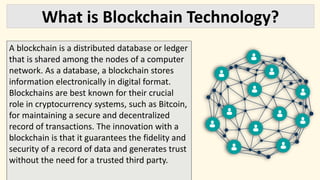
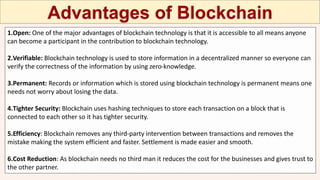
Blockchain is a distributed database or digital ledger of transactions that is duplicated and shared among members of a network. Each block contains a cryptographic hash of the previous block, a timestamp, and transaction data. By design, blockchains are inherently resistant to modification of the data. The blockchain serves as an open, distributed ledger that can record transactions between parties efficiently and in a verifiable and permanent way, without the need for a central authority. Some key applications of blockchain technology include cryptocurrencies, financial exchanges, lending, insurance, secure personal information, voting, real estate transactions, and healthcare records. The major advantages are that it is open, verifiable, permanent, secure, efficient and reduces costs. Major challenges include scalability,











![Blockchain, working [blockchain vs bitcoin] pros and cons](https://cdn.slidesharecdn.com/ss_thumbnails/blockchainfinal-180420144408-thumbnail.jpg?width=640&height=640&fit=bounds)


