https://www.orientmct.com/
OrientMCT
Blockchain Technology
Blockchain
Technology
A Digital Ledger
The history of Bitcoin
2008
Idea was published
under the pseudonym
Satoshi Nakamoto
2009
Start of the Bitcoin
Network
2010
Fist cryptocurrency
stock exchange is
launched
2011
One Bitcoin equals one
USD
The history of Bitcoin
2013
1 Bitcoin equals
100 USD
2014
Microsoft accepts
Bitcoin
2017
1 Bitcoin equals
10,000 USD
Bitcoin ≠ blockchain
Is an application of
blockchain technology
Is the underlying datastructure,
which can be used for many
things, including cryptocurrencies
Bitcoin ecosystem
A public network in which anyone, including a
malicious participant, can participate without
restriction.
Even though it is not organized by a central
authority, it works!
Impact of Blockchain on Bitcoin ecosystem
Increased
Bitcoin Value
More Security
More
Participants
What is A Blockchain?
A blockchain is a growing list of data blocks that are linked together. A block in a blockchain is
a group or collection of information. The information is added to the block in a blockchain, by
connecting it with other blocks in the chronological order and creating a chain of blocks linked
together.
Data
Reference
Data
Reference
Data
Reference
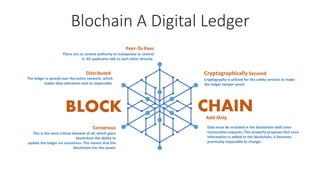
Blochain A Digital Ledger
Cryptographically Secured
Cryptography is utilized for the safety services to make
the ledger tamper-proof
Add-Only
Data must be included in the blockchain with time-
consecutive requests. This property proposes that once
information is added to the blockchain, it becomes
practically impossible to change..
Distributed
The ledger is spread over the entire network, which
makes data alteration next to impossible.
Consensus
This is the most critical element of all, which gives
blockchain the ability to
update the ledger via consensus. This means that the
blockchain has the power
Peer-To-Peer
There are no central authority to manipulate or control
it. All applicants talk to each other directly.
Benefits of
blockchain
technology
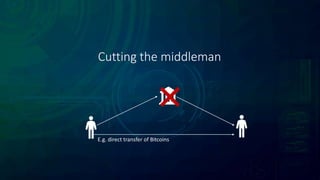
Cutting the middleman
E.g. direct transfer of Bitcoins
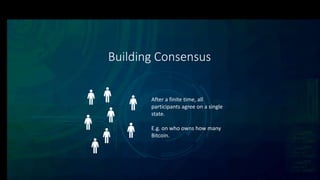
Building Consensus
After a finite time, all
participants agree on a single
state.
E.g. on who owns how many
Bitcoin.
CREATING WITNESSES
If something is published on a
public blockchain, all
participants become
witnesses.
This is used, for example, by
OriginStamp to create a secure
timestamp for documents.
Key Features of Blockchain
 Increased Capacity
 Better Security
 Immutability
 Minting
 Decentralized System
 Faster Settlement
Conclusion:
Blockchain technology creates a permanent and immutable record
of every transaction. This impenetrable digital ledger makes fraud,
hacking, data theft, and information loss impossible. ... While
blockchain technology has reshaped and decentralized financial
institutions, its application possibilities are far more robust.

Blockchain technology

  • 1.
  • 2.
  • 3.
    The history ofBitcoin 2008 Idea was published under the pseudonym Satoshi Nakamoto 2009 Start of the Bitcoin Network 2010 Fist cryptocurrency stock exchange is launched 2011 One Bitcoin equals one USD
  • 4.
    The history ofBitcoin 2013 1 Bitcoin equals 100 USD 2014 Microsoft accepts Bitcoin 2017 1 Bitcoin equals 10,000 USD
  • 5.
    Bitcoin ≠ blockchain Isan application of blockchain technology Is the underlying datastructure, which can be used for many things, including cryptocurrencies
  • 6.
    Bitcoin ecosystem A publicnetwork in which anyone, including a malicious participant, can participate without restriction. Even though it is not organized by a central authority, it works!
  • 7.
    Impact of Blockchainon Bitcoin ecosystem Increased Bitcoin Value More Security More Participants
  • 8.
    What is ABlockchain? A blockchain is a growing list of data blocks that are linked together. A block in a blockchain is a group or collection of information. The information is added to the block in a blockchain, by connecting it with other blocks in the chronological order and creating a chain of blocks linked together. Data Reference Data Reference Data Reference
  • 10.
    Blochain A DigitalLedger Cryptographically Secured Cryptography is utilized for the safety services to make the ledger tamper-proof Add-Only Data must be included in the blockchain with time- consecutive requests. This property proposes that once information is added to the blockchain, it becomes practically impossible to change.. Distributed The ledger is spread over the entire network, which makes data alteration next to impossible. Consensus This is the most critical element of all, which gives blockchain the ability to update the ledger via consensus. This means that the blockchain has the power Peer-To-Peer There are no central authority to manipulate or control it. All applicants talk to each other directly.
  • 12.
  • 13.
    Cutting the middleman E.g.direct transfer of Bitcoins
  • 14.
    Building Consensus After afinite time, all participants agree on a single state. E.g. on who owns how many Bitcoin.
  • 15.
    CREATING WITNESSES If somethingis published on a public blockchain, all participants become witnesses. This is used, for example, by OriginStamp to create a secure timestamp for documents.
  • 16.
    Key Features ofBlockchain  Increased Capacity  Better Security  Immutability  Minting  Decentralized System  Faster Settlement
  • 17.
    Conclusion: Blockchain technology createsa permanent and immutable record of every transaction. This impenetrable digital ledger makes fraud, hacking, data theft, and information loss impossible. ... While blockchain technology has reshaped and decentralized financial institutions, its application possibilities are far more robust.