BLOCK CHAIN
BY KOUSHIK ESLAVATH
CSE D
What Is Blockchain?
• Blockchain technology is a decentralized and distributed ledger
system that allows multiple parties to record and store information in
a secure, transparent, and tamper-resistant manner. The fundamental
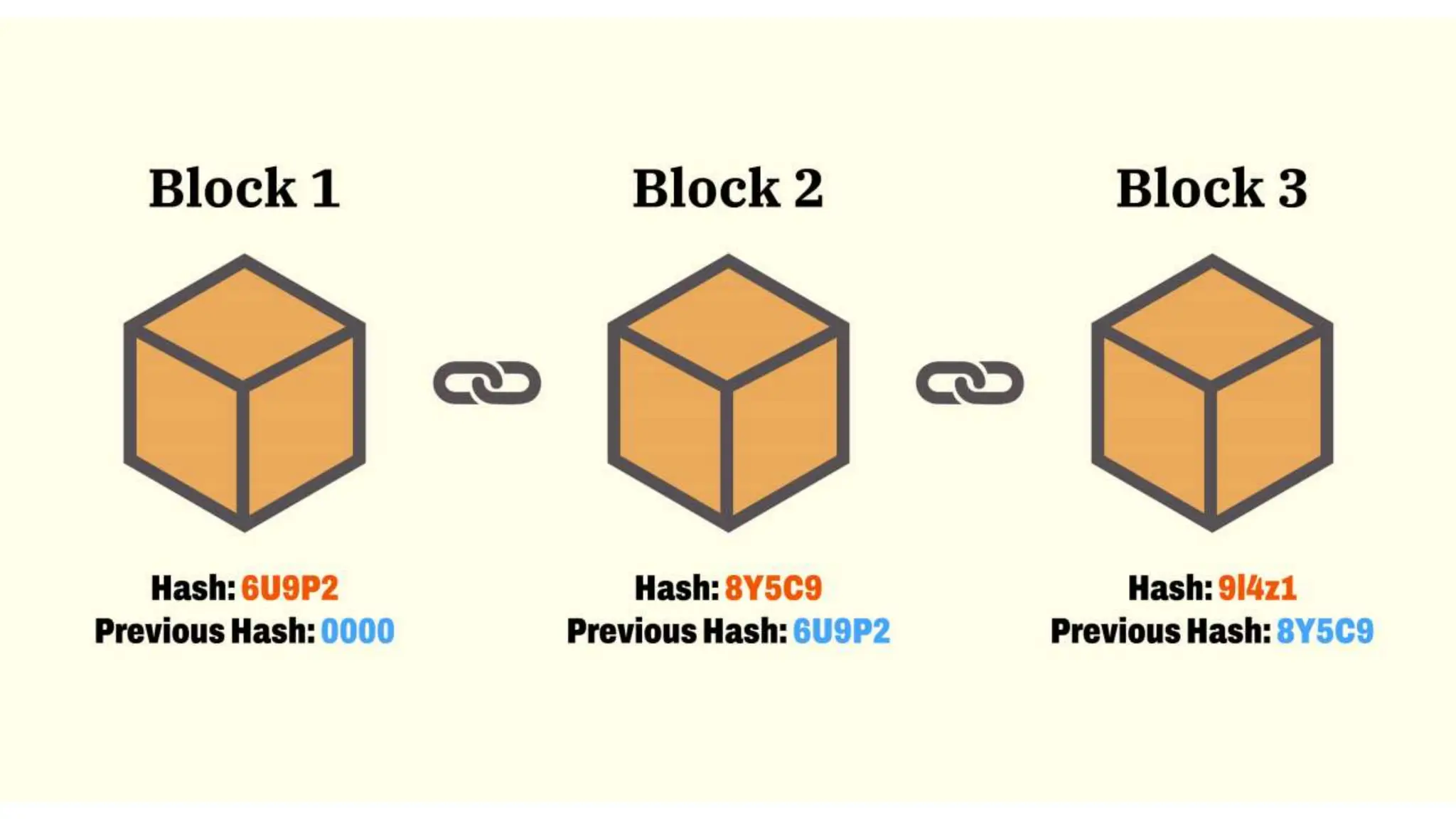
concept behind blockchain is to create a chain of blocks, where each
block contains a list of transactions or records, and each block is
linked to the previous one through a cryptographic hash.
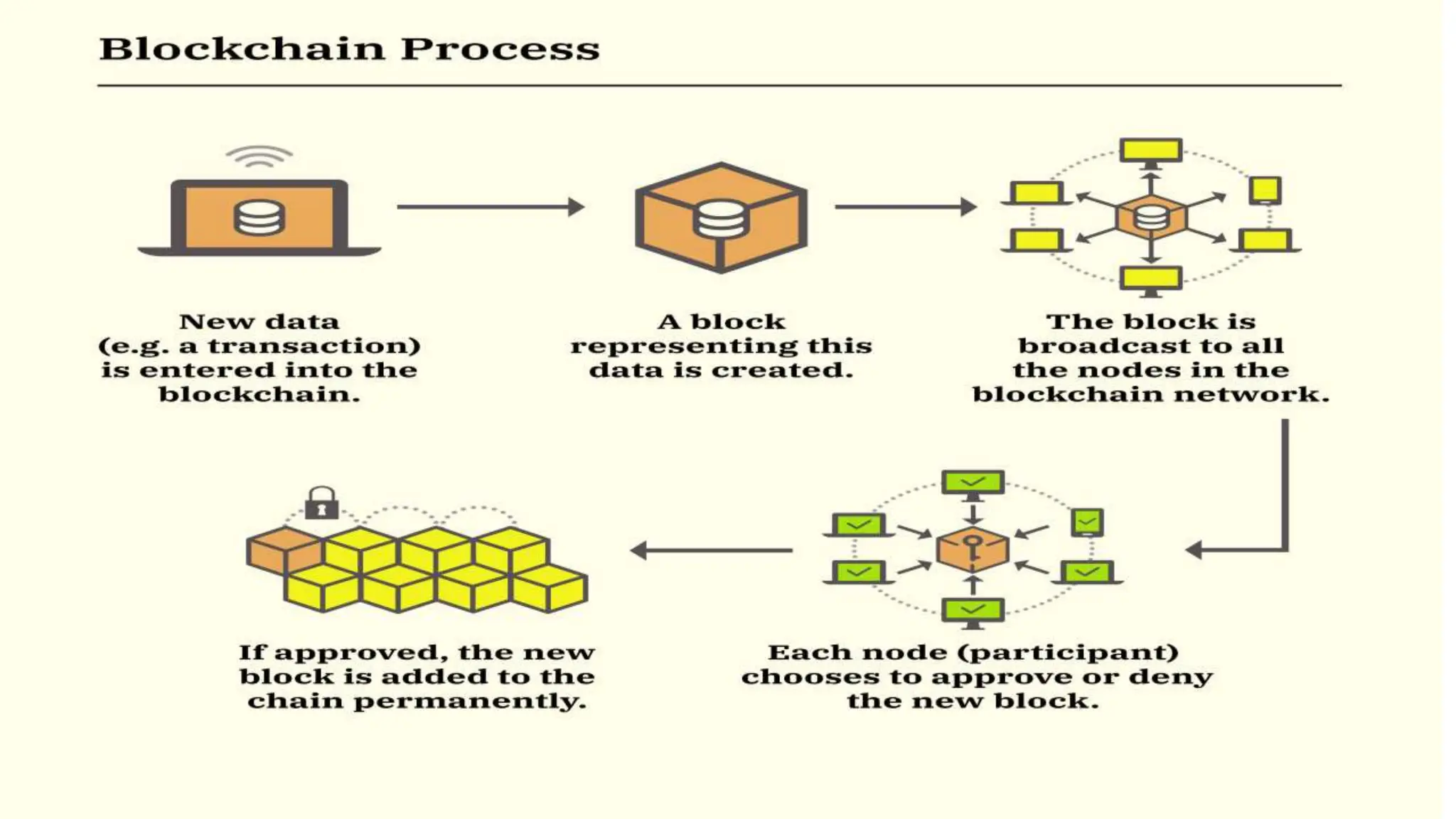
• In simple words, a blockchain is a chain of blocks that store
information. Each block in the chain contains a set of transactions,
and once the block is filled, it is added to the chain, forming a
permanent record of the transactions. This chain is then duplicated
and distributed across a network of computers, making it nearly
impossible to alter or delete information.
How does blockchain work?
Blockchain is a combination of technologies:
• Cryptographic keys
• A peer-to-peer network containing a shared ledger
• A means of computing, to store the transactions and records of the
network
Cryptographic keys
What is cryptography ?
In simple terms, it involves making information unreadable to anyone
who doesn't have the proper key to access it
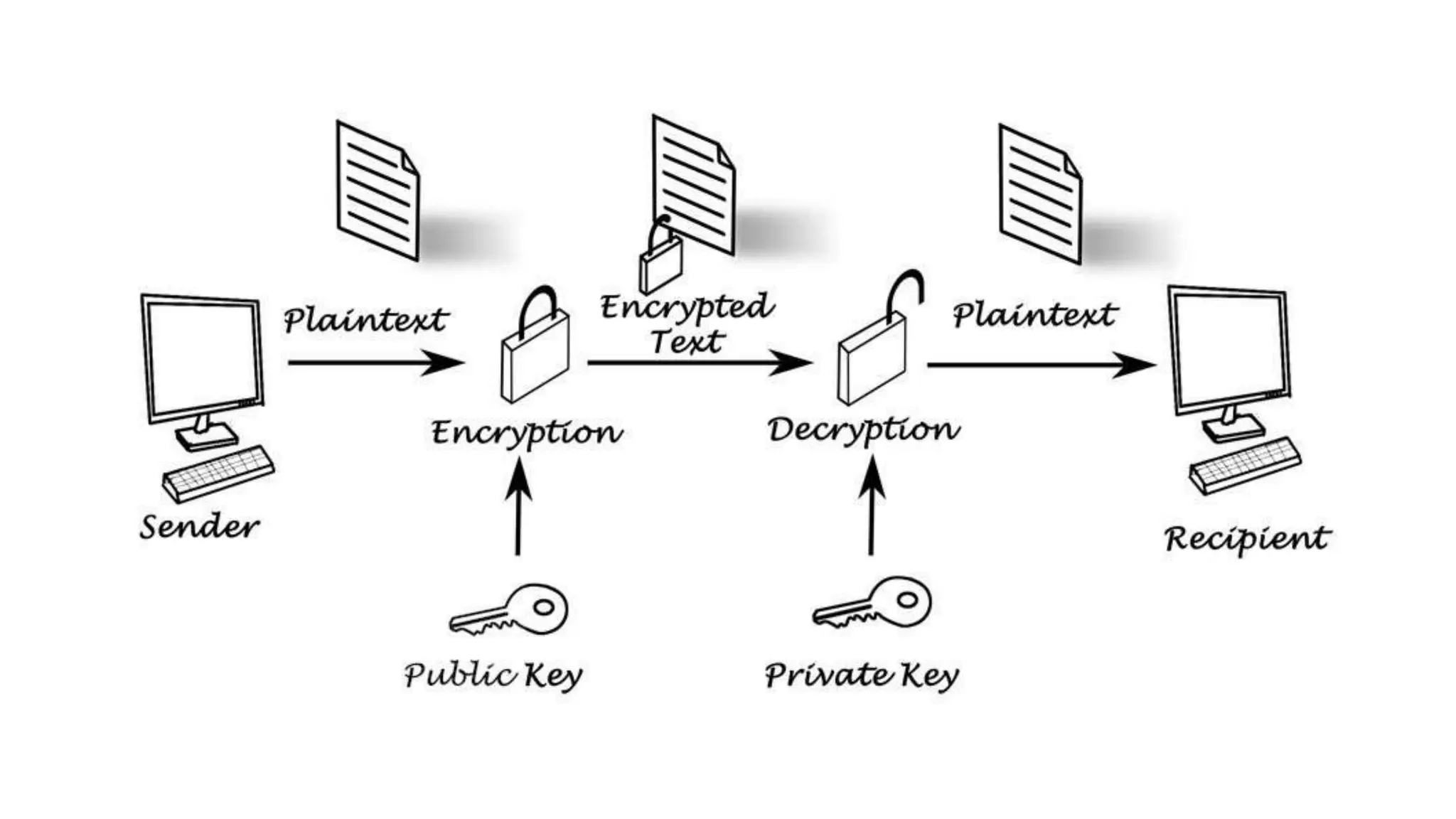
Cryptography keys consist of two keys – Private key and Public key.
These keys help in performing successful transactions between two
parties. Each individual has these two keys, which they use to produce
a secure digital identity reference. This secured identity is the most
important aspect of Blockchain technology.
Peer-To-Peer Network
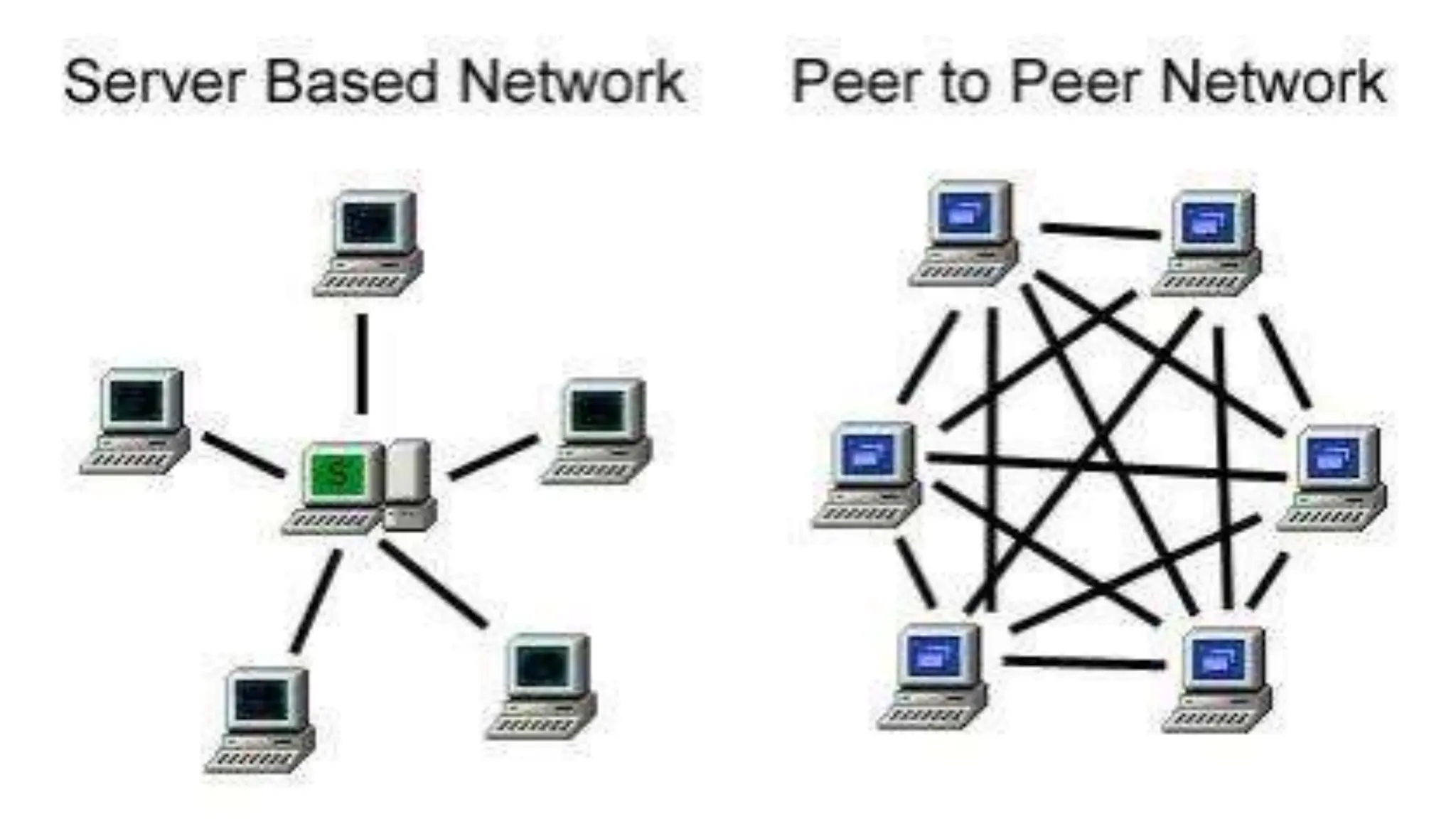
• The term Peer-To-peer (P2P) refers to decentralized networks of
interconnected computer systems containing peers, or nodes. All
nodes are equal, and the exchange of data occurs without a central
server — that is, each computer or node can act as both a file server
and a client.
Can Blockchain be Hacked?
• blockchain is considered to be very safe from hackers. On cryptocurrency
blockchains, hackers can launch something called a 51% attack, where they
attempt to gain more than half the hash rate (computer power) of a
blockchain’s network. If they are successful at doing this, they can block
transactions — or even reverse previously confirmed transactions, meaning
they can “double-spend” coins (spend a coin twice).
• Although the Bitcoin network has never been subjected to a successful 51%
attack, other cryptocurrencies have fallen prey. One such example occurred
in May 2018, when the Bitcoin Gold network succumbed to a 51% attack,
resulting in the loss of $18 million worth of its currency. Thankfully, such
events are rare, due to the sheer amount of hash power needed to conduct
an attack. While the hacking of a blockchain isn’t impossible, it’s very
unlikely.
Types of Blockchain
• Public Blockchain Networks
• Private Blockchain Networks
• Consortium Blockchains
• Hybrid Blockchains
Public Blockchain Networks
They’re open to everyone, and all transactions on the network can be
traced. Public blockchains are also known as permissionless blockchain
networks because anyone who joins can read or write to them
anonymously without the need for authorization.
Private Blockchain Networks
Private blockchains are fundamentally different from public
blockchains because they’re run by a central authority — they’re not
entirely decentralized networks. The central authority determines who
can read, write and participate in the network’s activities, which is why
they’re also known as permissioned blockchain networks. Private
blockchains offer greater customizability and can be used to store
sensitive data.
Consortium Blockchains
Consortium blockchains are most similar to private networks but share
some characteristics with public blockchains. These are controlled by
multiple central authorities and collaborate on a decentralized
network.
A predefined group of individuals or nodes are in charge of reaching
consensus in consortium blockchains. Like hybrid blockchains, the
ability to read or write on the network may be public or restricted to
select participants.
Hybrid Blockchains
Hybrid or semi-private blockchains were built to offer the best of both
worlds by combining elements from both public and private types of
blockchain. For example, they’re run by a single entity but may employ
both permission-based and permissionless systems to fine-tune access
to their data.
Transactions are generally not public but may be verified if necessary.
Users join the network as anonymous participants and only reveal their
identities to other parties when they engage in transactions.
Key features of blockchain technology
• Decentralization
• Transparency
• Immutability
• Security
Decentralization
Unlike traditional centralized systems where a single authority controls
the data, blockchain operates on a decentralized network of computers
(nodes). Each node on the network has a copy of the entire blockchain,
and consensus mechanisms are used to validate and agree on the state
of the blockchain.
Transparency
The data in a blockchain is visible to all participants in the network.
Every transaction or record is recorded in a block, and the entire history
of the blockchain is accessible to anyone who has the necessary
permissions.
Immutability
Once a block is added to the blockchain, it is very difficult to alter the
information within it. Each block contains a cryptographic hash of the
previous block, creating a chain of blocks. Changing the data in one
block would require changing the data in all subsequent blocks, which
is computationally infeasible.
Security
Blockchain uses cryptographic techniques to secure transactions and
control access to the network. Public and private keys enable secure
authentication and authorization. Consensus mechanisms, such as
Proof of Work (used in Bitcoin) or Proof of Stake, ensure agreement on
the state of the blockchain.
Pros and cons of
blockchain
PROS
• Transparency. All participants in a blockchain network share the
same documentation instead of individual copies. Because data is
shared across a wide network of computers, the blockchain is available
for anyone to access, verify and audit data and transactions.
• Traceability. Information in a blockchain is organized chronologically
and every block of data has an alphanumeric code linked to the
preceding block. This makes it easy to track a specific transaction and
trace it back to its source.
• Security. Data can only be added to a blockchain. Once a block has
been created, it cannot be altered, securing the information within it.
Moreover, the decentralized nature of most blockchains makes them
immune to takeovers or corruption by a central entity.
CONS
• Energy consumption. The way proof of work networks function is
inherently inefficient. Having several network users competing to
validate the same operations is a huge waste of energy that has a
strikingly negative impact on the environment.
• Scalability. As the number of users in a blockchain grows, so does the
number of operations. The computational power required for these
operations may outpace the workload that hard disks are realistically
able to handle.
• Unavoidable security flaw. Blockchains are generally more secure
than other databases and record-keeping methods but they share one
key flaw. If more than half of the nodes participating in the network
create invalid transactions or deny legitimate ones, the rest cannot
intervene. This is known as a 51% attack.
Some notable applications of Blockchain
technology
• Cryptocurrency
• Non-fungible token (NFT)
• Identity Management
• E-Governance
• Healthcare
• Education
• Voting Systems
• Insurance
• Supply chains
Cryptocurrency
Digital currency is the most well-known of all blockchain
applications. Cryptocurrency has experienced a pronounced shift
into the mainstream during the last couple of years. Popular crypto
such as bitcoin, ether and dogecoin
Non-fungible tokens
• Non-fungible tokens are likely the second most popular application
for blockchain after cryptocurrencies. NFTs are digital items — music,
art, trading cards, GIFs, videos — that, unlike crypto, are not
interchangeable. Their sole rights to ownership are sold on a
blockchain: owning an NFT means you have a digital certificate of
authenticity for that specific token.
Identity Management
Aadhaar and Identity Verification:
Blockchain can be integrated with the Aadhaar system to enhance the
security and privacy of citizen data.
E-Governance
Land Records and Property Transactions:
Blockchain can be applied to maintain transparent and immutable land
records, reducing the chances of fraud and corruption in property
transactions. This could streamline the process and provide a reliable
record of ownership.
Healthcare
Patient Records and Drug Traceability:
Blockchain can be used to maintain secure and interoperable electronic
health records (EHRs). It can also be applied to track the supply chain of
pharmaceuticals, ensuring the authenticity and safety of drugs
Education
Credential Verification:
Blockchain can help in the secure verification of educational
credentials, reducing the risk of fake degrees and certificates. This is
particularly relevant in a country with a large and diverse education
system like India.
Voting Systems
Election Integrity:
Implementing blockchain in the electoral process can enhance
transparency, reduce fraud, and provide a secure and verifiable voting
system
Insurance
Claim Processing and Fraud Prevention:
Blockchain can be used to streamline insurance processes, especially in
areas like claim processing and fraud prevention. Smart contracts can
automate the claims settlement process.
Conclusion
In conclusion, blockchain is a revolutionary technology that has the potential
to change the way we interact with digital systems. Its decentralization,
transparency, and security make it ideal for a wide range of applications,
from financial transactions to supply chain management and voting systems.
However, there are also challenges that must be overcome, such as
scalability and security, if blockchain is to reach its full potential.
As the technology continues to evolve and improve, it is likely that we will
see more and more applications of blockchain in our daily lives. Whether it is
used for financial transactions, supply chain management, or voting systems,
the potential benefits of blockchain are clear, and it is an exciting technology
to watch in the years to come.
Thank You

BLOCK CHAIN technology for the students.

  • 1.
    BLOCK CHAIN BY KOUSHIKESLAVATH CSE D
  • 2.
    What Is Blockchain? •Blockchain technology is a decentralized and distributed ledger system that allows multiple parties to record and store information in a secure, transparent, and tamper-resistant manner. The fundamental concept behind blockchain is to create a chain of blocks, where each block contains a list of transactions or records, and each block is linked to the previous one through a cryptographic hash.
  • 3.
    • In simplewords, a blockchain is a chain of blocks that store information. Each block in the chain contains a set of transactions, and once the block is filled, it is added to the chain, forming a permanent record of the transactions. This chain is then duplicated and distributed across a network of computers, making it nearly impossible to alter or delete information.
  • 5.
    How does blockchainwork? Blockchain is a combination of technologies: • Cryptographic keys • A peer-to-peer network containing a shared ledger • A means of computing, to store the transactions and records of the network
  • 6.
    Cryptographic keys What iscryptography ? In simple terms, it involves making information unreadable to anyone who doesn't have the proper key to access it Cryptography keys consist of two keys – Private key and Public key. These keys help in performing successful transactions between two parties. Each individual has these two keys, which they use to produce a secure digital identity reference. This secured identity is the most important aspect of Blockchain technology.
  • 8.
    Peer-To-Peer Network • Theterm Peer-To-peer (P2P) refers to decentralized networks of interconnected computer systems containing peers, or nodes. All nodes are equal, and the exchange of data occurs without a central server — that is, each computer or node can act as both a file server and a client.
  • 11.
    Can Blockchain beHacked? • blockchain is considered to be very safe from hackers. On cryptocurrency blockchains, hackers can launch something called a 51% attack, where they attempt to gain more than half the hash rate (computer power) of a blockchain’s network. If they are successful at doing this, they can block transactions — or even reverse previously confirmed transactions, meaning they can “double-spend” coins (spend a coin twice). • Although the Bitcoin network has never been subjected to a successful 51% attack, other cryptocurrencies have fallen prey. One such example occurred in May 2018, when the Bitcoin Gold network succumbed to a 51% attack, resulting in the loss of $18 million worth of its currency. Thankfully, such events are rare, due to the sheer amount of hash power needed to conduct an attack. While the hacking of a blockchain isn’t impossible, it’s very unlikely.
  • 12.
    Types of Blockchain •Public Blockchain Networks • Private Blockchain Networks • Consortium Blockchains • Hybrid Blockchains
  • 13.
    Public Blockchain Networks They’reopen to everyone, and all transactions on the network can be traced. Public blockchains are also known as permissionless blockchain networks because anyone who joins can read or write to them anonymously without the need for authorization.
  • 14.
    Private Blockchain Networks Privateblockchains are fundamentally different from public blockchains because they’re run by a central authority — they’re not entirely decentralized networks. The central authority determines who can read, write and participate in the network’s activities, which is why they’re also known as permissioned blockchain networks. Private blockchains offer greater customizability and can be used to store sensitive data.
  • 15.
    Consortium Blockchains Consortium blockchainsare most similar to private networks but share some characteristics with public blockchains. These are controlled by multiple central authorities and collaborate on a decentralized network. A predefined group of individuals or nodes are in charge of reaching consensus in consortium blockchains. Like hybrid blockchains, the ability to read or write on the network may be public or restricted to select participants.
  • 16.
    Hybrid Blockchains Hybrid orsemi-private blockchains were built to offer the best of both worlds by combining elements from both public and private types of blockchain. For example, they’re run by a single entity but may employ both permission-based and permissionless systems to fine-tune access to their data. Transactions are generally not public but may be verified if necessary. Users join the network as anonymous participants and only reveal their identities to other parties when they engage in transactions.
  • 17.
    Key features ofblockchain technology • Decentralization • Transparency • Immutability • Security
  • 18.
    Decentralization Unlike traditional centralizedsystems where a single authority controls the data, blockchain operates on a decentralized network of computers (nodes). Each node on the network has a copy of the entire blockchain, and consensus mechanisms are used to validate and agree on the state of the blockchain.
  • 19.
    Transparency The data ina blockchain is visible to all participants in the network. Every transaction or record is recorded in a block, and the entire history of the blockchain is accessible to anyone who has the necessary permissions.
  • 20.
    Immutability Once a blockis added to the blockchain, it is very difficult to alter the information within it. Each block contains a cryptographic hash of the previous block, creating a chain of blocks. Changing the data in one block would require changing the data in all subsequent blocks, which is computationally infeasible.
  • 21.
    Security Blockchain uses cryptographictechniques to secure transactions and control access to the network. Public and private keys enable secure authentication and authorization. Consensus mechanisms, such as Proof of Work (used in Bitcoin) or Proof of Stake, ensure agreement on the state of the blockchain.
  • 22.
    Pros and consof blockchain
  • 23.
    PROS • Transparency. Allparticipants in a blockchain network share the same documentation instead of individual copies. Because data is shared across a wide network of computers, the blockchain is available for anyone to access, verify and audit data and transactions. • Traceability. Information in a blockchain is organized chronologically and every block of data has an alphanumeric code linked to the preceding block. This makes it easy to track a specific transaction and trace it back to its source. • Security. Data can only be added to a blockchain. Once a block has been created, it cannot be altered, securing the information within it. Moreover, the decentralized nature of most blockchains makes them immune to takeovers or corruption by a central entity.
  • 24.
    CONS • Energy consumption.The way proof of work networks function is inherently inefficient. Having several network users competing to validate the same operations is a huge waste of energy that has a strikingly negative impact on the environment. • Scalability. As the number of users in a blockchain grows, so does the number of operations. The computational power required for these operations may outpace the workload that hard disks are realistically able to handle. • Unavoidable security flaw. Blockchains are generally more secure than other databases and record-keeping methods but they share one key flaw. If more than half of the nodes participating in the network create invalid transactions or deny legitimate ones, the rest cannot intervene. This is known as a 51% attack.
  • 25.
    Some notable applicationsof Blockchain technology • Cryptocurrency • Non-fungible token (NFT) • Identity Management • E-Governance • Healthcare • Education • Voting Systems • Insurance • Supply chains
  • 26.
    Cryptocurrency Digital currency isthe most well-known of all blockchain applications. Cryptocurrency has experienced a pronounced shift into the mainstream during the last couple of years. Popular crypto such as bitcoin, ether and dogecoin
  • 27.
    Non-fungible tokens • Non-fungibletokens are likely the second most popular application for blockchain after cryptocurrencies. NFTs are digital items — music, art, trading cards, GIFs, videos — that, unlike crypto, are not interchangeable. Their sole rights to ownership are sold on a blockchain: owning an NFT means you have a digital certificate of authenticity for that specific token.
  • 28.
    Identity Management Aadhaar andIdentity Verification: Blockchain can be integrated with the Aadhaar system to enhance the security and privacy of citizen data.
  • 29.
    E-Governance Land Records andProperty Transactions: Blockchain can be applied to maintain transparent and immutable land records, reducing the chances of fraud and corruption in property transactions. This could streamline the process and provide a reliable record of ownership.
  • 30.
    Healthcare Patient Records andDrug Traceability: Blockchain can be used to maintain secure and interoperable electronic health records (EHRs). It can also be applied to track the supply chain of pharmaceuticals, ensuring the authenticity and safety of drugs
  • 31.
    Education Credential Verification: Blockchain canhelp in the secure verification of educational credentials, reducing the risk of fake degrees and certificates. This is particularly relevant in a country with a large and diverse education system like India.
  • 32.
    Voting Systems Election Integrity: Implementingblockchain in the electoral process can enhance transparency, reduce fraud, and provide a secure and verifiable voting system
  • 33.
    Insurance Claim Processing andFraud Prevention: Blockchain can be used to streamline insurance processes, especially in areas like claim processing and fraud prevention. Smart contracts can automate the claims settlement process.
  • 34.
    Conclusion In conclusion, blockchainis a revolutionary technology that has the potential to change the way we interact with digital systems. Its decentralization, transparency, and security make it ideal for a wide range of applications, from financial transactions to supply chain management and voting systems. However, there are also challenges that must be overcome, such as scalability and security, if blockchain is to reach its full potential. As the technology continues to evolve and improve, it is likely that we will see more and more applications of blockchain in our daily lives. Whether it is used for financial transactions, supply chain management, or voting systems, the potential benefits of blockchain are clear, and it is an exciting technology to watch in the years to come.
  • 35.