GOVERNMENT ENGINEERING
COLLEGE GANDHINAGAR
Subject:- Distributed Systems
Presented by :Parmar Nikita
Topic: Block chain in distributed computing
Subject code: 3710213
AGENDA
• Introduction
• How blockchain integrated in distributed computing
• Consensus mechanism
• Consensus mechanism algorithm
• Use case
• conclusion
INTRODUCTION
• Block chain in distributed computing
A block chain is a distributed database or ledger shared
among a computer network's nodes.
HOW BLOCKCHAIN INTEGRATED IN
DISTRIBUTED COMPUTING
• Decentralized Architecture
• Immutable
• Smart Contracts
• Consensus Mechanisms
• Security and Encryption
• Trust and Transparency
CONSENSUS MECHANISM
• A consensus mechanism is a self-regulatory stack of software
protocols written into a block chain's code that synchronizes
a network into agreement about the state of a digital ledger.
• This is done by up keeping a single data set — the mutually
agreed-upon version of a block chain's transaction history —
rather than employing each node, or in-network computer, to
individually maintain their own copy of the database in its
entirety.
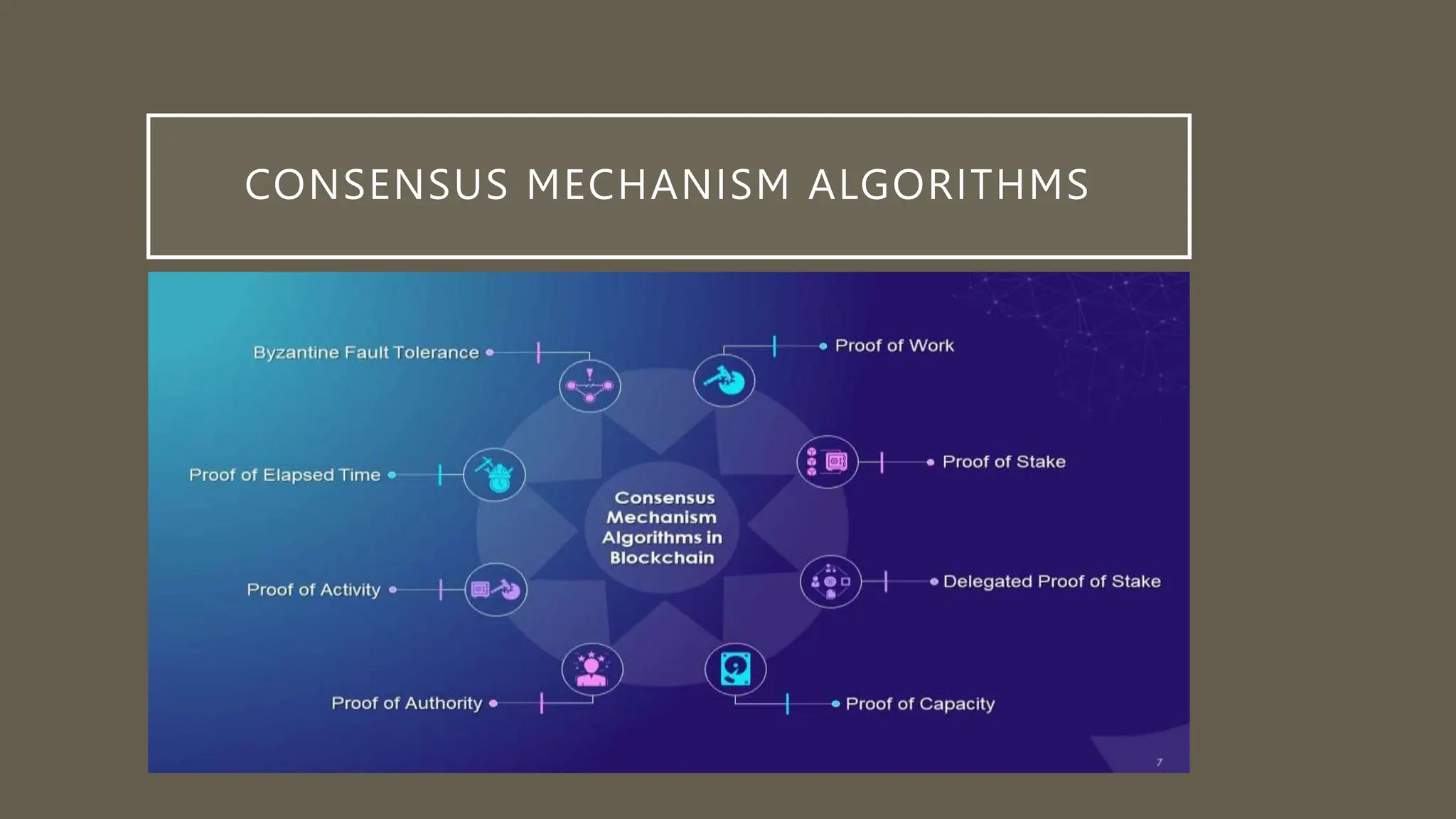
CONSENSUS MECHANISM ALGORITHMS
BYZANTINE FAULT TOLERANCE ALGORITHM
• Byzantine Fault Tolerance (BFT) is one of the fundamental
properties of creating reliable blockchain rules or protocols.
• A system has Byzantine Fault Tolerance (BFT) when it can
keep functioning correctly as long as two-thirds of the
network agree or reaches consensus.
• applying BFT, systems can be designed that are not
controlled by a single authority and do not rely on trusting
certain parties. It is fundamental to building a decentralized
network.
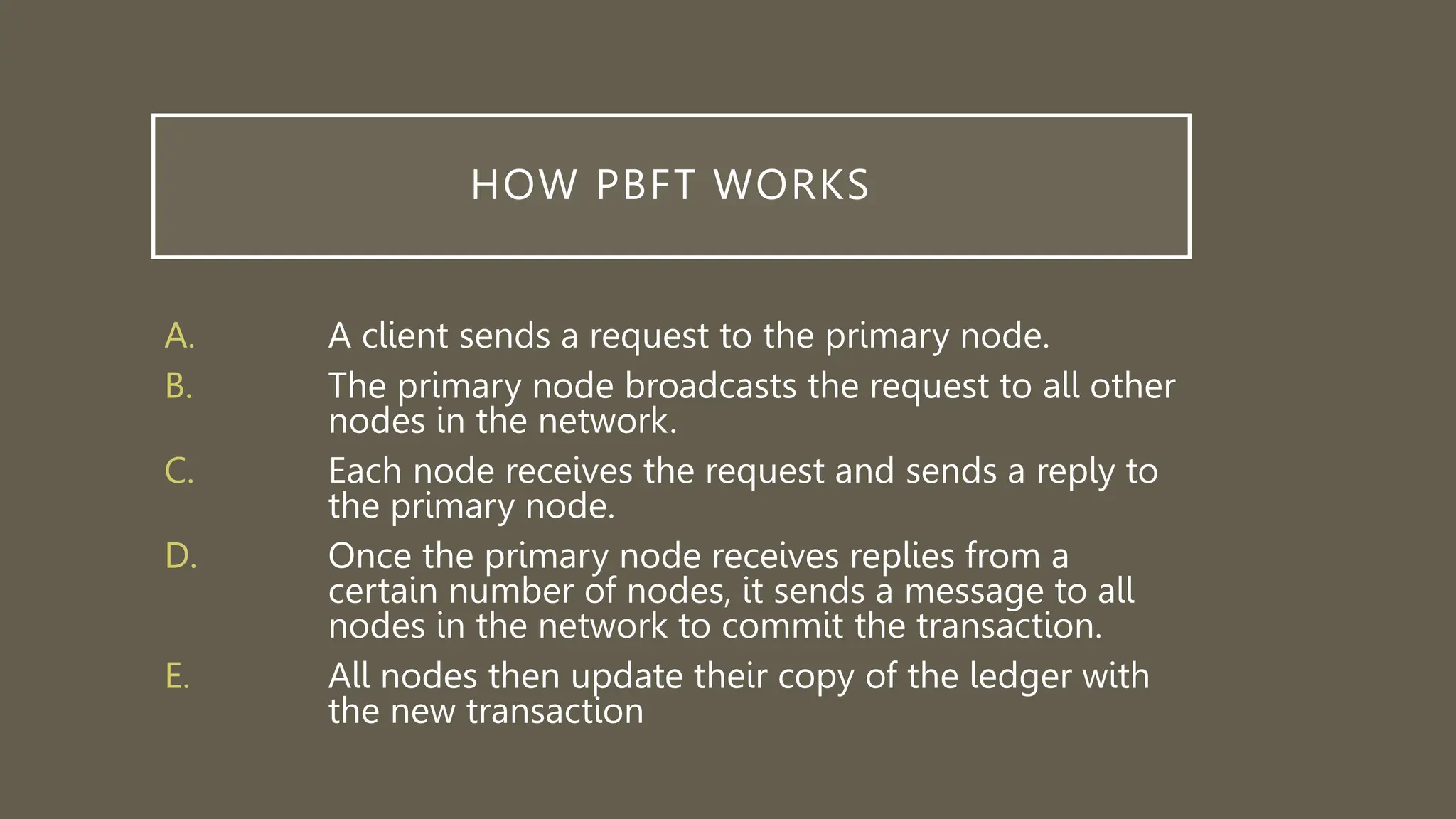
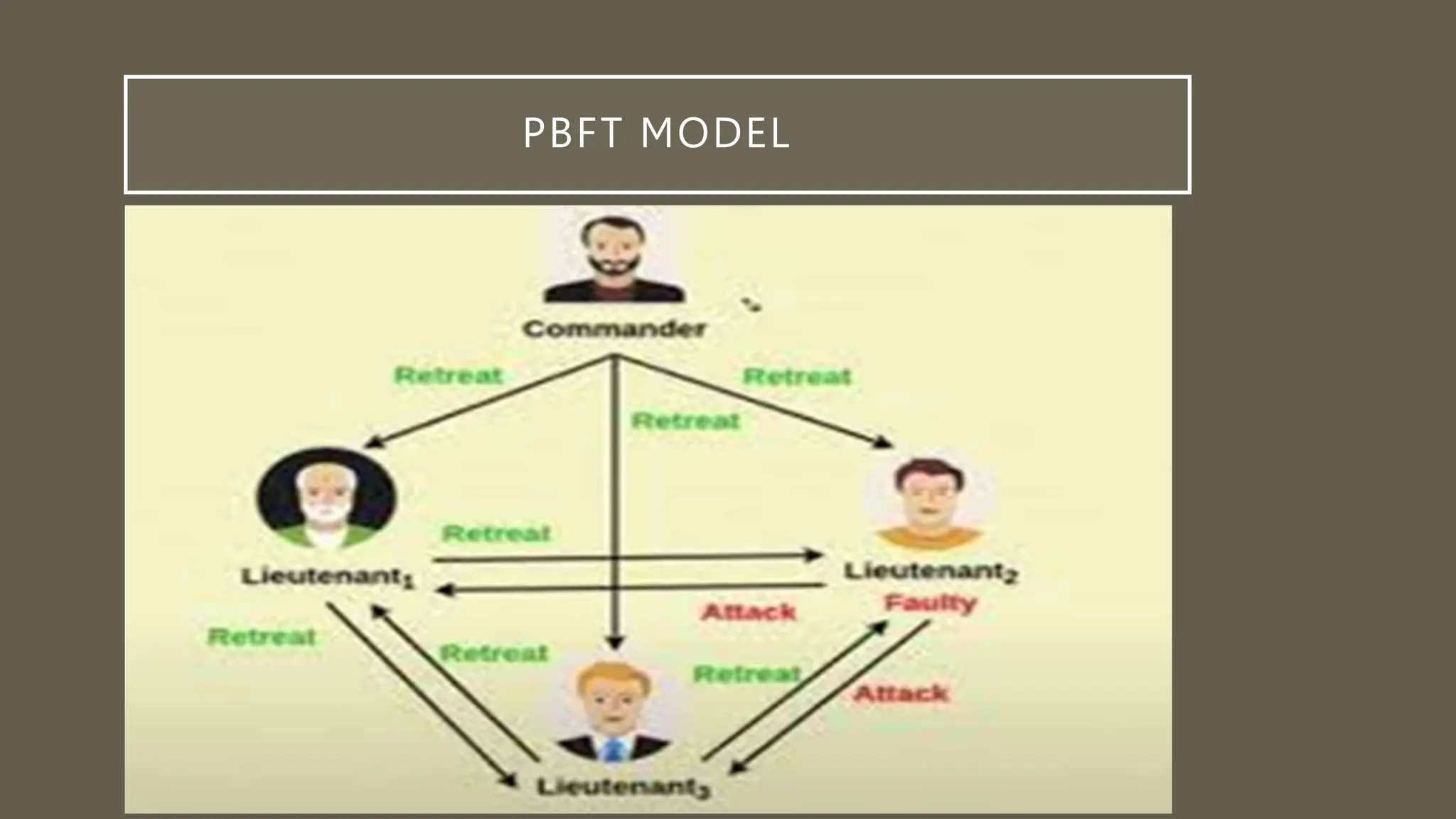
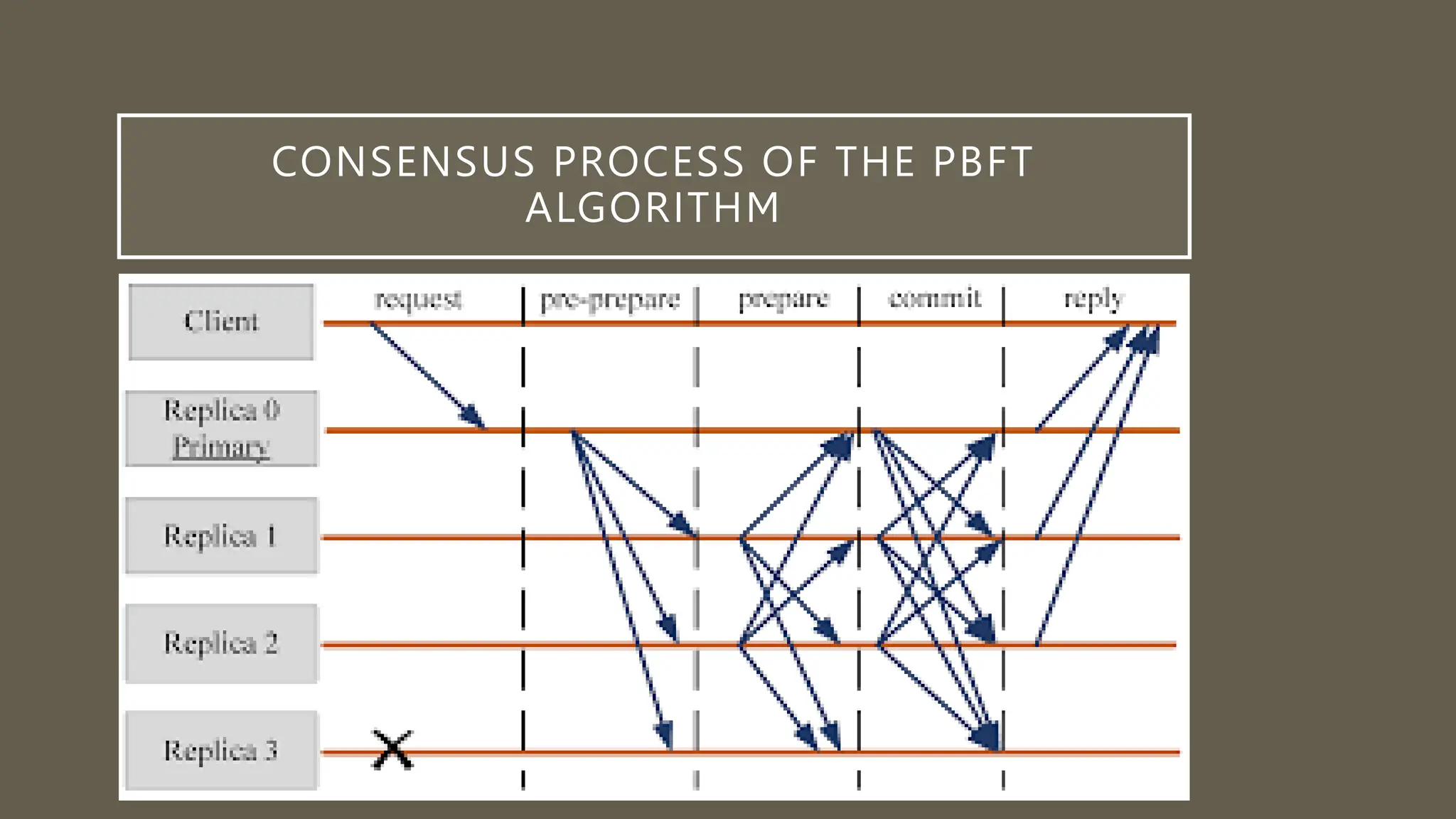
HOW PBFT WORKS
A. A client sends a request to the primary node.
B. The primary node broadcasts the request to all other
nodes in the network.
C. Each node receives the request and sends a reply to
the primary node.
D. Once the primary node receives replies from a
certain number of nodes, it sends a message to all
nodes in the network to commit the transaction.
E. All nodes then update their copy of the ledger with
the new transaction
PBFT MODEL
PBFT ATTRIBUTES
• Basic concept -Voting based consensus mechanism
• Energy consumption-low
• Security-Resistant to Sybil attacks
• Transaction speed- fast
• Centralization risk-Can be centralized if nodes
are controlled by a few
entities
• Incentive model-Validators receive
transaction fees
CONSENSUS PROCESS OF THE PBFT
ALGORITHM
•
USE CASE
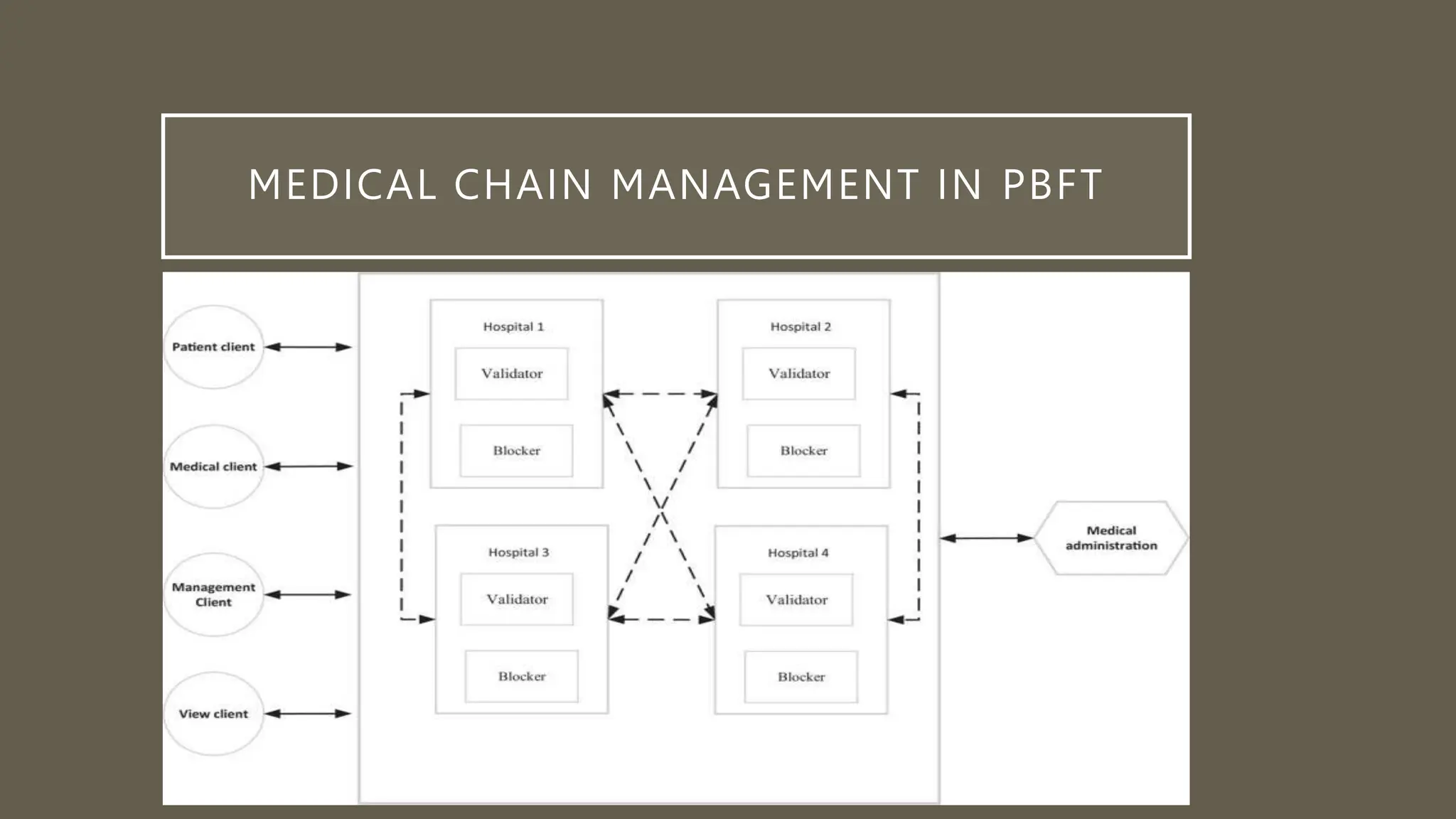
• Healthcare:
PBFT enables the secure sharing of patient data among
healthcare providers. For instance, a PBFT-based blockchain
network can securely share electronic health records between
healthcare providers while maintaining data privacy and
security.
MEDICAL CHAIN MANAGEMENT IN PBFT
CONCLUSION
• Byzantine fault tolerance should be considered a
practical and fundamental building block for modern
long-running and safety-critical systems.
• The principles, mechanisms, and blockchain
technologies themselves could help improve the
security and quality of such systems
THANK YOU?

Blockchain in disributed computing for study

  • 1.
    GOVERNMENT ENGINEERING COLLEGE GANDHINAGAR Subject:-Distributed Systems Presented by :Parmar Nikita Topic: Block chain in distributed computing Subject code: 3710213
  • 2.
    AGENDA • Introduction • Howblockchain integrated in distributed computing • Consensus mechanism • Consensus mechanism algorithm • Use case • conclusion
  • 3.
    INTRODUCTION • Block chainin distributed computing A block chain is a distributed database or ledger shared among a computer network's nodes.
  • 4.
    HOW BLOCKCHAIN INTEGRATEDIN DISTRIBUTED COMPUTING • Decentralized Architecture • Immutable • Smart Contracts • Consensus Mechanisms • Security and Encryption • Trust and Transparency
  • 5.
    CONSENSUS MECHANISM • Aconsensus mechanism is a self-regulatory stack of software protocols written into a block chain's code that synchronizes a network into agreement about the state of a digital ledger. • This is done by up keeping a single data set — the mutually agreed-upon version of a block chain's transaction history — rather than employing each node, or in-network computer, to individually maintain their own copy of the database in its entirety.
  • 6.
  • 7.
    BYZANTINE FAULT TOLERANCEALGORITHM • Byzantine Fault Tolerance (BFT) is one of the fundamental properties of creating reliable blockchain rules or protocols. • A system has Byzantine Fault Tolerance (BFT) when it can keep functioning correctly as long as two-thirds of the network agree or reaches consensus. • applying BFT, systems can be designed that are not controlled by a single authority and do not rely on trusting certain parties. It is fundamental to building a decentralized network.
  • 8.
    HOW PBFT WORKS A.A client sends a request to the primary node. B. The primary node broadcasts the request to all other nodes in the network. C. Each node receives the request and sends a reply to the primary node. D. Once the primary node receives replies from a certain number of nodes, it sends a message to all nodes in the network to commit the transaction. E. All nodes then update their copy of the ledger with the new transaction
  • 9.
  • 10.
    PBFT ATTRIBUTES • Basicconcept -Voting based consensus mechanism • Energy consumption-low • Security-Resistant to Sybil attacks • Transaction speed- fast • Centralization risk-Can be centralized if nodes are controlled by a few entities • Incentive model-Validators receive transaction fees
  • 11.
    CONSENSUS PROCESS OFTHE PBFT ALGORITHM •
  • 12.
    USE CASE • Healthcare: PBFTenables the secure sharing of patient data among healthcare providers. For instance, a PBFT-based blockchain network can securely share electronic health records between healthcare providers while maintaining data privacy and security.
  • 13.
  • 14.
    CONCLUSION • Byzantine faulttolerance should be considered a practical and fundamental building block for modern long-running and safety-critical systems. • The principles, mechanisms, and blockchain technologies themselves could help improve the security and quality of such systems
  • 15.