
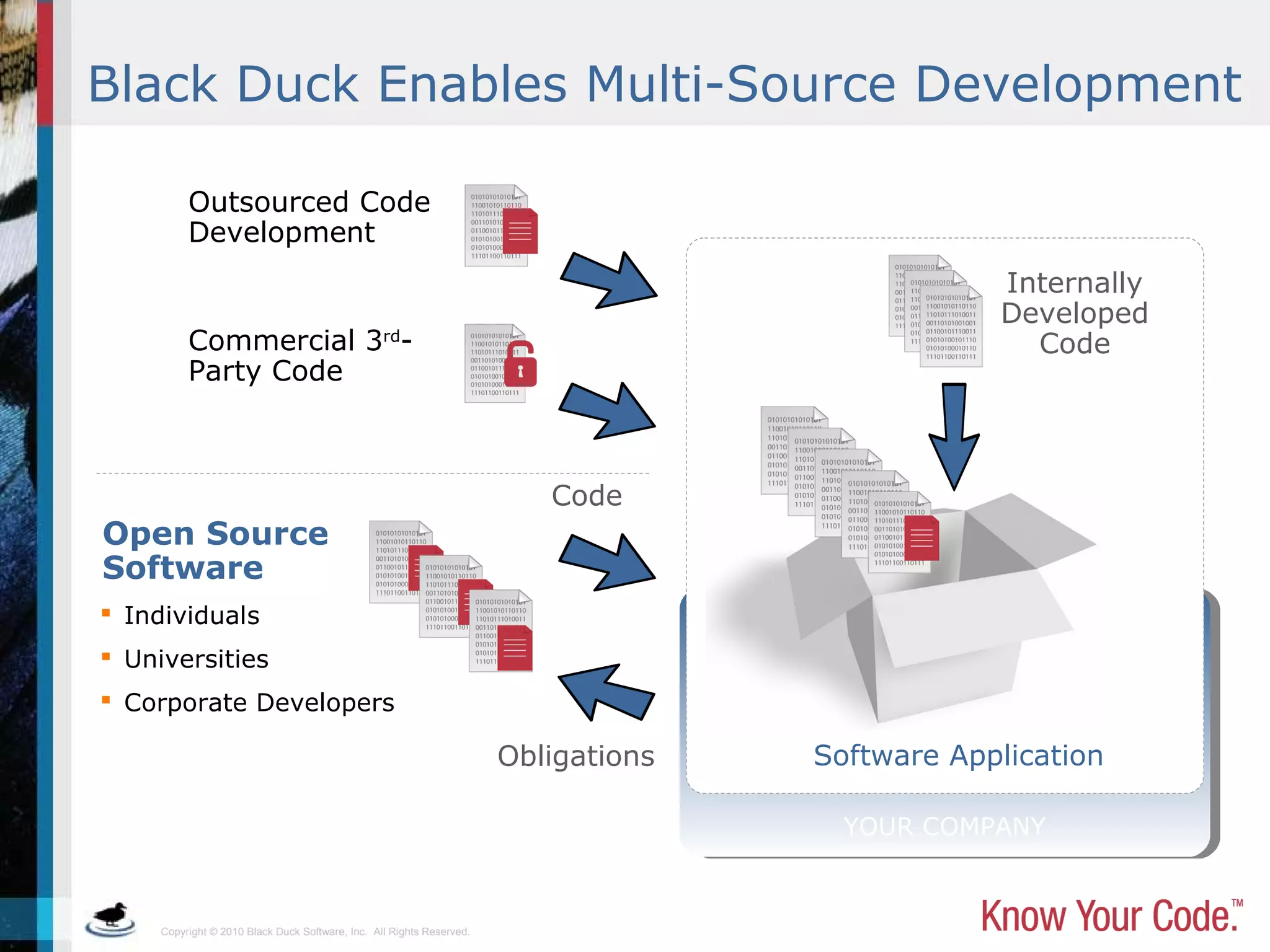



The document discusses the challenges of managing open source software at scale and introduces the Black Duck Suite as a solution. It summarizes the evolution of software development, the promises and challenges of open source, and risks of unmanaged code. The Black Duck Suite helps manage risks through an automated workflow that integrates with development tools to enable multi-source development across the application lifecycle. It addresses management, compliance, and security challenges.
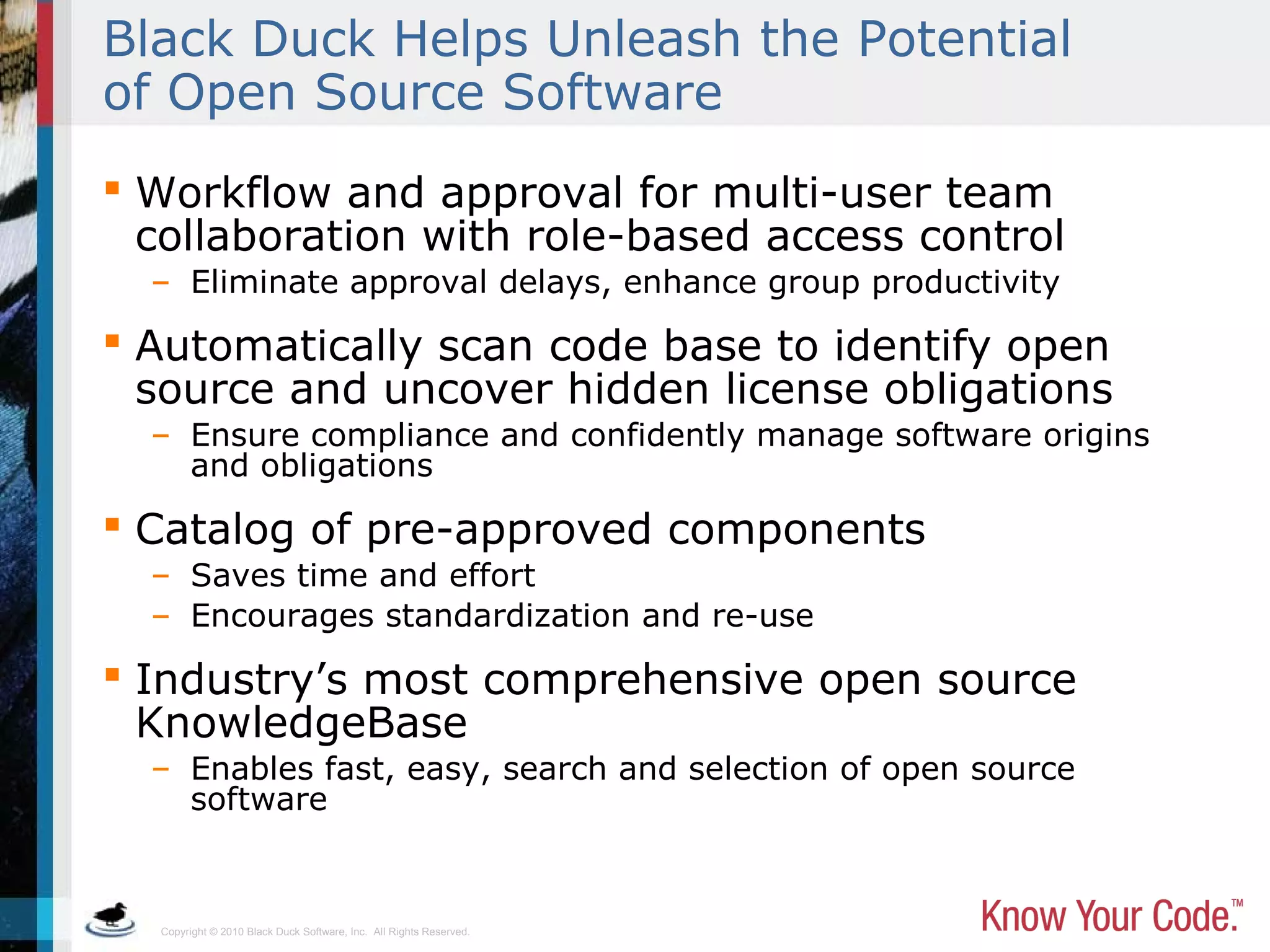
Introduction to Black Duck Suite, highlighting benefits for open source software in innovation.
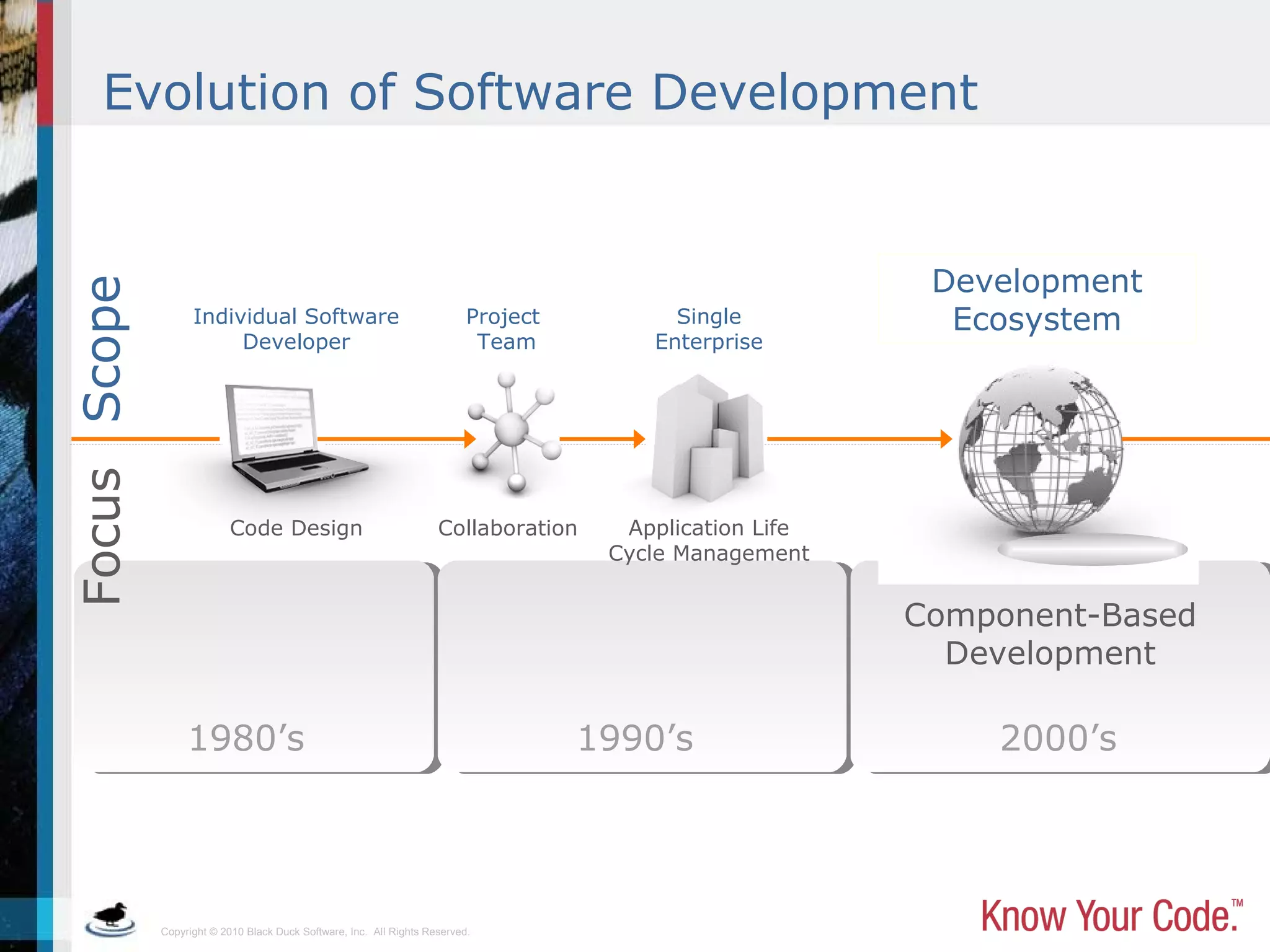
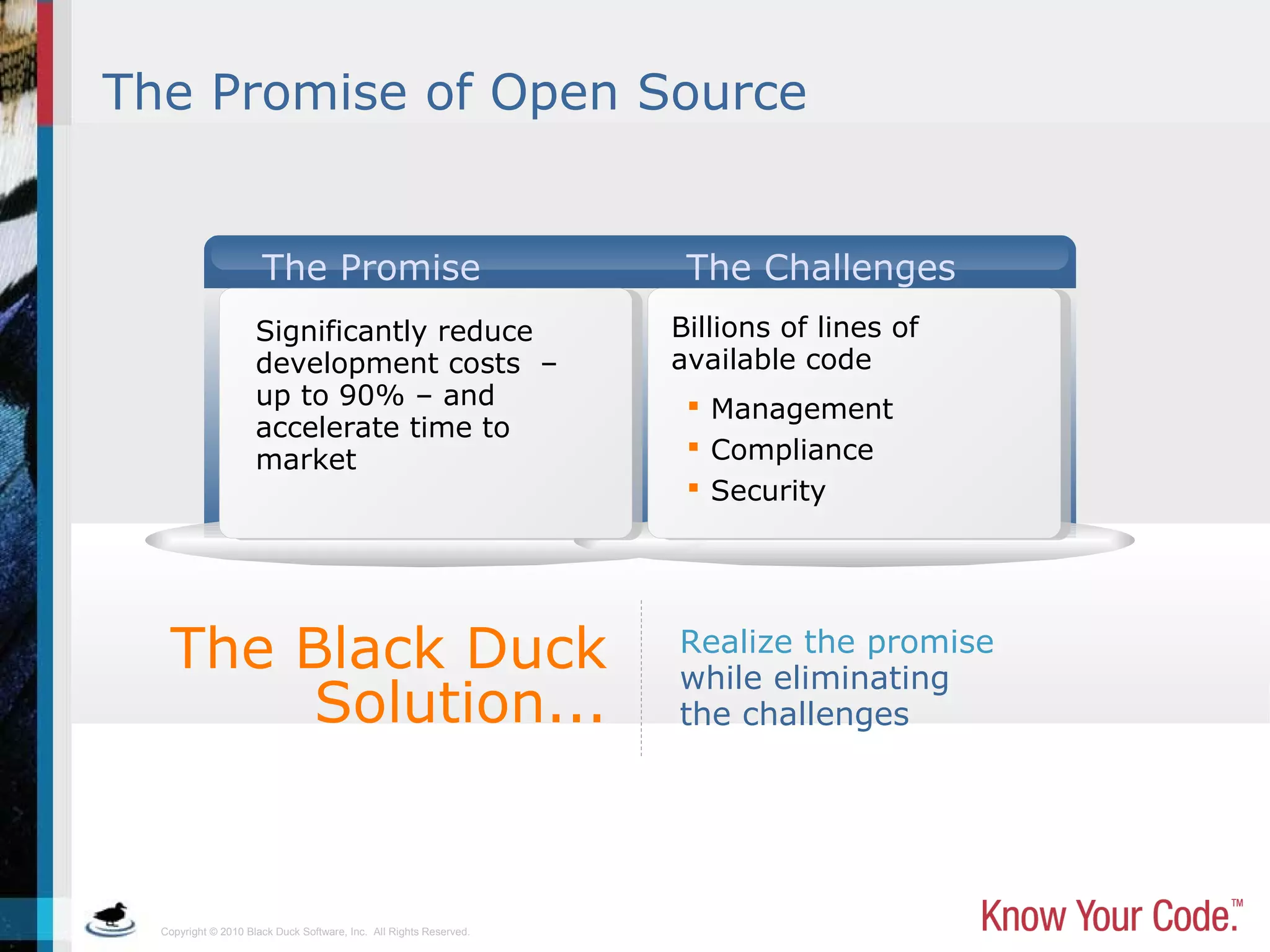
Discusses software development evolution and the advantages of open source, including cost reduction.
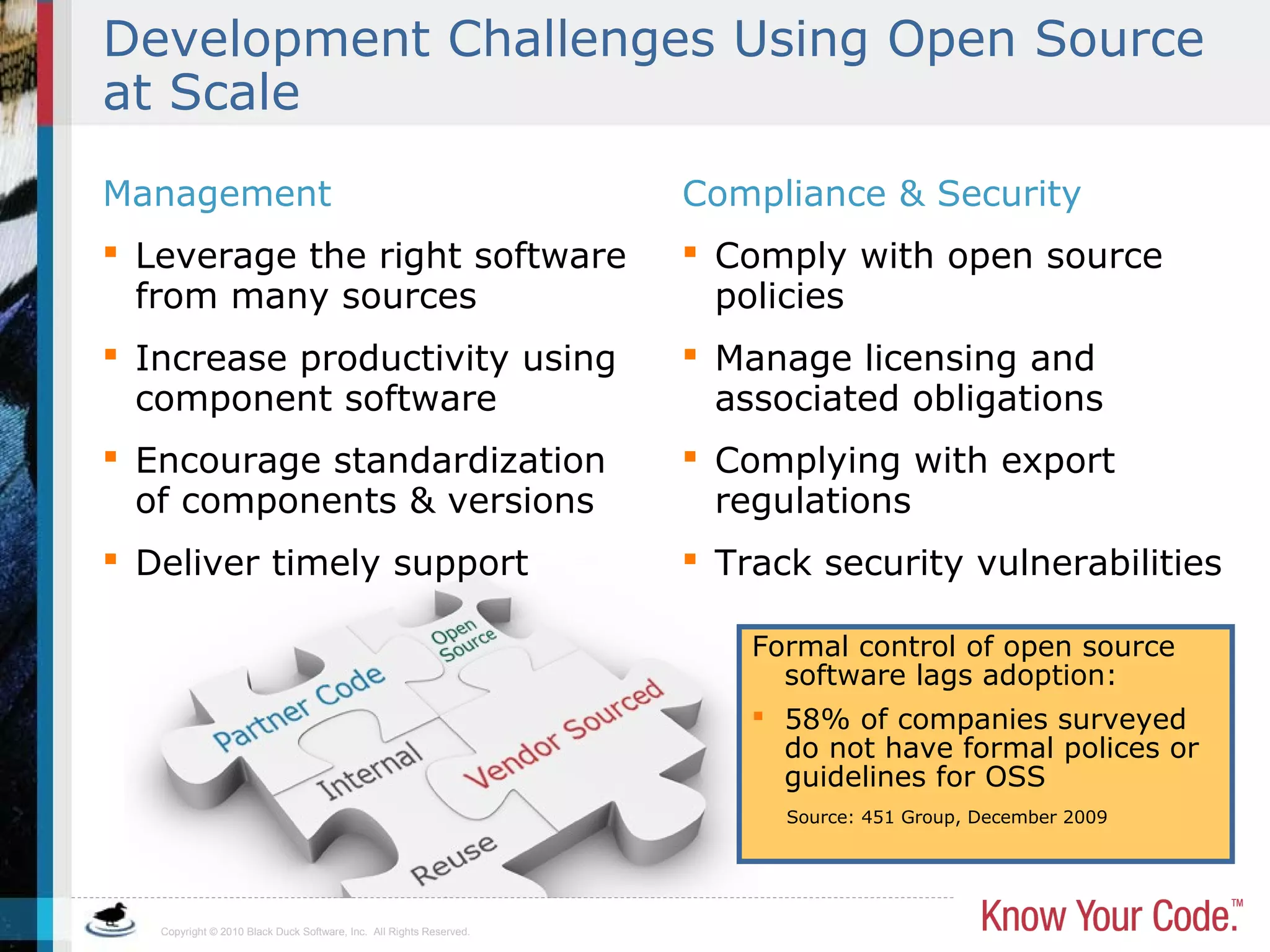
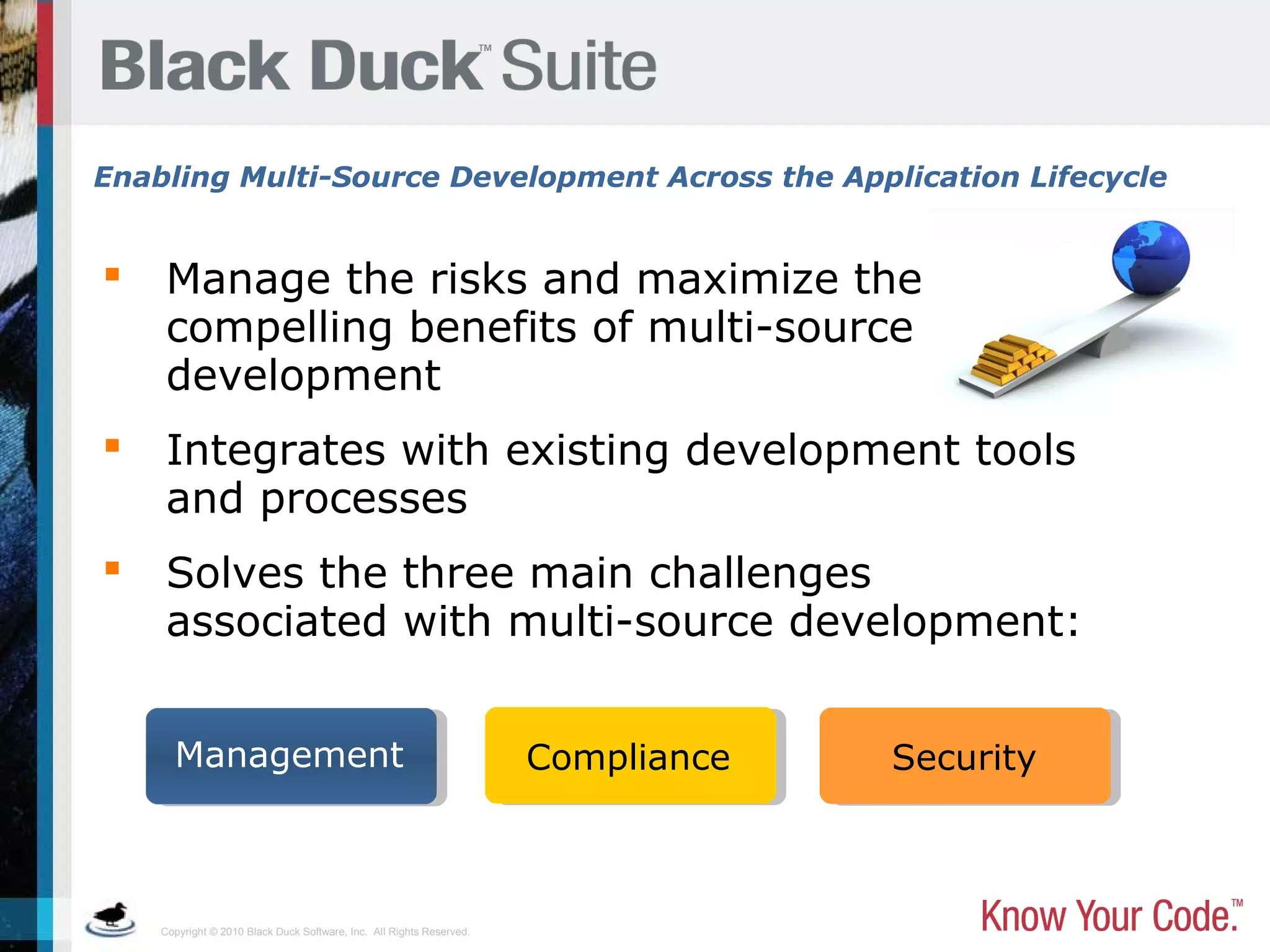
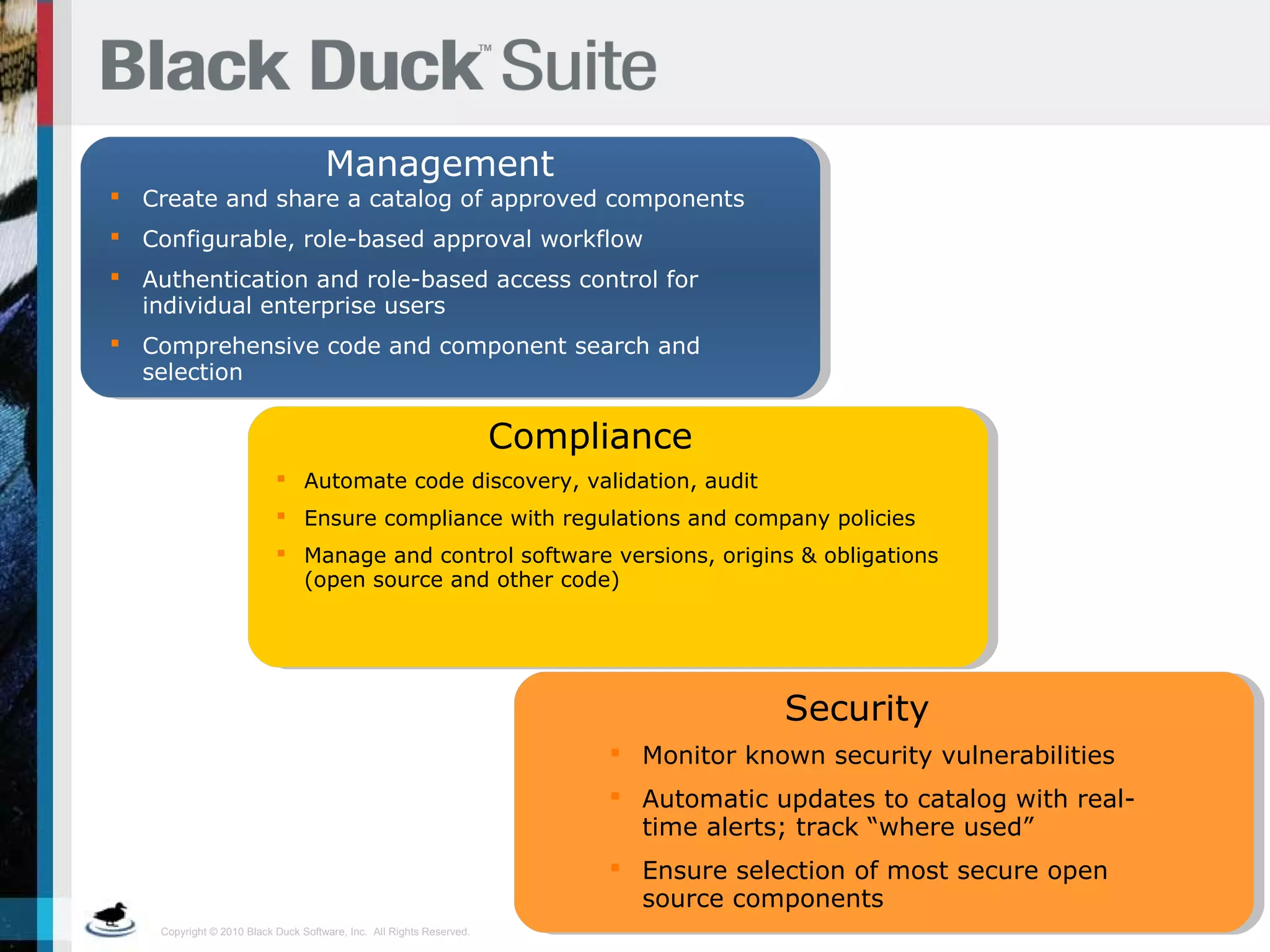
Outlines multi-source development risks, including management, compliance, and security challenges.
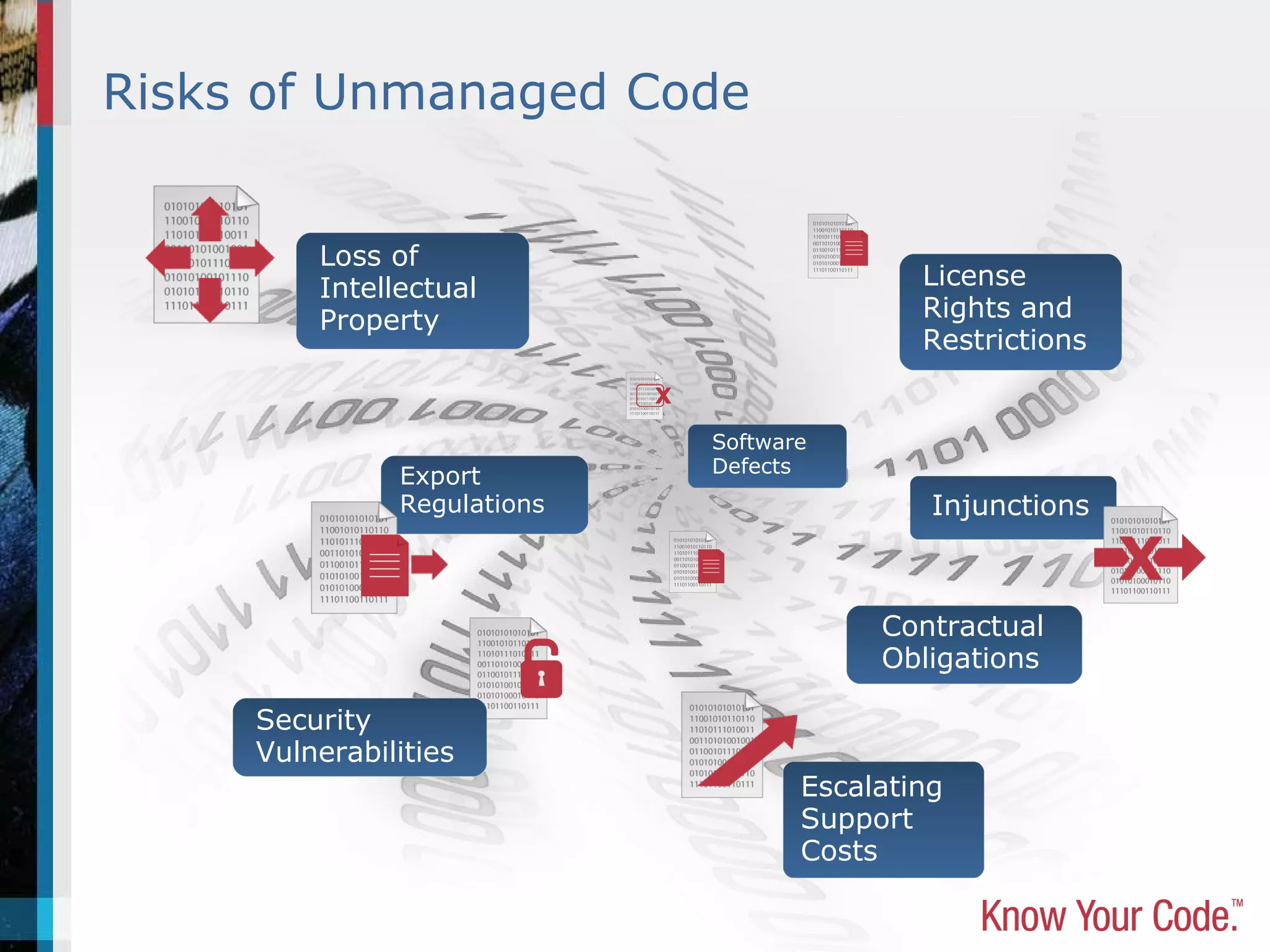
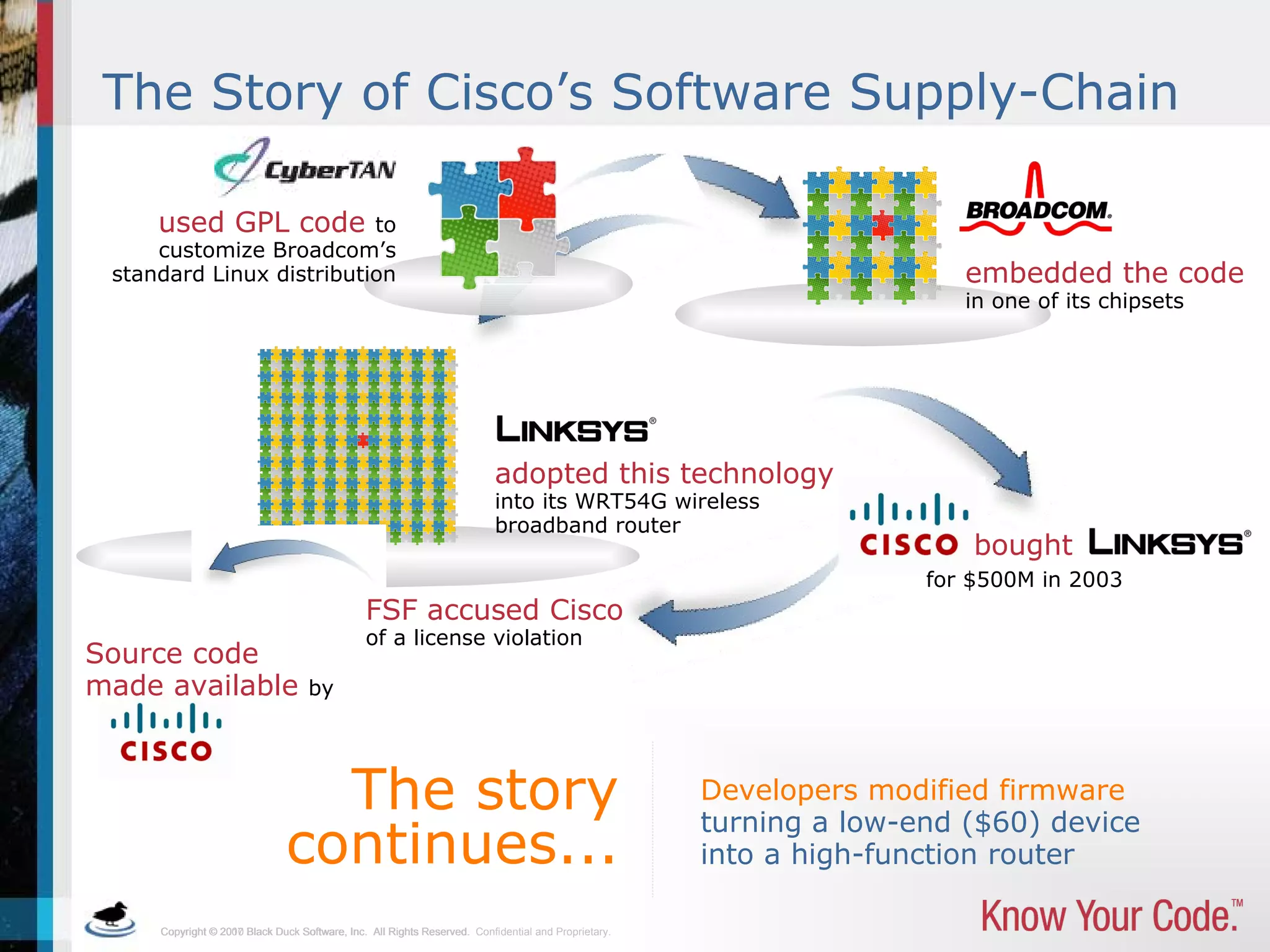
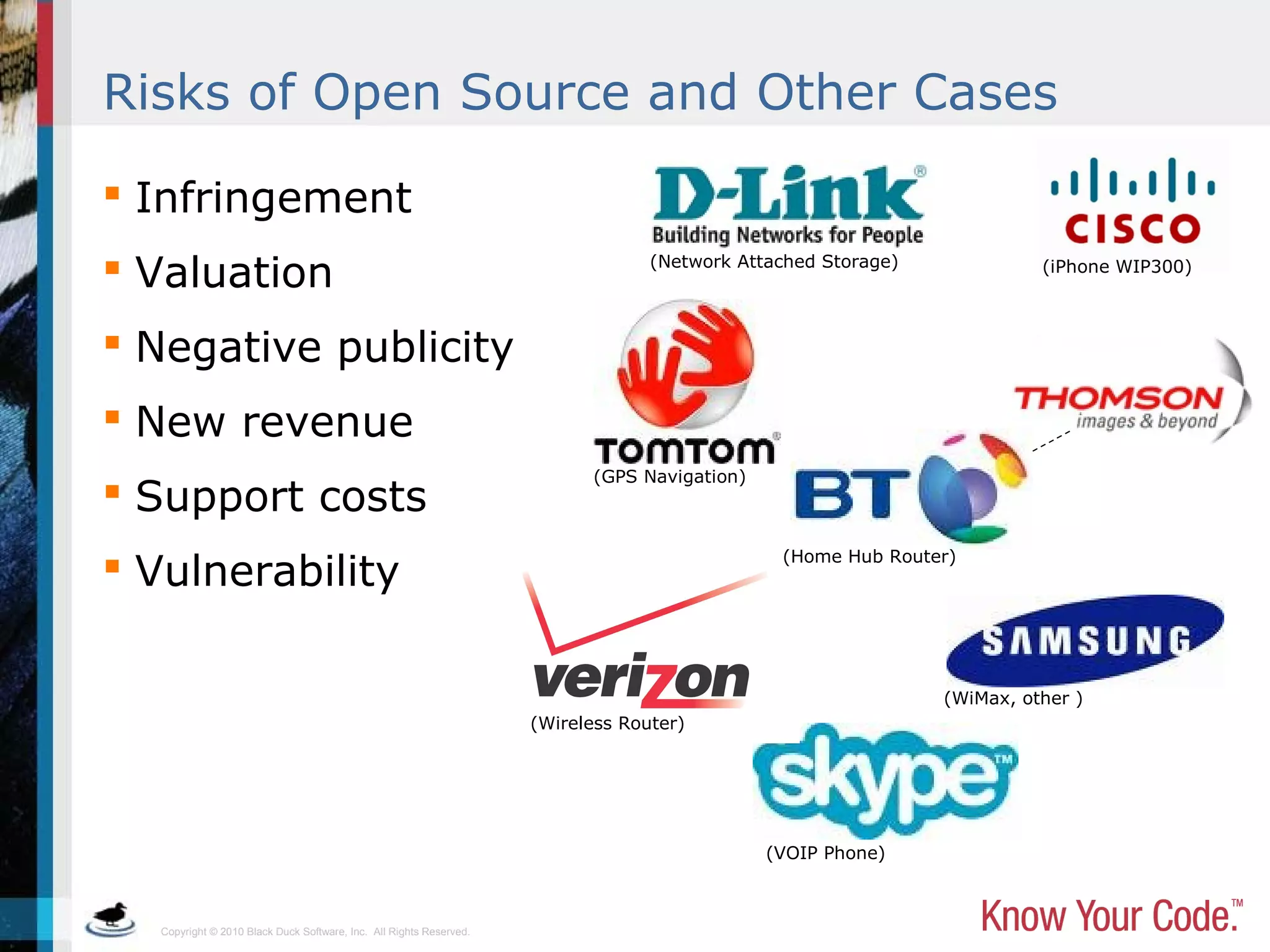
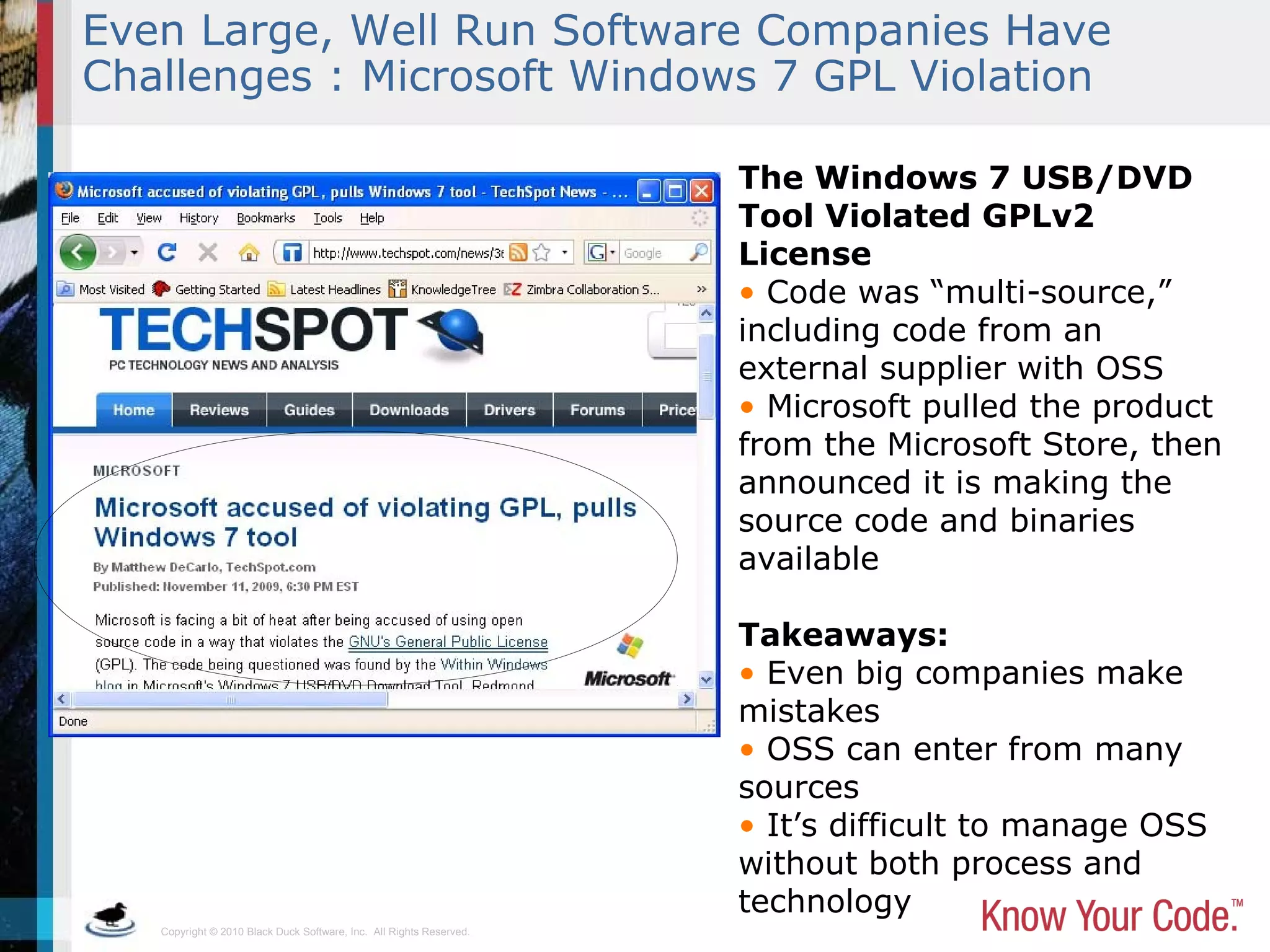
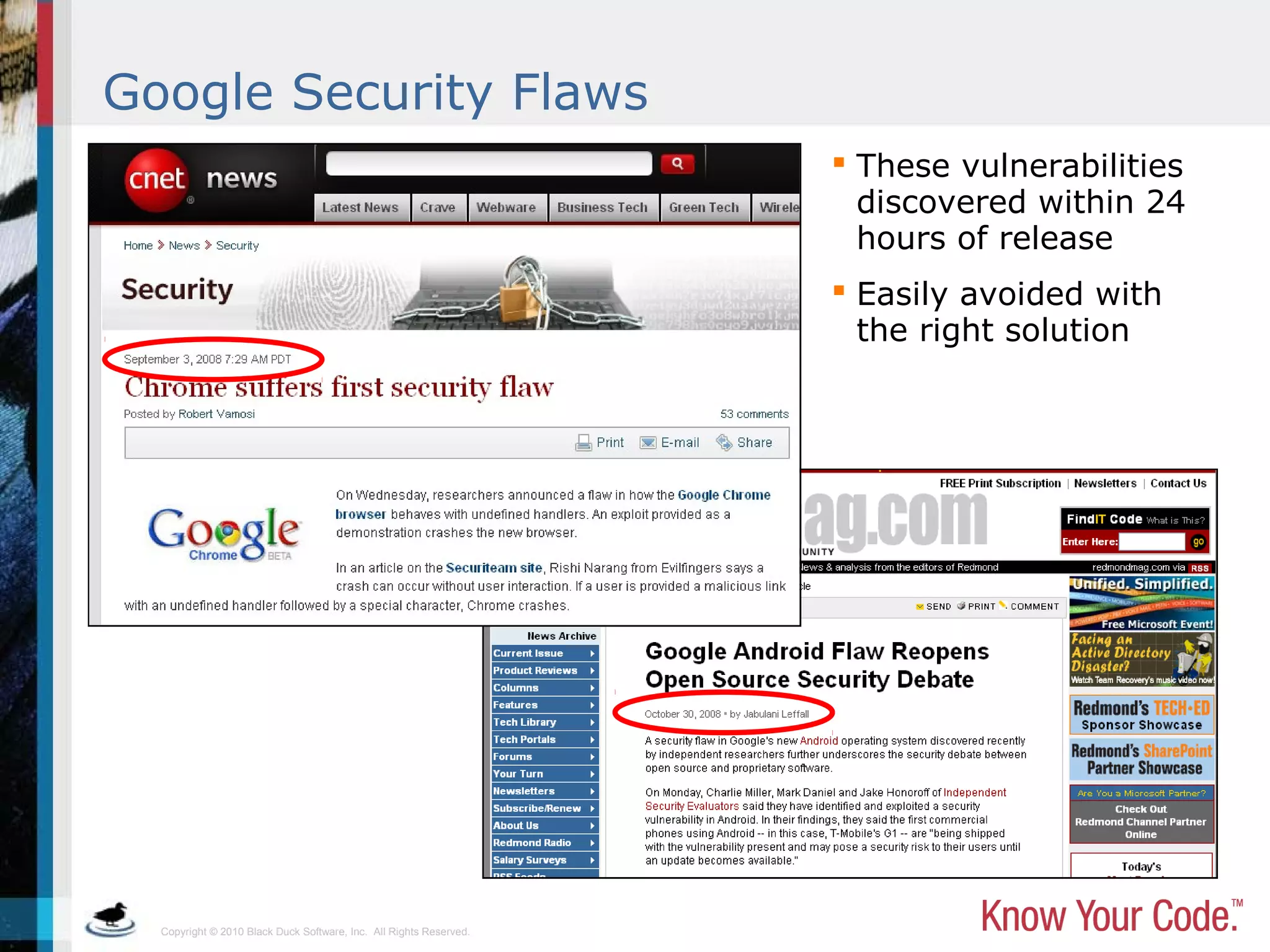
Illustrates risks associated with unmanaged code through Cisco and Microsoft's experiences.
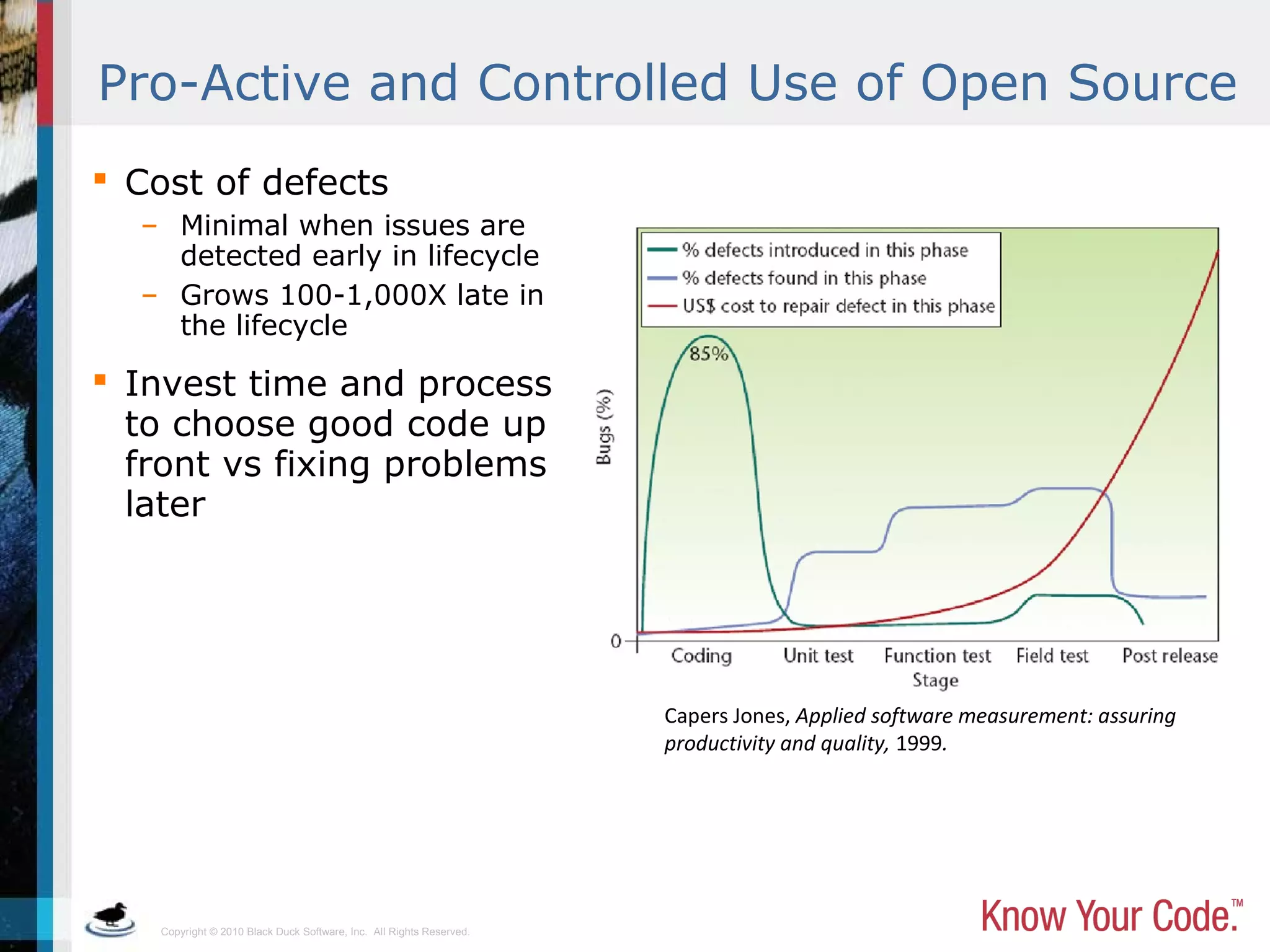
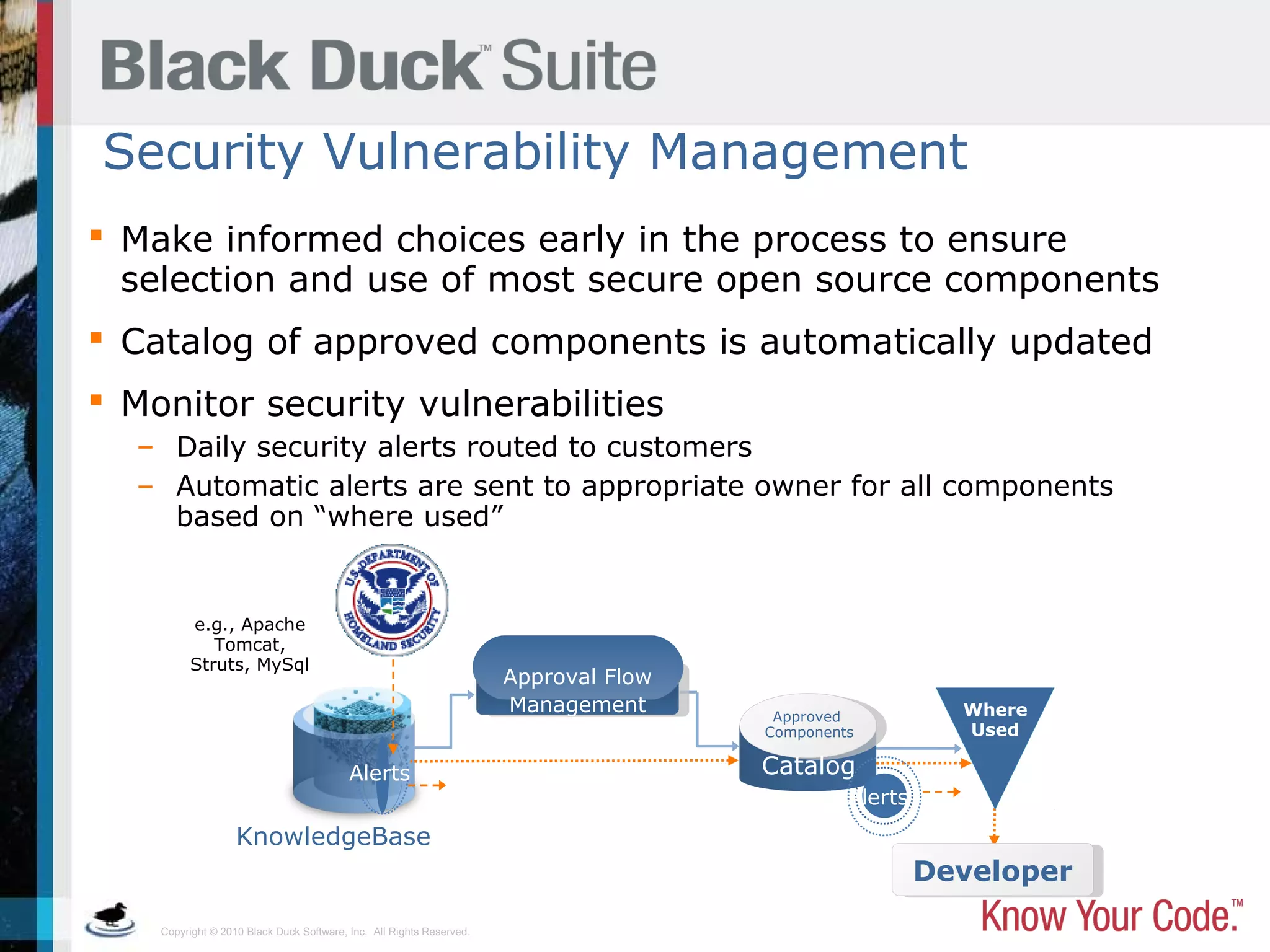
Emphasizes early detection of vulnerabilities and the importance of the right solutions.
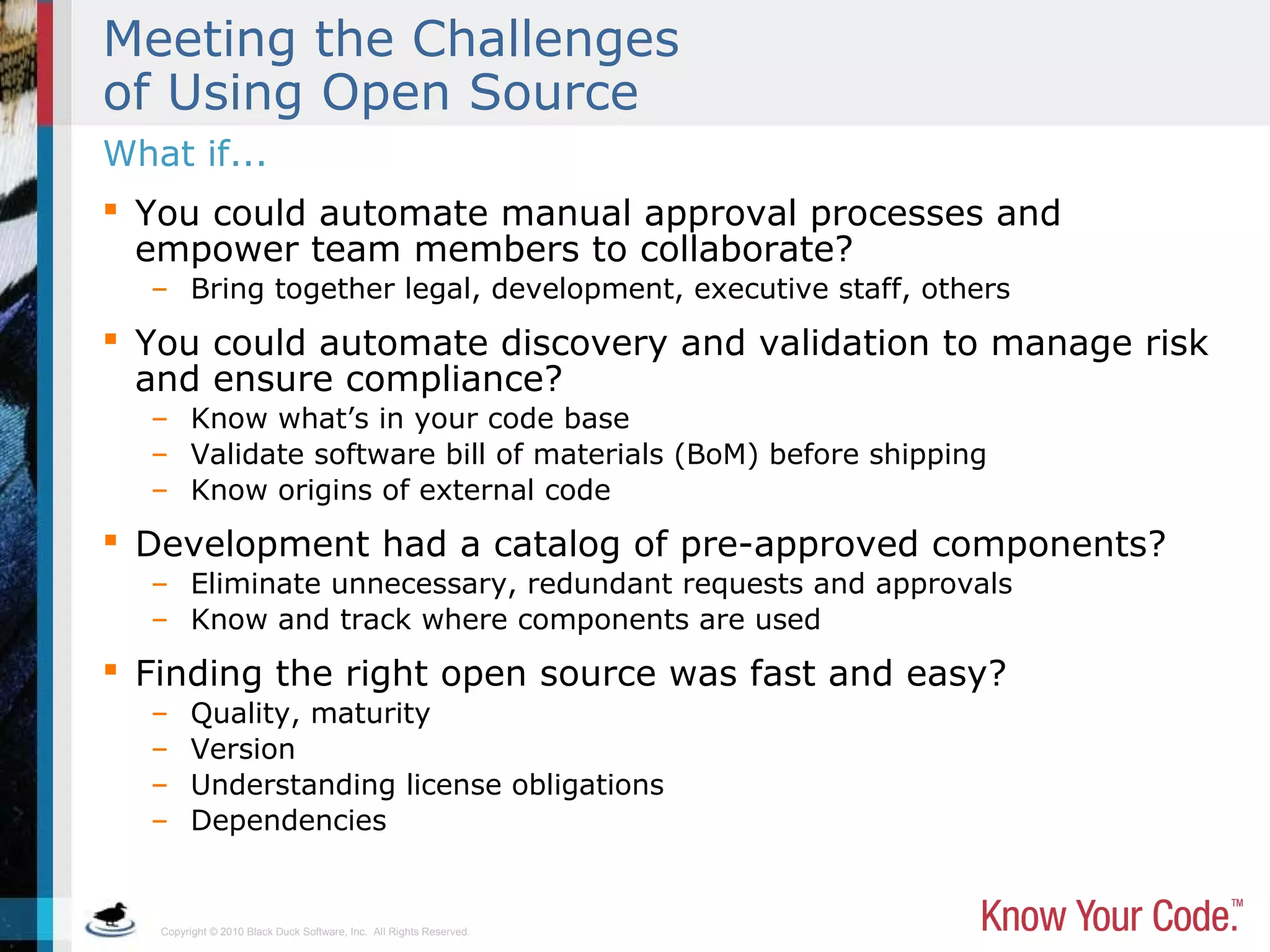
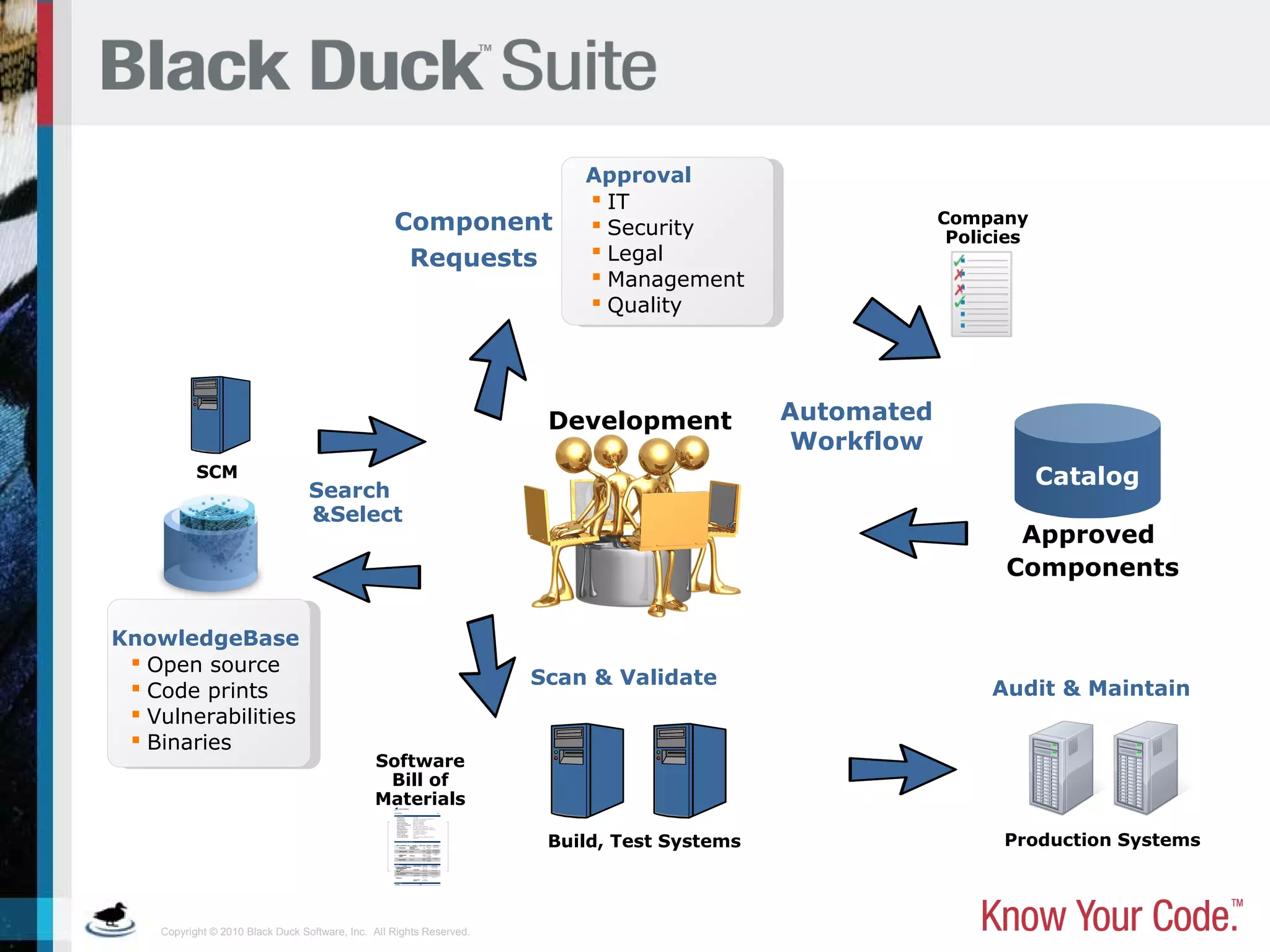
Proposes strategies for automating and streamlining open source management and compliance.
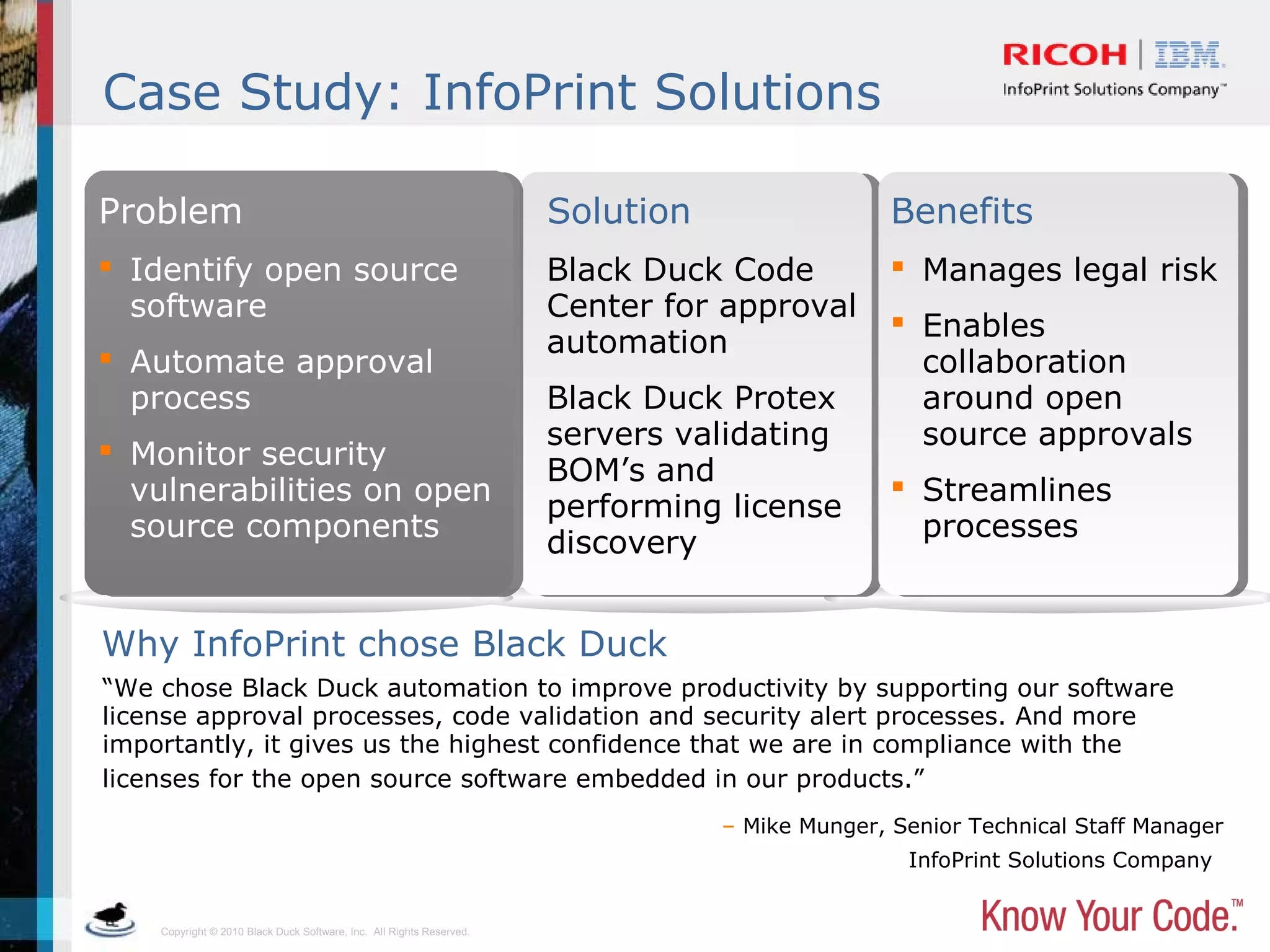
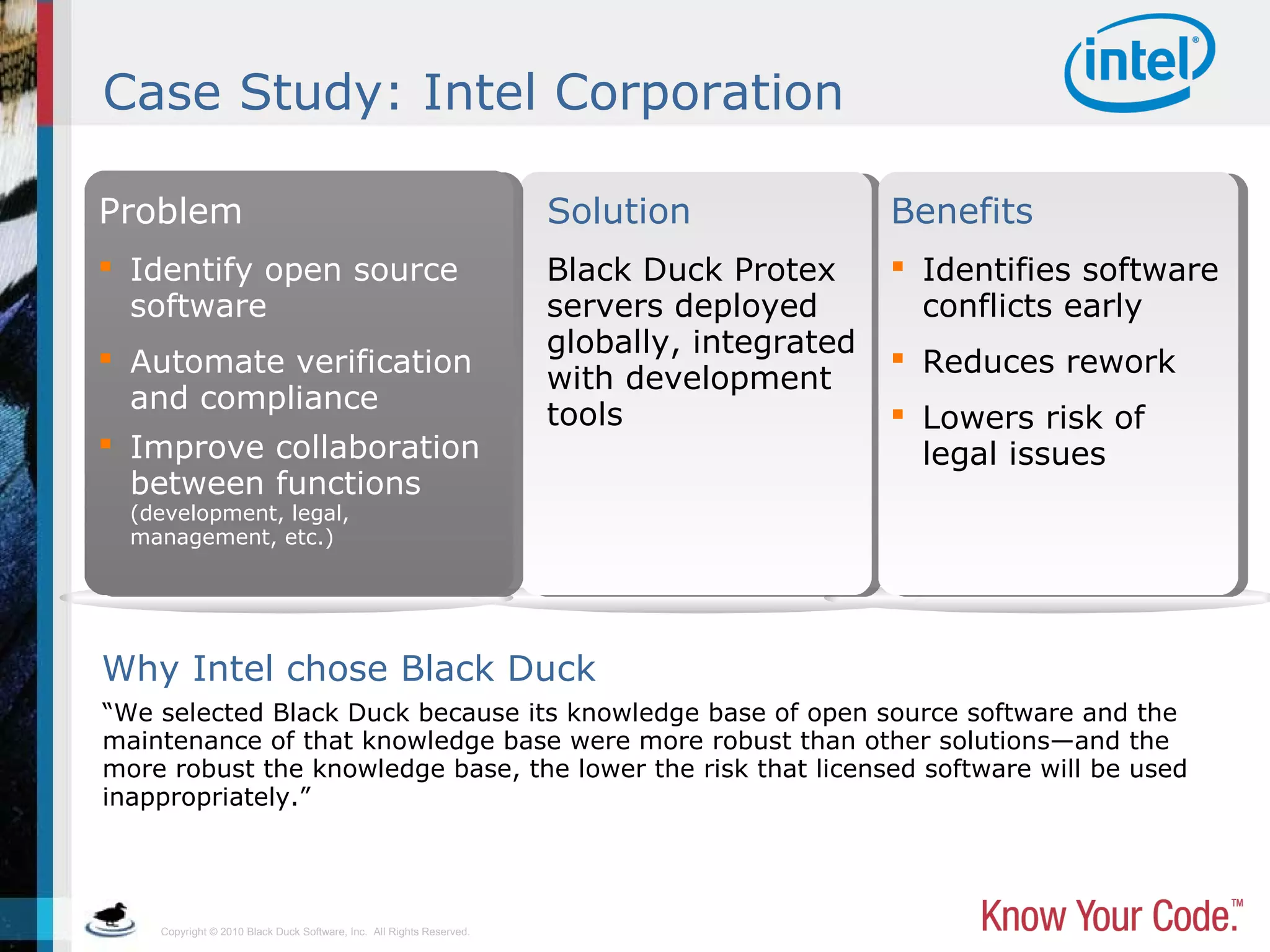
Highlights how Intel and InfoPrint Solutions successfully used Black Duck for compliance and collaboration.
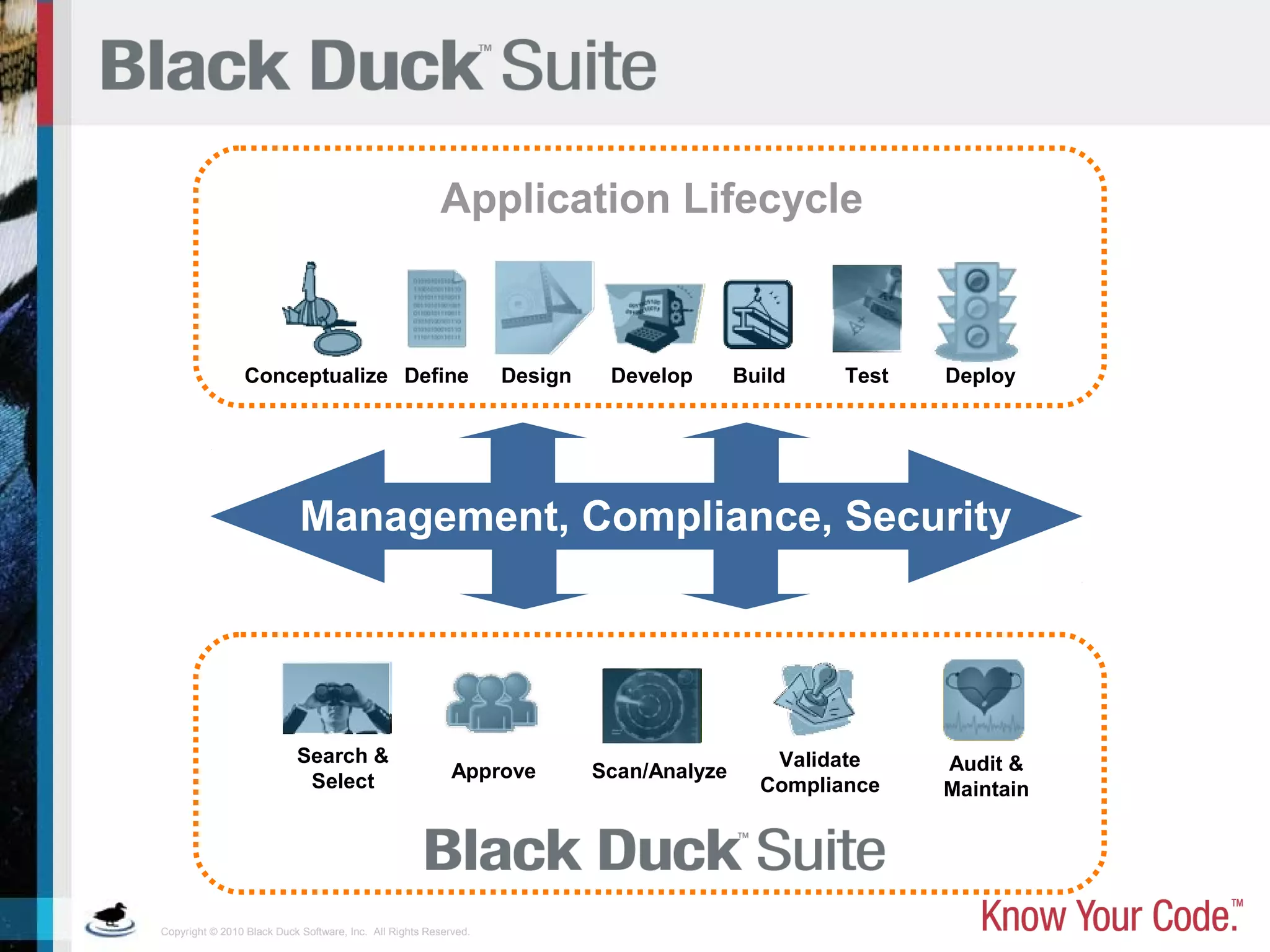
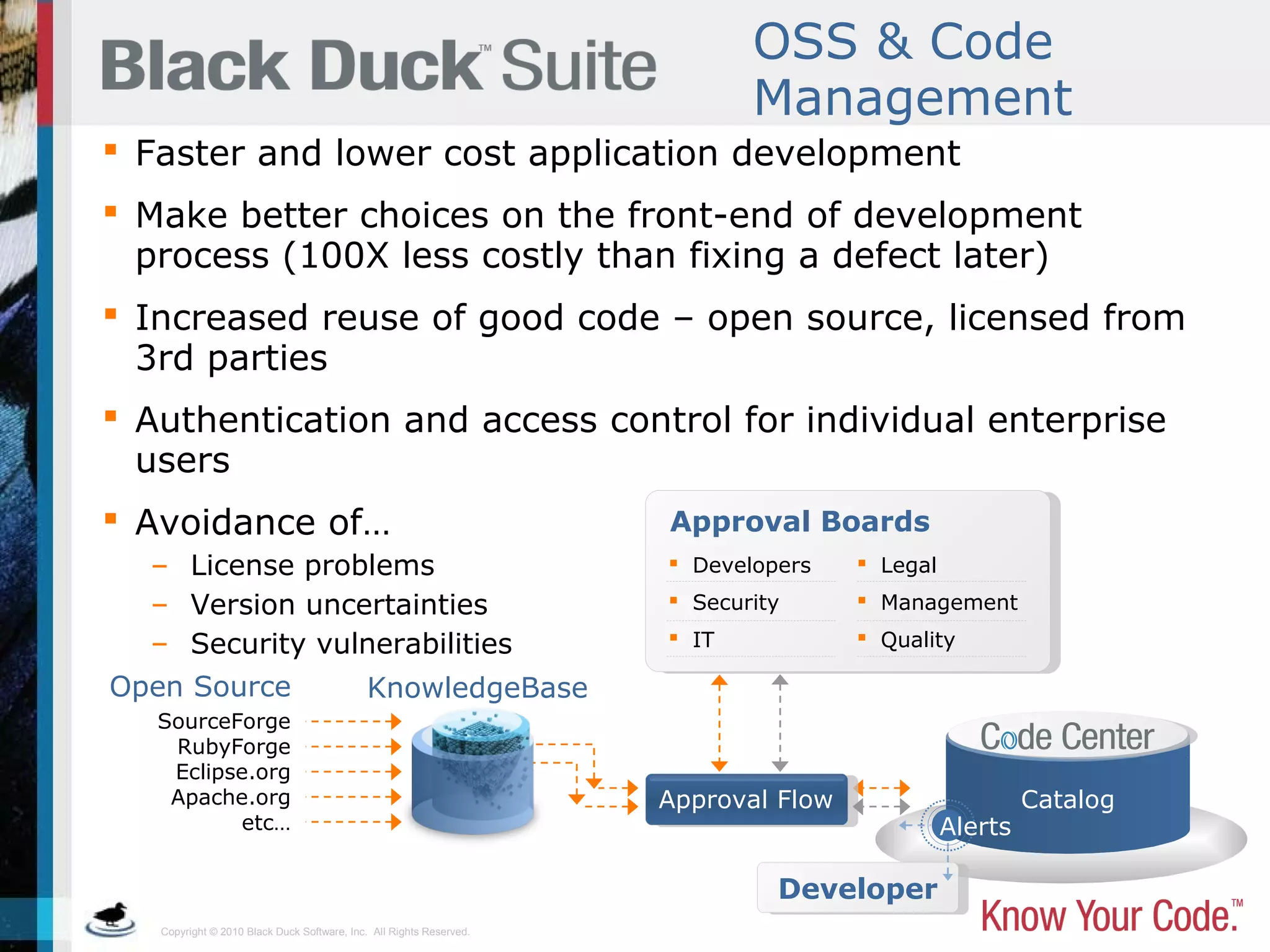
Details the integration of Black Duck Suite with existing processes, focusing on management and compliance.
Describes the workflow in application lifecycle management, ensuring compliance and security.
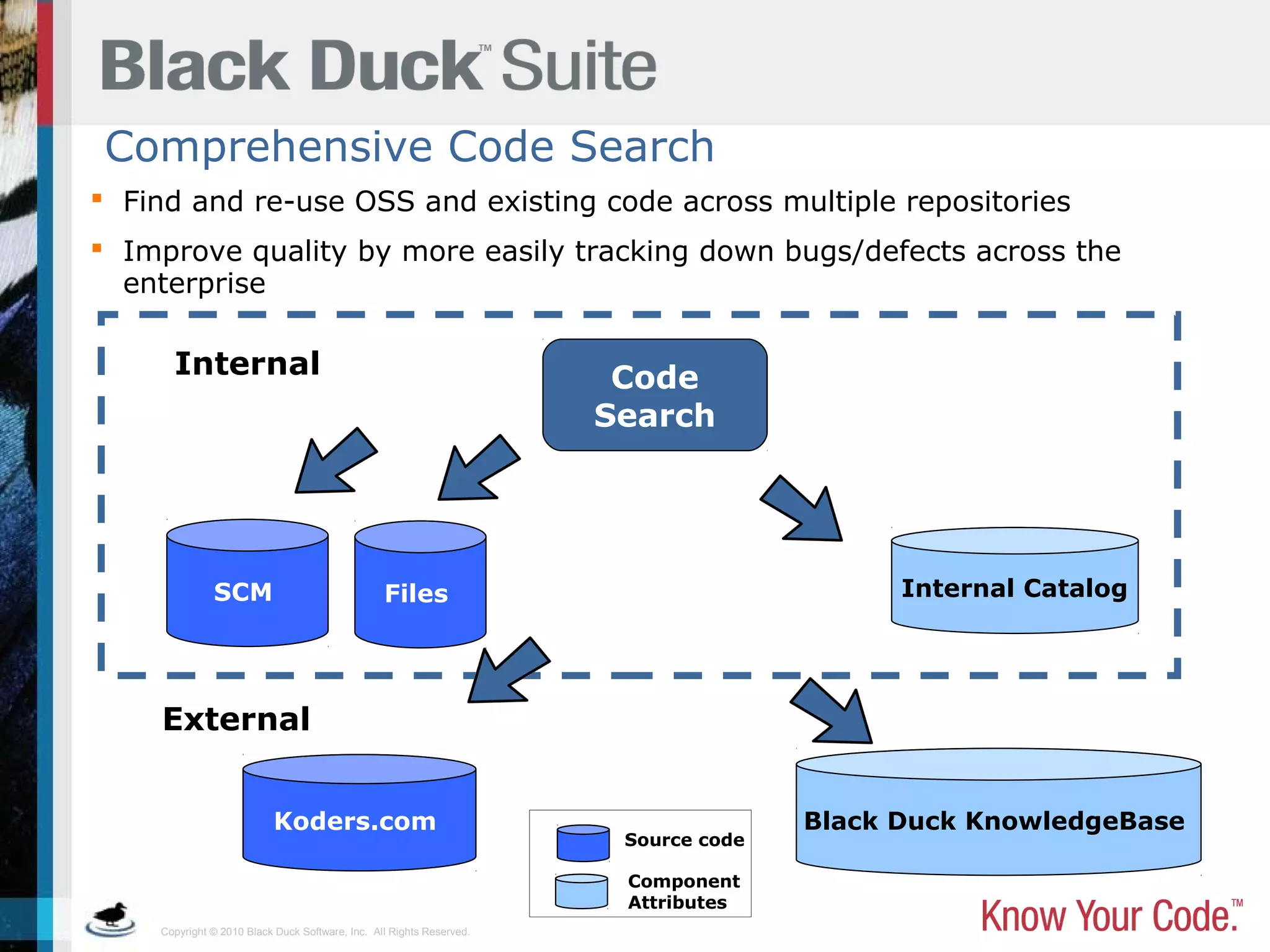
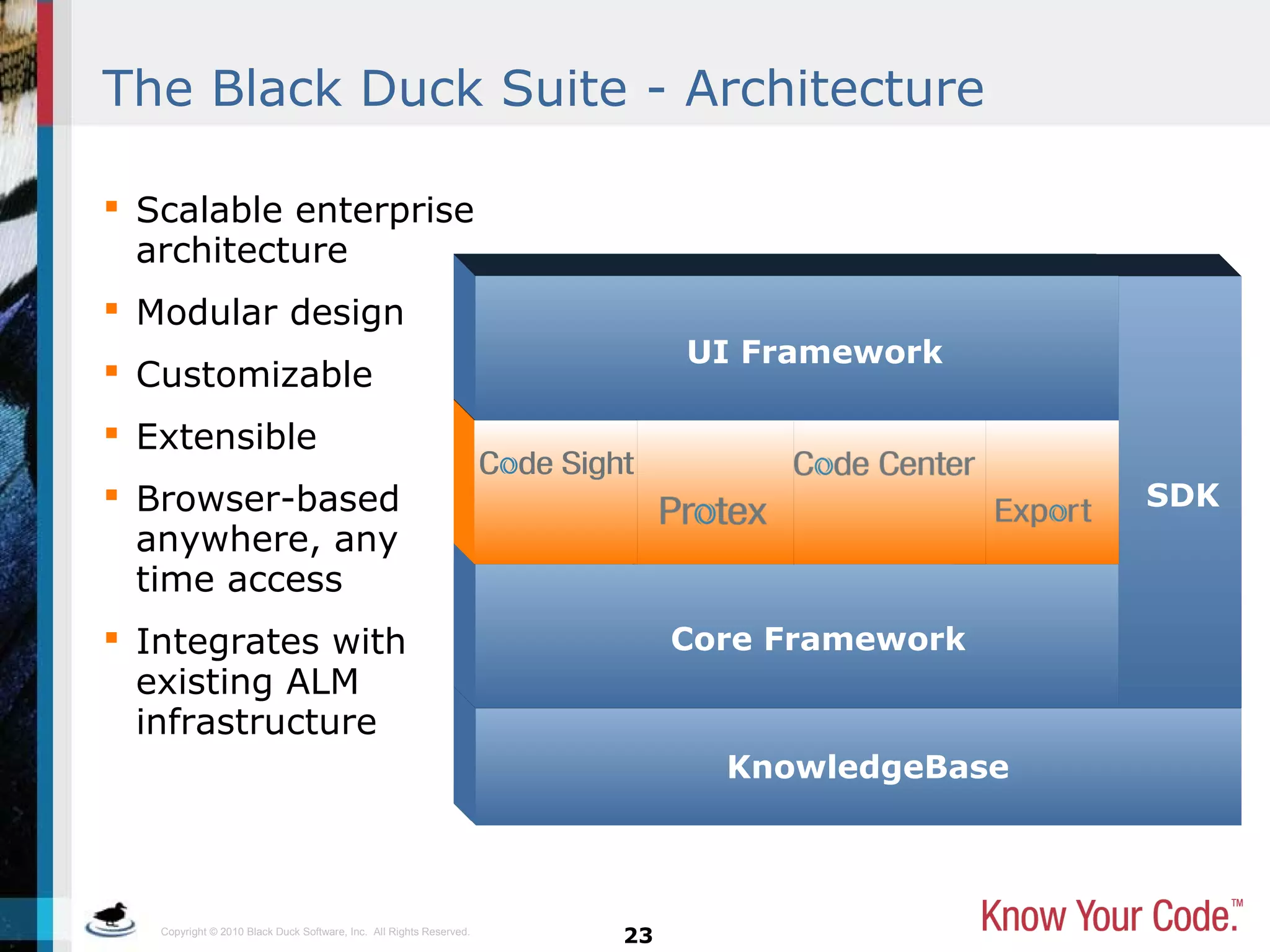
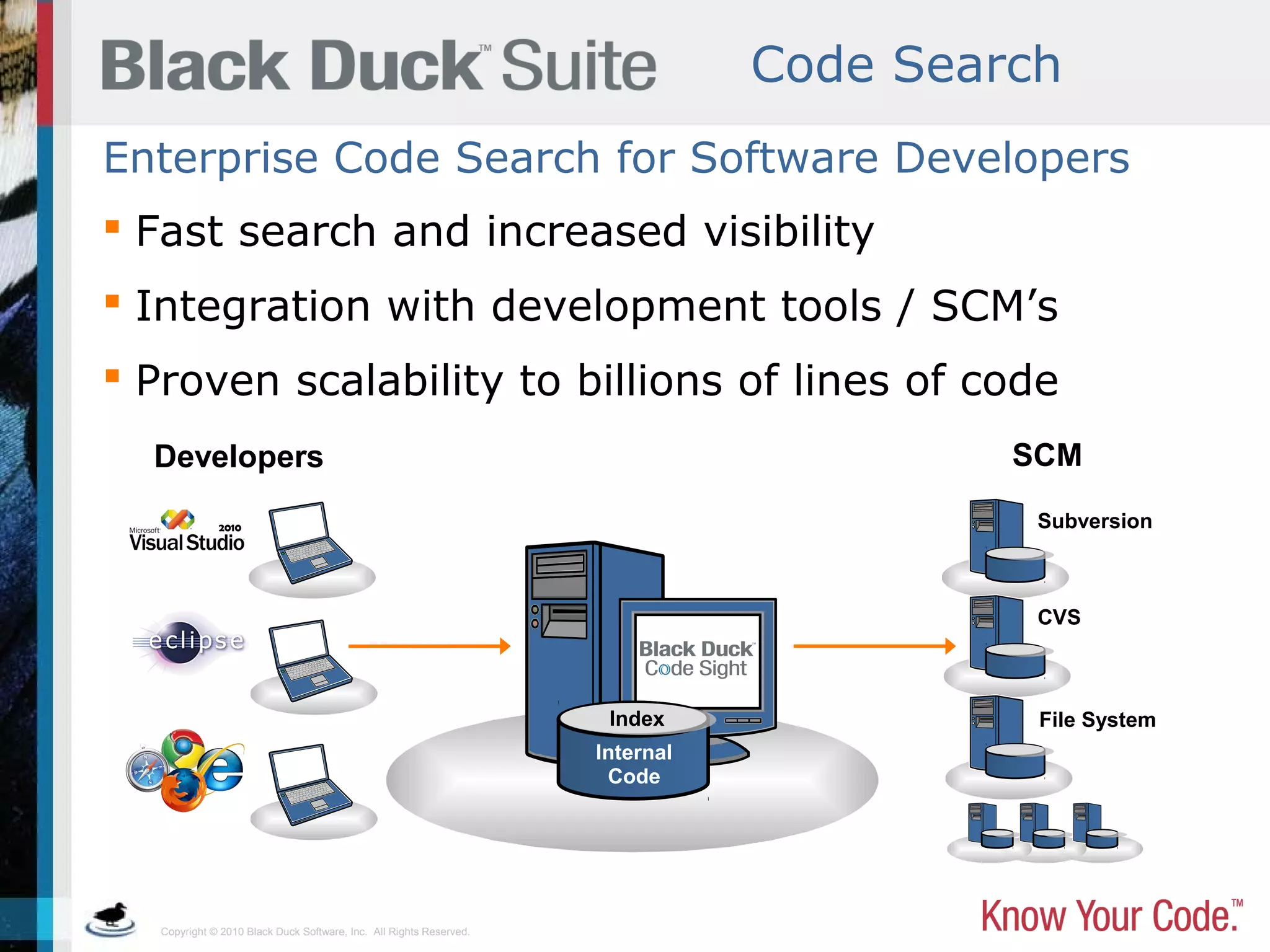
Showcases Black Duck's robust code search options and its scalable architecture for enterprise management.
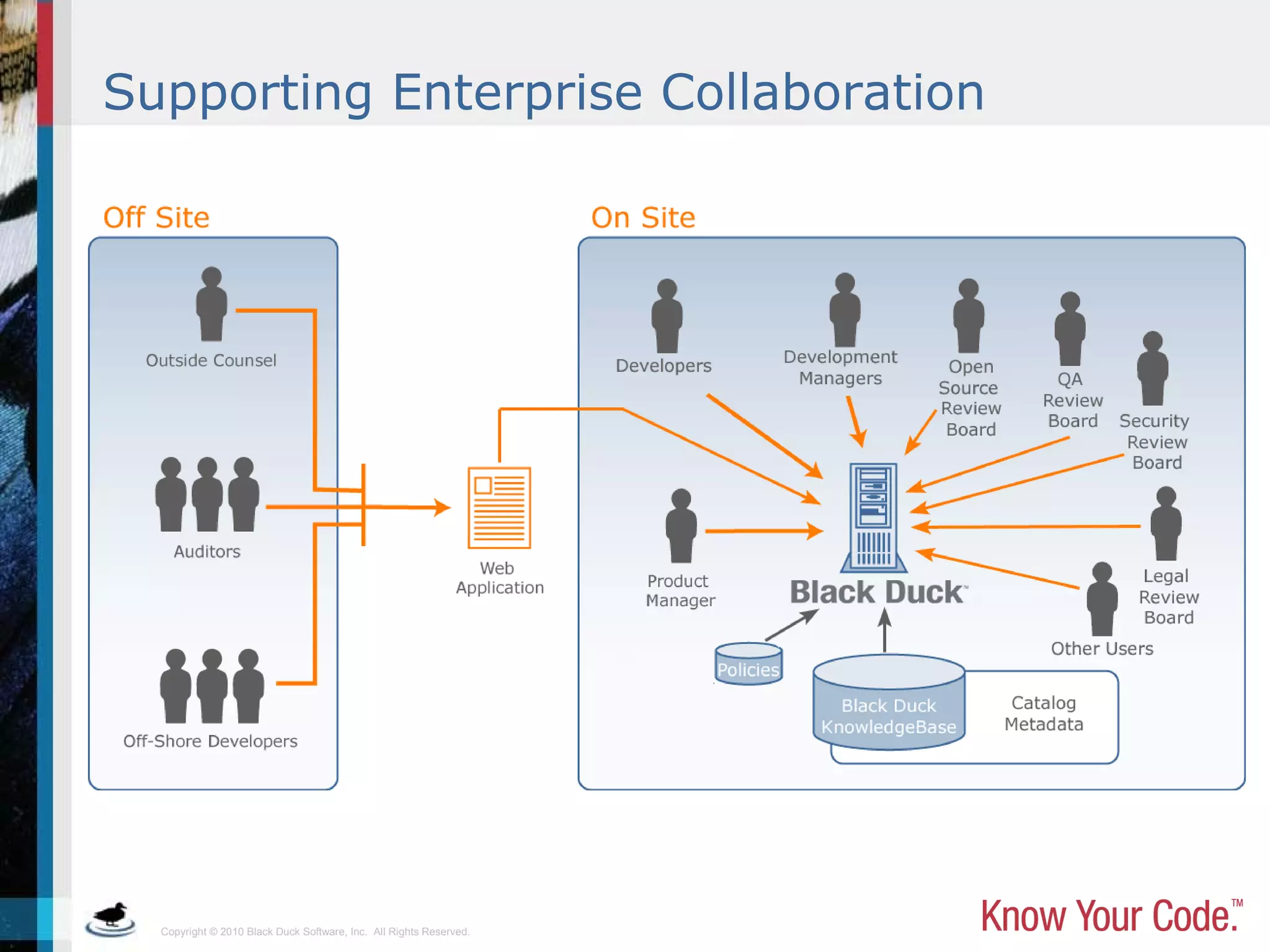
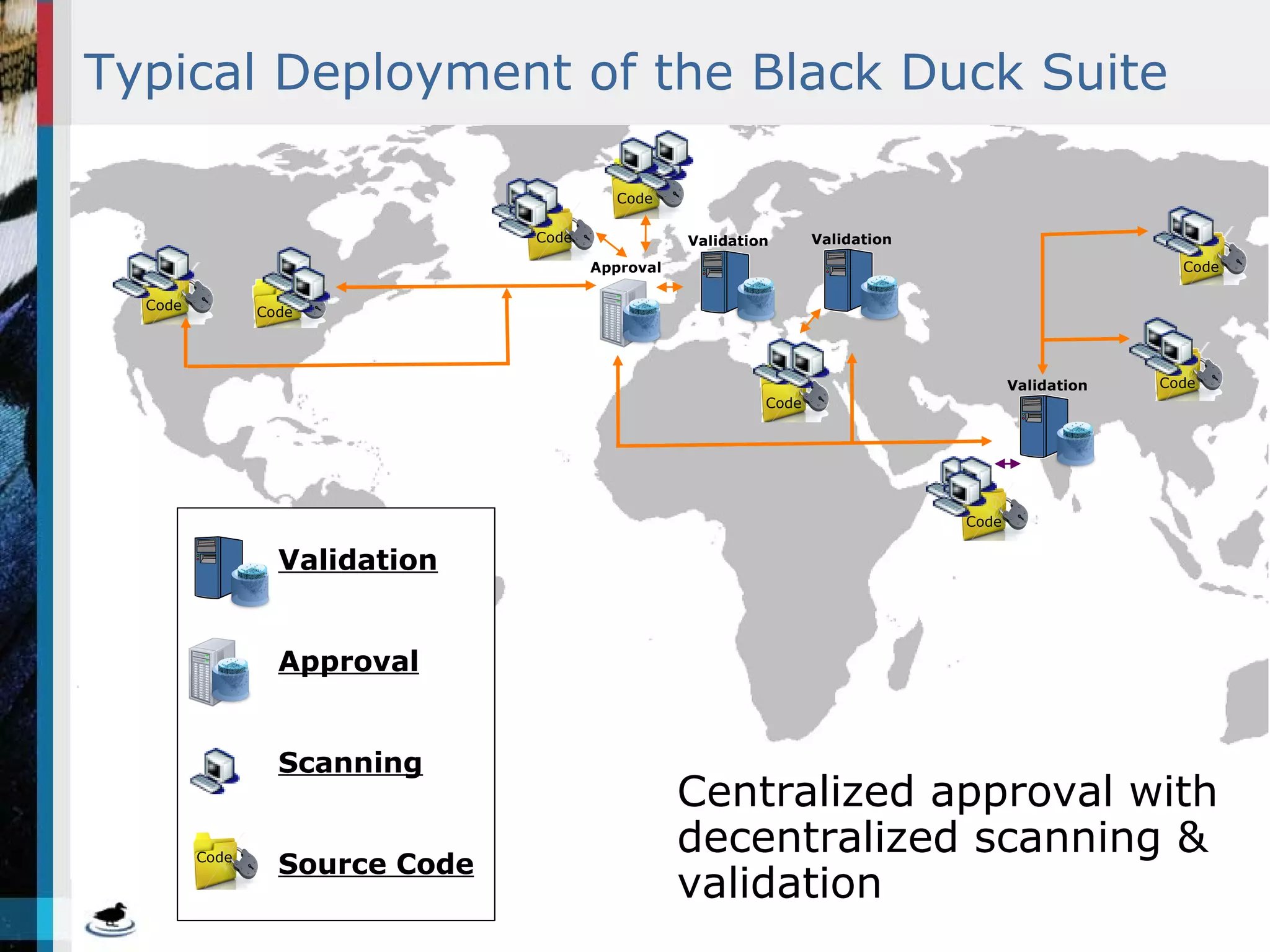
Discusses how Black Duck Suite empowers collaboration and supports centralized validation.
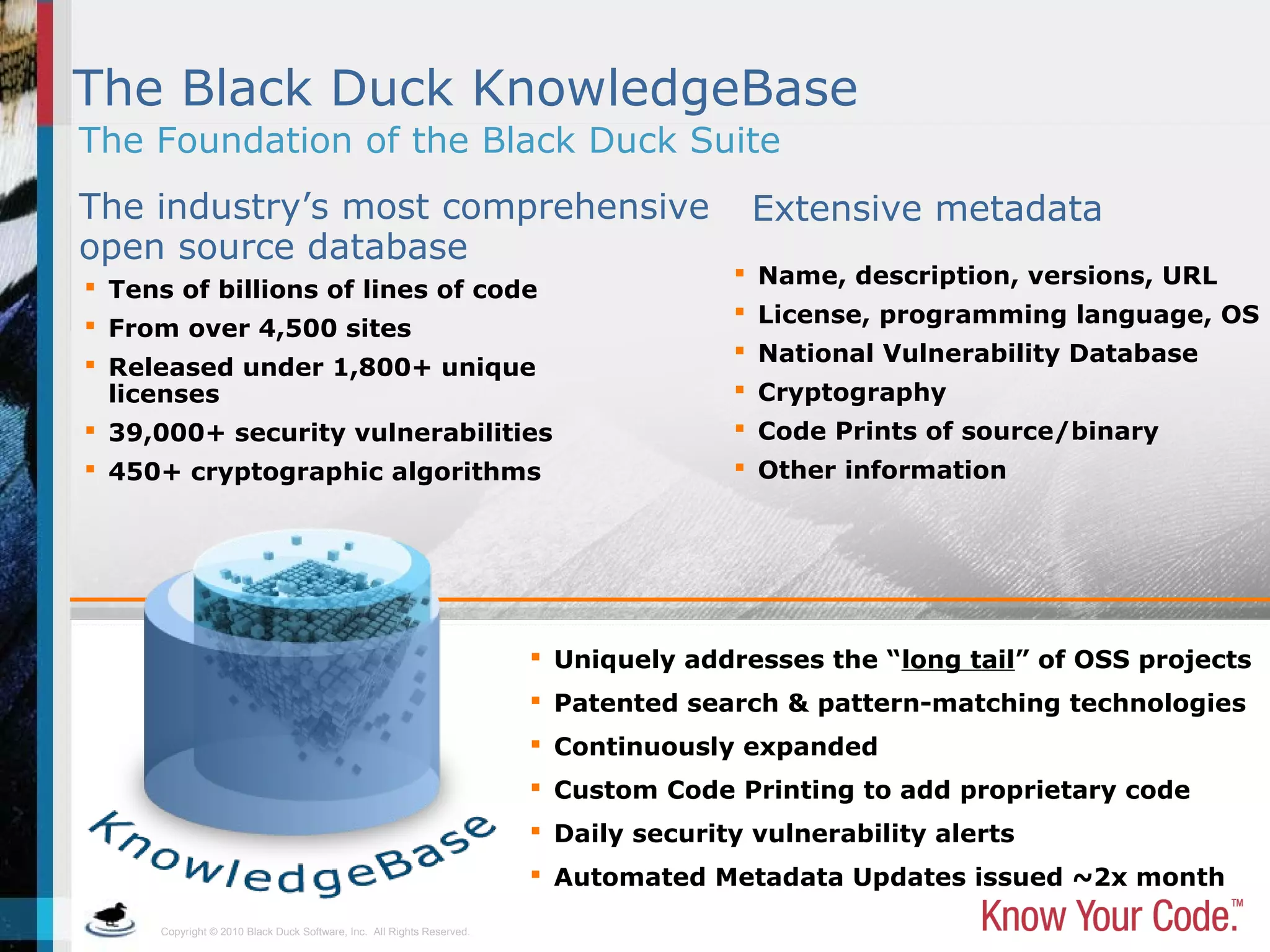
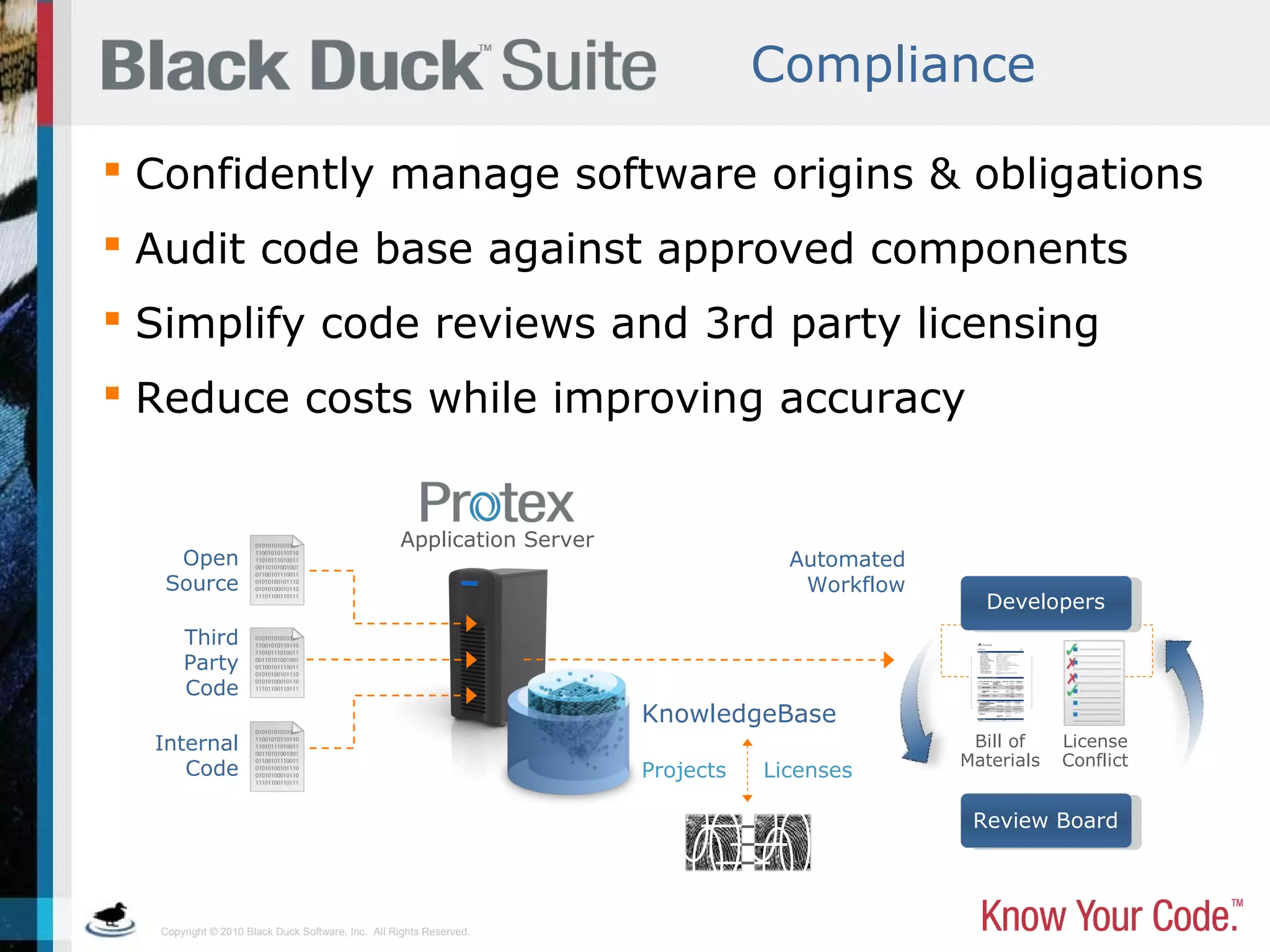
Explains the significance of the KnowledgeBase in managing open source software effectively.
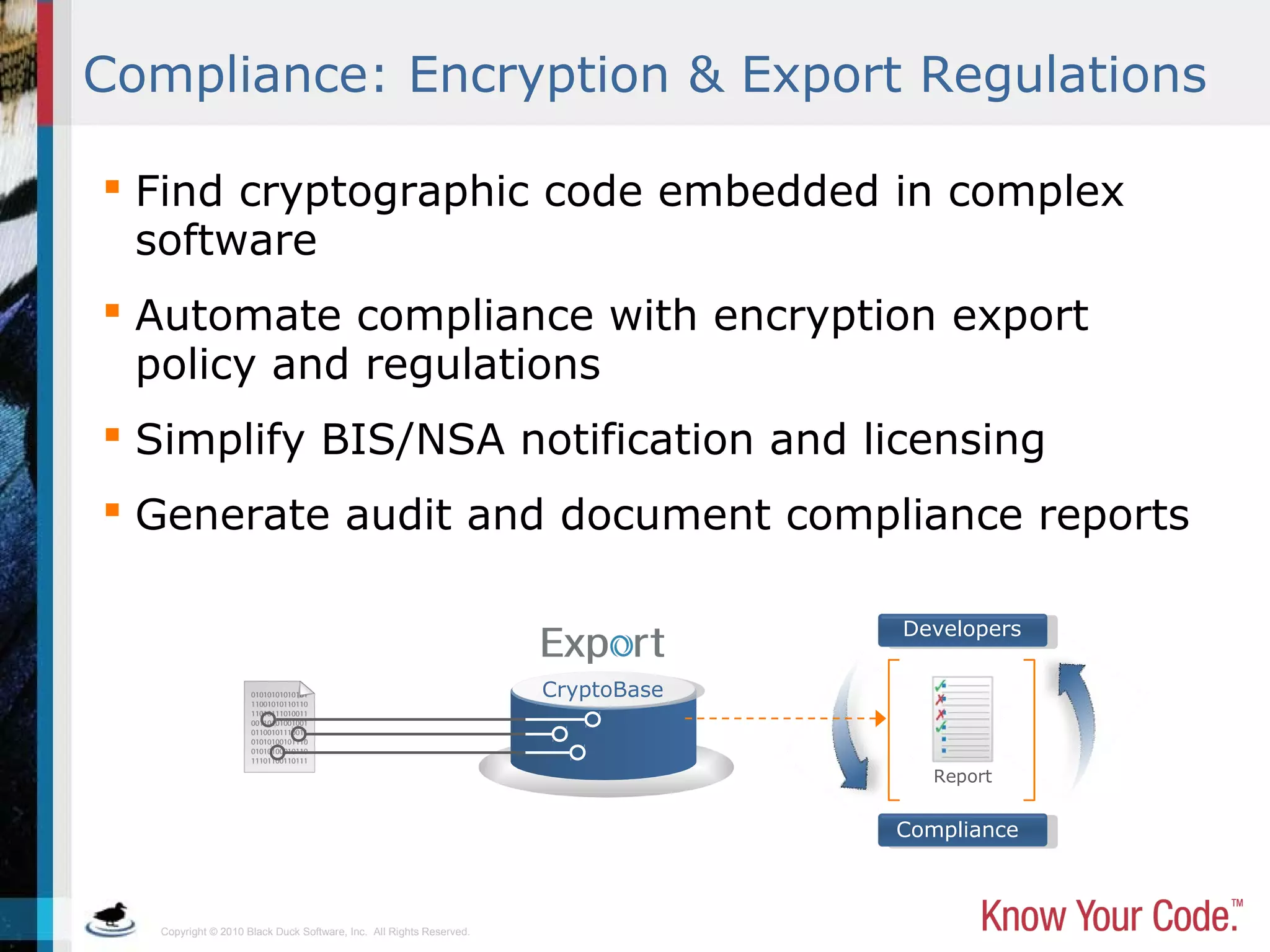
Details how Black Duck helps in compliance management, licensing, and security monitoring.
Highlights the importance of managing security vulnerabilities with early detection and alerts.
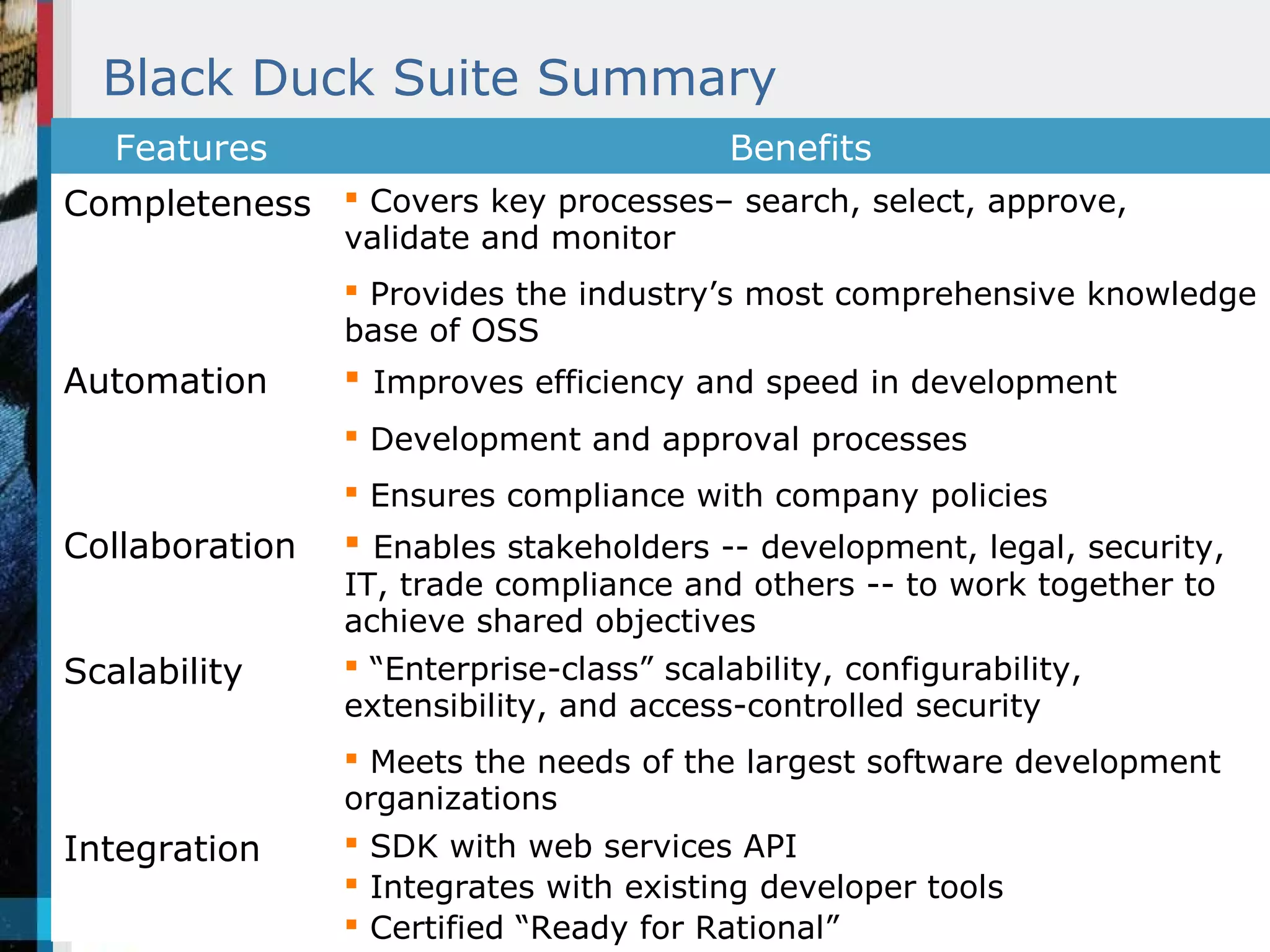
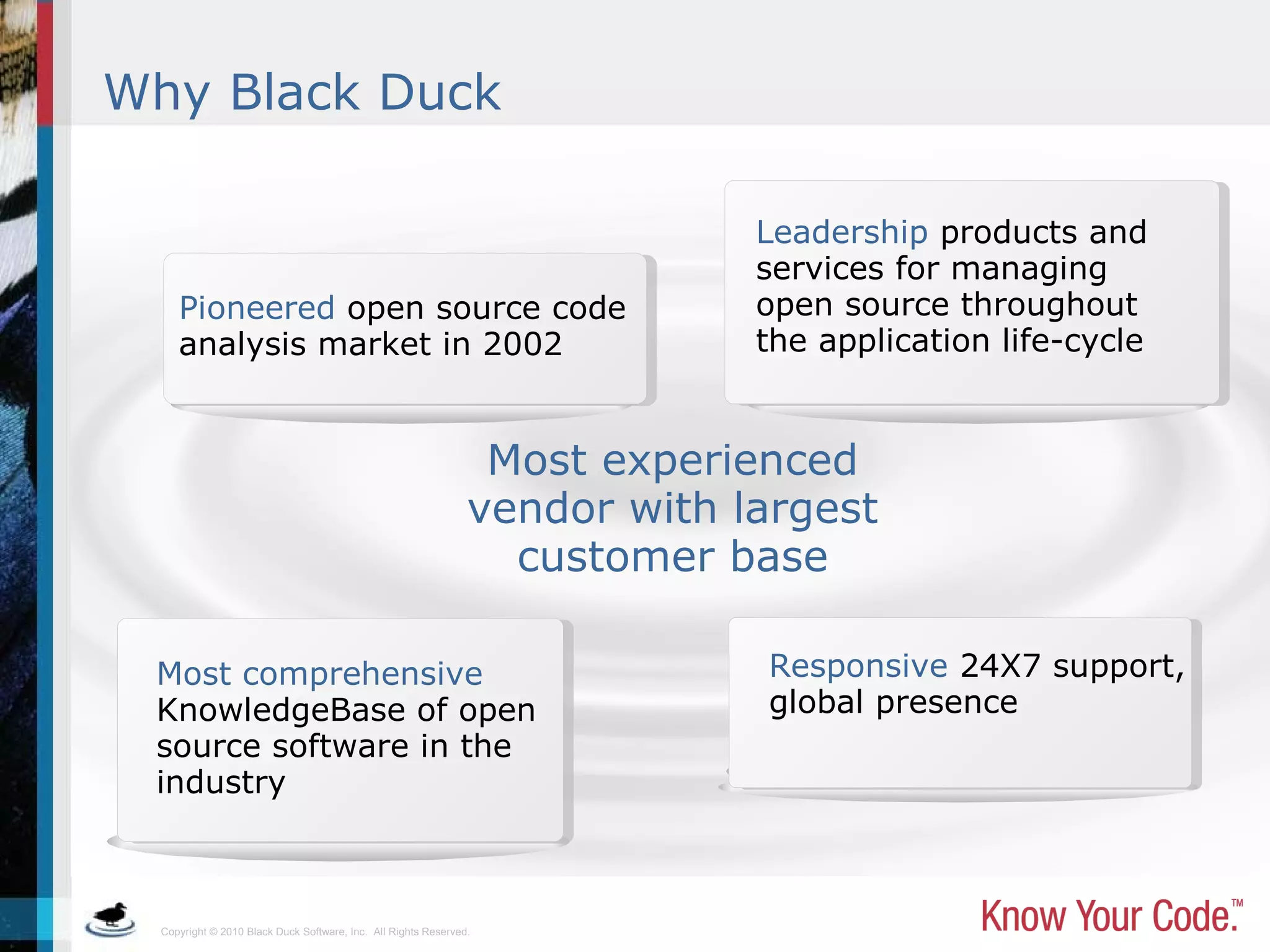
Summarizes the key features and benefits of Black Duck Suite, emphasizing its support and scalability.


