Presented by:
Aziz Ullah
M.Phil in Zoology Wildlife and
Fisheries.
(PMAS. AAUR Pakistan).
Contact Information:
Email: uaziz7003@gmail.com
Chapter # 26
Biotechnology
Contents
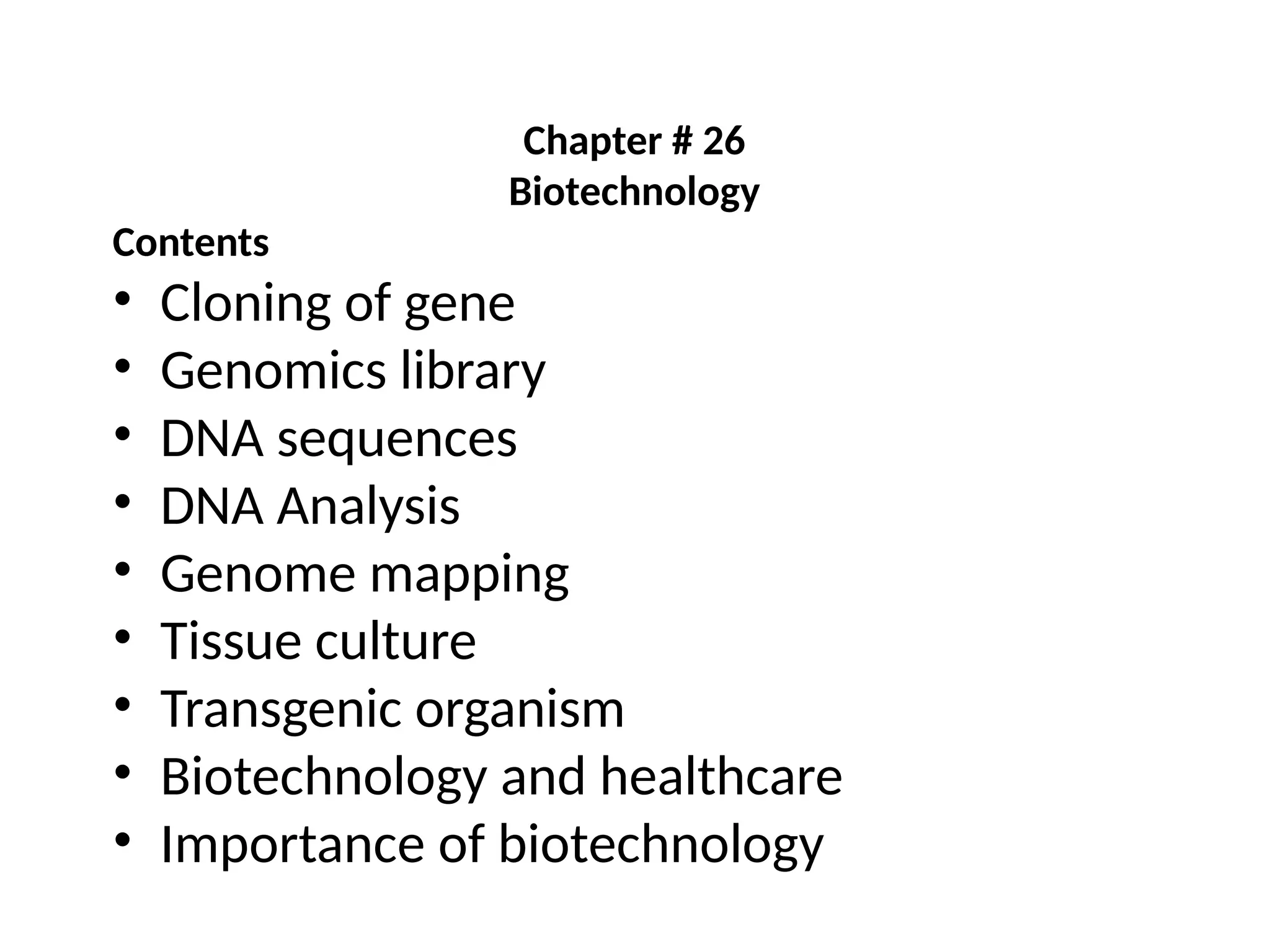
• Cloning of gene
• Genomics library
• DNA sequences
• DNA Analysis
• Genome mapping
• Tissue culture
• Transgenic organism
• Biotechnology and healthcare
• Importance of biotechnology
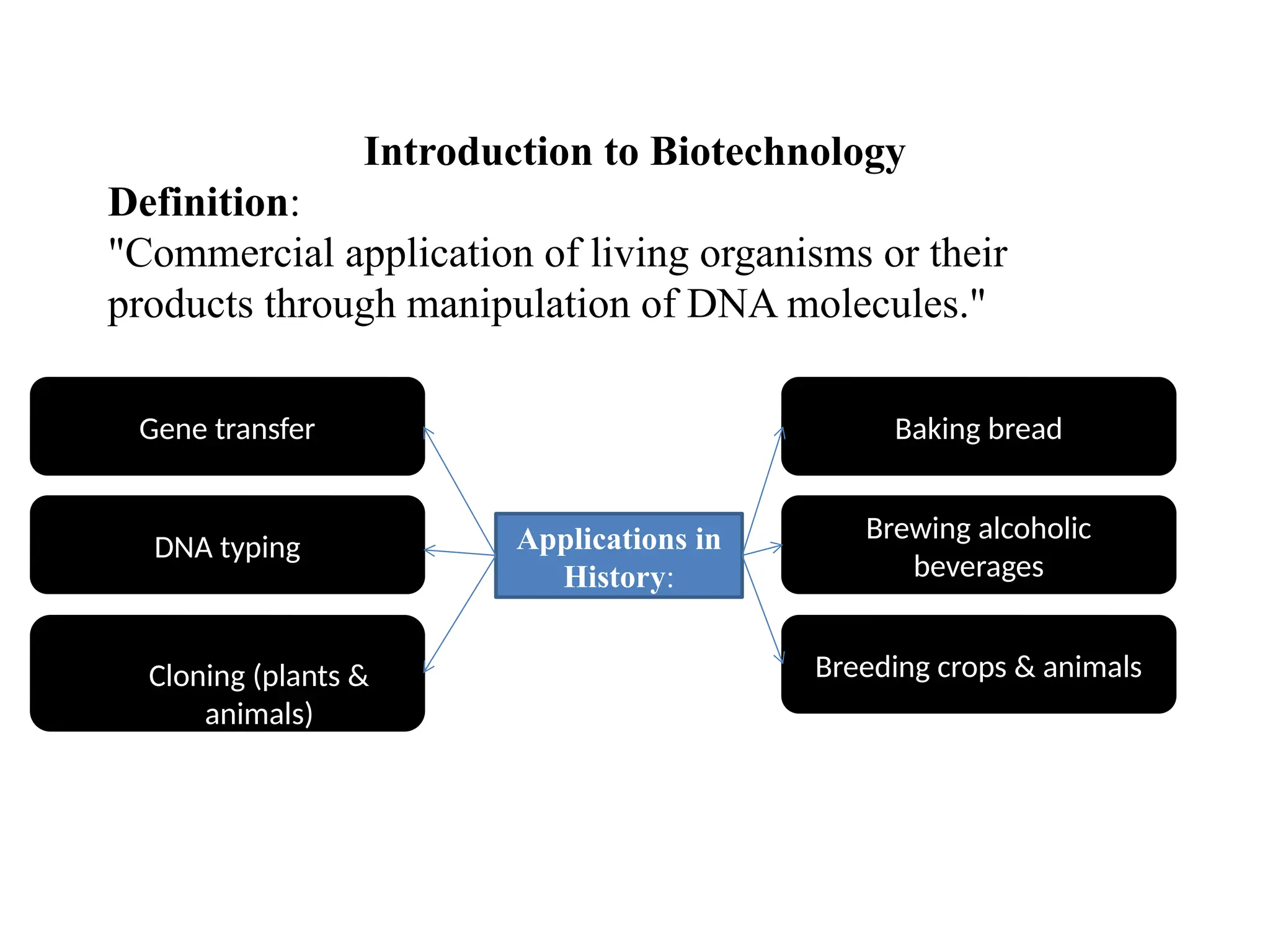
Introduction to Biotechnology
Definition:
"Commercial application of living organisms or their
products through manipulation of DNA molecules."
Applications in
History:
Baking bread
Brewing alcoholic
beverages
Breeding crops & animals
Gene transfer
DNA typing
Cloning (plants &
animals)
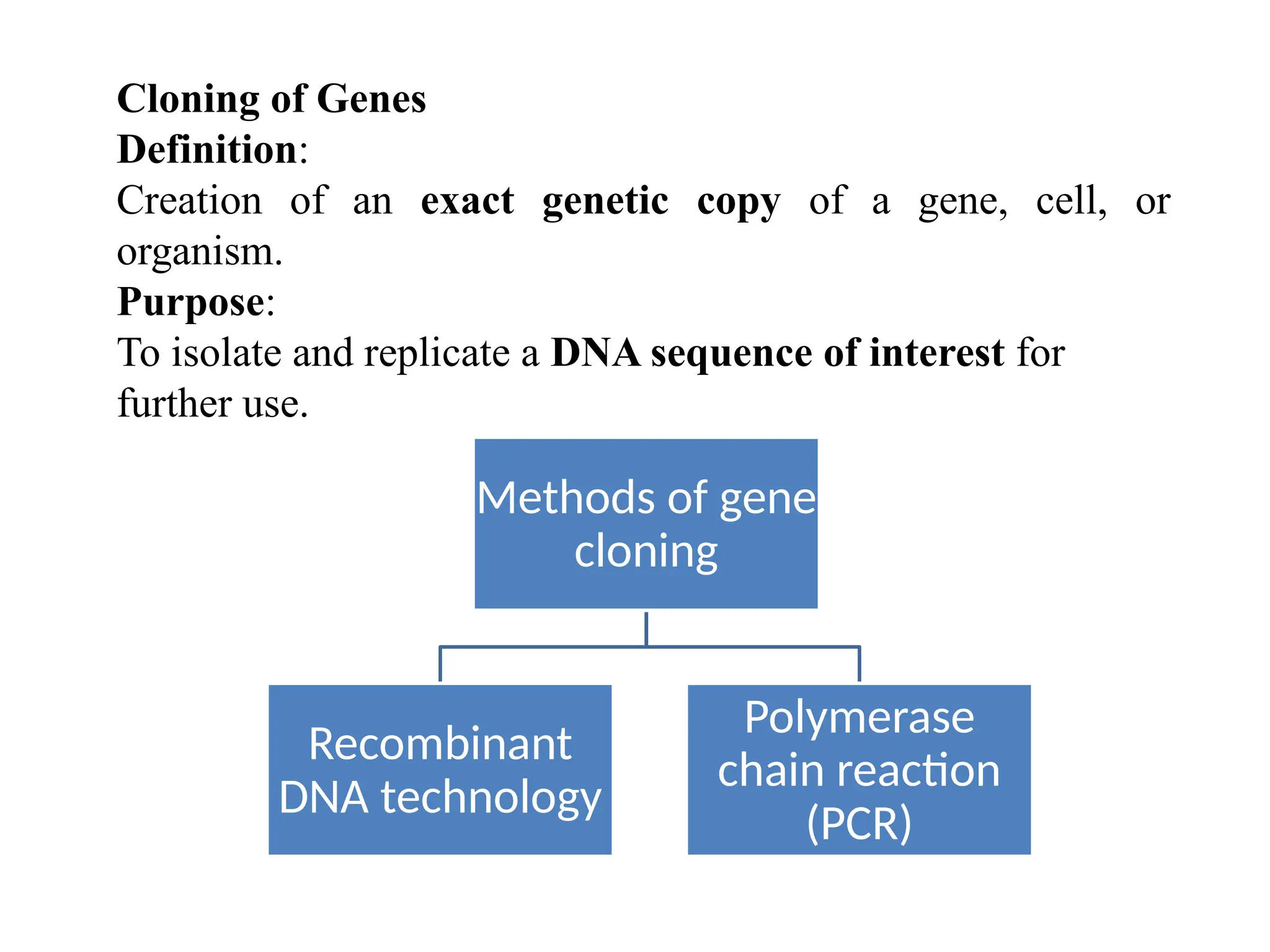
Cloning of Genes
Definition:
Creation of an exact genetic copy of a gene, cell, or
organism.
Purpose:
To isolate and replicate a DNA sequence of interest for
further use.
Methods of gene
cloning
Recombinant
DNA technology
Polymerase
chain reaction
(PCR)
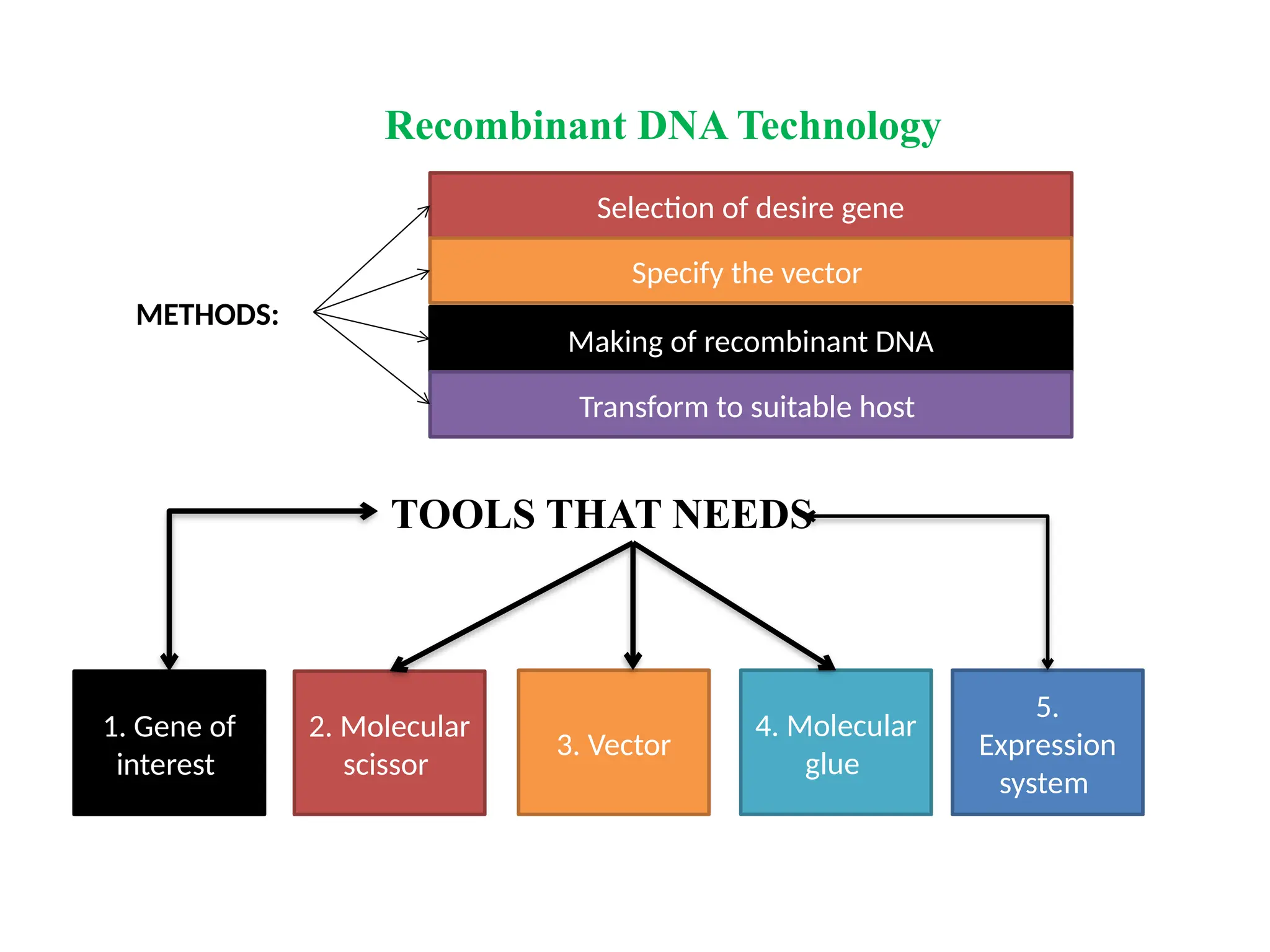
Recombinant DNA Technology
TOOLS THAT NEEDS
METHODS:
Selection of desire gene
Specify the vector
Making of recombinant DNA
Transform to suitable host
1. Gene of
interest
2. Molecular
scissor
3. Vector
4. Molecular
glue
5.
Expression
system
Detail of Genetic Recombination Technology
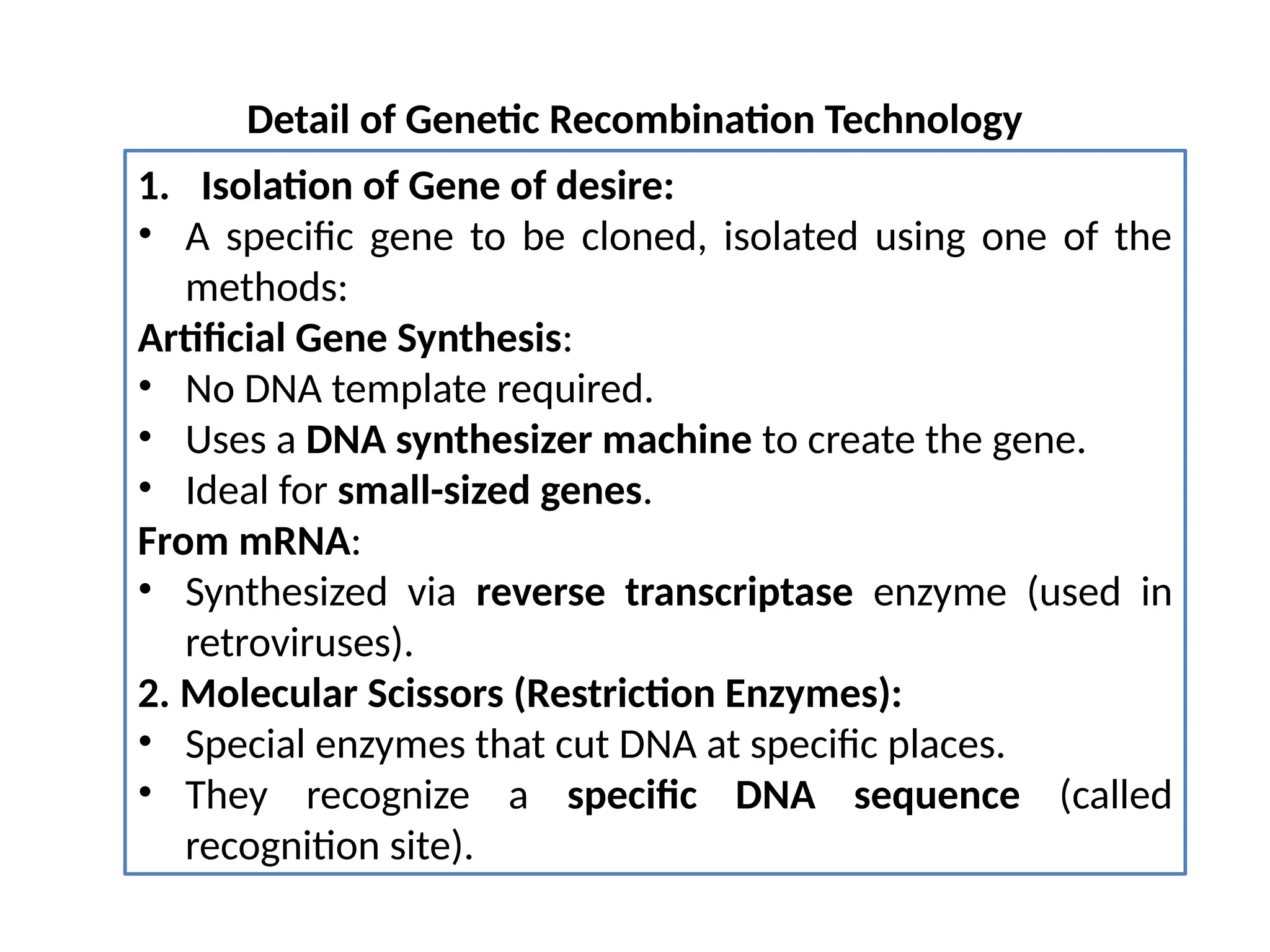
1. Isolation of Gene of desire:
• A specific gene to be cloned, isolated using one of the
methods:
Artificial Gene Synthesis:
• No DNA template required.
• Uses a DNA synthesizer machine to create the gene.
• Ideal for small-sized genes.
From mRNA:
• Synthesized via reverse transcriptase enzyme (used in
retroviruses).
2. Molecular Scissors (Restriction Enzymes):
• Special enzymes that cut DNA at specific places.
• They recognize a specific DNA sequence (called
recognition site).
Detail of Genetic Recombination Technology
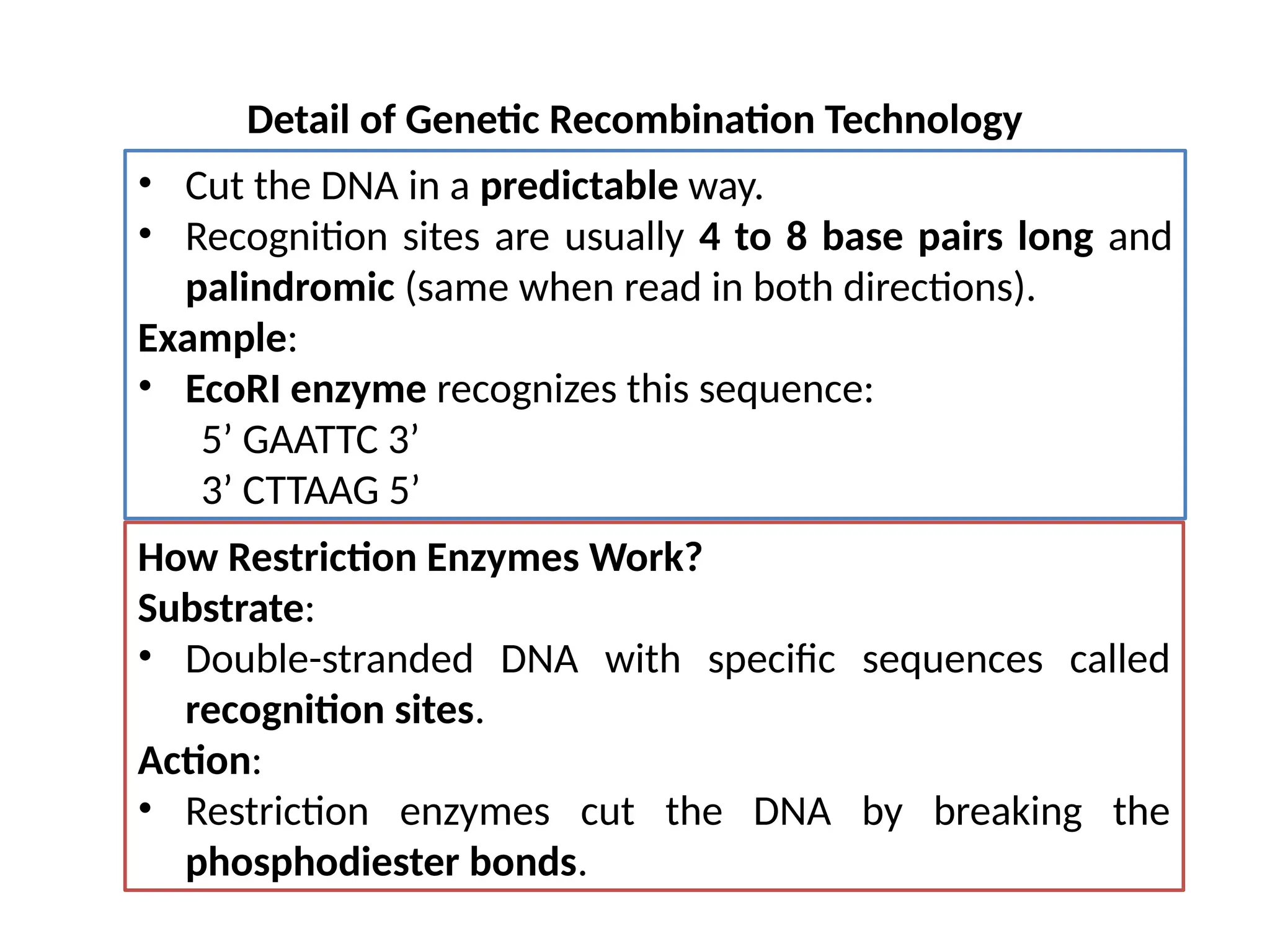
• Cut the DNA in a predictable way.
• Recognition sites are usually 4 to 8 base pairs long and
palindromic (same when read in both directions).
Example:
• EcoRI enzyme recognizes this sequence:
5’ GAATTC 3’
3’ CTTAAG 5’
How Restriction Enzymes Work?
Substrate:
• Double-stranded DNA with specific sequences called
recognition sites.
Action:
• Restriction enzymes cut the DNA by breaking the
phosphodiester bonds.
Detail of Genetic Recombination Technology
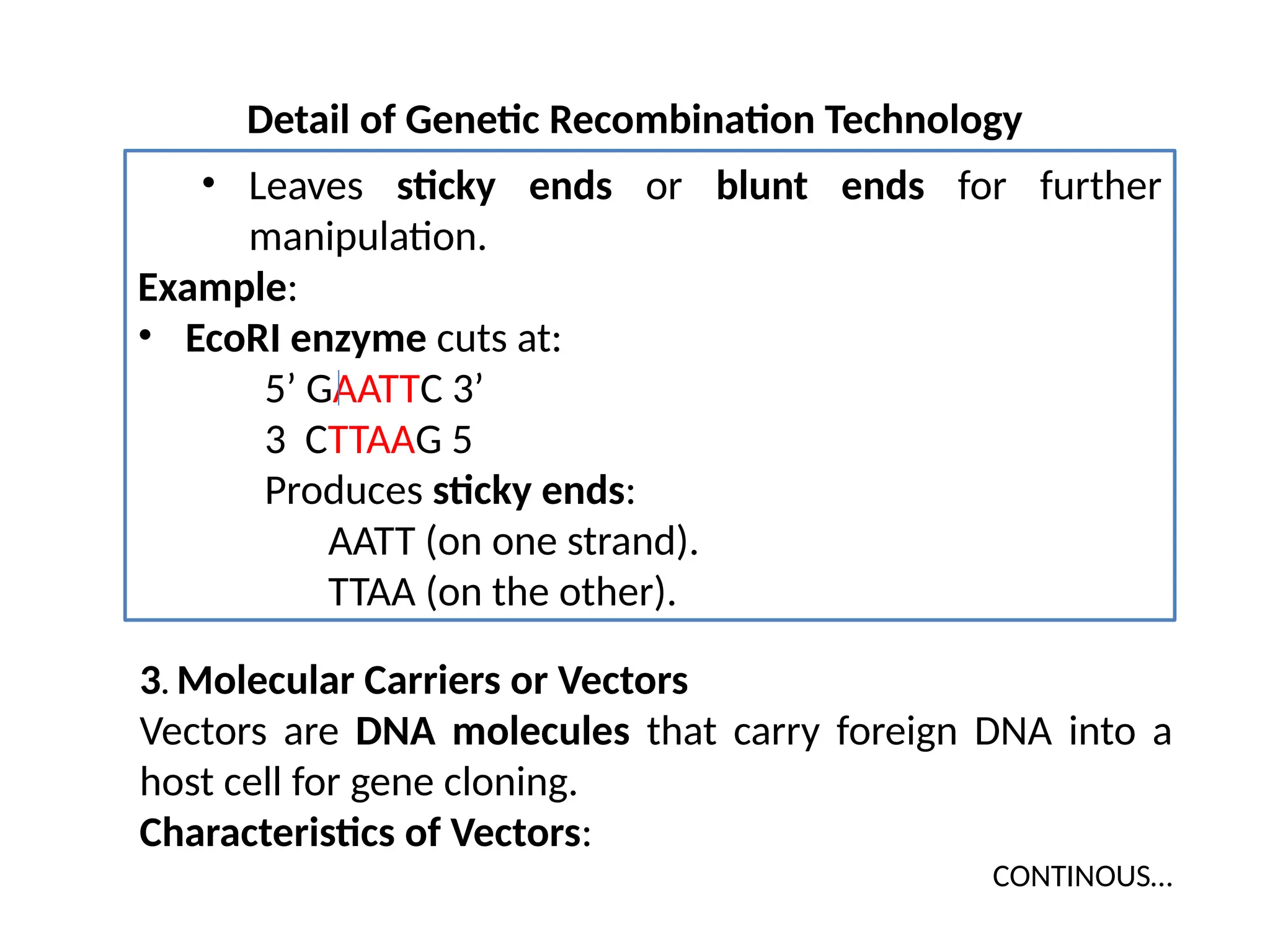
• Leaves sticky ends or blunt ends for further
manipulation.
Example:
• EcoRI enzyme cuts at:
5’ GAATTC 3’
3 CTTAAG 5
Produces sticky ends:
AATT (on one strand).
TTAA (on the other).
3. Molecular Carriers or Vectors
Vectors are DNA molecules that carry foreign DNA into a
host cell for gene cloning.
Characteristics of Vectors:
CONTINOUS…
Detail of Genetic Recombination Technology
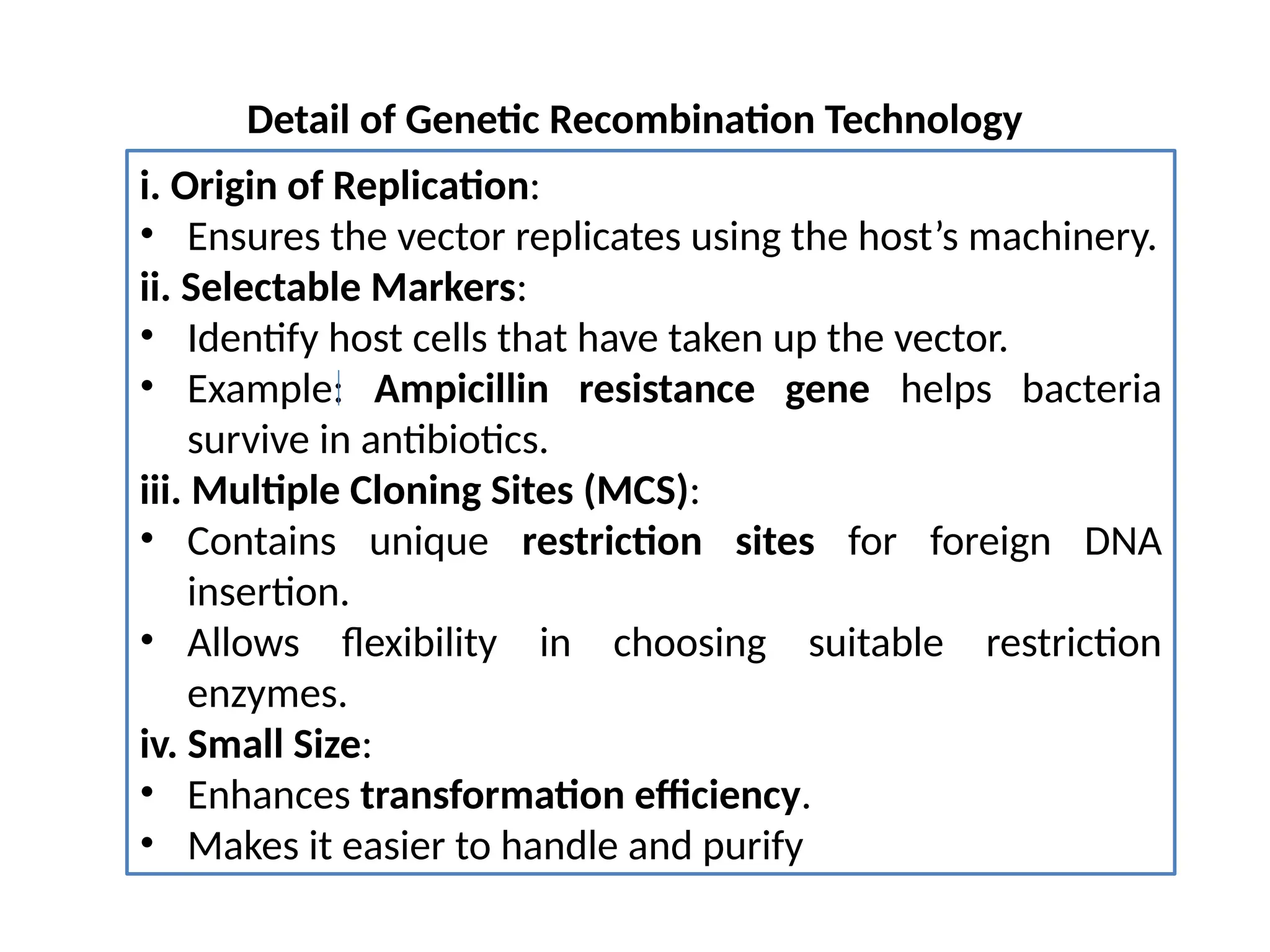
i. Origin of Replication:
• Ensures the vector replicates using the host’s machinery.
ii. Selectable Markers:
• Identify host cells that have taken up the vector.
• Example: Ampicillin resistance gene helps bacteria
survive in antibiotics.
iii. Multiple Cloning Sites (MCS):
• Contains unique restriction sites for foreign DNA
insertion.
• Allows flexibility in choosing suitable restriction
enzymes.
iv. Small Size:
• Enhances transformation efficiency.
• Makes it easier to handle and purify
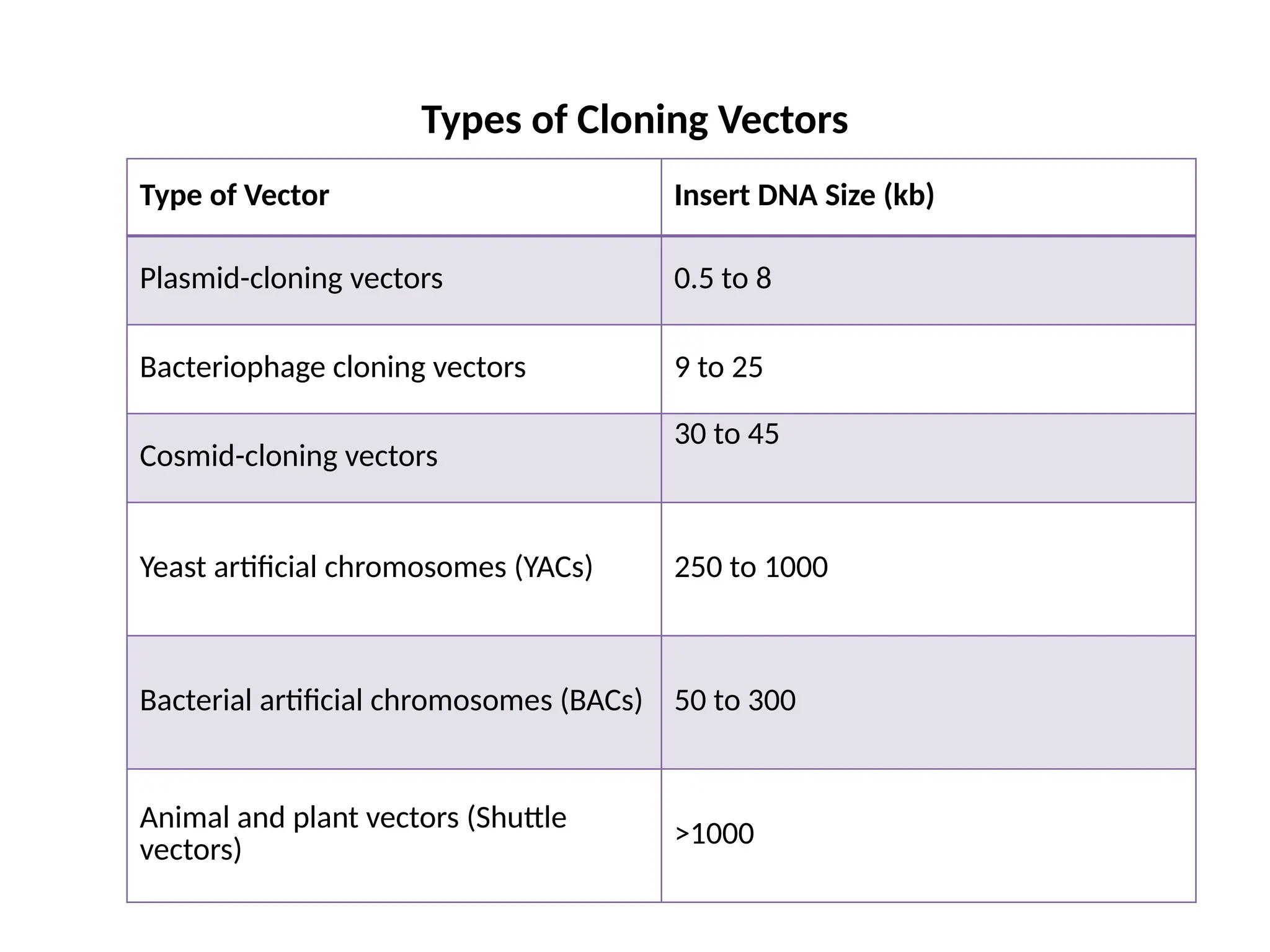
Types of Cloning Vectors
Type of Vector Insert DNA Size (kb)
Plasmid-cloning vectors 0.5 to 8
Bacteriophage cloning vectors 9 to 25
Cosmid-cloning vectors
30 to 45
Yeast artificial chromosomes (YACs) 250 to 1000
Bacterial artificial chromosomes (BACs) 50 to 300
Animal and plant vectors (Shuttle
vectors)
>1000
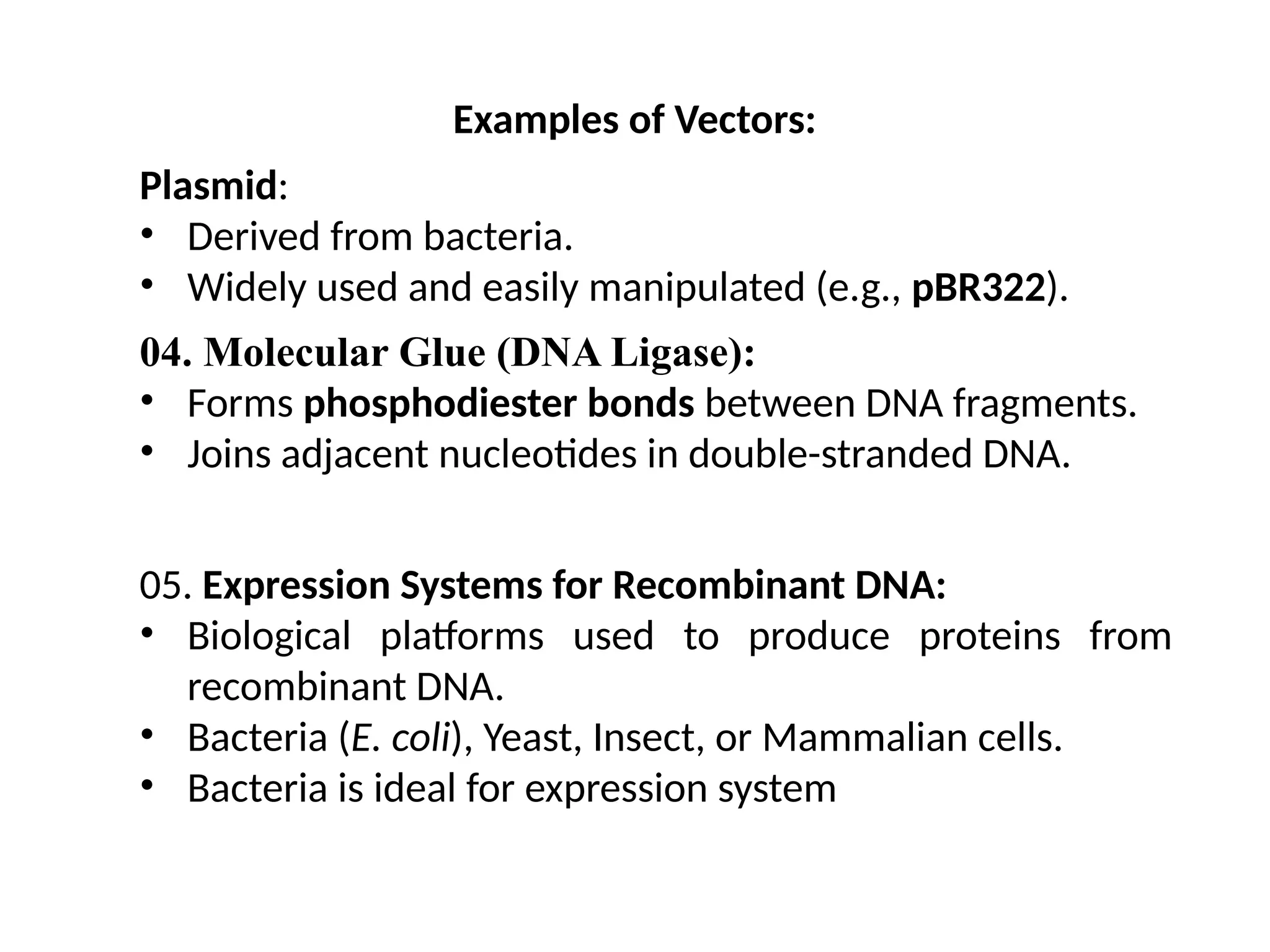
Examples of Vectors:
Plasmid:
• Derived from bacteria.
• Widely used and easily manipulated (e.g., pBR322).
04. Molecular Glue (DNA Ligase):
• Forms phosphodiester bonds between DNA fragments.
• Joins adjacent nucleotides in double-stranded DNA.
05. Expression Systems for Recombinant DNA:
• Biological platforms used to produce proteins from
recombinant DNA.
• Bacteria (E. coli), Yeast, Insect, or Mammalian cells.
• Bacteria is ideal for expression system
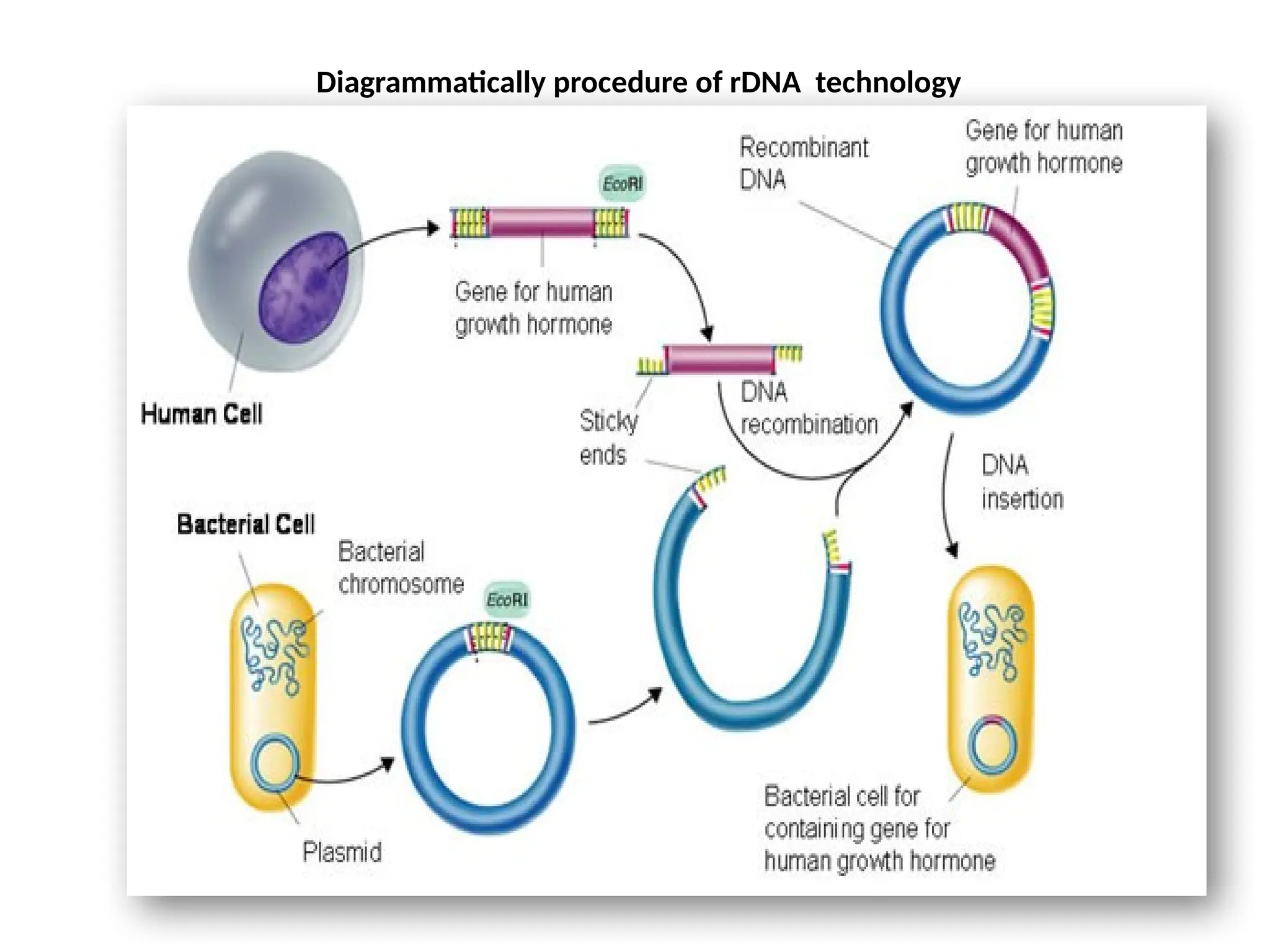
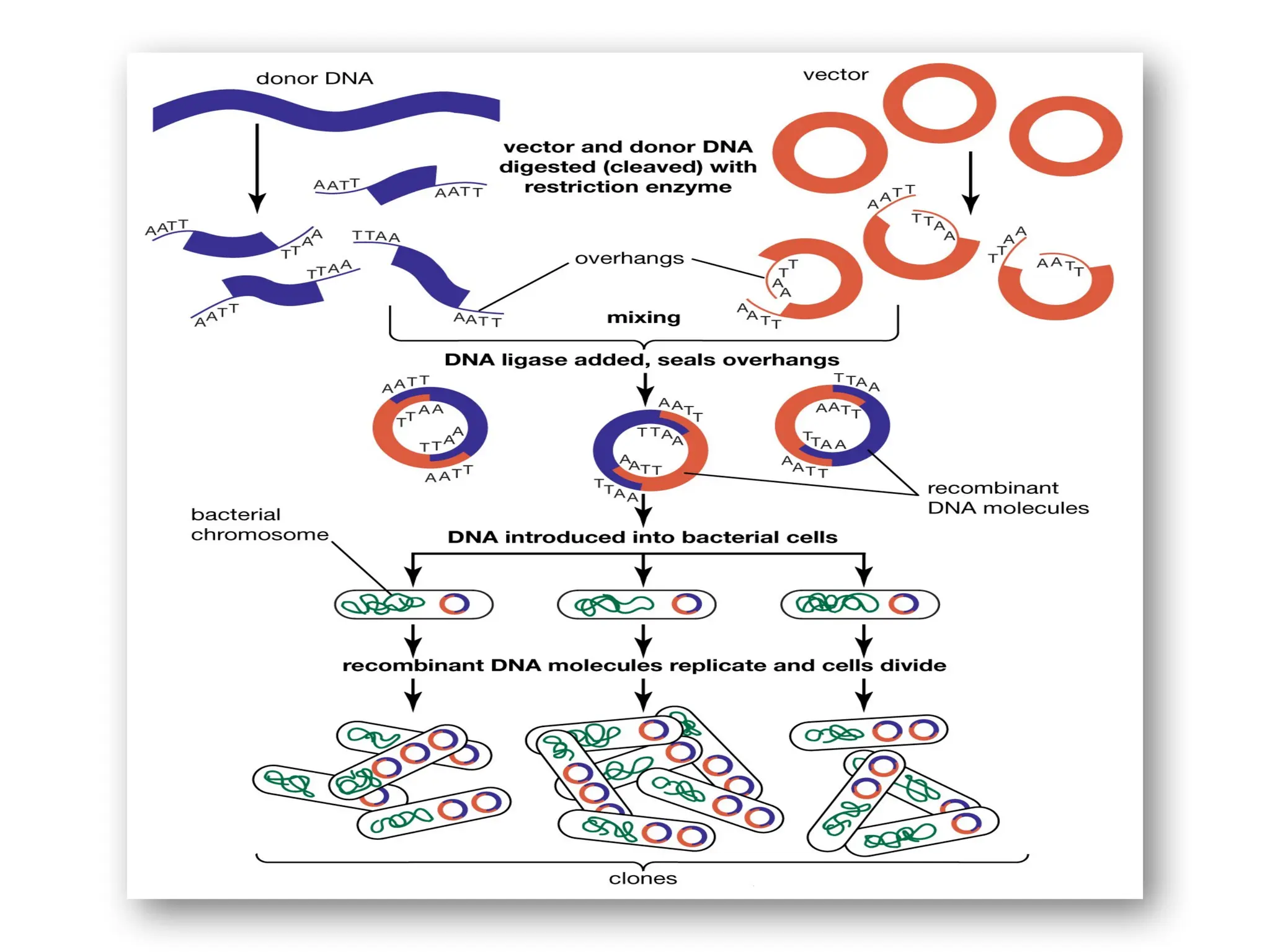
Diagrammatically procedure of rDNA technology
Introduction to PCR
Definition:
PCR amplifies DNA to generate thousands/millions of copies.
Invented by:
Kary Mullis (1983), Nobel Prize (1993).
Mechanism:
In vitro replication using DNA polymerase.
Purpose:
Amplifies a target DNA sequence for research, medical, or
forensic use.
Components of PCR
1. Template DNA:
The DNA sequence to be amplified.
2. dNTPs (deoxynucleotides):
Raw materials for DNA synthesis (dATP, dGTP, dCTP, dTTP).
3. Primers:
• Short DNA sequences that guide DNA polymerase.
• Forward Primer: Binds to one strand.
• Reverse Primer: Binds to the complementary strand.
4. Taq Polymerase:
• Heat-resistant enzyme from Thermus aquaticus.
• Synthesizes new DNA at high temperatures.
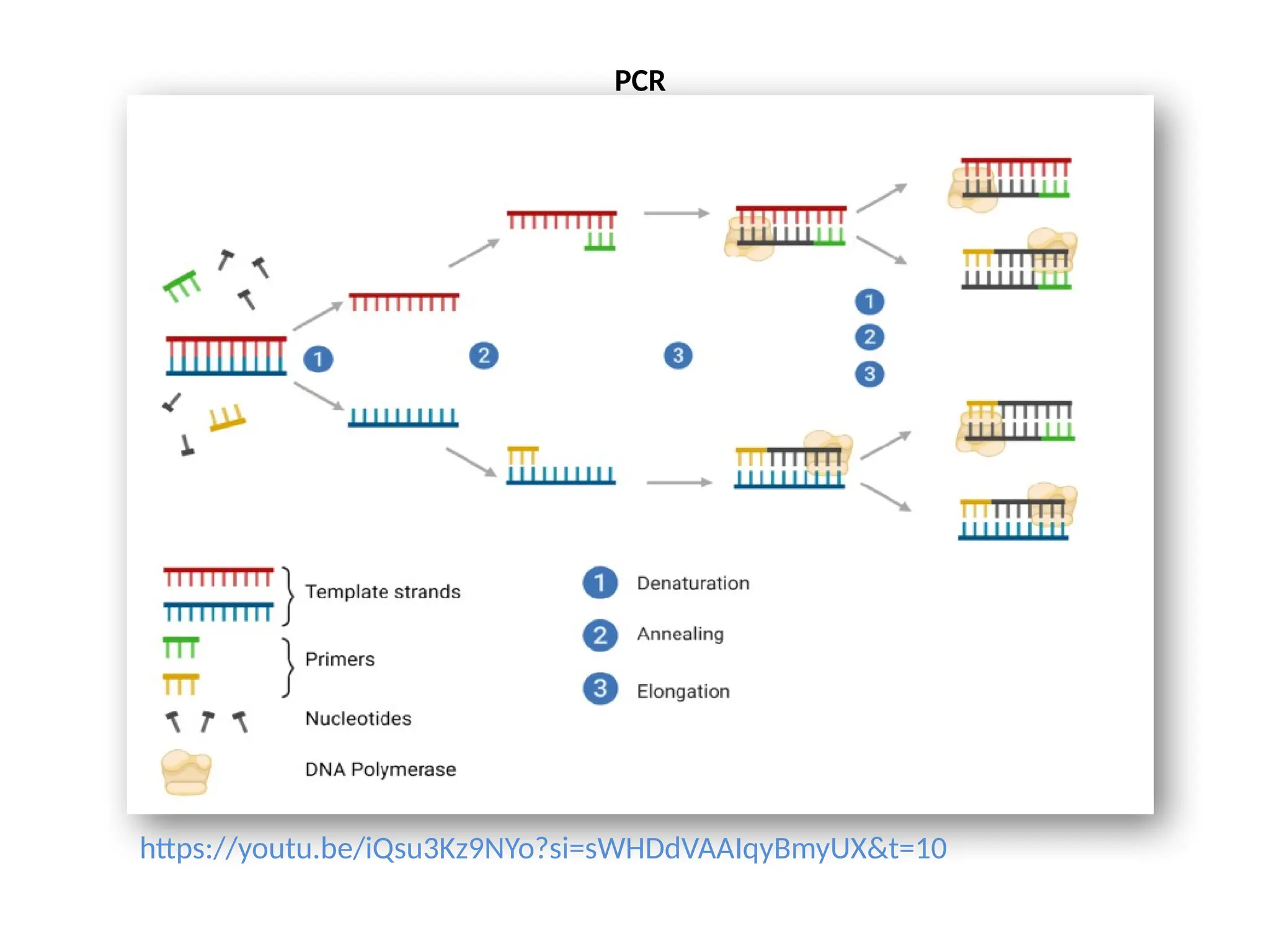
Steps of PCR Cycle
Denaturation (94°C):
DNA strands separate into single strands.
Annealing (54°C):
Primers attach to complementary regions on single-
stranded DNA.
Extension (72°C):
Taq Polymerase extends primers, synthesizing new DNA
strands.
Amplification Process
• Each cycle doubles the DNA.
• Exponential growth: 1 → 2 → 4 → 8 → 16 DNA molecules.
• Thermal Cycler automates cycles: Denaturation →
Annealing → Extension.
Primer and Taq Polymerase
Primer:
Directs DNA polymerase to the target region.
Forward Primer: Reads template strand 5’ to 3’.
Reverse Primer: Complements target strand.
Taq Polymerase:
Heat-tolerant enzyme from hot spring bacteria.
Works optimally at 72°C for rapid DNA synthesis.
PCR
https://youtu.be/iQsu3Kz9NYo?si=sWHDdVAAIqyBmyUX&t=10
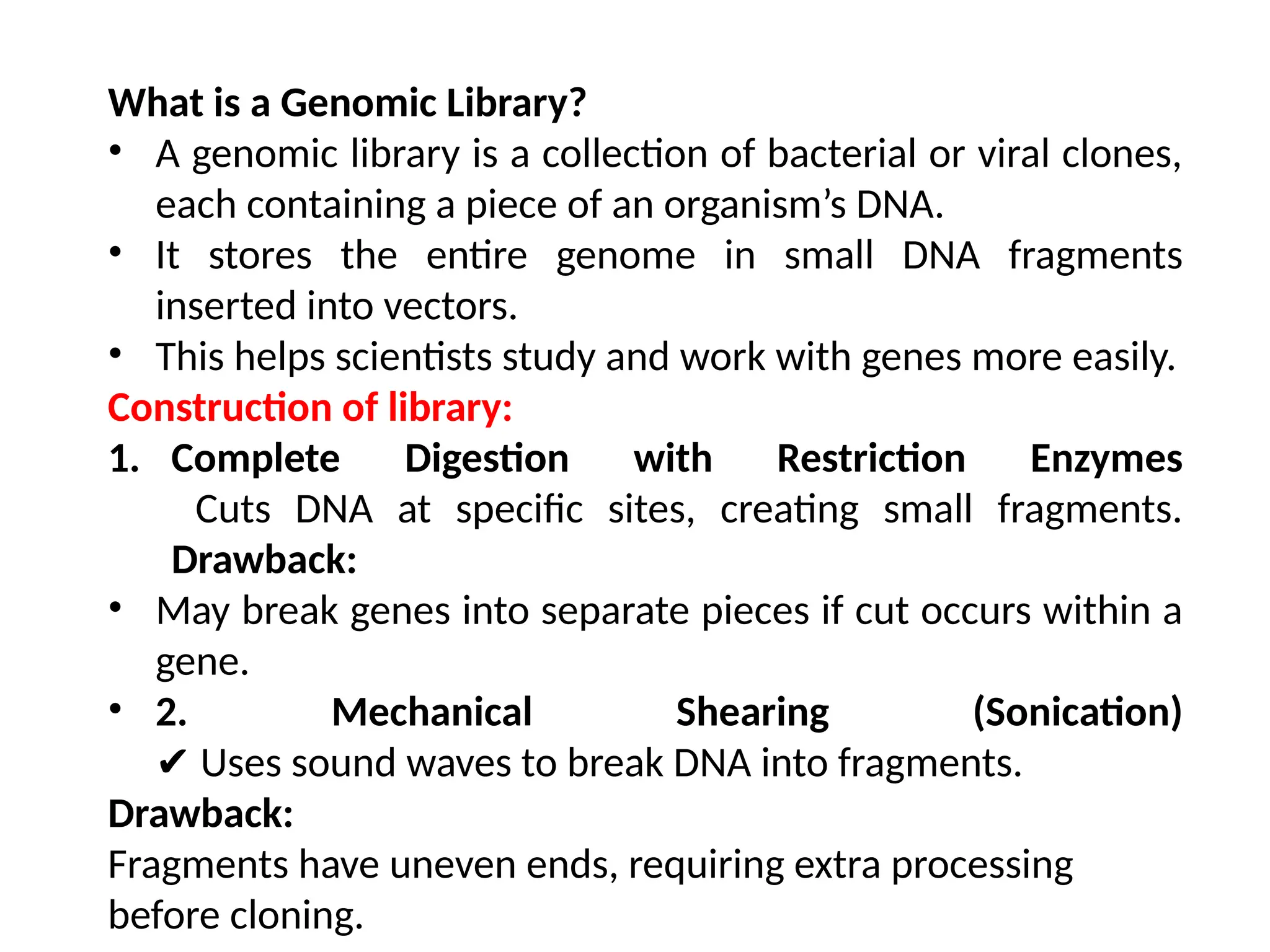
What is a Genomic Library?
• A genomic library is a collection of bacterial or viral clones,
each containing a piece of an organism’s DNA.
• It stores the entire genome in small DNA fragments
inserted into vectors.
• This helps scientists study and work with genes more easily.
Construction of library:
1. Complete Digestion with Restriction Enzymes
Cuts DNA at specific sites, creating small fragments.
Drawback:
• May break genes into separate pieces if cut occurs within a
gene.
• 2. Mechanical Shearing (Sonication)
Uses sound waves to break DNA into fragments.
✔
Drawback:
Fragments have uneven ends, requiring extra processing
before cloning.
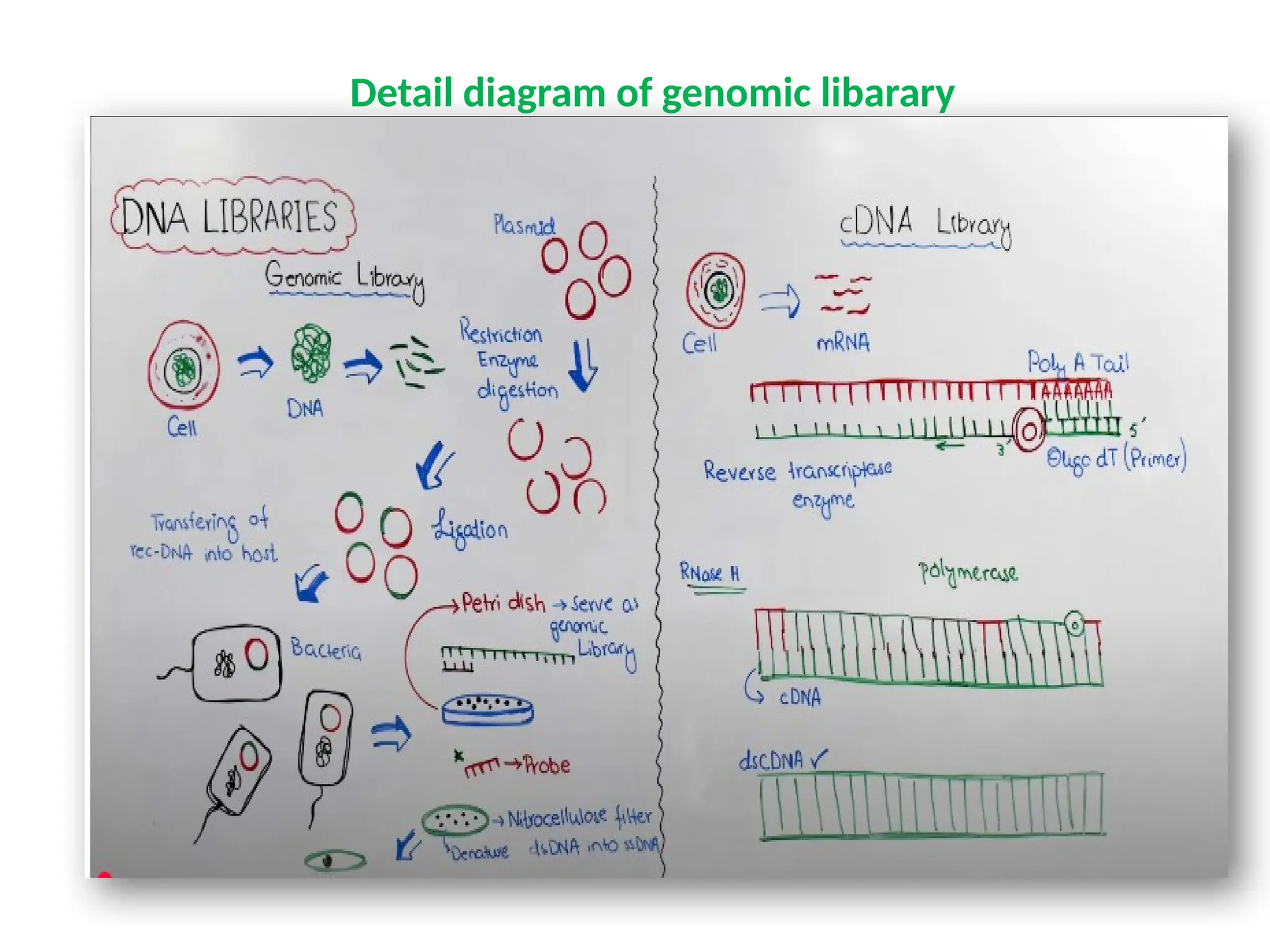
Detail diagram of genomic libarary
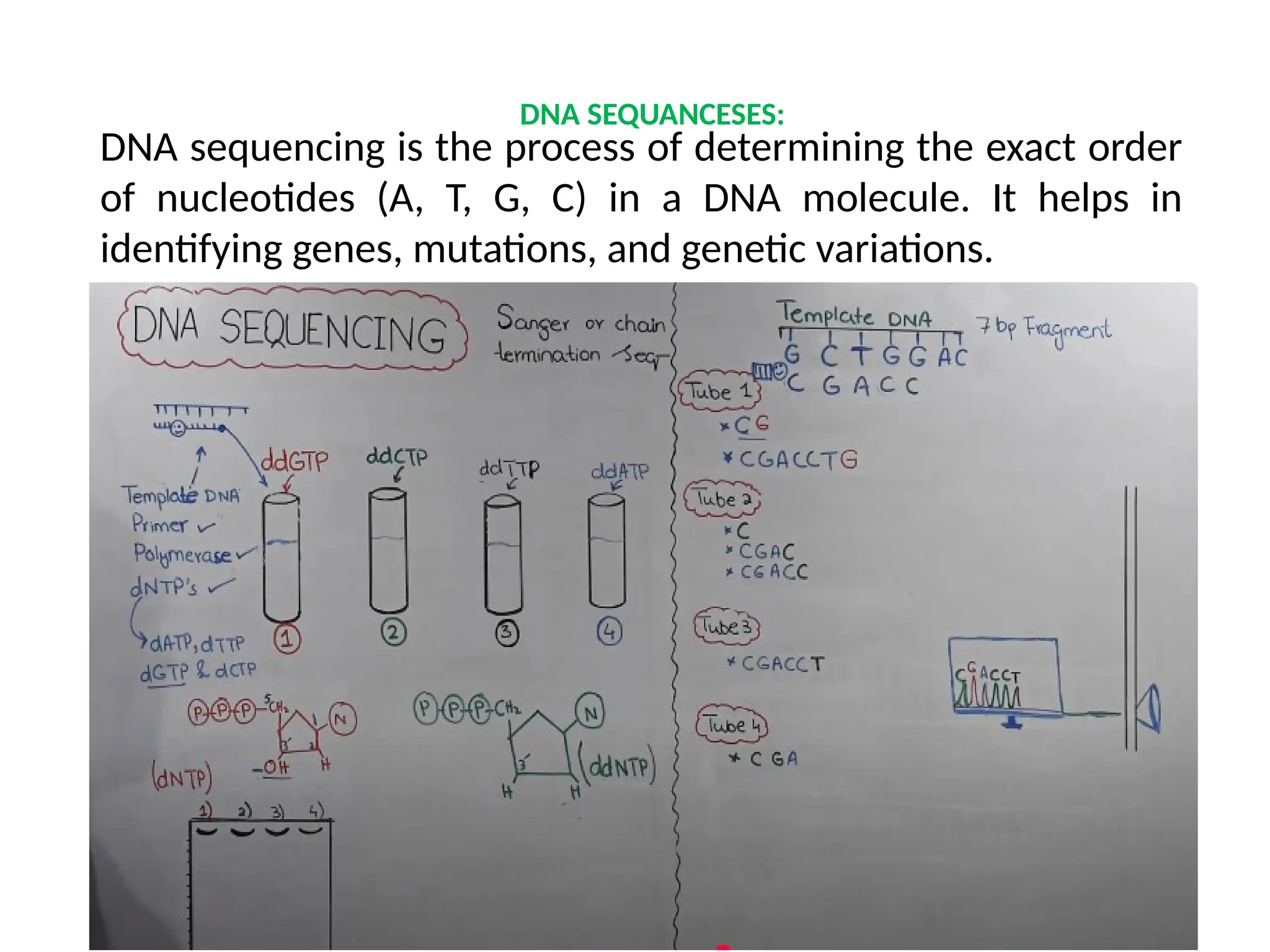
DNA sequencing is the process of determining the exact order
of nucleotides (A, T, G, C) in a DNA molecule. It helps in
identifying genes, mutations, and genetic variations.
DNA SEQUANCESES:
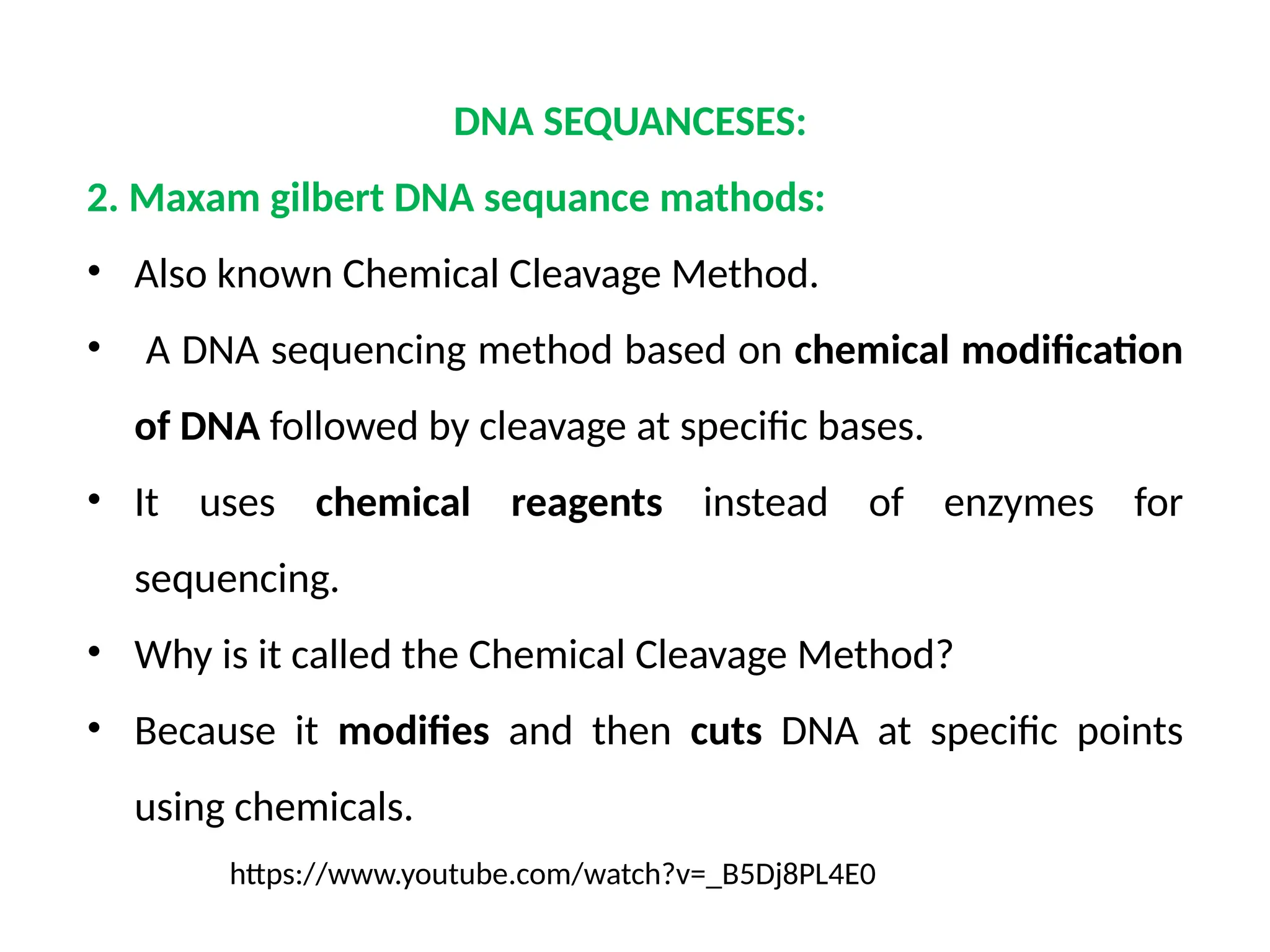
DNA SEQUANCESES:
2. Maxam gilbert DNA sequance mathods:
• Also known Chemical Cleavage Method.
• A DNA sequencing method based on chemical modification
of DNA followed by cleavage at specific bases.
• It uses chemical reagents instead of enzymes for
sequencing.
• Why is it called the Chemical Cleavage Method?
• Because it modifies and then cuts DNA at specific points
using chemicals.
https://www.youtube.com/watch?v=_B5Dj8PL4E0
Steps of the Method (Overview)
• Labeling the DNA
• Denaturation (Separation of strands)
• Chemical Treatment (Selective base cleavage)
• Electrophoresis (Separation of DNA fragments)
• Reading the sequence
DNA Labeling
DNA is labeled at one end only using radioactive phosphorus
(³²P ATP).
The enzyme kinase transfers ³²P from ATP to the 5' end of DNA.
Why is labeling necessary?
It helps in detecting the DNA fragments after cleavage.
Denaturation (Strand Separation)
Labeled DNA is heated to 90°C with Dimethyl Sulfoxide (DMSO).
This breaks the hydrogen bonds, causing DNA to separate into
single strands.
Why separate the strands?
Because sequencing needs to be done on a single strand, not
double-stranded DNA.
Chemical Cleavage
The single-stranded DNA is divided into four tubes, each treated
with different chemicals:
G (Guanine)
A+G (Adenine + Guanine)
T+C (Thymine + Cytosine)
C (Cytosine)
• These chemicals modify specific bases, making them prone to
cleavage.
Electrophoresis
• DNA fragments are separated using polyacrylamide gel
electrophoresis (PAGE).
• Shorter fragments move faster than longer ones.
• Why use gel electrophoresis?
• It arranges DNA fragments by size, helping in sequence
determination.
Reading the Sequence
The gel is exposed to X-ray film (Autoradiography).
• The pattern of bands tells us the DNA sequence.
How does it work?
• By comparing band positions, we deduce the original DNA
sequence.
Advantages of Maxam-Gilbert Sequencing
• Good for short sequences
• Can analyze DNA with complex structure
• Does not require DNA polymerase (unlike Sanger method)
• The pattern of bands tells us the DNA sequence.
How does it work?
• By comparing band positions, we deduce the original DNA
sequence.
Advantages of Maxam-Gilbert Sequencing
• Good for short sequences
• Can analyze DNA with complex structure
• Does not require DNA polymerase (unlike Sanger method)
DNA Fingerprinting – RFLP Method
• Developed by Alec Jeffreys (1985)
Introduction to DNA Fingerprinting
What is DNA Fingerprinting?
• A technique used to identify individuals based on their unique
DNA sequences.
Why is it important?
• Used in crime investigation, paternity testing, and species
identification.
Who discovered it?
• Developed by Alec Jeffreys in 1985.
How DNA Fingerprinting Works
Every person (except identical twins) has unique DNA patterns.
DNA analysis can compare genetic material to:
✅ Identify a person
✅ Confirm biological relationships
✅ Solve crimes
✅ Study evolution
Methods of DNA Analysis
There are different methods to analyze DNA:
1. RFLP (Restriction Fragment Length Polymorphism)
2. PCR-based methods
3. STR (Short Tandem Repeats)
We will focus on the RFLP method
Steps of RFLP DNA Fingerprinting (Overview)
1. DNA Collection
2. DNA Cutting (Restriction Enzymes
3. Separation of Fragments (Gel Electrophoresis)
4. Transferring DNA (Southern Blotting)
5. Visualization (Autoradiography)
6. Analysis of DNA Bands.
DNA Collection
• Blood, hair roots, saliva, or skin cells
• Even ancient mummies and fossils (for evolutionary studies)
• Why is a small amount enough
• Because DNA can be amplified using PCR.
How does it work?
• Electric current pulls DNA from negative (-) to positive (+)
pole.
• Smaller fragments move faster, and larger ones move slower.
• This step separates DNA by size.
Southern Blotting
What is Southern Blotting?
• A technique used to transfer DNA fragments from gel to a
membrane.
Why is it needed?
• To make DNA bands visible using a DNA probe.
Cutting DNA (RFLP Concept)
What is RFLP?
• DNA is cut into fragments using restriction enzymes.
Why is it unique?
• Every person has different cutting sites, except identical twins.
Result:
DNA fragments of different sizes are created.
Separation of Fragments (Gel Electrophoresis)
DNA fragments are loaded onto an agarose gel.
Autoradiography (Visualizing DNA Bands)
• A radioactive probe binds to specific DNA sequences.
• The membrane is placed under X-ray film.
• Result: DNA bands appear like a barcode pattern.
Analysis of DNA Bands
• The banding pattern is compared to:
• Crime scene evidence
• Paternity tests
• Evolutionary studies
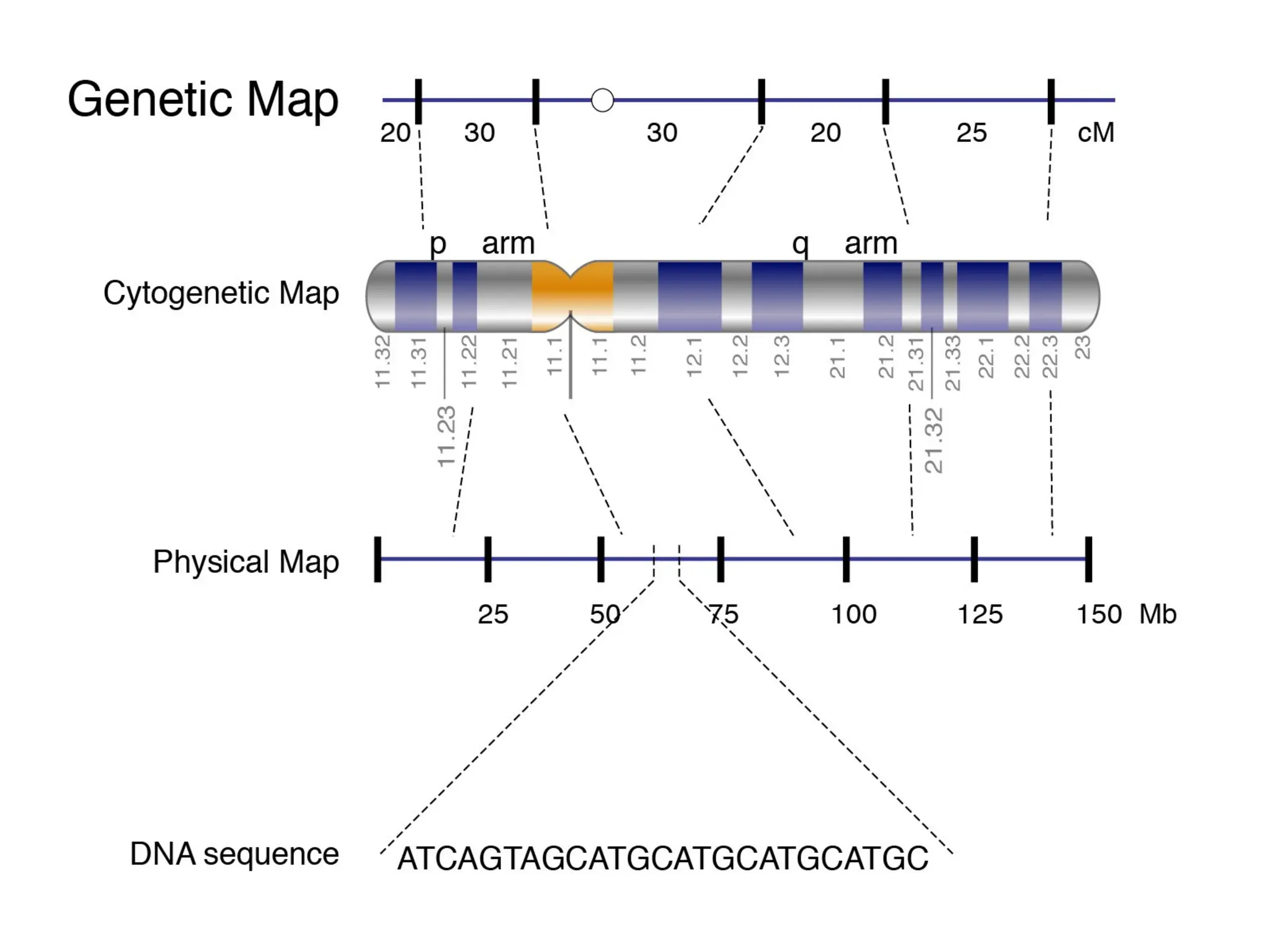
Genome Maps
• A genome is the complete set of genes in an organism.
• Diploid organisms have two copies of the genome, while
sperm and egg cells have one.
• Genome maps help scientists locate genes within the human
genome, just like road maps help in finding locations.
Two main types
1. Genetic Maps (Like Highway Maps)
Show the relative positions of genes based on how often they are
inherited together.
Example: If two genes are inherited together frequently, they are
close on the chromosome.
2. Physical Maps (Like Street Maps
• Show the exact distance between genes in base pairs.
• Example: The distance between Gene A and Gene B might be
1 million base pairs.
Genetic Markers
• Just like cities on a map, genetic markers help identify specific
gene locations.
• A marker is any DNA variation that can be inherited.
• Markers can be:
• Within genes (e.g., eye color).
• In non-coding DNA regions (used for unique identification).
• DNA markers are crucial for genetic mapping and tracking
mutations over generations.
Common DNA Markers
1. RFLPs – Restriction Fragment Length Polymorphisms
2. VNTRs – Variable Number of Tandem Repeats
3. Microsatellites – Short repeating sequences in DNA
4. SNPs – Single Nucleotide Polymorphisms (single base changes
in DNA).
Genome Analysis & Genomics
• Genomics is the study of entire DNA sequences in organisms.
• The first bacterial genome was sequenced in 1995
(Haemophilus influenzae).
• Fred Sanger earlier sequenced a bacteriophage genome,
winning a Nobel Prize.
• The Human Genome Project (HGP) began in 1990 and was
completed in 2003.
• A global research initiative led by the U.S. Department of
Energy & NIH.James D.
• Watson was the first director; Francis Collins led its
completion.
• Funded by the US, UK (Wellcome Trust), Japan, France,
Germany, and China.
Major Goals of HGP
• Identify all 20,000–25,000 genes in human DNA.
• Determine the 3 billion DNA base pair sequences.
• Store information in databases & develop analysis tools.
• Transfer technology to the private sector.
• Address ethical, legal, and social issues (ELSI).
Benefits of HGP
• Molecular Medicine
• Better disease diagnosis.
• Early detection of genetic disorders.
• Development of targeted gene therapy and customized
drugs (pharmacogenomics).
• Anthropology & Evolution
• Studying human migration through genetic markers.
• Understanding evolution via DNA mutations.
• Tracing male and female ancestry using Y-chromosome and
mitochondrial DNA.
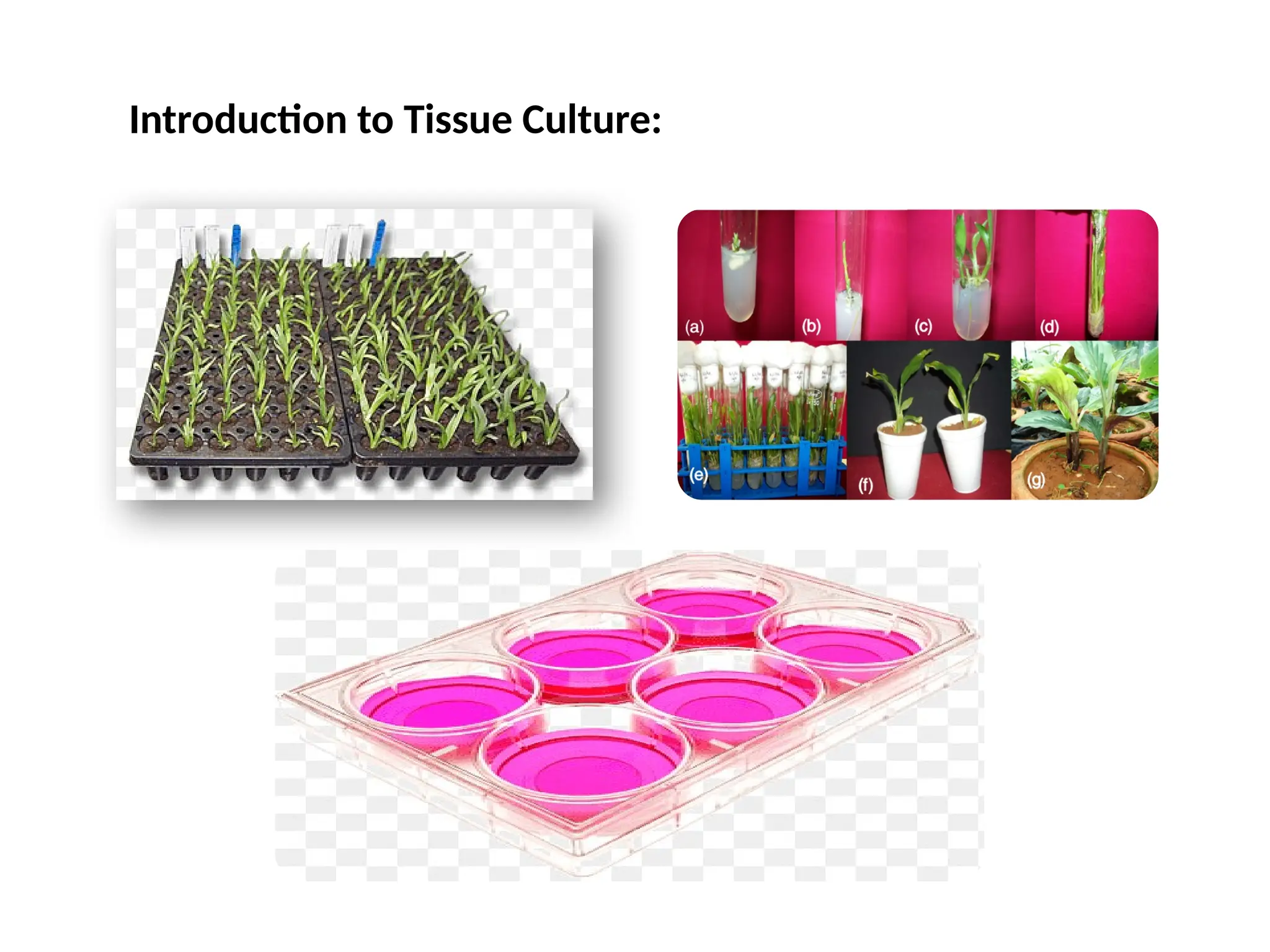
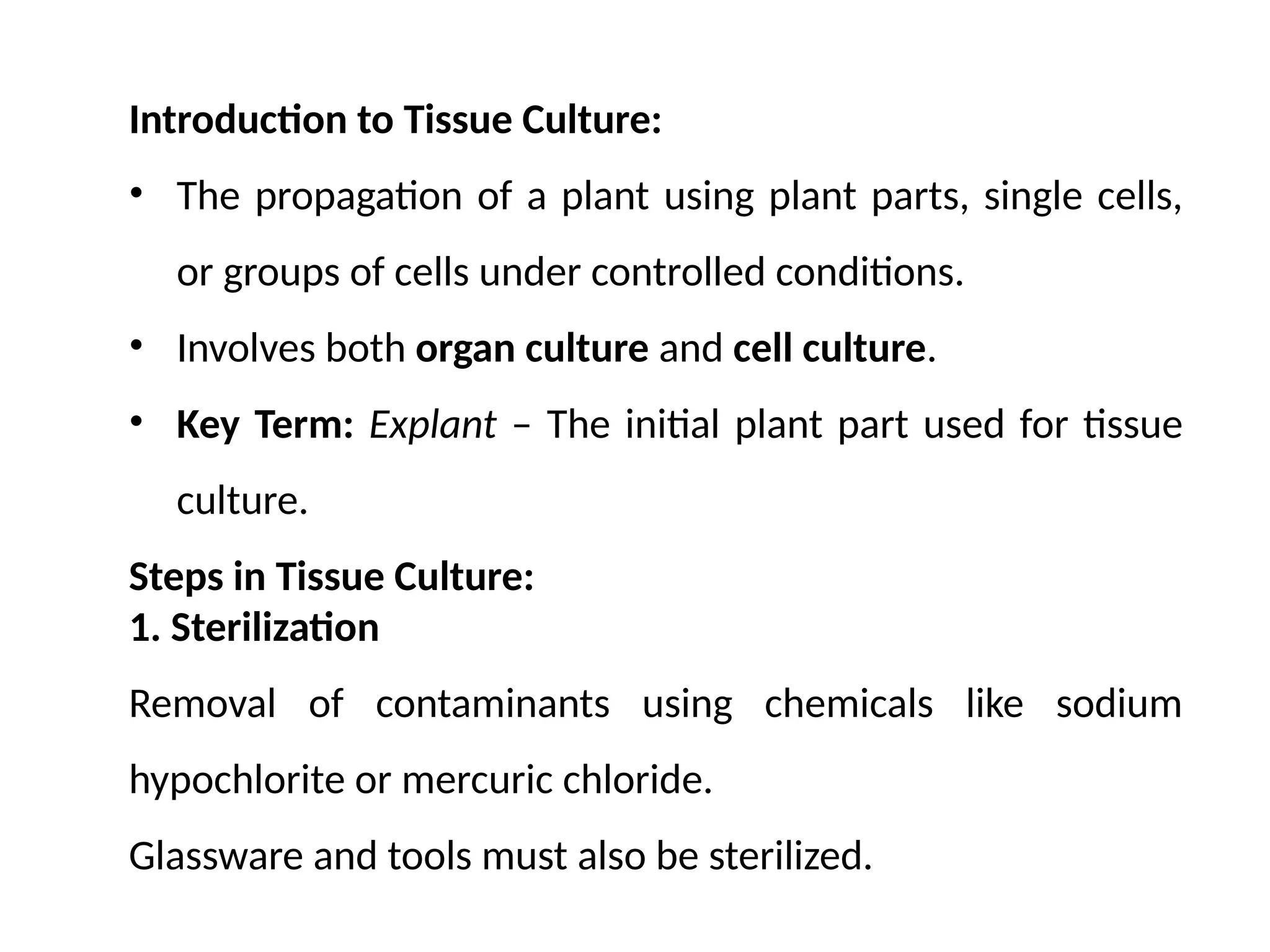
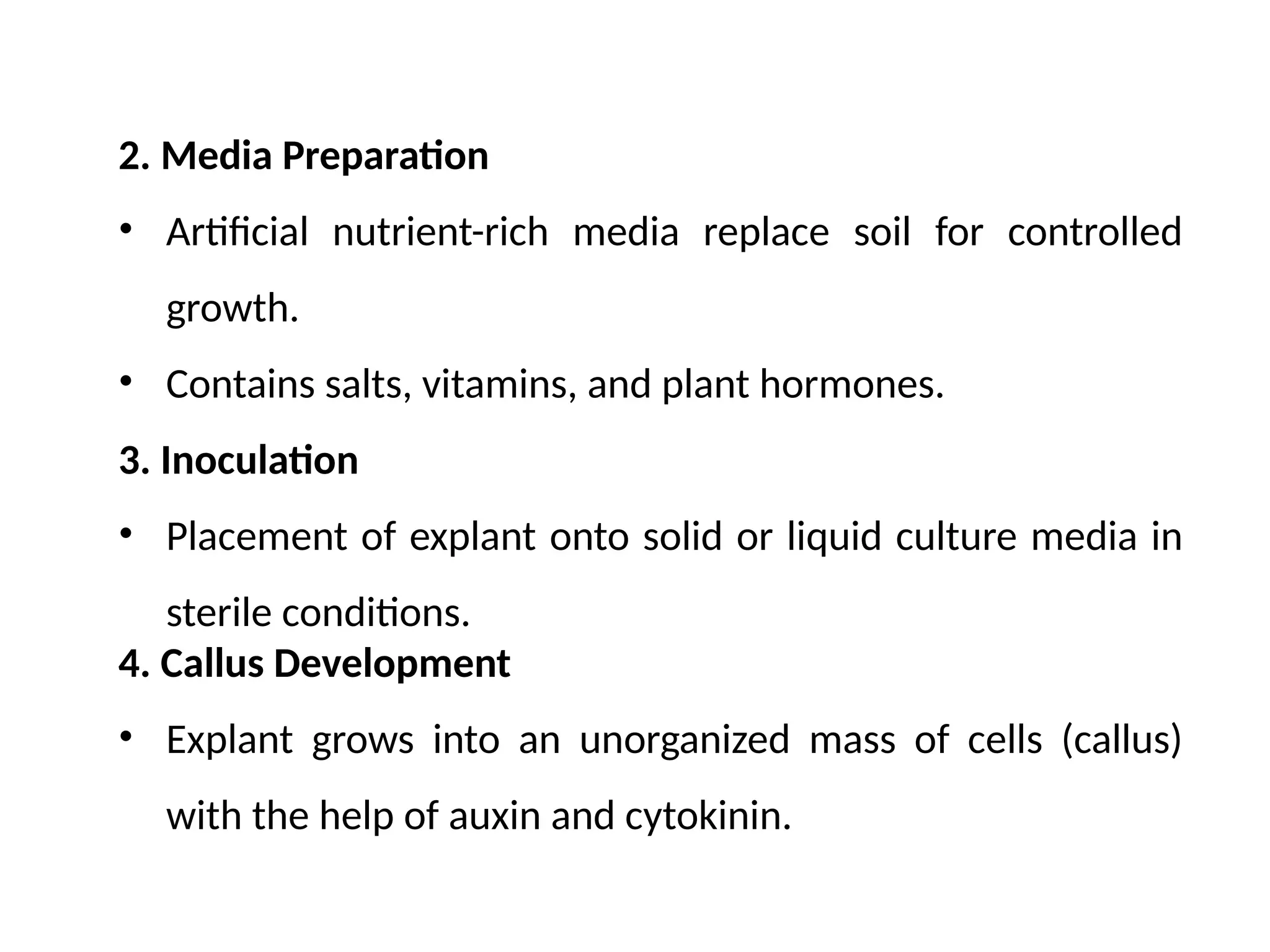
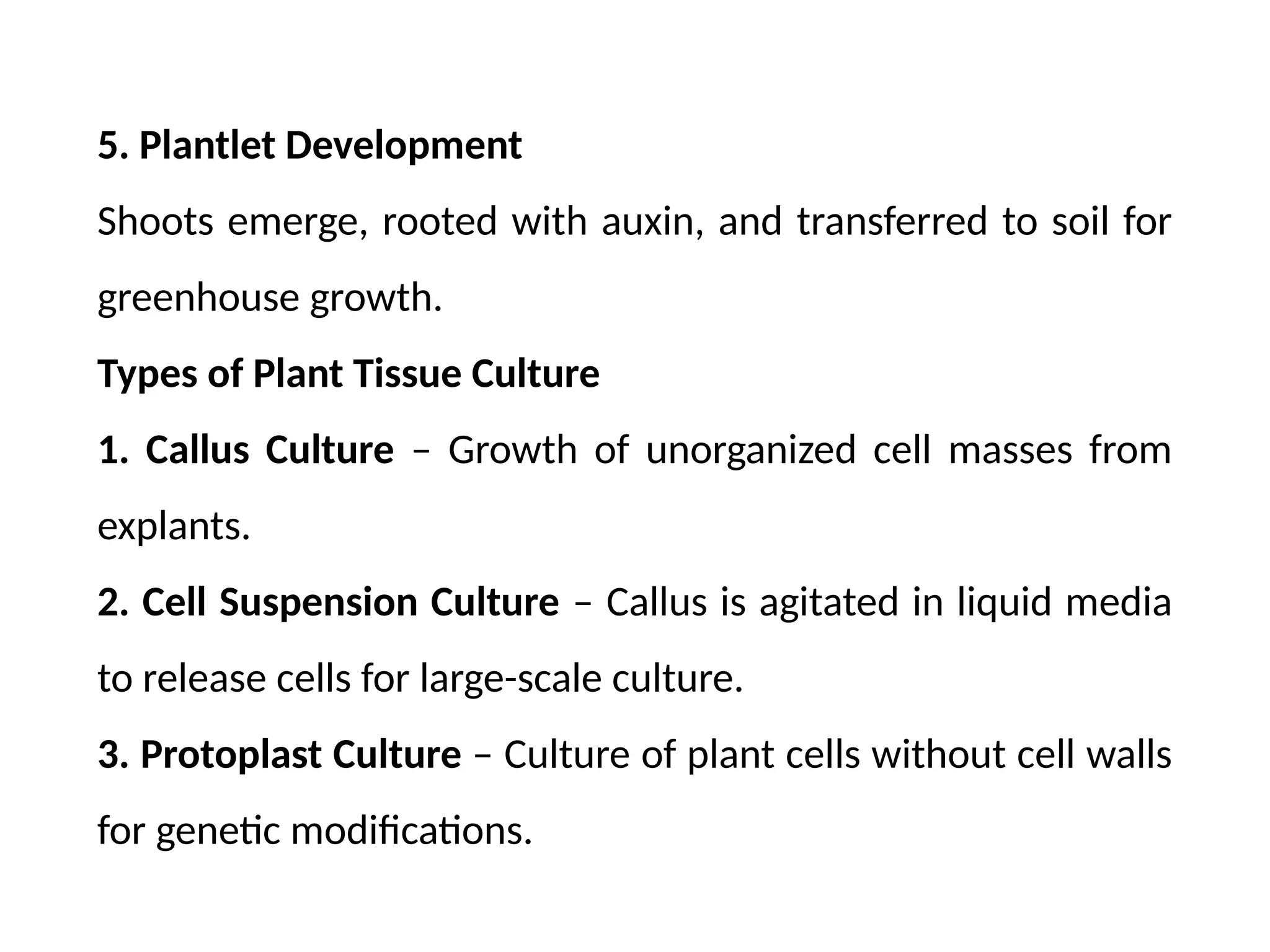
Introduction to Tissue Culture:
• The propagation of a plant using plant parts, single cells,
or groups of cells under controlled conditions.
• Involves both organ culture and cell culture.
• Key Term: Explant – The initial plant part used for tissue
culture.
Steps in Tissue Culture:
1. Sterilization
Removal of contaminants using chemicals like sodium
hypochlorite or mercuric chloride.
Glassware and tools must also be sterilized.
2. Media Preparation
• Artificial nutrient-rich media replace soil for controlled
growth.
• Contains salts, vitamins, and plant hormones.
3. Inoculation
• Placement of explant onto solid or liquid culture media in
sterile conditions.
4. Callus Development
• Explant grows into an unorganized mass of cells (callus)
with the help of auxin and cytokinin.
5. Plantlet Development
Shoots emerge, rooted with auxin, and transferred to soil for
greenhouse growth.
Types of Plant Tissue Culture
1. Callus Culture – Growth of unorganized cell masses from
explants.
2. Cell Suspension Culture – Callus is agitated in liquid media
to release cells for large-scale culture.
3. Protoplast Culture – Culture of plant cells without cell walls
for genetic modifications.
5. Meristem Culture – Using shoot/root apices to produce
disease-free plants.
6. Anther Culture – Producing haploid plants from
pollen/microspores.
Applications of Plant Tissue Culture
• Micro-propagation of plants
• Production of disease-free plants
• Genetic modifications and breeding
• Large-scale production of secondary metabolites
Introduction to Animal Cell Culture:
• Growth of animal cells in artificial conditions
Used in biotechnology, genetics, and medical
Types of Animal Cell Culture:
• Primary Cell Culture: Directly from an animal organ.
• Secondary Culture: Sub-cultured from primary culture.
• Organ Culture: Cells maintain histological features.
• Histotypic Culture: Cells re-aggregate into tissues.
• Organotypic Culture: Different cell types recombine to
form tissue or organs.
Requirements for Animal Cell Culture
Sterile Conditions: Prevent contamination.
Synthetic Media: Provide nutrients like amino acids,
vitamins, salts, and serum proteins.
Types of Media:
Serum-containing media
Serum-free media
Applications of Animal Cell Culture
Production of vaccines (e.g., antiviral vaccines)
Genetic manipulation for medical research
Production of monoclonal antibodies
Pharmaceutical drug development
Chromosome analysis for genetic disorders
Toxicity testing of pollutants and drugs
Use of artificial skin
Study of nerve cell functions
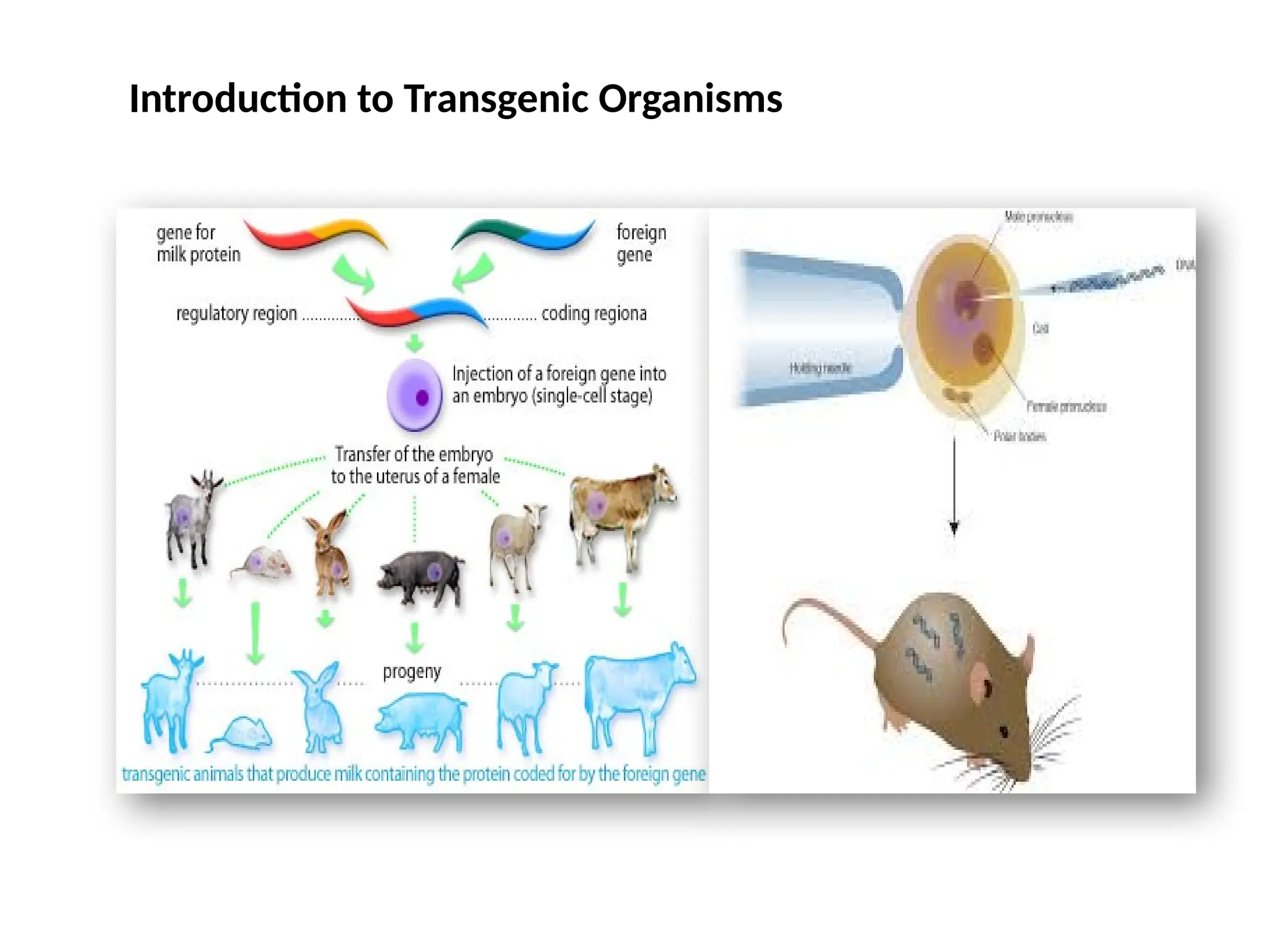
Introduction to Transgenic Organisms
• Definition: Organisms that have had a foreign gene
inserted into their genome using genetic engineering
techniques.
• Examples: Transgenic bacteria, plants, and animals.
• Importance: Used in biotechnology, medicine, and
agriculture to improve traits and enhance production.
Recombinant DNA Technology
Process:
• Combining genes from different organisms to create
genetically modified (GM) or genetically engineered (GE)
organisms.
First Transgenic Organism:
• A bacterium in 1973.
Transgenic Bacteria
• First Modification: 1978 by Herbert Boyer.
• Example: Escherichia coli engineered to produce human
insulin.
• Purpose: Used extensively in medicine and industry.
Applications of Transgenic Bacteria
Medical Uses:
• Production of human insulin for diabetes treatment.
• Clotting factors for hemophilia patients.
• Growth hormones to treat dwarfism.
Environmental Uses:
• Bioremediation: Cleaning up oil spills and environmental
pollutants.
Concerns About Transgenic Bacteria
• Risk: Potential creation of hazardous new pathogens.
• Ecological Impact: Possible disruption of natural microbial
ecosystems.
Transgenic Plants
• First Field Trials: Conducted in France and the USA in
1986.
• Purpose: To introduce beneficial traits such as pest
resistance, disease resistance, and improved nutritional
content.
• Examples: Bt cotton, golden rice, herbicide-resistant
crops.
Methods of Gene Transformation in Plants
Techniques Used:
• Gene transfer into plant cells.
• Regeneration of transgenic plants through tissue
culture.
Benefits of Transgenic Plants
• Resistance: Protection against pests, weeds, and
• Improved Nutrition: Enhanced vitamins and minerals
(e.g., Golden Rice).
• Environmental Tolerance: Greater resistance to drought,
salinity, and extreme temperatures.
Commercial Examples:
• Roundup Ready Soybeans – Resistant to glyphosate
herbicide.
• Flavr Savr Tomatoes – Delayed ripening for longer shelf
life.
• Bt Crops (e.g., Cotton, Corn, Rice) – Pest-resistant due to
Bacillus thuringiensis gene.
Transgenic Animals
• Definition: Animals that have had foreign genes inserted
to enhance specific traits.
Applications:
• Agriculture: Larger animals, improved wool
production.
• Medicine: Cows producing insulin in milk.
• Industry: Goats producing spider silk for material
production.
Methods of Creating Transgenic Animals
• Common Model: Mice, due to their small size, fast
Challenges:
• Random insertion of genes.
• Uncertainty in gene expression.
Ethical and Ecological Concerns
• Health and Safety: Unpredictable long-term effects on
humans and animals.
• Environmental Impact: Risk of transgenes spreading to
wild populations.
• Regulations: Public concerns require strict oversight and
ethical considerations.
Introduction to Biotechnology and Healthcare:
• Definition: Application of biological techniques to improve
healthcare.
• Importance: Understanding molecular bases of diseases
and developing treatments.
Role of Biotechnology in Medicine
• Molecular understanding of health and disease.
• Development of precise diagnostic tools.
• Improved treatment and prevention methods.
• Example: Targeted cancer therapies vs. traditional
chemotherapy.
Development of Vaccines in Biotechnology
Three major approaches:
• Separation of a pure antigen using monoclonal
antibodies.
• Synthesis of an antigen via cloned genes.
• Synthesis of peptides to be used as vaccines.
• Example: COVID-19 mRNA vaccines (Pfizer, Moderna).
• Why are biotech-based vaccines safer and more effective?
Role of Biotechnology in Disease Diagnosis
• Early and accurate detection using biotech tools.
• Use of monoclonal antibodies (mAb) and DNA/RNA
probes.
• Example: PCR tests for viral diseases like COVID-19.
Monoclonal Antibodies in Diagnosis
• Definition: Identical antibodies produced by cloned
immune cells.
Applications:
• Detecting infections and abnormal substances.
• Therapeutic use (e.g., cancer treatment, autoimmune
diseases).
Production of Monoclonal Antibodies
Process:
• Inject antigen into a mouse.
• Isolate spleen cells producing antibodies.
• Fuse them with myeloma (cancer) cells.
• Harvest and purify monoclonal antibodies.
Example: Use in pregnancy test kits.
DNA/RNA Probes in Disease Diagnosis
• Definition: Labeled DNA/RNA sequences that detect
complementary sequences.
Applications:
• Viral infections (e.g., Hepatitis, Herpes virus).
• Bacterial and parasitic infections.
• Example: DNA probes for malaria detection.
Gene Therapy – A Revolutionary Approach
• Technique for correcting faulty genes causing diseases.
Methods:
• Inserting a normal gene.
• Swapping an abnormal gene for a normal one.
• Repairing defective genes.
• Altering gene regulation.
• Example: Treatment of genetic disorders like muscular
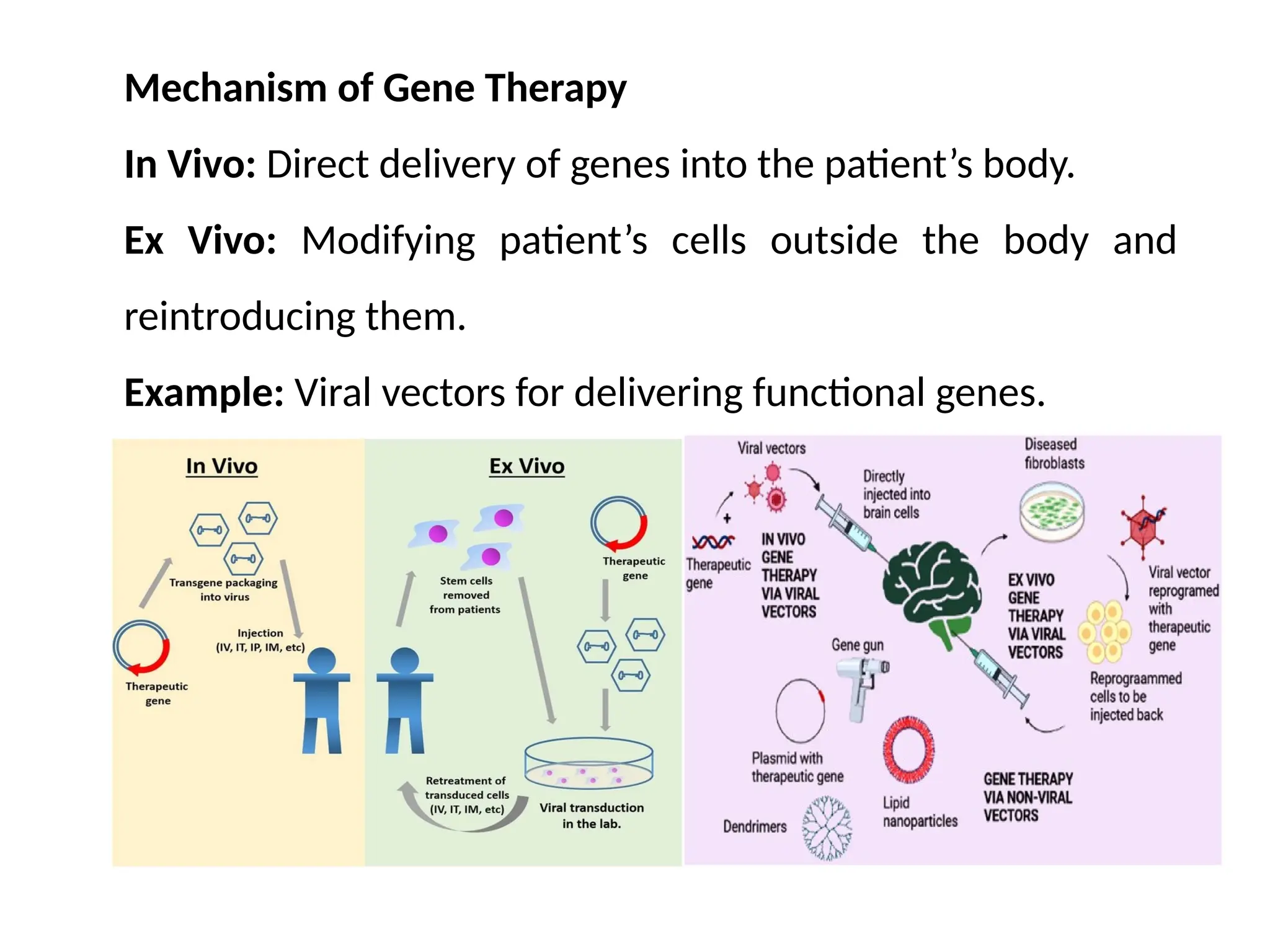
Mechanism of Gene Therapy
In Vivo: Direct delivery of genes into the patient’s body.
Ex Vivo: Modifying patient’s cells outside the body and
reintroducing them.
Example: Viral vectors for delivering functional genes.
Cystic Fibrosis – A Case Study
• Genetic disorder affecting lungs and digestive system.
• Cause: Mutation in the CFTR gene.
• Impact: Thick mucus production, leading to breathing
difficulties.
Gene Therapy for Cystic Fibrosis
• Discovery of CFTR gene in 1989.
• Gene therapy approach:
• Introduce a functional CFTR gene.
• Use viral/liposome vectors for gene delivery.
• Restore normal salt-water balance in cells.
• Example: Ongoing clinical trials for CF gene therapy.
Ethical Considerations in Biotechnology
 Safety Concerns: Potential risks of genetic modifications.
 Moral and Religious Views: Ethical concerns regarding
gene manipulation.
 Economic Factors: High costs of biotech treatments.
Introduction to Biotechnology
• Biotechnology is the application of biological processes,
organisms, or systems to develop products beneficial to
humans and other life forms.
• It emerged as a discipline in the 1970s due to
advancements in biological sciences and technology.
• Example: Insulin production through genetically modified
bacteria.
Definition of Biotechnology
• Defined as "the development and utilization of biological
processes, forms, and systems for the benefit of humans
and other life forms.“
• It is an applied science combining biology with
technology.
• Involves fields like genetics, microbiology, biochemistry,
and engineering.
• Importance of Biotechnology Biotechnology plays a
significant role in:
 Medicine
 Agriculture
 Industry
 Environmental Conservation
 Research & Development
Biochips & Biological Computers
• Biochips are miniaturized laboratories capable of
performing multiple biochemical reactions simultaneously.
• Used in disease diagnosis and bioterrorism detection.
• Example: DNA microarrays help detect genetic disorders.
Mycorrhiza – A Natural Plant Partner
A symbiotic association between fungi and plant roots.
• Helps plants absorb nutrients and resist environmental
stress.
• Example: Orchids rely on mycorrhizal fungi for
germination and growth.
Biofertilizers – Sustainable Farming
• Use of microbes to enhance soil fertility and plant growth.
• Fixes atmospheric nitrogen naturally, reducing chemical
fertilizer use.
• Example: Rhizobium bacteria in leguminous plants.
Nanotechnology in Biotechnology
• Manipulating materials at the molecular level (1-100 nm).
• Used in drug delivery, cancer treatment, and disease
detection.
• Example: Nanoparticles delivering targeted chemotherapy.
Scope of Biotechnology Biotechnology offers career
opportunities in:
• Pharmaceutical Industry – Drug development
• Research & Development – Cancer and genetic disorder
research
• Medical Science – Genetic counseling, gene therapy
• Agriculture – Genetically modified crops
• Environmental Science – Waste management, pollution
control
• Forensic Science – DNA fingerprinting for crime
investigation
• Military Applications – Protection against biological
warfare
• Legal Field – Intellectual property rights in biotech
innovations
Ethical and Social Concerns
• Ethical, Legal, and Social Implications (ELSI) of
biotechnology include:
• Safety of Genetically Modified Organisms (GMOs)
• Environmental impact of biotech products
• Ethical concerns over cloning and genetic modifications
• Bioterrorism and biological weapons.
Genetic Engineering and GMOs
• Genetic modifications can improve crops but may have
unintended effects.
• Some organizations oppose GMOs due to environmental
and health concerns.
• Example: Golden Rice (Vitamin A-enriched) helps combat
malnutrition but faces opposition.
• Intellectual Property in Biotechnology
• Intellectual Property Rights (IPR) protect biotech
innovations.
• Includes patents, copyrights, and plant breeder’s rights
(PBRs).
• Example: Bt Cotton is a patented genetically modified
crop.
Conclusion
• Biotechnology is a rapidly growing field with applications
in healthcare, agriculture, environment, and industry.
• Offers promising career opportunities.
• Ethical considerations must be addressed for sustainable
development.
Thanks you
Any
questions ?

biotechnology chapter 23 consist of all essential topics...

  • 1.
    Presented by: Aziz Ullah M.Philin Zoology Wildlife and Fisheries. (PMAS. AAUR Pakistan). Contact Information: Email: uaziz7003@gmail.com
  • 2.
    Chapter # 26 Biotechnology Contents •Cloning of gene • Genomics library • DNA sequences • DNA Analysis • Genome mapping • Tissue culture • Transgenic organism • Biotechnology and healthcare • Importance of biotechnology
  • 3.
    Introduction to Biotechnology Definition: "Commercialapplication of living organisms or their products through manipulation of DNA molecules." Applications in History: Baking bread Brewing alcoholic beverages Breeding crops & animals Gene transfer DNA typing Cloning (plants & animals)
  • 4.
    Cloning of Genes Definition: Creationof an exact genetic copy of a gene, cell, or organism. Purpose: To isolate and replicate a DNA sequence of interest for further use. Methods of gene cloning Recombinant DNA technology Polymerase chain reaction (PCR)
  • 5.
    Recombinant DNA Technology TOOLSTHAT NEEDS METHODS: Selection of desire gene Specify the vector Making of recombinant DNA Transform to suitable host 1. Gene of interest 2. Molecular scissor 3. Vector 4. Molecular glue 5. Expression system
  • 6.
    Detail of GeneticRecombination Technology 1. Isolation of Gene of desire: • A specific gene to be cloned, isolated using one of the methods: Artificial Gene Synthesis: • No DNA template required. • Uses a DNA synthesizer machine to create the gene. • Ideal for small-sized genes. From mRNA: • Synthesized via reverse transcriptase enzyme (used in retroviruses). 2. Molecular Scissors (Restriction Enzymes): • Special enzymes that cut DNA at specific places. • They recognize a specific DNA sequence (called recognition site).
  • 7.
    Detail of GeneticRecombination Technology • Cut the DNA in a predictable way. • Recognition sites are usually 4 to 8 base pairs long and palindromic (same when read in both directions). Example: • EcoRI enzyme recognizes this sequence: 5’ GAATTC 3’ 3’ CTTAAG 5’ How Restriction Enzymes Work? Substrate: • Double-stranded DNA with specific sequences called recognition sites. Action: • Restriction enzymes cut the DNA by breaking the phosphodiester bonds.
  • 8.
    Detail of GeneticRecombination Technology • Leaves sticky ends or blunt ends for further manipulation. Example: • EcoRI enzyme cuts at: 5’ GAATTC 3’ 3 CTTAAG 5 Produces sticky ends: AATT (on one strand). TTAA (on the other). 3. Molecular Carriers or Vectors Vectors are DNA molecules that carry foreign DNA into a host cell for gene cloning. Characteristics of Vectors: CONTINOUS…
  • 9.
    Detail of GeneticRecombination Technology i. Origin of Replication: • Ensures the vector replicates using the host’s machinery. ii. Selectable Markers: • Identify host cells that have taken up the vector. • Example: Ampicillin resistance gene helps bacteria survive in antibiotics. iii. Multiple Cloning Sites (MCS): • Contains unique restriction sites for foreign DNA insertion. • Allows flexibility in choosing suitable restriction enzymes. iv. Small Size: • Enhances transformation efficiency. • Makes it easier to handle and purify
  • 10.
    Types of CloningVectors Type of Vector Insert DNA Size (kb) Plasmid-cloning vectors 0.5 to 8 Bacteriophage cloning vectors 9 to 25 Cosmid-cloning vectors 30 to 45 Yeast artificial chromosomes (YACs) 250 to 1000 Bacterial artificial chromosomes (BACs) 50 to 300 Animal and plant vectors (Shuttle vectors) >1000
  • 11.
    Examples of Vectors: Plasmid: •Derived from bacteria. • Widely used and easily manipulated (e.g., pBR322). 04. Molecular Glue (DNA Ligase): • Forms phosphodiester bonds between DNA fragments. • Joins adjacent nucleotides in double-stranded DNA. 05. Expression Systems for Recombinant DNA: • Biological platforms used to produce proteins from recombinant DNA. • Bacteria (E. coli), Yeast, Insect, or Mammalian cells. • Bacteria is ideal for expression system
  • 12.
  • 14.
    Introduction to PCR Definition: PCRamplifies DNA to generate thousands/millions of copies. Invented by: Kary Mullis (1983), Nobel Prize (1993). Mechanism: In vitro replication using DNA polymerase. Purpose: Amplifies a target DNA sequence for research, medical, or forensic use. Components of PCR 1. Template DNA: The DNA sequence to be amplified. 2. dNTPs (deoxynucleotides): Raw materials for DNA synthesis (dATP, dGTP, dCTP, dTTP).
  • 15.
    3. Primers: • ShortDNA sequences that guide DNA polymerase. • Forward Primer: Binds to one strand. • Reverse Primer: Binds to the complementary strand. 4. Taq Polymerase: • Heat-resistant enzyme from Thermus aquaticus. • Synthesizes new DNA at high temperatures. Steps of PCR Cycle Denaturation (94°C): DNA strands separate into single strands. Annealing (54°C): Primers attach to complementary regions on single- stranded DNA. Extension (72°C): Taq Polymerase extends primers, synthesizing new DNA strands.
  • 16.
    Amplification Process • Eachcycle doubles the DNA. • Exponential growth: 1 → 2 → 4 → 8 → 16 DNA molecules. • Thermal Cycler automates cycles: Denaturation → Annealing → Extension. Primer and Taq Polymerase Primer: Directs DNA polymerase to the target region. Forward Primer: Reads template strand 5’ to 3’. Reverse Primer: Complements target strand. Taq Polymerase: Heat-tolerant enzyme from hot spring bacteria. Works optimally at 72°C for rapid DNA synthesis.
  • 17.
  • 18.
    What is aGenomic Library? • A genomic library is a collection of bacterial or viral clones, each containing a piece of an organism’s DNA. • It stores the entire genome in small DNA fragments inserted into vectors. • This helps scientists study and work with genes more easily. Construction of library: 1. Complete Digestion with Restriction Enzymes Cuts DNA at specific sites, creating small fragments. Drawback: • May break genes into separate pieces if cut occurs within a gene. • 2. Mechanical Shearing (Sonication) Uses sound waves to break DNA into fragments. ✔ Drawback: Fragments have uneven ends, requiring extra processing before cloning.
  • 19.
    Detail diagram ofgenomic libarary
  • 20.
    DNA sequencing isthe process of determining the exact order of nucleotides (A, T, G, C) in a DNA molecule. It helps in identifying genes, mutations, and genetic variations. DNA SEQUANCESES:
  • 21.
    DNA SEQUANCESES: 2. Maxamgilbert DNA sequance mathods: • Also known Chemical Cleavage Method. • A DNA sequencing method based on chemical modification of DNA followed by cleavage at specific bases. • It uses chemical reagents instead of enzymes for sequencing. • Why is it called the Chemical Cleavage Method? • Because it modifies and then cuts DNA at specific points using chemicals. https://www.youtube.com/watch?v=_B5Dj8PL4E0
  • 22.
    Steps of theMethod (Overview) • Labeling the DNA • Denaturation (Separation of strands) • Chemical Treatment (Selective base cleavage) • Electrophoresis (Separation of DNA fragments) • Reading the sequence DNA Labeling DNA is labeled at one end only using radioactive phosphorus (³²P ATP). The enzyme kinase transfers ³²P from ATP to the 5' end of DNA. Why is labeling necessary? It helps in detecting the DNA fragments after cleavage.
  • 23.
    Denaturation (Strand Separation) LabeledDNA is heated to 90°C with Dimethyl Sulfoxide (DMSO). This breaks the hydrogen bonds, causing DNA to separate into single strands. Why separate the strands? Because sequencing needs to be done on a single strand, not double-stranded DNA. Chemical Cleavage The single-stranded DNA is divided into four tubes, each treated with different chemicals: G (Guanine) A+G (Adenine + Guanine) T+C (Thymine + Cytosine) C (Cytosine)
  • 24.
    • These chemicalsmodify specific bases, making them prone to cleavage. Electrophoresis • DNA fragments are separated using polyacrylamide gel electrophoresis (PAGE). • Shorter fragments move faster than longer ones. • Why use gel electrophoresis? • It arranges DNA fragments by size, helping in sequence determination. Reading the Sequence The gel is exposed to X-ray film (Autoradiography).
  • 25.
    • The patternof bands tells us the DNA sequence. How does it work? • By comparing band positions, we deduce the original DNA sequence. Advantages of Maxam-Gilbert Sequencing • Good for short sequences • Can analyze DNA with complex structure • Does not require DNA polymerase (unlike Sanger method)
  • 26.
    • The patternof bands tells us the DNA sequence. How does it work? • By comparing band positions, we deduce the original DNA sequence. Advantages of Maxam-Gilbert Sequencing • Good for short sequences • Can analyze DNA with complex structure • Does not require DNA polymerase (unlike Sanger method)
  • 27.
    DNA Fingerprinting –RFLP Method • Developed by Alec Jeffreys (1985) Introduction to DNA Fingerprinting What is DNA Fingerprinting? • A technique used to identify individuals based on their unique DNA sequences. Why is it important? • Used in crime investigation, paternity testing, and species identification. Who discovered it? • Developed by Alec Jeffreys in 1985.
  • 28.
    How DNA FingerprintingWorks Every person (except identical twins) has unique DNA patterns. DNA analysis can compare genetic material to: ✅ Identify a person ✅ Confirm biological relationships ✅ Solve crimes ✅ Study evolution Methods of DNA Analysis There are different methods to analyze DNA: 1. RFLP (Restriction Fragment Length Polymorphism) 2. PCR-based methods 3. STR (Short Tandem Repeats) We will focus on the RFLP method
  • 29.
    Steps of RFLPDNA Fingerprinting (Overview) 1. DNA Collection 2. DNA Cutting (Restriction Enzymes 3. Separation of Fragments (Gel Electrophoresis) 4. Transferring DNA (Southern Blotting) 5. Visualization (Autoradiography) 6. Analysis of DNA Bands. DNA Collection • Blood, hair roots, saliva, or skin cells • Even ancient mummies and fossils (for evolutionary studies) • Why is a small amount enough • Because DNA can be amplified using PCR.
  • 30.
    How does itwork? • Electric current pulls DNA from negative (-) to positive (+) pole. • Smaller fragments move faster, and larger ones move slower. • This step separates DNA by size. Southern Blotting What is Southern Blotting? • A technique used to transfer DNA fragments from gel to a membrane. Why is it needed? • To make DNA bands visible using a DNA probe.
  • 31.
    Cutting DNA (RFLPConcept) What is RFLP? • DNA is cut into fragments using restriction enzymes. Why is it unique? • Every person has different cutting sites, except identical twins. Result: DNA fragments of different sizes are created. Separation of Fragments (Gel Electrophoresis) DNA fragments are loaded onto an agarose gel.
  • 32.
    Autoradiography (Visualizing DNABands) • A radioactive probe binds to specific DNA sequences. • The membrane is placed under X-ray film. • Result: DNA bands appear like a barcode pattern. Analysis of DNA Bands • The banding pattern is compared to: • Crime scene evidence • Paternity tests • Evolutionary studies
  • 33.
    Genome Maps • Agenome is the complete set of genes in an organism. • Diploid organisms have two copies of the genome, while sperm and egg cells have one. • Genome maps help scientists locate genes within the human genome, just like road maps help in finding locations. Two main types 1. Genetic Maps (Like Highway Maps) Show the relative positions of genes based on how often they are inherited together. Example: If two genes are inherited together frequently, they are close on the chromosome.
  • 34.
    2. Physical Maps(Like Street Maps • Show the exact distance between genes in base pairs. • Example: The distance between Gene A and Gene B might be 1 million base pairs. Genetic Markers • Just like cities on a map, genetic markers help identify specific gene locations. • A marker is any DNA variation that can be inherited. • Markers can be: • Within genes (e.g., eye color). • In non-coding DNA regions (used for unique identification).
  • 35.
    • DNA markersare crucial for genetic mapping and tracking mutations over generations. Common DNA Markers 1. RFLPs – Restriction Fragment Length Polymorphisms 2. VNTRs – Variable Number of Tandem Repeats 3. Microsatellites – Short repeating sequences in DNA 4. SNPs – Single Nucleotide Polymorphisms (single base changes in DNA). Genome Analysis & Genomics • Genomics is the study of entire DNA sequences in organisms. • The first bacterial genome was sequenced in 1995 (Haemophilus influenzae).
  • 36.
    • Fred Sangerearlier sequenced a bacteriophage genome, winning a Nobel Prize. • The Human Genome Project (HGP) began in 1990 and was completed in 2003. • A global research initiative led by the U.S. Department of Energy & NIH.James D. • Watson was the first director; Francis Collins led its completion. • Funded by the US, UK (Wellcome Trust), Japan, France, Germany, and China.
  • 37.
    Major Goals ofHGP • Identify all 20,000–25,000 genes in human DNA. • Determine the 3 billion DNA base pair sequences. • Store information in databases & develop analysis tools. • Transfer technology to the private sector. • Address ethical, legal, and social issues (ELSI). Benefits of HGP • Molecular Medicine • Better disease diagnosis. • Early detection of genetic disorders.
  • 38.
    • Development oftargeted gene therapy and customized drugs (pharmacogenomics). • Anthropology & Evolution • Studying human migration through genetic markers. • Understanding evolution via DNA mutations. • Tracing male and female ancestry using Y-chromosome and mitochondrial DNA.
  • 40.
  • 41.
    Introduction to TissueCulture: • The propagation of a plant using plant parts, single cells, or groups of cells under controlled conditions. • Involves both organ culture and cell culture. • Key Term: Explant – The initial plant part used for tissue culture. Steps in Tissue Culture: 1. Sterilization Removal of contaminants using chemicals like sodium hypochlorite or mercuric chloride. Glassware and tools must also be sterilized.
  • 42.
    2. Media Preparation •Artificial nutrient-rich media replace soil for controlled growth. • Contains salts, vitamins, and plant hormones. 3. Inoculation • Placement of explant onto solid or liquid culture media in sterile conditions. 4. Callus Development • Explant grows into an unorganized mass of cells (callus) with the help of auxin and cytokinin.
  • 43.
    5. Plantlet Development Shootsemerge, rooted with auxin, and transferred to soil for greenhouse growth. Types of Plant Tissue Culture 1. Callus Culture – Growth of unorganized cell masses from explants. 2. Cell Suspension Culture – Callus is agitated in liquid media to release cells for large-scale culture. 3. Protoplast Culture – Culture of plant cells without cell walls for genetic modifications.
  • 44.
    5. Meristem Culture– Using shoot/root apices to produce disease-free plants. 6. Anther Culture – Producing haploid plants from pollen/microspores. Applications of Plant Tissue Culture • Micro-propagation of plants • Production of disease-free plants • Genetic modifications and breeding • Large-scale production of secondary metabolites Introduction to Animal Cell Culture: • Growth of animal cells in artificial conditions
  • 45.
    Used in biotechnology,genetics, and medical Types of Animal Cell Culture: • Primary Cell Culture: Directly from an animal organ. • Secondary Culture: Sub-cultured from primary culture. • Organ Culture: Cells maintain histological features. • Histotypic Culture: Cells re-aggregate into tissues. • Organotypic Culture: Different cell types recombine to form tissue or organs. Requirements for Animal Cell Culture Sterile Conditions: Prevent contamination.
  • 46.
    Synthetic Media: Providenutrients like amino acids, vitamins, salts, and serum proteins. Types of Media: Serum-containing media Serum-free media Applications of Animal Cell Culture Production of vaccines (e.g., antiviral vaccines) Genetic manipulation for medical research Production of monoclonal antibodies Pharmaceutical drug development
  • 47.
    Chromosome analysis forgenetic disorders Toxicity testing of pollutants and drugs Use of artificial skin Study of nerve cell functions
  • 48.
  • 49.
    Introduction to TransgenicOrganisms • Definition: Organisms that have had a foreign gene inserted into their genome using genetic engineering techniques. • Examples: Transgenic bacteria, plants, and animals. • Importance: Used in biotechnology, medicine, and agriculture to improve traits and enhance production. Recombinant DNA Technology Process: • Combining genes from different organisms to create genetically modified (GM) or genetically engineered (GE) organisms.
  • 50.
    First Transgenic Organism: •A bacterium in 1973. Transgenic Bacteria • First Modification: 1978 by Herbert Boyer. • Example: Escherichia coli engineered to produce human insulin. • Purpose: Used extensively in medicine and industry. Applications of Transgenic Bacteria Medical Uses: • Production of human insulin for diabetes treatment. • Clotting factors for hemophilia patients. • Growth hormones to treat dwarfism.
  • 51.
    Environmental Uses: • Bioremediation:Cleaning up oil spills and environmental pollutants. Concerns About Transgenic Bacteria • Risk: Potential creation of hazardous new pathogens. • Ecological Impact: Possible disruption of natural microbial ecosystems. Transgenic Plants • First Field Trials: Conducted in France and the USA in 1986. • Purpose: To introduce beneficial traits such as pest
  • 52.
    resistance, disease resistance,and improved nutritional content. • Examples: Bt cotton, golden rice, herbicide-resistant crops. Methods of Gene Transformation in Plants Techniques Used: • Gene transfer into plant cells. • Regeneration of transgenic plants through tissue culture. Benefits of Transgenic Plants • Resistance: Protection against pests, weeds, and
  • 53.
    • Improved Nutrition:Enhanced vitamins and minerals (e.g., Golden Rice). • Environmental Tolerance: Greater resistance to drought, salinity, and extreme temperatures. Commercial Examples: • Roundup Ready Soybeans – Resistant to glyphosate herbicide. • Flavr Savr Tomatoes – Delayed ripening for longer shelf life. • Bt Crops (e.g., Cotton, Corn, Rice) – Pest-resistant due to Bacillus thuringiensis gene.
  • 54.
    Transgenic Animals • Definition:Animals that have had foreign genes inserted to enhance specific traits. Applications: • Agriculture: Larger animals, improved wool production. • Medicine: Cows producing insulin in milk. • Industry: Goats producing spider silk for material production. Methods of Creating Transgenic Animals • Common Model: Mice, due to their small size, fast
  • 55.
    Challenges: • Random insertionof genes. • Uncertainty in gene expression. Ethical and Ecological Concerns • Health and Safety: Unpredictable long-term effects on humans and animals. • Environmental Impact: Risk of transgenes spreading to wild populations. • Regulations: Public concerns require strict oversight and ethical considerations.
  • 56.
    Introduction to Biotechnologyand Healthcare: • Definition: Application of biological techniques to improve healthcare. • Importance: Understanding molecular bases of diseases and developing treatments. Role of Biotechnology in Medicine • Molecular understanding of health and disease. • Development of precise diagnostic tools. • Improved treatment and prevention methods.
  • 57.
    • Example: Targetedcancer therapies vs. traditional chemotherapy. Development of Vaccines in Biotechnology Three major approaches: • Separation of a pure antigen using monoclonal antibodies. • Synthesis of an antigen via cloned genes. • Synthesis of peptides to be used as vaccines. • Example: COVID-19 mRNA vaccines (Pfizer, Moderna). • Why are biotech-based vaccines safer and more effective?
  • 58.
    Role of Biotechnologyin Disease Diagnosis • Early and accurate detection using biotech tools. • Use of monoclonal antibodies (mAb) and DNA/RNA probes. • Example: PCR tests for viral diseases like COVID-19. Monoclonal Antibodies in Diagnosis • Definition: Identical antibodies produced by cloned immune cells. Applications: • Detecting infections and abnormal substances. • Therapeutic use (e.g., cancer treatment, autoimmune diseases).
  • 59.
    Production of MonoclonalAntibodies Process: • Inject antigen into a mouse. • Isolate spleen cells producing antibodies. • Fuse them with myeloma (cancer) cells. • Harvest and purify monoclonal antibodies. Example: Use in pregnancy test kits. DNA/RNA Probes in Disease Diagnosis • Definition: Labeled DNA/RNA sequences that detect complementary sequences. Applications:
  • 60.
    • Viral infections(e.g., Hepatitis, Herpes virus). • Bacterial and parasitic infections. • Example: DNA probes for malaria detection. Gene Therapy – A Revolutionary Approach • Technique for correcting faulty genes causing diseases. Methods: • Inserting a normal gene. • Swapping an abnormal gene for a normal one. • Repairing defective genes. • Altering gene regulation. • Example: Treatment of genetic disorders like muscular
  • 61.
    Mechanism of GeneTherapy In Vivo: Direct delivery of genes into the patient’s body. Ex Vivo: Modifying patient’s cells outside the body and reintroducing them. Example: Viral vectors for delivering functional genes.
  • 62.
    Cystic Fibrosis –A Case Study • Genetic disorder affecting lungs and digestive system. • Cause: Mutation in the CFTR gene. • Impact: Thick mucus production, leading to breathing difficulties. Gene Therapy for Cystic Fibrosis • Discovery of CFTR gene in 1989. • Gene therapy approach: • Introduce a functional CFTR gene. • Use viral/liposome vectors for gene delivery. • Restore normal salt-water balance in cells. • Example: Ongoing clinical trials for CF gene therapy.
  • 63.
    Ethical Considerations inBiotechnology  Safety Concerns: Potential risks of genetic modifications.  Moral and Religious Views: Ethical concerns regarding gene manipulation.  Economic Factors: High costs of biotech treatments. Introduction to Biotechnology • Biotechnology is the application of biological processes, organisms, or systems to develop products beneficial to humans and other life forms. • It emerged as a discipline in the 1970s due to advancements in biological sciences and technology.
  • 64.
    • Example: Insulinproduction through genetically modified bacteria. Definition of Biotechnology • Defined as "the development and utilization of biological processes, forms, and systems for the benefit of humans and other life forms.“ • It is an applied science combining biology with technology. • Involves fields like genetics, microbiology, biochemistry, and engineering. • Importance of Biotechnology Biotechnology plays a significant role in:
  • 65.
     Medicine  Agriculture Industry  Environmental Conservation  Research & Development Biochips & Biological Computers • Biochips are miniaturized laboratories capable of performing multiple biochemical reactions simultaneously. • Used in disease diagnosis and bioterrorism detection. • Example: DNA microarrays help detect genetic disorders. Mycorrhiza – A Natural Plant Partner A symbiotic association between fungi and plant roots.
  • 66.
    • Helps plantsabsorb nutrients and resist environmental stress. • Example: Orchids rely on mycorrhizal fungi for germination and growth. Biofertilizers – Sustainable Farming • Use of microbes to enhance soil fertility and plant growth. • Fixes atmospheric nitrogen naturally, reducing chemical fertilizer use. • Example: Rhizobium bacteria in leguminous plants. Nanotechnology in Biotechnology • Manipulating materials at the molecular level (1-100 nm).
  • 67.
    • Used indrug delivery, cancer treatment, and disease detection. • Example: Nanoparticles delivering targeted chemotherapy. Scope of Biotechnology Biotechnology offers career opportunities in: • Pharmaceutical Industry – Drug development • Research & Development – Cancer and genetic disorder research • Medical Science – Genetic counseling, gene therapy • Agriculture – Genetically modified crops • Environmental Science – Waste management, pollution control
  • 68.
    • Forensic Science– DNA fingerprinting for crime investigation • Military Applications – Protection against biological warfare • Legal Field – Intellectual property rights in biotech innovations Ethical and Social Concerns • Ethical, Legal, and Social Implications (ELSI) of biotechnology include: • Safety of Genetically Modified Organisms (GMOs) • Environmental impact of biotech products
  • 69.
    • Ethical concernsover cloning and genetic modifications • Bioterrorism and biological weapons. Genetic Engineering and GMOs • Genetic modifications can improve crops but may have unintended effects. • Some organizations oppose GMOs due to environmental and health concerns. • Example: Golden Rice (Vitamin A-enriched) helps combat malnutrition but faces opposition. • Intellectual Property in Biotechnology • Intellectual Property Rights (IPR) protect biotech innovations.
  • 70.
    • Includes patents,copyrights, and plant breeder’s rights (PBRs). • Example: Bt Cotton is a patented genetically modified crop. Conclusion • Biotechnology is a rapidly growing field with applications in healthcare, agriculture, environment, and industry. • Offers promising career opportunities. • Ethical considerations must be addressed for sustainable development.
  • 71.