Biosimilars
DINESH K
M PHARM PHARMACOLOGY
1
CONTENTS
• WHAT IS BIOLOGIC
• STEPS INVOLVED IN BIOLOGIC
• WHAT IS BIOSIMILARS
• STEPS INVOLVED IN BIOSIMILARS
• DIFFERENCE BETWEEN BIOLOGIC AND BIOSIMILARS
• REGULATING BIOSIMILARS
• References
2
Introduction
• Biological drugs- essential part of modern pharmacotherapy.
• 1st developed in 1980’s
Recombinant technology
complex proteins
(DNA manipulation in bacteria, yeast or mammalian cells)
3
WHAT IS BIOLOGIC
• BIOLOGIC medicines are large, complex molecules that are made in living
cells grown in laboratory. Biologic medicines are often 200 to 1000 times the
size of a small molecule or chemical drug such as aspirin. Due to both large
molecular size and fragile molecular structure, biologic medicines are almost
always injected into the patients body.
4
Manufacturing of biologic medicines
• Steps involed in manufacturing biologic medicine
 The isolated gene encoding the therapeutic protein of interest is placed
inside a “host” cell growing in the laboratory. The host uses this gene to
make a protein which will become the medicine.
 large volumes of these host cells are grown in a medium that has been
created for optimal growth of the cells and production of the medicine.
5
Once sufficient quantities of the desired protein have been produced, the
therapeutic protein must be isolated from the cell that produced it. Numerous
purification steps are required in order to separate the therapeutic protein from
impurities.
The purified medicine is packaged and shipped to those who need it.
A reliable supply of high-quality biologic medicines requires commitment highly
specialized biologics knowledge and expertise, infrastructure and capital investment.
6
What is biosimilar?
• A biosimilar is a biologic medicine that is similar but not identical to the
original biologic medicine is based on. It is impossible to make an exact copy
of a biologic medicine because they are developed using cell lines that are
unique to a given manufacture and are made using different purification
process. Therefore the “copies” are highly SIMILAR but not identical to the
original biologic upon which they are based.
• Biosimilars(Europe)= follow-on biologics (USA)
7
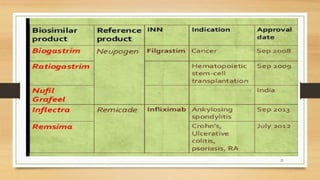
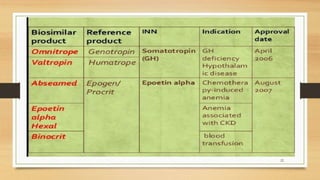
• 1st biosimilars approved by EMEA (2006)
omnitrope : biosimilar to genotropin
valtropin : biosimilar to humatrope
• US-FDA
zarxio- 2015
• In India
1st similar biologic- 2000
(for Hep B vaccine)
8
How do manufactures develop and test
biosimilars?
Step 1: characterize the existing biologic medicine and develop a process to
replicate it
Step 2: develop a unique cell line and manufacturing process for the
biosimilar
Step 3: characterize the biosimilar candidate and match critical quality
attributes.
Step 4: testing to demonstrate similarity to the original biologic medicine.
9
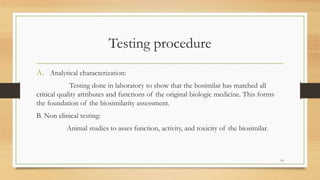
Testing procedure
A. Analytical characterization:
Testing done in laboratory to show that the bosimilar has matched all
critical quality attributes and functions of the original biologic medicine. This forms
the foundation of the biosimilarity assessment.
B. Non clinical testing:
Animal studies to asses function, activity, and toxicity of the biosimilar.
10
Conti….
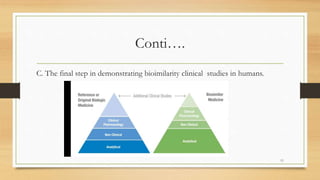
C. The final step in demonstrating bioimilarity clinical studies in humans.
11
Regulating biosimilars
• The world health organisation(WHO)
• Europe and Europe medicines agency
• North America: U.S and FDA
• Canada
• Latin American region
• Brazil and colombia
12
13
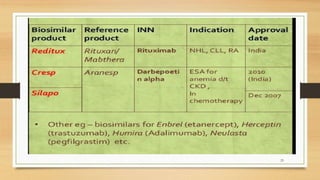
Potential concerns
• 4 major concerns
Safety
Substitution
Naming
Labelling
14
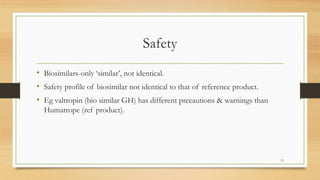
Safety
• Biosimilars-only ‘similar’, not identical.
• Safety profile of biosimilar not identical to that of reference product.
• Eg valtropin (bio similar GH) has different precautions & warnings than
Humatrope (ref product).
15
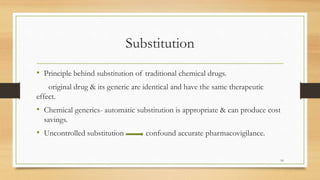
Substitution
• Principle behind substitution of traditional chemical drugs.
original drug & its generic are identical and have the same therapeutic
effect.
• Chemical generics- automatic substitution is appropriate & can produce cost
savings.
• Uncontrolled substitution confound accurate pharmacovigilance.
16
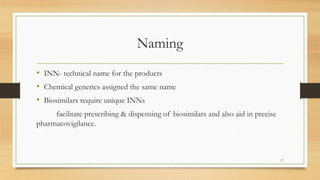
Naming
• INN- technical name for the products
• Chemical generics assigned the same name
• Biosimilars require unique INNs
facilitate prescribing & dispensing of biosimilars and also aid in precise
pharmacovigilance.
17
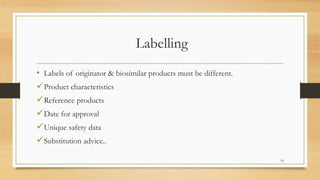
Labelling
• Labels of originator & biosimilar products must be different.
Product characteristics
Reference products
Date for approval
Unique safety data
Substitution advice..
18
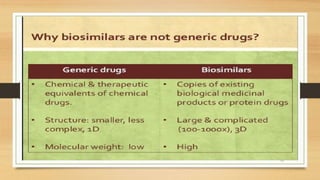
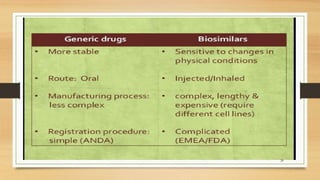
Difference between generic and biosimilars
19
20
21
22
23
References
24
• Molecular pharmacology from DNA to Drug discovery by Dickenson et.al
• Amgen biosimilars
• Slide shares & Wikipedia
25

Biosimilars

  • 1.
  • 2.
    CONTENTS • WHAT ISBIOLOGIC • STEPS INVOLVED IN BIOLOGIC • WHAT IS BIOSIMILARS • STEPS INVOLVED IN BIOSIMILARS • DIFFERENCE BETWEEN BIOLOGIC AND BIOSIMILARS • REGULATING BIOSIMILARS • References 2
  • 3.
    Introduction • Biological drugs-essential part of modern pharmacotherapy. • 1st developed in 1980’s Recombinant technology complex proteins (DNA manipulation in bacteria, yeast or mammalian cells) 3
  • 4.
    WHAT IS BIOLOGIC •BIOLOGIC medicines are large, complex molecules that are made in living cells grown in laboratory. Biologic medicines are often 200 to 1000 times the size of a small molecule or chemical drug such as aspirin. Due to both large molecular size and fragile molecular structure, biologic medicines are almost always injected into the patients body. 4
  • 5.
    Manufacturing of biologicmedicines • Steps involed in manufacturing biologic medicine  The isolated gene encoding the therapeutic protein of interest is placed inside a “host” cell growing in the laboratory. The host uses this gene to make a protein which will become the medicine.  large volumes of these host cells are grown in a medium that has been created for optimal growth of the cells and production of the medicine. 5
  • 6.
    Once sufficient quantitiesof the desired protein have been produced, the therapeutic protein must be isolated from the cell that produced it. Numerous purification steps are required in order to separate the therapeutic protein from impurities. The purified medicine is packaged and shipped to those who need it. A reliable supply of high-quality biologic medicines requires commitment highly specialized biologics knowledge and expertise, infrastructure and capital investment. 6
  • 7.
    What is biosimilar? •A biosimilar is a biologic medicine that is similar but not identical to the original biologic medicine is based on. It is impossible to make an exact copy of a biologic medicine because they are developed using cell lines that are unique to a given manufacture and are made using different purification process. Therefore the “copies” are highly SIMILAR but not identical to the original biologic upon which they are based. • Biosimilars(Europe)= follow-on biologics (USA) 7
  • 8.
    • 1st biosimilarsapproved by EMEA (2006) omnitrope : biosimilar to genotropin valtropin : biosimilar to humatrope • US-FDA zarxio- 2015 • In India 1st similar biologic- 2000 (for Hep B vaccine) 8
  • 9.
    How do manufacturesdevelop and test biosimilars? Step 1: characterize the existing biologic medicine and develop a process to replicate it Step 2: develop a unique cell line and manufacturing process for the biosimilar Step 3: characterize the biosimilar candidate and match critical quality attributes. Step 4: testing to demonstrate similarity to the original biologic medicine. 9
  • 10.
    Testing procedure A. Analyticalcharacterization: Testing done in laboratory to show that the bosimilar has matched all critical quality attributes and functions of the original biologic medicine. This forms the foundation of the biosimilarity assessment. B. Non clinical testing: Animal studies to asses function, activity, and toxicity of the biosimilar. 10
  • 11.
    Conti…. C. The finalstep in demonstrating bioimilarity clinical studies in humans. 11
  • 12.
    Regulating biosimilars • Theworld health organisation(WHO) • Europe and Europe medicines agency • North America: U.S and FDA • Canada • Latin American region • Brazil and colombia 12
  • 13.
  • 14.
    Potential concerns • 4major concerns Safety Substitution Naming Labelling 14
  • 15.
    Safety • Biosimilars-only ‘similar’,not identical. • Safety profile of biosimilar not identical to that of reference product. • Eg valtropin (bio similar GH) has different precautions & warnings than Humatrope (ref product). 15
  • 16.
    Substitution • Principle behindsubstitution of traditional chemical drugs. original drug & its generic are identical and have the same therapeutic effect. • Chemical generics- automatic substitution is appropriate & can produce cost savings. • Uncontrolled substitution confound accurate pharmacovigilance. 16
  • 17.
    Naming • INN- technicalname for the products • Chemical generics assigned the same name • Biosimilars require unique INNs facilitate prescribing & dispensing of biosimilars and also aid in precise pharmacovigilance. 17
  • 18.
    Labelling • Labels oforiginator & biosimilar products must be different. Product characteristics Reference products Date for approval Unique safety data Substitution advice.. 18
  • 19.
    Difference between genericand biosimilars 19
  • 20.
  • 21.
  • 22.
  • 23.
  • 24.
    References 24 • Molecular pharmacologyfrom DNA to Drug discovery by Dickenson et.al • Amgen biosimilars • Slide shares & Wikipedia
  • 25.