7 DESIGN ELEMENTS YOU NEED FOR A RUSTIC
LOOK
EUGENE CHRINIAN
7 DESIGN ELEMENTS YOU NEED FOR A RUSTIC LOOK
 In an age of increasingly sleek, modern interiors, more and more homeowners are finding themselves
drawn to the rugged, cozy aesthetic of the rustic look. Taking inspiration from the cabins of colonial
times, this interior design style creates a simplistic charm that is entirely unique. If you want to bring
this style to your own home, there are a wide array of elements that you must include. From material
choice to decorations, here are seven of the most essential aspects of rustic design:
1. NATURAL MATERIALS
 Perhaps the most crucial aspect of a rustic-inspired home
is ample use of natural materials. You should do away with
manmade furnishings and replace them with pieces made
of wood or stone. For example, you can replace a
traditional coffee table with an unrefined section of tree
trunk. You can also use natural elements in the architecture
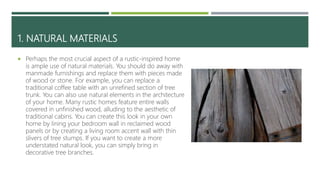
of your home. Many rustic homes feature entire walls
covered in unfinished wood, alluding to the aesthetic of
traditional cabins. You can create this look in your own
home by lining your bedroom wall in reclaimed wood
panels or by creating a living room accent wall with thin
slivers of tree stumps. If you want to create a more
understated natural look, you can simply bring in
decorative tree branches.
2. FLOORING
 For a comprehensive look, continue the trend of natural materials in your flooring as well. Whether
you are operating on a budget or have money to spare, you can easily create a rustic aesthetic. You
can adorn your home with dark or light wood floors, but if you want to bring a more unique element
to your home, use large wood planks for a more unfinished appearance. Tile is another common
feature in rustic homes, but you should stay away from solid white or cream tiling in favor of greyer
tones, which will better complement the more natural-looking elements of your home.
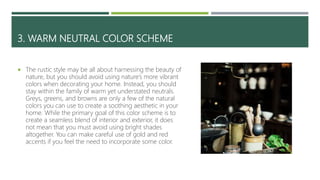
3. WARM NEUTRAL COLOR SCHEME
 The rustic style may be all about harnessing the beauty of
nature, but you should avoid using nature’s more vibrant
colors when decorating your home. Instead, you should
stay within the family of warm yet understated neutrals.
Greys, greens, and browns are only a few of the natural
colors you can use to create a soothing aesthetic in your
home. While the primary goal of this color scheme is to
create a seamless blend of interior and exterior, it does
not mean that you must avoid using bright shades
altogether. You can make careful use of gold and red
accents if you feel the need to incorporate some color.
4. EXPOSED WOODEN BEAMS
 Continuing the theme of displaying natural materials, your rustic home should also showcase its
wooden structural elements. Like a dramatic umbrella of branches, exposed beaming can immediately
create a rustic atmosphere in your home. You can take a more traditional route and incorporate thick,
unfinished beams to frame walls, ceilings, or doorways. Place even more emphasis on these features
by pairing them with light walls or other simple textures. Another popular feature of rustic design is
the use of bare wood ceiling beaming and paneling. This not only contributes a more contemporary
look, but it draws the eye upward to the room’s “fifth wall.”
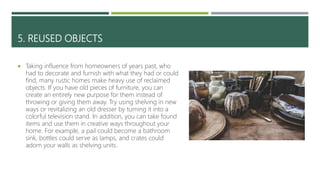
5. REUSED OBJECTS
 Taking influence from homeowners of years past, who
had to decorate and furnish with what they had or could
find, many rustic homes make heavy use of reclaimed
objects. If you have old pieces of furniture, you can
create an entirely new purpose for them instead of
throwing or giving them away. Try using shelving in new
ways or revitalizing an old dresser by turning it into a
colorful television stand. In addition, you can take found
items and use them in creative ways throughout your
home. For example, a pail could become a bathroom
sink, bottles could serve as lamps, and crates could
adorn your walls as shelving units.
6. SIMPLE FABRICS
 Successfully creating a rustic atmosphere in your home can even come down to your choice of fabrics.
You should always opt for simple designs before going with more elaborate ones. Hand-made fabrics
such as quilts are popular in rustic homes, but you can also include more natural textiles like cotton
and burlap. Most rustic interior design does not feature heavy patterned fabrics, but faux animal hides
remain a popular textile choice. Both cow and sheep-inspired hides feature prominently throughout
furnishings due to their appearance and natural sturdiness.
7. MODERN INFLUENCES
 In recent years, many homeowners have begun to depart from the more traditional style of rustic
design and explored a much more modern aesthetic. If you choose to try this mix-and-match style, it
does not mean that you will need to forego all the coziness of a rustic home for a streamlined design.
You can easily marry these influences in a variety of ways. For example, you can adorn your kitchen
walls with natural stone, but install modern cabinets with clean, straight lines. Similarly, an exposed
wood ceiling and stainless steel kitchen can perfectly complement one another. Other elements of
modern design that can perfectly accompany rustic features are large windows and an expansive floor
plan.

7 Design Elements You Need for a Rustic Look

  • 1.
    7 DESIGN ELEMENTSYOU NEED FOR A RUSTIC LOOK EUGENE CHRINIAN
  • 2.
    7 DESIGN ELEMENTSYOU NEED FOR A RUSTIC LOOK  In an age of increasingly sleek, modern interiors, more and more homeowners are finding themselves drawn to the rugged, cozy aesthetic of the rustic look. Taking inspiration from the cabins of colonial times, this interior design style creates a simplistic charm that is entirely unique. If you want to bring this style to your own home, there are a wide array of elements that you must include. From material choice to decorations, here are seven of the most essential aspects of rustic design:
  • 3.
    1. NATURAL MATERIALS Perhaps the most crucial aspect of a rustic-inspired home is ample use of natural materials. You should do away with manmade furnishings and replace them with pieces made of wood or stone. For example, you can replace a traditional coffee table with an unrefined section of tree trunk. You can also use natural elements in the architecture of your home. Many rustic homes feature entire walls covered in unfinished wood, alluding to the aesthetic of traditional cabins. You can create this look in your own home by lining your bedroom wall in reclaimed wood panels or by creating a living room accent wall with thin slivers of tree stumps. If you want to create a more understated natural look, you can simply bring in decorative tree branches.
  • 4.
    2. FLOORING  Fora comprehensive look, continue the trend of natural materials in your flooring as well. Whether you are operating on a budget or have money to spare, you can easily create a rustic aesthetic. You can adorn your home with dark or light wood floors, but if you want to bring a more unique element to your home, use large wood planks for a more unfinished appearance. Tile is another common feature in rustic homes, but you should stay away from solid white or cream tiling in favor of greyer tones, which will better complement the more natural-looking elements of your home.
  • 5.
    3. WARM NEUTRALCOLOR SCHEME  The rustic style may be all about harnessing the beauty of nature, but you should avoid using nature’s more vibrant colors when decorating your home. Instead, you should stay within the family of warm yet understated neutrals. Greys, greens, and browns are only a few of the natural colors you can use to create a soothing aesthetic in your home. While the primary goal of this color scheme is to create a seamless blend of interior and exterior, it does not mean that you must avoid using bright shades altogether. You can make careful use of gold and red accents if you feel the need to incorporate some color.
  • 6.
    4. EXPOSED WOODENBEAMS  Continuing the theme of displaying natural materials, your rustic home should also showcase its wooden structural elements. Like a dramatic umbrella of branches, exposed beaming can immediately create a rustic atmosphere in your home. You can take a more traditional route and incorporate thick, unfinished beams to frame walls, ceilings, or doorways. Place even more emphasis on these features by pairing them with light walls or other simple textures. Another popular feature of rustic design is the use of bare wood ceiling beaming and paneling. This not only contributes a more contemporary look, but it draws the eye upward to the room’s “fifth wall.”
  • 7.
    5. REUSED OBJECTS Taking influence from homeowners of years past, who had to decorate and furnish with what they had or could find, many rustic homes make heavy use of reclaimed objects. If you have old pieces of furniture, you can create an entirely new purpose for them instead of throwing or giving them away. Try using shelving in new ways or revitalizing an old dresser by turning it into a colorful television stand. In addition, you can take found items and use them in creative ways throughout your home. For example, a pail could become a bathroom sink, bottles could serve as lamps, and crates could adorn your walls as shelving units.
  • 8.
    6. SIMPLE FABRICS Successfully creating a rustic atmosphere in your home can even come down to your choice of fabrics. You should always opt for simple designs before going with more elaborate ones. Hand-made fabrics such as quilts are popular in rustic homes, but you can also include more natural textiles like cotton and burlap. Most rustic interior design does not feature heavy patterned fabrics, but faux animal hides remain a popular textile choice. Both cow and sheep-inspired hides feature prominently throughout furnishings due to their appearance and natural sturdiness.
  • 9.
    7. MODERN INFLUENCES In recent years, many homeowners have begun to depart from the more traditional style of rustic design and explored a much more modern aesthetic. If you choose to try this mix-and-match style, it does not mean that you will need to forego all the coziness of a rustic home for a streamlined design. You can easily marry these influences in a variety of ways. For example, you can adorn your kitchen walls with natural stone, but install modern cabinets with clean, straight lines. Similarly, an exposed wood ceiling and stainless steel kitchen can perfectly complement one another. Other elements of modern design that can perfectly accompany rustic features are large windows and an expansive floor plan.