MODULE-2 (8 HOURS)
BIOMOLECULESAND THEIR
APPLICATIONS (QUALITATIVE)
• Carbohydrates (cellulose-based water filters, PHA and PLA as bioplastics),
• Nucleic acids (DNA Vaccine for Rabies and RNA vaccines for Covid19,
• Forensics – DNA fingerprinting),
• Proteins (Proteins as food – whey protein and meat analogs, Plant based proteins),
• lipids (biodiesel, cleaning agents/detergents),
• Enzymes (glucose-oxidase in biosensors, lignolytic enzyme in bio-bleaching).
CELLULOSE
• French chemistAnselme Payen was the first to discover
cellulose in the year 1838.
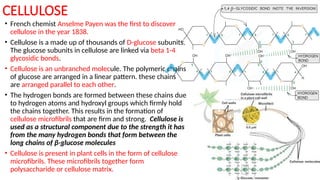
• Cellulose is a made up of thousands of D-glucose subunits.
The glucose subunits in cellulose are linked via beta 1-4
glycosidic bonds.
• Cellulose is an unbranched molecule. The polymeric chains
of glucose are arranged in a linear pattern. these chains
are arranged parallel to each other.
• The hydrogen bonds are formed between these chains due
to hydrogen atoms and hydroxyl groups which firmly hold
the chains together. This results in the formation of
cellulose microfibrils that are firm and strong. Cellulose is
used as a structural component due to the strength it has
from the many hydrogen bonds that form between the
long chains of β-glucose molecules
• Cellulose is present in plant cells in the form of cellulose
microfibrils. These microfibrils together form
polysaccharide or cellulose matrix.
4.
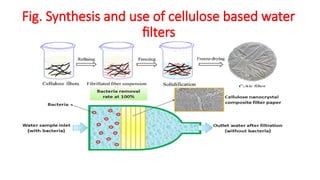
CELLULOSE-BASED WATER FILTERS
•Cellulose-based water filters are filters made from cellulose, a carbohydrate
polymer found in plant cell walls.
• They are used to remove impurities and contaminants from water and are an
alternative to traditional synthetic polymer filters.
• The high mechanical strength and hydrophilic properties of cellulose make it
an ideal material for water filtration.
• Cellulose filters can effectively remove particles, pathogens, and other
contaminants from water, making it safer and more potable.
• Cellulose-based water filters are widely used in both developed and
developing countries for household, industrial, and agricultural applications.
• They are also an environmentally friendly alternative to traditional filters, as
they are biodegradable and can be produced from renewable resources.
5.
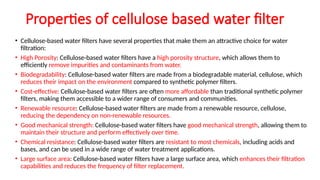
Properties of cellulosebased water filter
• Cellulose-based water filters have several properties that make them an attractive choice for water
filtration:
• High Porosity: Cellulose-based water filters have a high porosity structure, which allows them to
efficiently remove impurities and contaminants from water.
• Biodegradability: Cellulose-based water filters are made from a biodegradable material, cellulose, which
reduces their impact on the environment compared to synthetic polymer filters.
• Cost-effective: Cellulose-based water filters are often more affordable than traditional synthetic polymer
filters, making them accessible to a wider range of consumers and communities.
• Renewable resource: Cellulose-based water filters are made from a renewable resource, cellulose,
reducing the dependency on non-renewable resources.
• Good mechanical strength: Cellulose-based water filters have good mechanical strength, allowing them to
maintain their structure and perform effectively over time.
• Chemical resistance: Cellulose-based water filters are resistant to most chemicals, including acids and
bases, and can be used in a wide range of water treatment applications.
• Large surface area: Cellulose-based water filters have a large surface area, which enhances their filtration
capabilities and reduces the frequency of filter replacement.
6.
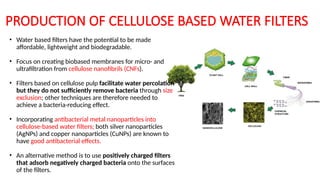
PRODUCTION OF CELLULOSEBASED WATER FILTERS
• Water based filters have the potential to be made
affordable, lightweight and biodegradable.
• Focus on creating biobased membranes for micro- and
ultrafiltration from cellulose nanofibrils (CNFs).
• Filters based on cellulose pulp facilitate water percolation
but they do not sufficiently remove bacteria through size
exclusion; other techniques are therefore needed to
achieve a bacteria-reducing effect.
• Incorporating antibacterial metal nanoparticles into
cellulose-based water filters; both silver nanoparticles
(AgNPs) and copper nanoparticles (CuNPs) are known to
have good antibacterial effects.
• An alternative method is to use positively charged filters
that adsorb negatively charged bacteria onto the surfaces
of the filters.
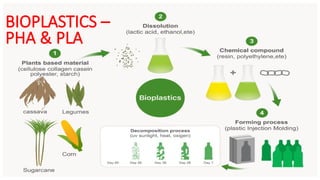
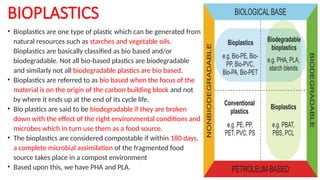
BIOPLASTICS
• Bioplastics areone type of plastic which can be generated from
natural resources such as starches and vegetable oils.
Bioplastics are basically classified as bio based and/or
biodegradable. Not all bio-based plastics are biodegradable
and similarly not all biodegradable plastics are bio based.
• Bioplastics are referred to as bio based when the focus of the
material is on the origin of the carbon building block and not
by where it ends up at the end of its cycle life.
• Bio plastics are said to be biodegradable if they are broken
down with the effect of the right environmental conditions and
microbes which in turn use them as a food source.
• The bioplastics are considered compostable if within 180 days,
a complete microbial assimilation of the fragmented food
source takes place in a compost environment
• Based upon this, we have PHA and PLA.
10.
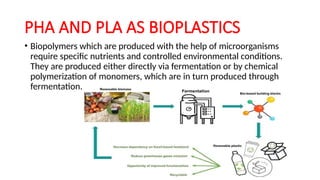
PHA AND PLAAS BIOPLASTICS
• Biopolymers which are produced with the help of microorganisms
require specific nutrients and controlled environmental conditions.
They are produced either directly via fermentation or by chemical
polymerization of monomers, which are in turn produced through
fermentation.
11.
Conventional Plastics Bioplastics
Source
Derivedfrom fossil fuels
and petroleum-based
sources
Produced from natural,
renewable resources
Resource Availability
Reliant on finite fossil
fuel resources
Utilize renewable
resources
Biodegradability
Most conventional
plastics are non-
biodegradable
Many bioplastics are
biodegradable
Environmental Impact
Contributes to
environmental pollution
Often considered more
environmentally friendly
Common Applications
Used in packaging, bags,
bottles, construction,
textiles, electronics, and
more
Applied in
biodegradable food
packaging, automotive
parts, biomedical tools,
and more
Examples of Materials
Polyethylene
terephthalate, polyvinyl
chloride, polystyrene
Polyhydroxyalkanoate,
polylactic acid,
polyhydroxyurethanes
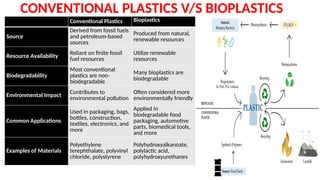
CONVENTIONAL PLASTICS V/S BIOPLASTICS
12.
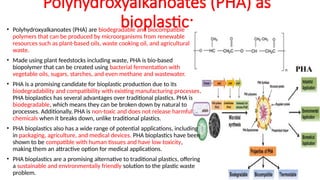
Polyhydroxyalkanoates (PHA) as
bioplastic:
•Polyhydroxyalkanoates (PHA) are biodegradable and biocompatible
polymers that can be produced by microorganisms from renewable
resources such as plant-based oils, waste cooking oil, and agricultural
waste.
• Made using plant feedstocks including waste, PHA is bio-based
biopolymer that can be created using bacterial fermentation with
vegetable oils, sugars, starches, and even methane and wastewater.
• PHA is a promising candidate for bioplastic production due to its
biodegradability and compatibility with existing manufacturing processes.
PHA bioplastics has several advantages over traditional plastics. PHA is
biodegradable, which means they can be broken down by natural to
processes. Additionally, PHA is non-toxic and does not release harmful
chemicals when it breaks down, unlike traditional plastics.
• PHA bioplastics also has a wide range of potential applications, including
in packaging, agriculture, and medical devices. PHA bioplastics have been
shown to be compatible with human tissues and have low toxicity,
making them an attractive option for medical applications.
• PHA bioplastics are a promising alternative to traditional plastics, offering
a sustainable and environmentally friendly solution to the plastic waste
problem.
13.
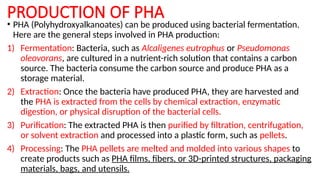
PRODUCTION OF PHA
•PHA (Polyhydroxyalkanoates) can be produced using bacterial fermentation.
Here are the general steps involved in PHA production:
1) Fermentation: Bacteria, such as Alcaligenes eutrophus or Pseudomonas
oleovorans, are cultured in a nutrient-rich solution that contains a carbon
source. The bacteria consume the carbon source and produce PHA as a
storage material.
2) Extraction: Once the bacteria have produced PHA, they are harvested and
the PHA is extracted from the cells by chemical extraction, enzymatic
digestion, or physical disruption of the bacterial cells.
3) Purification: The extracted PHA is then purified by filtration, centrifugation,
or solvent extraction and processed into a plastic form, such as pellets.
4) Processing: The PHA pellets are melted and molded into various shapes to
create products such as PHA films, fibers, or 3D-printed structures, packaging
materials, bags, and utensils.
14.
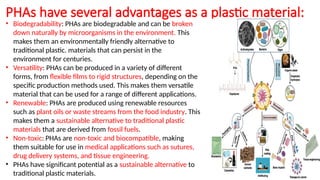
PHAs have severaladvantages as a plastic material:
• Biodegradability: PHAs are biodegradable and can be broken
down naturally by microorganisms in the environment. This
makes them an environmentally friendly alternative to
traditional plastic. materials that can persist in the
environment for centuries.
• Versatility: PHAs can be produced in a variety of different
forms, from flexible films to rigid structures, depending on the
specific production methods used. This makes them versatile
material that can be used for a range of different applications.
• Renewable: PHAs are produced using renewable resources
such as plant oils or waste streams from the food industry. This
makes them a sustainable alternative to traditional plastic
materials that are derived from fossil fuels.
• Non-toxic: PHAs are non-toxic and biocompatible, making
them suitable for use in medical applications such as sutures,
drug delivery systems, and tissue engineering.
• PHAs have significant potential as a sustainable alternative to
traditional plastic materials.
15.
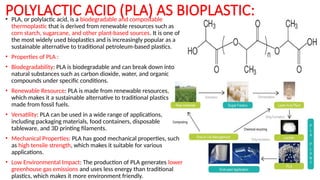
POLYLACTIC ACID (PLA)AS BIOPLASTIC:
• PLA, or polylactic acid, is a biodegradable and compostable
thermoplastic that is derived from renewable resources such as
corn starch, sugarcane, and other plant-based sources. It is one of
the most widely used bioplastics and is increasingly popular as a
sustainable alternative to traditional petroleum-based plastics.
• Properties of PLA :
• Biodegradability: PLA is biodegradable and can break down into
natural substances such as carbon dioxide, water, and organic
compounds under specific conditions.
• Renewable Resource: PLA is made from renewable resources,
which makes it a sustainable alternative to traditional plastics
made from fossil fuels.
• Versatility: PLA can be used in a wide range of applications,
including packaging materials, food containers, disposable
tableware, and 3D printing filaments.
• Mechanical Properties: PLA has good mechanical properties, such
as high tensile strength, which makes it suitable for various
applications.
• Low Environmental Impact: The production of PLA generates lower
greenhouse gas emissions and uses less energy than traditional
plastics, which makes it more environment friendly.
2. Nucleic acids(DNA Vaccine for
Rabies and RNA vaccines for
Covid19, Forensics – DNA
fingerprinting)
18.
DNA VACCINES FORRABIES
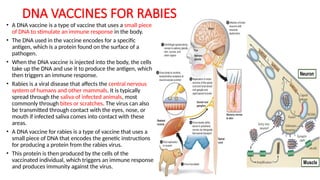
• A DNA vaccine is a type of vaccine that uses a small piece
of DNA to stimulate an immune response in the body.
• The DNA used in the vaccine encodes for a specific
antigen, which is a protein found on the surface of a
pathogen.
• When the DNA vaccine is injected into the body, the cells
take up the DNA and use it to produce the antigen, which
then triggers an immune response.
• Rabies is a viral disease that affects the central nervous
system of humans and other mammals. It is typically
spread through the saliva of infected animals, most
commonly through bites or scratches. The virus can also
be transmitted through contact with the eyes, nose, or
mouth if infected saliva comes into contact with these
areas.
• A DNA vaccine for rabies is a type of vaccine that uses a
small piece of DNA that encodes the genetic instructions
for producing a protein from the rabies virus.
• This protein is then produced by the cells of the
vaccinated individual, which triggers an immune response
and produces immunity against the virus.
19.
DNA VACCINE
PRODUCTION
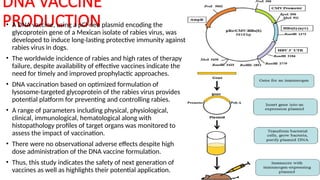
• ADNA vaccine, using a pCl-neo plasmid encoding the
glycoprotein gene of a Mexican isolate of rabies virus, was
developed to induce long-lasting protective immunity against
rabies virus in dogs.
• The worldwide incidence of rabies and high rates of therapy
failure, despite availability of effective vaccines indicate the
need for timely and improved prophylactic approaches.
• DNA vaccination based on optimized formulation of
lysosome-targeted glycoprotein of the rabies virus provides
potential platform for preventing and controlling rabies.
• A range of parameters including physical, physiological,
clinical, immunological, hematological along with
histopathology profiles of target organs was monitored to
assess the impact of vaccination.
• There were no observational adverse effects despite high
dose administration of the DNA vaccine formulation.
• Thus, this study indicates the safety of next generation of
vaccines as well as highlights their potential application.
20.
RNA VACCINES FORCOVID-19
• Coronavirus disease (COVID-19) is an infectious disease caused by the SARS-CoV-2
virus (Severe Acute Respiratory Syndrome CoronaVirus 2).
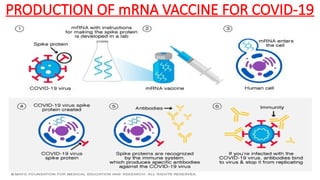
• Messenger RNA, or mRNA technology, instructs cells to make a protein that
generates an immune response in the body, thus producing the antibodies that
provide protection against a disease.
• It is the basis for the Pfizer/BioNTech and Moderna COVID-19 vaccines being used by
governments worldwide, and in the UN-supported COVAX global vaccine solidarity
initiative.
• Messenger ribonucleic acid (mRNA) is a molecule that provides cells with
instructions for making proteins.
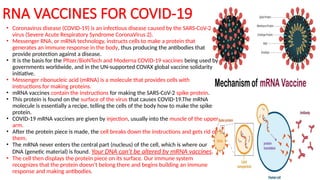
• mRNA vaccines contain the instructions for making the SARS-CoV-2 spike protein.
• This protein is found on the surface of the virus that causes COVID-19.The mRNA
molecule is essentially a recipe, telling the cells of the body how to make the spike
protein.
• COVID-19 mRNA vaccines are given by injection, usually into the muscle of the upper
arm.
• After the protein piece is made, the cell breaks down the instructions and gets rid of
them.
• The mRNA never enters the central part (nucleus) of the cell, which is where our
DNA (genetic material) is found. Your DNA can't be altered by mRNA vaccines.
• The cell then displays the protein piece on its surface. Our immune system
recognizes that the protein doesn't belong there and begins building an immune
response and making antibodies.
FORENSIC-DNA FINGERPRINTING
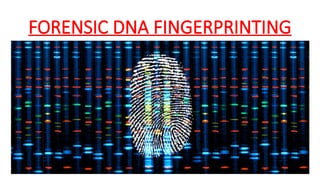
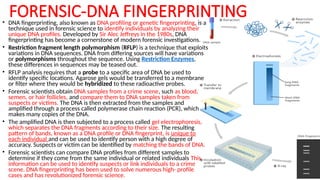
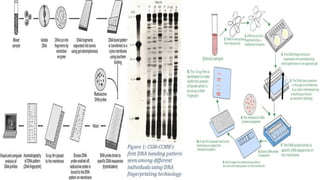
• DNAfingerprinting, also known as DNA profiling or genetic fingerprinting, is a
technique used in forensic science to identify individuals by analyzing their
unique DNA profiles. Developed by Sir Alec Jeffreys in the 1980s, DNA
fingerprinting has become a cornerstone of modern forensic investigations.
• Restriction fragment length polymorphism (RFLP) is a technique that exploits
variations in DNA sequences. DNA from differing sources will have variations
or polymorphisms throughout the sequence. Using Restriction Enzymes,
these differences in sequences may be teased out.
• RFLP analysis requires that a probe to a specific area of DNA be used to
identify specific locations. Agarose gels would be transferred to a membrane
or filter where they would be hybridized to these radioactive probes.
• Forensic scientists obtain DNA samples from a crime scene, such as blood,
semen, or hair follicles, and compare them to DNA samples taken from
suspects or victims. The DNA is then extracted from the samples and
amplified through a process called polymerase chain reaction (PCR), which
makes many copies of the DNA.
• The amplified DNA is then subjected to a process called gel electrophoresis,
which separates the DNA fragments according to their size. The resulting
pattern of bands, known as a DNA profile or DNA fingerprint, is unique to
each individual and can be used to identify person with a high degree of
accuracy. Suspects or victim can be identified by matching the bands of DNA.
• Forensic scientists can compare DNA profiles from different samples to
determine if they come from the same individual or related individuals This
information can be used to identify suspects or link individuals to a crime
scene. DNA fingerprinting has been used to solve numerous high- profile
cases and has revolutionized forensic science.
24.
• DNA fingerprintingis a laboratory technique used to determine the probable identity of a person based on the nucleotide
sequences of certain regions of human DNA that are unique to individuals.
• Forensic genetic fingerprinting can be defined as the comparison of the DNA in a person’s nucleated cells with that identified in
biological matter found at the scene of a crime or with the DNA of another person for the purpose of identification or exclusion.
The application of these techniques introduces new factual evidence to criminal investigations and court cases.
• The DNA testing process is comprised of four main steps, including
• extraction,
• quantitation ,
• amplification, and
• capillary electrophoresis.
• The procedure for creating a DNA fingerprint consists of:
• First, obtaining a sample of cells, such as skin, hair, or blood cells, which contain DNA.
• The DNA is extracted from the cells and purified, the DNA is then cut at specific points along the strand with proteins known as
restriction enzymes.
• The enzymes produce fragments of varying lengths that are sorted by placing them on a gel and then subjecting the gel to an
electric current (electrophoresis): the shorter the fragment, the more quickly it moved toward the positive pole (anode).
• The sorted double-stranded DNA fragments are then subjected to a blotting technique in which they are split into single strands
and transferred to a nylon sheet.
• The fragments undergo autoradiography in which they are exposed to DNA probes--pieces of synthetic DNA that are made
radioactive and that bind to the mini satellites.
• A piece of X-ray film is then exposed to the fragments, and a dark mark is produced at any point where a radioactive probe had
attached.
• The resultant pattern of marks can then be analyzed.
FORENSIC-DNA FINGERPRINTING
25.
STEPS IN DNAFINGERPRINTING
1. Sample Collection: Biological samples containing DNA are collected from a crime scene, victim, or
suspect. Common sources of DNA include blood, saliva, semen, hair roots, skin cells, and other bodily
fluids or tissues.
2. DNA Extraction: DNA is extracted from the collected samples using various methods to isolate the
genetic material from other cellular components. This step is crucial to obtain a pure DNA sample for
analysis.
3. DNA Amplification: Polymerase chain reaction (PCR) is used to amplify specific regions of the DNA that
contain short tandem repeats (STRs) or other genetic markers. STRs are repetitive sequences of DNA
that vary in length between individuals and are highly polymorphic, meaning they exhibit significant
variation in the population.
4. DNA Profiling: The amplified DNA fragments are separated and analyzed using techniques such as gel
electrophoresis or capillary electrophoresis. By measuring the lengths of the STR alleles at multiple loci,
a unique DNA profile, or fingerprint, is generated for each individual. The likelihood of two individuals
having the same DNA profile is extremely low, making DNA fingerprinting a highly reliable method of
identification.
5. Database Comparison: The DNA profile obtained from the forensic sample can be compared to DNA
profiles stored in forensic DNA databases, such as CODIS (Combined DNA Index System), to identify
potential matches with known individuals. This comparison can help law enforcement agencies identify
suspects, link crime scenes, and solve cases.
6. Interpretation and Reporting: Forensic analysts interpret the DNA profiles and generate reports
detailing the results of the analysis. If a match is found between the forensic sample and a known
individual, this information can be used as evidence in criminal investigations or court proceedings.
Forensic DNA fingerprinting has revolutionized criminal investigations by providing a powerful tool for
PROTEIN AS FOOD:
WHEYPROTEIN
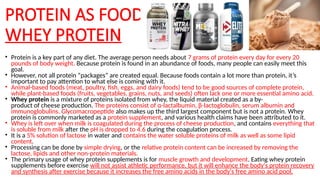
• Protein is a key part of any diet. The average person needs about 7 grams of protein every day for every 20
pounds of body weight. Because protein is found in an abundance of foods, many people can easily meet this
goal.
• However, not all protein “packages” are created equal. Because foods contain a lot more than protein, it’s
important to pay attention to what else is coming with it.
• Animal-based foods (meat, poultry, fish, eggs, and dairy foods) tend to be good sources of complete protein,
while plant-based foods (fruits, vegetables, grains, nuts, and seeds) often lack one or more essential amino acid.
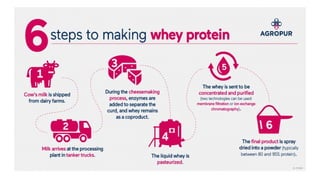
• Whey protein is a mixture of proteins isolated from whey, the liquid material created as a by-
product of cheese production. The proteins consist of α-lactalbumin, β-lactoglobulin, serum albumin and
immunoglobulins. Glycomacropeptide also makes up the third largest component but is not a protein. Whey
protein is commonly marketed as a protein supplement, and various health claims have been attributed to it.
• Whey is left over when milk is coagulated during the process of cheese production, and contains everything that
is soluble from milk after the pH is dropped to 4.6 during the coagulation process.
• It is a 5% solution of lactose in water and contains the water soluble proteins of milk as well as some lipid
content.
• Processing can be done by simple drying, or the relative protein content can be increased by removing the
lactose, lipids and other non-protein materials.
• The primary usage of whey protein supplements is for muscle growth and development. Eating whey protein
supplements before exercise will not assist athletic performance, but it will enhance the body's protein recovery
and synthesis after exercise because it increases the free amino acids in the body's free amino acid pool.
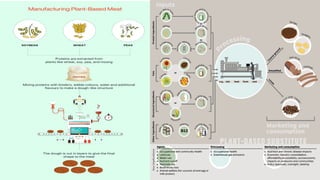
MEAT ANALOGUES
• Meatanalogues find raising interest of many consumers who are looking for indulgent, healthy, low
environmental impact, ethical, cost-effective, and/or new food products.
• High moisture extrusion cooking enables the production of fresh, premium meat analogues that are
texturally like muscle meat from plant or animal proteins.
• The appearance and eating sensation are similar to cooked meat while high protein content offers a
similar nutritional value.
• Here, we focus on plant-based meat analogues and cover process and product-related aspects
including ingredients and structure formation, flavor, taste and nutritional value, post extrusion
processing, packaging and shelf life, consumer benefits, and product-related environmental impacts.
• Meat analogues, can be defined as products that mimic meat in its functionality, bearing similar
appearance, texture, and sensory attributes to meat. Production of meat analogues has been on the
increase, targeted at satisfying consumers’ desire for indulgent, healthy, low environmental impact,
and ethical meat substitutes.
• The factors that lead to this shift is due to low fat and calorie foods intake, flexitarians, animal
disease, natural resources depletion, and to reduce greenhouse gas emission.
• Currently, available marketed meat analog products are plant-based meat in which the quality (i.e.,
texture and taste)are similar to the conventional meat.
• The ingredients used are mainly soy proteins with novel ingredients added, such as mycoprotein and
soy leghemoglobin.
32.
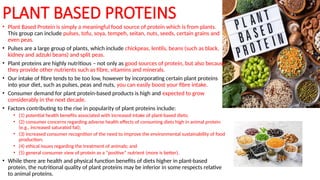
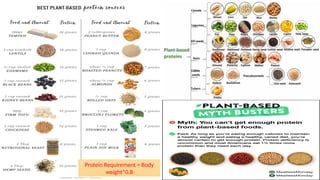
• Plant BasedProtein is simply a meaningful food source of protein which is from plants.
This group can include pulses, tofu, soya, tempeh, seitan, nuts, seeds, certain grains and
even peas.
• Pulses are a large group of plants, which include chickpeas, lentils, beans (such as black,
kidney and adzuki beans) and split peas.
• Plant proteins are highly nutritious – not only as good sources of protein, but also because
they provide other nutrients such as fibre, vitamins and minerals.
• Our intake of fibre tends to be too low, however by incorporating certain plant proteins
into your diet, such as pulses, peas and nuts, you can easily boost your fibre intake.
• Consumer demand for plant protein-based products is high and expected to grow
considerably in the next decade.
• Factors contributing to the rise in popularity of plant proteins include:
• (1) potential health benefits associated with increased intake of plant-based diets;
• (2) consumer concerns regarding adverse health effects of consuming diets high in animal protein
(e.g., increased saturated fat);
• (3) increased consumer recognition of the need to improve the environmental sustainability of food
production;
• (4) ethical issues regarding the treatment of animals; and
• (5) general consumer view of protein as a “positive” nutrient (more is better).
• While there are health and physical function benefits of diets higher in plant-based
protein, the nutritional quality of plant proteins may be inferior in some respects relative
to animal proteins.
PLANT BASED PROTEINS
BIODIESEL
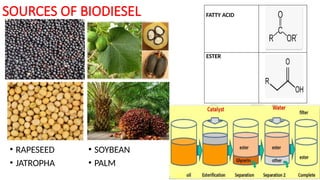
Biodiesel is aliquid biofuel obtained by chemical processes from vegetable oils or animal fats and an alcohol that
can be used in diesel engines, alone or blended with diesel oil.
Biodiesel is a renewable fuel made from natural oils and fats, such as vegetable oil, animal fats, or recycled
cooking grease. It is produced through a process called transesterification, which involves reacting these oils or
fats with an alcohol (usually methanol or ethanol) in the presence of a catalyst (such as sodium hydroxide or
potassium hydroxide). This reaction converts the oils or fats into fatty acid methyl esters (FAME), which are the
chemical compounds that make up biodiesel, along with glycerin as a byproduct.
Here are some key points about biodiesel:
• Renewable and Sustainable: Biodiesel is considered a renewable fuel because it is made from organic
materials that can be replenished relatively quickly compared to finite fossil fuels like petroleum diesel. It is
produced from feedstocks such as soybean oil, canola oil, palm oil, animal fats, and used cooking oil, which can
be grown, harvested, or collected as waste products.
• Environmental Benefits: Biodiesel is often promoted as a cleaner-burning alternative to petroleum diesel, as it
produces fewer harmful emissions when burned. It has lower levels of sulfur, particulate matter, and carbon
monoxide, and it emits less greenhouse gases such as carbon dioxide (CO2). Biodiesel also helps reduce
dependence on fossil fuels and can contribute to lower carbon footprints and improved air quality.
36.
BIODIESEL
• Compatibility: Biodieselcan be used as a drop-in replacement for petroleum diesel in most diesel
engines without the need for engine modifications. It can be blended with petroleum diesel in
various proportions, such as B20 (20% biodiesel, 80% petroleum diesel) or B100 (100% biodiesel),
depending on the engine type, climate conditions, and fuel specifications.
• Biodegradability: Biodiesel is biodegradable and non-toxic, which means it breaks down naturally in
the environment and poses less risk of soil or water contamination in the event of spills or leaks.
This makes it safer to handle and transport compared to petroleum diesel.
• Applications: Biodiesel is used primarily as a transportation fuel for diesel vehicles, including cars,
trucks, buses, and trains. It can also be used in stationary diesel engines for power generation,
agricultural machinery, construction equipment, and marine vessels. Additionally, biodiesel can be
blended with heating oil for residential and commercial heating applications.
Overall, biodiesel offers a renewable and sustainable alternative to petroleum diesel, with
environmental benefits such as reduced emissions and lower carbon footprint and improved air
quality.
37.
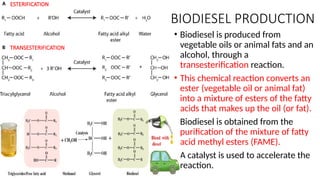
BIODIESEL PRODUCTION
• Biodieselis produced from
vegetable oils or animal fats and an
alcohol, through a
transesterification reaction.
• This chemical reaction converts an
ester (vegetable oil or animal fat)
into a mixture of esters of the fatty
acids that makes up the oil (or fat).
• Biodiesel is obtained from the
purification of the mixture of fatty
acid methyl esters (FAME).
• A catalyst is used to accelerate the
reaction.
ESTERIFICATION
TRANSESTERIFICATION
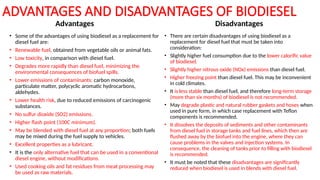
ADVANTAGES AND DISADVANTAGESOF BIODIESEL
Advantages
• Some of the advantages of using biodiesel as a replacement for
diesel fuel are:
• Renewable fuel, obtained from vegetable oils or animal fats.
• Low toxicity, in comparison with diesel fuel.
• Degrades more rapidly than diesel fuel, minimizing the
environmental consequences of biofuel spills.
• Lower emissions of contaminants: carbon monoxide,
particulate matter, polycyclic aromatic hydrocarbons,
aldehydes.
• Lower health risk, due to reduced emissions of carcinogenic
substances.
• No sulfur dioxide (SO2) emissions.
• Higher flash point (100C minimum).
• May be blended with diesel fuel at any proportion; both fuels
may be mixed during the fuel supply to vehicles.
• Excellent properties as a lubricant.
• It is the only alternative fuel that can be used in a conventional
diesel engine, without modifications.
• Used cooking oils and fat residues from meat processing may
be used as raw materials.
Disadvantages
• There are certain disadvantages of using biodiesel as a
replacement for diesel fuel that must be taken into
consideration:
• Slightly higher fuel consumption due to the lower calorific value
of biodiesel.
• Slightly higher nitrous oxide (NOx) emissions than diesel fuel.
• Higher freezing point than diesel fuel. This may be inconvenient
in cold climates.
• It is less stable than diesel fuel, and therefore long-term storage
(more than six months) of biodiesel is not recommended.
• May degrade plastic and natural rubber gaskets and hoses when
used in pure form, in which case replacement with Teflon
components is recommended.
• It dissolves the deposits of sediments and other contaminants
from diesel fuel in storage tanks and fuel lines, which then are
flushed away by the biofuel into the engine, where they can
cause problems in the valves and injection systems. In
consequence, the cleaning of tanks prior to filling with biodiesel
is recommended.
• It must be noted that these disadvantages are significantly
reduced when biodiesel is used in blends with diesel fuel.
41.
CLEANING AGENTS/DETERGENTS
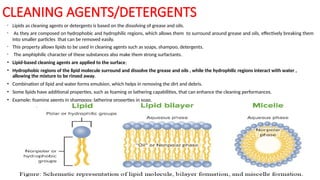
• Lipidsas cleaning agents or detergents is based on the dissolving of grease and oils.
• As they are composed on hydrophobic and hydrophilic regions, which allows them to surround around grease and oils, effectively breaking them
into smaller particles that can be removed easily.
• This property allows lipids to be used in cleaning agents such as soaps, shampoo, detergents.
• The amphiphilic character of these substances also make them strong surfactants.
• Lipid-based cleaning agents are applied to the surface;
• Hydrophobic regions of the lipid molecule surround and dissolve the grease and oils , while the hydrophilic regions interact with water ,
allowing the mixture to be rinsed away.
• Combination of lipid and water forms emulsion, which helps in removing the dirt and debris.
• Some lipids have additional properties, such as foaming or lathering capabilities, that can enhance the cleaning performances.
• Example: foaming agents in shampoos; lathering properties in soap.
42.
CLEANING AGENTS/DETERGENTS
• Oil-BasedCleaners: Certain types of oils, such as vegetable oil or mineral
oil, can be used to clean surfaces that are greasy or oily. When applied to
surfaces, these oils can help dissolve and lift away dirt, grime, and other oily
residues. They are particularly effective for cleaning surfaces like wood,
metal, or leather, where water-based cleaners may not be as effective.
• Soap Making: Soap is a type of detergent that is traditionally made from
fats or oils, such as tallow (rendered animal fat) or vegetable oils (e.g., olive
oil, coconut oil). During the soap-making process, fats or oils are combined
with a strong alkaline solution (such as lye) to undergo a chemical reaction
called saponification. This reaction produces soap molecules, which have
both hydrophilic (water-attracting) and hydrophobic (water-repelling) parts.
The hydrophobic parts of the soap molecules can trap and remove dirt and
oils from surfaces, while the hydrophilic parts allow them to be rinsed away
with water.
• Natural Cleaning Products: Some environmentally friendly cleaning
products use plant-derived oils, such as citrus oils or essential oils, as active
cleaning agents. These oils can have antimicrobial properties and can help
remove dirt and odors from surfaces without the use of harsh chemicals.
• Natural Cleaning Products: Some environmentally friendly cleaning
products use plant-derived oils, such as citrus oils or essential oils, as active
cleaning agents. These oils can have antimicrobial properties and can help
remove dirt and odors from surfaces without the use of harsh chemicals.
• Degreasing Agents: Lipids, such as fatty acids or esters, can be used as
degreasers to remove oily residues from surfaces or equipment. They can
be applied directly to the surface or used as ingredients in cleaning
formulations to break down and dissolve grease.
• While lipids can be effective for certain cleaning tasks, they may not be
suitable for all cleaning applications.
BIOSENSORS
A biosensor isa device that measures biological or chemical reactions by generating signals proportional to the
concentration of an analyte in the reaction. Biosensors are employed in applications such as disease monitoring,
drug discovery, and detection of pollutants, disease-causing micro-organisms and markers that are indicators of
a disease in bodily fluids (blood, urine, saliva, sweat). Various types of biosensors being used are enzyme-based,
tissue-based, immunosensors, DNA biosensors, and thermal and piezoelectric biosensors. There are wide variety
of enzymes used in biosensors. One such enzyme is glucose oxidase, mainly in amperometric glucose biosensor.
Amperometric sensors monitor currents generated when electrons are exchanged either directly or indirectly
between a biological system and an electrode.
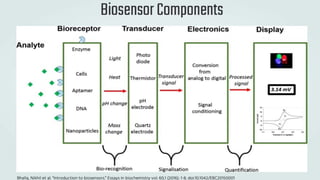
Biosensors are analytical devices that combine a biological sensing element with a physicochemical transducer
to detect and quantify specific biological analytes. They're used across various fields, including healthcare,
environmental monitoring, food safety, and more. Here's how they typically work:
• Biological Sensing Element: This component recognizes and interacts selectively with the target analyte. It can
be an enzyme, antibody, nucleic acid, whole cell, or biomimetic molecule. In the case of glucose monitoring,
as mentioned earlier, glucose oxidase serves as the biological sensing element.
• Transducer: The transducer converts the biological response into a measurable signal. Depending on the
application, this can be optical, electrochemical, piezoelectric, or thermal. For example, in glucose biosensors,
the transducer often measures changes in electrical current or potential resulting from the enzymatic
reaction.
• Signal Processing and Output: The signal generated by the transducer is processed and often displayed or
recorded for analysis. This could involve simple readouts like a digital display or more complex analysis using
computers or other devices.
45.
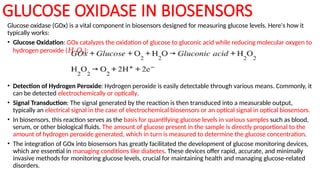
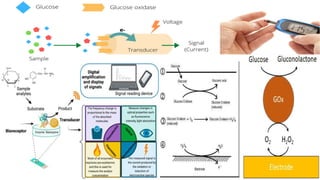
GLUCOSE OXIDASE INBIOSENSORS
Glucose oxidase (GOx) is a vital component in biosensors designed for measuring glucose levels. Here's how it
typically works:
• Glucose Oxidation: GOx catalyzes the oxidation of glucose to gluconic acid while reducing molecular oxygen to
hydrogen peroxide (𝐻2𝑂2
):
• Detection of Hydrogen Peroxide: Hydrogen peroxide is easily detectable through various means. Commonly, it
can be detected electrochemically or optically.
• Signal Transduction: The signal generated by the reaction is then transduced into a measurable output,
typically an electrical signal in the case of electrochemical biosensors or an optical signal in optical biosensors.
• In biosensors, this reaction serves as the basis for quantifying glucose levels in various samples such as blood,
serum, or other biological fluids. The amount of glucose present in the sample is directly proportional to the
amount of hydrogen peroxide generated, which in turn is measured to determine the glucose concentration.
• The integration of GOx into biosensors has greatly facilitated the development of glucose monitoring devices,
which are essential in managing conditions like diabetes. These devices offer rapid, accurate, and minimally
invasive methods for monitoring glucose levels, crucial for maintaining health and managing glucose-related
disorders.
48.
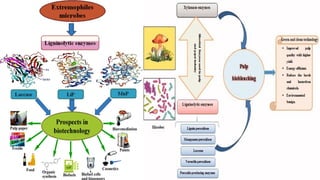
ENZYMES IN BIOBLEACHING:
• Biobleaching is the bleaching of pulps using enzymes or ligninolytic fungi that reduce
the amount of chemical bleach required to obtain a desirable brightness of pulps.
• Ligninolytic enzymes play a key role in degradation and detoxification of lingo-cellulosic
waste in environment.
• The major ligninolytic enzymes are laccase, lignin peroxidase, manganese peroxidase.
• Ligninolytic fungi and enzymes (i.e., laccase, manganese peroxidase, and lignin
peroxidase) have been applied recently in the production of second-generation
biofuels.
• White-rot fungi are the main producers of lignin-oxidizing enzymes. These fungi
secrete a number of oxidative enzymes and some hitherto unknown substances
(mediators) into their environment together effecting a slow but continuous
degradation.
• The most important lignin-oxidizing enzymes are lignin peroxidases, manganese
peroxidases and laccases. Lignin peroxidase and manganese peroxidase appear to
constitute a major component of the ligninolytic system.
49.
ENZYMES IN BIO-BLEACHING:
Here'show ligninolytic enzymes contribute to degradation and detoxification:
• Lignin Degradation: Ligninolytic enzymes, including lignin peroxidase (LiP), manganese
peroxidase (MnP), and laccase, work together to depolymerize lignin, which is highly
resistant to degradation due to its complex and heterogeneous structure. These
enzymes catalyze the oxidation of lignin, cleaving its aromatic rings and breaking down
its bonds, leading to the fragmentation of lignin into smaller molecules.
• Detoxification of Environmental Pollutants: Ligninolytic enzymes are not only
involved in lignin degradation but also play a role in the detoxification of various
environmental pollutants. They can oxidize a wide range of organic pollutants,
including aromatic compounds, polycyclic aromatic hydrocarbons (PAHs), dyes,
pesticides, and industrial chemicals. By breaking down these pollutants into less toxic
or more biodegradable forms, ligninolytic enzymes contribute to environmental
remediation and pollution control.
50.
ENZYMES IN BIO-BLEACHING:
•Bioremediation of Contaminated Sites: Ligninolytic enzymes are utilized in bioremediation
processes to clean up sites contaminated with lignin-rich substances, such as industrial effluents,
pulp and paper mill wastewater, and soil polluted with petroleum hydrocarbons. By accelerating
the degradation of lignin and associated pollutants, these enzymes help restoring the
environmental health of contaminated sites and reduce the impact of pollution on ecosystems.
• Production of High-Value Products: Ligninolytic enzymes have biotechnological applications
beyond environmental remediation. They are used in the production of high-value products, such
as biofuels, chemicals, and pharmaceuticals, through the enzymatic conversion of lignin-derived
compounds into valuable intermediates. This enzymatic conversion process offers a sustainable
and environmentally friendly approach to utilizing lingo-cellulosic biomass for industrial purposes.
• Synergistic Action with Other Enzymes: Ligninolytic enzymes often work synergistically with
other enzymes, such as cellulases and hemicellulases, in the degradation of lignocellulosic
biomass. This synergistic action enhances the efficiency of biomass conversion processes, such as
biofuel production and bio-refinery operations, by facilitating the breakdown of both lignin and
carbohydrate components of biomass.
Editor's Notes
#19 RABIES- Rabies is a vaccine-preventable, zoonotic, viral disease affecting the central nervous system. Once clinical symptoms appear, rabies is virtually 100% fatal. In up to 99% of cases, domestic dogs are responsible for rabies virus transmission to humans. Yet, rabies can affect both domestic and wild animals. It spreads to people and animals via saliva, usually through bites, scratches or direct contact with mucosa (e.g. eyes, mouth or open wounds). Children between the age of 5 and 14 years are frequent victims.
#21 Corona virus disease (COVID-19) is an infectious disease caused by a novel severe acute respiratory syndrome coronavirus 2 (SARS-CoV-2)
Coronaviruses (CoVs) are a group of enveloped viruses, having a positive single-stranded RNA genome and pathogenic.
#24 Forensic scientists obtain DNA samples from a crime scene, such as blood, semen, or hair follicles, and compare them to DNA samples taken from suspects or victims. The DNA is then extracted from the samples and amplified through a process called polymerase chain reaction (PCR), which makes many copies of the DNA.
The amplified DNA is then subjected to a process called gel electrophoresis, which separates the DNA fragments according to their size. The resulting pattern of bands, known as a DNA profile or DNA fingerprint, is unique to each individual and can be used to identify person with a high degree of accuracy. Suspects or victim can be identified by matching the bands of DNA.
Forensic scientists can compare DNA profiles from different samples to determine if they come from the same individual or related individuals This information can be used to identify suspects or link individuals to a crime scene. DNA fingerprinting has been used to solve numerous high- profile cases and has revolutionized forensic science.
#34 Protein Requirement = Body weight*0.8
0.8g/kg of body weight
#38 ESTERIFICATION: It is the general name for a chemical reaction in which two reactants (typically an alcohol and an acid) form an ester as the reaction product. Esters are common in organic chemistry and biological materials, and often have a pleasant characteristic, fruity odor.
The reaction: CH3 COOH + CH3 CH2 OH ====> CH3COOCH2CH3 + H2O
TRANSESTERIFICATION:
In organic chemistry, transesterification is the process of exchanging the organic group R″ of an ester with the organic group R′ of an alcohol. These reactions are often catalyzed by the addition of an acid or base catalyst.
#43 Cationic detergents are quaternary ammonium salts of amines with anions as acetates, chlorides or bromides . The cationic part consists of a long hydrocarbon chain and a positively charge Nitrogen atom. The centre ammonium sulphate is positively charged. Fabrics can easily absorb cationic detergents.
Anionic detergents are so named because large part of their molecules are anions and it is the anionic part of the molecule which is involved in the cleansing action. These are sodium salt of sulphonated long chain alcohols or hydrocarbons. For example, sodium lauryl sulphate, sodium dedocylbenzene sulphonate, etc.
#45 The majority of the current glucose biosensors are of the electrochemical type, because of their better sensitivity, reproducibility, and easy maintenance as well as their low cost. Electrochemical sensors may be subdivided into potentiometric, amperometric, or conductometric types.
Enzymatic amperometric glucose biosensors are the most common devices commercially available, and have been widely studied over the last few decades. Amperometric sensors monitor currents generated when electrons are exchanged either directly or indirectly between a biological system and an electrode.
GOx is the standard enzyme for biosensors; it has a relatively higher selectivity for glucose.
#51 Bioremediation is a process where biological organisms are used to remove or neutralize an environmental pollutant by metabolic process. The “biological” organisms include microscopic organisms, such as fungi, algae and bacteria, and the “remediation”—treating the situation.