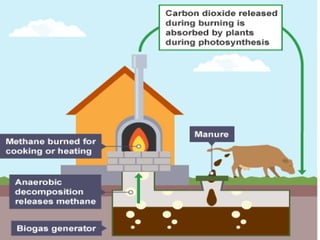
 Biogas is a bio fuel produced from the
anaerobic fermentation of carbohydrates in
plant material or waste (egg food peelings or
manure) by bacteria. It is mainly composed
of methane, with some carbon dioxide and
other trace gases.
 Biogas typically refers to a mixture of
different gases produced by the breakdown
of organic matter in the absence of oxygen.
Biogas can be produced from raw materials
such as agricultural waste, manure, municipal
waste, plant material, sewage, green
waste or food waste. Biogas is a renewable
energy source and in many cases exerts a very
small carbon footprint.
 Biogas can be produced by anaerobic
digestion with anaerobic organisms, which
digest material inside a closed system,
or fermentation of biodegradable materials.
 Biogas is primarily methane (CH
4) and carbon dioxide (CO2) and may have
small amounts of hydrogen sulfide (H
2S), moisture and siloxanes. The
gases methane, hydrogen, and carbon
monoxide (CO) can be combusted or oxidized
with oxygen. This energy release allows biogas
to be used as a fuel; it can be used for any
heating purpose, such as cooking
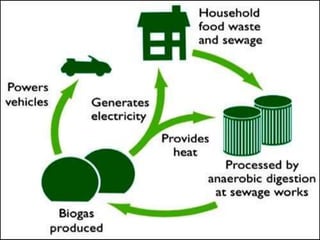
 It can also be used in a gas engine to convert
the energy in the gas into electricity and heat.
 Biogas can be compressed, the same
way natural gas is compressed to CNG, and
used to power motor vehicles. In the UK, for
example, biogas is estimated to have the
potential to replace around 17% of vehicle fuel .
It qualifies for renewable energy subsidies in
some parts of
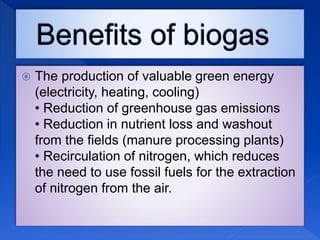
 The production of valuable green energy
(electricity, heating, cooling)
• Reduction of greenhouse gas emissions
• Reduction in nutrient loss and washout
from the fields (manure processing plants)
• Recirculation of nitrogen, which reduces
the need to use fossil fuels for the extraction
of nitrogen from the air.
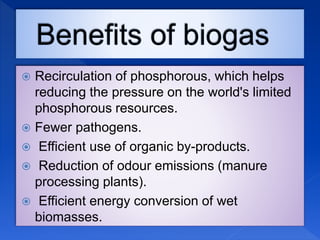
 Recirculation of phosphorous, which helps
reducing the pressure on the world's limited
phosphorous resources.
 Fewer pathogens.
 Efficient use of organic by-products.
 Reduction of odour emissions (manure
processing plants).
 Efficient energy conversion of wet
biomasses.
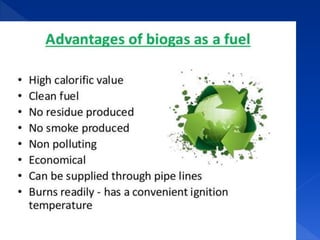
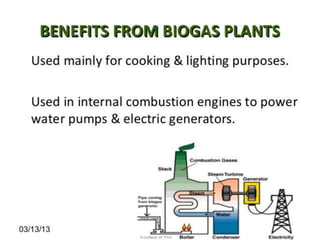
 For cooking and heating
 As an illuminant for domestic and street
lighting using mental lantern.
 For running tube-well and water pump-set
engines.
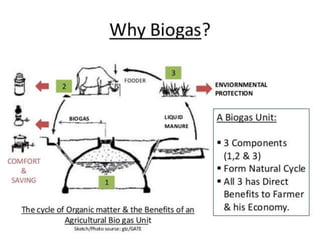
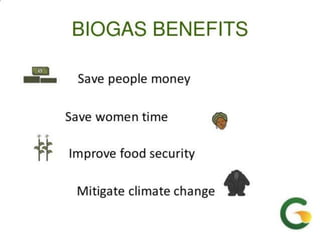
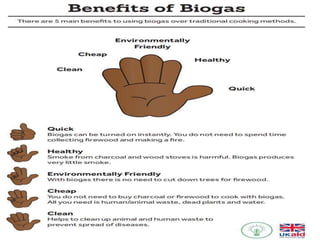
 Provides a non-polluting and renewable
source of energy.
 Efficient way of energy conversion (saves
fuel wood).
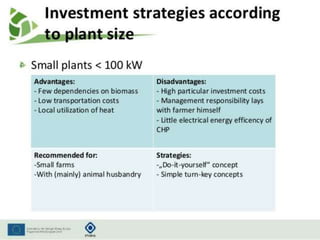
 The technology is cheaper and much simpler
than those for other bio-fuels, and it is ideal
for small scale application.
 Biogas can also be used for the
simultaneous heating, cooling and power
generation.
Biogs  science

Biogs science

  • 2.
     Biogas isa bio fuel produced from the anaerobic fermentation of carbohydrates in plant material or waste (egg food peelings or manure) by bacteria. It is mainly composed of methane, with some carbon dioxide and other trace gases.
  • 5.
     Biogas typicallyrefers to a mixture of different gases produced by the breakdown of organic matter in the absence of oxygen. Biogas can be produced from raw materials such as agricultural waste, manure, municipal waste, plant material, sewage, green waste or food waste. Biogas is a renewable energy source and in many cases exerts a very small carbon footprint.
  • 6.
     Biogas canbe produced by anaerobic digestion with anaerobic organisms, which digest material inside a closed system, or fermentation of biodegradable materials.
  • 7.
     Biogas isprimarily methane (CH 4) and carbon dioxide (CO2) and may have small amounts of hydrogen sulfide (H 2S), moisture and siloxanes. The gases methane, hydrogen, and carbon monoxide (CO) can be combusted or oxidized with oxygen. This energy release allows biogas to be used as a fuel; it can be used for any heating purpose, such as cooking
  • 8.
     It canalso be used in a gas engine to convert the energy in the gas into electricity and heat.  Biogas can be compressed, the same way natural gas is compressed to CNG, and used to power motor vehicles. In the UK, for example, biogas is estimated to have the potential to replace around 17% of vehicle fuel . It qualifies for renewable energy subsidies in some parts of
  • 10.
     The productionof valuable green energy (electricity, heating, cooling) • Reduction of greenhouse gas emissions • Reduction in nutrient loss and washout from the fields (manure processing plants) • Recirculation of nitrogen, which reduces the need to use fossil fuels for the extraction of nitrogen from the air.
  • 11.
     Recirculation ofphosphorous, which helps reducing the pressure on the world's limited phosphorous resources.  Fewer pathogens.  Efficient use of organic by-products.  Reduction of odour emissions (manure processing plants).  Efficient energy conversion of wet biomasses.
  • 17.
     For cookingand heating  As an illuminant for domestic and street lighting using mental lantern.  For running tube-well and water pump-set engines.  Provides a non-polluting and renewable source of energy.
  • 18.
     Efficient wayof energy conversion (saves fuel wood).  The technology is cheaper and much simpler than those for other bio-fuels, and it is ideal for small scale application.  Biogas can also be used for the simultaneous heating, cooling and power generation.