 Biogenic amines are defined as aliphatic,
alicyclic and hetrocyclic organic bases of low
molecular weight.
 The compounds are reported to originate
from the decarboxylation of specific free
amino acids in fish or shellfish tissue
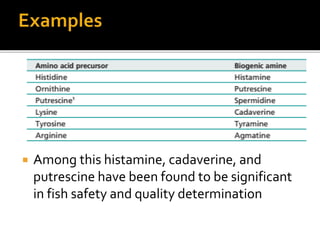
 Among this histamine, cadaverine, and
putrescine have been found to be significant
in fish safety and quality determination
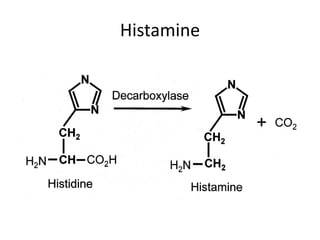
Histamine
 Histamine is produced in species of the Scombroidae family
such as tuna, mackerel, mahimahi, bluefish and sardine
 Histamine range for causing Scombroid Poisoning
 < 50 mg/kg safe for consumption
 50–200 mg/kg possibly toxic
 200–1 000 mg/kg probably toxic
 > 1 000 mg/kg toxic and unsafe for human consumption
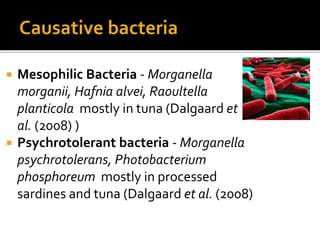
 Mesophilic Bacteria - Morganella
morganii, Hafnia alvei, Raoultella
planticola mostly in tuna (Dalgaard et
al. (2008) )
 Psychrotolerant bacteria - Morganella
psychrotolerans, Photobacterium
phosphoreum mostly in processed
sardines and tuna (Dalgaard et al. (2008)
 Onset: immediate to 30 minutes up to 2h and people often develop
symptoms while they are still eating.
 Primary Symptoms :
 cutaneous - rash, urticaria, oedema, and localized
inflammation
 gastrointestinal - nausea, vomiting and diarrhoea
 Haemodynamic – hypotension
 Neurological - headache, tingling, oral burning and blistering
sensation, flushing and perspiration, and itching
 More serious complications such as cardiac palpitations occur but are
rare
 FDA guideline:
20 mg/l00gm - spoilage
50 mg/l00gm – hazard
 Prevention : Rapid chilling of fish immediately after death.This is
particularly important for fish that are from warmer water or are exposed
to warm air, and for large tuna that generate heat in the tissues of the fish
following death.
 Good hygiene practices on board, at landing and during processing to
avoid contamination or recontamination of the fish by bacteria capable of
amino-acid decarboxylation.
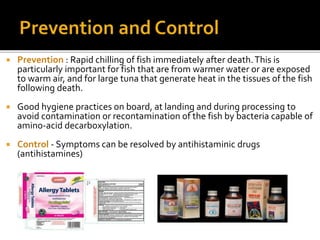
 Control - Symptoms can be resolved by antihistaminic drugs
(antihistamines)
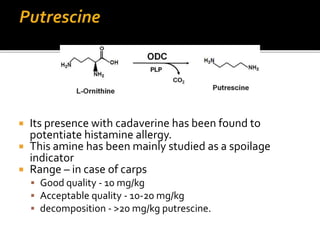
 Its presence with cadaverine has been found to
potentiate histamine allergy.
 This amine has been mainly studied as a spoilage
indicator
 Range – in case of carps
 Good quality - 10 mg/kg
 Acceptable quality - 10-20 mg/kg
 decomposition - >20 mg/kg putrescine.
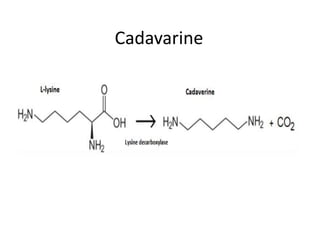
Cadavarine
 Occurs in Albacore, Bigeye tuna, Sardine etc as free lysine precursor of
cadavarine
 Foul Smelling compounds produced when amino acids decompose in
decaying animals
 Cadaverine has been found to be a useful index for evaluating fish
microbial spoilage in a wide range of fish including
non-pelagic fish
 Range
 1–10 mg/kg – Acceptable Quality
 ≥10 mg/kg – Unacceptable Quality
(Yamanaka et al., 1989)
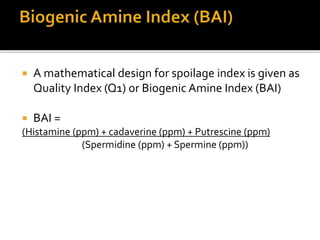
 A mathematical design for spoilage index is given as
Quality Index (Q1) or Biogenic Amine Index (BAI)
 BAI =
(Histamine (ppm) + cadaverine (ppm) + Putrescine (ppm)
(Spermidine (ppm) + Spermine (ppm))
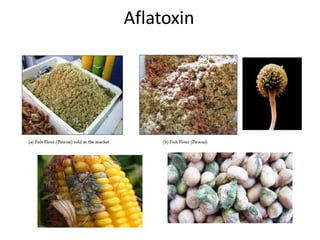
Aflatoxin
Continue….
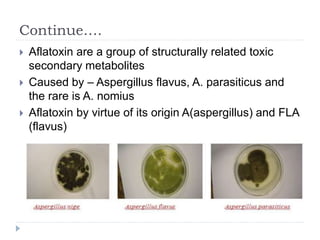
 Aflatoxin are a group of structurally related toxic
secondary metabolites
 Caused by – Aspergillus flavus, A. parasiticus and
the rare is A. nomius
 Aflatoxin by virtue of its origin A(aspergillus) and FLA
(flavus)
Types
 Four major Aflatoxins:
G1 & G2 – Yellow-Green fluorescence under
UV-light
B1 & B2 – Exhibition of Blue fluorescence
under UV-light
Additional - M1 & M2 – isolated from Milk
 Occurrence – Feed contaminated with aflatoxin
 Temperature – more than 27oC
 Humidity – greater than 62%
 Moisture – greater than 14%
 Regions – Subtropical and Tropical Aquaculture
 Improper Storage
 Cancer causing agent
 Liver tumors
 Reduced growth rate
 Tissue abnormality
 Lesions in the liver
 Depress the immune system making it
susceptible to disease
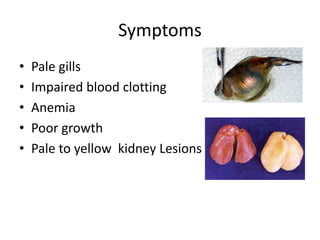
Symptoms
• Pale gills
• Impaired blood clotting
• Anemia
• Poor growth
• Pale to yellow kidney Lesions
 Recently prepared and properly stored feeds
 Control of rodents and insects in storage
 Regular testing visually
 Bright greenish/yellow fluorescence in black light
A. flavs
 Commercial kits –Veratox, Afla BTM and
VICAM for detection
 FDA – maximum 20ppb in feeds
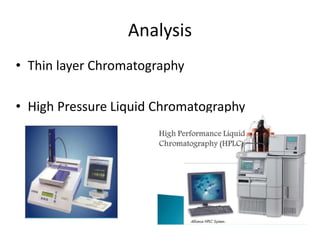
Analysis
• Thin layer Chromatography
• High Pressure Liquid Chromatography
Biogenic amines and Aflatoxin

Biogenic amines and Aflatoxin

  • 2.
     Biogenic aminesare defined as aliphatic, alicyclic and hetrocyclic organic bases of low molecular weight.  The compounds are reported to originate from the decarboxylation of specific free amino acids in fish or shellfish tissue
  • 3.
     Among thishistamine, cadaverine, and putrescine have been found to be significant in fish safety and quality determination
  • 4.
  • 5.
     Histamine isproduced in species of the Scombroidae family such as tuna, mackerel, mahimahi, bluefish and sardine  Histamine range for causing Scombroid Poisoning  < 50 mg/kg safe for consumption  50–200 mg/kg possibly toxic  200–1 000 mg/kg probably toxic  > 1 000 mg/kg toxic and unsafe for human consumption
  • 6.
     Mesophilic Bacteria- Morganella morganii, Hafnia alvei, Raoultella planticola mostly in tuna (Dalgaard et al. (2008) )  Psychrotolerant bacteria - Morganella psychrotolerans, Photobacterium phosphoreum mostly in processed sardines and tuna (Dalgaard et al. (2008)
  • 7.
     Onset: immediateto 30 minutes up to 2h and people often develop symptoms while they are still eating.  Primary Symptoms :  cutaneous - rash, urticaria, oedema, and localized inflammation  gastrointestinal - nausea, vomiting and diarrhoea  Haemodynamic – hypotension  Neurological - headache, tingling, oral burning and blistering sensation, flushing and perspiration, and itching  More serious complications such as cardiac palpitations occur but are rare  FDA guideline: 20 mg/l00gm - spoilage 50 mg/l00gm – hazard
  • 8.
     Prevention :Rapid chilling of fish immediately after death.This is particularly important for fish that are from warmer water or are exposed to warm air, and for large tuna that generate heat in the tissues of the fish following death.  Good hygiene practices on board, at landing and during processing to avoid contamination or recontamination of the fish by bacteria capable of amino-acid decarboxylation.  Control - Symptoms can be resolved by antihistaminic drugs (antihistamines)
  • 9.
     Its presencewith cadaverine has been found to potentiate histamine allergy.  This amine has been mainly studied as a spoilage indicator  Range – in case of carps  Good quality - 10 mg/kg  Acceptable quality - 10-20 mg/kg  decomposition - >20 mg/kg putrescine.
  • 10.
  • 11.
     Occurs inAlbacore, Bigeye tuna, Sardine etc as free lysine precursor of cadavarine  Foul Smelling compounds produced when amino acids decompose in decaying animals  Cadaverine has been found to be a useful index for evaluating fish microbial spoilage in a wide range of fish including non-pelagic fish  Range  1–10 mg/kg – Acceptable Quality  ≥10 mg/kg – Unacceptable Quality (Yamanaka et al., 1989)
  • 12.
     A mathematicaldesign for spoilage index is given as Quality Index (Q1) or Biogenic Amine Index (BAI)  BAI = (Histamine (ppm) + cadaverine (ppm) + Putrescine (ppm) (Spermidine (ppm) + Spermine (ppm))
  • 13.
  • 14.
    Continue….  Aflatoxin area group of structurally related toxic secondary metabolites  Caused by – Aspergillus flavus, A. parasiticus and the rare is A. nomius  Aflatoxin by virtue of its origin A(aspergillus) and FLA (flavus)
  • 15.
    Types  Four majorAflatoxins: G1 & G2 – Yellow-Green fluorescence under UV-light B1 & B2 – Exhibition of Blue fluorescence under UV-light Additional - M1 & M2 – isolated from Milk
  • 16.
     Occurrence –Feed contaminated with aflatoxin  Temperature – more than 27oC  Humidity – greater than 62%  Moisture – greater than 14%  Regions – Subtropical and Tropical Aquaculture  Improper Storage
  • 17.
     Cancer causingagent  Liver tumors  Reduced growth rate  Tissue abnormality  Lesions in the liver  Depress the immune system making it susceptible to disease
  • 18.
    Symptoms • Pale gills •Impaired blood clotting • Anemia • Poor growth • Pale to yellow kidney Lesions
  • 19.
     Recently preparedand properly stored feeds  Control of rodents and insects in storage  Regular testing visually  Bright greenish/yellow fluorescence in black light A. flavs  Commercial kits –Veratox, Afla BTM and VICAM for detection  FDA – maximum 20ppb in feeds
  • 20.
    Analysis • Thin layerChromatography • High Pressure Liquid Chromatography