Reusing Resources
Biogas from Kitchen Waste
Anshul Vardhan
Class XII
Delhi Public School, Pune
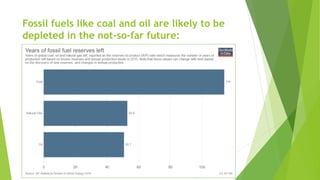
Fossil fuels like coal and oil are likely to be
depleted in the not-so-far future:
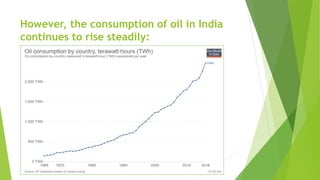
However, the consumption of oil in India
continues to rise steadily:
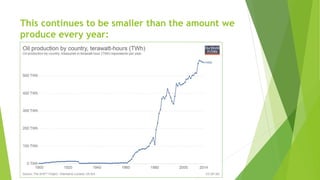
This continues to be smaller than the amount we
produce every year:
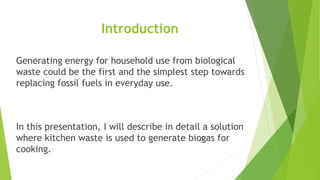
Generating energy for household use from biological
waste could be the first and the simplest step towards
replacing fossil fuels in everyday use.
In this presentation, I will describe in detail a solution
where kitchen waste is used to generate biogas for
cooking.
Introduction
Concept
 Recycling kitchen waste to produce fuel for cooking.
 Kitchen waste (biomass) has stored chemical energy
derived from solar energy by photosynthesis.
 Biomass gets converted into methane by anaerobic
bacteria.
 Methane generated in this way is a green fuel.
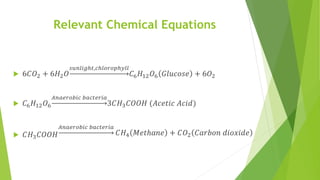
Relevant Chemical Equations
 6𝐶𝑂2 + 6𝐻2 𝑂
𝑠𝑢𝑛𝑙𝑖𝑔ℎ𝑡,𝑐ℎ𝑙𝑜𝑟𝑜𝑝ℎ𝑦𝑙𝑙
𝐶6 𝐻12 𝑂6 𝐺𝑙𝑢𝑐𝑜𝑠𝑒 + 6𝑂2
 𝐶6 𝐻12 𝑂6
𝐴𝑛𝑎𝑒𝑟𝑜𝑏𝑖𝑐 𝑏𝑎𝑐𝑡𝑒𝑟𝑖𝑎
3𝐶𝐻3 𝐶𝑂𝑂𝐻 (𝐴𝑐𝑒𝑡𝑖𝑐 𝐴𝑐𝑖𝑑)
 𝐶𝐻3 𝐶𝑂𝑂𝐻
𝐴𝑛𝑎𝑒𝑟𝑜𝑏𝑖𝑐 𝑏𝑎𝑐𝑡𝑒𝑟𝑖𝑎
𝐶𝐻4 𝑀𝑒𝑡ℎ𝑎𝑛𝑒 + 𝐶𝑂2 𝐶𝑎𝑟𝑏𝑜𝑛 𝑑𝑖𝑜𝑥𝑖𝑑𝑒
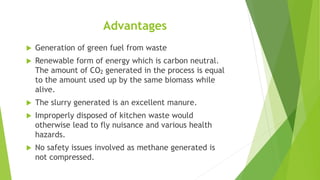
Advantages
 Generation of green fuel from waste
 Renewable form of energy which is carbon neutral.
The amount of CO2 generated in the process is equal
to the amount used up by the same biomass while
alive.
 The slurry generated is an excellent manure.
 Improperly disposed of kitchen waste would
otherwise lead to fly nuisance and various health
hazards.
 No safety issues involved as methane generated is
not compressed.
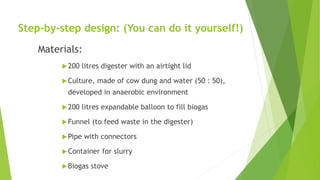
Step-by-step design: (You can do it yourself!)
Materials:
200 litres digester with an airtight lid
Culture, made of cow dung and water (50 : 50),
developed in anaerobic environment
200 litres expandable balloon to fill biogas
Funnel (to feed waste in the digester)
Pipe with connectors
Container for slurry
Biogas stove
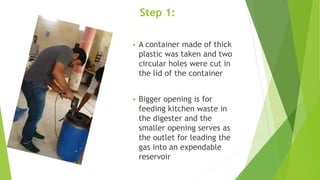
Step 1:
 A container made of thick
plastic was taken and two
circular holes were cut in
the lid of the container
 Bigger opening is for
feeding kitchen waste in
the digester and the
smaller opening serves as
the outlet for leading the
gas into an expendable
reservoir
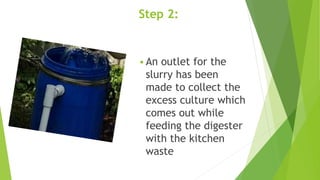
Step 2:
 An outlet for the
slurry has been
made to collect the
excess culture which
comes out while
feeding the digester
with the kitchen
waste
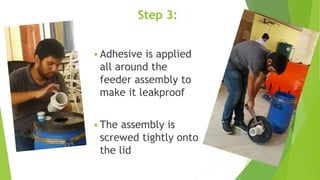
Step 3:
 Adhesive is applied
all around the
feeder assembly to
make it leakproof
 The assembly is
screwed tightly onto
the lid
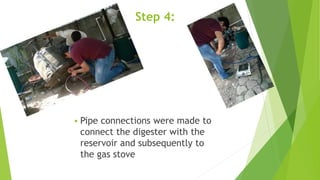
Step 4:
 Pipe connections were made to
connect the digester with the
reservoir and subsequently to
the gas stove
Step 5:
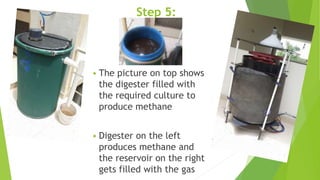
 The picture on top shows
the digester filled with
the required culture to
produce methane
 Digester on the left
produces methane and
the reservoir on the right
gets filled with the gas
Step 6:
 These pictures show
the burning of
methane with blue
flame used for
cooking on the gas
stove
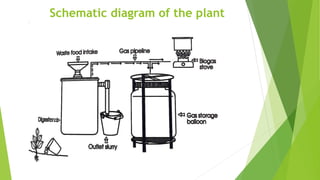
Schematic diagram of the plant
Safety Features of the device
 Pressure inside an LPG cylinder at room temperature
is approximately 6 – 10 bar (6 bar = 4560 mm Hg /
torr) depending on room temperature. This high
pressure is due to compression of propane. This
process of compression helps gas to last for a longer
time, but makes LPG cylinders relatively dangerous.
 Pressure within the fully inflated 200 litres capacity
balloon in the biogas system is virtually negligible
because it is not compressed. Due to this, it is not
hazardous. It can never explode or catch catastrophic
fire.
Hurdles
 It takes about a month for the bacterial culture to
stabilize.
 The basis of biogas generation needs to be
understood by the user.
 It takes time to find the exact amount of kitchen
waste to be fed in the digester: excess amount will
make it acidic and less amount will result in
inadequate generation of methane
 During winter season it may not generate sufficient
methane as it requires optimum temperature
(more than 37 degrees Celsius).
Precautions and Solutions
 Learn to feed right amount of kitchen waste in the
digester daily.
 We need to maintain the PH level of 6.5 – 8 to
generate methane. When the conditions within the
digester are not optimum, PH level drops and the
digester becomes acidic.
 In this case, add lime or any alkali which neutralizes
the acid to restore the PH level. Check the PH level
with the litmus paper till it comes back to normal.
Stop feeding kitchen waste at this this time, and wait
for two to three days.
Conclusion
 With the use of biogas, our consumption of LPG
reduces significantly, saving this non-renewable
fossil fuel.
 It cuts down the fossil CO2 emissions associated
with the burning of LPG.
 Biogas is carbon neutral.
 Also an economical source of fuel.

Biogas from kitchen waste

  • 1.
    Reusing Resources Biogas fromKitchen Waste Anshul Vardhan Class XII Delhi Public School, Pune
  • 2.
    Fossil fuels likecoal and oil are likely to be depleted in the not-so-far future:
  • 3.
    However, the consumptionof oil in India continues to rise steadily:
  • 4.
    This continues tobe smaller than the amount we produce every year:
  • 5.
    Generating energy forhousehold use from biological waste could be the first and the simplest step towards replacing fossil fuels in everyday use. In this presentation, I will describe in detail a solution where kitchen waste is used to generate biogas for cooking. Introduction
  • 6.
    Concept  Recycling kitchenwaste to produce fuel for cooking.  Kitchen waste (biomass) has stored chemical energy derived from solar energy by photosynthesis.  Biomass gets converted into methane by anaerobic bacteria.  Methane generated in this way is a green fuel.
  • 7.
    Relevant Chemical Equations 6𝐶𝑂2 + 6𝐻2 𝑂 𝑠𝑢𝑛𝑙𝑖𝑔ℎ𝑡,𝑐ℎ𝑙𝑜𝑟𝑜𝑝ℎ𝑦𝑙𝑙 𝐶6 𝐻12 𝑂6 𝐺𝑙𝑢𝑐𝑜𝑠𝑒 + 6𝑂2  𝐶6 𝐻12 𝑂6 𝐴𝑛𝑎𝑒𝑟𝑜𝑏𝑖𝑐 𝑏𝑎𝑐𝑡𝑒𝑟𝑖𝑎 3𝐶𝐻3 𝐶𝑂𝑂𝐻 (𝐴𝑐𝑒𝑡𝑖𝑐 𝐴𝑐𝑖𝑑)  𝐶𝐻3 𝐶𝑂𝑂𝐻 𝐴𝑛𝑎𝑒𝑟𝑜𝑏𝑖𝑐 𝑏𝑎𝑐𝑡𝑒𝑟𝑖𝑎 𝐶𝐻4 𝑀𝑒𝑡ℎ𝑎𝑛𝑒 + 𝐶𝑂2 𝐶𝑎𝑟𝑏𝑜𝑛 𝑑𝑖𝑜𝑥𝑖𝑑𝑒
  • 8.
    Advantages  Generation ofgreen fuel from waste  Renewable form of energy which is carbon neutral. The amount of CO2 generated in the process is equal to the amount used up by the same biomass while alive.  The slurry generated is an excellent manure.  Improperly disposed of kitchen waste would otherwise lead to fly nuisance and various health hazards.  No safety issues involved as methane generated is not compressed.
  • 9.
    Step-by-step design: (Youcan do it yourself!) Materials: 200 litres digester with an airtight lid Culture, made of cow dung and water (50 : 50), developed in anaerobic environment 200 litres expandable balloon to fill biogas Funnel (to feed waste in the digester) Pipe with connectors Container for slurry Biogas stove
  • 10.
    Step 1:  Acontainer made of thick plastic was taken and two circular holes were cut in the lid of the container  Bigger opening is for feeding kitchen waste in the digester and the smaller opening serves as the outlet for leading the gas into an expendable reservoir
  • 11.
    Step 2:  Anoutlet for the slurry has been made to collect the excess culture which comes out while feeding the digester with the kitchen waste
  • 12.
    Step 3:  Adhesiveis applied all around the feeder assembly to make it leakproof  The assembly is screwed tightly onto the lid
  • 13.
    Step 4:  Pipeconnections were made to connect the digester with the reservoir and subsequently to the gas stove
  • 14.
    Step 5:  Thepicture on top shows the digester filled with the required culture to produce methane  Digester on the left produces methane and the reservoir on the right gets filled with the gas
  • 15.
    Step 6:  Thesepictures show the burning of methane with blue flame used for cooking on the gas stove
  • 16.
  • 17.
    Safety Features ofthe device  Pressure inside an LPG cylinder at room temperature is approximately 6 – 10 bar (6 bar = 4560 mm Hg / torr) depending on room temperature. This high pressure is due to compression of propane. This process of compression helps gas to last for a longer time, but makes LPG cylinders relatively dangerous.  Pressure within the fully inflated 200 litres capacity balloon in the biogas system is virtually negligible because it is not compressed. Due to this, it is not hazardous. It can never explode or catch catastrophic fire.
  • 18.
    Hurdles  It takesabout a month for the bacterial culture to stabilize.  The basis of biogas generation needs to be understood by the user.  It takes time to find the exact amount of kitchen waste to be fed in the digester: excess amount will make it acidic and less amount will result in inadequate generation of methane  During winter season it may not generate sufficient methane as it requires optimum temperature (more than 37 degrees Celsius).
  • 19.
    Precautions and Solutions Learn to feed right amount of kitchen waste in the digester daily.  We need to maintain the PH level of 6.5 – 8 to generate methane. When the conditions within the digester are not optimum, PH level drops and the digester becomes acidic.  In this case, add lime or any alkali which neutralizes the acid to restore the PH level. Check the PH level with the litmus paper till it comes back to normal. Stop feeding kitchen waste at this this time, and wait for two to three days.
  • 20.
    Conclusion  With theuse of biogas, our consumption of LPG reduces significantly, saving this non-renewable fossil fuel.  It cuts down the fossil CO2 emissions associated with the burning of LPG.  Biogas is carbon neutral.  Also an economical source of fuel.