WHAT IS BIODIVERSITY
The variety of life on Earth, its biological diversity is commonly
referred to as biodiversity. The number of species of plants, animals,
and microorganisms, the enormous diversity of genes in these species,
the different ecosystems on the planet, such as deserts, rainforests and
coral reefs are all part of a biologically diverse Earth. Appropriate
conservation and sustainable development strategies attempt to
recognize this as being integral to any approach. Almost all cultures
have in some way or form recognized the importance that nature, and
its biological diversity has had upon them and the need to maintain it.
Yet, power, greed and politics have affected the precarious balance.
IMPORTANCE OF BIODIVERSITY
Biodiversity boosts ecosystem productivity where each
species, no matter how small, all have an important role to
play.
For example, a larger number of plant species means a
greater variety of crops; greater species diversity ensures
natural sustainability for all life forms; and healthy
ecosystems can better withstand and recover from a variety
of disasters.
MAJOR THREATS TO BIODIVERSITY
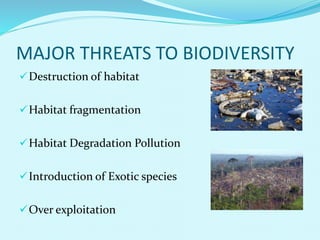
Destruction of habitat
Habitat fragmentation
Habitat Degradation Pollution
Introduction of Exotic species
Over exploitation
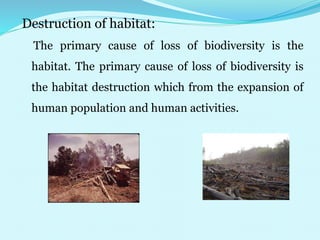
Destruction of habitat:
The primary cause of loss of biodiversity is the
habitat. The primary cause of loss of biodiversity is
the habitat destruction which from the expansion of
human population and human activities.
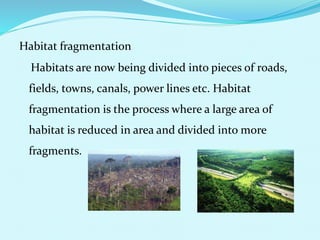
Habitat fragmentation
Habitats are now being divided into pieces of roads,
fields, towns, canals, power lines etc. Habitat
fragmentation is the process where a large area of
habitat is reduced in area and divided into more
fragments.
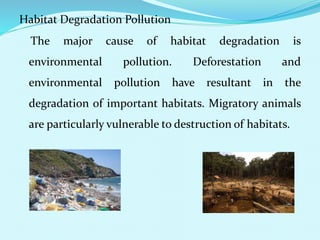
Habitat Degradation Pollution
The major cause of habitat degradation is
environmental pollution. Deforestation and
environmental pollution have resultant in the
degradation of important habitats. Migratory animals
are particularly vulnerable to destruction of habitats.
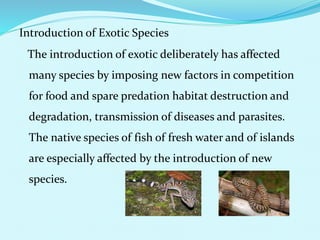
Introduction of Exotic Species
The introduction of exotic deliberately has affected
many species by imposing new factors in competition
for food and spare predation habitat destruction and
degradation, transmission of diseases and parasites.
The native species of fish of fresh water and of islands
are especially affected by the introduction of new
species.
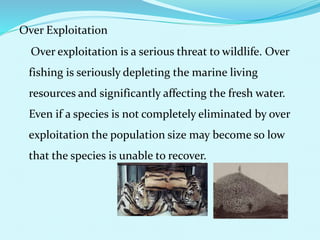
Over Exploitation
Over exploitation is a serious threat to wildlife. Over
fishing is seriously depleting the marine living
resources and significantly affecting the fresh water.
Even if a species is not completely eliminated by over
exploitation the population size may become so low
that the species is unable to recover.
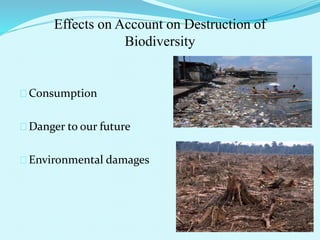
Consumption
Danger to our future
Environmental damages
Effects on Account on Destruction of
Biodiversity
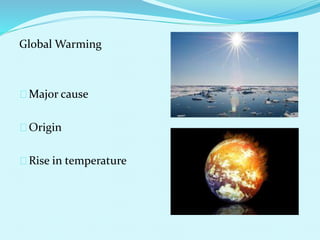
Global Warming
Major cause
Origin
Rise in temperature
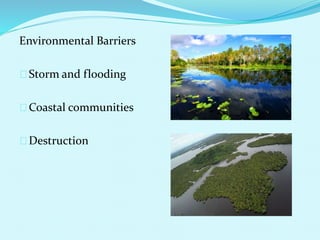
Environmental Barriers
Storm and flooding
Coastal communities
Destruction
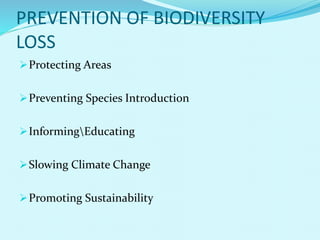
PREVENTION OF BIODIVERSITY
LOSS
Protecting Areas
Preventing Species Introduction
InformingEducating
Slowing Climate Change
Promoting Sustainability
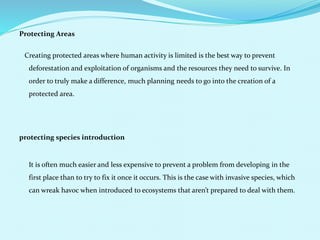
Protecting Areas
Creating protected areas where human activity is limited is the best way to prevent
deforestation and exploitation of organisms and the resources they need to survive. In
order to truly make a difference, much planning needs to go into the creation of a
protected area.
protecting species introduction
It is often much easier and less expensive to prevent a problem from developing in the
first place than to try to fix it once it occurs. This is the case with invasive species, which
can wreak havoc when introduced to ecosystems that aren’t prepared to deal with them.
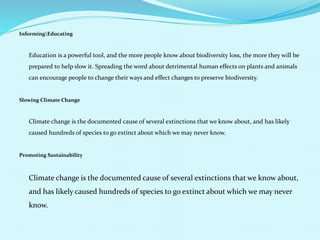
InformingEducating
Education is a powerful tool, and the more people know about biodiversity loss, the more they will be
prepared to help slow it. Spreading the word about detrimental human effects on plants and animals
can encourage people to change their ways and effect changes to preserve biodiversity.
Slowing Climate Change
Climate change is the documented cause of several extinctions that we know about, and has likely
caused hundreds of species to go extinct about which we may never know.
Promoting Sustainability
Climate change is the documented cause of several extinctions that we know about,
and has likely caused hundreds of species to go extinct about which we may never
know.
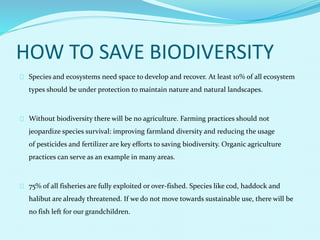
HOW TO SAVE BIODIVERSITY
Species and ecosystems need space to develop and recover. At least 10% of all ecosystem
types should be under protection to maintain nature and natural landscapes.
Without biodiversity there will be no agriculture. Farming practices should not
jeopardize species survival: improving farmland diversity and reducing the usage
of pesticides and fertilizer are key efforts to saving biodiversity. Organic agriculture
practices can serve as an example in many areas.
75% of all fisheries are fully exploited or over-fished. Species like cod, haddock and
halibut are already threatened. If we do not move towards sustainable use, there will be
no fish left for our grandchildren.
Roads, factories and housing destroy habitats for animals and plants. If urban and rural development
continues to ignore nature, our surroundings will be dominated by concrete and pollution.
Climate change is considered to be the greatest challenge for humanity. With changing conditions,
ecosystems and habitats will change as well. It is an obligation to fight climate change and make sure
that species can migrate or adapt to new surroundings.
If you release a species outside its usual habitat, it might simply die. In other cases, the so-called alien
invasive species have thrived and destroyed local flora and fauna. As you never know how things turn
out, reducing these invasions is crucial.
Biodiversity is the foundation for sustainable development. Its ecosystem services provide the basis
for all economic activity. Biodiversity concerns need thus be integrated into all areas of policy-
making. Measures include market incentives, development assistance, biodiversity-friendly trade and
international governance processes.
Biodiversity

Biodiversity

  • 2.
    WHAT IS BIODIVERSITY Thevariety of life on Earth, its biological diversity is commonly referred to as biodiversity. The number of species of plants, animals, and microorganisms, the enormous diversity of genes in these species, the different ecosystems on the planet, such as deserts, rainforests and coral reefs are all part of a biologically diverse Earth. Appropriate conservation and sustainable development strategies attempt to recognize this as being integral to any approach. Almost all cultures have in some way or form recognized the importance that nature, and its biological diversity has had upon them and the need to maintain it. Yet, power, greed and politics have affected the precarious balance.
  • 3.
    IMPORTANCE OF BIODIVERSITY Biodiversityboosts ecosystem productivity where each species, no matter how small, all have an important role to play. For example, a larger number of plant species means a greater variety of crops; greater species diversity ensures natural sustainability for all life forms; and healthy ecosystems can better withstand and recover from a variety of disasters.
  • 4.
    MAJOR THREATS TOBIODIVERSITY Destruction of habitat Habitat fragmentation Habitat Degradation Pollution Introduction of Exotic species Over exploitation
  • 5.
    Destruction of habitat: Theprimary cause of loss of biodiversity is the habitat. The primary cause of loss of biodiversity is the habitat destruction which from the expansion of human population and human activities.
  • 6.
    Habitat fragmentation Habitats arenow being divided into pieces of roads, fields, towns, canals, power lines etc. Habitat fragmentation is the process where a large area of habitat is reduced in area and divided into more fragments.
  • 7.
    Habitat Degradation Pollution Themajor cause of habitat degradation is environmental pollution. Deforestation and environmental pollution have resultant in the degradation of important habitats. Migratory animals are particularly vulnerable to destruction of habitats.
  • 8.
    Introduction of ExoticSpecies The introduction of exotic deliberately has affected many species by imposing new factors in competition for food and spare predation habitat destruction and degradation, transmission of diseases and parasites. The native species of fish of fresh water and of islands are especially affected by the introduction of new species.
  • 9.
    Over Exploitation Over exploitationis a serious threat to wildlife. Over fishing is seriously depleting the marine living resources and significantly affecting the fresh water. Even if a species is not completely eliminated by over exploitation the population size may become so low that the species is unable to recover.
  • 10.
    Consumption Danger to ourfuture Environmental damages Effects on Account on Destruction of Biodiversity
  • 11.
  • 12.
    Environmental Barriers Storm andflooding Coastal communities Destruction
  • 13.
    PREVENTION OF BIODIVERSITY LOSS ProtectingAreas Preventing Species Introduction InformingEducating Slowing Climate Change Promoting Sustainability
  • 14.
    Protecting Areas Creating protectedareas where human activity is limited is the best way to prevent deforestation and exploitation of organisms and the resources they need to survive. In order to truly make a difference, much planning needs to go into the creation of a protected area. protecting species introduction It is often much easier and less expensive to prevent a problem from developing in the first place than to try to fix it once it occurs. This is the case with invasive species, which can wreak havoc when introduced to ecosystems that aren’t prepared to deal with them.
  • 15.
    InformingEducating Education is apowerful tool, and the more people know about biodiversity loss, the more they will be prepared to help slow it. Spreading the word about detrimental human effects on plants and animals can encourage people to change their ways and effect changes to preserve biodiversity. Slowing Climate Change Climate change is the documented cause of several extinctions that we know about, and has likely caused hundreds of species to go extinct about which we may never know. Promoting Sustainability Climate change is the documented cause of several extinctions that we know about, and has likely caused hundreds of species to go extinct about which we may never know.
  • 16.
    HOW TO SAVEBIODIVERSITY Species and ecosystems need space to develop and recover. At least 10% of all ecosystem types should be under protection to maintain nature and natural landscapes. Without biodiversity there will be no agriculture. Farming practices should not jeopardize species survival: improving farmland diversity and reducing the usage of pesticides and fertilizer are key efforts to saving biodiversity. Organic agriculture practices can serve as an example in many areas. 75% of all fisheries are fully exploited or over-fished. Species like cod, haddock and halibut are already threatened. If we do not move towards sustainable use, there will be no fish left for our grandchildren.
  • 17.
    Roads, factories andhousing destroy habitats for animals and plants. If urban and rural development continues to ignore nature, our surroundings will be dominated by concrete and pollution. Climate change is considered to be the greatest challenge for humanity. With changing conditions, ecosystems and habitats will change as well. It is an obligation to fight climate change and make sure that species can migrate or adapt to new surroundings. If you release a species outside its usual habitat, it might simply die. In other cases, the so-called alien invasive species have thrived and destroyed local flora and fauna. As you never know how things turn out, reducing these invasions is crucial. Biodiversity is the foundation for sustainable development. Its ecosystem services provide the basis for all economic activity. Biodiversity concerns need thus be integrated into all areas of policy- making. Measures include market incentives, development assistance, biodiversity-friendly trade and international governance processes.