
ECOSYSTEM

Prepared by:

Mr. Raymond R. Diana
Which of the world’s ecosystems contain the
richest variety of plant and animal life?
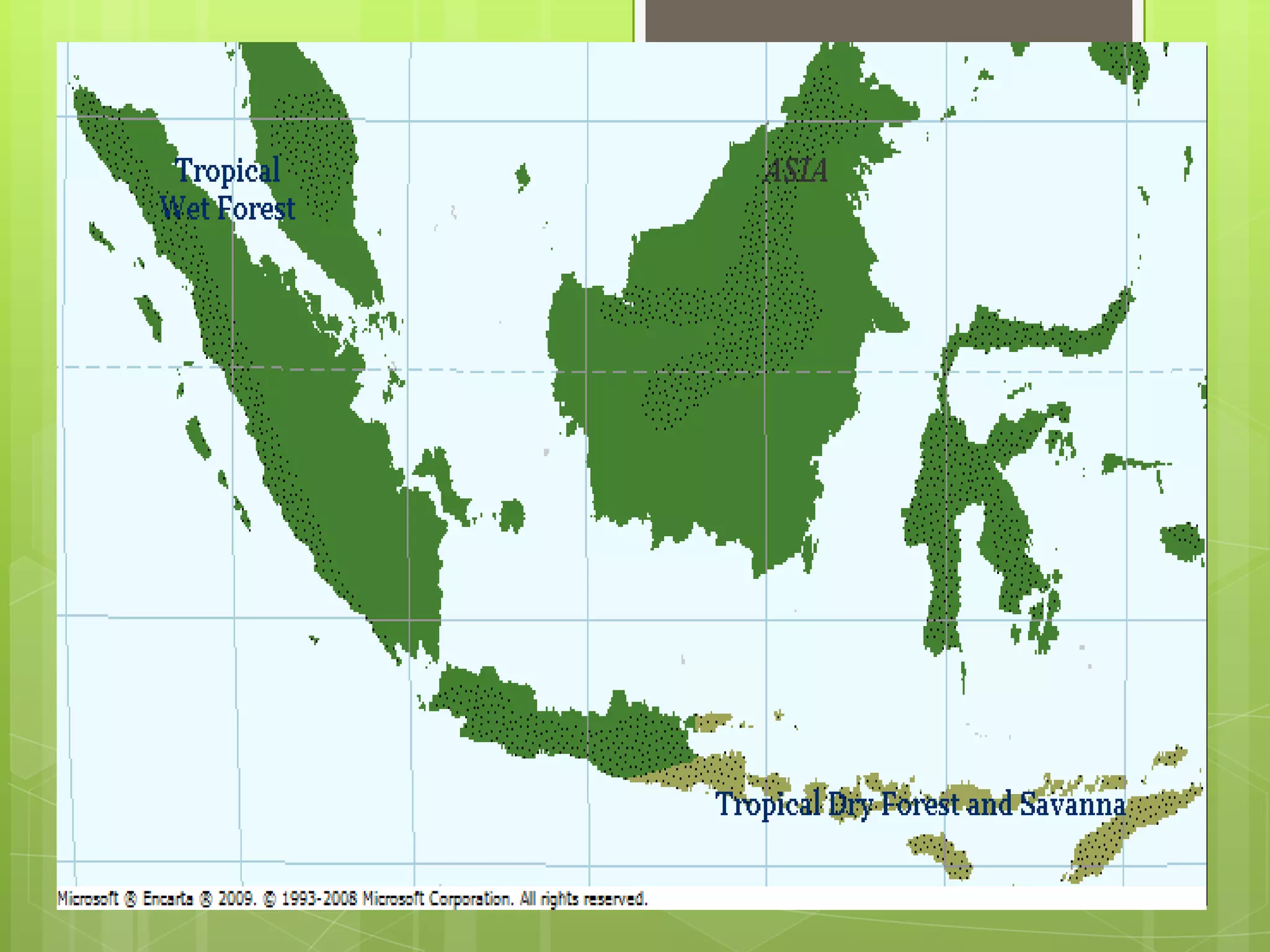
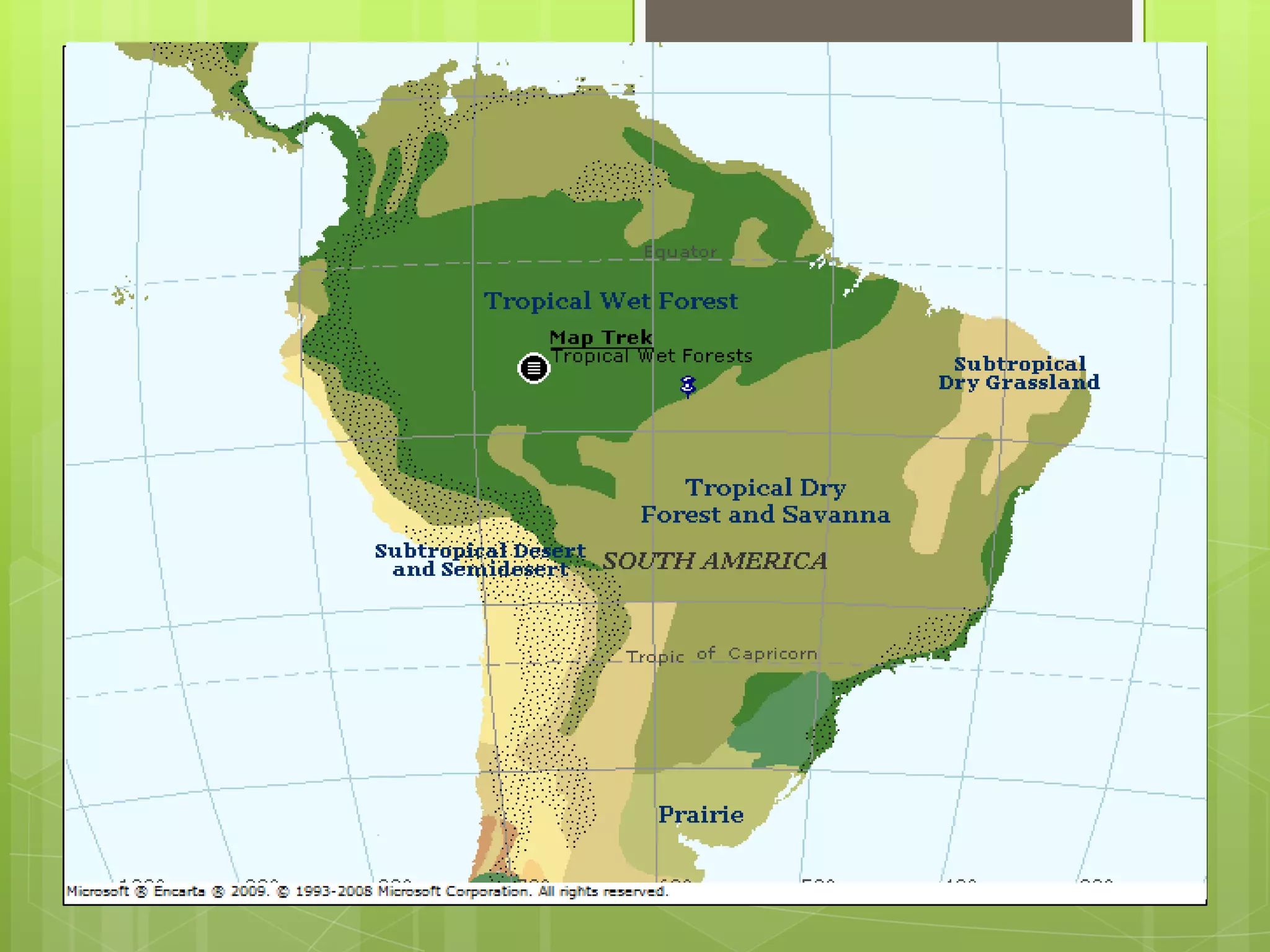
  The richest variety of plant and animal
  life—the richest biodiversity—is found
  near the equator. Indonesia (Biggest
  Archipelago) and equatorial South
  America may support the highest
  biodiversity on land. Coral reefs in the
  shallow waters of tropical marine
  environments are also among the richest
  ecosystems.
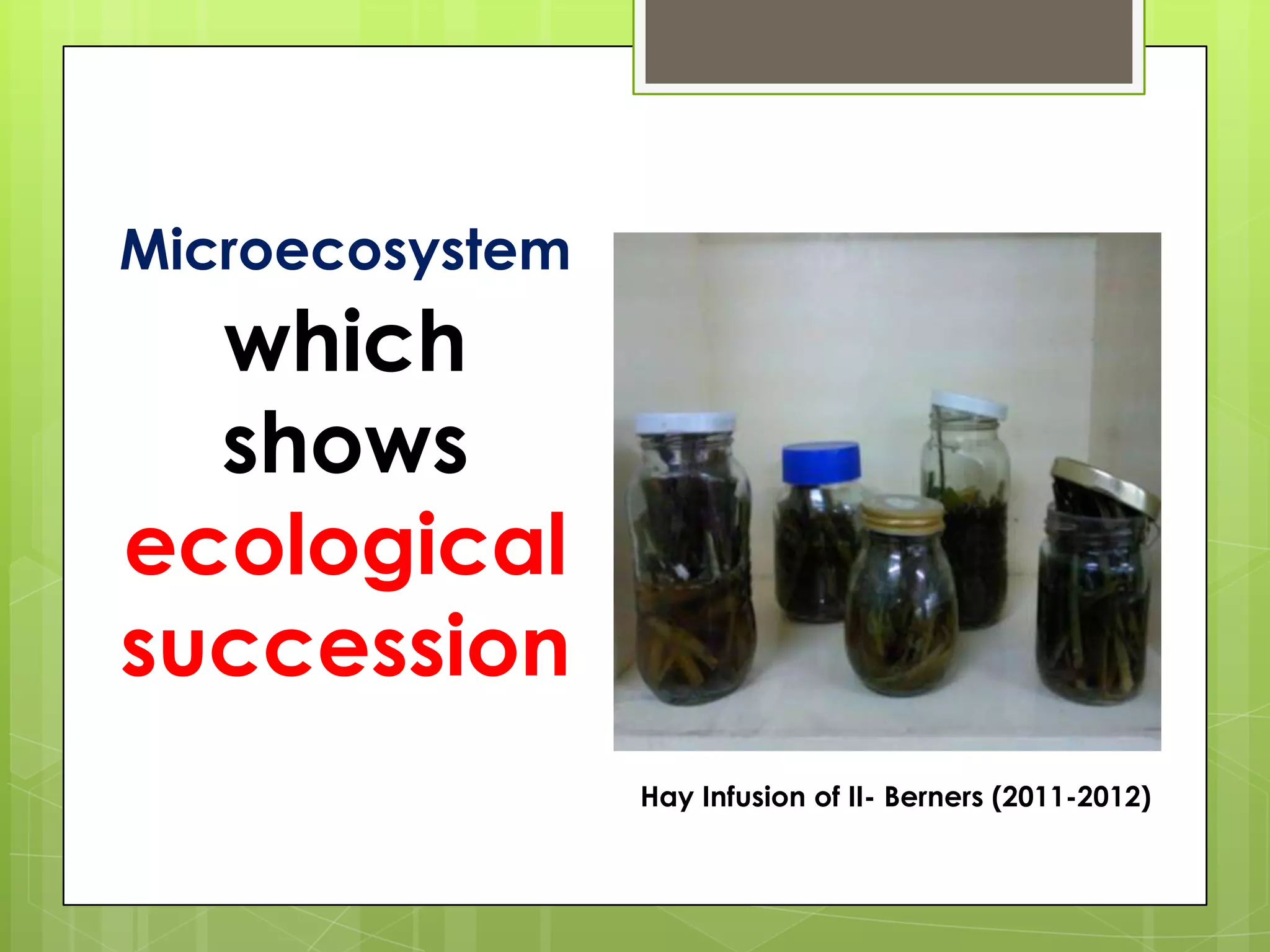
Microecosystem
  which
  shows
ecological
succession
                 Hay Infusion of II- Berners (2011-2012)
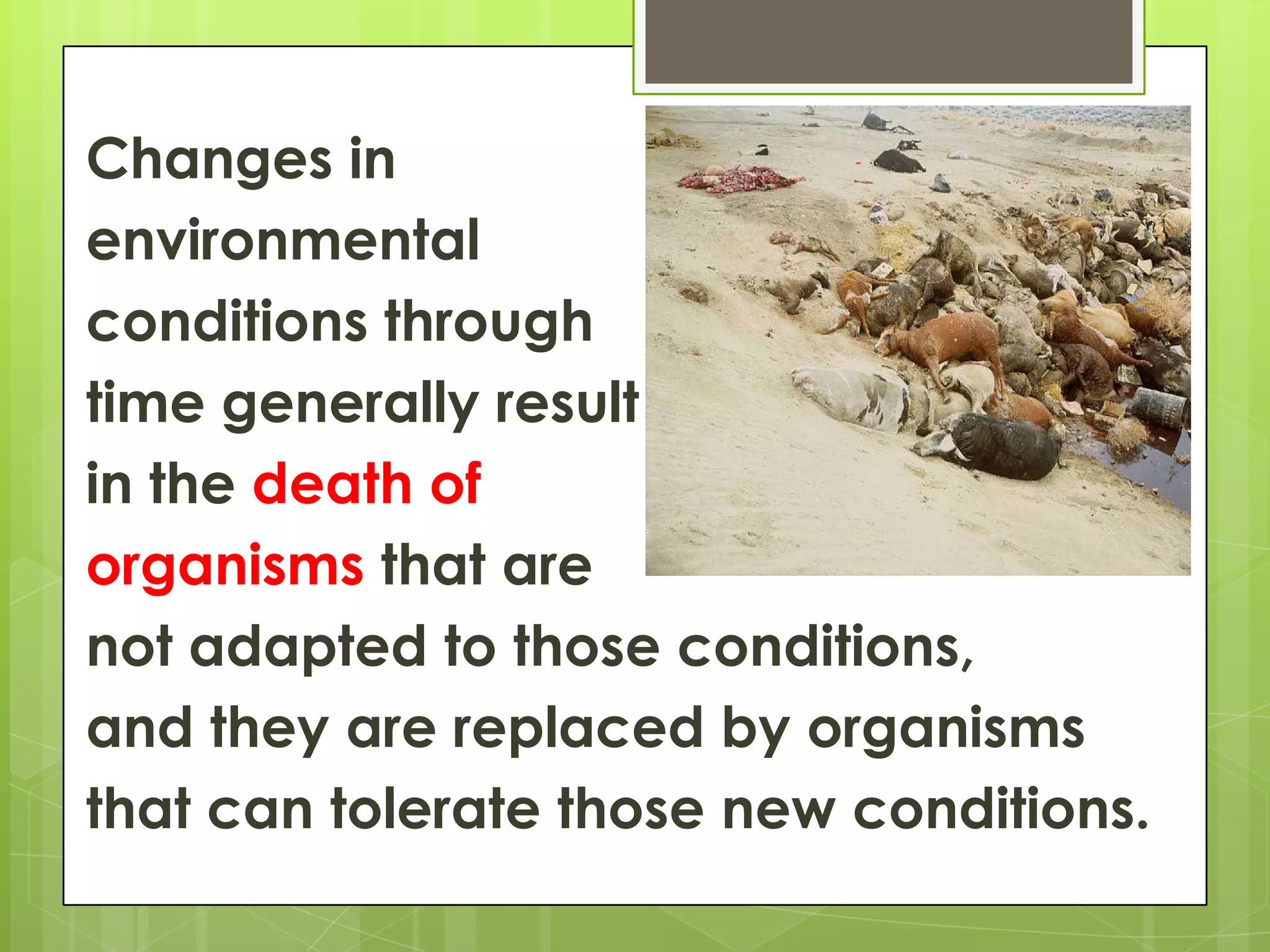
Changes in
environmental
conditions through
time generally result
in the death of
organisms that are
not adapted to those conditions,
and they are replaced by organisms
that can tolerate those new conditions.
Ecological succession in a rural
area and/or an urban area
   disruption on ecological succession affects
    the way of life of people in rural and urban
    communities.
   Rural and urban planning affects ecological
    succession.
   The degree of effects depends on
    advocacy/support/promotion        efforts   in
    sustaining the restoration of natural systems
    and promotion of a healthy ecology.
Ecological Backlash
   Everything on Earth is
 somehow connected to
everything else. What one
  does affects another,
   directly or indirectly.
Why is biodiversity essential to the
health of the environment?
Ecosystems that lose biodiversity—the
range     of    organisms   present—
become more fragile and susceptible
to collapse. This is because no
species lives independent of other
species.      All     species     are
interdependent, connected in a web
of life that forms the foundation of
the ecosystem.
Video footage
about ecological
   backlash
Assignment:     Poster  making,
collage,    scrapbook,   video
presentation,              and
photodocumentation. Refer to
your laboratory manual.
The Concept of Biodiversity
 Biodiversity refers to the variety and degree of
  differences among living things.
 It includes all microorganisms, plants and
  animals – from genes and species to the
  ecosystems that they live in and the valuable
  functions they perform.
 It has three levels, namely, – genetic diversity,
  species diversity and ecosystems diversity.
 Biodiversity has economic, ecological, social
  and cultural values. Hence, there is a need to
  conserve it.
Genetic Diversity
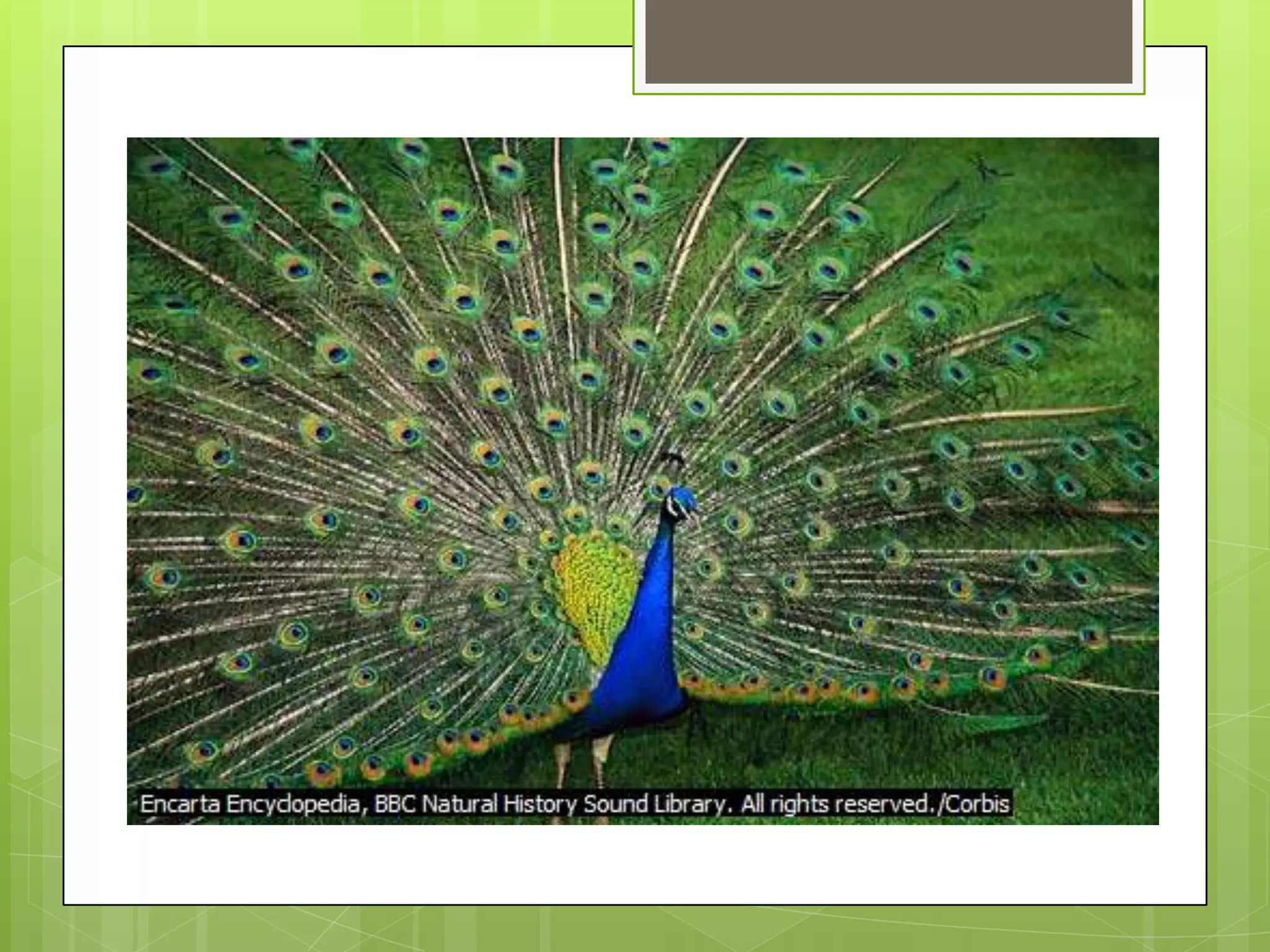
 No   individual members of any population
  (except identical twins, which develop from a
  single egg) are exactly alike in their genetic
  makeup.
 The greater a population’s genetic diversity, the
  more likely it is to evolve specific traits that
  enable it to adapt to new environmental
  pressures, such as climate change or disease.
 In contrast, sucha pressures might drive a
  population with a low degree of genetic
  diversity to extinction.
 Several   nations have enacted laws
   protecting endangered wildlife. An
   international treaty known as the
   Convention on International Trade in
   Endangered Species of Wild Fauna
   and Flora (CITES) went into effect in
   1975 to outlaw the trade of
   endangered animals and animal
   parts.
Reference:
             Microsoft ® Encarta ® 2009. © 1993-2008 Microsoft Corporation. All rights
reserved.
Species Diversity
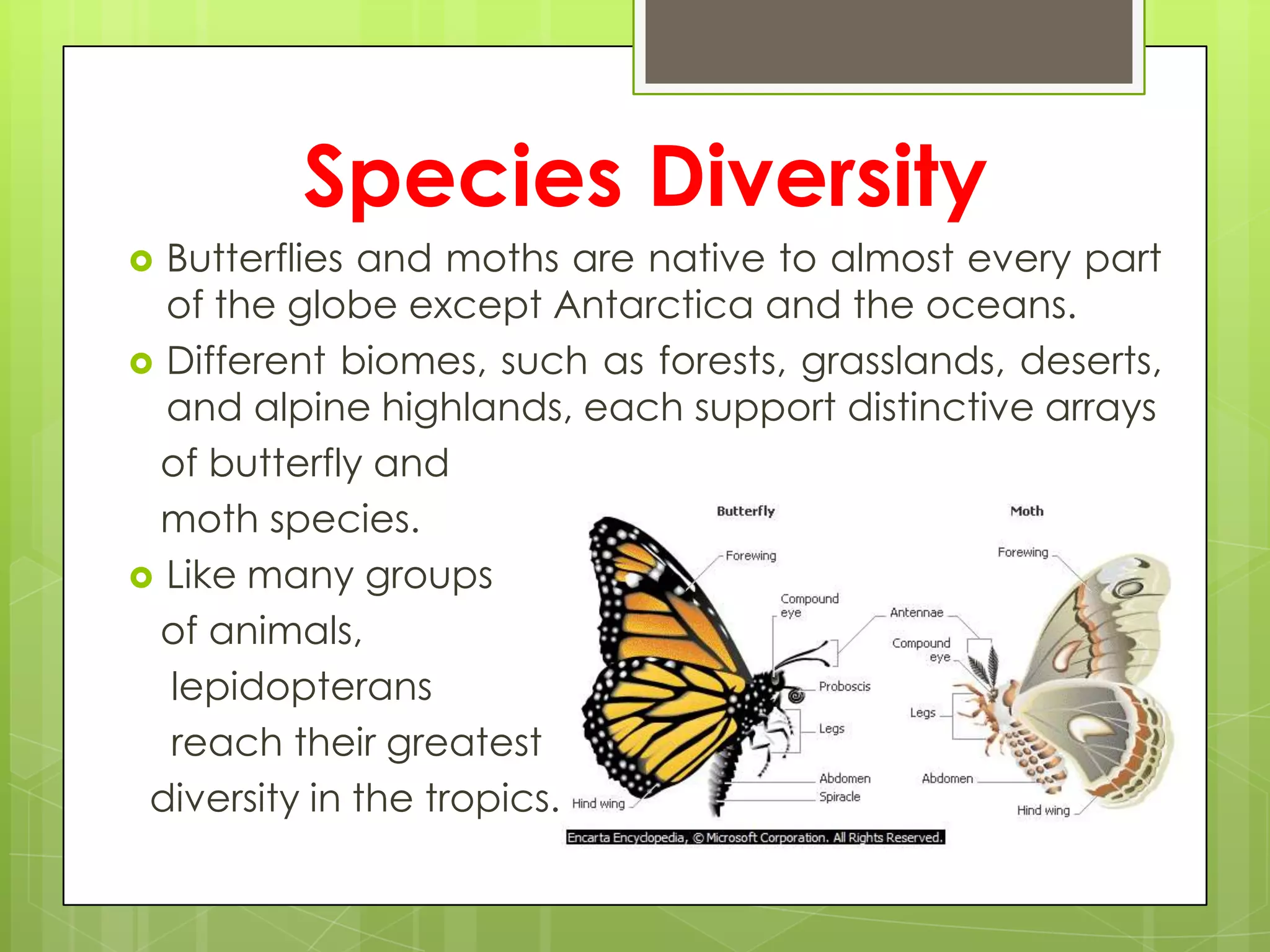
 Butterflies and moths are native to almost every part
  of the globe except Antarctica and the oceans.
 Different biomes, such as forests, grasslands, deserts,
  and alpine highlands, each support distinctive arrays
  of butterfly and
  moth species.
 Like many groups
  of animals,
  lepidopterans
  reach their greatest
 diversity in the tropics.
The   community has certain
 attributes, among     them
 dominance     and   species
 diversity.

Dominance    results when one
 or several species control the
 environmental conditions that
 influence associated species.
 Ina forest, for example, the dominant species
  may be one or more species of trees, such as
  oak or spruce; in a marine community the
  dominant organisms frequently are animals
  such as mussels or oysters.

 Dominance   can influence diversity of species
  in a community because diversity involves not
  only the number of species in a community,
  but also how numbers of individual species are
  apportioned.
Ecosystems Diversity
   Humans benefit from these smooth-functioning
    ecosystems in many ways. Healthy forests, streams,
    and wetlands contribute to clean air and clean water
    by trapping fast-moving air and water, enabling
    impurities to settle out or be converted to harmless
    compounds by plants or soil.

   The diversity of organisms, or biodiversity, in an
    ecosystem provides essential foods, medicines, and
    other materials. But as human populations increase
    and their encroachment on natural habitats expands,
    humans are having detrimental effects on the very
    ecosystems on which they depend.
 Thesurvival of natural ecosystems
 around the world is threatened by
 many human activities:
 a.   bulldozing wetlands and clear-
      cutting     forests—the    systematic
      cutting of all trees in a specific
      area—to make room for new
      housing and agricultural land;
 b.    damming rivers to harness the
      energy for electricity and water for
      irrigation; and polluting the air, soil,
      and water.
The Status of Biodiversity in
      One’s Locality
    The Philippines is one of the
richest countries in the world in
terms of biodiversity. The country
today plays host to several
habitats and ecosystems that
support a wide variety of
species.
The Threats and Pressures
   Affecting Biodiversity
     Despite the mega-diversity
status of the Philippines in terms
of    biodiversity,  it   is   also
considered a mega-diversity
hotspot because of the rapid
loss of biodiversity occurring in
the country today.
The single greatest threat to global
 biodiversity    is   the     human
 destruction of natural habitats.

Since   the invention of agriculture
 about 10,000 years ago, the human
 population has increased from
 approximately 5 million to a full 6
 billion people.
 The conversion of forests, grasslands, and
 wetlands for agricultural purposes, coupled
 with the multiplication and growth of urban
 centers and the building of dams and canals,
 highways, and railways, has physically altered
 ecosystems to the point that extinction of
 species has reached its current alarming
 pace.
During  that time, but especially
 in the past several centuries,
 humans         have     radically
 transformed the face of planet
 Earth.
Biodiversity Conservation
 Asthe scope and significance of
 biodiversity loss become better
 understood, positive steps to stem
 the tide of the sixth extinction have
 been proposed and, to some
 extent, adopted. Several nations
 have enacted laws protecting
 endangered wildlife.
References:

 Microsoft ® Encarta ® 2009. © 1993-2008
  Microsoft Corporation. All rights reserved.
 Department of Education 2003

Ecosystem

  • 1.
  • 2.
    Which of theworld’s ecosystems contain the richest variety of plant and animal life? The richest variety of plant and animal life—the richest biodiversity—is found near the equator. Indonesia (Biggest Archipelago) and equatorial South America may support the highest biodiversity on land. Coral reefs in the shallow waters of tropical marine environments are also among the richest ecosystems.
  • 5.
    Microecosystem which shows ecological succession Hay Infusion of II- Berners (2011-2012)
  • 8.
    Changes in environmental conditions through timegenerally result in the death of organisms that are not adapted to those conditions, and they are replaced by organisms that can tolerate those new conditions.
  • 9.
    Ecological succession ina rural area and/or an urban area  disruption on ecological succession affects the way of life of people in rural and urban communities.  Rural and urban planning affects ecological succession.  The degree of effects depends on advocacy/support/promotion efforts in sustaining the restoration of natural systems and promotion of a healthy ecology.
  • 10.
    Ecological Backlash Everything on Earth is somehow connected to everything else. What one does affects another, directly or indirectly.
  • 11.
    Why is biodiversityessential to the health of the environment? Ecosystems that lose biodiversity—the range of organisms present— become more fragile and susceptible to collapse. This is because no species lives independent of other species. All species are interdependent, connected in a web of life that forms the foundation of the ecosystem.
  • 12.
  • 13.
    Assignment: Poster making, collage, scrapbook, video presentation, and photodocumentation. Refer to your laboratory manual.
  • 14.
    The Concept ofBiodiversity  Biodiversity refers to the variety and degree of differences among living things.  It includes all microorganisms, plants and animals – from genes and species to the ecosystems that they live in and the valuable functions they perform.  It has three levels, namely, – genetic diversity, species diversity and ecosystems diversity.  Biodiversity has economic, ecological, social and cultural values. Hence, there is a need to conserve it.
  • 15.
    Genetic Diversity  No individual members of any population (except identical twins, which develop from a single egg) are exactly alike in their genetic makeup.  The greater a population’s genetic diversity, the more likely it is to evolve specific traits that enable it to adapt to new environmental pressures, such as climate change or disease.  In contrast, sucha pressures might drive a population with a low degree of genetic diversity to extinction.
  • 17.
     Several nations have enacted laws protecting endangered wildlife. An international treaty known as the Convention on International Trade in Endangered Species of Wild Fauna and Flora (CITES) went into effect in 1975 to outlaw the trade of endangered animals and animal parts. Reference: Microsoft ® Encarta ® 2009. © 1993-2008 Microsoft Corporation. All rights reserved.
  • 18.
    Species Diversity  Butterfliesand moths are native to almost every part of the globe except Antarctica and the oceans.  Different biomes, such as forests, grasslands, deserts, and alpine highlands, each support distinctive arrays of butterfly and moth species.  Like many groups of animals, lepidopterans reach their greatest diversity in the tropics.
  • 19.
    The community has certain attributes, among them dominance and species diversity. Dominance results when one or several species control the environmental conditions that influence associated species.
  • 20.
     Ina forest,for example, the dominant species may be one or more species of trees, such as oak or spruce; in a marine community the dominant organisms frequently are animals such as mussels or oysters.  Dominance can influence diversity of species in a community because diversity involves not only the number of species in a community, but also how numbers of individual species are apportioned.
  • 21.
    Ecosystems Diversity  Humans benefit from these smooth-functioning ecosystems in many ways. Healthy forests, streams, and wetlands contribute to clean air and clean water by trapping fast-moving air and water, enabling impurities to settle out or be converted to harmless compounds by plants or soil.  The diversity of organisms, or biodiversity, in an ecosystem provides essential foods, medicines, and other materials. But as human populations increase and their encroachment on natural habitats expands, humans are having detrimental effects on the very ecosystems on which they depend.
  • 22.
     Thesurvival ofnatural ecosystems around the world is threatened by many human activities: a. bulldozing wetlands and clear- cutting forests—the systematic cutting of all trees in a specific area—to make room for new housing and agricultural land; b. damming rivers to harness the energy for electricity and water for irrigation; and polluting the air, soil, and water.
  • 24.
    The Status ofBiodiversity in One’s Locality The Philippines is one of the richest countries in the world in terms of biodiversity. The country today plays host to several habitats and ecosystems that support a wide variety of species.
  • 25.
    The Threats andPressures Affecting Biodiversity Despite the mega-diversity status of the Philippines in terms of biodiversity, it is also considered a mega-diversity hotspot because of the rapid loss of biodiversity occurring in the country today.
  • 26.
    The single greatestthreat to global biodiversity is the human destruction of natural habitats. Since the invention of agriculture about 10,000 years ago, the human population has increased from approximately 5 million to a full 6 billion people.
  • 27.
     The conversionof forests, grasslands, and wetlands for agricultural purposes, coupled with the multiplication and growth of urban centers and the building of dams and canals, highways, and railways, has physically altered ecosystems to the point that extinction of species has reached its current alarming pace.
  • 28.
    During thattime, but especially in the past several centuries, humans have radically transformed the face of planet Earth.
  • 29.
    Biodiversity Conservation  Asthescope and significance of biodiversity loss become better understood, positive steps to stem the tide of the sixth extinction have been proposed and, to some extent, adopted. Several nations have enacted laws protecting endangered wildlife.
  • 30.
    References:  Microsoft ®Encarta ® 2009. © 1993-2008 Microsoft Corporation. All rights reserved.  Department of Education 2003