Biochemistry: A Pivotal
Aspect in Forensic Science
By Vanshika Varshney
MSc BIOCHEMISTRY
1st Year
Biochemistry and Forensic science both are related to our day
to day life.
Whereas the first one is the branch of science which explore
the chemical process within and related to living organism
and closely related to Molecular biology also, other one is a
critical element of the criminal justice system.
Importance of Forensic
science…..
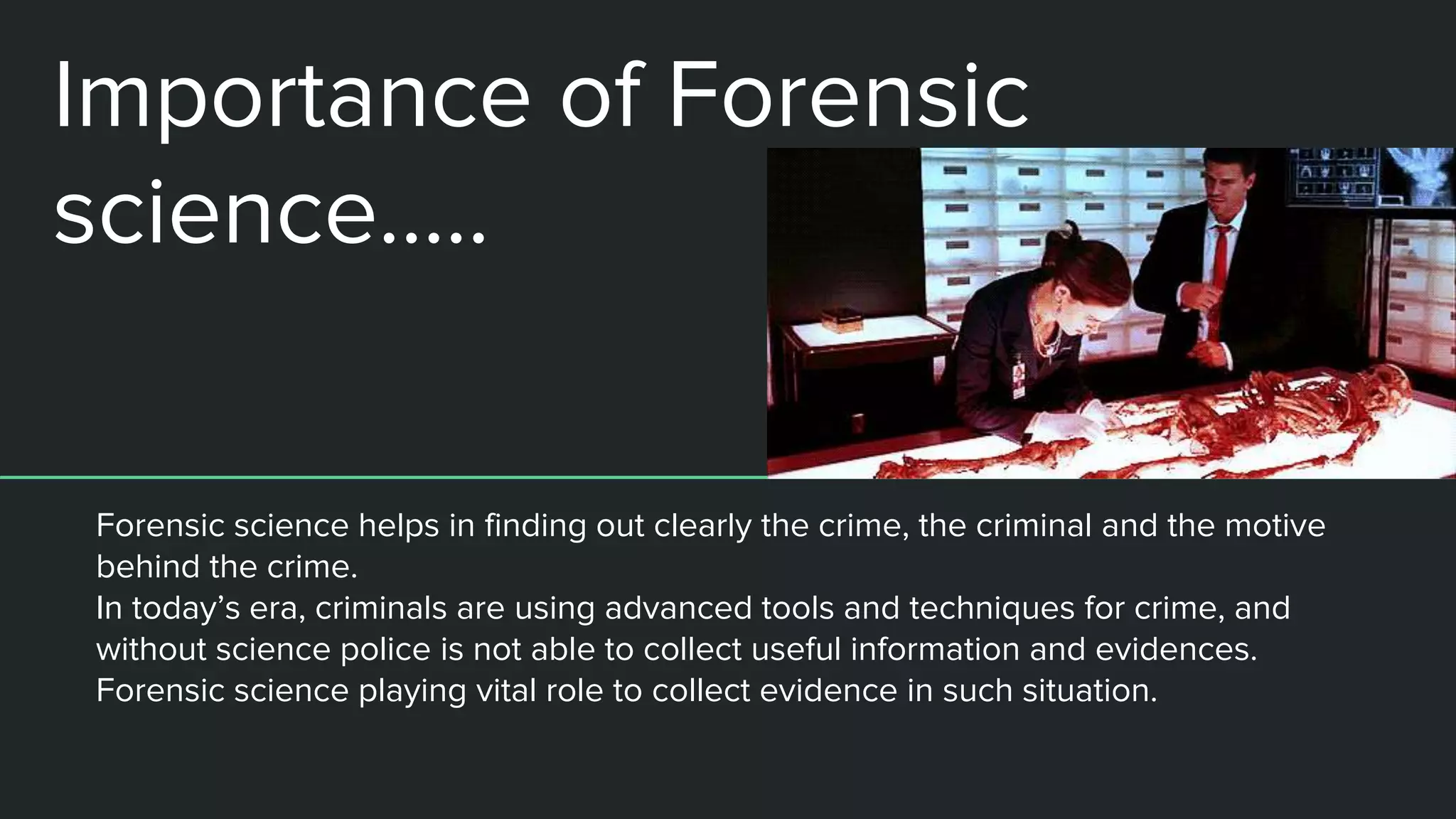
Forensic science helps in finding out clearly the crime, the criminal and the motive
behind the crime.
In today’s era, criminals are using advanced tools and techniques for crime, and
without science police is not able to collect useful information and evidences.
Forensic science playing vital role to collect evidence in such situation.
Need of Biochemistry in Forensic Science
● The main purpose of using biochemistry as well as molecular biology is to
investigate the systemic pathophysiological changes involved in the death
process that cannot usually be detected by morphological methods.
● These may be called pathophysiological vital reactions.
● These procedures can provide useful support for pathological evidence by
visualization of functional alterations.
● These are also essential for the pathognomic assessment of both the cause
and process of death.
● Forensic Biochemistry is the study of how the body breaks down and
utilizes different chemicals, specifically in cases relating to death. It is
used in a number of areas including toxicology, forensic science, and
medical research.
FORENSIC SCIENCE + BIOCHEMISTRY = FORENSIC BIOCHEMISTRY
DNA as evidence!!!!!!
Exclusion vs Inclusion
No match in DNA Match in DNA
(Suspect is INNOCENT) (One now has to deal w/
. probabilities)
Where we can find DNA?
- Blood
- Hair roots
- Saliva
- Sweat
- Semen
- Finger Nail
- Various tissue
- Chewing gum
- Bone
- Penile swabs
Steps in DNA Analysis
- Obtain biological specimen
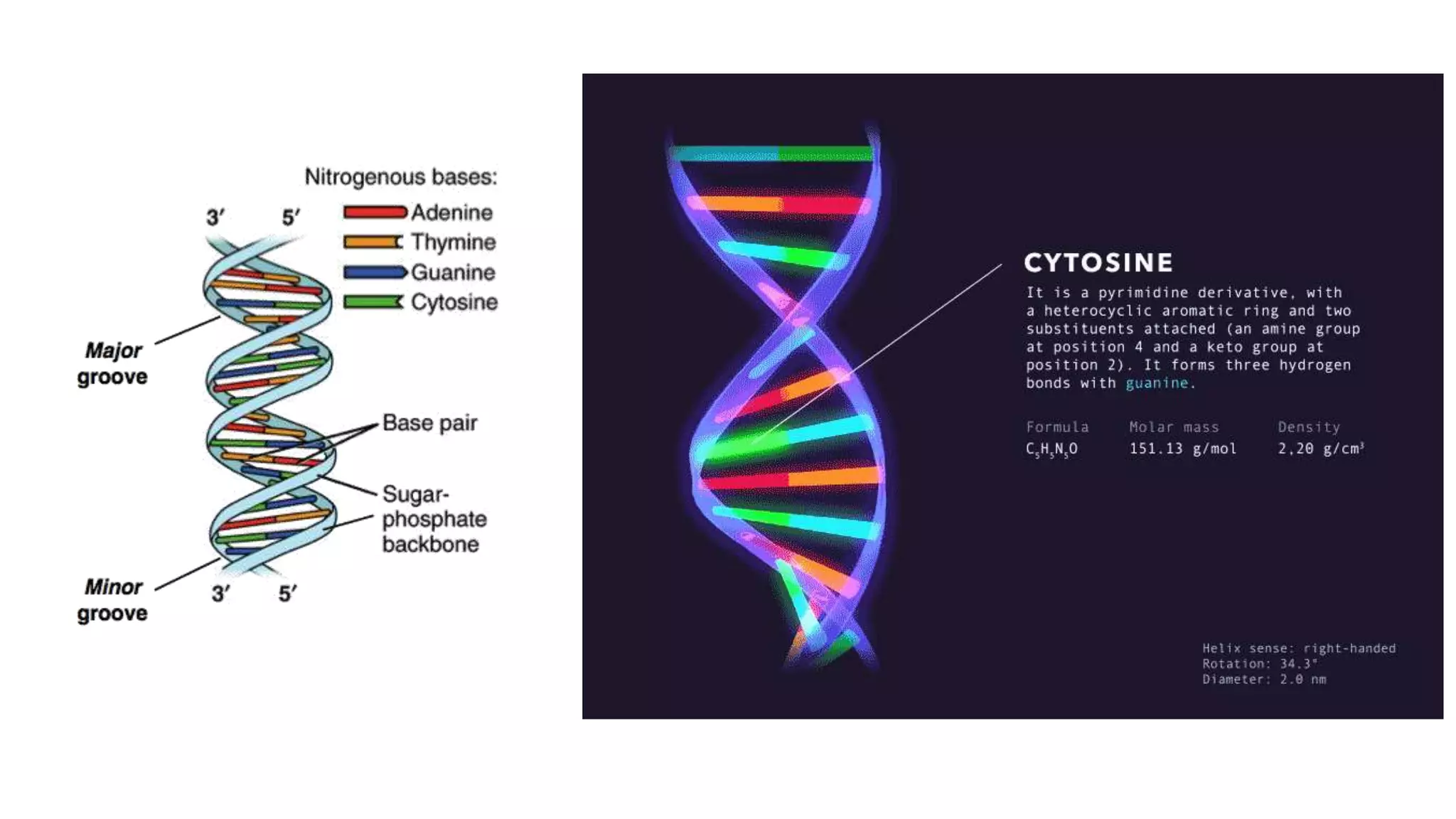
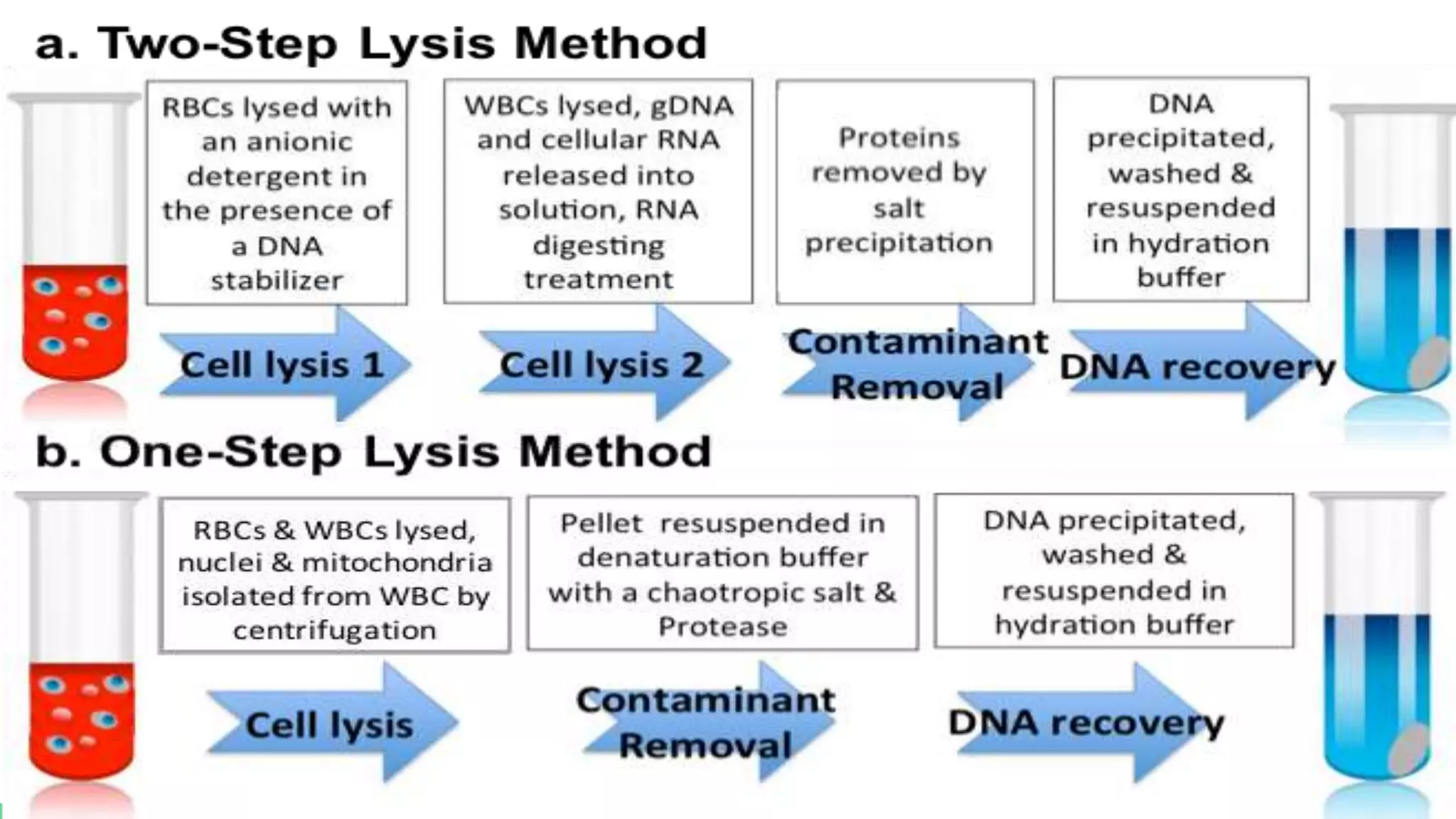
- Extract DNA
- Target specific STRs on chromosome
- Use Polymerase Chain Reaction (PCR)
- Visualize products from PCR
15
35
DNA
Technologies
used in Forensic
Science
● Restriction Fragment Length
Polymorphism (RFLPs)
● Variable Number Tandem
Repeats (VNTRs)
● Polymerase Chain Reaction
(PCR)
● Short Tandem Repeat (STR)
Analysis
● Y- chromosome analysis
● Mitochondrial DNA Analysis
Role of Biochemistry In Forensic science
● Biochemistry is the basis of Molecular biology, Cell biology, Immunology, and
many other branches which are co-relate with human life.
● It is of great utility for Forensic Science investigations, with the biochemical
technique of DNA fingerprinting being of particular importance.
● The development of the biochemical techniques for DNA sequencing allowed the
genomes of organisms to be sequenced.
● As a result, genetic markers can now be used to identify individual members of a
population.
● However, despite their utility, biochemical techniques must be applied with
caution in forensic science.
● The results of biochemical techniques used in forensic science can have serious
implications for the lives of individuals.
Other Biochemical techniques used in Forensic
science
● Thin Layer Chromatography (TLC) - Separation and identification of drug.
● Gas Chromatography (GC)
● Mass Spectrometer - Measuring the molecular weight, determine the molecular
formula of an organic compound.
● Ultraviolet & Visible Spectrophotometer - In pharmaceutical and biomedical
analysis.
● Infrared Spectroscopy - study of the scattering, reflection, absorption or
transmission of IR radiation in the spectral range 800 nm to 1000 nm (0.8 to
1000 μm).
● Immunoassay
● Biochemical techniques are not only apply in DNA analysis, but with the
help of these techniques, we can also analysis some other evidences too;
Such as:
1) Drug analysis
2) Fingerprinting analysis
3) Hair analysis
4) Serology test
Biochemistry is not only use in DNA analysis…..
Current research in Forensic science with the
help of Biochemistry
● Age assessment in Forensic cases: Anthropological, Odontological &
Biochemical Methods for Age Estimation in the dead. (2018)
● A reliable method for estimating the postmortem interval from the
biochemistry of the vitreous humor, temperature and body weight. (2019)
● Evaluation of gingival tissue samples for predicting the time of death using
histological and biochemical tests. (2018)
● Death following extreme temperature exposure: Histological, biochemical and
immunohistochemical markers. (2021)
Conclusion
Forensic biochemistry is when biochemistry is applied for Forensic investigation. DNA
fingerprinting, a biochemical technique is vastly used for such investigations.
Emergence of sequencing technology enabled identification of individual members of a
population with the development of genetic markers.
Some of the ways in which biochemistry is used include: Analysis of evidence found at
crime scene, by using biology, chemistry, physics, and genetics.
According to data 90% cases solved with the help of Biochemical techniques, which
shows the importance and relation of Biochemistry in the field of Forensic science.
REFERENCE……
● https://www.academia.edu/38297786/Chapt
er_16_Forensic_Biochemistry_pp_pptx?pop
_sutd=false
● https://www.ukessays.com/essays/criminolo
gy/essay-on-use-of-biochemistry-in-
forensic-science-criminology-essay.php
● https://www.sciencedirect.com/science/artic
le/pii/S0379073818310594
● https://www.mathewsopenaccess.com/full-
text/age-assessment-in-forensic-cases-
anthropological-odontological-and-
biochemical-methods-for-age-estimation-in-
the-dead
● https://www.sciencedirect.com/science/artic
le/abs/pii/S0379073821001705
● https://journals.sagepub.com/doi/abs/10.1177
/0025802420942423
● https://innovareacademics.in/journals/index.
Biochemistry: A pivotal aspects in forensic science

Biochemistry: A pivotal aspects in forensic science

  • 2.
    Biochemistry: A Pivotal Aspectin Forensic Science By Vanshika Varshney MSc BIOCHEMISTRY 1st Year
  • 3.
    Biochemistry and Forensicscience both are related to our day to day life. Whereas the first one is the branch of science which explore the chemical process within and related to living organism and closely related to Molecular biology also, other one is a critical element of the criminal justice system.
  • 4.
    Importance of Forensic science….. Forensicscience helps in finding out clearly the crime, the criminal and the motive behind the crime. In today’s era, criminals are using advanced tools and techniques for crime, and without science police is not able to collect useful information and evidences. Forensic science playing vital role to collect evidence in such situation.
  • 5.
    Need of Biochemistryin Forensic Science ● The main purpose of using biochemistry as well as molecular biology is to investigate the systemic pathophysiological changes involved in the death process that cannot usually be detected by morphological methods. ● These may be called pathophysiological vital reactions. ● These procedures can provide useful support for pathological evidence by visualization of functional alterations. ● These are also essential for the pathognomic assessment of both the cause and process of death.
  • 6.
    ● Forensic Biochemistryis the study of how the body breaks down and utilizes different chemicals, specifically in cases relating to death. It is used in a number of areas including toxicology, forensic science, and medical research. FORENSIC SCIENCE + BIOCHEMISTRY = FORENSIC BIOCHEMISTRY
  • 7.
    DNA as evidence!!!!!! Exclusionvs Inclusion No match in DNA Match in DNA (Suspect is INNOCENT) (One now has to deal w/ . probabilities)
  • 9.
    Where we canfind DNA? - Blood - Hair roots - Saliva - Sweat - Semen - Finger Nail - Various tissue - Chewing gum - Bone - Penile swabs
  • 12.
    Steps in DNAAnalysis - Obtain biological specimen - Extract DNA - Target specific STRs on chromosome - Use Polymerase Chain Reaction (PCR) - Visualize products from PCR 15 35
  • 13.
    DNA Technologies used in Forensic Science ●Restriction Fragment Length Polymorphism (RFLPs) ● Variable Number Tandem Repeats (VNTRs) ● Polymerase Chain Reaction (PCR) ● Short Tandem Repeat (STR) Analysis ● Y- chromosome analysis ● Mitochondrial DNA Analysis
  • 17.
    Role of BiochemistryIn Forensic science ● Biochemistry is the basis of Molecular biology, Cell biology, Immunology, and many other branches which are co-relate with human life. ● It is of great utility for Forensic Science investigations, with the biochemical technique of DNA fingerprinting being of particular importance. ● The development of the biochemical techniques for DNA sequencing allowed the genomes of organisms to be sequenced. ● As a result, genetic markers can now be used to identify individual members of a population. ● However, despite their utility, biochemical techniques must be applied with caution in forensic science. ● The results of biochemical techniques used in forensic science can have serious implications for the lives of individuals.
  • 18.
    Other Biochemical techniquesused in Forensic science ● Thin Layer Chromatography (TLC) - Separation and identification of drug. ● Gas Chromatography (GC) ● Mass Spectrometer - Measuring the molecular weight, determine the molecular formula of an organic compound. ● Ultraviolet & Visible Spectrophotometer - In pharmaceutical and biomedical analysis. ● Infrared Spectroscopy - study of the scattering, reflection, absorption or transmission of IR radiation in the spectral range 800 nm to 1000 nm (0.8 to 1000 μm). ● Immunoassay
  • 19.
    ● Biochemical techniquesare not only apply in DNA analysis, but with the help of these techniques, we can also analysis some other evidences too; Such as: 1) Drug analysis 2) Fingerprinting analysis 3) Hair analysis 4) Serology test Biochemistry is not only use in DNA analysis…..
  • 20.
    Current research inForensic science with the help of Biochemistry ● Age assessment in Forensic cases: Anthropological, Odontological & Biochemical Methods for Age Estimation in the dead. (2018) ● A reliable method for estimating the postmortem interval from the biochemistry of the vitreous humor, temperature and body weight. (2019) ● Evaluation of gingival tissue samples for predicting the time of death using histological and biochemical tests. (2018) ● Death following extreme temperature exposure: Histological, biochemical and immunohistochemical markers. (2021)
  • 21.
    Conclusion Forensic biochemistry iswhen biochemistry is applied for Forensic investigation. DNA fingerprinting, a biochemical technique is vastly used for such investigations. Emergence of sequencing technology enabled identification of individual members of a population with the development of genetic markers. Some of the ways in which biochemistry is used include: Analysis of evidence found at crime scene, by using biology, chemistry, physics, and genetics. According to data 90% cases solved with the help of Biochemical techniques, which shows the importance and relation of Biochemistry in the field of Forensic science.
  • 22.
    REFERENCE…… ● https://www.academia.edu/38297786/Chapt er_16_Forensic_Biochemistry_pp_pptx?pop _sutd=false ● https://www.ukessays.com/essays/criminolo gy/essay-on-use-of-biochemistry-in- forensic-science-criminology-essay.php ●https://www.sciencedirect.com/science/artic le/pii/S0379073818310594 ● https://www.mathewsopenaccess.com/full- text/age-assessment-in-forensic-cases- anthropological-odontological-and- biochemical-methods-for-age-estimation-in- the-dead ● https://www.sciencedirect.com/science/artic le/abs/pii/S0379073821001705 ● https://journals.sagepub.com/doi/abs/10.1177 /0025802420942423 ● https://innovareacademics.in/journals/index.