Bio-Based Solvents 
Standardisation 
Certification 
Integration 
www.greenchemistry.net 
James Sherwood 
james.sherwood@york.ac.uk
2025 
2010 
2005 
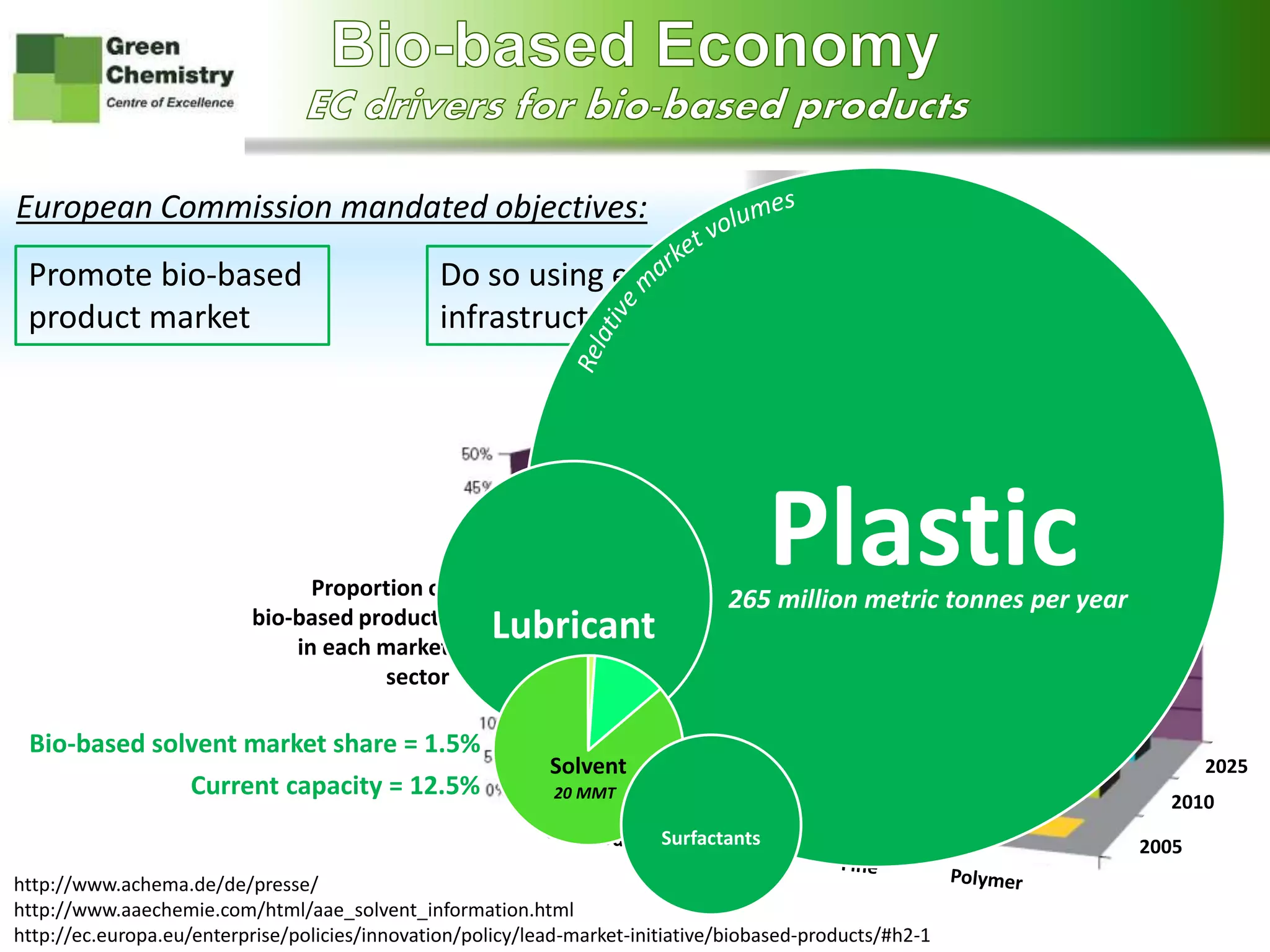
Plastic 
265 million metric tonnes per year 
www.greenchemistry.net 
European Commission mandated objectives: 
Promote bio-based 
product market 
Do so using existing 
infrastructure 
Proportion of 
bio-based products 
in each market 
sector 
Lubricant 
Solvent 
Surfactants 
Bio-based solvent market share = 1.5% 
Current capacity = 12.5% 
20 MMT 
http://www.achema.de/de/presse/ 
http://www.aaechemie.com/html/aae_solvent_information.html 
http://ec.europa.eu/enterprise/policies/innovation/policy/lead-market-initiative/biobased-products/#h2-1
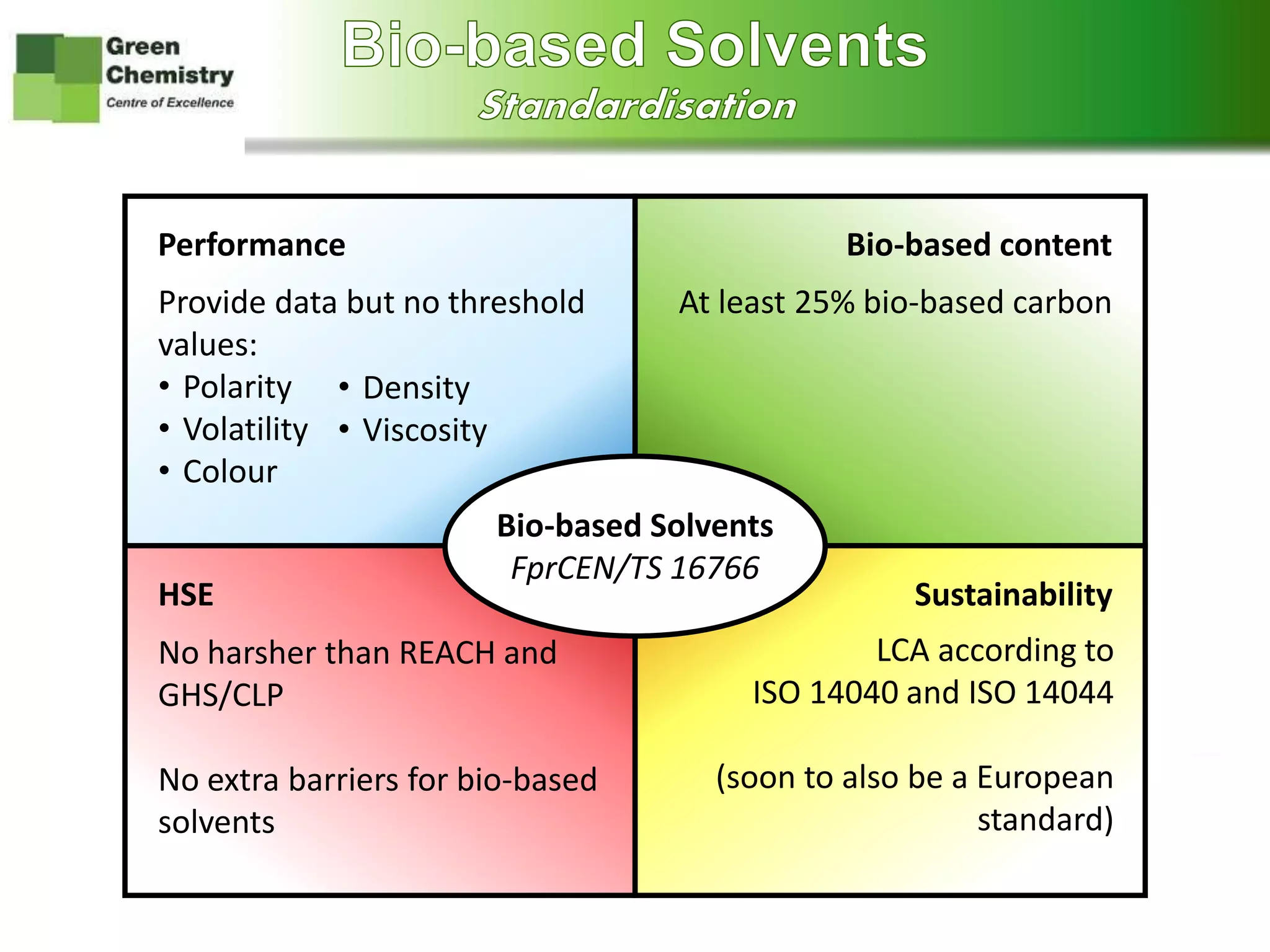
Performance Bio-based content 
Provide data but no threshold At least 25% bio-based carbon 
values: 
• Polarity 
• Volatility 
• Colour 
HSE Sustainability 
www.greenchemistry.net 
Bio-based Solvents 
FprCEN/TS 16766 
• Density 
• Viscosity 
No harsher than REACH and 
GHS/CLP 
No extra barriers for bio-based 
solvents 
LCA according to 
ISO 14040 and ISO 14044 
(soon to also be a European 
standard)
Solvent Polarity Density B.P /°C Viscosity /cP 
Ethanol Protic (high) 0.79 78 1.1 
Butanol Protic (high) 0.81 118 2.5 
Glycerol Protic (high) 1.25 290 954 
2-MeTHF Medium 0.85 79 0.5 
FAME Medium ~0.9 >250 ~4 
Dimethyl isosorbide Medium 1.15 >200 ~5 
Solketal Protic (high) 1.07 191 11 
Limonene Low 0.84 176 0.9 
www.greenchemistry.net
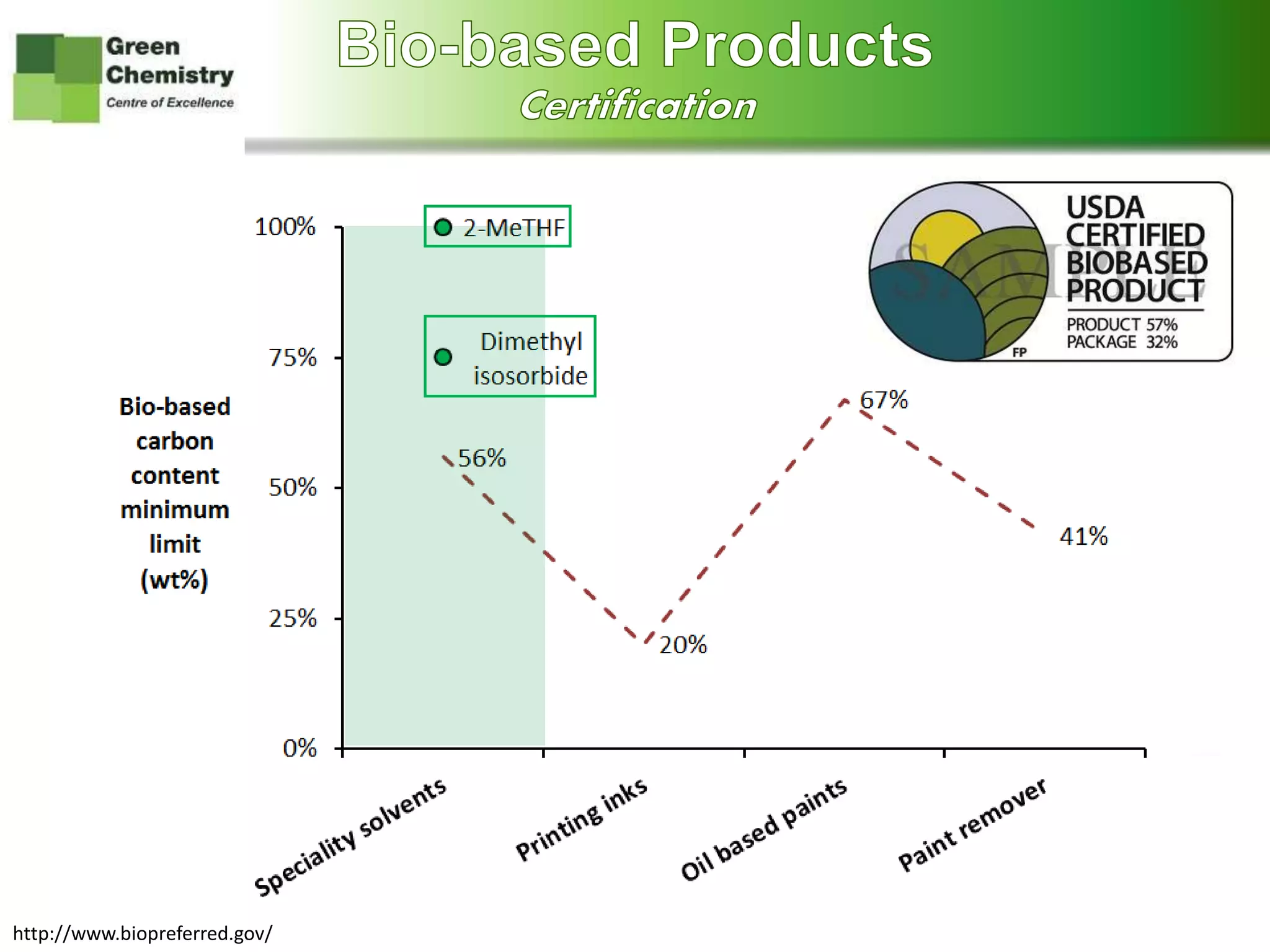
http://www.biopreferred.gov/ www.greenchemistry.net
www.greenchemistry.net 
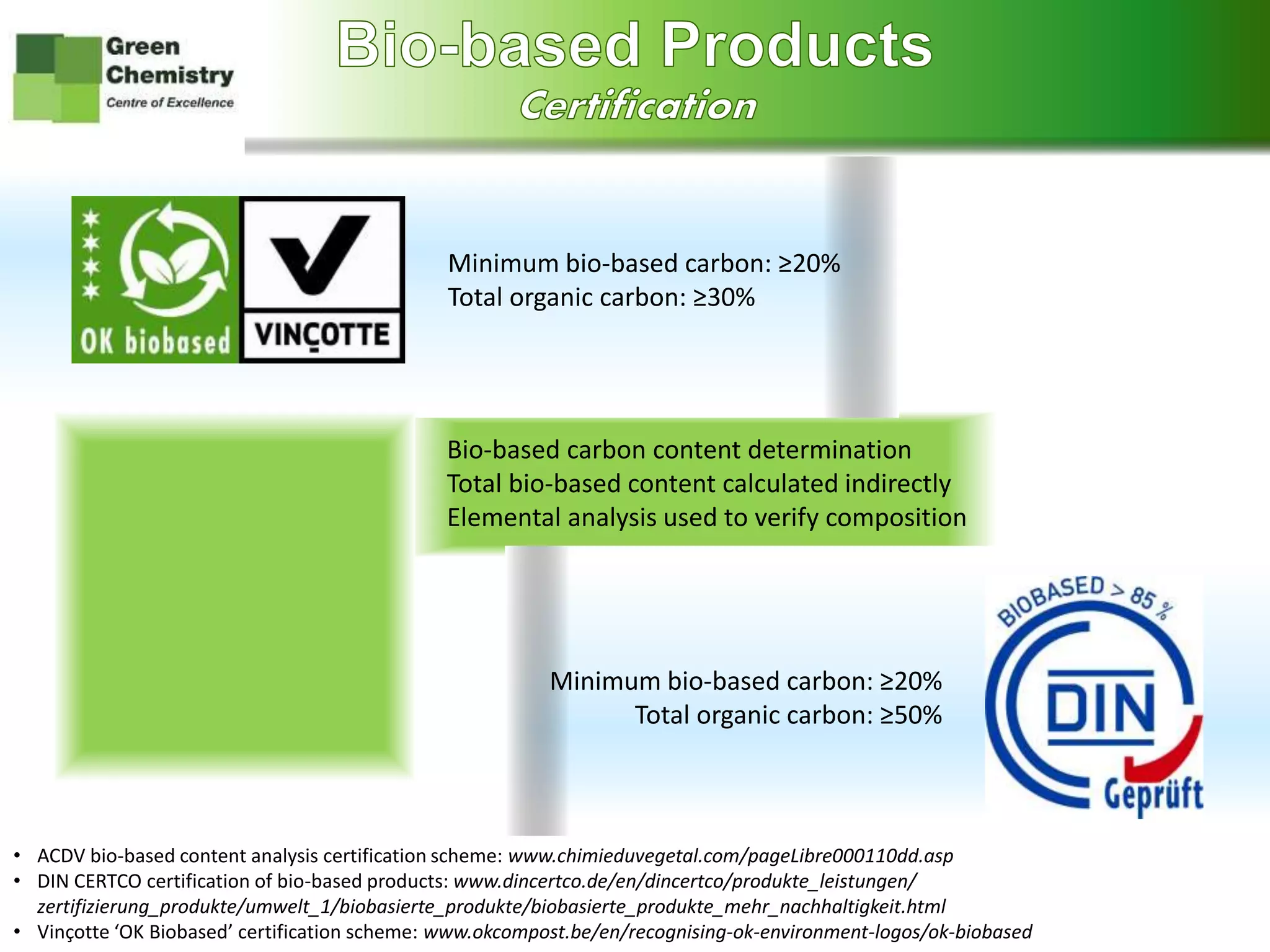
Minimum bio-based carbon: ≥20% 
Total organic carbon: ≥30% 
Bio-based carbon content determination 
Total bio-based content calculated indirectly 
Elemental analysis used to verify composition 
Minimum bio-based carbon: ≥20% 
Total organic carbon: ≥50% 
• ACDV bio-based content analysis certification scheme: www.chimieduvegetal.com/pageLibre000110dd.asp 
• DIN CERTCO certification of bio-based products: www.dincertco.de/en/dincertco/produkte_leistungen/ 
zertifizierung_produkte/umwelt_1/biobasierte_produkte/biobasierte_produkte_mehr_nachhaltigkeit.html 
• Vinçotte ‘OK Biobased’ certification scheme: www.okcompost.be/en/recognising-ok-environment-logos/ok-biobased
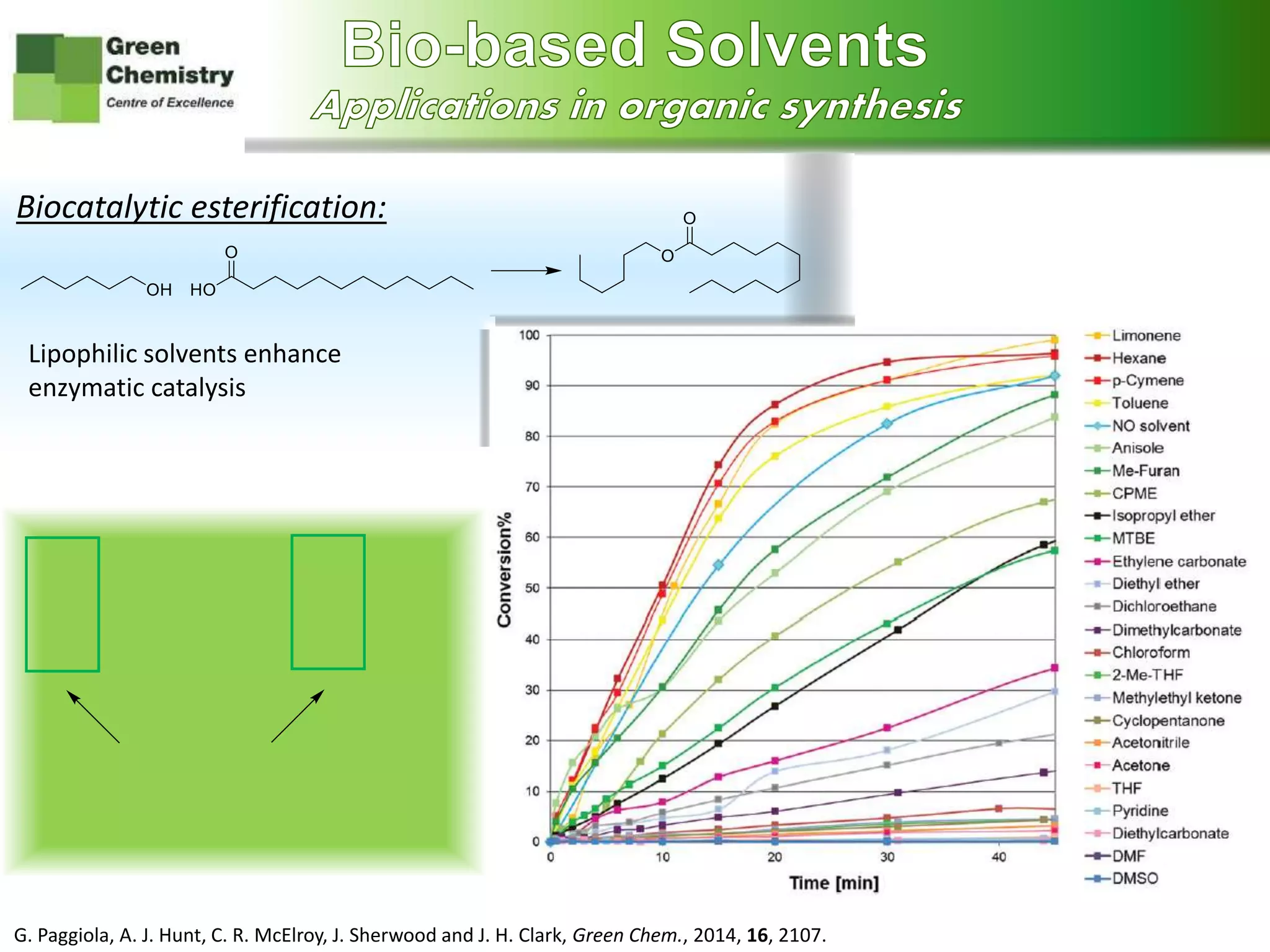
Biocatalytic esterification: 
Lipophilic solvents enhance 
enzymatic catalysis 
> > > 
G. Paggiola, A. J. Hunt, C. R. McElroy, J. Sherwood and J. H. Clark, Green Chem., 2014, 16, 2107. www.greenchemistry.net
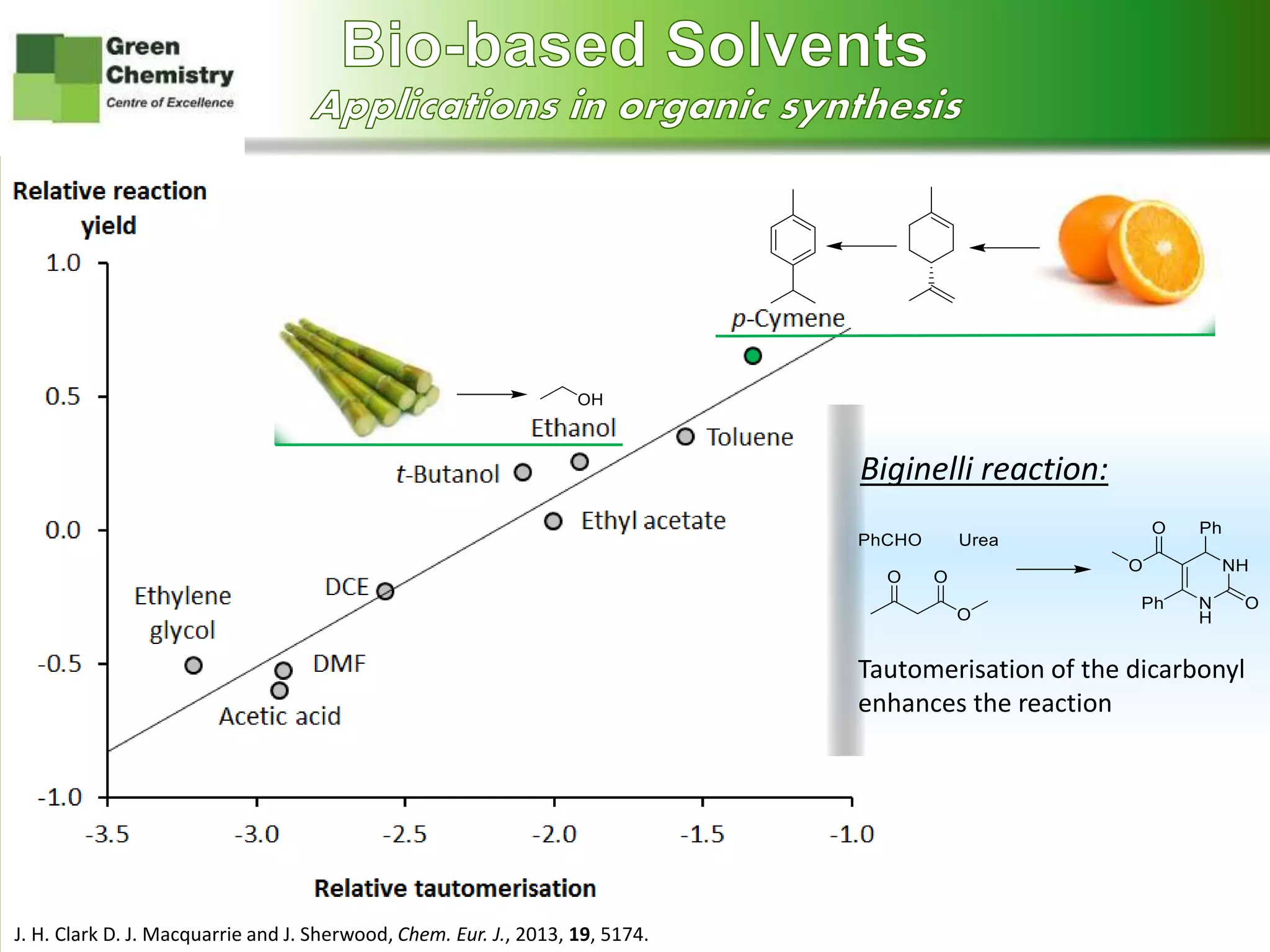
Biginelli reaction: 
Tautomerisation of the dicarbonyl 
enhances the reaction 
J. H. Clark D. J. Macquarrie and J. Sherwood, Chem. Eur. J., 2013, 19, 5174. www.greenchemistry.net
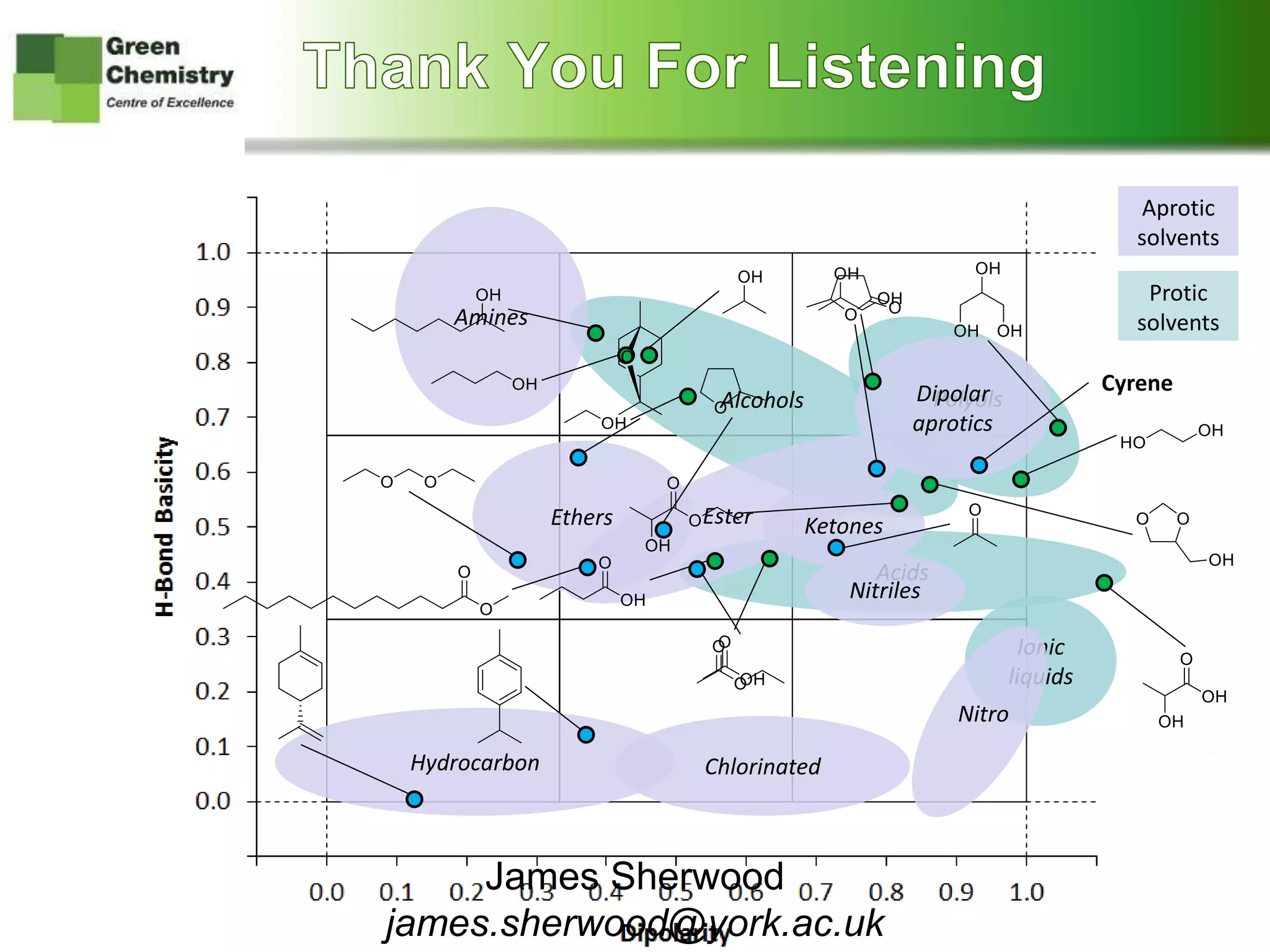
Ionic 
liquids 
Alcohols Polyols 
www.greenchemistry.net 
Acids 
Aprotic 
solvents 
Amines 
Dipolar 
aprotics 
Hydrocarbon Chlorinated 
Nitro 
Ethers Ester Ketones 
Nitriles 
Protic 
solvents 
Cyrene 
James Sherwood 
james.sherwood@york.ac.uk
γ-Valerolactone Acetone 
www.greenchemistry.net 
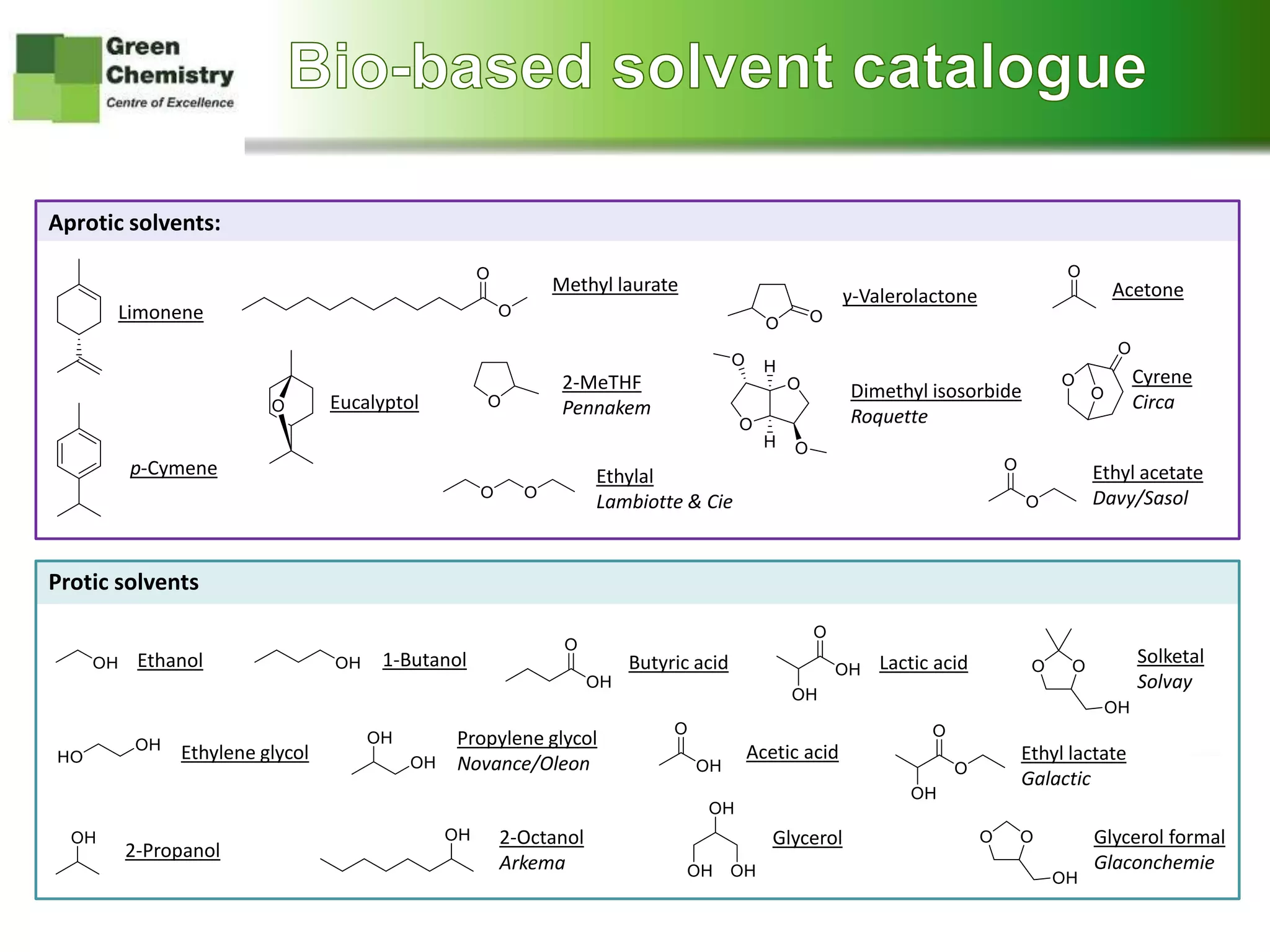
Aprotic solvents: 
Protic solvents 
Cyrene 
Circa 
Limonene 
p-Cymene 
1-Butanol 
Methyl laurate 
2-MeTHF 
Eucalyptol Pennakem 
Ethylal 
Lambiotte & Cie 
Ethyl acetate 
Davy/Sasol 
Ethanol 
2-Propanol 
2-Octanol 
Arkema 
Ethylene glycol 
Propylene glycol 
Novance/Oleon 
Butyric acid 
Acetic acid 
Glycerol Glycerol formal 
Glaconchemie 
Lactic acid 
Ethyl lactate 
Galactic 
Solketal 
Solvay 
Dimethyl isosorbide 
Roquette

Bio-based solvents

  • 1.
    Bio-Based Solvents Standardisation Certification Integration www.greenchemistry.net James Sherwood james.sherwood@york.ac.uk
  • 2.
    2025 2010 2005 Plastic 265 million metric tonnes per year www.greenchemistry.net European Commission mandated objectives: Promote bio-based product market Do so using existing infrastructure Proportion of bio-based products in each market sector Lubricant Solvent Surfactants Bio-based solvent market share = 1.5% Current capacity = 12.5% 20 MMT http://www.achema.de/de/presse/ http://www.aaechemie.com/html/aae_solvent_information.html http://ec.europa.eu/enterprise/policies/innovation/policy/lead-market-initiative/biobased-products/#h2-1
  • 3.
    Performance Bio-based content Provide data but no threshold At least 25% bio-based carbon values: • Polarity • Volatility • Colour HSE Sustainability www.greenchemistry.net Bio-based Solvents FprCEN/TS 16766 • Density • Viscosity No harsher than REACH and GHS/CLP No extra barriers for bio-based solvents LCA according to ISO 14040 and ISO 14044 (soon to also be a European standard)
  • 4.
    Solvent Polarity DensityB.P /°C Viscosity /cP Ethanol Protic (high) 0.79 78 1.1 Butanol Protic (high) 0.81 118 2.5 Glycerol Protic (high) 1.25 290 954 2-MeTHF Medium 0.85 79 0.5 FAME Medium ~0.9 >250 ~4 Dimethyl isosorbide Medium 1.15 >200 ~5 Solketal Protic (high) 1.07 191 11 Limonene Low 0.84 176 0.9 www.greenchemistry.net
  • 5.
  • 6.
  • 7.
    www.greenchemistry.net Minimum bio-basedcarbon: ≥20% Total organic carbon: ≥30% Bio-based carbon content determination Total bio-based content calculated indirectly Elemental analysis used to verify composition Minimum bio-based carbon: ≥20% Total organic carbon: ≥50% • ACDV bio-based content analysis certification scheme: www.chimieduvegetal.com/pageLibre000110dd.asp • DIN CERTCO certification of bio-based products: www.dincertco.de/en/dincertco/produkte_leistungen/ zertifizierung_produkte/umwelt_1/biobasierte_produkte/biobasierte_produkte_mehr_nachhaltigkeit.html • Vinçotte ‘OK Biobased’ certification scheme: www.okcompost.be/en/recognising-ok-environment-logos/ok-biobased
  • 8.
    Biocatalytic esterification: Lipophilicsolvents enhance enzymatic catalysis > > > G. Paggiola, A. J. Hunt, C. R. McElroy, J. Sherwood and J. H. Clark, Green Chem., 2014, 16, 2107. www.greenchemistry.net
  • 9.
    Biginelli reaction: Tautomerisationof the dicarbonyl enhances the reaction J. H. Clark D. J. Macquarrie and J. Sherwood, Chem. Eur. J., 2013, 19, 5174. www.greenchemistry.net
  • 10.
    Ionic liquids AlcoholsPolyols www.greenchemistry.net Acids Aprotic solvents Amines Dipolar aprotics Hydrocarbon Chlorinated Nitro Ethers Ester Ketones Nitriles Protic solvents Cyrene James Sherwood james.sherwood@york.ac.uk
  • 11.
    γ-Valerolactone Acetone www.greenchemistry.net Aprotic solvents: Protic solvents Cyrene Circa Limonene p-Cymene 1-Butanol Methyl laurate 2-MeTHF Eucalyptol Pennakem Ethylal Lambiotte & Cie Ethyl acetate Davy/Sasol Ethanol 2-Propanol 2-Octanol Arkema Ethylene glycol Propylene glycol Novance/Oleon Butyric acid Acetic acid Glycerol Glycerol formal Glaconchemie Lactic acid Ethyl lactate Galactic Solketal Solvay Dimethyl isosorbide Roquette