Getting The Most Out Of Big 
Data 
Associate Professor Paul Hawking
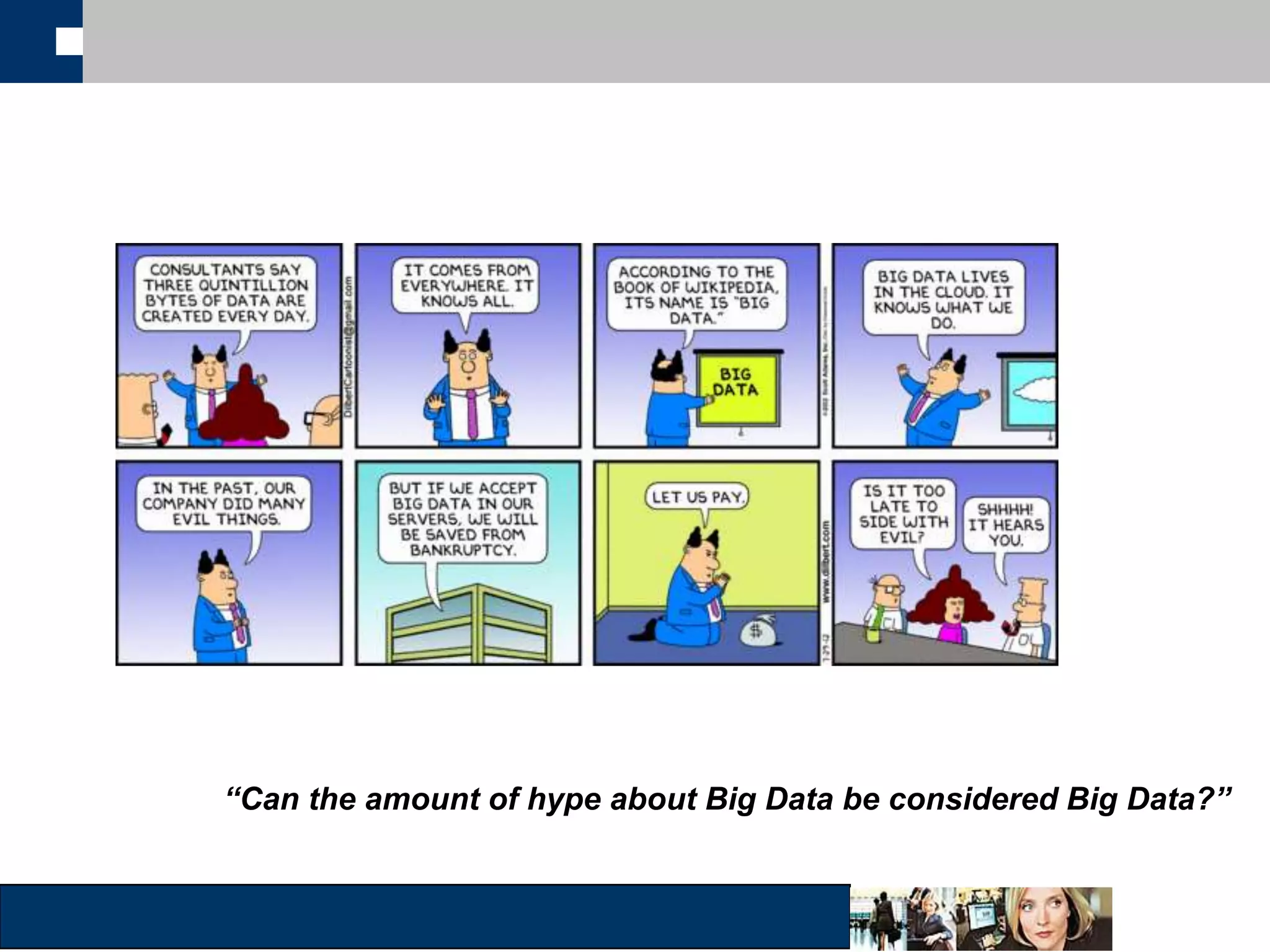
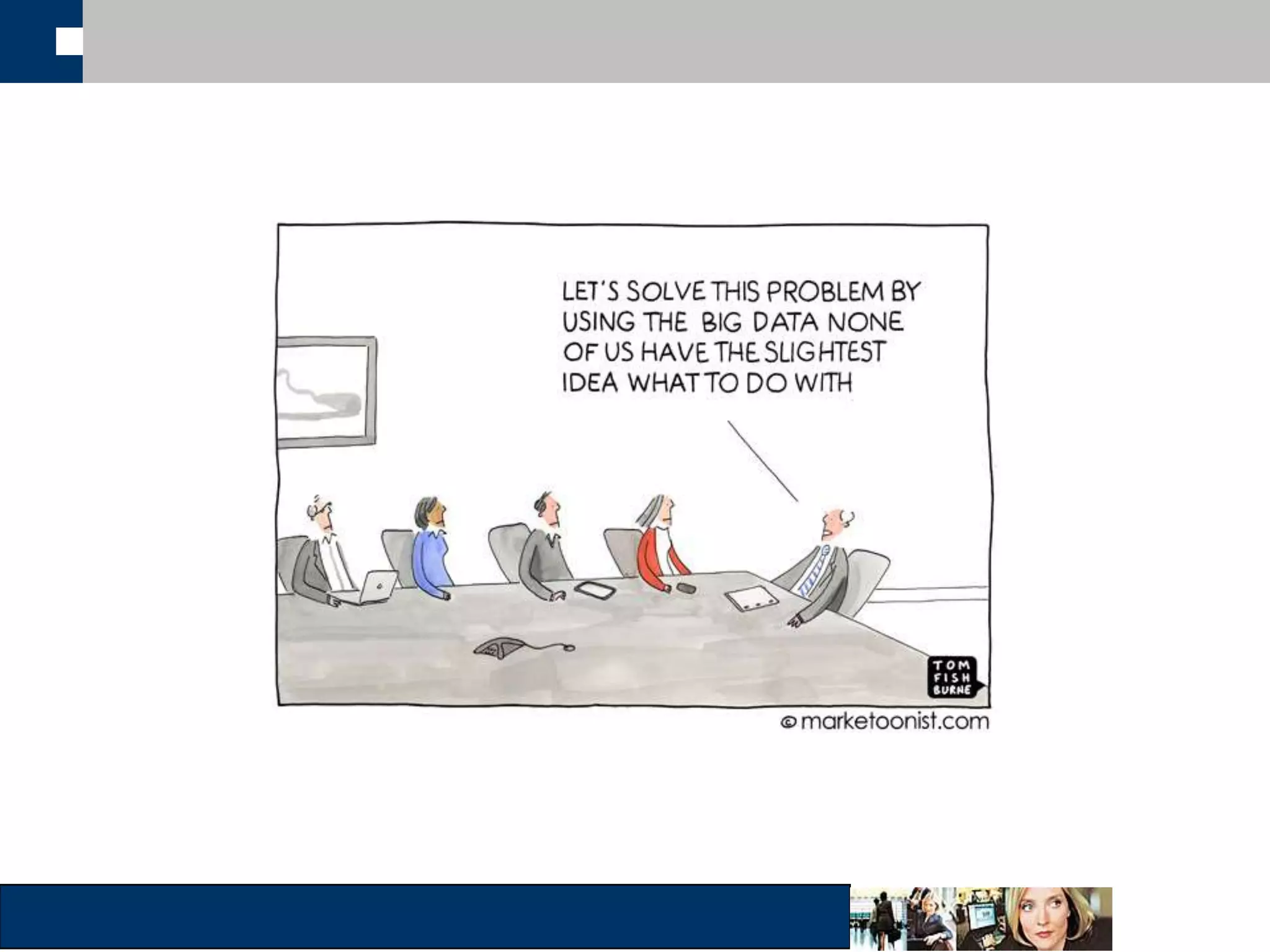
“Can the amount of hype about Big Data be considered Big Data?”
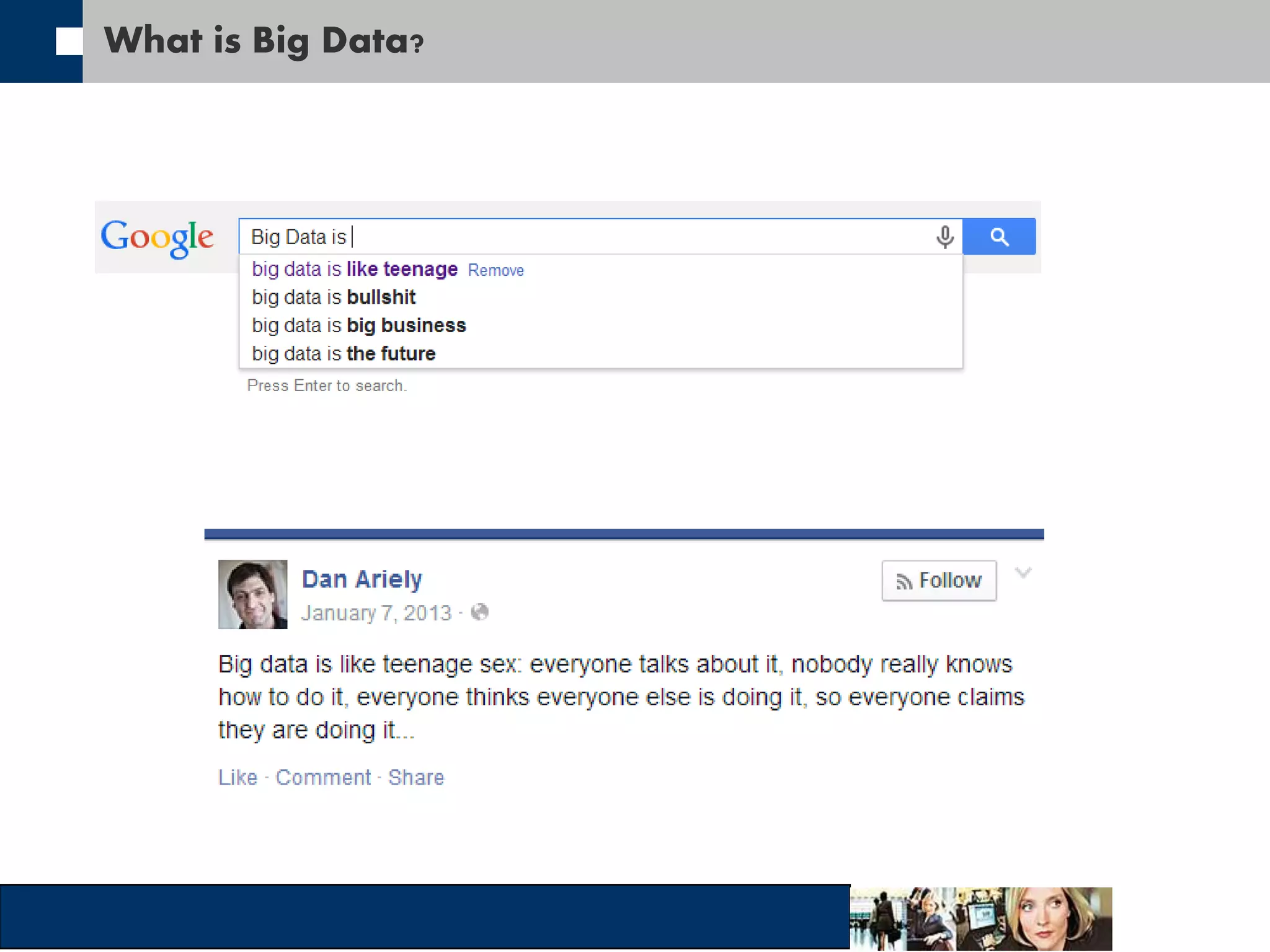
What is Big Data?
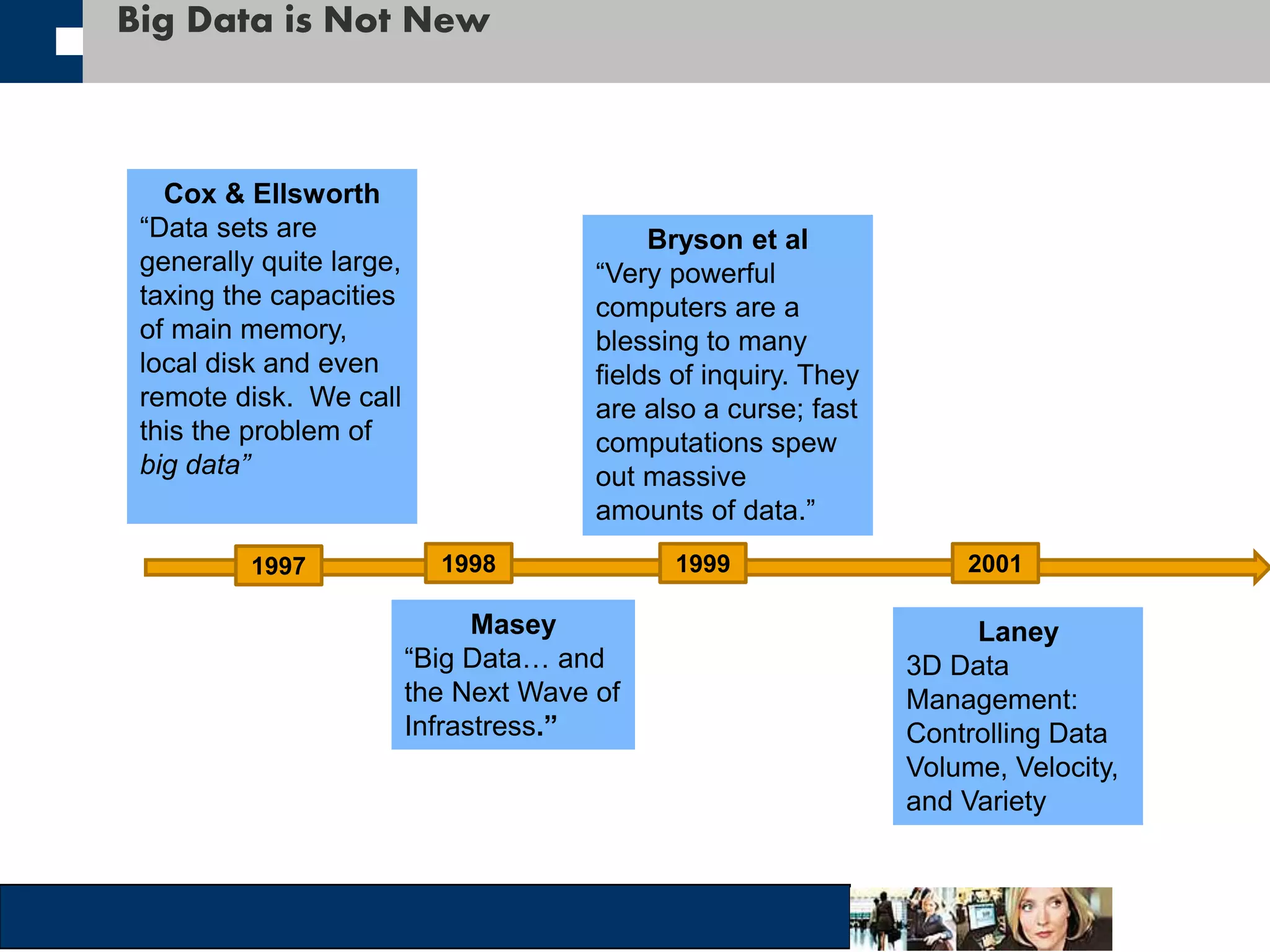
Big Data is Not New 
Cox & Ellsworth 
“Data sets are 
generally quite large, 
taxing the capacities 
of main memory, 
local disk and even 
remote disk. We call 
this the problem of 
big data” 
1997 1998 1999 2001 
Masey 
“Big Data… and 
the Next Wave of 
Infrastress.” 
Bryson et al 
“Very powerful 
computers are a 
blessing to many 
fields of inquiry. They 
are also a curse; fast 
computations spew 
out massive 
amounts of data.” 
Laney 
3D Data 
Management: 
Controlling Data 
Volume, Velocity, 
and Variety
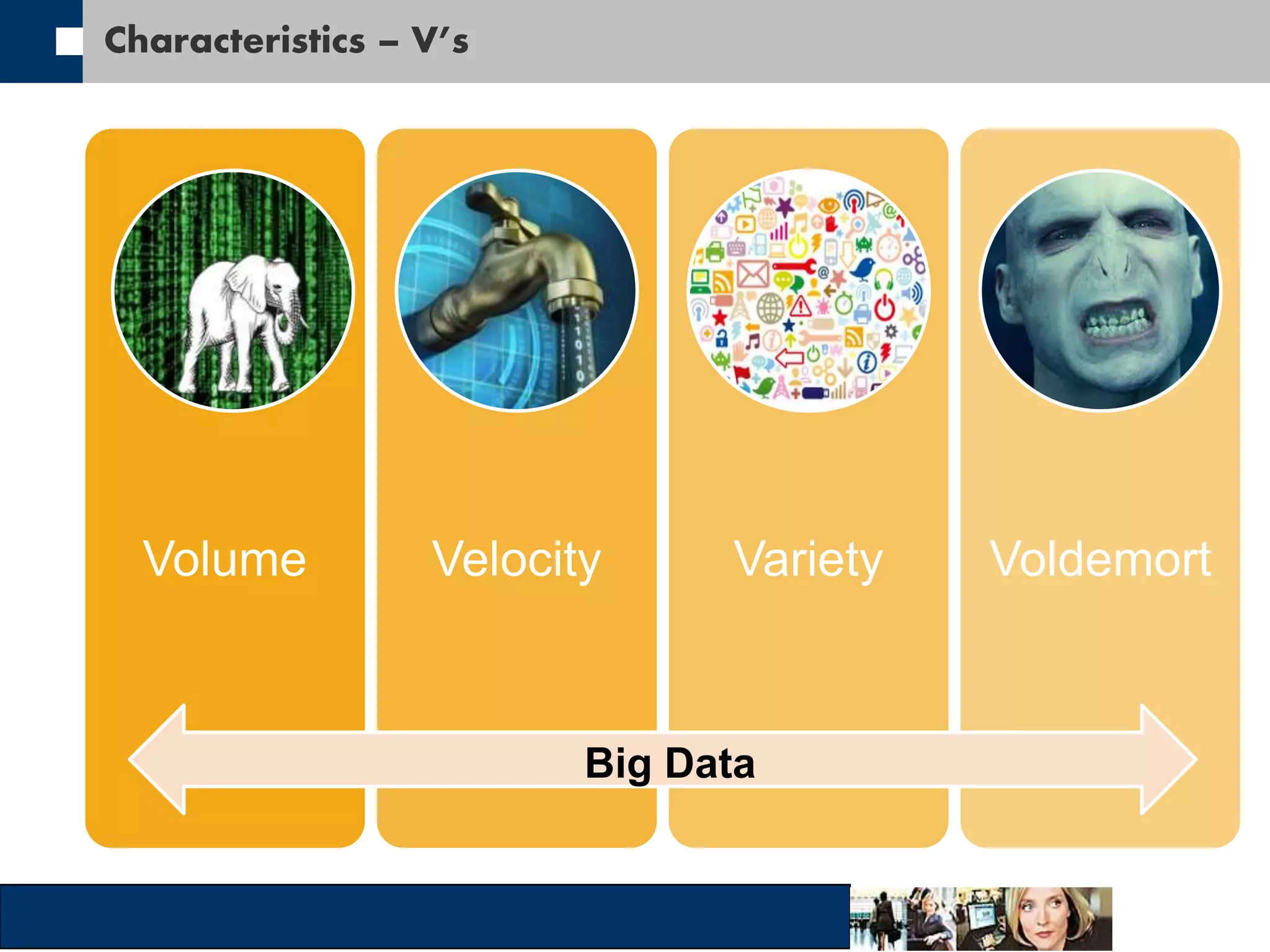
Characteristics – V’s 
Volume Velocity Variety Voldemort 
Big Data
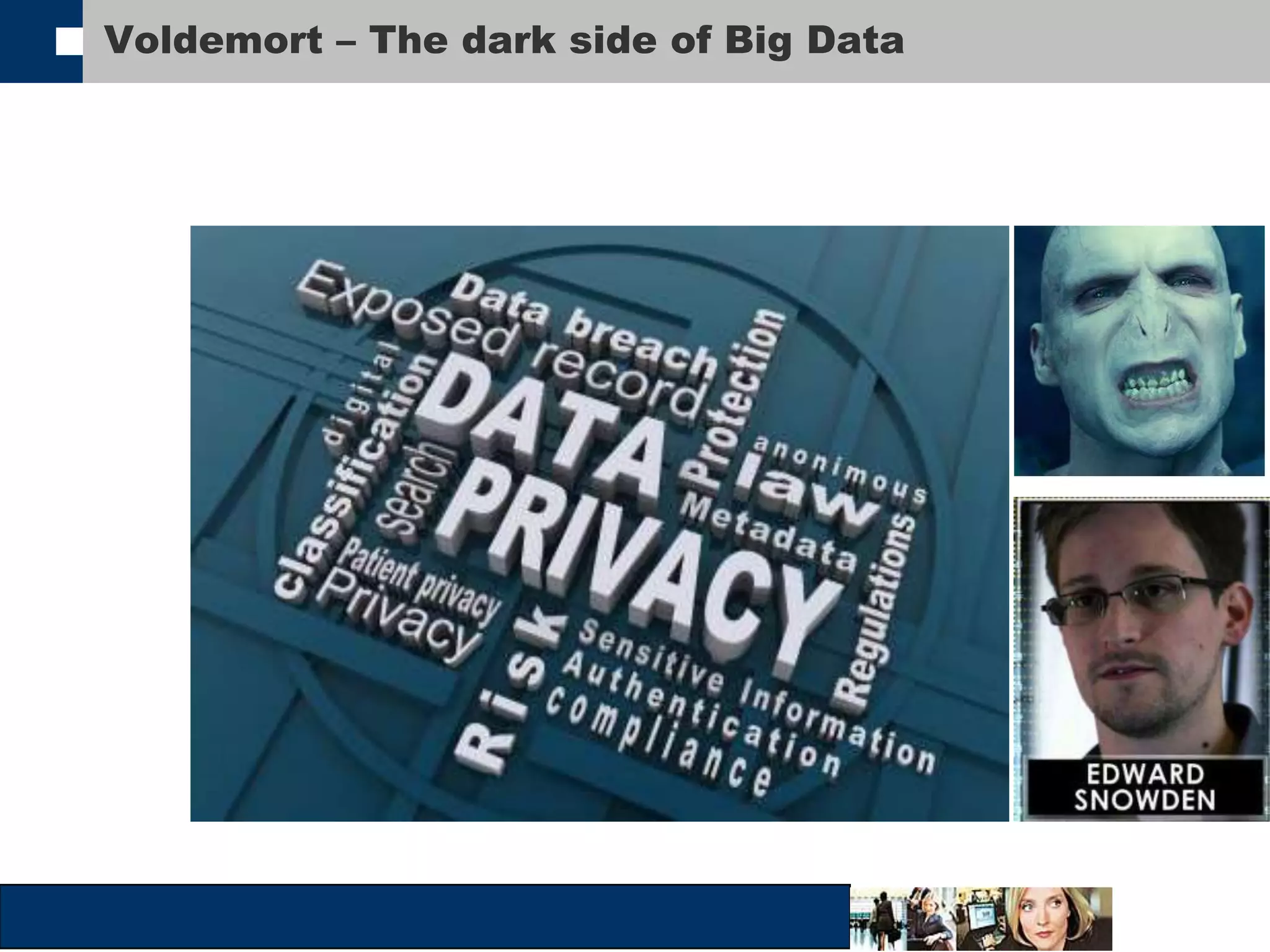
Voldemort – The dark side of Big Data
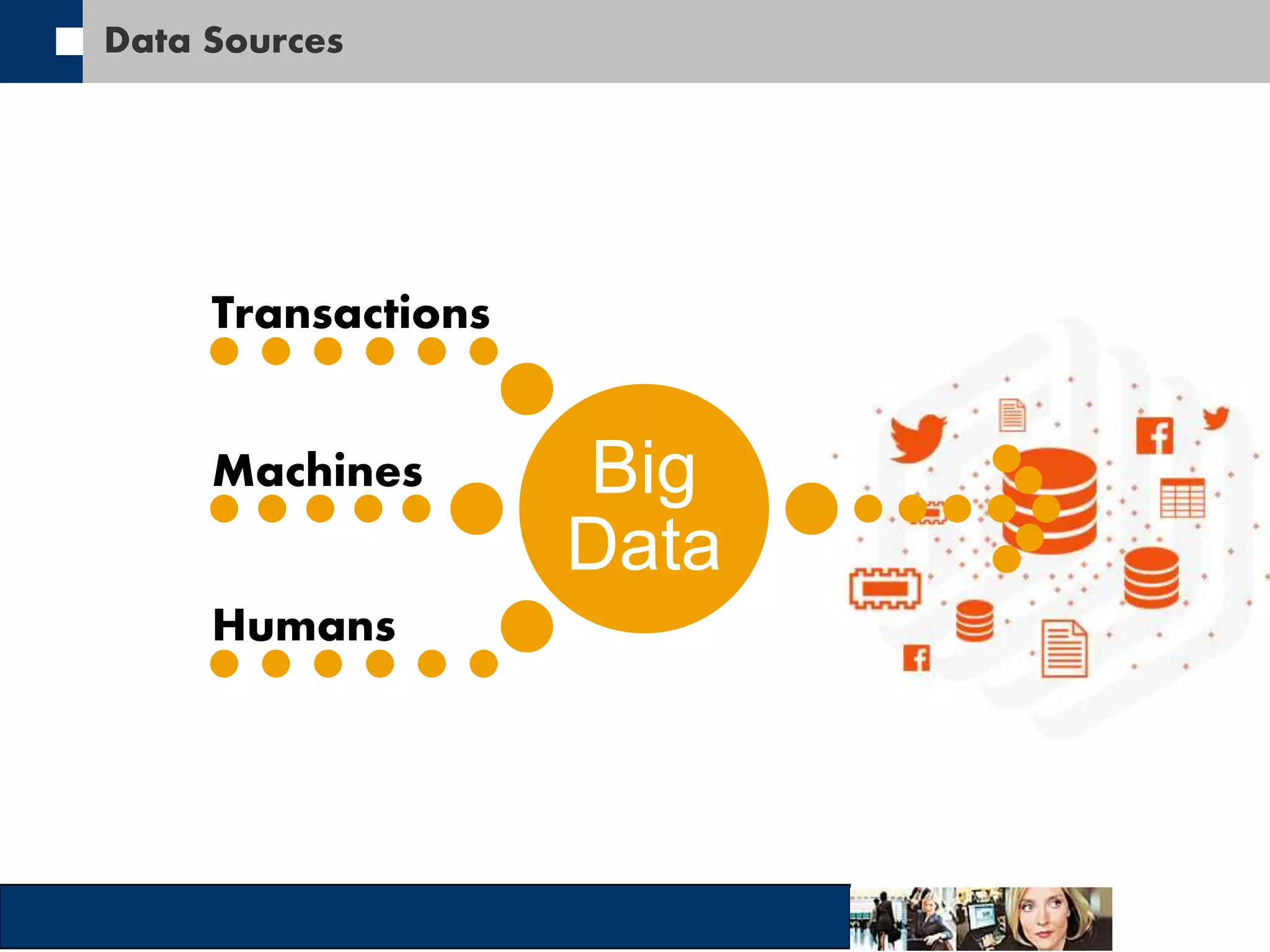
Data Sources 
Big 
Data 
Transactions 
Machines 
Humans
What is Big Data? 
Danah Boyd & Kate Crawford (Microsoft) 
Big data is “a cultural, technological, and scholarly phenomenon 
that rests on the interplay of: 
 Technology: maximizing computation power and algorithmic accuracy 
to gather, analyze, link, and compare large data sets. 
 Analysis: drawing on large data sets to identify patterns in order to 
make economic, social, technical, and legal claims. 
 Mythology: the widespread belief that large data sets offer a higher form 
of intelligence and knowledge that can generate insights that were 
previously impossible, with the aura of truth, objectivity, and accuracy.
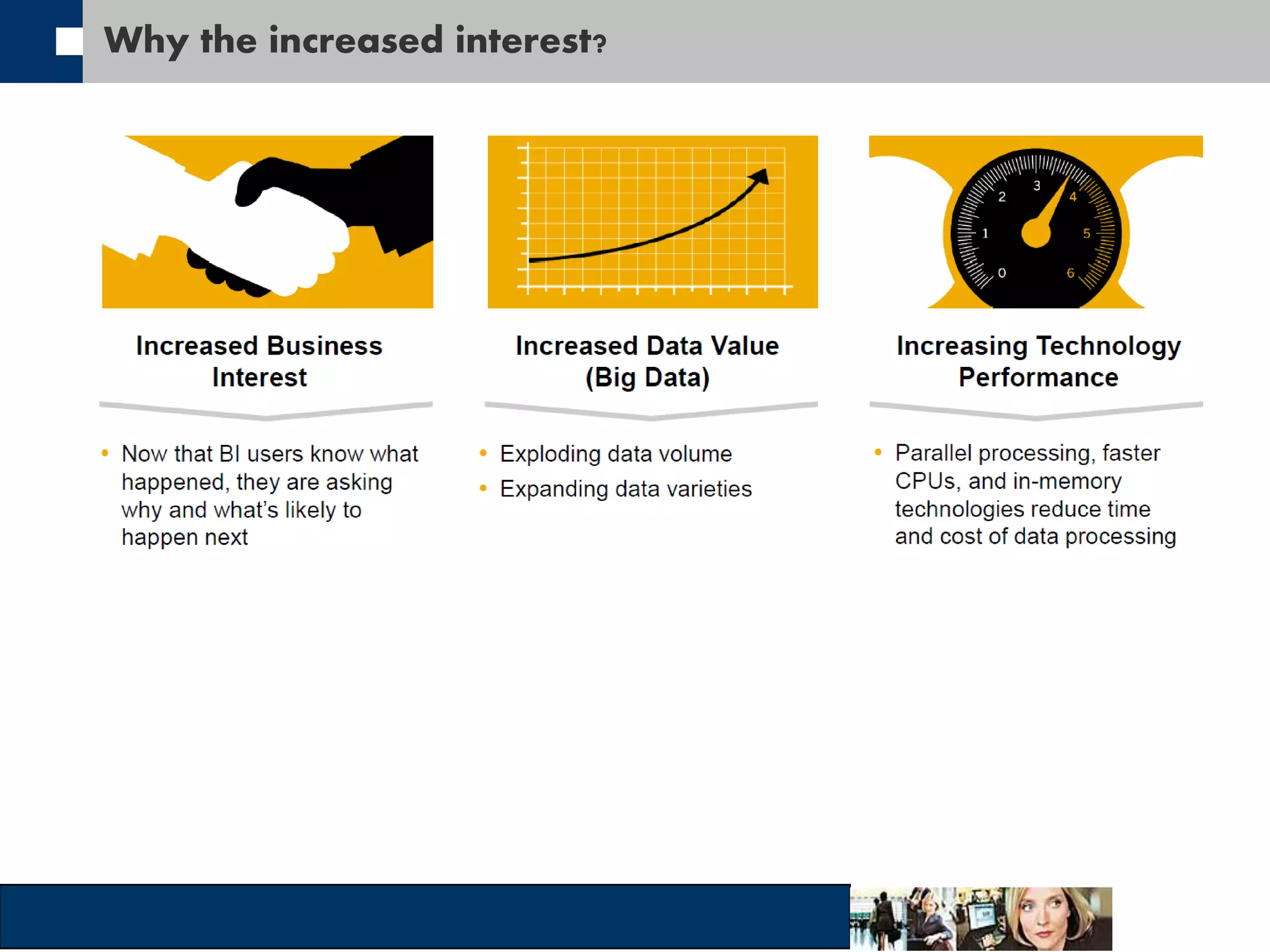
Why the increased interest?
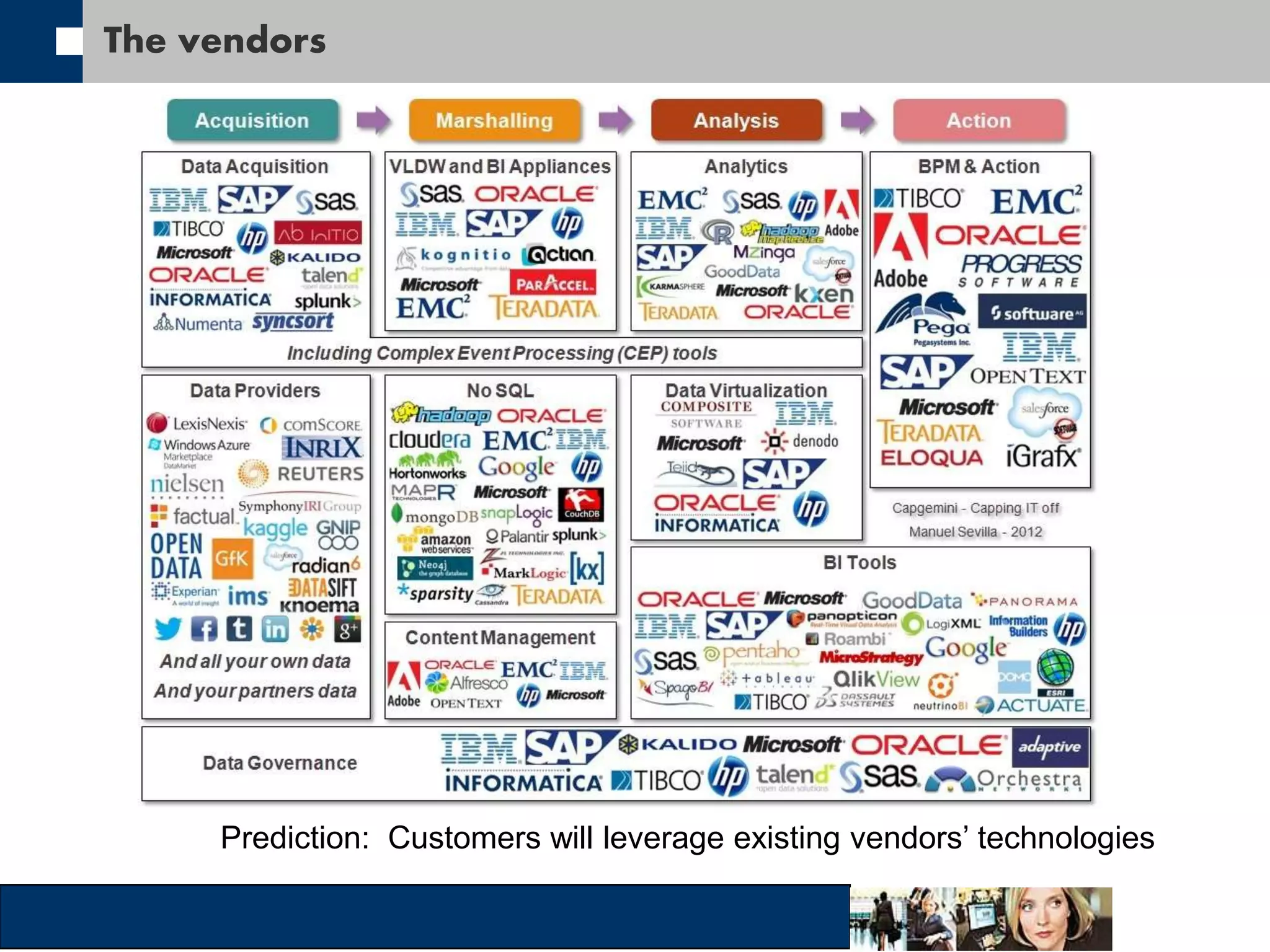
The vendors 
Prediction: Customers will leverage existing vendors’ technologies
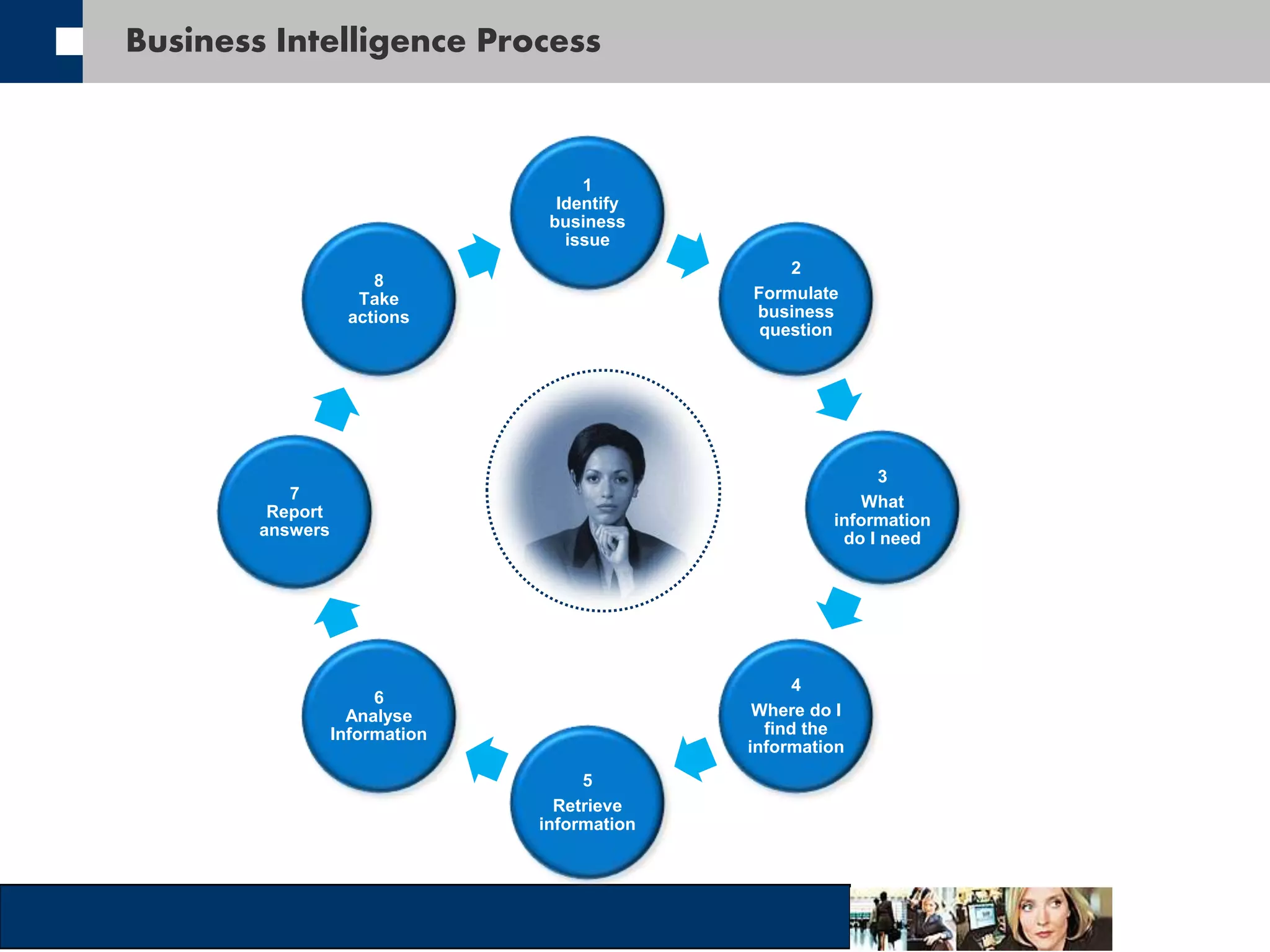
Business Intelligence Process 
1 
Identify 
business 
issue 
2 
Formulate 
business 
question 
3 
What 
information 
do I need 
4 
Where do I 
find the 
information 
5 
Retrieve 
information 
6 
Analyse 
Information 
7 
Report 
answers 
8 
Take 
actions
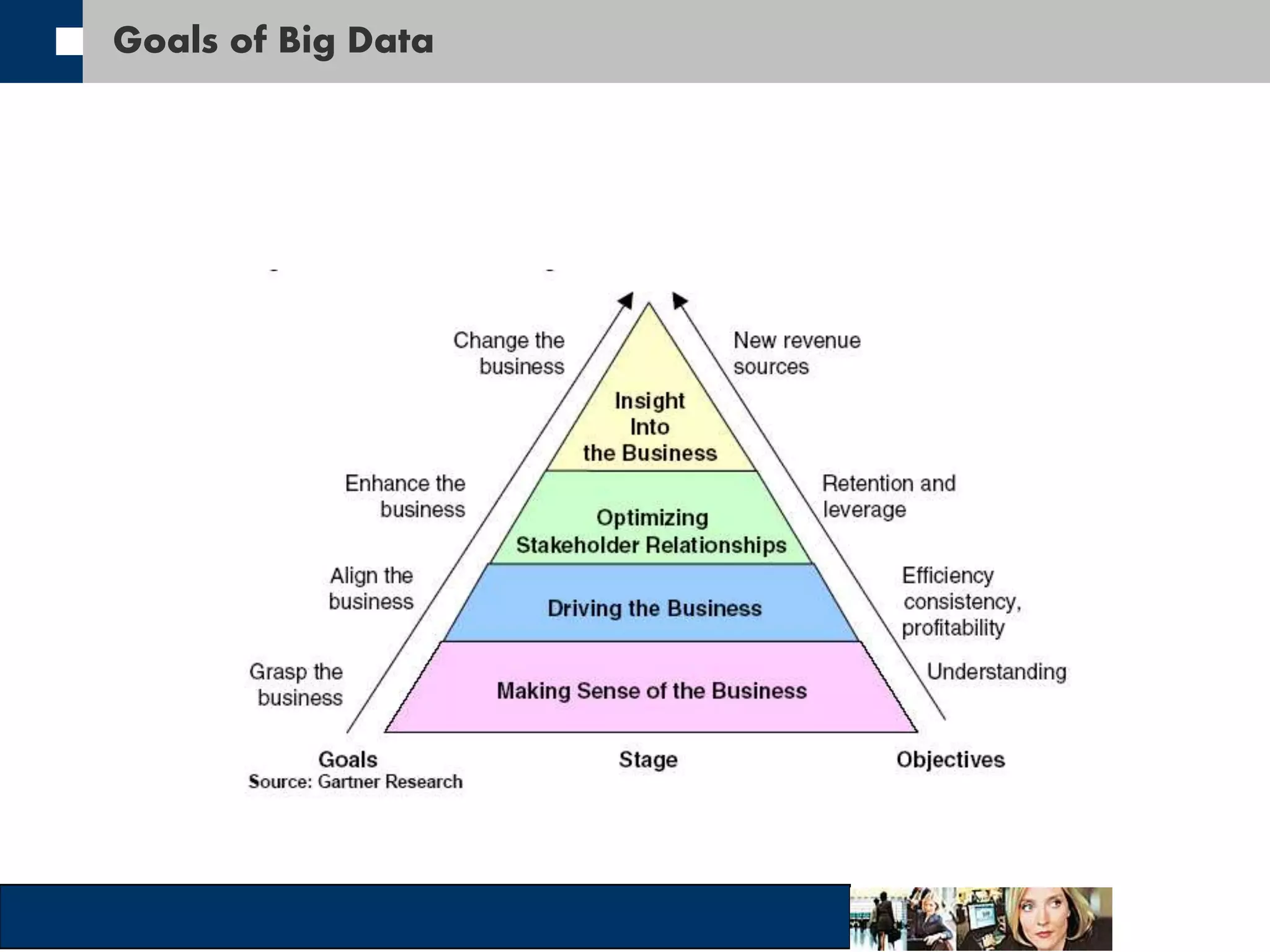
Goals of Big Data
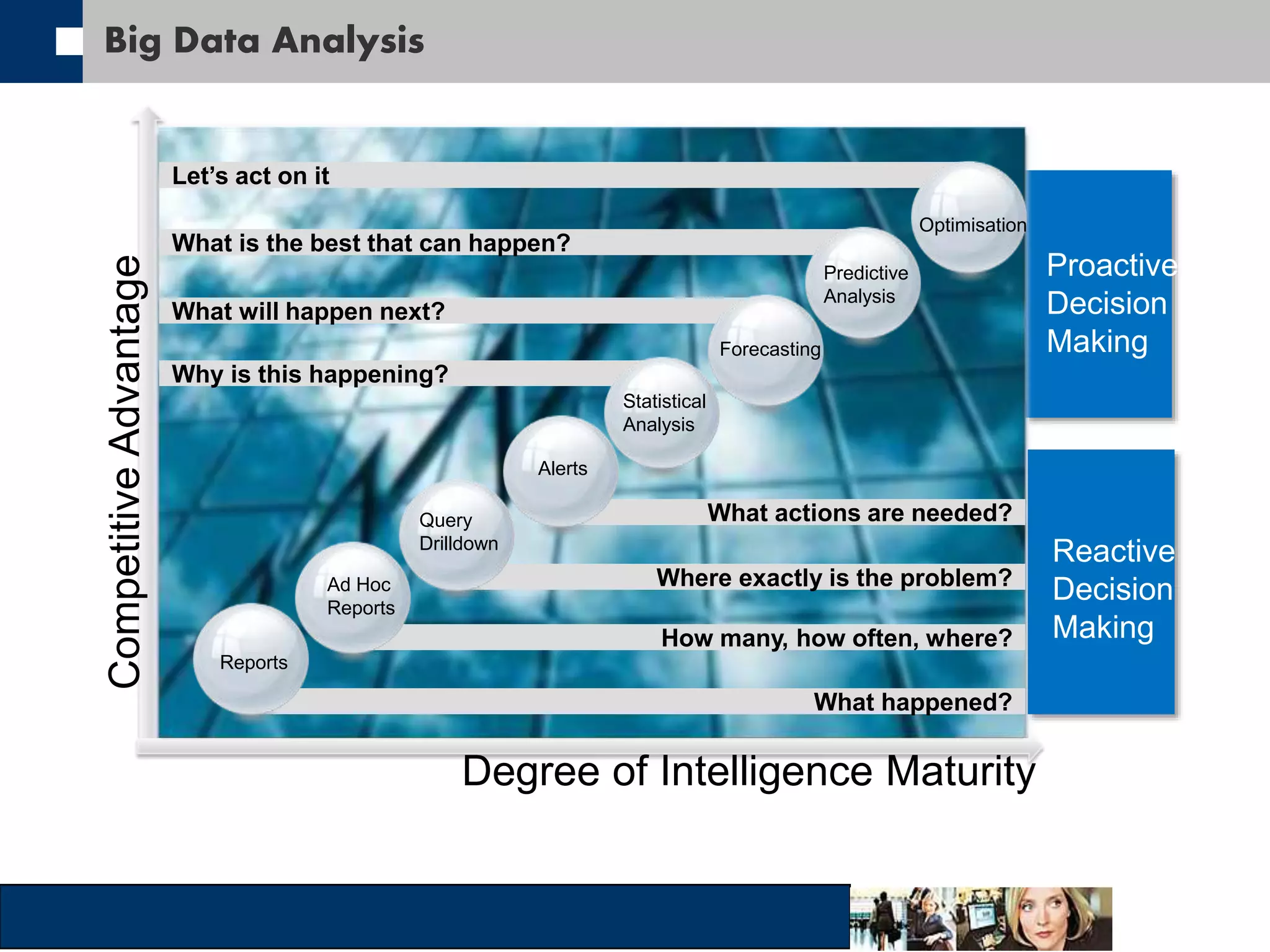
Big Data Analysis 
Let’s act on it 
What is the best that can happen? 
What will happen next? 
Why is this happening? 
What actions are needed? 
Where exactly is the problem? 
How many, how often, where? 
What happened? 
Reports 
Ad Hoc 
Reports 
Query 
Drilldown 
Alerts 
Statistical 
Analysis 
Forecasting 
Predictive 
Analysis 
Optimisation 
Degree of Intelligence Maturity 
Competitive Advantage 
Proactive 
Decision 
Making 
Reactive 
Decision 
Making
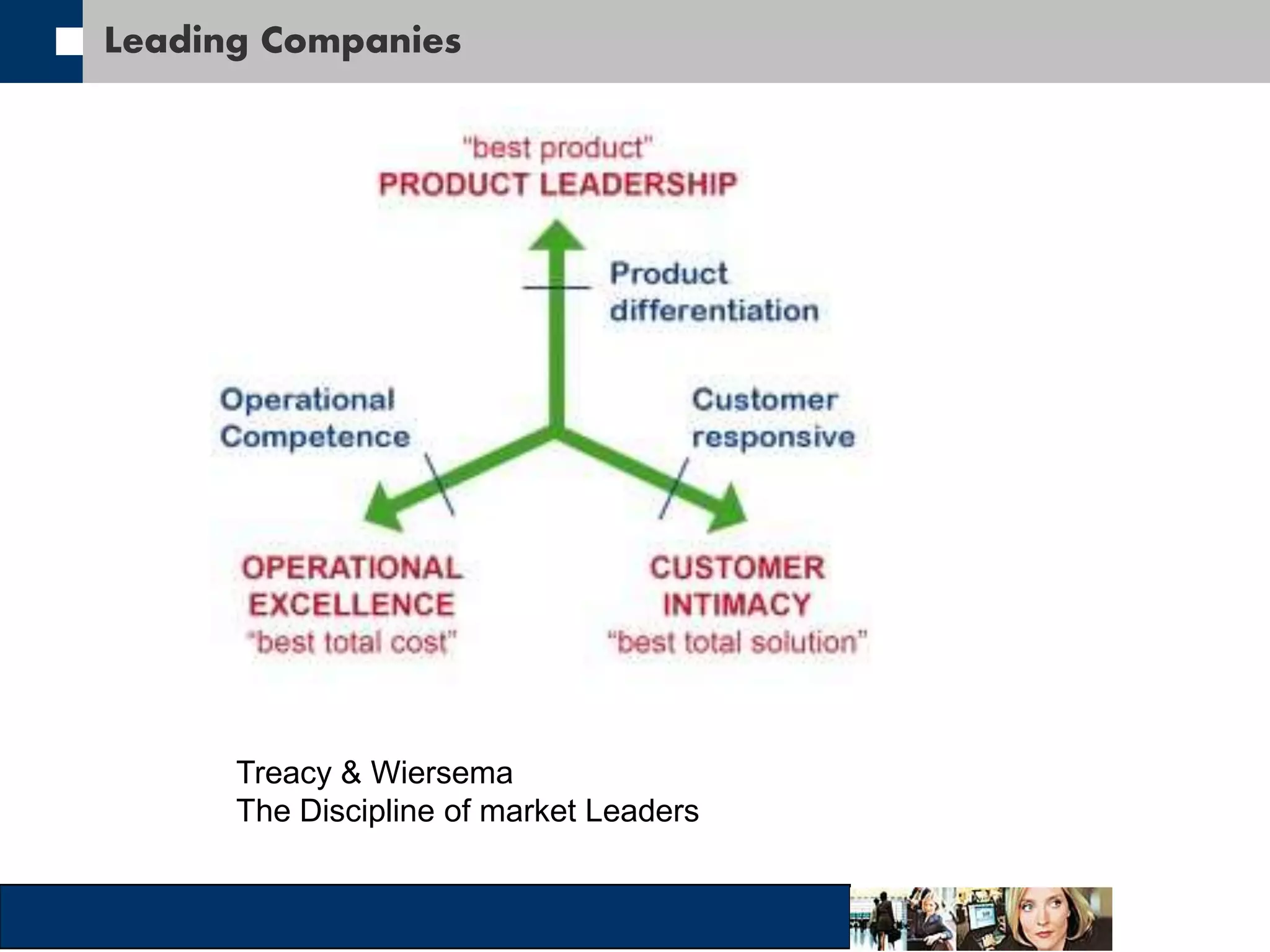
Leading Companies 
Treacy & Wiersema 
The Discipline of market Leaders
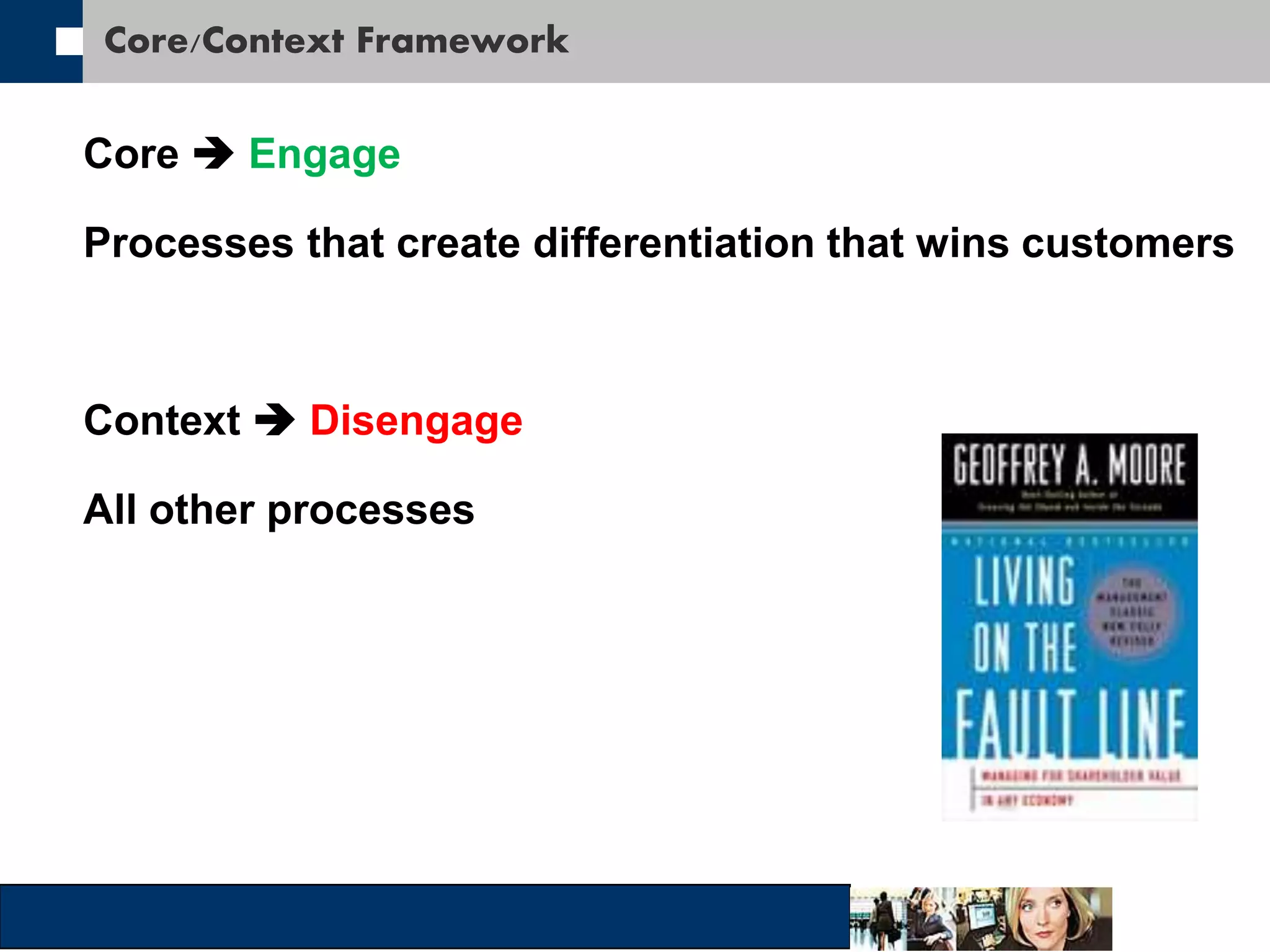
Core/Context Framework 
Core  Engage 
Processes that create differentiation that wins customers 
Context  Disengage 
All other processes
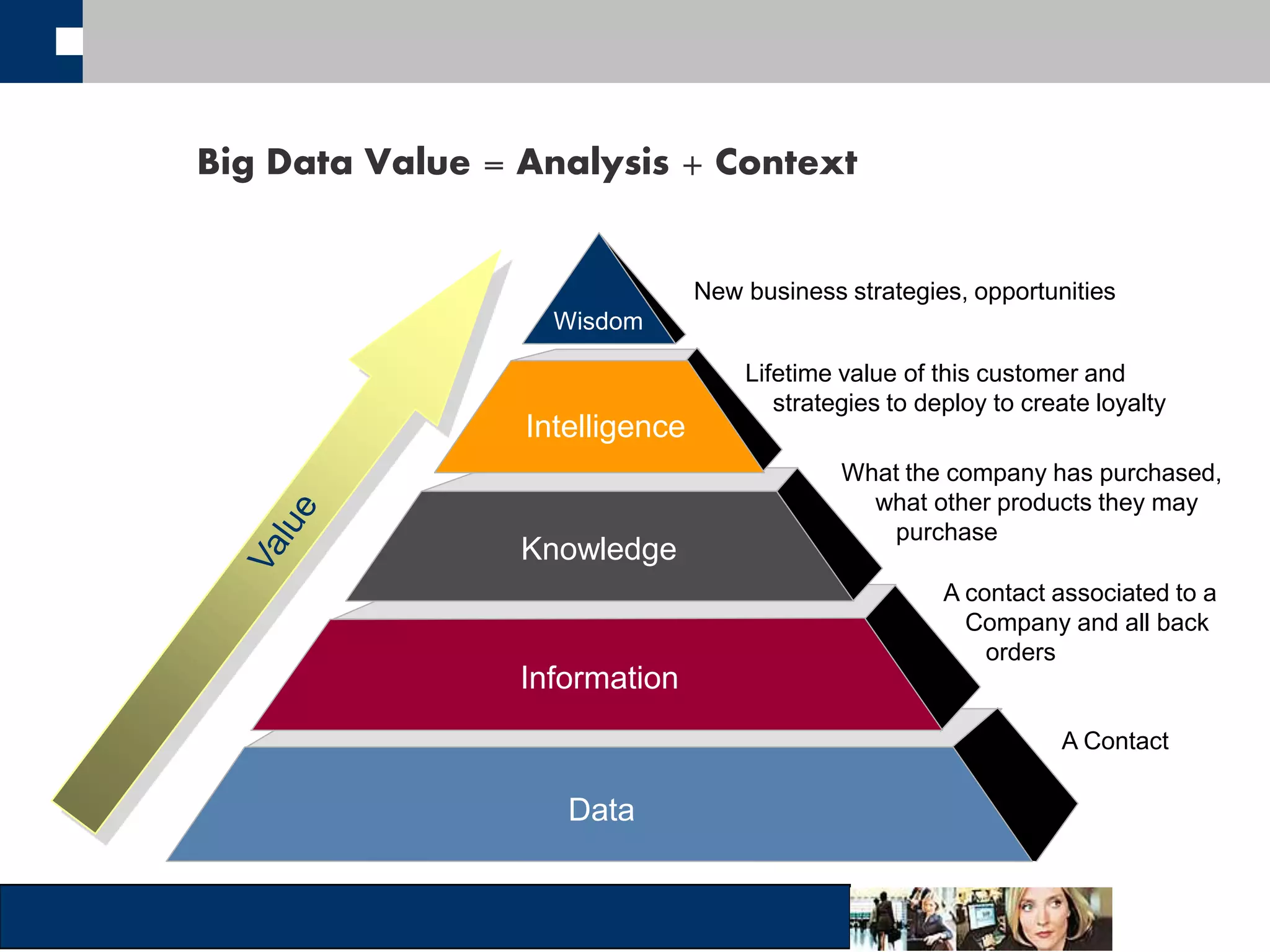
Big Data Value = Analysis + Context 
Wisdom 
Intelligence 
Knowledge 
Information 
Data 
New business strategies, opportunities 
Lifetime value of this customer and 
strategies to deploy to create loyalty 
What the company has purchased, 
what other products they may 
purchase 
A contact associated to a 
Company and all back 
orders 
A Contact
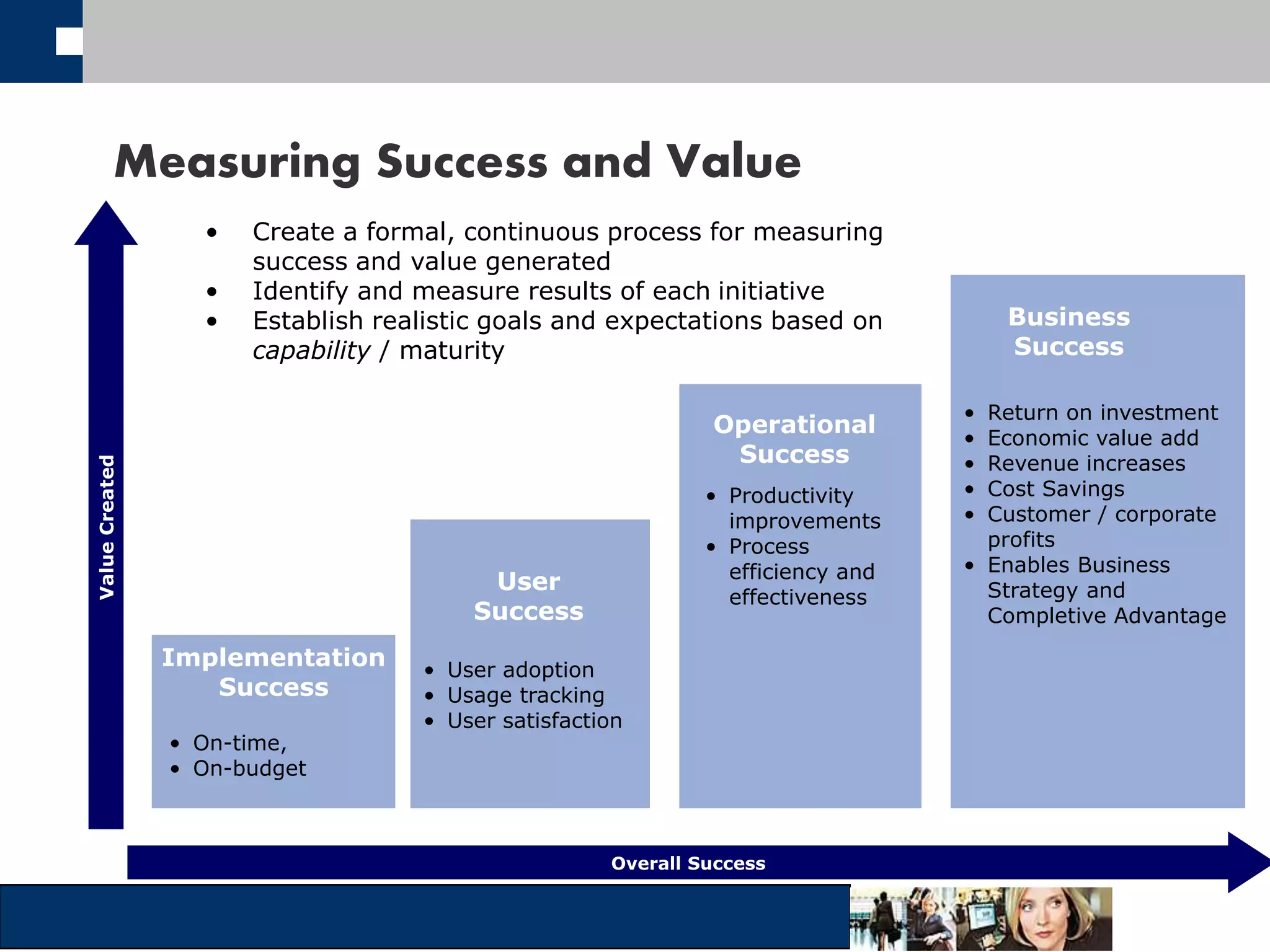
Measuring Success and Value 
Overall Success 
Implementation 
Success 
User 
Success 
Operational 
Success 
Business 
Success 
• Create a formal, continuous process for measuring 
success and value generated 
• Identify and measure results of each initiative 
• Establish realistic goals and expectations based on 
capability / maturity 
• On-time, 
• On-budget 
• User adoption 
• Usage tracking 
• User satisfaction 
• Productivity 
improvements 
• Process 
efficiency and 
effectiveness 
• Return on investment 
• Economic value add 
• Revenue increases 
• Cost Savings 
• Customer / corporate 
profits 
• Enables Business 
Strategy and 
Completive Advantage 
Value Created
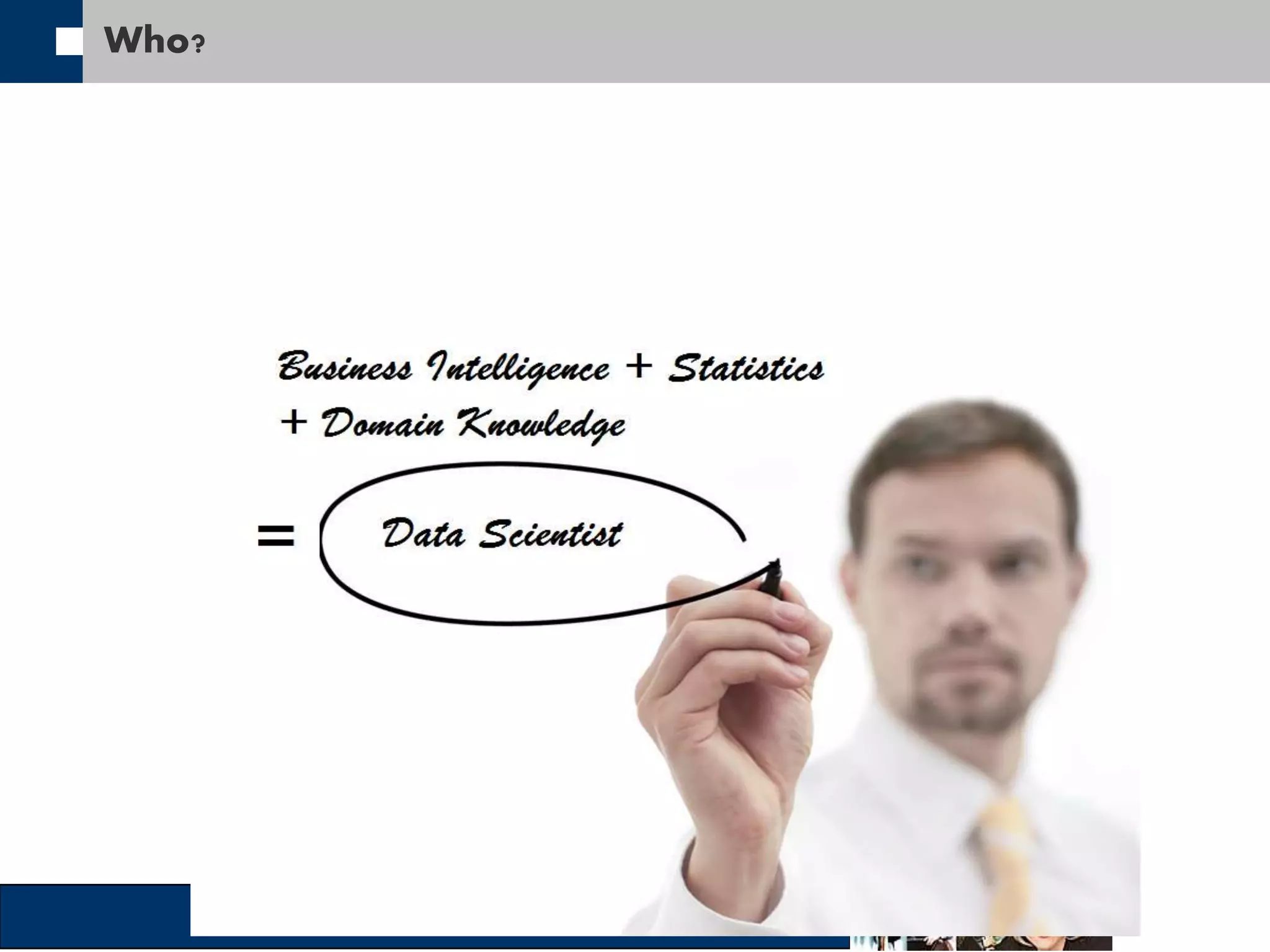
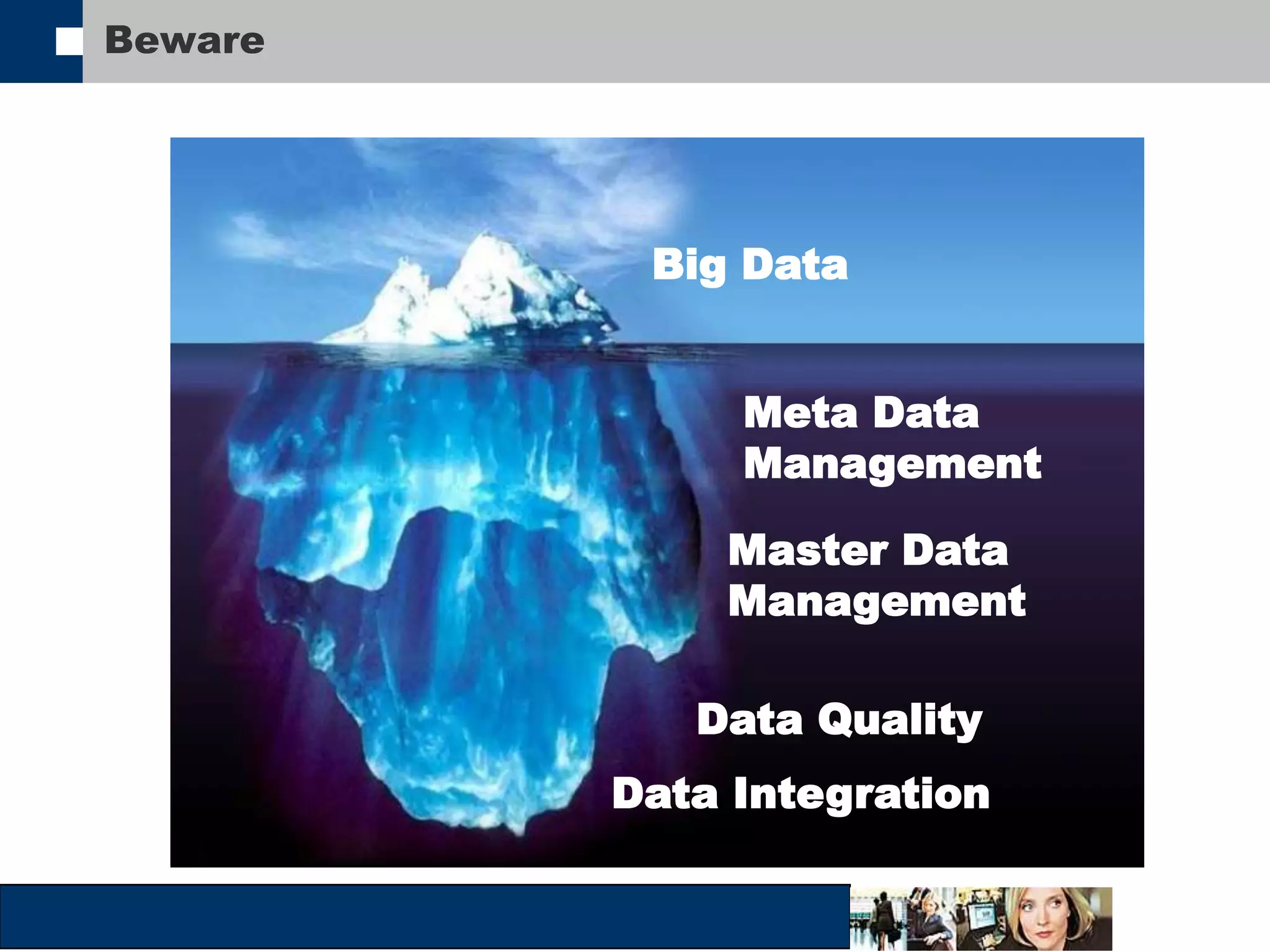
Who?
Meta Data 
Management 
Master Data 
Management 
Data Quality 
Data Integration 
Beware 
Big Data
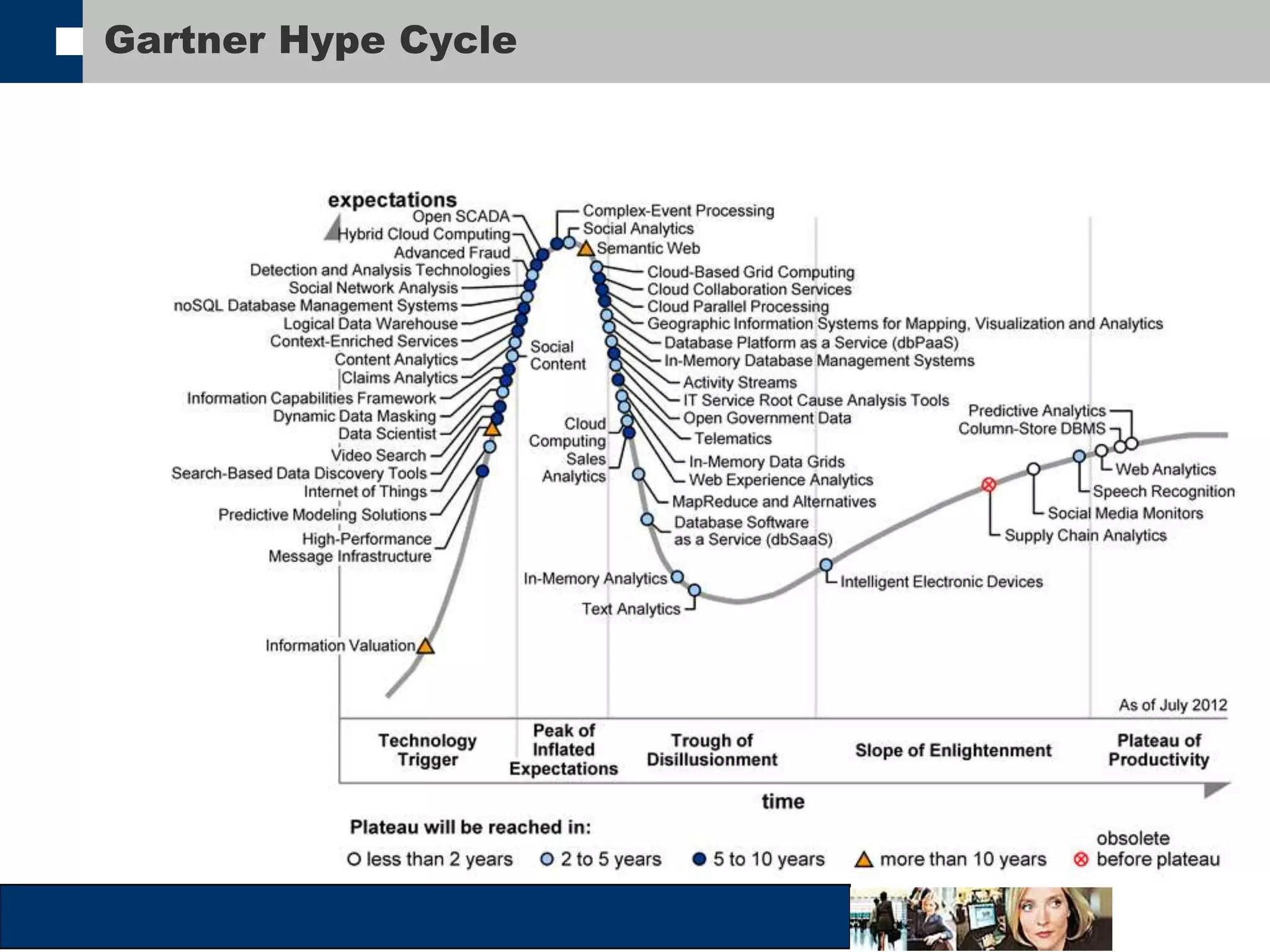
Gartner Hype Cycle
Topic: 
Organized by 
Paul Hawking 
Associate Professor 
SAP Academic Programs Director 
College of Business 
Telephone: +61-3-99194031 
Mobile: +61-419301628 
Email Paul.Hawking@vu.edu.au 
Speaker name: 
Email ID: 
UNICOM Trainings & Seminars Pvt. Ltd. 
contact@unicomlearning.com 
Paulhawking #SAPVU
Big Data Innovation
Big Data Innovation

Big Data Innovation

  • 1.
    Getting The MostOut Of Big Data Associate Professor Paul Hawking
  • 2.
    “Can the amountof hype about Big Data be considered Big Data?”
  • 3.
  • 4.
    Big Data isNot New Cox & Ellsworth “Data sets are generally quite large, taxing the capacities of main memory, local disk and even remote disk. We call this the problem of big data” 1997 1998 1999 2001 Masey “Big Data… and the Next Wave of Infrastress.” Bryson et al “Very powerful computers are a blessing to many fields of inquiry. They are also a curse; fast computations spew out massive amounts of data.” Laney 3D Data Management: Controlling Data Volume, Velocity, and Variety
  • 5.
    Characteristics – V’s Volume Velocity Variety Voldemort Big Data
  • 6.
    Voldemort – Thedark side of Big Data
  • 7.
    Data Sources Big Data Transactions Machines Humans
  • 8.
    What is BigData? Danah Boyd & Kate Crawford (Microsoft) Big data is “a cultural, technological, and scholarly phenomenon that rests on the interplay of:  Technology: maximizing computation power and algorithmic accuracy to gather, analyze, link, and compare large data sets.  Analysis: drawing on large data sets to identify patterns in order to make economic, social, technical, and legal claims.  Mythology: the widespread belief that large data sets offer a higher form of intelligence and knowledge that can generate insights that were previously impossible, with the aura of truth, objectivity, and accuracy.
  • 10.
  • 11.
    The vendors Prediction:Customers will leverage existing vendors’ technologies
  • 13.
    Business Intelligence Process 1 Identify business issue 2 Formulate business question 3 What information do I need 4 Where do I find the information 5 Retrieve information 6 Analyse Information 7 Report answers 8 Take actions
  • 14.
  • 15.
    Big Data Analysis Let’s act on it What is the best that can happen? What will happen next? Why is this happening? What actions are needed? Where exactly is the problem? How many, how often, where? What happened? Reports Ad Hoc Reports Query Drilldown Alerts Statistical Analysis Forecasting Predictive Analysis Optimisation Degree of Intelligence Maturity Competitive Advantage Proactive Decision Making Reactive Decision Making
  • 16.
    Leading Companies Treacy& Wiersema The Discipline of market Leaders
  • 17.
    Core/Context Framework Core Engage Processes that create differentiation that wins customers Context  Disengage All other processes
  • 18.
    Big Data Value= Analysis + Context Wisdom Intelligence Knowledge Information Data New business strategies, opportunities Lifetime value of this customer and strategies to deploy to create loyalty What the company has purchased, what other products they may purchase A contact associated to a Company and all back orders A Contact
  • 19.
    Measuring Success andValue Overall Success Implementation Success User Success Operational Success Business Success • Create a formal, continuous process for measuring success and value generated • Identify and measure results of each initiative • Establish realistic goals and expectations based on capability / maturity • On-time, • On-budget • User adoption • Usage tracking • User satisfaction • Productivity improvements • Process efficiency and effectiveness • Return on investment • Economic value add • Revenue increases • Cost Savings • Customer / corporate profits • Enables Business Strategy and Completive Advantage Value Created
  • 20.
  • 21.
    Meta Data Management Master Data Management Data Quality Data Integration Beware Big Data
  • 22.
  • 23.
    Topic: Organized by Paul Hawking Associate Professor SAP Academic Programs Director College of Business Telephone: +61-3-99194031 Mobile: +61-419301628 Email Paul.Hawking@vu.edu.au Speaker name: Email ID: UNICOM Trainings & Seminars Pvt. Ltd. contact@unicomlearning.com Paulhawking #SAPVU