Bhopal Gas Tragedy 
Fight for the justice
Overview 
Objective 
UCIL 
The accident 
Factors causing that accident 
The effects 
The aftermath 
Measures taken for rehabilitation 
Compensation provided by Union Carbide 
Sources 
Closing
Objective 
A study on what had caused the Bhopal disaster 
and what measures were taken post the 
disaster.
UCIL 
Built in 1969 
Indian subsidiary of Union Carbide Corporation 
UCIL factory was located in Bhopal 
Produced a pesticide named, Sevin (UCCs brand 
name for carbaryl using methyl isocyanate (MIC) 
as an intermediate.
The Accident 
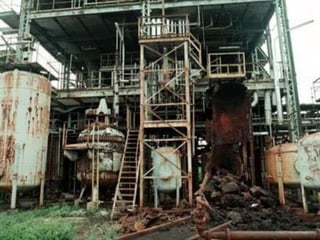
During the night of 2-3 December 1984, water 
entered Tank E610 containing 42 tons of MIC. 
The resulting reaction was an increase of the 
temperature ,inside the tank, of over 200 Celsius 
(392 F) and which led to a raise in the pressure. 
About 30 metric tons of methyl isocyanate 
escaped from the tank into Bhopal’s atmosphere 
in 45-60 minutes.
Factors causing that 
accident 
Storing MIC in large tanks and filling beyond recommended 
levels 
Poor maintenance 
Lack of effective safety systems in place 
Undersized safety devices 
Dependence on manual operations 
Location of the plant next to a densely operated area 
Safety systems were switched off to save money- including 
MIC tank refrigeration which could have prevented the 
disaster from taking place
The effects 
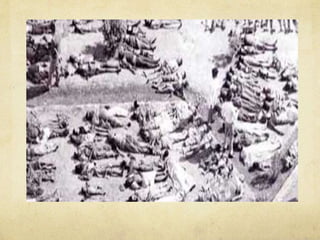
The official immediate death toll was 2,259 and 
the government of Madhya Pradesh had 
confirmed a death toll of 3,787 people post the 
gas release. 
2,000 bloated animal carcasses were disposed 
off. 
A government affidavit in 2006 stated that the 
leak caused 5,58,125 injuries including 38,478 
temporary partial and approximately 3,900 
severely and permanent disabled injuries.
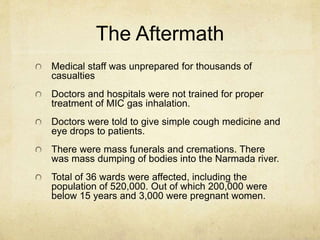
The Aftermath 
Medical staff was unprepared for thousands of 
casualties 
Doctors and hospitals were not trained for proper 
treatment of MIC gas inhalation. 
Doctors were told to give simple cough medicine and 
eye drops to patients. 
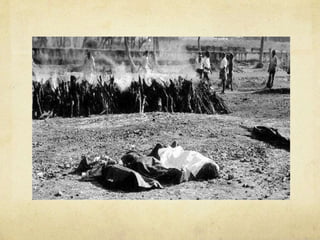
There were mass funerals and cremations. There 
was mass dumping of bodies into the Narmada river. 
Total of 36 wards were affected, including the 
population of 520,000. Out of which 200,000 were 
below 15 years and 3,000 were pregnant women.
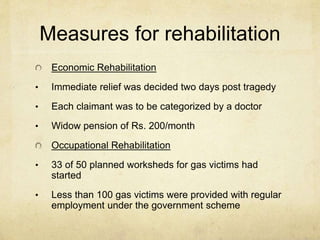
Measures for rehabilitation 
Economic Rehabilitation 
• Immediate relief was decided two days post tragedy 
• Each claimant was to be categorized by a doctor 
• Widow pension of Rs. 200/month 
Occupational Rehabilitation 
• 33 of 50 planned worksheds for gas victims had 
started 
• Less than 100 gas victims were provided with regular 
employment under the government scheme
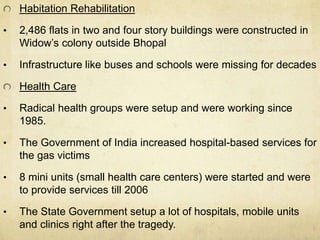
Habitation Rehabilitation 
• 2,486 flats in two and four story buildings were constructed in 
Widow’s colony outside Bhopal 
• Infrastructure like buses and schools were missing for decades 
Health Care 
• Radical health groups were setup and were working since 
1985. 
• The Government of India increased hospital-based services for 
the gas victims 
• 8 mini units (small health care centers) were started and were 
to provide services till 2006 
• The State Government setup a lot of hospitals, mobile units 
and clinics right after the tragedy.
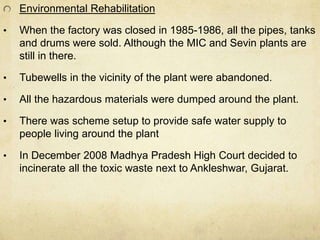
Environmental Rehabilitation 
• When the factory was closed in 1985-1986, all the pipes, tanks 
and drums were sold. Although the MIC and Sevin plants are 
still in there. 
• Tubewells in the vicinity of the plant were abandoned. 
• All the hazardous materials were dumped around the plant. 
• There was scheme setup to provide safe water supply to 
people living around the plant 
• In December 2008 Madhya Pradesh High Court decided to 
incinerate all the toxic waste next to Ankleshwar, Gujarat.
Compensation provided by 
Union Carbide 
Government of India passed the Bhopal Gas 
Leak Disaster Act, which allowed them to 
represent victims outside India. 
UCC offered US $ 350 million as an insurance 
sum. 
The Government of India claimed US $3.3 billion. 
In 1989, a settlement was reached where UCC 
agreed to pay US $470 million in a full and final 
settlement of its civil and criminal liability.
Sources 
Wikipedia.org 
NDTV 
Times of India
THANK YOU

Bhopal gas tragedy- fight for justice

  • 1.
    Bhopal Gas Tragedy Fight for the justice
  • 2.
    Overview Objective UCIL The accident Factors causing that accident The effects The aftermath Measures taken for rehabilitation Compensation provided by Union Carbide Sources Closing
  • 3.
    Objective A studyon what had caused the Bhopal disaster and what measures were taken post the disaster.
  • 4.
    UCIL Built in1969 Indian subsidiary of Union Carbide Corporation UCIL factory was located in Bhopal Produced a pesticide named, Sevin (UCCs brand name for carbaryl using methyl isocyanate (MIC) as an intermediate.
  • 5.
    The Accident Duringthe night of 2-3 December 1984, water entered Tank E610 containing 42 tons of MIC. The resulting reaction was an increase of the temperature ,inside the tank, of over 200 Celsius (392 F) and which led to a raise in the pressure. About 30 metric tons of methyl isocyanate escaped from the tank into Bhopal’s atmosphere in 45-60 minutes.
  • 7.
    Factors causing that accident Storing MIC in large tanks and filling beyond recommended levels Poor maintenance Lack of effective safety systems in place Undersized safety devices Dependence on manual operations Location of the plant next to a densely operated area Safety systems were switched off to save money- including MIC tank refrigeration which could have prevented the disaster from taking place
  • 9.
    The effects Theofficial immediate death toll was 2,259 and the government of Madhya Pradesh had confirmed a death toll of 3,787 people post the gas release. 2,000 bloated animal carcasses were disposed off. A government affidavit in 2006 stated that the leak caused 5,58,125 injuries including 38,478 temporary partial and approximately 3,900 severely and permanent disabled injuries.
  • 13.
    The Aftermath Medicalstaff was unprepared for thousands of casualties Doctors and hospitals were not trained for proper treatment of MIC gas inhalation. Doctors were told to give simple cough medicine and eye drops to patients. There were mass funerals and cremations. There was mass dumping of bodies into the Narmada river. Total of 36 wards were affected, including the population of 520,000. Out of which 200,000 were below 15 years and 3,000 were pregnant women.
  • 14.
    Measures for rehabilitation Economic Rehabilitation • Immediate relief was decided two days post tragedy • Each claimant was to be categorized by a doctor • Widow pension of Rs. 200/month Occupational Rehabilitation • 33 of 50 planned worksheds for gas victims had started • Less than 100 gas victims were provided with regular employment under the government scheme
  • 15.
    Habitation Rehabilitation •2,486 flats in two and four story buildings were constructed in Widow’s colony outside Bhopal • Infrastructure like buses and schools were missing for decades Health Care • Radical health groups were setup and were working since 1985. • The Government of India increased hospital-based services for the gas victims • 8 mini units (small health care centers) were started and were to provide services till 2006 • The State Government setup a lot of hospitals, mobile units and clinics right after the tragedy.
  • 16.
    Environmental Rehabilitation •When the factory was closed in 1985-1986, all the pipes, tanks and drums were sold. Although the MIC and Sevin plants are still in there. • Tubewells in the vicinity of the plant were abandoned. • All the hazardous materials were dumped around the plant. • There was scheme setup to provide safe water supply to people living around the plant • In December 2008 Madhya Pradesh High Court decided to incinerate all the toxic waste next to Ankleshwar, Gujarat.
  • 17.
    Compensation provided by Union Carbide Government of India passed the Bhopal Gas Leak Disaster Act, which allowed them to represent victims outside India. UCC offered US $ 350 million as an insurance sum. The Government of India claimed US $3.3 billion. In 1989, a settlement was reached where UCC agreed to pay US $470 million in a full and final settlement of its civil and criminal liability.
  • 18.
  • 19.