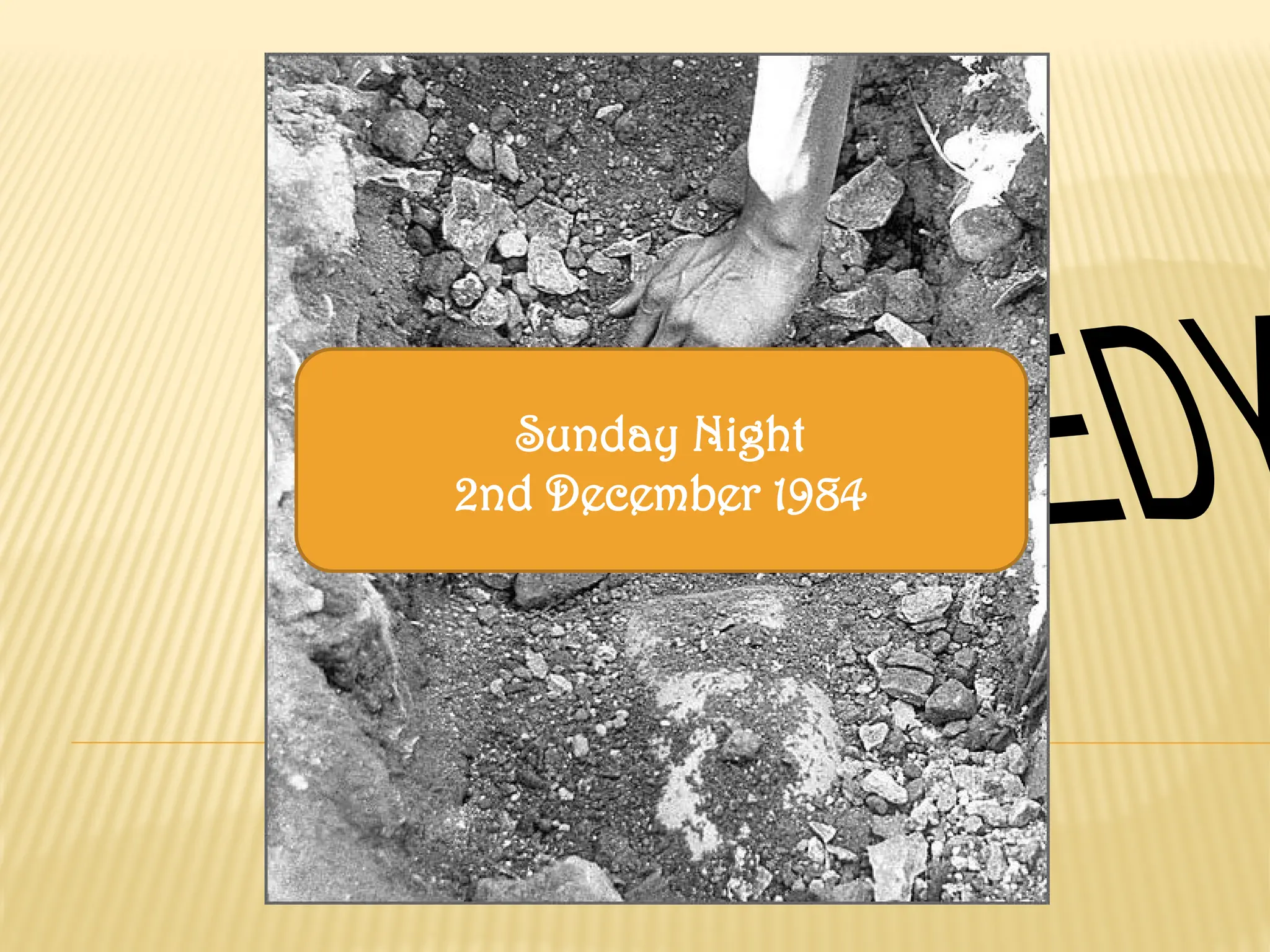
Sunday Night
2nd December 1984
“WHAT IS BHOPAL GAS TRAGEDY ?”
 The Bhopal gas tragedy (commonly referred to
as Bhopal disaster) was a gas leak incident in India,
considered one of the world's worst industrial
catastrophes.
 It occurred on the night of 2nd–3rd December 1984
at the Union Carbide India Limited (UCIL) pesticide
plant in Bhopal, Madhya Pradesh.
 A leak of methyl isocyanate (MIC) gas and other
chemicals from the plant resulted in the exposure of
hundreds of thousands of people.
BACKGROUND OF “UCIL”
 UCIL, built in 1969, which was the Indian subsidiary
of Union Carbide Corporation (UCC), with Indian
Government controlled banks and the Indian public
holding a 49.1% stake.
 In 1994, the Supreme Court of India allowed UCC to
sell its 50.9% share. Union Carbide sold UCIL, the
Bhopal plant operator, to Eveready Industries India
Limited in 1994.
 The Bhopal plant was later sold to McLeod Russel
(India) Ltd. Dow Chemical Company purchased UCC in
2001.
PLANT PRODUCTION PROCESS
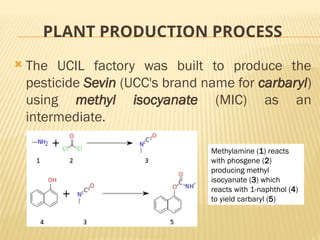
 The UCIL factory was built to produce the
pesticide Sevin (UCC's brand name for carbaryl)
using methyl isocyanate (MIC) as an
intermediate.
Methylamine (1) reacts
with phosgene (2)
producing methyl
isocyanate (3) which
reacts with 1-naphthol (4)
to yield carbaryl (5)
THE ACCIDENT
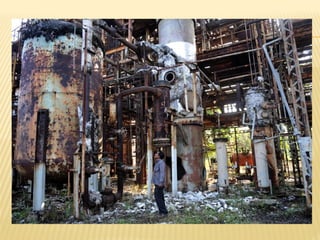
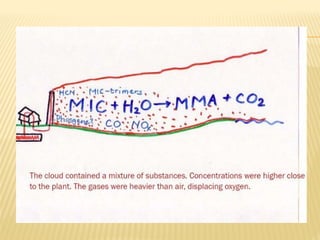
 During the night of 2–3 December 1984, water
entered Tank E610 containing 42 tons of MIC.
 The resulting exothermic reaction increased the
temperature inside the tank to over
200°C (392 °F) and raised the pressure.
 About 30 metric tons of methyl isocyanate
(MIC) escaped from the tank into the
atmosphere of Bhopal in 45 to 60 minutes.
FACTORS LEADING TO THE GAS LEAK
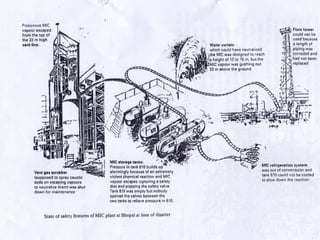
 Storing MIC in large tanks and filling beyond
recommended levels,
 Poor maintenance,
 Failure of several safety systems,
 Safety systems being switched off to save money—
including the MIC tank refrigeration system which
could have mitigated the disaster severity,
 Plant location close to a densely populated area,
 Undersized safety devices,
 The dependence on manual operations,
 Plant management deficiencies were also identified –
 lack of skilled operators,
 reduction of safety management,
 insufficient maintenance,
 inadequate emergency action plans.
 Use of a more dangerous pesticide manufacturing method,
or “ROUTE”, where same raw materials are combined in a
different manufacturing order, with phosgene first reacted
with naphthol to form a chloroformate ester, which is then
reacted with methyl amine.
 In the early 1980s, the demand for pesticides had fallen,
but production continued, leading to buildup of stores of
unused MIC
TOXIC MATERIALS IN SOIL AND WATER
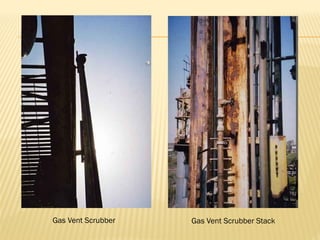
Gas Vent Scrubber Gas Vent Scrubber Stack
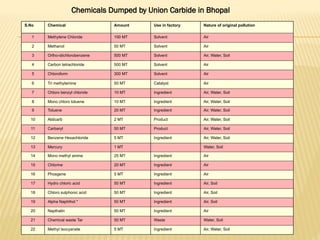
S.No Chemical Amount Use in factory Nature of original pollution
1 Methylene Chloride 100 MT Solvent Air
2 Methanol 50 MT Solvent Air
3 Ortho-idichlorobenzene 500 MT Solvent Air, Water, Soil
4 Carbon tetrachloride 500 MT Solvent Air
5 Chloroform 300 MT Solvent Air
6 Tri methylamine 50 MT Catalyst Air
7 Chloro benzyl chloride 10 MT Ingredient Air, Water, Soil
8 Mono chloro toluene 10 MT Ingredient Air, Water, Soil
9 Toluene 20 MT Ingredient Air, Water, Soil
10 Aldicarb 2 MT Product Air, Water, Soil
11 Carbaryl 50 MT Product Air, Water, Soil
12 Benzene Hexachloride 5 MT Ingredient Air, Water, Soil
13 Mercury 1 MT Water, Soil
14 Mono methyl amine 25 MT Ingredient Air
15 Chlorine 20 MT Ingredient Air
16 Phosgene 5 MT Ingredient Air
17 Hydro chloric acid 50 MT Ingredient Air, Soil
18 Chloro sulphonic acid 50 MT Ingredient Air, Soil
19 Alpha Naphthol * 50 MT Ingredient Air, Soil
20 Napthalin 50 MT Ingredient Air
21 Chemical waste Tar 50 MT Waste Water, Soil
22 Methyl Isocyanate 5 MT Ingredient Air, Water, Soil
Chemicals Dumped by Union Carbide in Bhopal
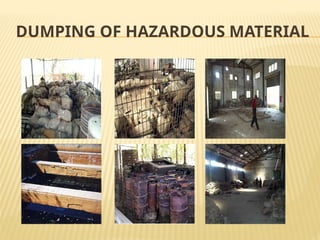
DUMPING OF HAZARDOUS MATERIAL
THE DEVASTATION
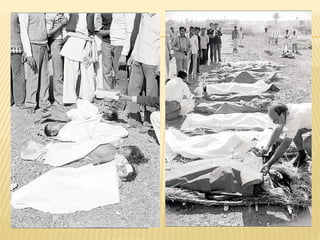
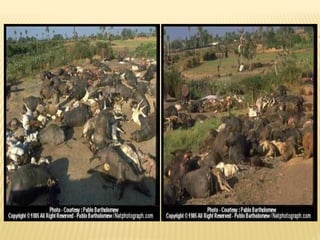
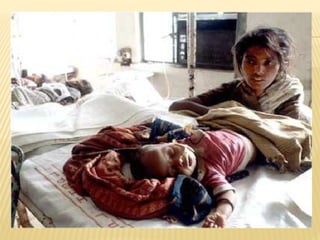
 The official immediate death toll was 2,259 and the
government of Madhya Pradesh has confirmed a total of
3,787 deaths related to the gas release.
 Others estimate 8,000 died within two weeks and another
8,000 or more have since died from gas-related diseases.
 A government affidavit in 2006 stated the leak caused
5,58,125 injuries including 38,478 temporary partial and
approximately 3,900 severely and permanently disabling
injuries.
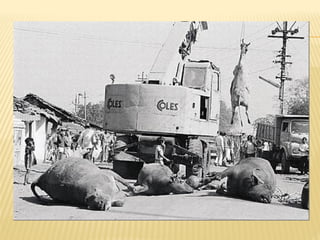
 2,000 bloated animal carcasses had to be disposed.
HEALTH EFFECTS
 Short term health effects
 Apart from MIC, the dense gas cloud may have contained
 phosgene,
 hydrogen cyanide,
 carbon monoxide,
 hydrogen chloride,
 oxides of nitrogen,
 monomethyl amine (MMA) and
 carbon dioxide, either produced in the storage tank or in the
atmosphere.
 The initial effects of exposure were coughing, vomiting,
severe eye irritation and a feeling of suffocation.
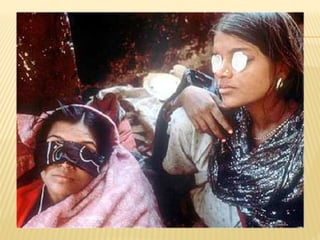
 The acute symptoms were burning in the respiratory tract
and eyes, blepharospasm, breathlessness, stomach
pains and vomiting.
 The causes of deaths were choking,
reflexogenic circulatory collapse and pulmonary oedema.
 Findings during autopsies revealed changes not only in
the lungs but also cerebral oedema, tubular necrosis of
the kidneys, fatty degeneration of the liver and
necrotising enteritis.
 The stillbirth rate increased by up to 300% and neonatal
mortality rate by 200%.
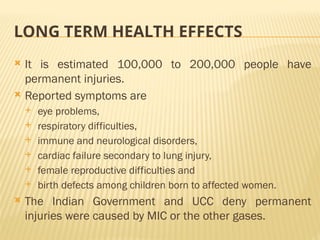
LONG TERM HEALTH EFFECTS
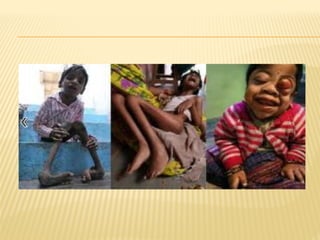
 It is estimated 100,000 to 200,000 people have
permanent injuries.
 Reported symptoms are
 eye problems,
 respiratory difficulties,
 immune and neurological disorders,
 cardiac failure secondary to lung injury,
 female reproductive difficulties and
 birth defects among children born to affected women.
 The Indian Government and UCC deny permanent
injuries were caused by MIC or the other gases.
AFTERMATH OF THE LEAKAGE
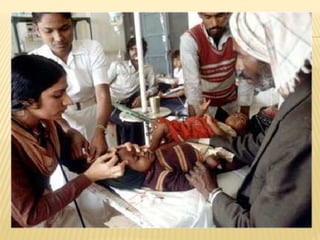
 Medical staff were unprepared for the thousands of
casualties.
 Doctors and hospitals were not informed of proper
treatment methods for MIC gas inhalation. They
were told to simply give cough medicine and eye
drops to their patients.[
 The gases immediately caused visible damage to
the trees. Within a few days, all the leaves fell off.
 "Operation Faith": On 16 December, the tanks 611
and 619 were emptied of the remaining MIC. This
led to a second mass evacuation from Bhopal.
 Formal statements were issued that air, water,
vegetation and foodstuffs were safe within the city. At
the same time, people were informed that poultry was
unaffected, but were warned not to consume fish.
 A total of 36 wards were marked by the authorities as
being "gas affected", affecting a population of 520,000.
 Of these, 200,000 were below 15 years of age, and
3,000 were pregnant women.
 There were mass funerals and mass cremations.
Bodies were dumped into the Narmada River, less than
100 km from Bhopal.
COMPENSATION FROM UNION CARBIDE
 The Government of India passed the Bhopal
Gas Leak Disaster Act that gave the
government rights to represent all victims in or
outside India.
 UCC offered US $350 million, the insurance
sum. The Government of India claimed US$ 3.3
billion from UCC.
 In 1989, a settlement was reached under
which UCC agreed to pay US$470 million (the
insurance sum, plus interest) in a full and final
settlement of its civil and criminal liability.
 When UCC wanted to sell its shares in UCIL, it was directed
by the Supreme Court to finance a 500-bed hospital for the
medical care of the survivors. Bhopal Memorial Hospital
and Research Centre (BMHRC) was inaugurated in 1998. It
was obliged to give free care for survivors for eight years.
 A US court rejected the law suit blaming UCC for causing
soil and water pollution around the site of the plant and
ruled that responsibility for remedial measures or related
claims rested with the State Government and not with UCC.
ECONOMIC REHABILITATION
 Immediate relief was decided two days after the tragedy.
 Relief measures commenced in 1985 when food was distributed
for a short period and ration cards were distributed.
 Madhya Pradesh government's finance department allocated Rs
874 million for victim relief in July 1985.
 Widow pension of Rs 200/per month (later Rs 750) was
provided.
 One-time ex-gratia payment of Rs 1,500 to families with monthly
income Rs 500 or less was decided.
 Each claimant was to be categorized by a doctor.
 In court, the claimants were expected to prove "beyond
reasonable doubt" that death or injury in each case was
attributable to exposure.
 From 1990 interim relief of Rs 200 was paid to everyone in the
family who was born before the disaster.
 The final compensation (including interim relief) for personal
injury was for the majority Rs 25,000 (US$ 830). For death claim,
the average sum paid out was Rs 62,000 (US$ 2,058).
 Effects of interim relief were more children sent to school, more
money spent on treatment and food, and housing improvements.
 In 2007, 1,029,517 cases were registered and decided. Number
of awarded cases were 574,304 and number of rejected cases
455,213. Total compensation awarded was Rs.1,546.47 crores.
 On 24 June 2010, the Union Cabinet of the Government of
India approved a Rs1265cr aid package. It will be funded by
Indian taxpayers through the government.
OCCUPATIONAL REHABILITATION
 33 of the 50 planned work-sheds for gas victims
started. All except one was closed down by 1992.
 1986, the MP government invested in the Special
Industrial Area Bhopal. 152 of the planned 200 work-
sheds were built. In 2000, 16 were partially
functioning.
 It is estimated that 50,000 persons need alternative
jobs, and that less than 100 gas victims have found
regular employment under the government's scheme.
HABITATION REHABILITATION
 2,486 flats in two- and four-story buildings
were constructed in the "Widows colony"
outside Bhopal.
 The water did not reach the upper floors.
 It was not possible to keep cattle.
 Infrastructure like buses, schools, etc. were
missing for at least a decade.
HEALTH CARE
 In the immediate aftermath of the disaster, the health care
system became tremendously overloaded. Within weeks,
the State Government established a number of hospitals,
clinics and mobile units in the gas-affected area.
 Radical health groups set up JSK (the People's Health
Centre) that was working a few years from 1985.
 The Government of India has focused primarily on
increasing the hospital-based services for gas victims.
Several hospitals have been built after the disaster. In
1994, there were approximately 1.25 beds per 1,000,
compared to the recommendation from the World bank of
1.0 beds per 1,000 in developing countries.
 The Bhopal Memorial Hospital and Research
Centre (BMHRC) is a 350-bedded super speciality hospital.
Heart surgery and hemodialysis are done. Major specialities
missing are gynecology, obstetrics and pediatrics.
 Eight mini-units (outreach health centers) were started. Free
health care for gas victims should be offered until 2006.
 Sambhavna Trust is a charitable trust that registered in
1995. The clinic gives modern and Ayurvedic treatments to
gas victims, free of charge.
 Since the leak, a very large number of private practitioners
have opened in Bhopal. In the severely affected areas, nearly
70 percent do not appear to be professionally qualified.
ENVIRONMENTAL REHABILITATION
 When the factory was closed in 1985–1986, pipes,
drums and tanks were sold. The MIC and the Sevin plants
are still there, as are storages of different residues.
Isolation material is falling down and spreading.
 The area around the plant was used as a dumping area
for hazardous chemicals.
 Tubewells in the vicinity of the UCC factory had to be
abandoned. UCC's laboratory tests in 1989 revealed that
soil and water samples collected from near the factory
and inside the plant were toxic to fish.
 In order to provide safe drinking water to the population
around the UCC factory, there is a scheme for improvement
of water supply.[43]
 In December 2008, the Madhya Pradesh High Court decided
that the toxic waste should be incinerated
at Ankleshwar in Gujarat.[49]
 In October 2011, the Institute of Environmental Management
and Assessment published an article and video by two British
environmental scientists, showing the current state of the
plant, landfill and solar evaporation ponds and calling for
renewed international efforts to provide the necessary skills
to clean up the site and contaminated groundwater[50]
SOURCES
THANK YOU
A Biswadeep Jena
Presentation

bhopaltragedy-120818152838-phpapp02.pptx

  • 1.
  • 2.
    “WHAT IS BHOPALGAS TRAGEDY ?”  The Bhopal gas tragedy (commonly referred to as Bhopal disaster) was a gas leak incident in India, considered one of the world's worst industrial catastrophes.  It occurred on the night of 2nd–3rd December 1984 at the Union Carbide India Limited (UCIL) pesticide plant in Bhopal, Madhya Pradesh.  A leak of methyl isocyanate (MIC) gas and other chemicals from the plant resulted in the exposure of hundreds of thousands of people.
  • 3.
    BACKGROUND OF “UCIL” UCIL, built in 1969, which was the Indian subsidiary of Union Carbide Corporation (UCC), with Indian Government controlled banks and the Indian public holding a 49.1% stake.  In 1994, the Supreme Court of India allowed UCC to sell its 50.9% share. Union Carbide sold UCIL, the Bhopal plant operator, to Eveready Industries India Limited in 1994.  The Bhopal plant was later sold to McLeod Russel (India) Ltd. Dow Chemical Company purchased UCC in 2001.
  • 4.
    PLANT PRODUCTION PROCESS The UCIL factory was built to produce the pesticide Sevin (UCC's brand name for carbaryl) using methyl isocyanate (MIC) as an intermediate. Methylamine (1) reacts with phosgene (2) producing methyl isocyanate (3) which reacts with 1-naphthol (4) to yield carbaryl (5)
  • 5.
    THE ACCIDENT  Duringthe night of 2–3 December 1984, water entered Tank E610 containing 42 tons of MIC.  The resulting exothermic reaction increased the temperature inside the tank to over 200°C (392 °F) and raised the pressure.  About 30 metric tons of methyl isocyanate (MIC) escaped from the tank into the atmosphere of Bhopal in 45 to 60 minutes.
  • 7.
    FACTORS LEADING TOTHE GAS LEAK  Storing MIC in large tanks and filling beyond recommended levels,  Poor maintenance,  Failure of several safety systems,  Safety systems being switched off to save money— including the MIC tank refrigeration system which could have mitigated the disaster severity,  Plant location close to a densely populated area,  Undersized safety devices,  The dependence on manual operations,
  • 8.
     Plant managementdeficiencies were also identified –  lack of skilled operators,  reduction of safety management,  insufficient maintenance,  inadequate emergency action plans.  Use of a more dangerous pesticide manufacturing method, or “ROUTE”, where same raw materials are combined in a different manufacturing order, with phosgene first reacted with naphthol to form a chloroformate ester, which is then reacted with methyl amine.  In the early 1980s, the demand for pesticides had fallen, but production continued, leading to buildup of stores of unused MIC
  • 10.
    TOXIC MATERIALS INSOIL AND WATER
  • 11.
    Gas Vent ScrubberGas Vent Scrubber Stack
  • 12.
    S.No Chemical AmountUse in factory Nature of original pollution 1 Methylene Chloride 100 MT Solvent Air 2 Methanol 50 MT Solvent Air 3 Ortho-idichlorobenzene 500 MT Solvent Air, Water, Soil 4 Carbon tetrachloride 500 MT Solvent Air 5 Chloroform 300 MT Solvent Air 6 Tri methylamine 50 MT Catalyst Air 7 Chloro benzyl chloride 10 MT Ingredient Air, Water, Soil 8 Mono chloro toluene 10 MT Ingredient Air, Water, Soil 9 Toluene 20 MT Ingredient Air, Water, Soil 10 Aldicarb 2 MT Product Air, Water, Soil 11 Carbaryl 50 MT Product Air, Water, Soil 12 Benzene Hexachloride 5 MT Ingredient Air, Water, Soil 13 Mercury 1 MT Water, Soil 14 Mono methyl amine 25 MT Ingredient Air 15 Chlorine 20 MT Ingredient Air 16 Phosgene 5 MT Ingredient Air 17 Hydro chloric acid 50 MT Ingredient Air, Soil 18 Chloro sulphonic acid 50 MT Ingredient Air, Soil 19 Alpha Naphthol * 50 MT Ingredient Air, Soil 20 Napthalin 50 MT Ingredient Air 21 Chemical waste Tar 50 MT Waste Water, Soil 22 Methyl Isocyanate 5 MT Ingredient Air, Water, Soil Chemicals Dumped by Union Carbide in Bhopal
  • 13.
  • 14.
    THE DEVASTATION  Theofficial immediate death toll was 2,259 and the government of Madhya Pradesh has confirmed a total of 3,787 deaths related to the gas release.  Others estimate 8,000 died within two weeks and another 8,000 or more have since died from gas-related diseases.  A government affidavit in 2006 stated the leak caused 5,58,125 injuries including 38,478 temporary partial and approximately 3,900 severely and permanently disabling injuries.  2,000 bloated animal carcasses had to be disposed.
  • 18.
    HEALTH EFFECTS  Shortterm health effects  Apart from MIC, the dense gas cloud may have contained  phosgene,  hydrogen cyanide,  carbon monoxide,  hydrogen chloride,  oxides of nitrogen,  monomethyl amine (MMA) and  carbon dioxide, either produced in the storage tank or in the atmosphere.  The initial effects of exposure were coughing, vomiting, severe eye irritation and a feeling of suffocation.
  • 19.
     The acutesymptoms were burning in the respiratory tract and eyes, blepharospasm, breathlessness, stomach pains and vomiting.  The causes of deaths were choking, reflexogenic circulatory collapse and pulmonary oedema.  Findings during autopsies revealed changes not only in the lungs but also cerebral oedema, tubular necrosis of the kidneys, fatty degeneration of the liver and necrotising enteritis.  The stillbirth rate increased by up to 300% and neonatal mortality rate by 200%.
  • 23.
    LONG TERM HEALTHEFFECTS  It is estimated 100,000 to 200,000 people have permanent injuries.  Reported symptoms are  eye problems,  respiratory difficulties,  immune and neurological disorders,  cardiac failure secondary to lung injury,  female reproductive difficulties and  birth defects among children born to affected women.  The Indian Government and UCC deny permanent injuries were caused by MIC or the other gases.
  • 25.
    AFTERMATH OF THELEAKAGE  Medical staff were unprepared for the thousands of casualties.  Doctors and hospitals were not informed of proper treatment methods for MIC gas inhalation. They were told to simply give cough medicine and eye drops to their patients.[  The gases immediately caused visible damage to the trees. Within a few days, all the leaves fell off.  "Operation Faith": On 16 December, the tanks 611 and 619 were emptied of the remaining MIC. This led to a second mass evacuation from Bhopal.
  • 26.
     Formal statementswere issued that air, water, vegetation and foodstuffs were safe within the city. At the same time, people were informed that poultry was unaffected, but were warned not to consume fish.  A total of 36 wards were marked by the authorities as being "gas affected", affecting a population of 520,000.  Of these, 200,000 were below 15 years of age, and 3,000 were pregnant women.  There were mass funerals and mass cremations. Bodies were dumped into the Narmada River, less than 100 km from Bhopal.
  • 27.
    COMPENSATION FROM UNIONCARBIDE  The Government of India passed the Bhopal Gas Leak Disaster Act that gave the government rights to represent all victims in or outside India.  UCC offered US $350 million, the insurance sum. The Government of India claimed US$ 3.3 billion from UCC.  In 1989, a settlement was reached under which UCC agreed to pay US$470 million (the insurance sum, plus interest) in a full and final settlement of its civil and criminal liability.
  • 28.
     When UCCwanted to sell its shares in UCIL, it was directed by the Supreme Court to finance a 500-bed hospital for the medical care of the survivors. Bhopal Memorial Hospital and Research Centre (BMHRC) was inaugurated in 1998. It was obliged to give free care for survivors for eight years.  A US court rejected the law suit blaming UCC for causing soil and water pollution around the site of the plant and ruled that responsibility for remedial measures or related claims rested with the State Government and not with UCC.
  • 29.
    ECONOMIC REHABILITATION  Immediaterelief was decided two days after the tragedy.  Relief measures commenced in 1985 when food was distributed for a short period and ration cards were distributed.  Madhya Pradesh government's finance department allocated Rs 874 million for victim relief in July 1985.  Widow pension of Rs 200/per month (later Rs 750) was provided.  One-time ex-gratia payment of Rs 1,500 to families with monthly income Rs 500 or less was decided.  Each claimant was to be categorized by a doctor.  In court, the claimants were expected to prove "beyond reasonable doubt" that death or injury in each case was attributable to exposure.
  • 30.
     From 1990interim relief of Rs 200 was paid to everyone in the family who was born before the disaster.  The final compensation (including interim relief) for personal injury was for the majority Rs 25,000 (US$ 830). For death claim, the average sum paid out was Rs 62,000 (US$ 2,058).  Effects of interim relief were more children sent to school, more money spent on treatment and food, and housing improvements.  In 2007, 1,029,517 cases were registered and decided. Number of awarded cases were 574,304 and number of rejected cases 455,213. Total compensation awarded was Rs.1,546.47 crores.  On 24 June 2010, the Union Cabinet of the Government of India approved a Rs1265cr aid package. It will be funded by Indian taxpayers through the government.
  • 31.
    OCCUPATIONAL REHABILITATION  33of the 50 planned work-sheds for gas victims started. All except one was closed down by 1992.  1986, the MP government invested in the Special Industrial Area Bhopal. 152 of the planned 200 work- sheds were built. In 2000, 16 were partially functioning.  It is estimated that 50,000 persons need alternative jobs, and that less than 100 gas victims have found regular employment under the government's scheme.
  • 32.
    HABITATION REHABILITATION  2,486flats in two- and four-story buildings were constructed in the "Widows colony" outside Bhopal.  The water did not reach the upper floors.  It was not possible to keep cattle.  Infrastructure like buses, schools, etc. were missing for at least a decade.
  • 33.
    HEALTH CARE  Inthe immediate aftermath of the disaster, the health care system became tremendously overloaded. Within weeks, the State Government established a number of hospitals, clinics and mobile units in the gas-affected area.  Radical health groups set up JSK (the People's Health Centre) that was working a few years from 1985.  The Government of India has focused primarily on increasing the hospital-based services for gas victims. Several hospitals have been built after the disaster. In 1994, there were approximately 1.25 beds per 1,000, compared to the recommendation from the World bank of 1.0 beds per 1,000 in developing countries.
  • 34.
     The BhopalMemorial Hospital and Research Centre (BMHRC) is a 350-bedded super speciality hospital. Heart surgery and hemodialysis are done. Major specialities missing are gynecology, obstetrics and pediatrics.  Eight mini-units (outreach health centers) were started. Free health care for gas victims should be offered until 2006.  Sambhavna Trust is a charitable trust that registered in 1995. The clinic gives modern and Ayurvedic treatments to gas victims, free of charge.  Since the leak, a very large number of private practitioners have opened in Bhopal. In the severely affected areas, nearly 70 percent do not appear to be professionally qualified.
  • 35.
    ENVIRONMENTAL REHABILITATION  Whenthe factory was closed in 1985–1986, pipes, drums and tanks were sold. The MIC and the Sevin plants are still there, as are storages of different residues. Isolation material is falling down and spreading.  The area around the plant was used as a dumping area for hazardous chemicals.  Tubewells in the vicinity of the UCC factory had to be abandoned. UCC's laboratory tests in 1989 revealed that soil and water samples collected from near the factory and inside the plant were toxic to fish.
  • 36.
     In orderto provide safe drinking water to the population around the UCC factory, there is a scheme for improvement of water supply.[43]  In December 2008, the Madhya Pradesh High Court decided that the toxic waste should be incinerated at Ankleshwar in Gujarat.[49]  In October 2011, the Institute of Environmental Management and Assessment published an article and video by two British environmental scientists, showing the current state of the plant, landfill and solar evaporation ponds and calling for renewed international efforts to provide the necessary skills to clean up the site and contaminated groundwater[50]
  • 37.
  • 38.
    THANK YOU A BiswadeepJena Presentation