


Union Carbide Corporation
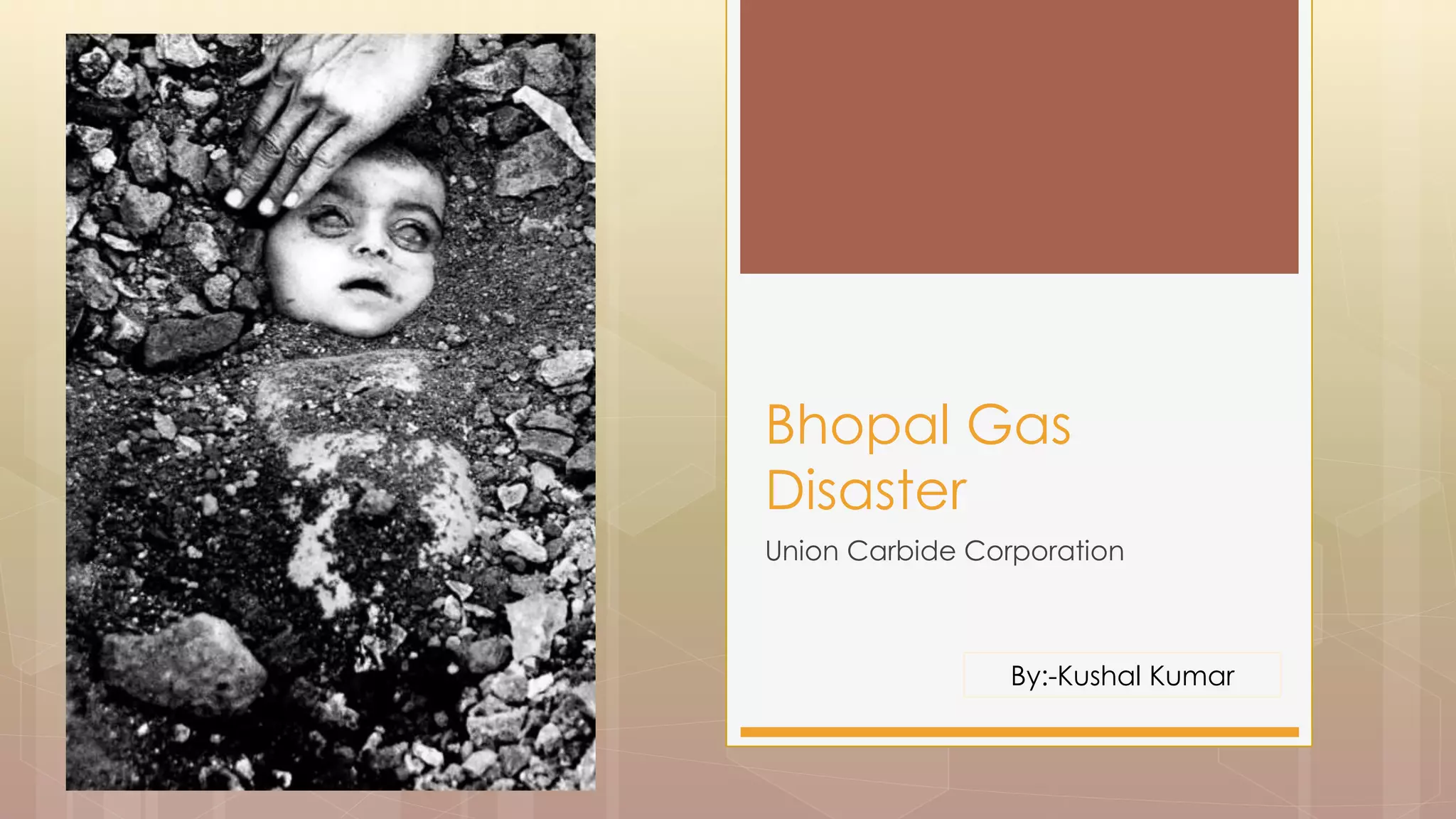
Bhopal Gas
Disaster
By:-Kushal Kumar
Amongst the worst Industrial Disasters of its time.
• Occurrence: 3rd December 1984.
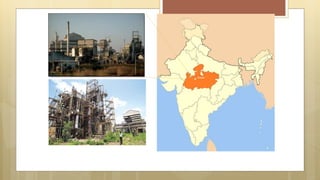
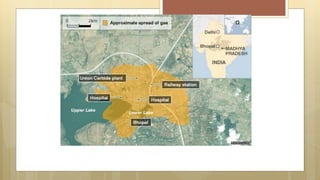
• Place of occurrence: Bhopal, Madhya Pradesh, India.
• Company: Union Carbide Corporation.
• Chemical: Methyl Isocyanate (40 tons)
• People Affected- >500,000
• People Died- ~40,000
Overview
 December 3, 1984, over 40 tons (this amount is debated, but 40
tons appears to be the most popular, purely based on number of
references that mention it) of methyl isocyanate (MIC) were
released over the community of Bhopal, India, with a population
of 900,000.
 Partially because of the transient nature of the population, and
partially due to the general obfuscation of data from all sources
involved,
 The number killed ranges from 2,000 to 15,000. The 2002-2003
annual report of the Madhya Pradesh
 Gas Relief and Rehabilitation Department stated that a total of
15,248 people had died as a result of the gas leak
 Based on claims accepted by the Indian government, there
were at least 500,000 injured.
Ethical Issues before the Disaster
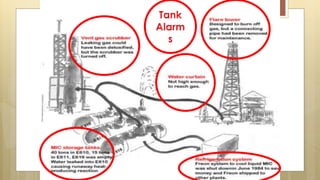
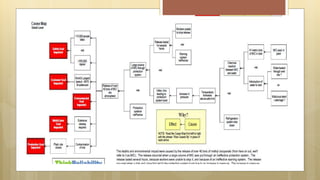
•The MIC tank alarms had not worked for 4 years
•The flare tower and vent gas scrubber had been
out of service for 5 months
•To reduce energy costs, the refrigeration system
was idle
Poor
Maintenance
•January 1982: phosgene leak, 24 workers were
exposed => protective mask
•February 1982: MIC leak affected 18 workers
•1983 & 1984: Regular leaks of MIC, chlorine, and
monomethylamine
Improper Safety
Management
•Workers were forced to use English manuals, even
though only a few understands the languange
•70% of the plant’s employees were fined for refusing
to deviate from the proper safety regulation
(replacing leaked pipes)
Repressive style
Management
Ethical Issues after the Disaster
• Short-term: Burning in respiratory
tract and eyes, breathlessness,
choking => death
• Long-term: Estimated between 100 –
200 thousands sustain permanent
injuries (eye problems, respiratory
difficulties, immune system disorders
Health
Effects
• 2,000 bloated animal carcasses
were disposed
• UCC’s laboratory test in 1989: soil
and water samples collected from
near the factory were toxic to fish
• Polluting compounds include
naphthol, naphthalene and Sevin
Environmental
Damages
• Chemicals abandoned at the plant
continue to leak and pollute the
groundwater
• 2002: Inquiry found toxins including
mercury, lead, and trichlorobenzene in
nursing women’s breast milk
Ongoing
Contamination
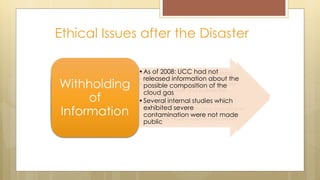
•As of 2008: UCC had not
released information about the
possible composition of the
cloud gas
•Several internal studies which
exhibited severe
contamination were not made
public
Withholding
of
Information
Any Queries ?
SOURCES
Thinkreliability.com
http://root-cause-analysis.info/2010/01/22/tragedy-in-bhopal/
http://www.bhopal.com/
http://www.thehealthsite.com/diseases-conditions/how-the-bhopal-gas-tragedy-is-still-
affecting-thousands/
http://indiatoday.intoday.in/story/bhopal-gas-tragedy-warren-anderson-union-carbide-
dow-chemicals-rajiv-gandhi-congress-arjun-singh/1/398605.html
http://www.thehindu.com/opinion/op-ed/managing-risks-avoiding-
disasters/article6662316.ece
Thank You!

Bhopal case

  • 1.
    Union Carbide Corporation BhopalGas Disaster By:-Kushal Kumar
  • 2.
    Amongst the worstIndustrial Disasters of its time. • Occurrence: 3rd December 1984. • Place of occurrence: Bhopal, Madhya Pradesh, India. • Company: Union Carbide Corporation. • Chemical: Methyl Isocyanate (40 tons) • People Affected- >500,000 • People Died- ~40,000
  • 5.
  • 6.
     December 3,1984, over 40 tons (this amount is debated, but 40 tons appears to be the most popular, purely based on number of references that mention it) of methyl isocyanate (MIC) were released over the community of Bhopal, India, with a population of 900,000.  Partially because of the transient nature of the population, and partially due to the general obfuscation of data from all sources involved,  The number killed ranges from 2,000 to 15,000. The 2002-2003 annual report of the Madhya Pradesh  Gas Relief and Rehabilitation Department stated that a total of 15,248 people had died as a result of the gas leak  Based on claims accepted by the Indian government, there were at least 500,000 injured.
  • 9.
    Ethical Issues beforethe Disaster •The MIC tank alarms had not worked for 4 years •The flare tower and vent gas scrubber had been out of service for 5 months •To reduce energy costs, the refrigeration system was idle Poor Maintenance •January 1982: phosgene leak, 24 workers were exposed => protective mask •February 1982: MIC leak affected 18 workers •1983 & 1984: Regular leaks of MIC, chlorine, and monomethylamine Improper Safety Management •Workers were forced to use English manuals, even though only a few understands the languange •70% of the plant’s employees were fined for refusing to deviate from the proper safety regulation (replacing leaked pipes) Repressive style Management
  • 10.
    Ethical Issues afterthe Disaster • Short-term: Burning in respiratory tract and eyes, breathlessness, choking => death • Long-term: Estimated between 100 – 200 thousands sustain permanent injuries (eye problems, respiratory difficulties, immune system disorders Health Effects • 2,000 bloated animal carcasses were disposed • UCC’s laboratory test in 1989: soil and water samples collected from near the factory were toxic to fish • Polluting compounds include naphthol, naphthalene and Sevin Environmental Damages • Chemicals abandoned at the plant continue to leak and pollute the groundwater • 2002: Inquiry found toxins including mercury, lead, and trichlorobenzene in nursing women’s breast milk Ongoing Contamination •As of 2008: UCC had not released information about the possible composition of the cloud gas •Several internal studies which exhibited severe contamination were not made public Withholding of Information
  • 11.
  • 12.
  • 13.

Editor's Notes

  • #4 -Bhopal India -1984 -The Union Carbide factory in Bhopal was doomed almost from the start. The company built the pesticide factory there in the 1970s, thinking that India represented a huge untapped market for its pest control products. However sales never met the company’s expectations; Indian farmers, struggling to cope with droughts and floods, didn’t have the money to buy Union Carbide’s pesticides. The plant, which never reached its full capacity, proved to be a losing venture and ceased active production in the early 1980s. -vast quantities of dangerous chemicals remained; three tanks continued to hold over 60 tons of methyl isocyanate -the Union Carbide plant’s elaborate safety system was allowed to fall into disrepair -The management’s reasoning seemed to be that since the plant had ceased all production, no threat remained -Every safety system that had been installed to prevent a leak of MIC – at least six in all – ultimately proved inoperative -Regular maintenance had fallen into such disrepair that on the night of December 2nd that when an employee was flushing a corroded pipe, multiple stopcocks failed and allowed water to flow freely into the largest tank of MIC
  • #5 -Exposure to this water soon led to an uncontrolled reaction; the tank was blown out of its concrete sarcophagus and spewed a deadly cloud of MIC, hydrogen cyanide, mono methylamine and other chemicals that hugged the ground - Blown by the prevailing winds, this cloud settled over much of Bhopal
  • #8 Every safety system that had been installed to prevent a leak of MIC was either out of services or been shut down to reduce the cost. The MIC tank alarms had not worked for four years The flare tower and the vent gas scrubber had been out of service for five months before the disaster, which might have brought the concentration down to a safe level. Storing MIC in large tanks and filling beyond recommended levels The refrigeration system was switched off, which could have mitigated the disaster severity. If half of this systems were working, the disasters would never happened.