The Opportunities
Beyond Business as Usual
Richard Brubaker
July 2012
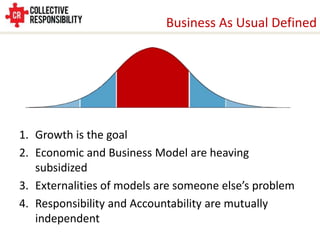
Business As Usual Defined


1. Growth is the goal
2. Economic and Business Model are heaving
   subsidized
3. Externalities of models are someone else’s problem
4. Responsibility and Accountability are mutually
   independent
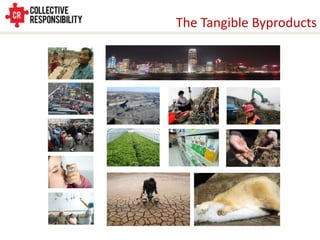
The Tangible Byproducts
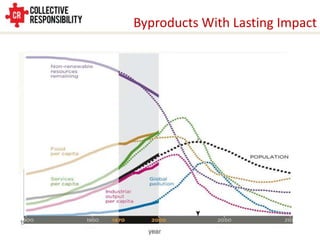
Byproducts With Lasting Impact
Catalysts
For Change
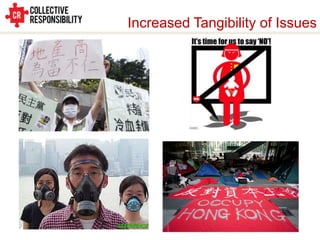
Increased Tangibility of Issues
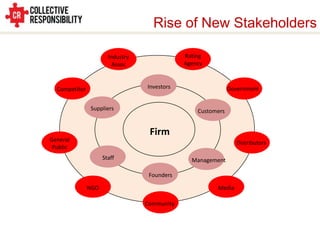
Rise of New Stakeholders

                       Industry               Rating
                         Assoc                Agency


  Competitor                      Investors                   Government


               Suppliers                          Customers


                                   Firm
General                                                          Distributors
 Public
                     Staff                      Management

                                   Founders

               NGO                                      Media

                                  Community
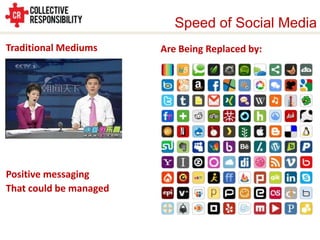
Speed of Social Media
Traditional Mediums     Are Being Replaced by:


Positive messaging
That could be managed
Rising Cost of Externalities


In economics, an externality, or transaction spillover, is a cost
or benefit that is not transmitted through prices[1] and is
incurred by a party who was not involved as either a buyer or
seller of the goods or services causing the cost or benefit.[2]
The cost of an externality is a negative externality, or external
cost, while the benefit of an externality is a positive
externality, or external benefit.

- Wikipedia
Fundamental Questions


1. What is Severity of the Problem
2. When do we/ they need to act
3. Who should/ will lead
4. How much will it cost “us”
New Models
of Business
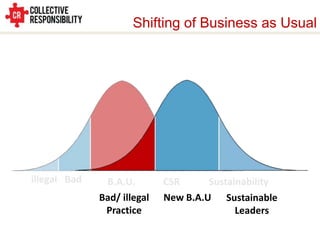
Shifting of Business as Usual


illegal Bad    B.A.U.        CSR      Sustainability
              Bad/ illegal   New B.A.U Sustainable
               Practice                     Leaders
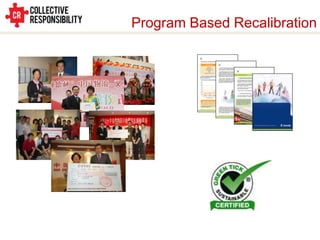
Program Based Recalibration
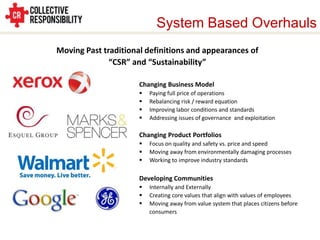
System Based Overhauls
Moving Past traditional definitions and appearances of
              “CSR” and “Sustainability”

                      Changing Business Model
                         Paying full price of operations
                         Rebalancing risk / reward equation
                         Improving labor conditions and standards
                         Addressing issues of governance and exploitation

                      Changing Product Portfolios
                         Focus on quality and safety vs. price and speed
                         Moving away from environmentally damaging processes
                         Working to improve industry standards

                      Developing Communities
                         Internally and Externally
                         Creating core values that align with values of employees
                         Moving away from value system that places citizens before
                          consumers
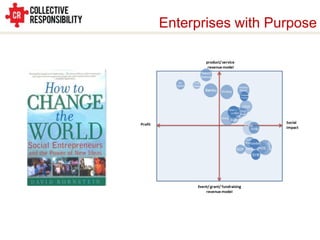
Enterprises with Purpose
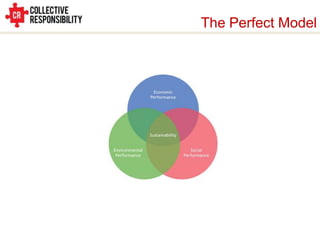
The Perfect Model
The Future Of Business
    • Growth is the achieved through quality

    • Economic and Business Model are full cost

    • Externalities of models are the firm’s problem

    • Responsibility and Accountability are aligned
“In the end, environmental, social and economic sustainability cannot be
separated. A sustainable planet must include a sustainable human
civilization – resilient human systems that respect the complicated
relationships among poverty, human rights, economic
development, environmental health, and human success”
- Institute for the Future, 2008


Richard Brubaker
rich@collectiveresponsibility.org
@ChinaCSR

Beyond Business as Usual

  • 1.
    The Opportunities Beyond Businessas Usual Richard Brubaker July 2012
  • 2.
    Business As UsualDefined 1. Growth is the goal 2. Economic and Business Model are heaving subsidized 3. Externalities of models are someone else’s problem 4. Responsibility and Accountability are mutually independent
  • 3.
  • 4.
  • 5.
  • 6.
  • 7.
    Rise of NewStakeholders Industry Rating Assoc Agency Competitor Investors Government Suppliers Customers Firm General Distributors Public Staff Management Founders NGO Media Community
  • 8.
    Speed of SocialMedia Traditional Mediums Are Being Replaced by: Positive messaging That could be managed
  • 9.
    Rising Cost ofExternalities In economics, an externality, or transaction spillover, is a cost or benefit that is not transmitted through prices[1] and is incurred by a party who was not involved as either a buyer or seller of the goods or services causing the cost or benefit.[2] The cost of an externality is a negative externality, or external cost, while the benefit of an externality is a positive externality, or external benefit. - Wikipedia
  • 10.
    Fundamental Questions 1. Whatis Severity of the Problem 2. When do we/ they need to act 3. Who should/ will lead 4. How much will it cost “us”
  • 11.
  • 12.
    Shifting of Businessas Usual illegal Bad B.A.U. CSR Sustainability Bad/ illegal New B.A.U Sustainable Practice Leaders
  • 13.
  • 14.
    System Based Overhauls MovingPast traditional definitions and appearances of “CSR” and “Sustainability” Changing Business Model  Paying full price of operations  Rebalancing risk / reward equation  Improving labor conditions and standards  Addressing issues of governance and exploitation Changing Product Portfolios  Focus on quality and safety vs. price and speed  Moving away from environmentally damaging processes  Working to improve industry standards Developing Communities  Internally and Externally  Creating core values that align with values of employees  Moving away from value system that places citizens before consumers
  • 15.
  • 16.
  • 17.
    The Future OfBusiness • Growth is the achieved through quality • Economic and Business Model are full cost • Externalities of models are the firm’s problem • Responsibility and Accountability are aligned
  • 18.
    “In the end,environmental, social and economic sustainability cannot be separated. A sustainable planet must include a sustainable human civilization – resilient human systems that respect the complicated relationships among poverty, human rights, economic development, environmental health, and human success” - Institute for the Future, 2008 Richard Brubaker rich@collectiveresponsibility.org @ChinaCSR