Della G. Rucker, AICP, CEcD
The Wise Economy Workshop

Jim Kinnett, CEcD, FM, EDFP
The Kinnett Consulting Group

          Mark Barbash, FM
      Economic Development
                 Consultng
 Changing   Thoughts

 How   is your community doing?

 What
     you can do to help your
 community improve?
 Della   Rucker

 Jim   Kinnett

 Mark    Barbash
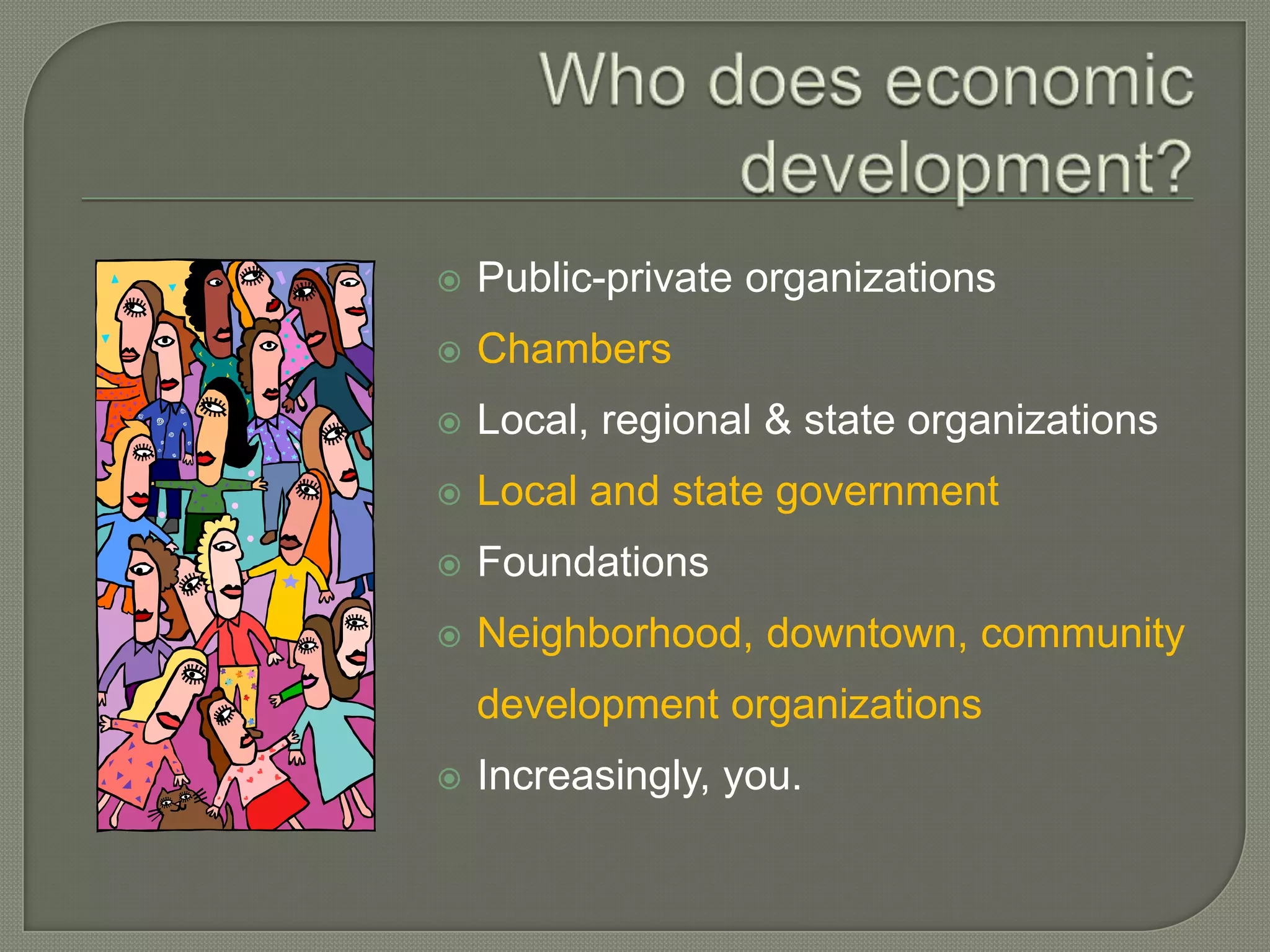
   Public-private organizations
   Chambers
   Local, regional & state organizations
   Local and state government
   Foundations
   Neighborhood, downtown, community
    development organizations
   Increasingly, you.
 Whois at the table? (hint:
 more than ever)
 Non-partner   partners
 Loss of local businesses =
 loss of decision makers
 Medium  sized business
 reluctant to participate in
 economic development
 Community     college
 lifeline
 Reshoring?

 Research
         and
 Development
 Educating
 entrepreneurs
 Public    schools
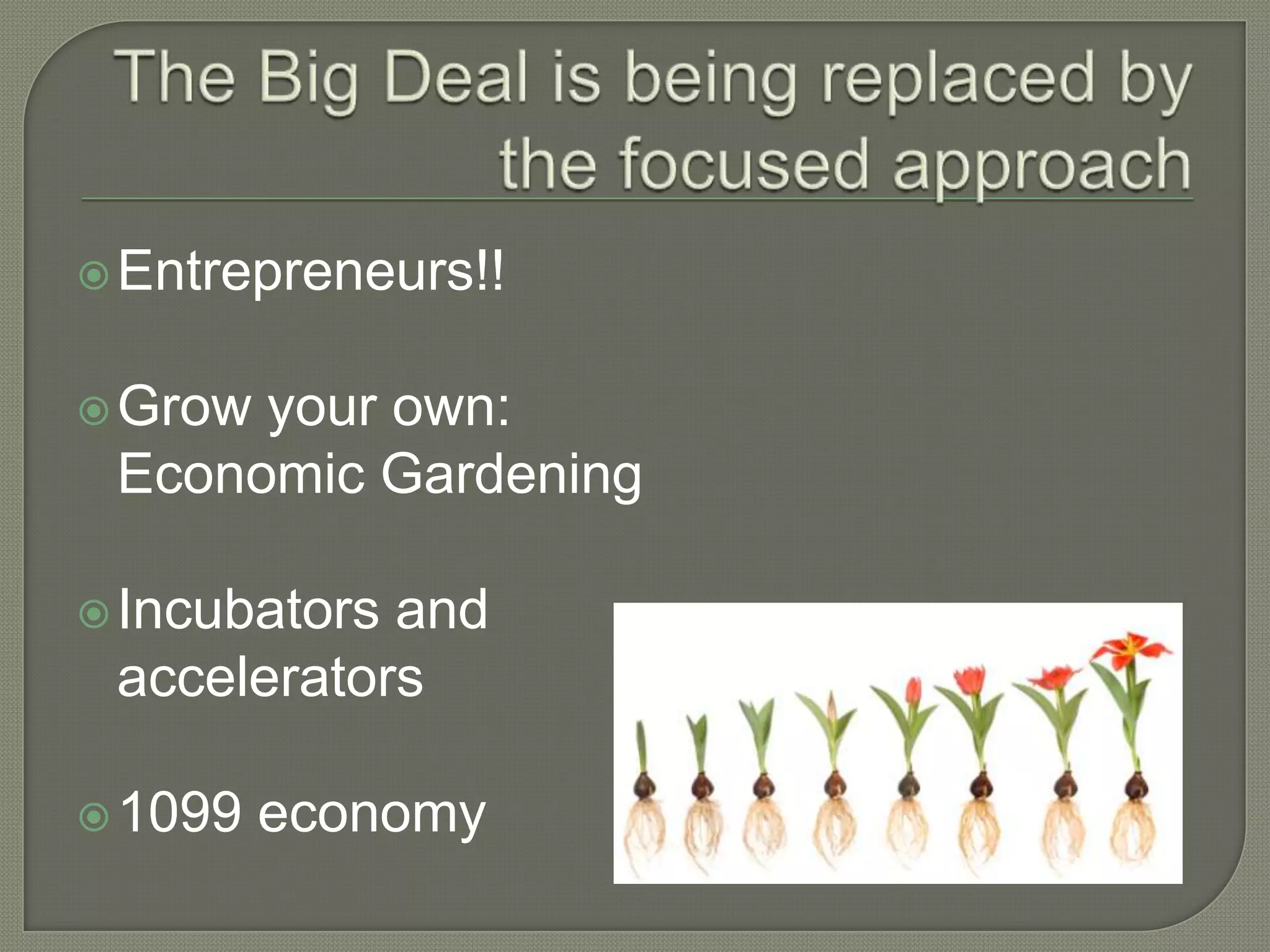
 Entrepreneurs!!


 Growyour own:
 Economic Gardening

 Incubatorsand
 accelerators

 1099   economy
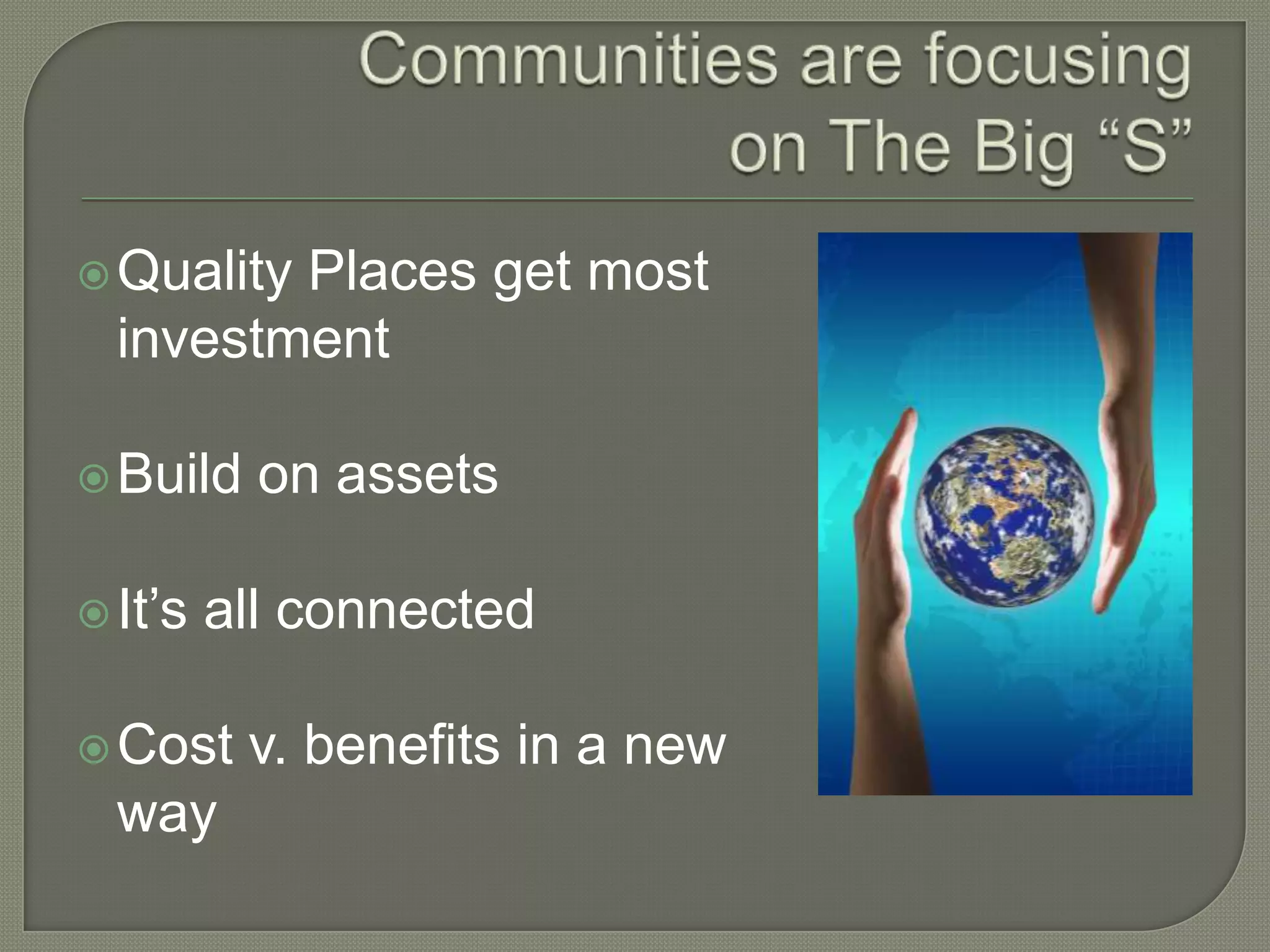
 QualityPlaces get most
  investment

 Build    on assets

 It’s   all connected

 Cost    v. benefits in a new
  way
 Where people get
 information

 Site   selection changing

 Reputation    management

 No   filters, no delays

 People    will have their say.
• Change or Die
• Be Strategic & Deliberate
• Redefine incentives
• Understand how a business
  makes decisions
• Find new partners – but
  understand their (and your)
  limitations
• Do the math & know your
    numbers
Economic development is acting to
   ensure that the economy of your
 community or region (your income or
    savings) grows faster than your
population (your expenses) so you have
  the extra resources in the future to
         finance improvement.
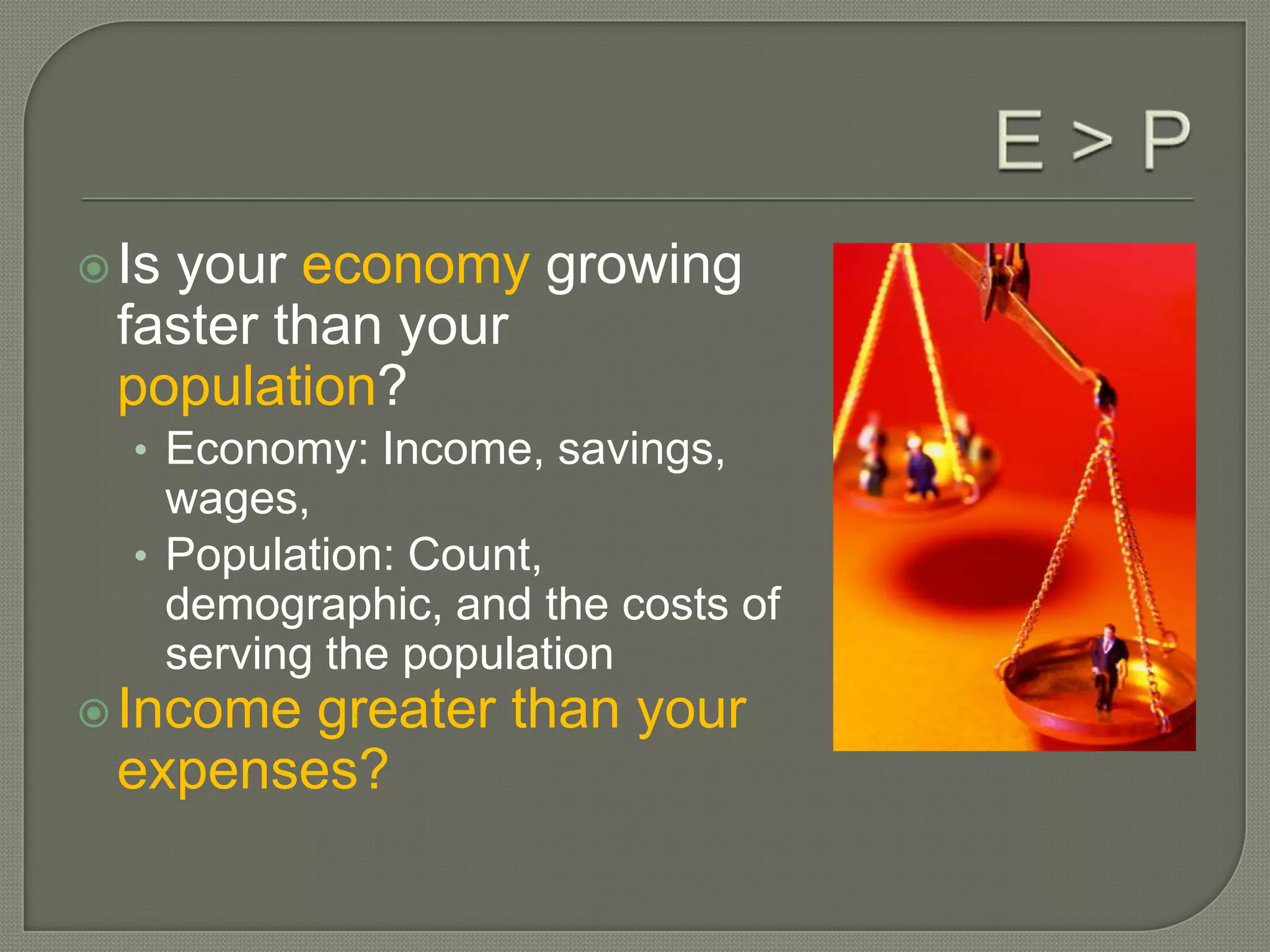
 Is
   your economy growing
 faster than your
 population?
  • Economy: Income, savings,
    wages,
  • Population: Count,
    demographic, and the costs of
    serving the population
 Incomegreater than your
 expenses?
How do you know if your
economy is growing faster than
      your population?
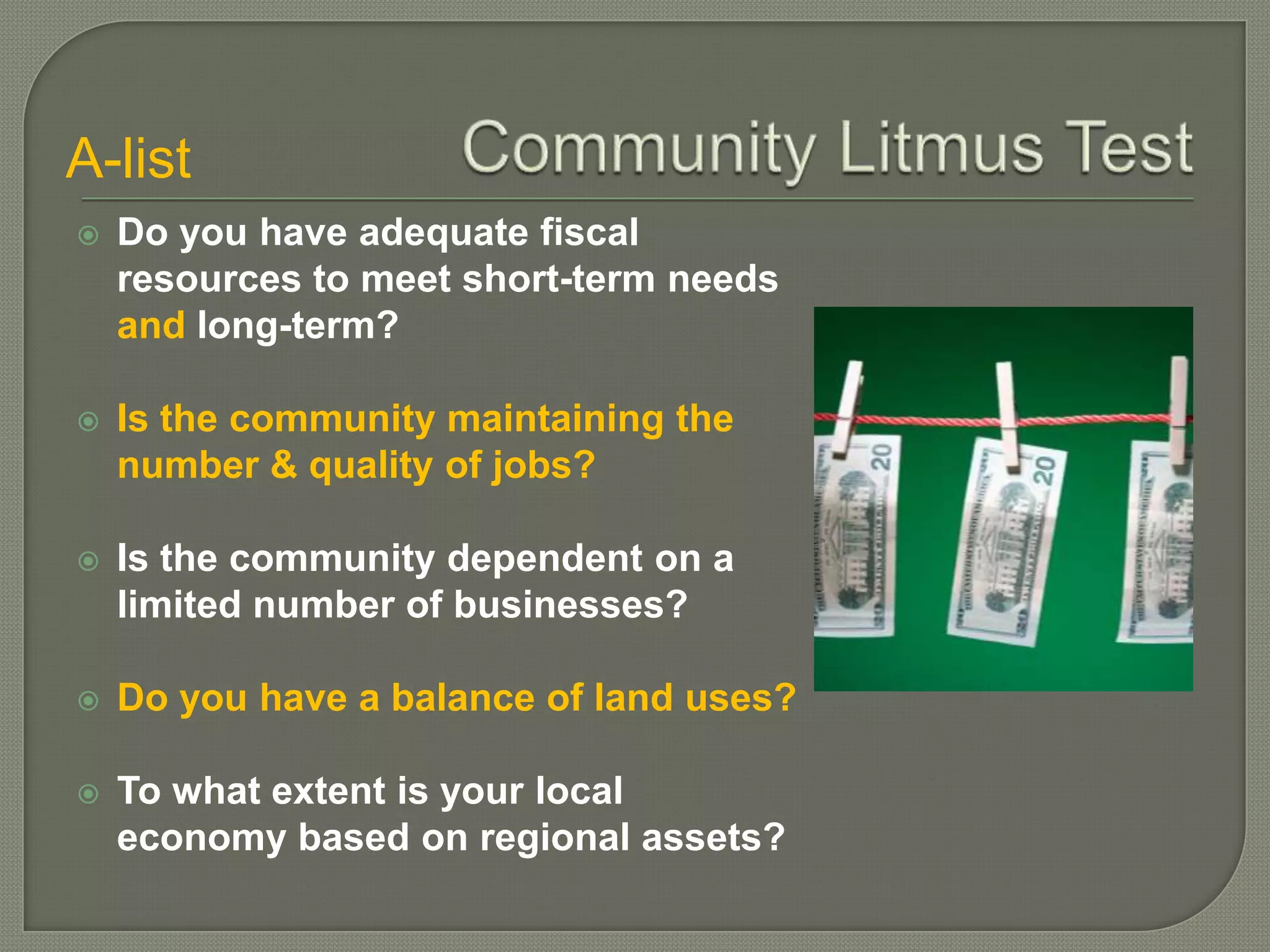
A-list
   Do you have adequate fiscal
    resources to meet short-term needs
    and long-term?

   Is the community maintaining the
    number & quality of jobs?

   Is the community dependent on a
    limited number of businesses?

   Do you have a balance of land uses?

   To what extent is your local
    economy based on regional assets?
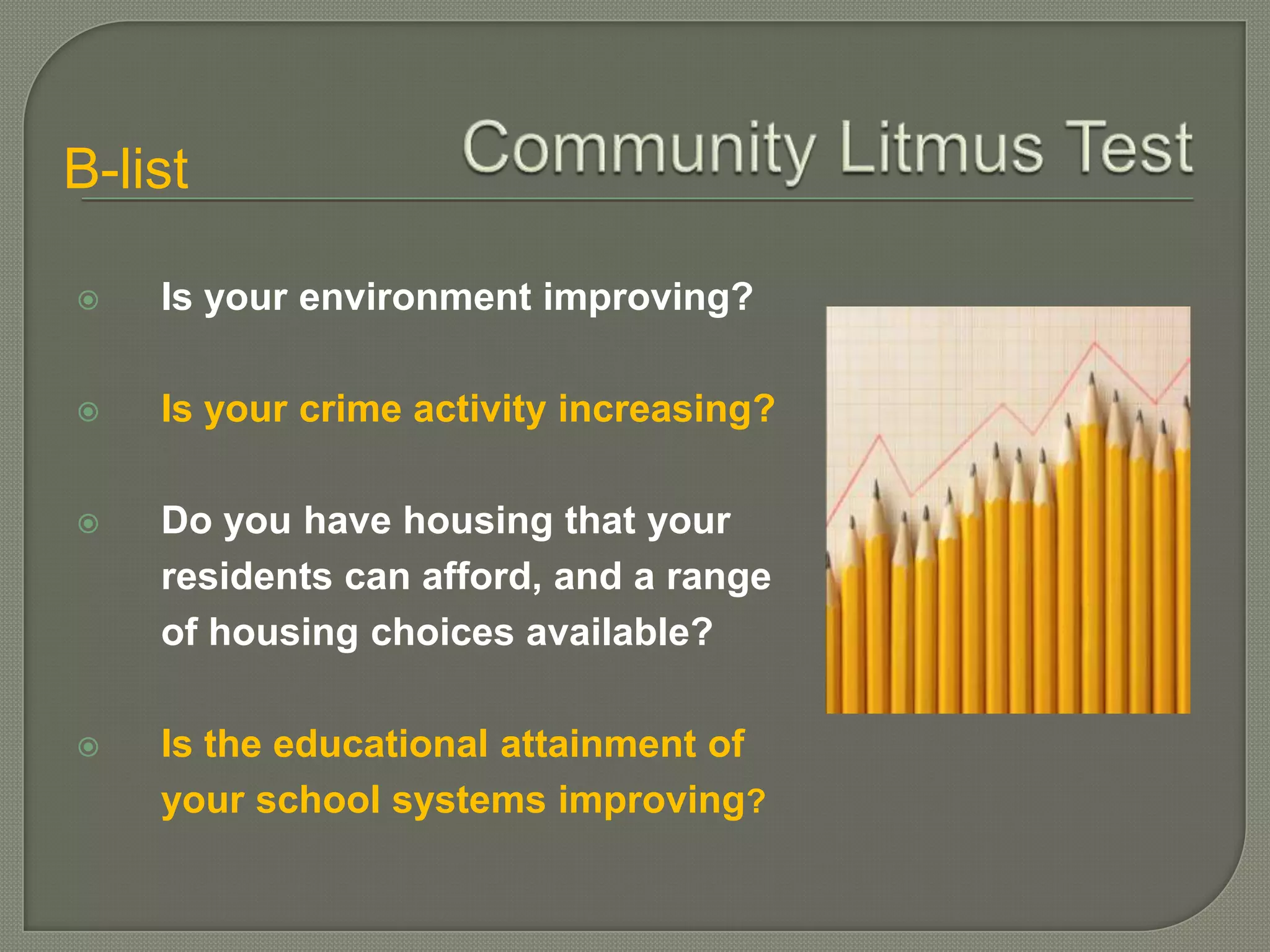
B-list

   Is your environment improving?

   Is your crime activity increasing?

   Do you have housing that your
    residents can afford, and a range
    of housing choices available?

   Is the educational attainment of
    your school systems improving?
C-list
   Is leadership strong in your
    community?

   Is tolerance and diversity strong
    in your community?

   Do your have strong
    infrastructure systems?

   Are people involved in
    community activities?

   Do you have a strong healthcare
    delivery system?
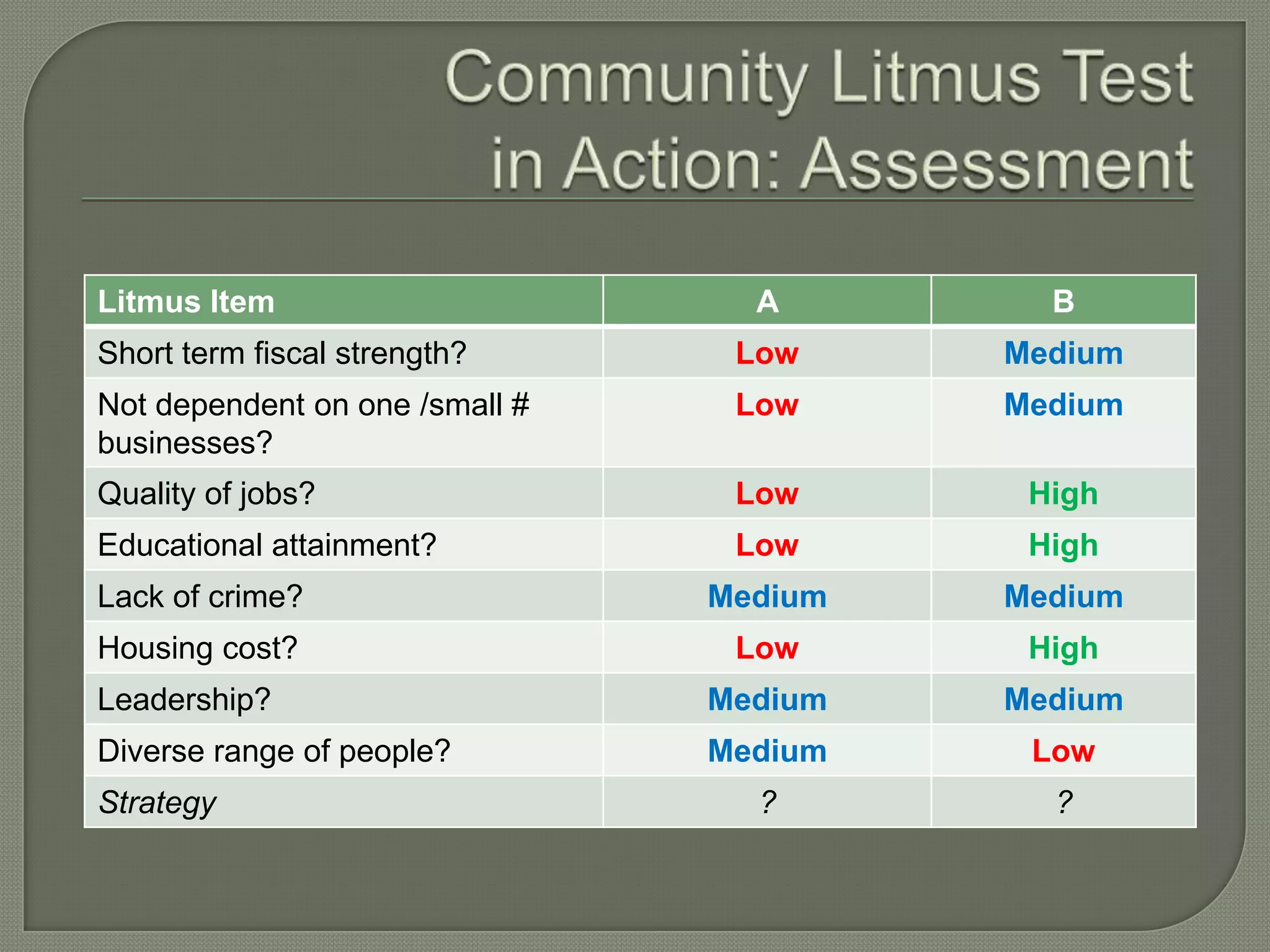
Litmus Item                       A        B
Short term fiscal strength?      Low     Medium
Not dependent on one /small #    Low     Medium
businesses?
Quality of jobs?                 Low      High
Educational attainment?          Low      High
Lack of crime?                  Medium   Medium
Housing cost?                    Low      High
Leadership?                     Medium   Medium
Diverse range of people?        Medium    Low
Strategy                          ?        ?
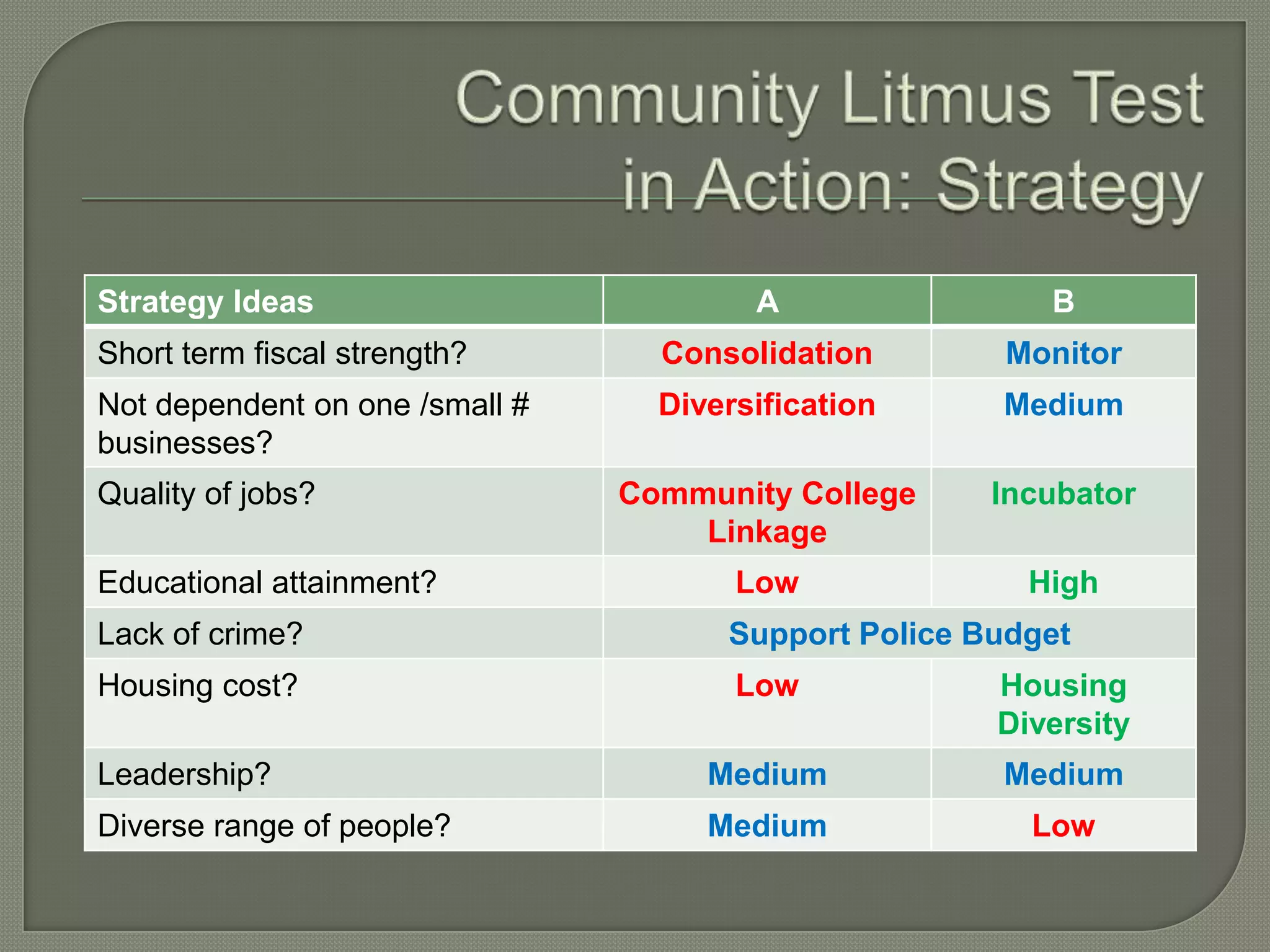
Strategy Ideas                          A                B
Short term fiscal strength?       Consolidation       Monitor
Not dependent on one /small #     Diversification     Medium
businesses?
Quality of jobs?                Community College     Incubator
                                    Linkage
Educational attainment?                Low              High
Lack of crime?                        Support Police Budget
Housing cost?                          Low            Housing
                                                      Diversity
Leadership?                          Medium           Medium
Diverse range of people?             Medium             Low
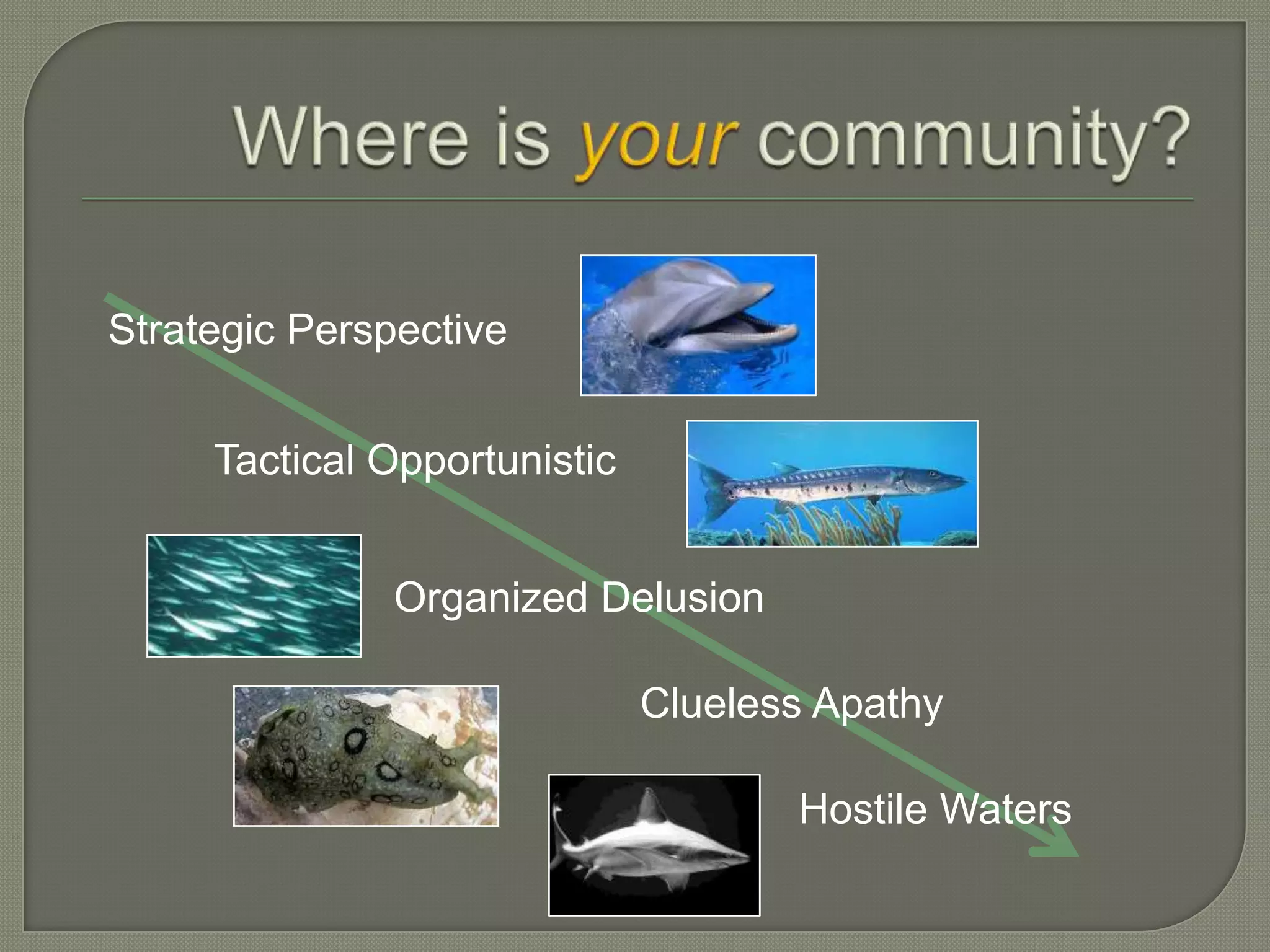
Strategic Perspective


     Tactical Opportunistic


               Organized Delusion

                              Clueless Apathy

                                     Hostile Waters
   Do you know how your
    community is doing?

   Who are your partners
    (if any)?

   Do you know where you
    want to go?

   Are you brave enough to
    start on that path?
Della Rucker, AICP, CEcD       James Kinnett, CEcD, FM, EDFP
The Wise Economy Workshop      The Kinnett Consulting Group

www.wiseeconomy.com            www.kinnett.biz
                               Jim@kinnett.biz
Della.rucker@wiseeconomy.com
                               812.290.5663
513.288.6613
      @dellarucker                www.linkedin.com/in/jameskinnett

      Della Rucker AICP CEcD
                               Mark Barbash, FM
Also on LinkedIn and Google+   Economic Development Consulting
                               www.markbarbashconsulting.com
                               Mark.barbash@gmail.com
                               614.774.7599

                                  www.linkedin.com/in/markbarbash

Best Practices In Local Economic Final 02.22.2012

  • 1.
    Della G. Rucker,AICP, CEcD The Wise Economy Workshop Jim Kinnett, CEcD, FM, EDFP The Kinnett Consulting Group Mark Barbash, FM Economic Development Consultng
  • 2.
     Changing Thoughts  How is your community doing?  What you can do to help your community improve?
  • 3.
     Della Rucker  Jim Kinnett  Mark Barbash
  • 4.
    Public-private organizations  Chambers  Local, regional & state organizations  Local and state government  Foundations  Neighborhood, downtown, community development organizations  Increasingly, you.
  • 6.
     Whois atthe table? (hint: more than ever)  Non-partner partners  Loss of local businesses = loss of decision makers  Medium sized business reluctant to participate in economic development
  • 7.
     Community college lifeline  Reshoring?  Research and Development  Educating entrepreneurs  Public schools
  • 8.
     Entrepreneurs!!  Growyourown: Economic Gardening  Incubatorsand accelerators  1099 economy
  • 9.
     QualityPlaces getmost investment  Build on assets  It’s all connected  Cost v. benefits in a new way
  • 10.
     Where peopleget information  Site selection changing  Reputation management  No filters, no delays  People will have their say.
  • 11.
    • Change orDie • Be Strategic & Deliberate • Redefine incentives • Understand how a business makes decisions • Find new partners – but understand their (and your) limitations • Do the math & know your numbers
  • 13.
    Economic development isacting to ensure that the economy of your community or region (your income or savings) grows faster than your population (your expenses) so you have the extra resources in the future to finance improvement.
  • 14.
     Is your economy growing faster than your population? • Economy: Income, savings, wages, • Population: Count, demographic, and the costs of serving the population  Incomegreater than your expenses?
  • 15.
    How do youknow if your economy is growing faster than your population?
  • 16.
    A-list  Do you have adequate fiscal resources to meet short-term needs and long-term?  Is the community maintaining the number & quality of jobs?  Is the community dependent on a limited number of businesses?  Do you have a balance of land uses?  To what extent is your local economy based on regional assets?
  • 17.
    B-list  Is your environment improving?  Is your crime activity increasing?  Do you have housing that your residents can afford, and a range of housing choices available?  Is the educational attainment of your school systems improving?
  • 18.
    C-list  Is leadership strong in your community?  Is tolerance and diversity strong in your community?  Do your have strong infrastructure systems?  Are people involved in community activities?  Do you have a strong healthcare delivery system?
  • 19.
    Litmus Item A B Short term fiscal strength? Low Medium Not dependent on one /small # Low Medium businesses? Quality of jobs? Low High Educational attainment? Low High Lack of crime? Medium Medium Housing cost? Low High Leadership? Medium Medium Diverse range of people? Medium Low Strategy ? ?
  • 20.
    Strategy Ideas A B Short term fiscal strength? Consolidation Monitor Not dependent on one /small # Diversification Medium businesses? Quality of jobs? Community College Incubator Linkage Educational attainment? Low High Lack of crime? Support Police Budget Housing cost? Low Housing Diversity Leadership? Medium Medium Diverse range of people? Medium Low
  • 21.
    Strategic Perspective Tactical Opportunistic Organized Delusion Clueless Apathy Hostile Waters
  • 23.
    Do you know how your community is doing?  Who are your partners (if any)?  Do you know where you want to go?  Are you brave enough to start on that path?
  • 24.
    Della Rucker, AICP,CEcD James Kinnett, CEcD, FM, EDFP The Wise Economy Workshop The Kinnett Consulting Group www.wiseeconomy.com www.kinnett.biz Jim@kinnett.biz Della.rucker@wiseeconomy.com 812.290.5663 513.288.6613 @dellarucker www.linkedin.com/in/jameskinnett Della Rucker AICP CEcD Mark Barbash, FM Also on LinkedIn and Google+ Economic Development Consulting www.markbarbashconsulting.com Mark.barbash@gmail.com 614.774.7599 www.linkedin.com/in/markbarbash

Editor's Notes

  • #2 Della begins
  • #3 DELLA
  • #4 Della will point to Jim and MarkStick tight to biosDELLAPlanner and economic developer, certified in both, focus on helping local governments and nonprofits make better decisions affecting the long-term economic health of their communities. To do that I provide consulting services, information, and toolboxesJIMKinnett Group advises and helps support economic development on both sides of the equasion. Helps national and international businesses with site selection, structures deals, and helps communities do intelligent planning for economic successMark Economic Development finance and policy specialist who has worked at federal, state and local levels. DirDev Columbus and ODOD.
  • #5 MARKHit this quick – there’s a lot of players in the field, and you probably have some of these in your community or region. But they all have different responsibiities, different people that they are responsible to, different limitations and different baggage. And as we increasingly understand how economic issues impact – and are impacted by– other community issues, you as planners have this as your responsibility, too.
  • #6 Jim
  • #7 MarkI think this slide and the next five or so need to be broken down to one or two items – hit quickly – per slide. Instead of 5 min per slide, I’d recommend two or three, max. Who is at the table? – broader than ever—neighborhood to regional – unique to this timeCrowdsourcing fundsNon-partner partners – unions, MPOs etc. Non traditionalLoss of local businesses – loss of decision makersReluctance of medium sized business to participate in econ dev
  • #8 Jim
  • #9 DellaThe exclamation points are ironic – need to avoid promoting entrepreneurship as be-all and end-all. Indicate importance but also that some may treat it as a magic bullet.
  • #10 Della
  • #11 Mark
  • #12 Jim
  • #13 JIM
  • #14 JIMKey points:There are lots of different definitions, this is one that we like. For example: is tax base growing faster than basic needs? Are number and types of jobs growing faster than demands on City revenue?
  • #15 JIMHere’s my thought: “ as we talked about in the beginning, there may be a lot of players in your community who are supposedly doing economic development. How can you as a community tell if their efforts are making an impact? An increasingly important element of economic development is measuring the impact of economic development efforts. The basic formula is….”
  • #16 Mark
  • #17 DELLABe sure to talk about the correlation between land uses and the fiscal impact on the community
  • #18 MARK?I am a little concerned that we need to be able to answer how you measure some of these… just make sure someone has an idea or example! Also be ready to explain the housing part – some communities are touchy on that. Planners are generally supportive of “affordable access to housing” and don’t mix that up with Section 8, but be prepared.
  • #19 JIMWe need to be prepared to explain a little preemptively about how these points tie back to and influence economic health. For this audience, we just need to reinforce their inherent sense of that connection, not pound it into the ground.
  • #20 Della / Wilmington
  • #21 Della / Wilmington
  • #22 JIM
  • #24 Della