


Best Practices for
DNS Monitoring
Nick Kephart, Director of Product Marketing
1
Network Intelligence Keeps Your Business Running
ThousandEyes is a network intelligence platform that delivers
visibility into every network your organization relies on.
Established and
backed by
network experts
Relied on for
critical operations by
leading enterprises
Recognized as
an innovative
new approach
2
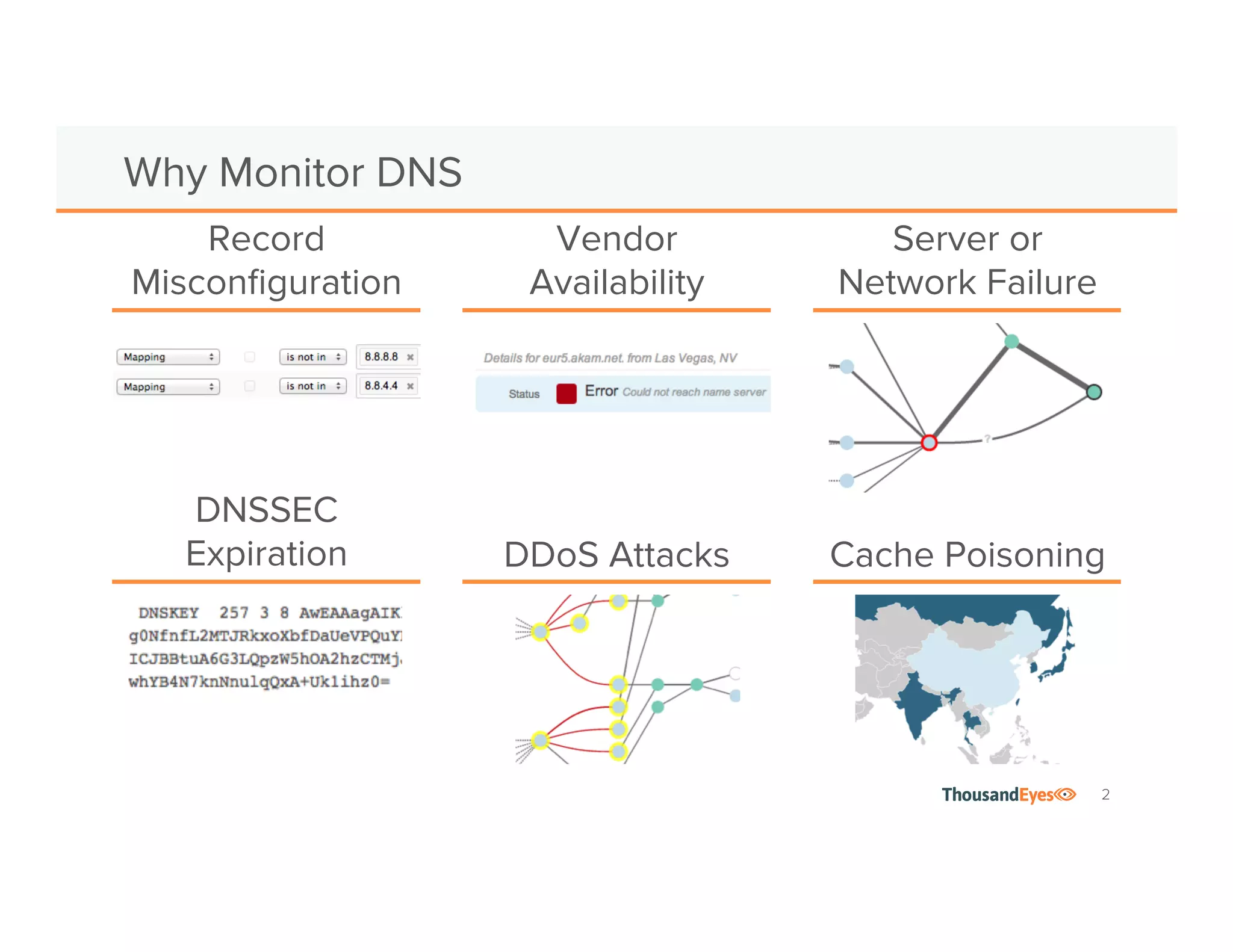
Why Monitor DNS
Record
Misconfiguration
Server or
Network Failure
Vendor
Availability
DNSSEC
Expiration Cache PoisoningDDoS Attacks
3
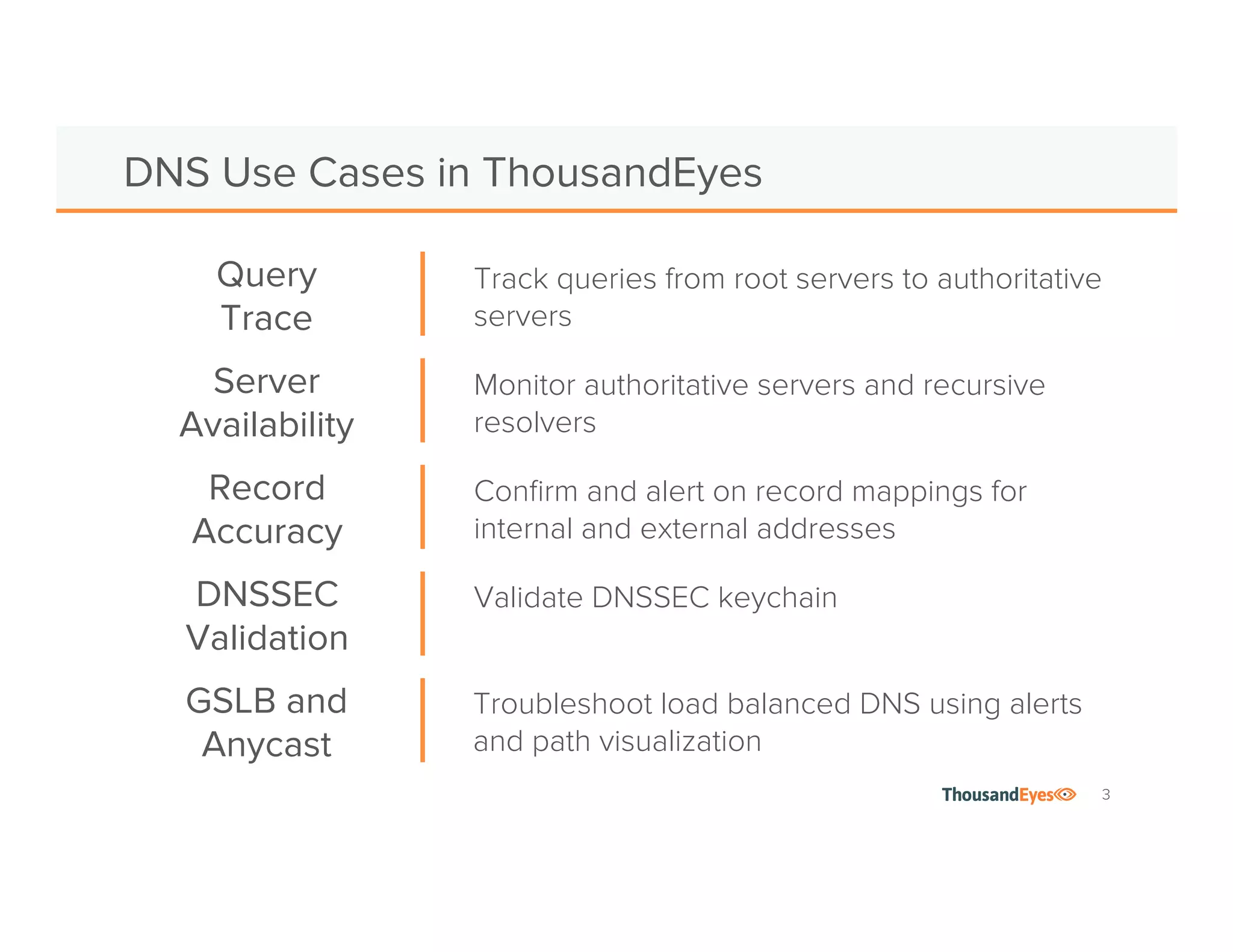
Confirm and alert on record mappings for internal and
external addresses
DNS Monitoring Use Cases
Track queries from root servers to authoritative servers
Query Trace
Record Accuracy
Server Availability
DNSSEC Validation
 Validate DNSSEC keychain
Monitor authoritative and caching servers
GSLB and Anycast
Troubleshoot load balanced DNS using alerts and path
visualization
4
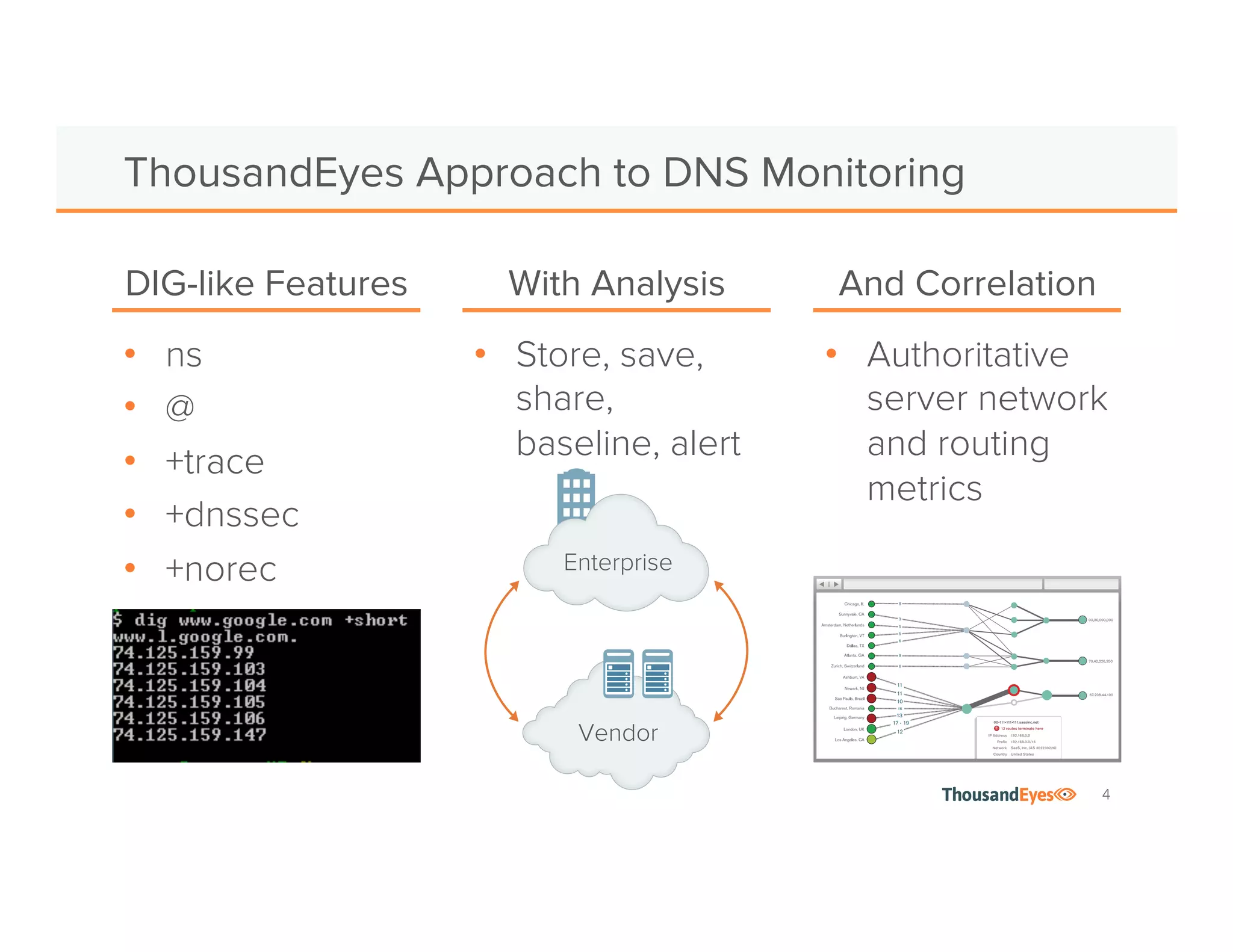
ThousandEyes Approach to DNS Monitoring
•  ns
•  @
•  +trace 
•  +dnssec
•  +norec
•  Authoritative
and caching
server network
•  Routing metrics
DIG-like Features And Correlation
•  Store, save,
share,
baseline, alert
With Analysis
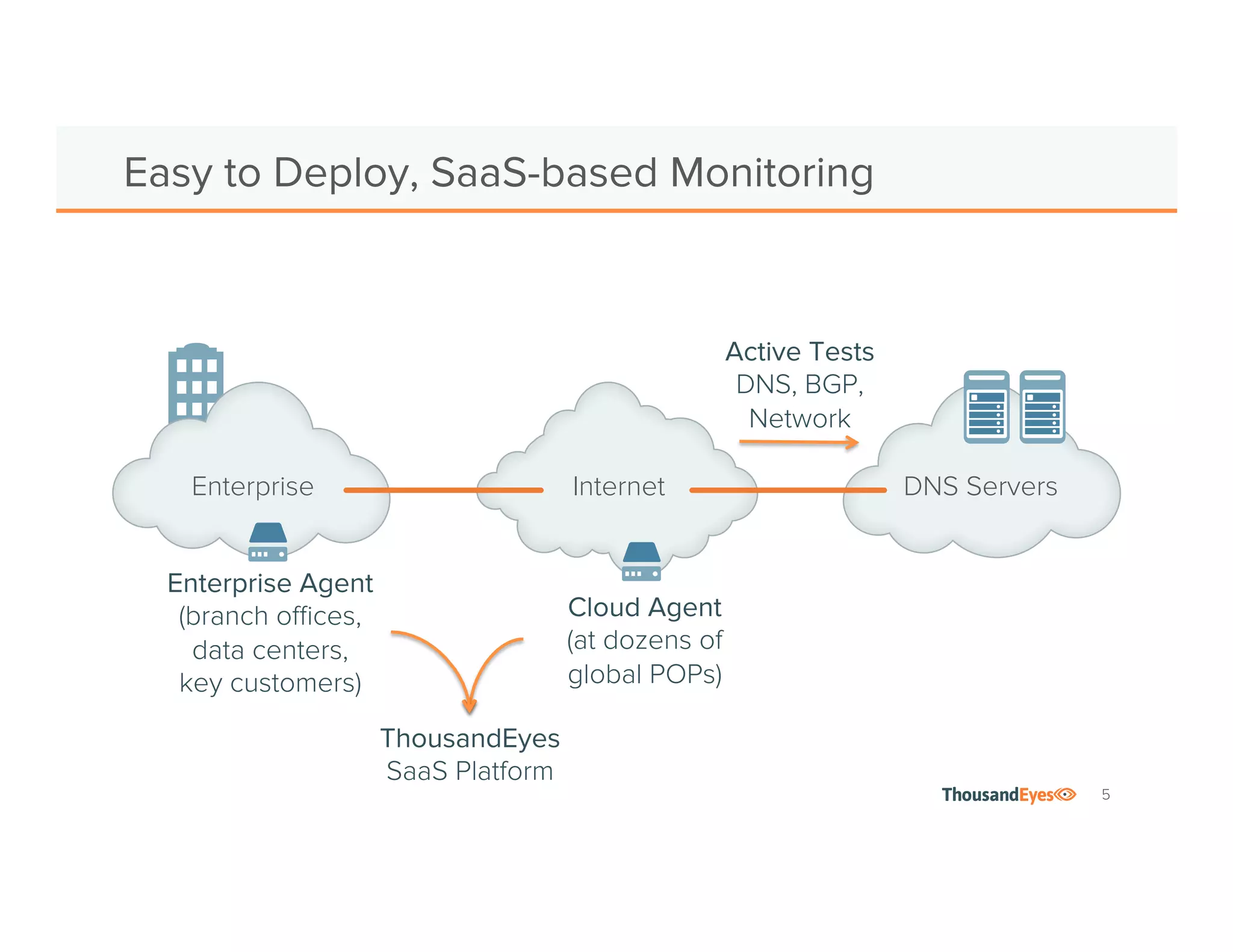
Enterprise
Vendor
5
How to Deploy DNS Tests
Consumers
Internet
DNS Hosting
Provider
Enterprise Branch
Enterprise Data
Center
3
Local
caching
server
2
1
Enterprise
Agent
Cloud Agent
Authoritative
Server Authoritative
Server
TLD
Server
DNS 
Server
DNS 
Trace
DNS 
Server
6
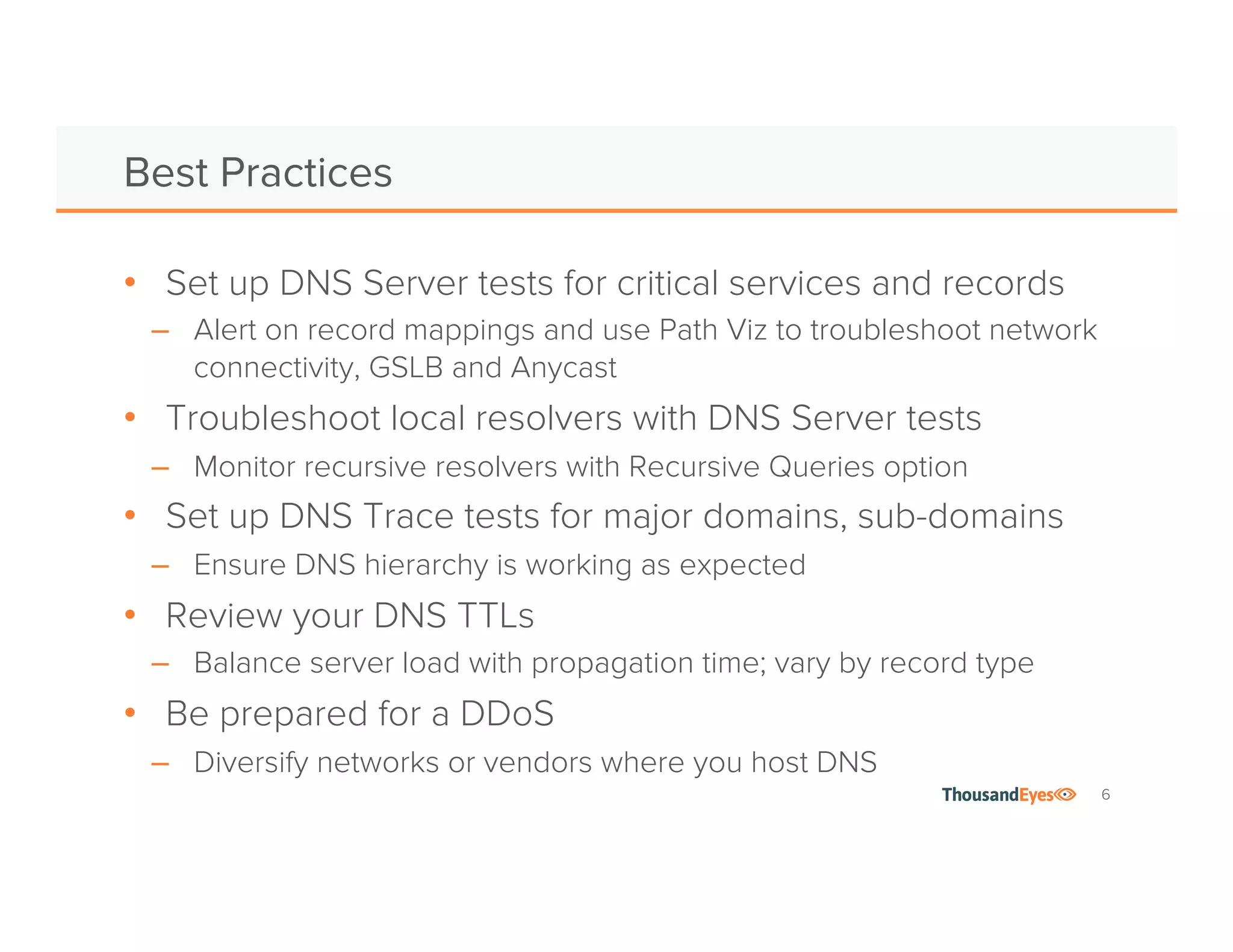
q Set up DNS Server tests for
critical services and records
q Alert on record mappings
q Use Path Viz to see network
connectivity, GSLB and Anycast 
q Troubleshoot local caching
servers with DNS Server tests
q Use Recursive Queries option
Best Practices
q Set up DNS Trace tests for major
domains, sub-domains
q Ensure DNS hierarchy is working as
expected, check for hijacks
q Review your DNS TTLs
q Balance server load with propagation
time; vary by record type
q Be prepared for a DDoS
q Diversify networks or vendors where
you host DNS
Demo
8
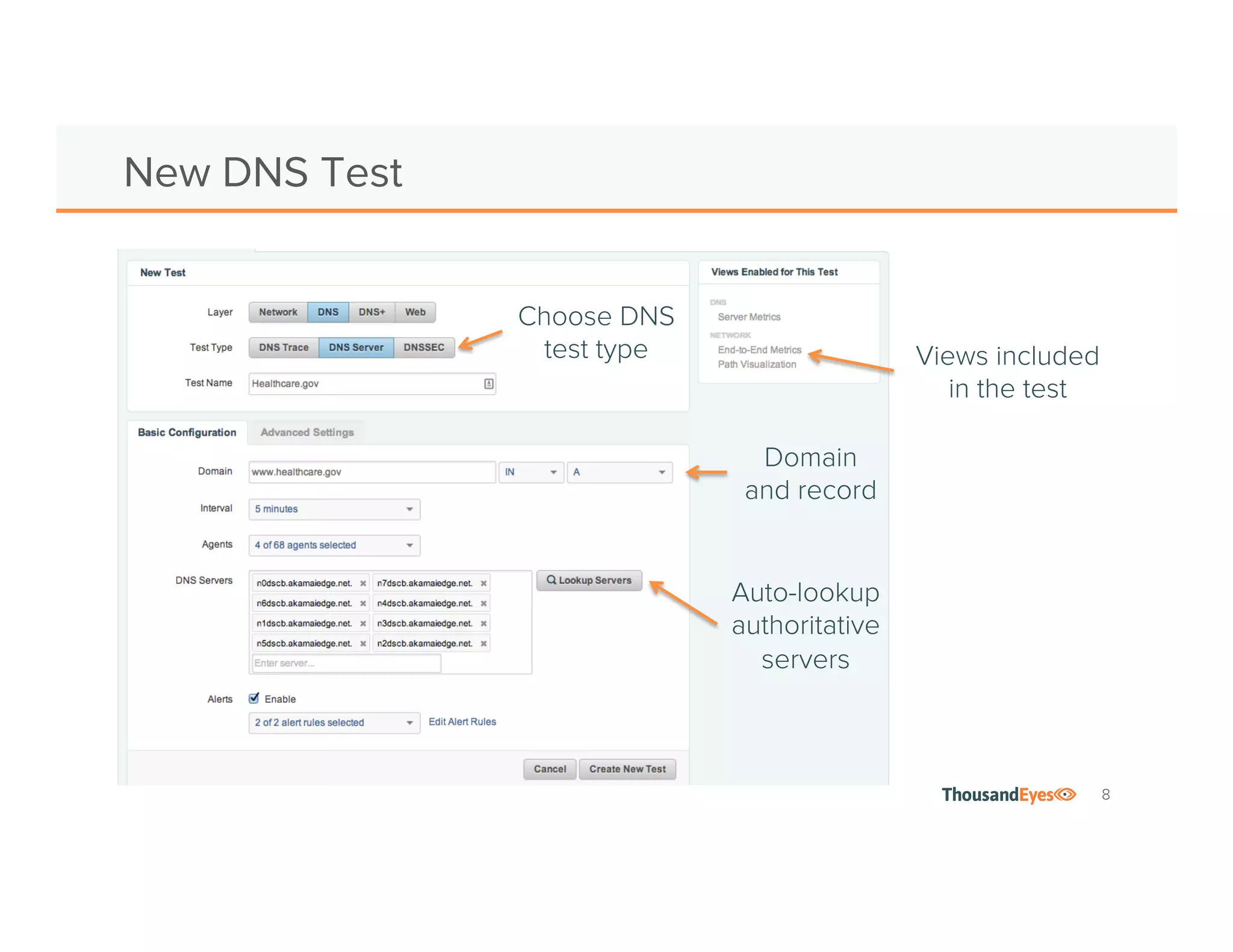
Choose DNS
test type
Domain
and record
Views included
in the test
Auto-lookup
authoritative
servers
Add a New DNS Test
9
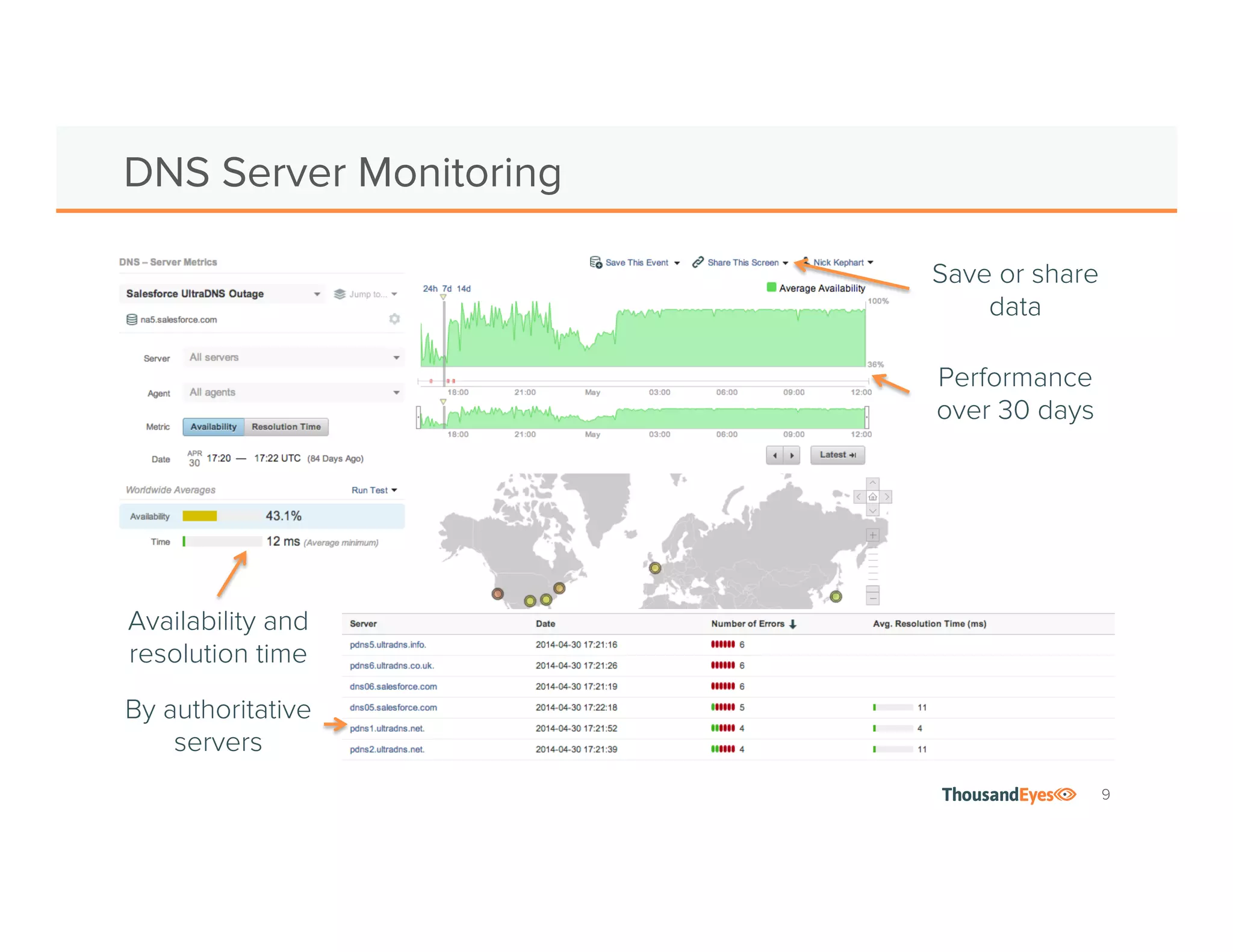
DNS Server Monitoring
Availability and
resolution time
By authoritative
servers
Performance
over 30 days
Save or share
data
10
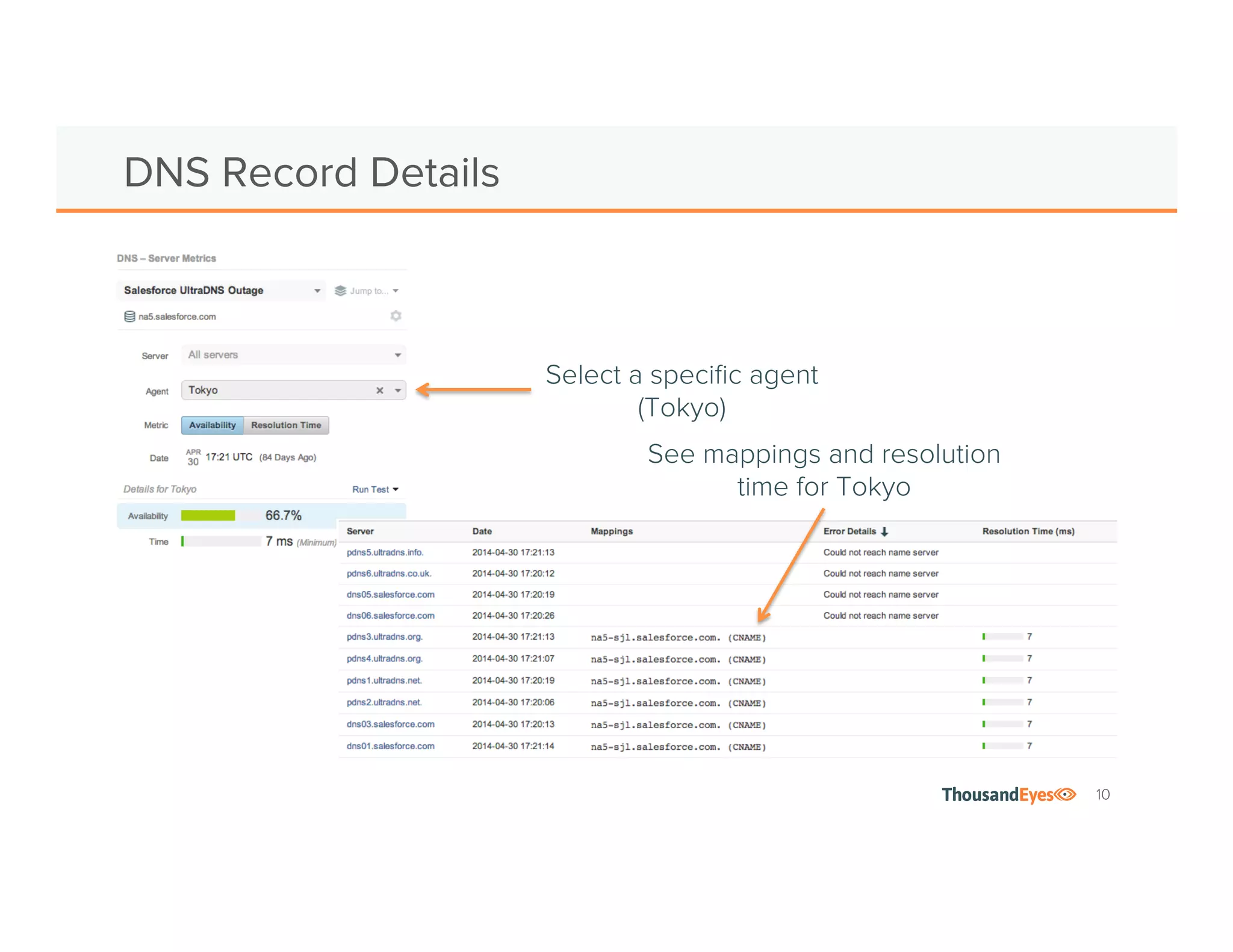
DNS Record Details
See mappings and
resolution time for Tokyo
Select a specific agent
(Tokyo)
11
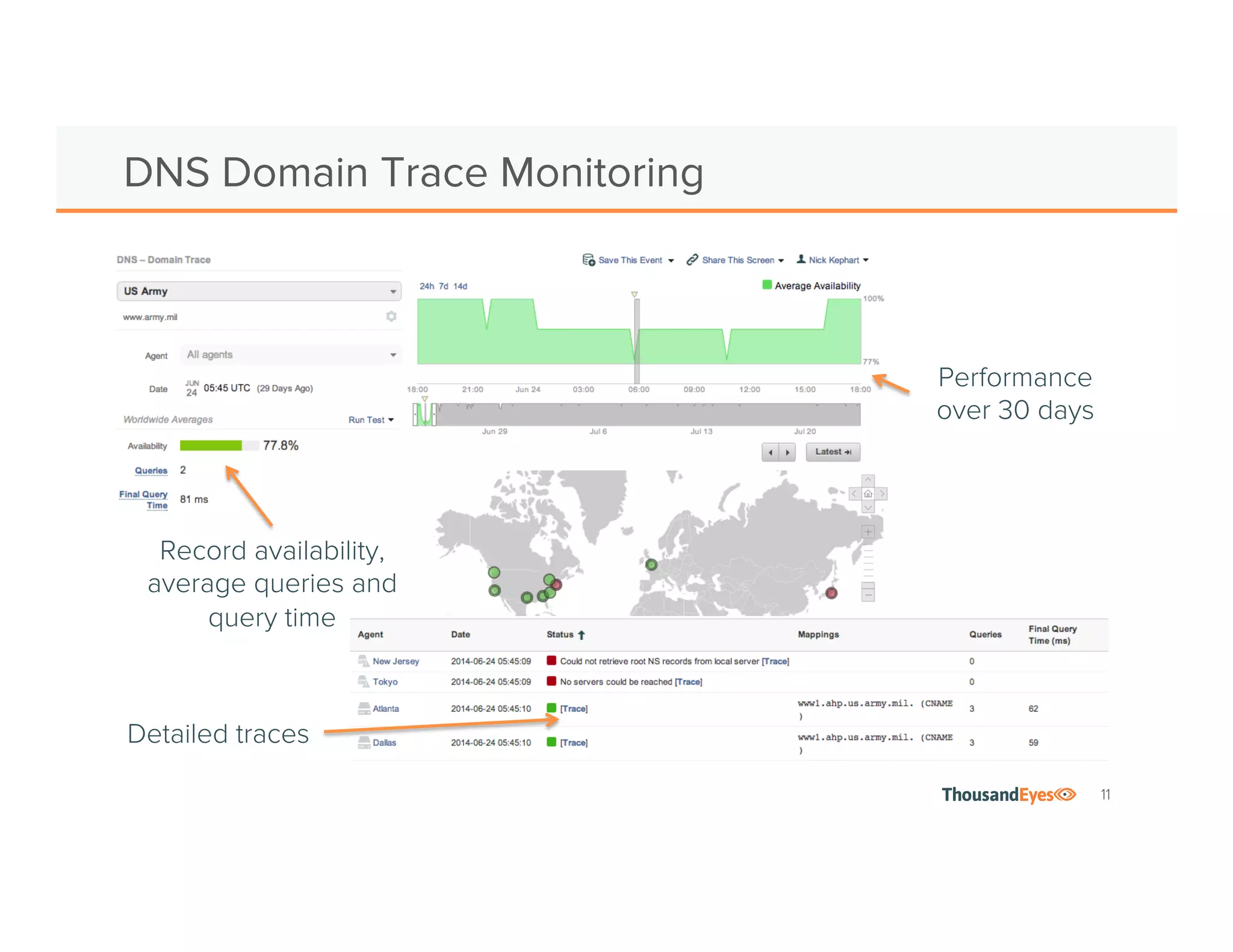
DNS Domain Trace Monitoring
Record
availability,
average queries
and query time
Detailed traces
Performance
over 30 days
12
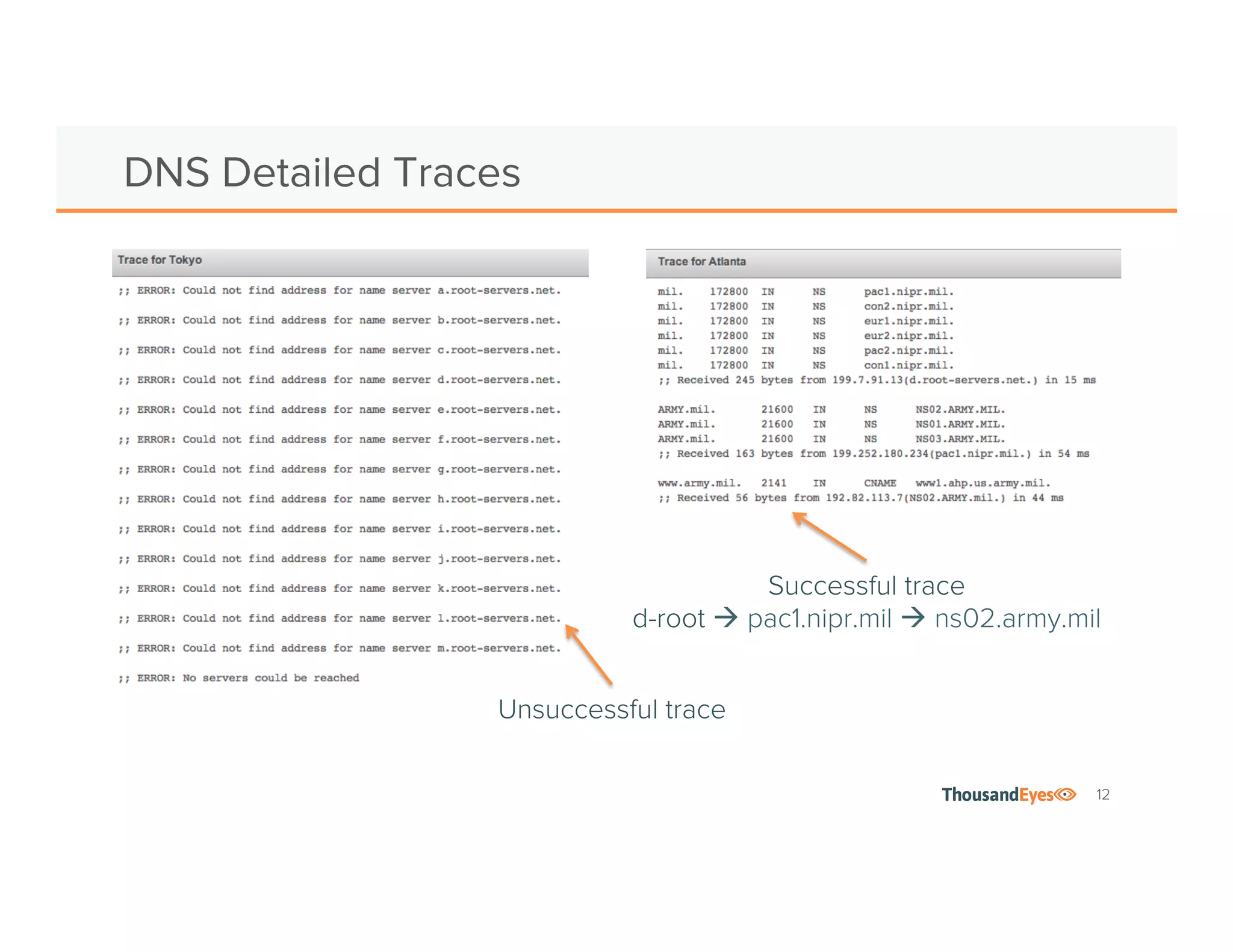
DNS Detailed Traces
Unsuccessful trace
Successful trace
d-root à pac1.nipr.mil à ns02.army.mil
13
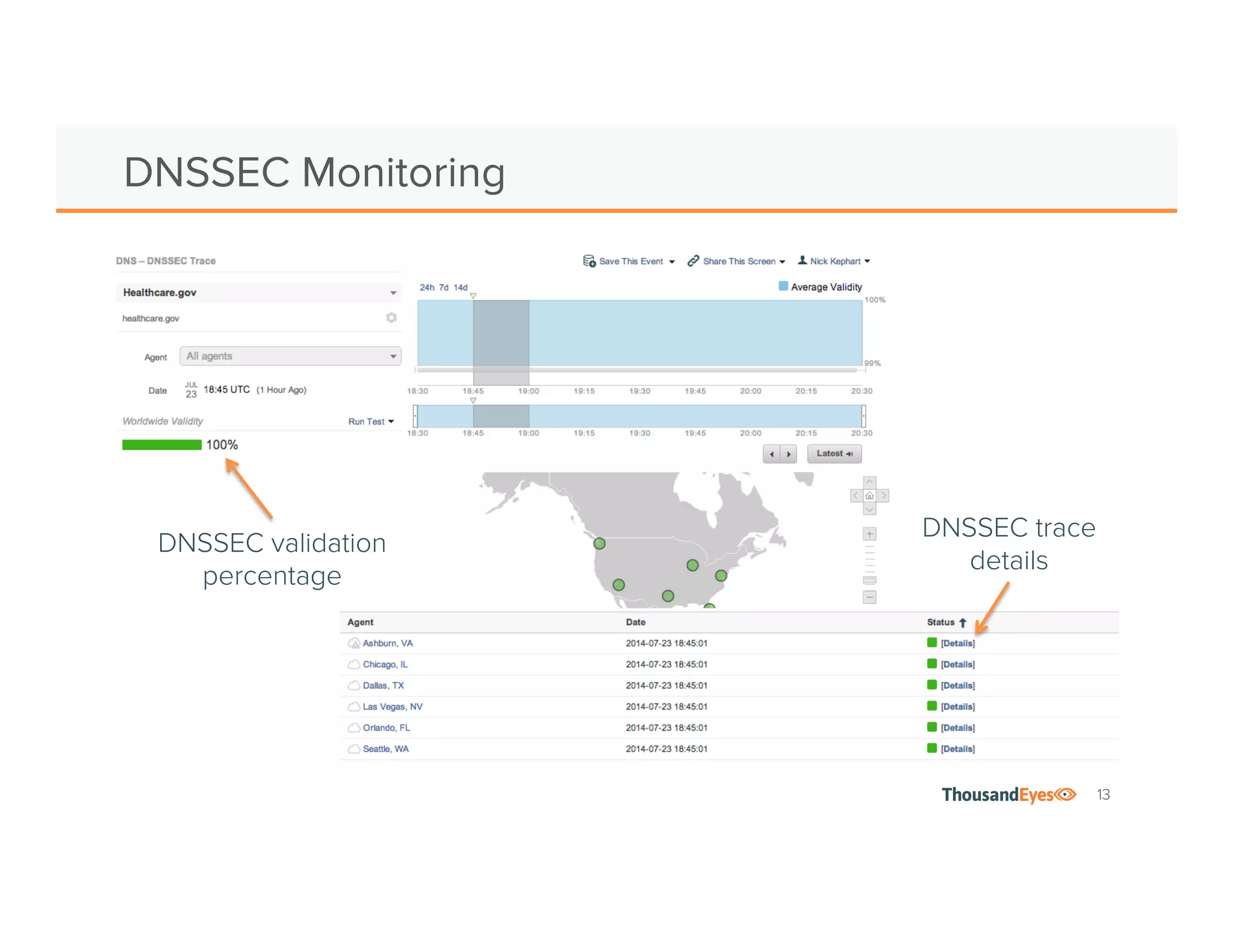
DNSSEC Monitoring
DNSSEC validation
percentage
DNSSEC trace
details
14
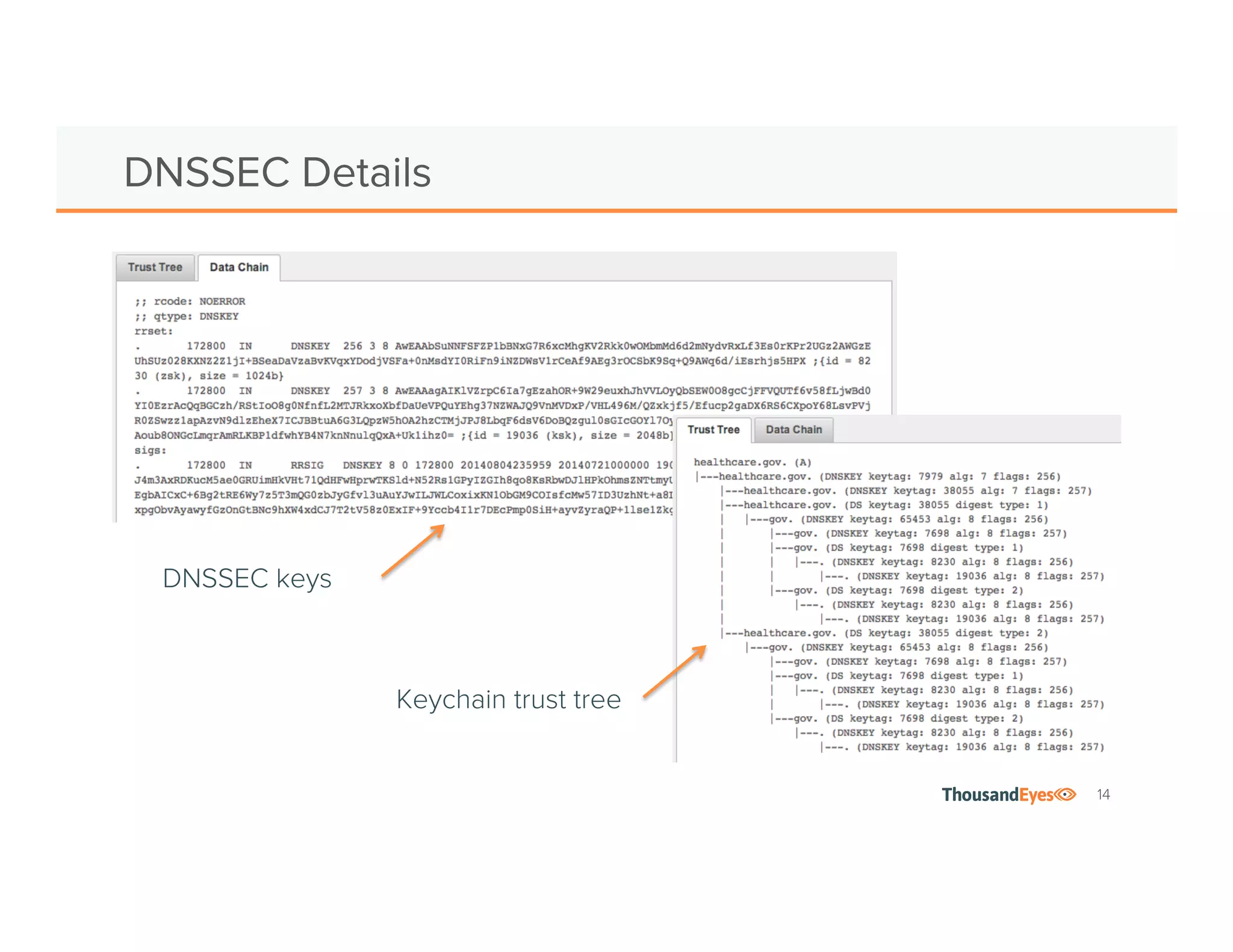
DNSSEC Details
Keychain trust tree
DNSSEC keys
15
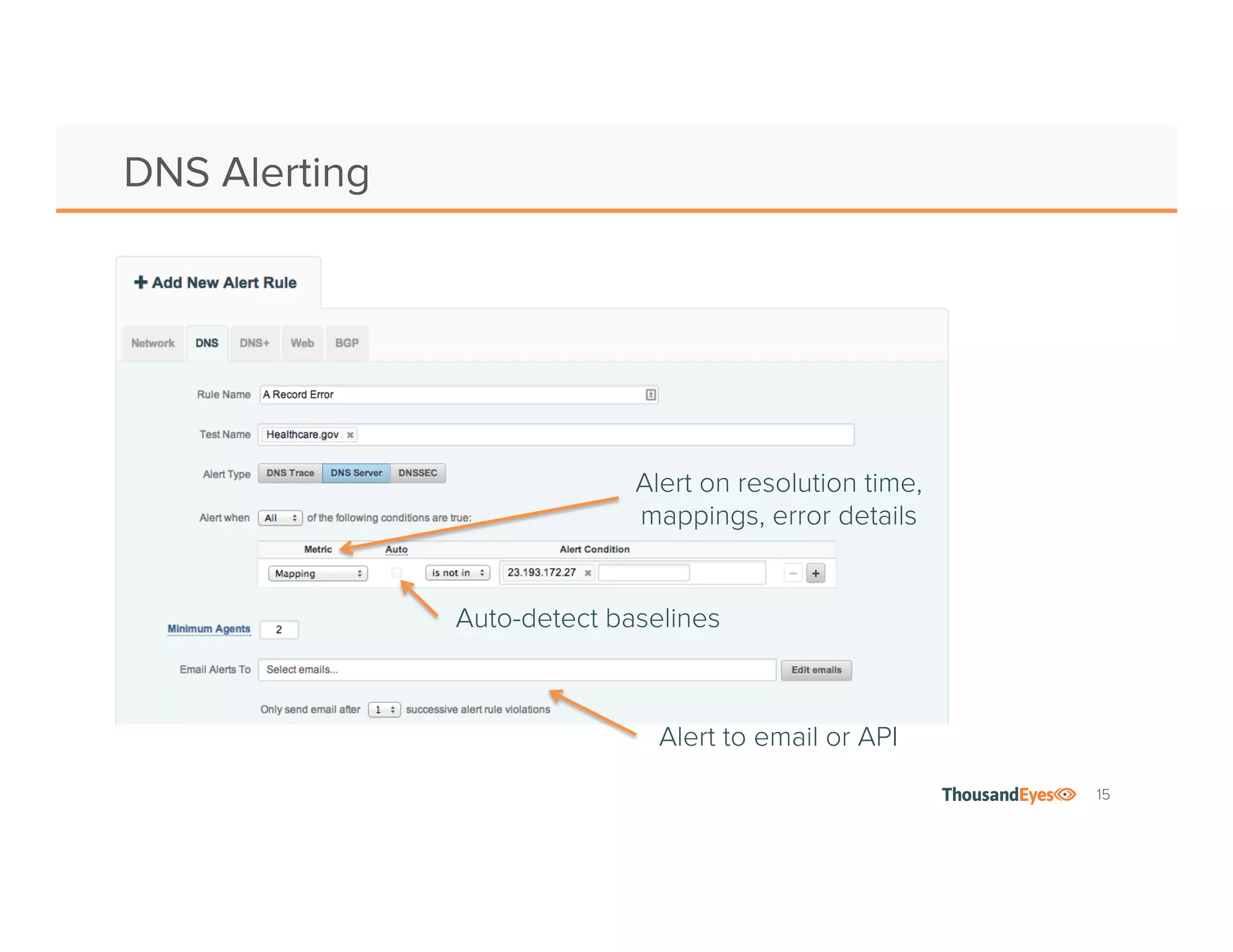
DNS Alerting
Alert on resolution time,
mappings, error details 
Alert to email or API
See what you’re missing.
Watch the webinar

www.thousandeyes.com/webinars/dns

Best Practices for Monitoring DNS

  • 1.
    Best Practices for DNSMonitoring Nick Kephart, Director of Product Marketing
  • 2.
    1 Network Intelligence KeepsYour Business Running ThousandEyes is a network intelligence platform that delivers visibility into every network your organization relies on. Established and backed by network experts Relied on for critical operations by leading enterprises Recognized as an innovative new approach
  • 3.
    2 Why Monitor DNS Record Misconfiguration Serveror Network Failure Vendor Availability DNSSEC Expiration Cache PoisoningDDoS Attacks
  • 4.
    3 Confirm and alerton record mappings for internal and external addresses DNS Monitoring Use Cases Track queries from root servers to authoritative servers Query Trace Record Accuracy Server Availability DNSSEC Validation Validate DNSSEC keychain Monitor authoritative and caching servers GSLB and Anycast Troubleshoot load balanced DNS using alerts and path visualization
  • 5.
    4 ThousandEyes Approach toDNS Monitoring •  ns •  @ •  +trace •  +dnssec •  +norec •  Authoritative and caching server network •  Routing metrics DIG-like Features And Correlation •  Store, save, share, baseline, alert With Analysis Enterprise Vendor
  • 6.
    5 How to DeployDNS Tests Consumers Internet DNS Hosting Provider Enterprise Branch Enterprise Data Center 3 Local caching server 2 1 Enterprise Agent Cloud Agent Authoritative Server Authoritative Server TLD Server DNS Server DNS Trace DNS Server
  • 7.
    6 q Set up DNSServer tests for critical services and records q Alert on record mappings q Use Path Viz to see network connectivity, GSLB and Anycast q Troubleshoot local caching servers with DNS Server tests q Use Recursive Queries option Best Practices q Set up DNS Trace tests for major domains, sub-domains q Ensure DNS hierarchy is working as expected, check for hijacks q Review your DNS TTLs q Balance server load with propagation time; vary by record type q Be prepared for a DDoS q Diversify networks or vendors where you host DNS
  • 8.
  • 9.
    8 Choose DNS test type Domain andrecord Views included in the test Auto-lookup authoritative servers Add a New DNS Test
  • 10.
    9 DNS Server Monitoring Availabilityand resolution time By authoritative servers Performance over 30 days Save or share data
  • 11.
    10 DNS Record Details Seemappings and resolution time for Tokyo Select a specific agent (Tokyo)
  • 12.
    11 DNS Domain TraceMonitoring Record availability, average queries and query time Detailed traces Performance over 30 days
  • 13.
    12 DNS Detailed Traces Unsuccessfultrace Successful trace d-root à pac1.nipr.mil à ns02.army.mil
  • 14.
  • 15.
  • 16.
    15 DNS Alerting Alert onresolution time, mappings, error details Alert to email or API
  • 17.
    See what you’remissing. Watch the webinar www.thousandeyes.com/webinars/dns