Behaviorism
B. F. Skinner
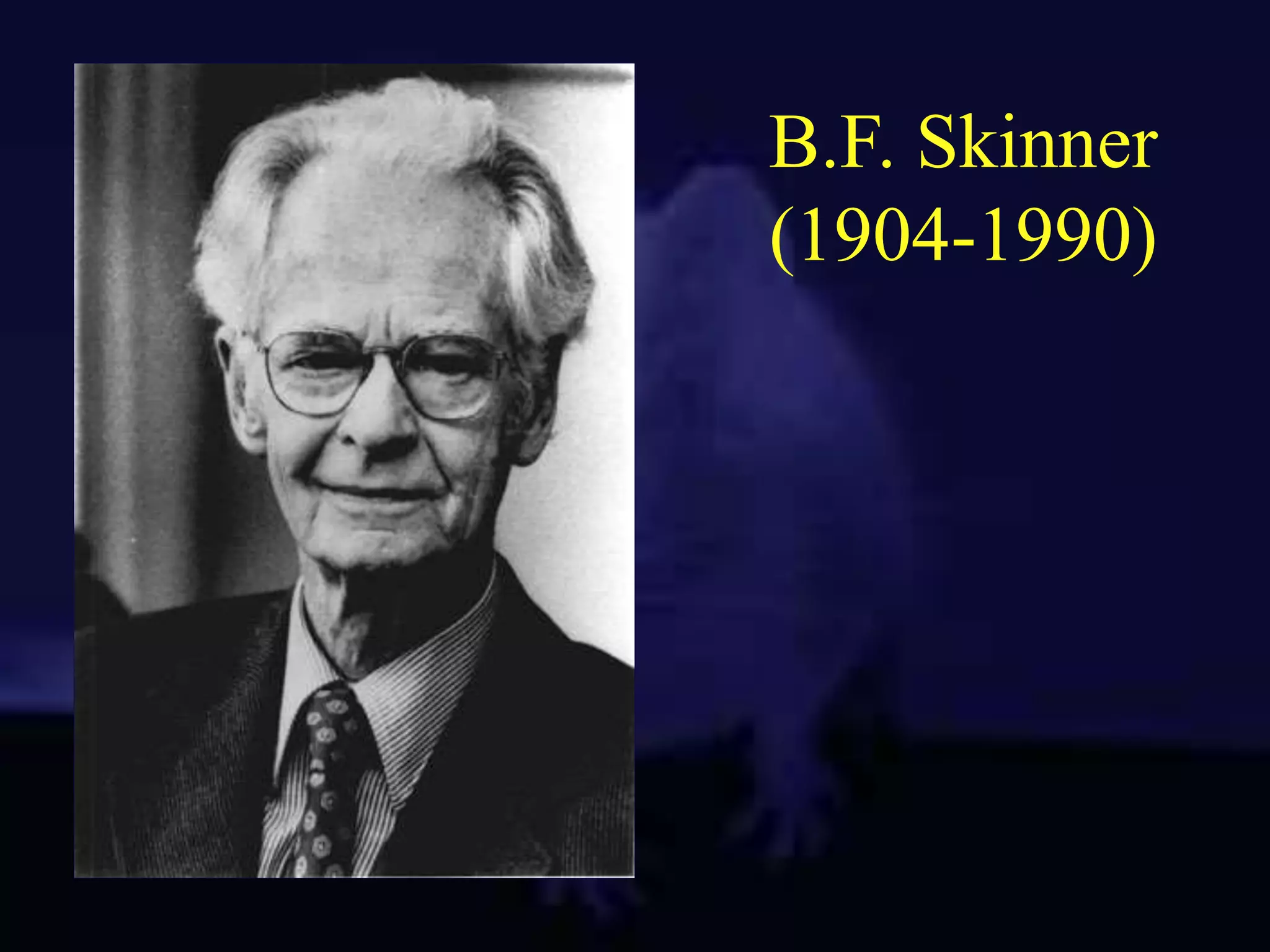
B.F. Skinner
(1904-1990)
B. F. Skinner
(1904-1990)
Skinner’s life
Predetermined, lawful, and orderly
A product of past reinforcements
1925: Hamilton College (NY): degree in English, no
courses in psychology
Read about Pavlov’s and Watson’s experimental work
1931: Ph.D. from Harvard
B. F. Skinner
Dissertation: a reflex is a correlation between
S and R
1938: The Behavior of Organisms
1953: Science and Human Behavior
1990: Vigorously attacked the growth of cognitive
psychology
1990 (final article): "Can Psychology Be a Science
of Mind?"
B. F. Skinner
Dealt only with observable behavior
The task of scientific inquiry:
To establish functional relationships between
experimenter-controlled stimulus and organism’s
response
No presumptions about internal entities - The "empty
organism" approach
B. F. Skinner
Single subject design
Large numbers of subjects not necessary
Statistical comparisons of group means not
necessary
A single subject provides valid and replicable
results
Requires "sufficient" data collected under well-
controlled experimental conditions
Statistics obscure individual responses and
differences
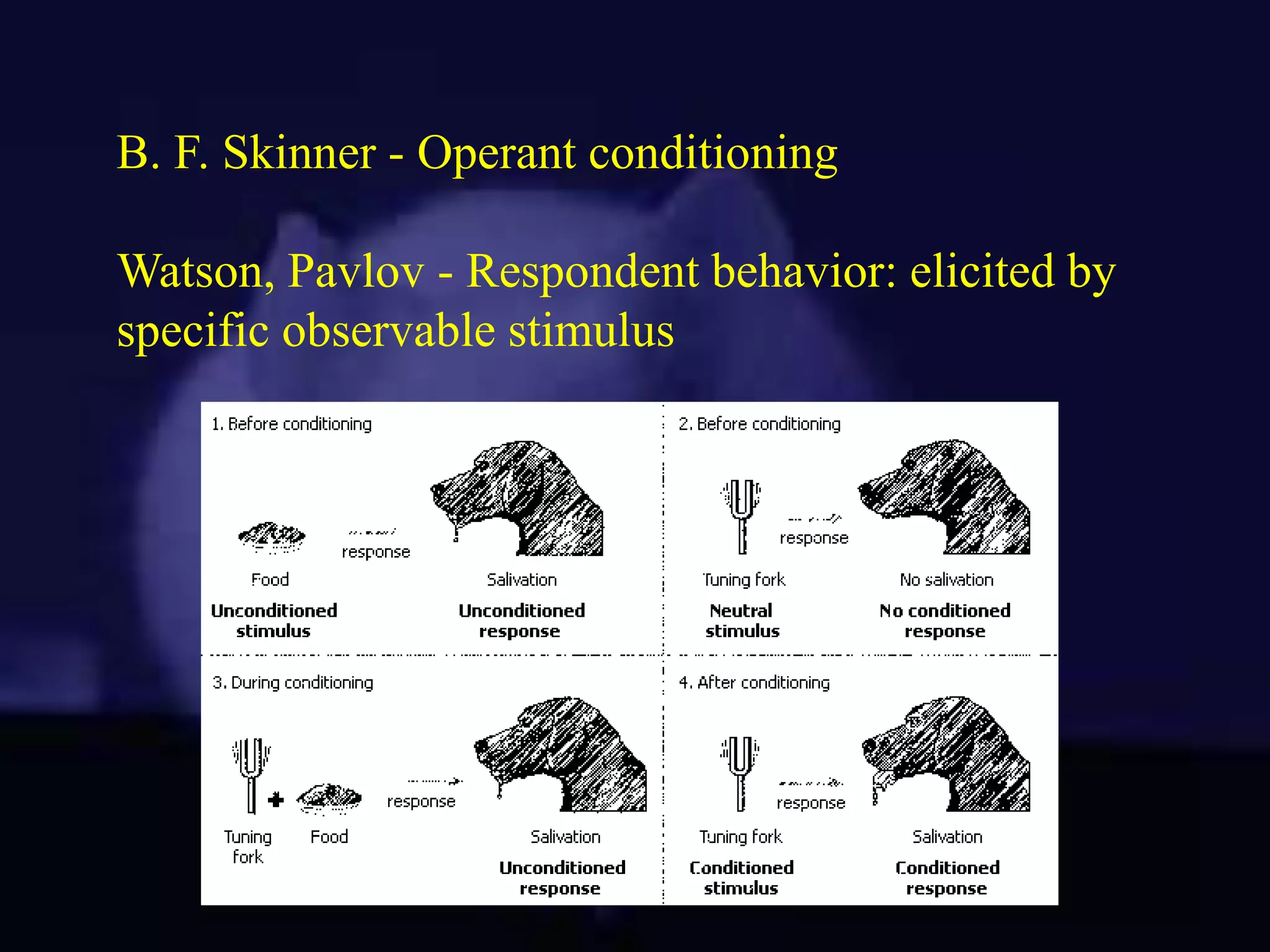
B. F. Skinner - Operant conditioning
Watson, Pavlov - Respondent behavior: elicited by
specific observable stimulus
B. F. Skinner
Operant behavior: occurs without an observable
external stimulus
Operates on the organism’s environment
The behavior is instrumental in securing a stimulus
more representative of everyday learning
B. F. Skinner
Science of behavior: Study of conditioning and
extinction of operants
Dependent variable in the "Skinner box": rate of
response
Law of acquisition
key variable: reinforcement
practice provides opportunities for
additional reinforcement
Differs from Thorndike and Hull’s positions
Thorndike and Hull: explanatory
Skinner: strictly descriptive
Skinner’s Theory
“All we need to know in order to describe
and explain behavior is this: actions
followed by good outcomes are likely to
recur , and actions followed by bad
outcomes are less likely to recur.”
(Skinner, 1953)
Central Human Motive in
Skinner’s Theory
Environmental consequences shape
behavior
LAW OF EFFECT
Behavior Better state Increased
of affairs probability of
behavior occurring
again
Behavior Worse state Decreased
of affairs probability of
behavior occurring
again
Behavior A
Behavior B
Behavior C Better state Behavior C
Behavior D of affairs emerges as the
Behavior E most probable
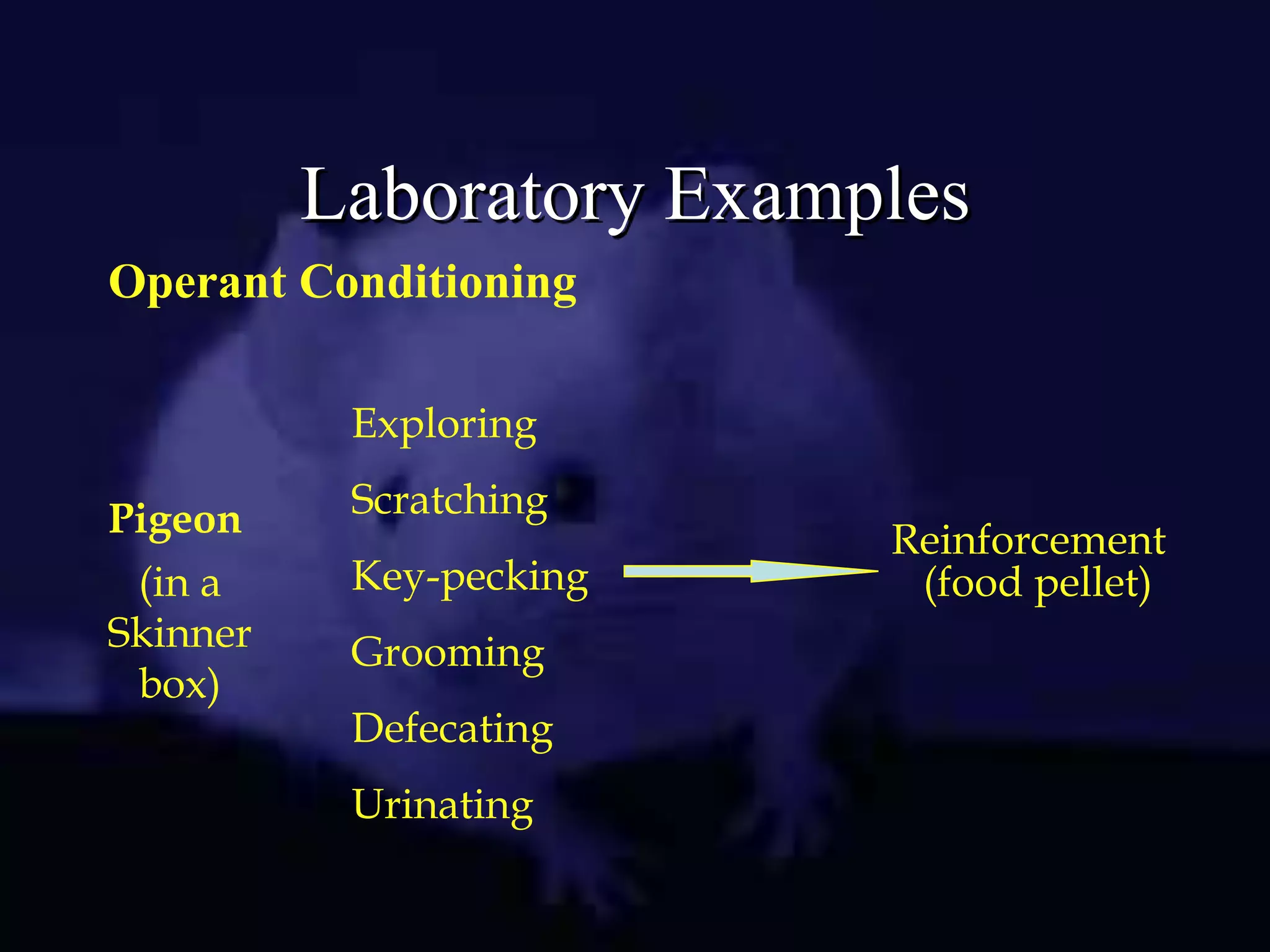
Laboratory Examples
Operant Conditioning
Reinforcement
(food pellet)
Exploring
Scratching
Key-pecking
Grooming
Defecating
Urinating
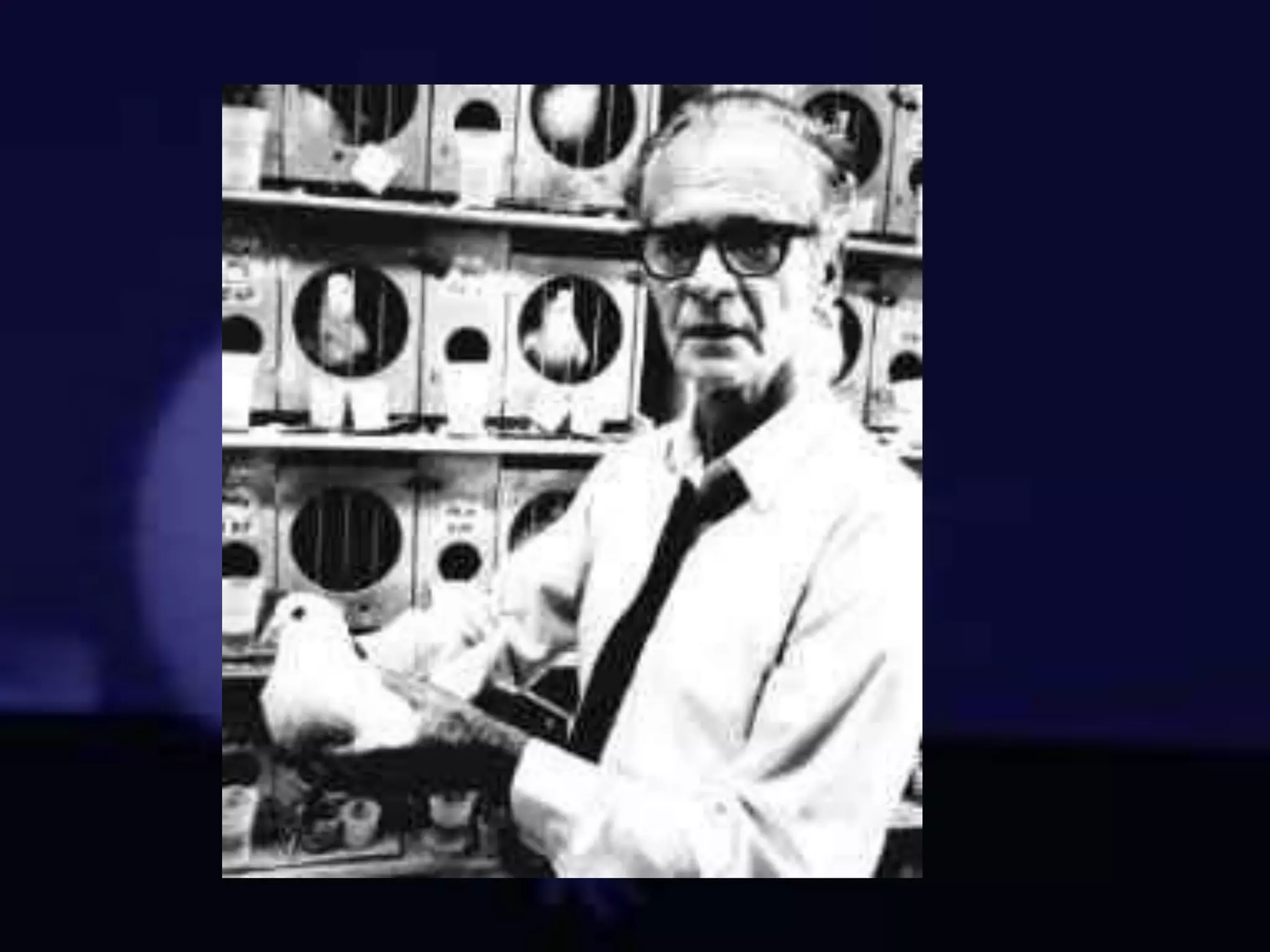
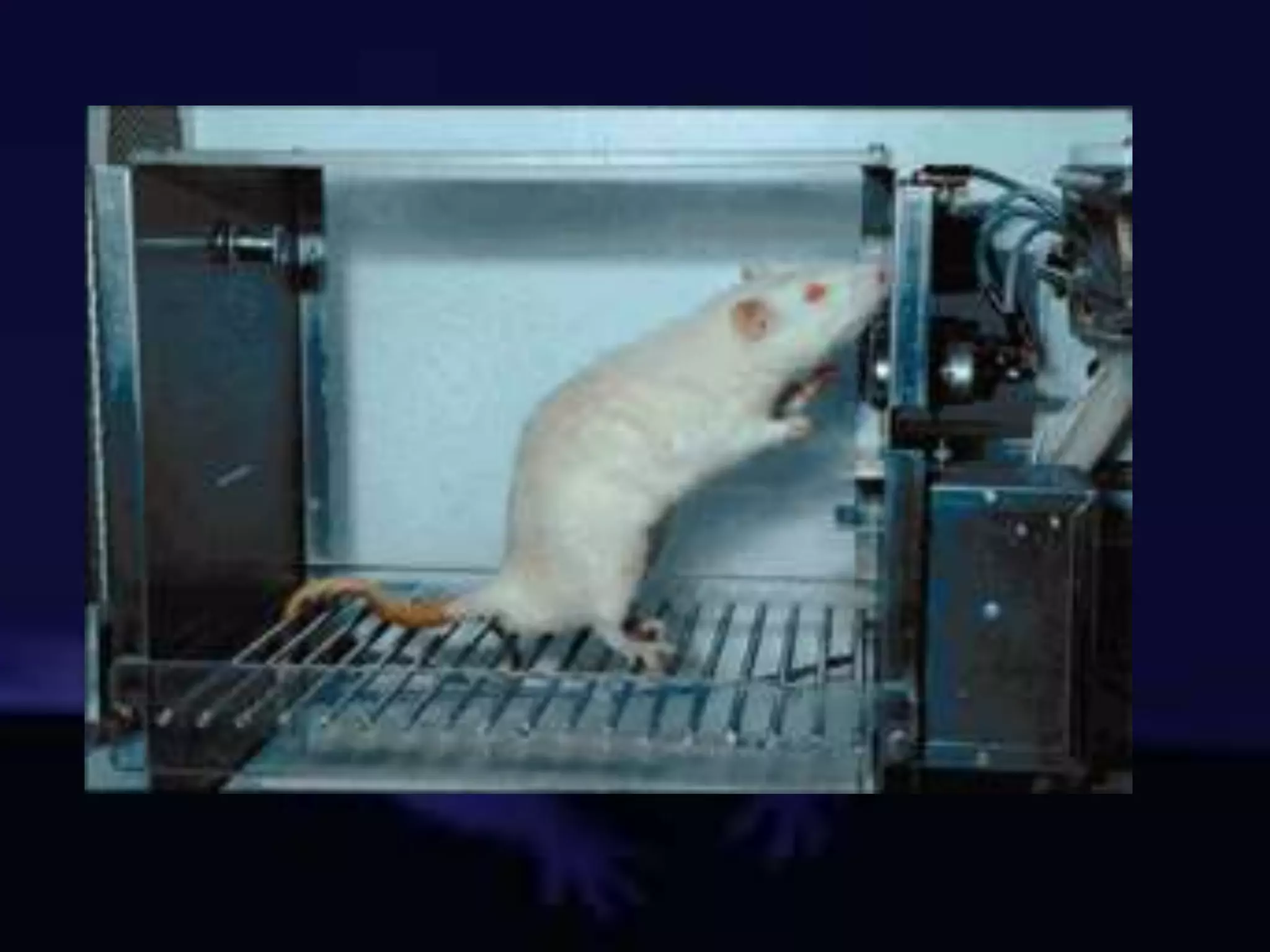
Pigeon
(in a
Skinner
box)
OPERANT CONDITIONING TECHNIQUES
• POSITIVE REINFORCEMENT = increasing a
behavior by administering a reward
• NEGATIVE REINFORCEMENT = increasing a
behavior by removing an aversive stimulus when a
behavior occurs
• PUNISHMENT = decreasing a behavior by
administering an aversive stimulus following a
behavior OR by removing a positive stimulus
• EXTINCTION = decreasing a behavior by not
rewarding it
B. F. Skinner
Research foci
Role of punishment in response acquisition
Schedules of reinforcement
Extinction of operants
Secondary reinforcement
Generalization
Subjects included humans as well as animals
B. F. Skinner
Schedules of reinforcement
Reinforcement is necessary in operant behavior
Reinforcement schedules
continuous
fixed and variable
ratio and interval
SCHEDULES OF REINFORCEMENT
• Interval schedules: reinforcement occurs after a certain
amount of time has passed
• Fixed Interval = reinforcement is presented after a fixed
amount of time
• Variable Interval = reinforcement is delivered on a
random/variable time schedule
• Ratio schedules: reinforcement occurs after a certain
number of responses
• Fixed Ratio = reinforcement presented after a fixed # of
responses
• Variable Ratio = reinforcement delivery is variable but
based on an overall average # of responses
LIMITED EFFECTS OF PUNISHMENT
• Punishment does not teach appropriate behaviors
• Must be delivered immediately & consistently
• May result in negative side effects
• Undesirable behaviors may be learned through
modeling (aggression)
• May create negative emotions (anxiety & fear)
HOW COMPLEX BEHAVIORS
ARE LEARNED
• Successive approximation/shaping = reinforcing
behaviors as they come to approximate the desired
behavior
• Superstitious Behavior = when persistent behaviors are
reinforced coincidentally rather than functionally
• Self-control of behavior
 Stimulus avoidance
 Self-administered satiation
 Aversive stimulation
 Self-reinforcement
B. F. Skinner
Verbal behavior
Speech
Comprised of responses
Can be reinforced by speech sounds or gestures
B. F. Skinner
Aircribs and teaching machines
1945: aircrib
Teaching machine
invented in the 1920s by Pressey
promoted by Skinner
1968: The Technology of Teaching
B. F. Skinner
Walden Two (1948): A
behavioristic society
Program of behavioral control
A technology of behavior
Application of laboratory
findings to society at large
B. F. Skinner
Behavior modification
Used in a variety of applied settings
Reinforce desired behavior and extinguish
undesired behavior
Punishment is not used
B. F. Skinner
Criticisms of Skinner’s behaviorism
His extreme positivism
His opposition to theory
His willingness to extrapolate beyond the data
The narrow range of behavior studied
Problem of instinctive drift
His position on verbal behavior
B. F. Skinner
Contributions of Skinner’s behaviorism
Shaped American psychology for 30 years
His goal: the improvement of society
Srength and ramifications of his radical behaviorism
Social Learning Theories: The Cognitive Challenge
The context
Skinner (1963): "Behaviorism at Fifty"
Progress in experimental psychology in U.S. due to
behaviorism
Social learning/sociobehaviorist approach fomented by
many, including some behaviorists, reflected
broader cognitive revolution in psychology
1995: consciousness has overtly and publicly returned
to psychology
BEHAVIOURISM-.ppt
BEHAVIOURISM-.ppt

BEHAVIOURISM-.ppt

  • 1.
  • 2.
  • 3.
    B. F. Skinner (1904-1990) Skinner’slife Predetermined, lawful, and orderly A product of past reinforcements 1925: Hamilton College (NY): degree in English, no courses in psychology Read about Pavlov’s and Watson’s experimental work 1931: Ph.D. from Harvard
  • 4.
    B. F. Skinner Dissertation:a reflex is a correlation between S and R 1938: The Behavior of Organisms 1953: Science and Human Behavior 1990: Vigorously attacked the growth of cognitive psychology 1990 (final article): "Can Psychology Be a Science of Mind?"
  • 5.
    B. F. Skinner Dealtonly with observable behavior The task of scientific inquiry: To establish functional relationships between experimenter-controlled stimulus and organism’s response No presumptions about internal entities - The "empty organism" approach
  • 6.
    B. F. Skinner Singlesubject design Large numbers of subjects not necessary Statistical comparisons of group means not necessary A single subject provides valid and replicable results Requires "sufficient" data collected under well- controlled experimental conditions Statistics obscure individual responses and differences
  • 7.
    B. F. Skinner- Operant conditioning Watson, Pavlov - Respondent behavior: elicited by specific observable stimulus
  • 8.
    B. F. Skinner Operantbehavior: occurs without an observable external stimulus Operates on the organism’s environment The behavior is instrumental in securing a stimulus more representative of everyday learning
  • 9.
    B. F. Skinner Scienceof behavior: Study of conditioning and extinction of operants Dependent variable in the "Skinner box": rate of response Law of acquisition key variable: reinforcement practice provides opportunities for additional reinforcement Differs from Thorndike and Hull’s positions Thorndike and Hull: explanatory Skinner: strictly descriptive
  • 11.
    Skinner’s Theory “All weneed to know in order to describe and explain behavior is this: actions followed by good outcomes are likely to recur , and actions followed by bad outcomes are less likely to recur.” (Skinner, 1953)
  • 12.
    Central Human Motivein Skinner’s Theory Environmental consequences shape behavior
  • 13.
    LAW OF EFFECT BehaviorBetter state Increased of affairs probability of behavior occurring again Behavior Worse state Decreased of affairs probability of behavior occurring again Behavior A Behavior B Behavior C Better state Behavior C Behavior D of affairs emerges as the Behavior E most probable
  • 14.
    Laboratory Examples Operant Conditioning Reinforcement (foodpellet) Exploring Scratching Key-pecking Grooming Defecating Urinating Pigeon (in a Skinner box)
  • 16.
    OPERANT CONDITIONING TECHNIQUES •POSITIVE REINFORCEMENT = increasing a behavior by administering a reward • NEGATIVE REINFORCEMENT = increasing a behavior by removing an aversive stimulus when a behavior occurs • PUNISHMENT = decreasing a behavior by administering an aversive stimulus following a behavior OR by removing a positive stimulus • EXTINCTION = decreasing a behavior by not rewarding it
  • 17.
    B. F. Skinner Researchfoci Role of punishment in response acquisition Schedules of reinforcement Extinction of operants Secondary reinforcement Generalization Subjects included humans as well as animals
  • 18.
    B. F. Skinner Schedulesof reinforcement Reinforcement is necessary in operant behavior Reinforcement schedules continuous fixed and variable ratio and interval
  • 19.
    SCHEDULES OF REINFORCEMENT •Interval schedules: reinforcement occurs after a certain amount of time has passed • Fixed Interval = reinforcement is presented after a fixed amount of time • Variable Interval = reinforcement is delivered on a random/variable time schedule • Ratio schedules: reinforcement occurs after a certain number of responses • Fixed Ratio = reinforcement presented after a fixed # of responses • Variable Ratio = reinforcement delivery is variable but based on an overall average # of responses
  • 20.
    LIMITED EFFECTS OFPUNISHMENT • Punishment does not teach appropriate behaviors • Must be delivered immediately & consistently • May result in negative side effects • Undesirable behaviors may be learned through modeling (aggression) • May create negative emotions (anxiety & fear)
  • 21.
    HOW COMPLEX BEHAVIORS ARELEARNED • Successive approximation/shaping = reinforcing behaviors as they come to approximate the desired behavior • Superstitious Behavior = when persistent behaviors are reinforced coincidentally rather than functionally • Self-control of behavior  Stimulus avoidance  Self-administered satiation  Aversive stimulation  Self-reinforcement
  • 24.
    B. F. Skinner Verbalbehavior Speech Comprised of responses Can be reinforced by speech sounds or gestures
  • 25.
    B. F. Skinner Aircribsand teaching machines 1945: aircrib Teaching machine invented in the 1920s by Pressey promoted by Skinner 1968: The Technology of Teaching
  • 28.
    B. F. Skinner WaldenTwo (1948): A behavioristic society Program of behavioral control A technology of behavior Application of laboratory findings to society at large
  • 29.
    B. F. Skinner Behaviormodification Used in a variety of applied settings Reinforce desired behavior and extinguish undesired behavior Punishment is not used
  • 30.
    B. F. Skinner Criticismsof Skinner’s behaviorism His extreme positivism His opposition to theory His willingness to extrapolate beyond the data The narrow range of behavior studied Problem of instinctive drift His position on verbal behavior
  • 31.
    B. F. Skinner Contributionsof Skinner’s behaviorism Shaped American psychology for 30 years His goal: the improvement of society Srength and ramifications of his radical behaviorism
  • 32.
    Social Learning Theories:The Cognitive Challenge The context Skinner (1963): "Behaviorism at Fifty" Progress in experimental psychology in U.S. due to behaviorism Social learning/sociobehaviorist approach fomented by many, including some behaviorists, reflected broader cognitive revolution in psychology 1995: consciousness has overtly and publicly returned to psychology