Beginning SCRUM
  for Startups
      Pradeep Sethi
   Associate Dir – Engineering
            iBibo.com
        December 2011
History of SCRUM
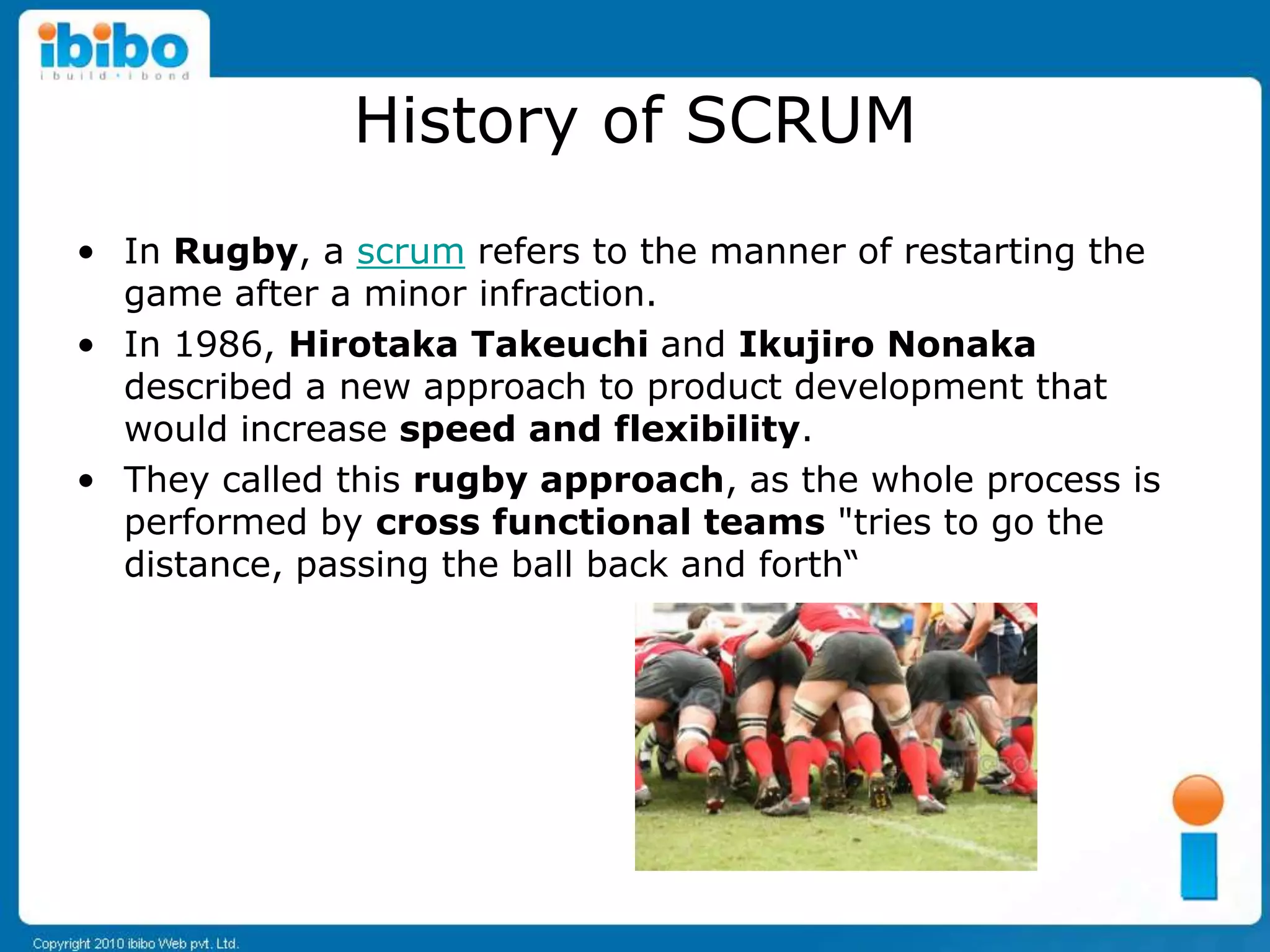
• In Rugby, a scrum refers to the manner of restarting the
  game after a minor infraction.
• In 1986, Hirotaka Takeuchi and Ikujiro Nonaka
  described a new approach to product development that
  would increase speed and flexibility.
• They called this rugby approach, as the whole process is
  performed by cross functional teams "tries to go the
  distance, passing the ball back and forth“
History of SCRUM - II
• Scrum is an iterative, incremental framework for project
  management often seen in agile software development


• A key principle of Scrum is its recognition that during a
  project the customers can change their minds about what
  they want and need (often called requirements churn)
  are split over iterations called sprints.
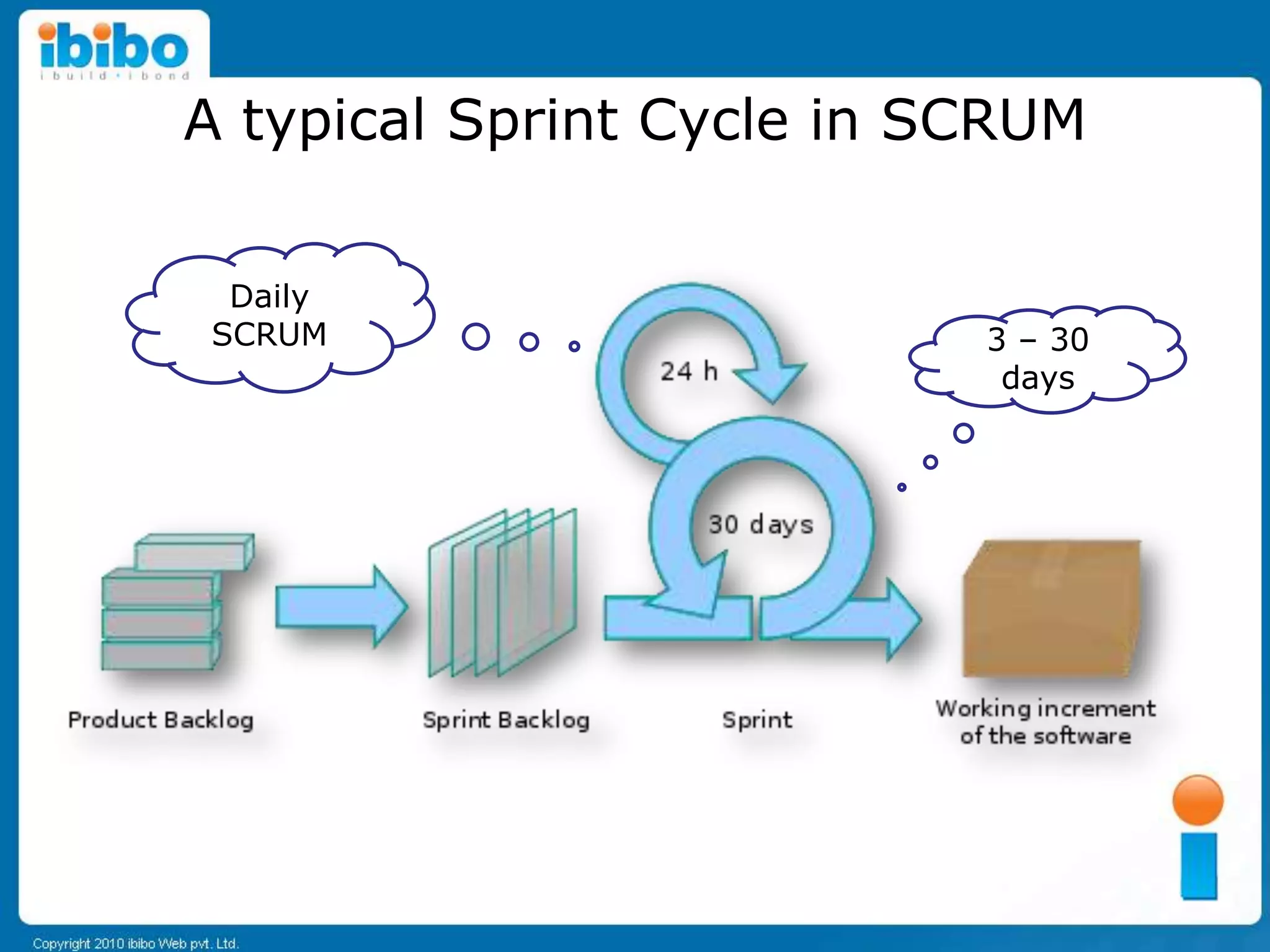
A typical Sprint Cycle in SCRUM

 Daily
SCRUM                      3 – 30
                            days
Characteristics & Roles

• Scrum is a process skeleton that contains sets of practices
  and predefined roles.

• The main roles in Scrum are:
   – “ScrumMaster”, who maintains the processes (typically in lieu of
     a project manager)
   – “Product Owner”, who represents the stakeholders and the business
   – “Team”, a cross-functional group who do the actual analysis, design,
     implementation, testing, etc.


• There are ancillary roles as well describes well by chicken &
  pig analagy…
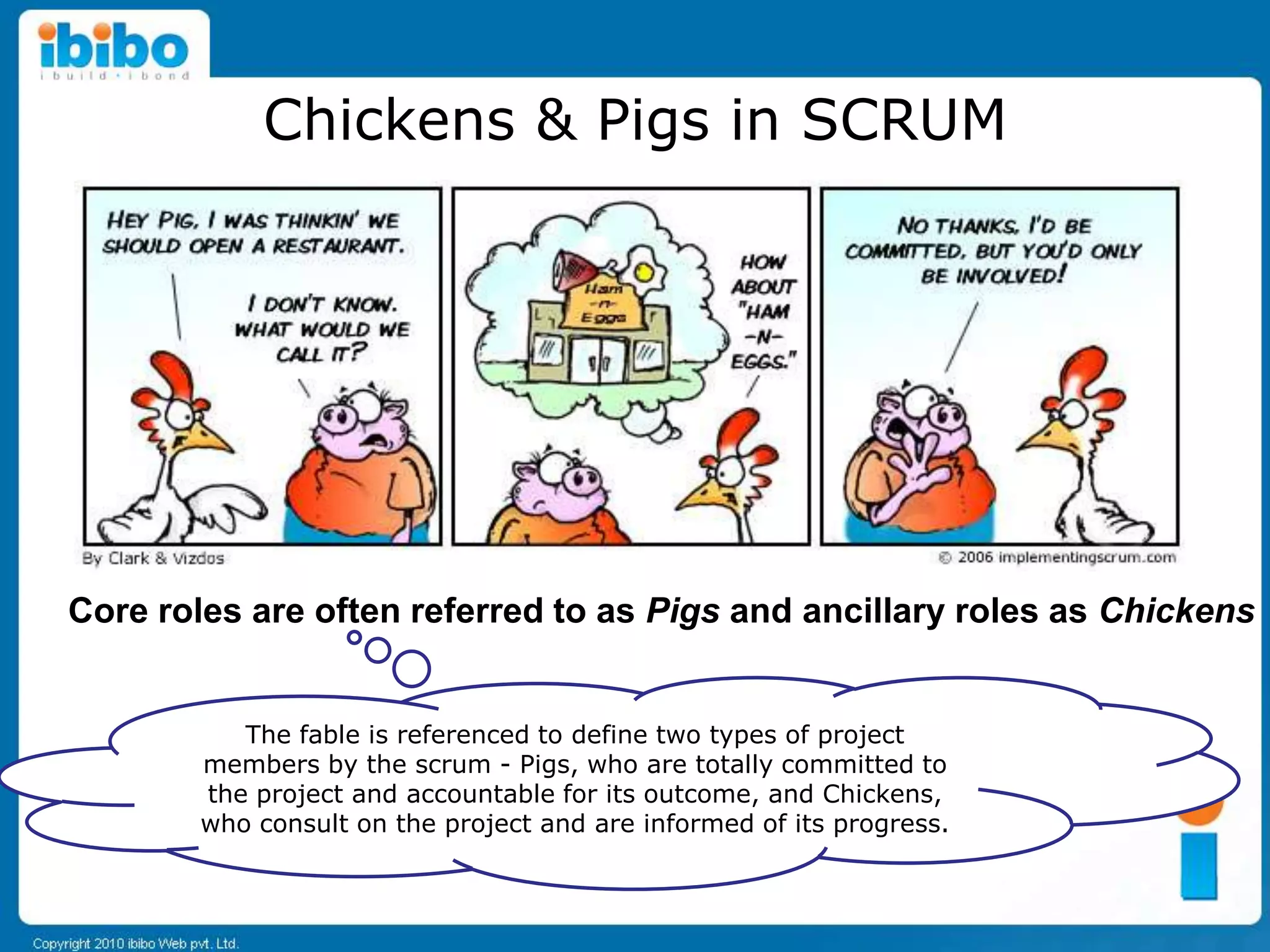
Chickens & Pigs in SCRUM


Core roles are often referred to as Pigs and ancillary roles as Chickens


           The fable is referenced to define two types of project
        members by the scrum - Pigs, who are totally committed to
        the project and accountable for its outcome, and Chickens,
        who consult on the project and are informed of its progress.
Sprints & Sprint Activities

• A sprint is the basic unit of development in
  Scrum.
• Typically between 1 week – 1 month.
• Timeboxed.
• Preceded by a sprint planning meeting.
• Daily sprint meeting / Daily standup.
• Sprint Review Meeting.
• Sprint Retrospective.
Sprint Planning Meeting

• At the beginning of the sprint cycle, a “Sprint Planning Meeting” is
  held.
• Product Backlog needs to be ready by Product Owner for the
  meeting.
• Based upon the Sprint Backlog that details the time it will take
  to do that work, with the entire team.
• The team including Development team & QC team gives the
  estimate.
• Sprint is published clearly to all the stakeholders. [sprint not to be
   changed in between – see appendix]
• At the end of a sprint cycle, Sprint Retrospective is held.
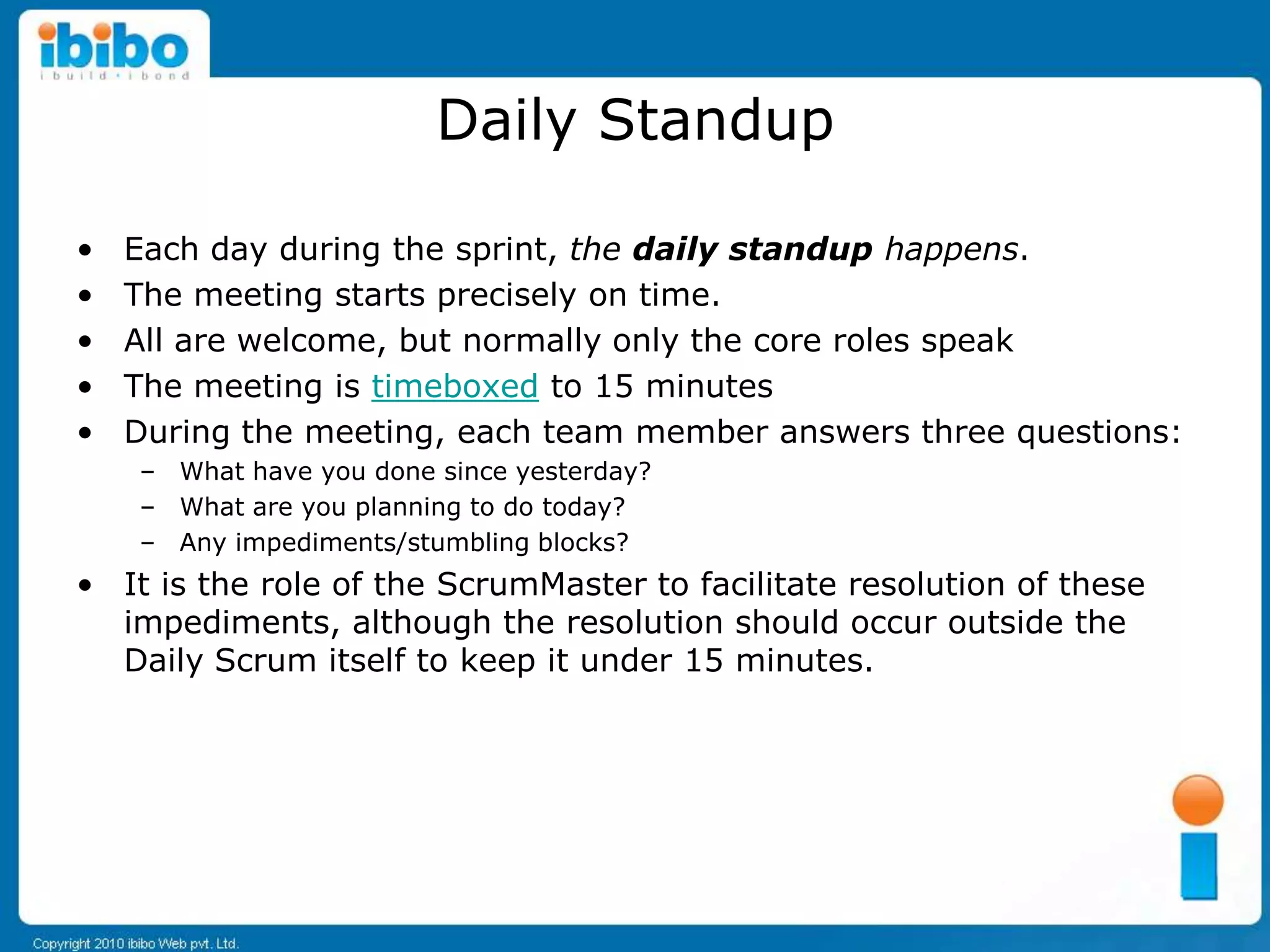
Daily Standup

•   Each day during the sprint, the daily standup happens.
•   The meeting starts precisely on time.
•   All are welcome, but normally only the core roles speak
•   The meeting is timeboxed to 15 minutes
•   During the meeting, each team member answers three questions:
    – What have you done since yesterday?
    – What are you planning to do today?
    – Any impediments/stumbling blocks?
• It is the role of the ScrumMaster to facilitate resolution of these
  impediments, although the resolution should occur outside the
  Daily Scrum itself to keep it under 15 minutes.
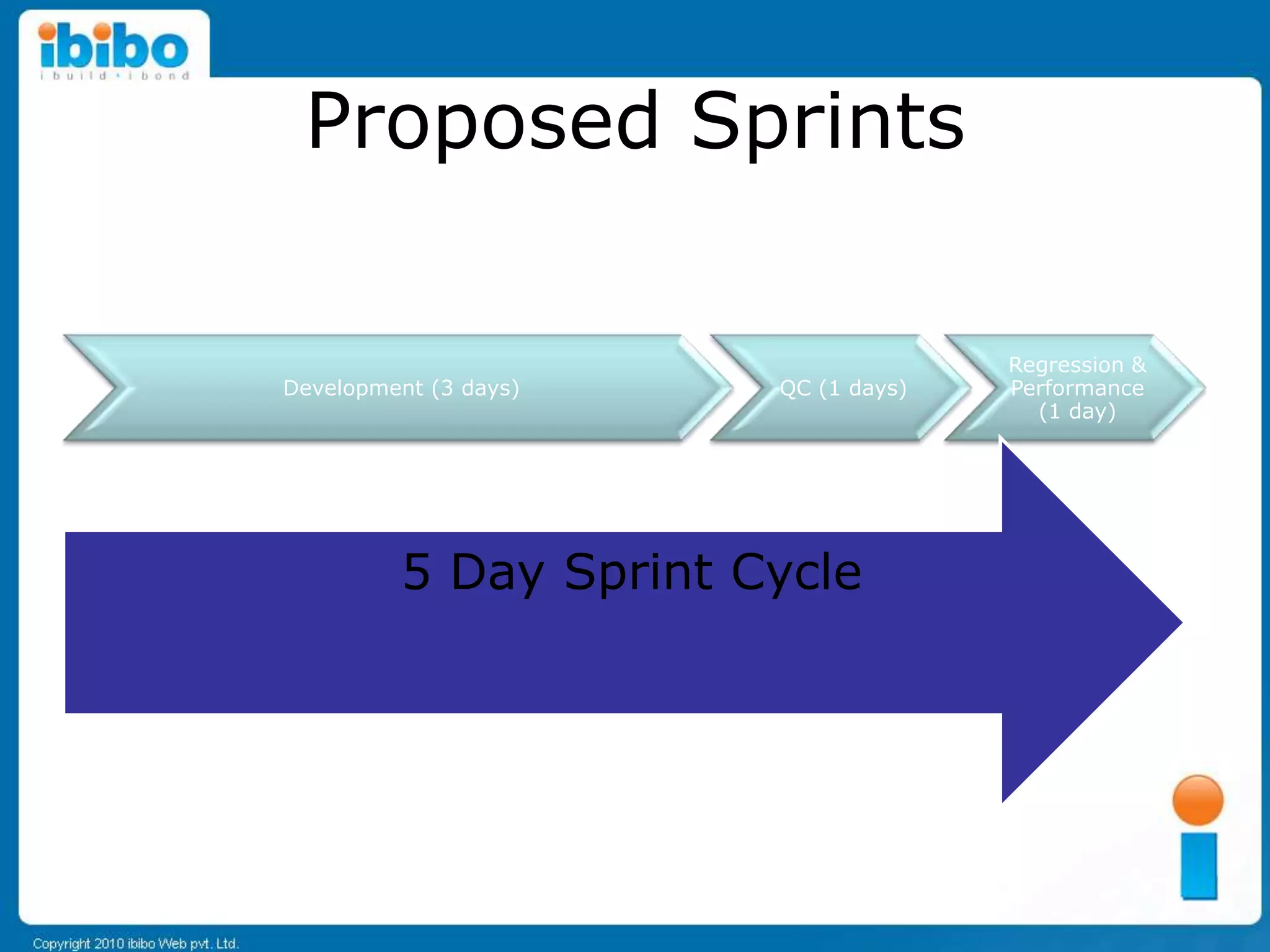
Proposed Sprints

                                     Regression &
Development (3 days)   QC (1 days)   Performance
                                       (1 day)


         5 Day Sprint Cycle
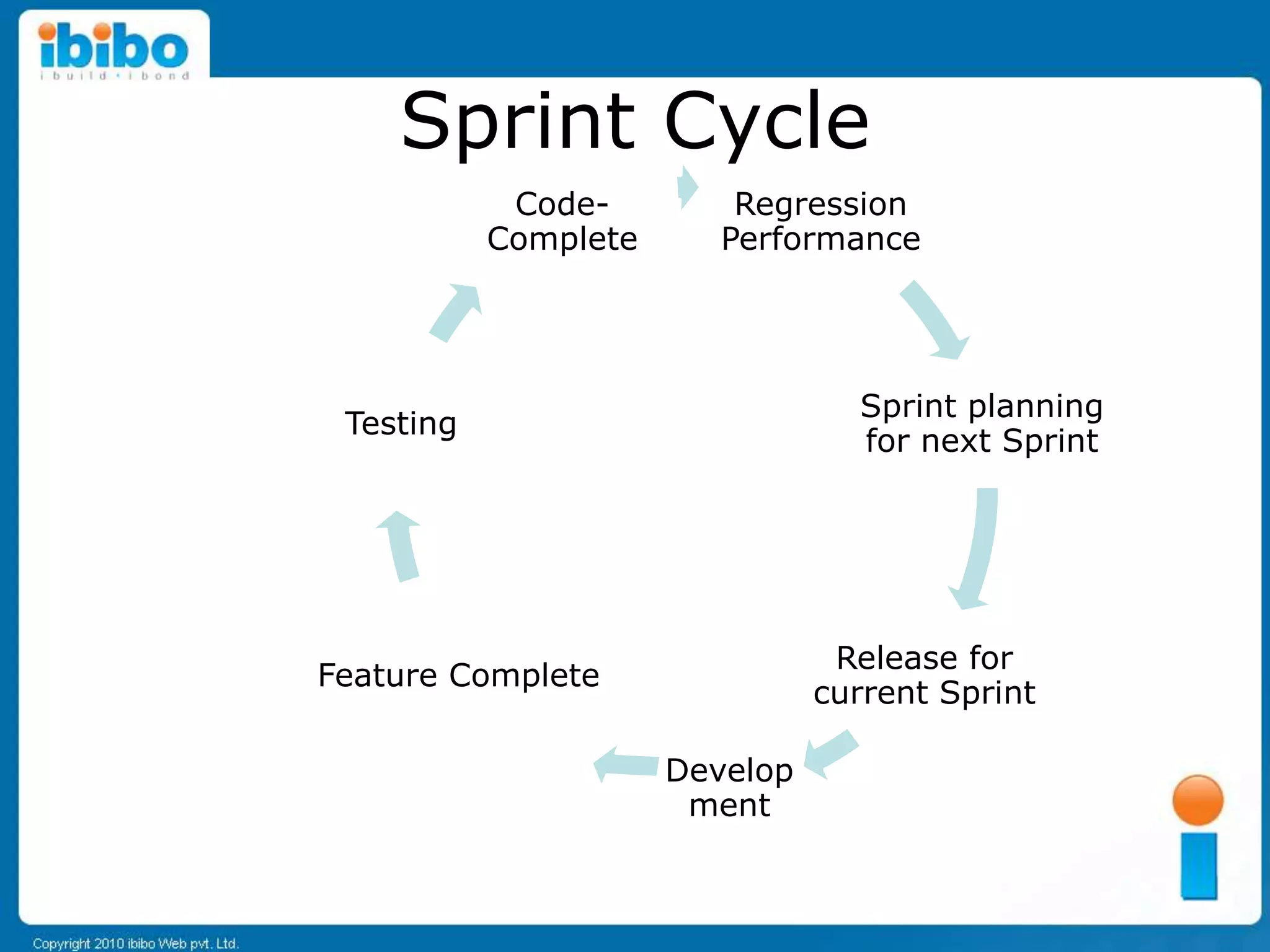
Sprint Cycle
            Code-         Regression
           Complete      Performance


                                  Sprint planning
 Testing
                                  for next Sprint


                                 Release for
Feature Complete
                                current Sprint

                      Develop
                       ment
Questions ?


Thank You
Appendix
SCRUM in <10 minutes
       (Nice video)

Beginning SCRUM for Startups

  • 1.
    Beginning SCRUM for Startups Pradeep Sethi Associate Dir – Engineering iBibo.com December 2011
  • 2.
    History of SCRUM •In Rugby, a scrum refers to the manner of restarting the game after a minor infraction. • In 1986, Hirotaka Takeuchi and Ikujiro Nonaka described a new approach to product development that would increase speed and flexibility. • They called this rugby approach, as the whole process is performed by cross functional teams "tries to go the distance, passing the ball back and forth“
  • 3.
    History of SCRUM- II • Scrum is an iterative, incremental framework for project management often seen in agile software development • A key principle of Scrum is its recognition that during a project the customers can change their minds about what they want and need (often called requirements churn) are split over iterations called sprints.
  • 4.
    A typical SprintCycle in SCRUM Daily SCRUM 3 – 30 days
  • 5.
    Characteristics & Roles •Scrum is a process skeleton that contains sets of practices and predefined roles. • The main roles in Scrum are: – “ScrumMaster”, who maintains the processes (typically in lieu of a project manager) – “Product Owner”, who represents the stakeholders and the business – “Team”, a cross-functional group who do the actual analysis, design, implementation, testing, etc. • There are ancillary roles as well describes well by chicken & pig analagy…
  • 6.
    Chickens & Pigsin SCRUM Core roles are often referred to as Pigs and ancillary roles as Chickens The fable is referenced to define two types of project members by the scrum - Pigs, who are totally committed to the project and accountable for its outcome, and Chickens, who consult on the project and are informed of its progress.
  • 7.
    Sprints & SprintActivities • A sprint is the basic unit of development in Scrum. • Typically between 1 week – 1 month. • Timeboxed. • Preceded by a sprint planning meeting. • Daily sprint meeting / Daily standup. • Sprint Review Meeting. • Sprint Retrospective.
  • 8.
    Sprint Planning Meeting •At the beginning of the sprint cycle, a “Sprint Planning Meeting” is held. • Product Backlog needs to be ready by Product Owner for the meeting. • Based upon the Sprint Backlog that details the time it will take to do that work, with the entire team. • The team including Development team & QC team gives the estimate. • Sprint is published clearly to all the stakeholders. [sprint not to be changed in between – see appendix] • At the end of a sprint cycle, Sprint Retrospective is held.
  • 9.
    Daily Standup • Each day during the sprint, the daily standup happens. • The meeting starts precisely on time. • All are welcome, but normally only the core roles speak • The meeting is timeboxed to 15 minutes • During the meeting, each team member answers three questions: – What have you done since yesterday? – What are you planning to do today? – Any impediments/stumbling blocks? • It is the role of the ScrumMaster to facilitate resolution of these impediments, although the resolution should occur outside the Daily Scrum itself to keep it under 15 minutes.
  • 10.
    Proposed Sprints Regression & Development (3 days) QC (1 days) Performance (1 day) 5 Day Sprint Cycle
  • 11.
    Sprint Cycle Code- Regression Complete Performance Sprint planning Testing for next Sprint Release for Feature Complete current Sprint Develop ment
  • 12.
  • 13.
  • 14.
    SCRUM in <10minutes (Nice video)