DAVID . VINCENT . ZACK
TUTOR: PROF. DEBRA HO
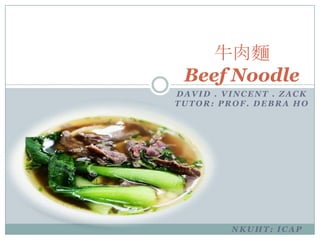
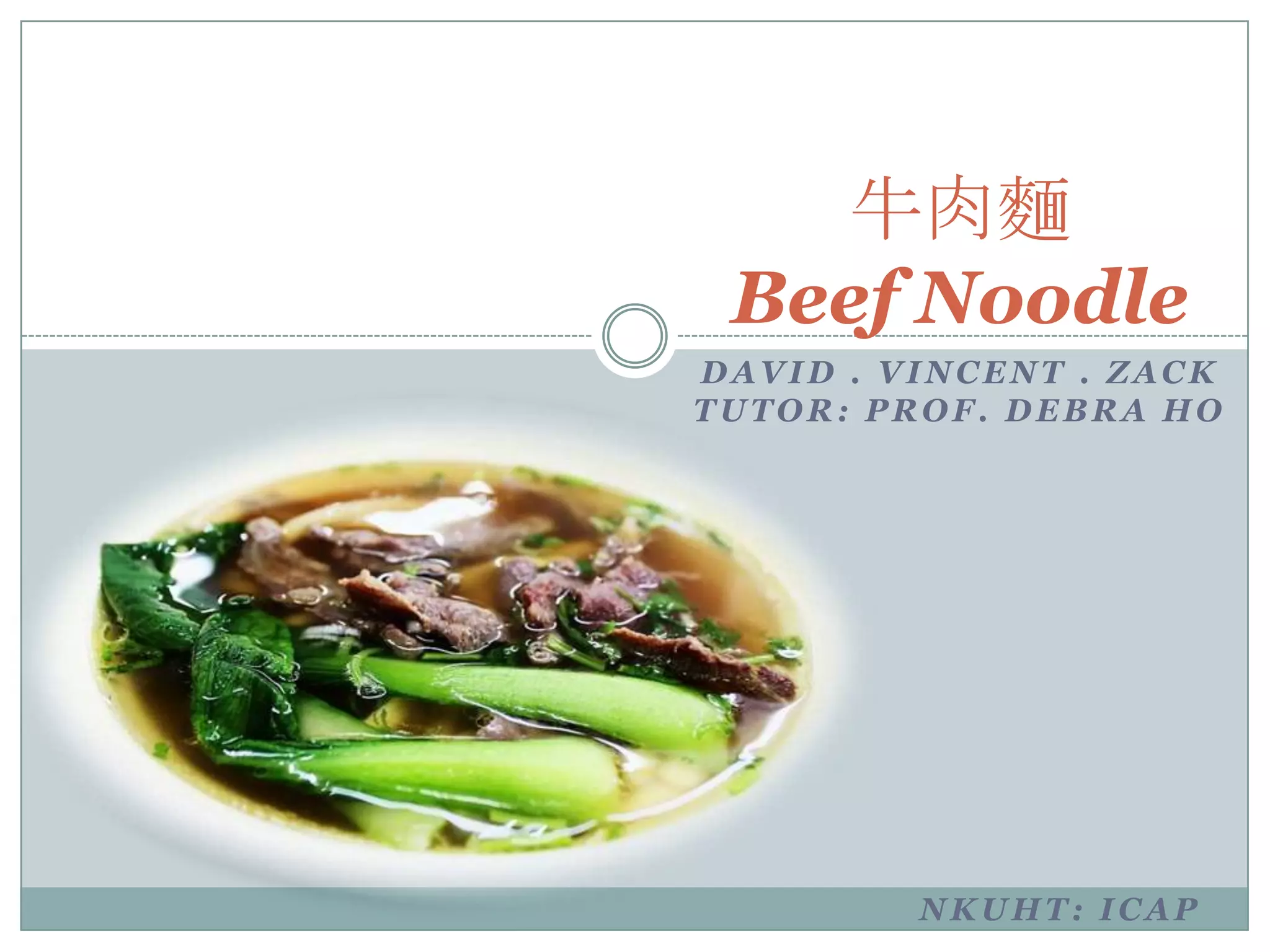
牛肉麵
Beef Noodle
NKUHT: ICAP
Introduction
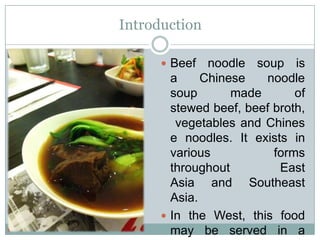
 Beef noodle soup is
a Chinese noodle
soup made of
stewed beef, beef broth,
vegetables and Chines
e noodles. It exists in
various forms
throughout East
Asia and Southeast
Asia.
 In the West, this food
may be served in a
Introduction (cont)
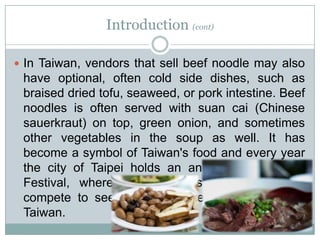
 In Taiwan, vendors that sell beef noodle may also
have optional, often cold side dishes, such as
braised dried tofu, seaweed, or pork intestine. Beef
noodles is often served with suan cai (Chinese
sauerkraut) on top, green onion, and sometimes
other vegetables in the soup as well. It has
become a symbol of Taiwan's food and every year
the city of Taipei holds an annual Beef Noodle
Festival, where various chefs and restaurants
compete to see who is the best beef noodle in
Taiwan.
Origin – Lanzhou Ramen
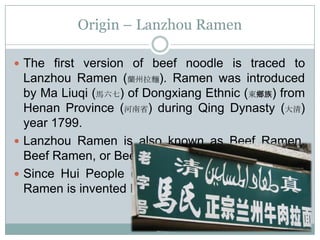
 The first version of beef noodle is traced to
Lanzhou Ramen (蘭州拉麵). Ramen was introduced
by Ma Liuqi (馬六七) of Dongxiang Ethnic (東鄉族) from
Henan Province (河南省) during Qing Dynasty (大清)
year 1799.
 Lanzhou Ramen is also known as Beef Ramen,
Beef Ramen, or Beef Noodle.
 Since Hui People (回族) are Islamic, the Lanzhou
Ramen is invented Halal.
Lanzhou Ramen – Characteristic
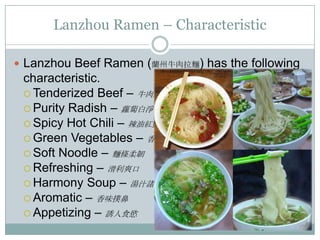
 Lanzhou Beef Ramen (蘭州牛肉拉麵) has the following
characteristic.
 Tenderized Beef – 牛肉爛軟
 Purity Radish – 蘿蔔白淨
 Spicy Hot Chili – 辣油紅艷
 Green Vegetables – 香菜脆綠
 Soft Noodle – 麵條柔韌
 Refreshing – 滑利爽口
 Harmony Soup – 湯汁諸味和諧
 Aromatic – 香味撲鼻
 Appetizing – 誘人食慾
Lanzhou Ramen - Principals
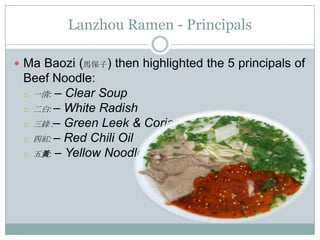
 Ma Baozi (馬保子) then highlighted the 5 principals of
Beef Noodle:
 一清: – Clear Soup
 二白: – White Radish
 三綠 :– Green Leek & Coriander
 四紅: – Red Chili Oil
 五黃: – Yellow Noodle
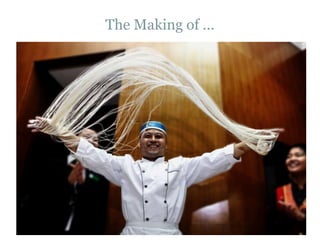
The Making of …
Lanzhou Ramen – TMO
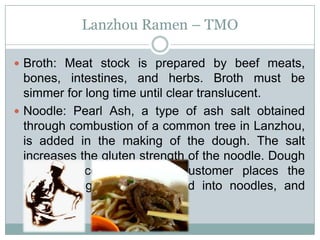
 Broth: Meat stock is prepared by beef meats,
bones, intestines, and herbs. Broth must be
simmer for long time until clear translucent.
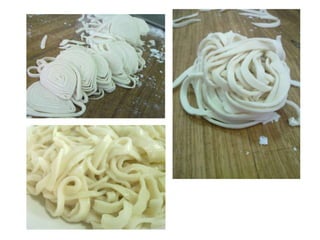
 Noodle: Pearl Ash, a type of ash salt obtained
through combustion of a common tree in Lanzhou,
is added in the making of the dough. The salt
increases the gluten strength of the noodle. Dough
remain uncooked until a customer places the
order. Dough is thus shaped into noodles, and
cooked.
Lanzhou Ramen – TMO
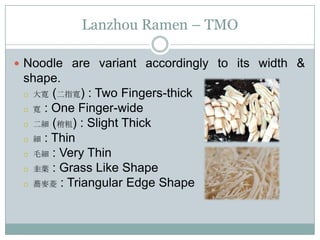
 Noodle are variant accordingly to its width &
shape.
 大寬 (二指寬) : Two Fingers-thick
 寬 : One Finger-wide
 二細 (稍粗) : Slight Thick
 細 : Thin
 毛細 : Very Thin
 韭葉 : Grass Like Shape
 蕎麥菱 : Triangular Edge Shape
Lanzhou Ramen – TMO
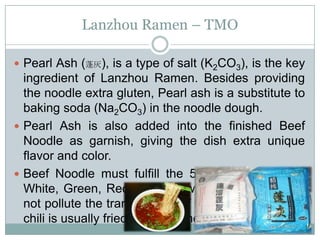
 Pearl Ash (蓬灰), is a type of salt (K2CO3), is the key
ingredient of Lanzhou Ramen. Besides providing
the noodle extra gluten, Pearl ash is a substitute to
baking soda (Na2CO3) in the noodle dough.
 Pearl Ash is also added into the finished Beef
Noodle as garnish, giving the dish extra unique
flavor and color.
 Beef Noodle must fulfill the 5 principal of Clear,
White, Green, Red and Yellow. The red chili must
not pollute the translucency of the broth, therefore,
chili is usually fried with sesame.
Lanzhou Ramen & Culture
 Beef noodle is more than a dish in Lanzhou.
People of Lanzhou eat it almost everyday. It is
also an important breakfast for the people.
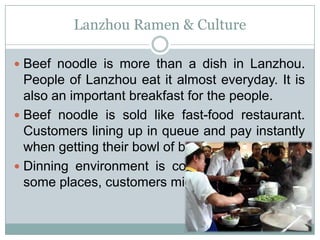
 Beef noodle is sold like fast-food restaurant.
Customers lining up in queue and pay instantly
when getting their bowl of beef noodle.
 Dinning environment is commonly ignored, in
some places, customers might dine in standing.
Lanzhou Beef Ramen
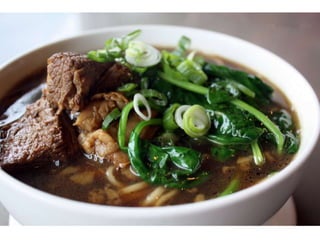
 The principals of Ma Baozi in cooking Beef Noodle
is highly respected. The special features of ‘mirror-
clear broth, soft tender meat, and shinny noodle’
and the ‘Clear, White, Green, Red, Yellow’ principal
has made Beef Noodle known worldwide.
 Beef Noodle has been recognized as the first
Chinese noodle by the China government. Beef
Noodle is also considered a type of Chinese
traditional food.
 Beef Noodle are variant from vendor to vendor
throughout the country due to different type of
stock base and ingredient, however, all cook
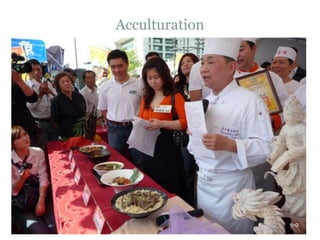
Acculturation
Acculturation of Beef Noodle in Taiwan
 Beef Noodle was introduced to Taiwan in the 50’s.
Migrations from China mainland were selling their
cultural food at Ximenting, Taipei.
 Beef Noodle begins getting popularized among
local Taiwanese. Food vendors has started to
create their own version of Beef Noodle due to no
exact traditional recipe to be followed.
 In the 60’s when transportation has
improved, vendors travel all the way in the
country, Beef Noodle is thus widely spread.
 The vendors maintain the
Taiwanese Beef Noodle – Recipe
 In general, the broth of Beef Noodle is prepared
with beef bones and meats. Ingredients needed to
be simmer over long time, some recipe calls for
more than 24 hours of simmering.
 Reuse of same broth is common for economic
vendors. Broth are first prepared in large pot, when
the restaurant has finished its daily service, old
ingredient are removed and discarded, while
adding new ingredient to the same broth.
 The common spices added are: tangerine peel,
star anise, ginger and soy sauce. Vendors might
add different type of cooking wine.
 After the broth is done, noodles are cooked
Taiwanese Beef Noodle – Variety
 紅燒牛肉麵 : the most common type of Beef Noodle,
heavily seasoned with bean paste, soy sauce.
 清燉牛肉麵 : Broth and freshness of meat is the key of
cooking, barely seasoned.
 清湯牛肉麵 : Broth is based with beef bones, carrot
and corn.
 牛肉湯麵 : Beef noodle without meats.
 番茄牛肉麵 : Broth is added with tomato.
 蔥燒牛肉麵 : Broth is added with shallots.
 麻辣牛肉麵 : Broth is spiced with dried chili.
 川味牛肉麵 : Lanzhou Beef Noodle added with
Taiwanese Beef Noodle – Variety
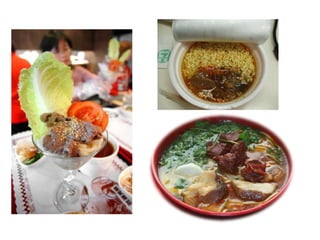
 沙茶牛肉麵 : Broth is seasoned with Chinese Sacha
sauce.
 牛排牛肉麵 : Beef Noodle served with quality slice of
beef.
 咖哩牛肉麵 : Broth is added with curry flavor.
 速食牛肉麵 : Instant noodle with beef flavor.
 餛飩牛湯麵 : Beef Noodle served with dumplings.
 牛肉細粉 : Beef Noodle with thin type /glutinous /rice
noodle.
 牛腩面 : Beef brisket noodle
 牛雜面 : Beef mixed meat noodle
Taiwanese Beef Noodle Culture
 Beef Noodle is consider a type of local dish here.
Beef noodle is commonly available throughout the
entire day time.
 The price of beef noodle can be vary from NT50 to
NT300, even more, depending on the quality of the
dish as well as environment of the restaurant.
 One of the well-known high-class restaurant is
Restaurant Ding Tai Fung (鼎泰豐). It sells famous
Taiwanese food such as Soup Dumplings, Ramen,
and Beef Noodles.
Taipei Beef Noodle Fest
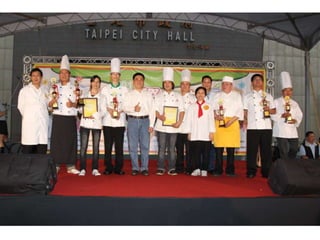
 Taipei Beef Noodle Festival is an annual
competition organized by Taipei City Government.
The competition was to determine the best Beef
Noodle ranked by local citizen and internet users.
 The first Taipei Beef Noodle Fest was held in year
2005, under the leadership of Town Mayor Ma
Ying-Jeou.
 The event was successful and receive enormous
response from the public. And hence, the
organizer continue organizing the event in
subsequence years, with increasing the size of
event.
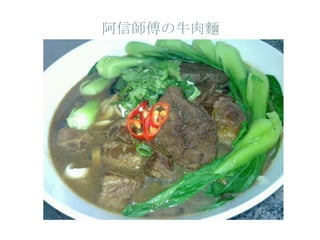
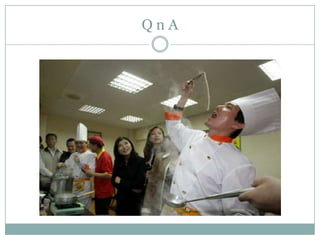
阿信師傅の牛肉麵
Q n A
Thank you

NKUHT 2010 | Beef Noodle Presentation

  • 1.
    DAVID . VINCENT. ZACK TUTOR: PROF. DEBRA HO 牛肉麵 Beef Noodle NKUHT: ICAP
  • 2.
    Introduction  Beef noodlesoup is a Chinese noodle soup made of stewed beef, beef broth, vegetables and Chines e noodles. It exists in various forms throughout East Asia and Southeast Asia.  In the West, this food may be served in a
  • 3.
    Introduction (cont)  InTaiwan, vendors that sell beef noodle may also have optional, often cold side dishes, such as braised dried tofu, seaweed, or pork intestine. Beef noodles is often served with suan cai (Chinese sauerkraut) on top, green onion, and sometimes other vegetables in the soup as well. It has become a symbol of Taiwan's food and every year the city of Taipei holds an annual Beef Noodle Festival, where various chefs and restaurants compete to see who is the best beef noodle in Taiwan.
  • 4.
    Origin – LanzhouRamen  The first version of beef noodle is traced to Lanzhou Ramen (蘭州拉麵). Ramen was introduced by Ma Liuqi (馬六七) of Dongxiang Ethnic (東鄉族) from Henan Province (河南省) during Qing Dynasty (大清) year 1799.  Lanzhou Ramen is also known as Beef Ramen, Beef Ramen, or Beef Noodle.  Since Hui People (回族) are Islamic, the Lanzhou Ramen is invented Halal.
  • 5.
    Lanzhou Ramen –Characteristic  Lanzhou Beef Ramen (蘭州牛肉拉麵) has the following characteristic.  Tenderized Beef – 牛肉爛軟  Purity Radish – 蘿蔔白淨  Spicy Hot Chili – 辣油紅艷  Green Vegetables – 香菜脆綠  Soft Noodle – 麵條柔韌  Refreshing – 滑利爽口  Harmony Soup – 湯汁諸味和諧  Aromatic – 香味撲鼻  Appetizing – 誘人食慾
  • 6.
    Lanzhou Ramen -Principals  Ma Baozi (馬保子) then highlighted the 5 principals of Beef Noodle:  一清: – Clear Soup  二白: – White Radish  三綠 :– Green Leek & Coriander  四紅: – Red Chili Oil  五黃: – Yellow Noodle
  • 7.
  • 8.
    Lanzhou Ramen –TMO  Broth: Meat stock is prepared by beef meats, bones, intestines, and herbs. Broth must be simmer for long time until clear translucent.  Noodle: Pearl Ash, a type of ash salt obtained through combustion of a common tree in Lanzhou, is added in the making of the dough. The salt increases the gluten strength of the noodle. Dough remain uncooked until a customer places the order. Dough is thus shaped into noodles, and cooked.
  • 9.
    Lanzhou Ramen –TMO  Noodle are variant accordingly to its width & shape.  大寬 (二指寬) : Two Fingers-thick  寬 : One Finger-wide  二細 (稍粗) : Slight Thick  細 : Thin  毛細 : Very Thin  韭葉 : Grass Like Shape  蕎麥菱 : Triangular Edge Shape
  • 10.
    Lanzhou Ramen –TMO  Pearl Ash (蓬灰), is a type of salt (K2CO3), is the key ingredient of Lanzhou Ramen. Besides providing the noodle extra gluten, Pearl ash is a substitute to baking soda (Na2CO3) in the noodle dough.  Pearl Ash is also added into the finished Beef Noodle as garnish, giving the dish extra unique flavor and color.  Beef Noodle must fulfill the 5 principal of Clear, White, Green, Red and Yellow. The red chili must not pollute the translucency of the broth, therefore, chili is usually fried with sesame.
  • 11.
    Lanzhou Ramen &Culture  Beef noodle is more than a dish in Lanzhou. People of Lanzhou eat it almost everyday. It is also an important breakfast for the people.  Beef noodle is sold like fast-food restaurant. Customers lining up in queue and pay instantly when getting their bowl of beef noodle.  Dinning environment is commonly ignored, in some places, customers might dine in standing.
  • 12.
    Lanzhou Beef Ramen The principals of Ma Baozi in cooking Beef Noodle is highly respected. The special features of ‘mirror- clear broth, soft tender meat, and shinny noodle’ and the ‘Clear, White, Green, Red, Yellow’ principal has made Beef Noodle known worldwide.  Beef Noodle has been recognized as the first Chinese noodle by the China government. Beef Noodle is also considered a type of Chinese traditional food.  Beef Noodle are variant from vendor to vendor throughout the country due to different type of stock base and ingredient, however, all cook
  • 13.
  • 14.
    Acculturation of BeefNoodle in Taiwan  Beef Noodle was introduced to Taiwan in the 50’s. Migrations from China mainland were selling their cultural food at Ximenting, Taipei.  Beef Noodle begins getting popularized among local Taiwanese. Food vendors has started to create their own version of Beef Noodle due to no exact traditional recipe to be followed.  In the 60’s when transportation has improved, vendors travel all the way in the country, Beef Noodle is thus widely spread.  The vendors maintain the
  • 16.
    Taiwanese Beef Noodle– Recipe  In general, the broth of Beef Noodle is prepared with beef bones and meats. Ingredients needed to be simmer over long time, some recipe calls for more than 24 hours of simmering.  Reuse of same broth is common for economic vendors. Broth are first prepared in large pot, when the restaurant has finished its daily service, old ingredient are removed and discarded, while adding new ingredient to the same broth.  The common spices added are: tangerine peel, star anise, ginger and soy sauce. Vendors might add different type of cooking wine.  After the broth is done, noodles are cooked
  • 17.
    Taiwanese Beef Noodle– Variety  紅燒牛肉麵 : the most common type of Beef Noodle, heavily seasoned with bean paste, soy sauce.  清燉牛肉麵 : Broth and freshness of meat is the key of cooking, barely seasoned.  清湯牛肉麵 : Broth is based with beef bones, carrot and corn.  牛肉湯麵 : Beef noodle without meats.  番茄牛肉麵 : Broth is added with tomato.  蔥燒牛肉麵 : Broth is added with shallots.  麻辣牛肉麵 : Broth is spiced with dried chili.  川味牛肉麵 : Lanzhou Beef Noodle added with
  • 18.
    Taiwanese Beef Noodle– Variety  沙茶牛肉麵 : Broth is seasoned with Chinese Sacha sauce.  牛排牛肉麵 : Beef Noodle served with quality slice of beef.  咖哩牛肉麵 : Broth is added with curry flavor.  速食牛肉麵 : Instant noodle with beef flavor.  餛飩牛湯麵 : Beef Noodle served with dumplings.  牛肉細粉 : Beef Noodle with thin type /glutinous /rice noodle.  牛腩面 : Beef brisket noodle  牛雜面 : Beef mixed meat noodle
  • 20.
    Taiwanese Beef NoodleCulture  Beef Noodle is consider a type of local dish here. Beef noodle is commonly available throughout the entire day time.  The price of beef noodle can be vary from NT50 to NT300, even more, depending on the quality of the dish as well as environment of the restaurant.  One of the well-known high-class restaurant is Restaurant Ding Tai Fung (鼎泰豐). It sells famous Taiwanese food such as Soup Dumplings, Ramen, and Beef Noodles.
  • 21.
    Taipei Beef NoodleFest  Taipei Beef Noodle Festival is an annual competition organized by Taipei City Government. The competition was to determine the best Beef Noodle ranked by local citizen and internet users.  The first Taipei Beef Noodle Fest was held in year 2005, under the leadership of Town Mayor Ma Ying-Jeou.  The event was successful and receive enormous response from the public. And hence, the organizer continue organizing the event in subsequence years, with increasing the size of event.
  • 23.
  • 25.
  • 26.