Diamond Sponsor:
                        Become a
                        Learning
                       Masterchef

                      The Recipe for a
                       Perfect Blend


                    Sue Dark, Director of Learning
                   Tina Griffin, eLearning Manager

                            Kineo Pacific
Recipe of the day


Supreme Blended Learning!
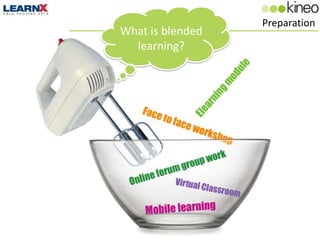
Preparation
What is blended
  learning?
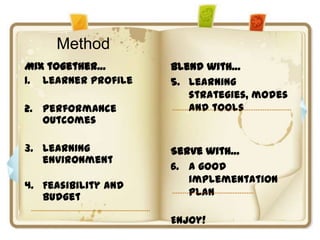
Method
Mix together…        Blend with…
1. Learner profile   5. Learning
                        strategies, modes
2. Performance          and tools
   outcomes

3. Learning          Serve with…
   environment
                     6. A good
                        implementation
4. Feasibility and
   budget               plan

                     Enjoy!
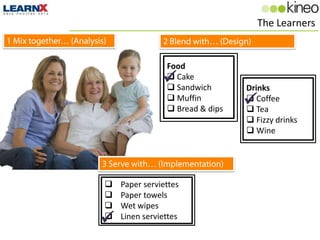
The Learners


                Food
                Cake
                 Sandwich       Drinks
                 Muffin
                 Bread & dips
                                 
                                  Coffee
                                  Tea
                                  Fizzy drinks
                                  Wine


   Paper serviettes
   Paper towels
   Wet wipes

   Linen serviettes
What’s cooking?


1. Mix together…
   (Analysis)
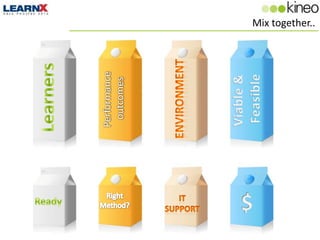
Mix together..
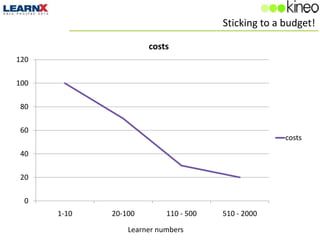
Sticking to a budget!

                      costs
120

100

80

60
                                                     costs

40

20

 0
      1-10   20-100        110 - 500   510 - 2000

                 Learner numbers
What’s cooking?


2. Blend with…
   (Design)
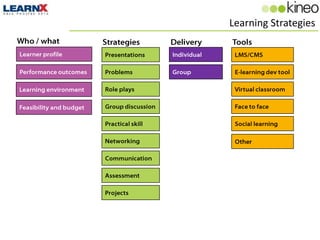
Learning Strategies
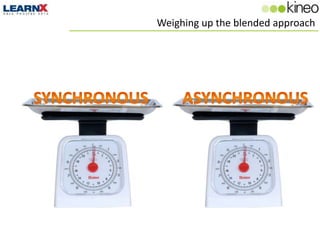
Weighing up the blended approach
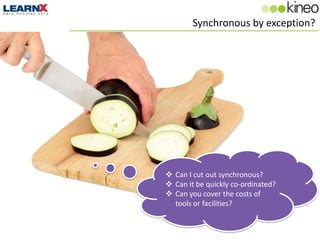
Synchronous by exception?


 Can I cut out synchronous?
 Can it be quickly co-ordinated?
 Can you cover the costs of
  tools or facilities?
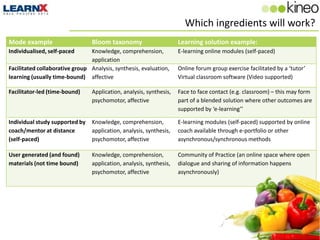
Which ingredients will work?
Mode example                     Bloom taxonomy                      Learning solution example:
Individualised, self-paced      Knowledge, comprehension,            E-learning online modules (self-paced)
                                application
Facilitated collaborative group Analysis, synthesis, evaluation,     Online forum group exercise facilitated by a ‘tutor’
learning (usually time-bound) affective                              Virtual classroom software (Video supported)

Facilitator-led (time-bound)     Application, analysis, synthesis,   Face to face contact (e.g. classroom) – this may form
                                 psychomotor, affective              part of a blended solution where other outcomes are
                                                                     supported by ‘e-learning’’

Individual study supported by    Knowledge, comprehension,           E-learning modules (self-paced) supported by online
coach/mentor at distance         application, analysis, synthesis,   coach available through e-portfolio or other
(self-paced)                     psychomotor, affective              asynchronous/synchronous methods

User generated (and found)       Knowledge, comprehension,           Community of Practice (an online space where open
materials (not time bound)       application, analysis, synthesis,   dialogue and sharing of information happens
                                 psychomotor, affective              asynchronously)
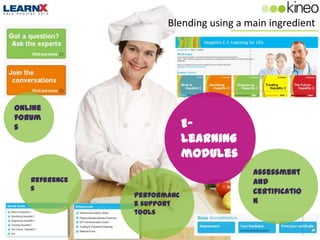
Blending using a main ingredient


Online
forum
s                           E-
                            learning
                            modules
                                        Assessment
   Reference                            and
   s                                    certificatio
               Performanc
               e support                n
               tools
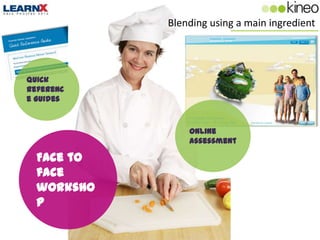
Blending using a main ingredient


Quick
Referenc
e Guides


                Online
                assessment

  Face to
  face
  worksho
  p
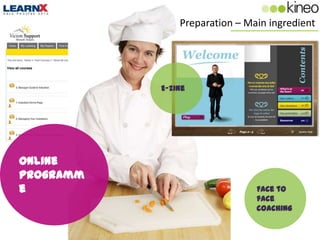
Preparation – Main ingredient


           E-zine


Online
programm
e                              Face to
                               face
                               coaching
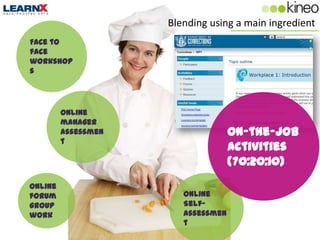
Blending using a main ingredient
Face to
face
workshop
s


         Online
         manager
         assessmen                  On-the-job
         t
                                    activities
                                    (70:20:10)
Online
forum                   Online
group                   Self-
work                    assessmen
                        t
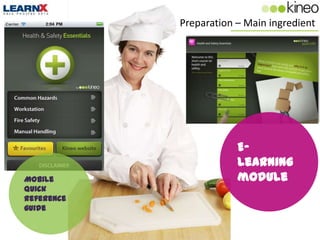
Preparation – Main ingredient


                        E-
                        learning
Mobile                  module
quick
reference
guide
What’s cooking?


3. Serve with…
   (Implement)
Serving suggestions


• Coordinate your            • Use a good menu
  activities                   (clear
                               communications)
• Make it seamless to
  the guests (learners)      • Identify and engage
                               the master chef
• Review it; if it doesn’t     judges (stakeholders)
  work, change the
  recipe
Diamond Sponsor:
                        Become a
                        Learning
                       Masterchef

                      The Recipe for a
                       Perfect Blend


                    Sue Dark, Director of Learning
                   Tina Griffin, eLearning Manager

                            Kineo Pacific

Become a Learning Masterchef

  • 1.
    Diamond Sponsor: Become a Learning Masterchef The Recipe for a Perfect Blend Sue Dark, Director of Learning Tina Griffin, eLearning Manager Kineo Pacific
  • 2.
    Recipe of theday Supreme Blended Learning!
  • 3.
  • 4.
    Method Mix together… Blend with… 1. Learner profile 5. Learning strategies, modes 2. Performance and tools outcomes 3. Learning Serve with… environment 6. A good implementation 4. Feasibility and budget plan Enjoy!
  • 5.
    The Learners Food  Cake  Sandwich Drinks  Muffin  Bread & dips   Coffee  Tea  Fizzy drinks  Wine  Paper serviettes  Paper towels  Wet wipes   Linen serviettes
  • 6.
    What’s cooking? 1. Mixtogether… (Analysis)
  • 7.
  • 8.
    Sticking to abudget! costs 120 100 80 60 costs 40 20 0 1-10 20-100 110 - 500 510 - 2000 Learner numbers
  • 9.
  • 10.
  • 11.
    Weighing up theblended approach
  • 12.
    Synchronous by exception? Can I cut out synchronous?  Can it be quickly co-ordinated?  Can you cover the costs of tools or facilities?
  • 13.
    Which ingredients willwork? Mode example Bloom taxonomy Learning solution example: Individualised, self-paced Knowledge, comprehension, E-learning online modules (self-paced) application Facilitated collaborative group Analysis, synthesis, evaluation, Online forum group exercise facilitated by a ‘tutor’ learning (usually time-bound) affective Virtual classroom software (Video supported) Facilitator-led (time-bound) Application, analysis, synthesis, Face to face contact (e.g. classroom) – this may form psychomotor, affective part of a blended solution where other outcomes are supported by ‘e-learning’’ Individual study supported by Knowledge, comprehension, E-learning modules (self-paced) supported by online coach/mentor at distance application, analysis, synthesis, coach available through e-portfolio or other (self-paced) psychomotor, affective asynchronous/synchronous methods User generated (and found) Knowledge, comprehension, Community of Practice (an online space where open materials (not time bound) application, analysis, synthesis, dialogue and sharing of information happens psychomotor, affective asynchronously)
  • 14.
    Blending using amain ingredient Online forum s E- learning modules Assessment Reference and s certificatio Performanc e support n tools
  • 15.
    Blending using amain ingredient Quick Referenc e Guides Online assessment Face to face worksho p
  • 16.
    Preparation – Mainingredient E-zine Online programm e Face to face coaching
  • 17.
    Blending using amain ingredient Face to face workshop s Online manager assessmen On-the-job t activities (70:20:10) Online forum Online group Self- work assessmen t
  • 18.
    Preparation – Mainingredient E- learning Mobile module quick reference guide
  • 19.
    What’s cooking? 3. Servewith… (Implement)
  • 20.
    Serving suggestions • Coordinateyour • Use a good menu activities (clear communications) • Make it seamless to the guests (learners) • Identify and engage the master chef • Review it; if it doesn’t judges (stakeholders) work, change the recipe
  • 21.
    Diamond Sponsor: Become a Learning Masterchef The Recipe for a Perfect Blend Sue Dark, Director of Learning Tina Griffin, eLearning Manager Kineo Pacific

Editor's Notes

  • #4 Many of us understand blended learning to include a mixture of many different delivery methods and modes.Simple blend examples include: Virtual classroom session followed up with e-learning updatesClassroom training course followed up by online assessmentFace to face workshop followed by FAQs
  • #8 Its important however in preparation to consider some important ingredients:Do you have an LMS or ability tointroduce/use learning technologies?Could any existing channels support your learners and the delivery of your activities? Will this be cost effective?Can this be done within your timeframes?Do you have the infrastructureand support from the organisation?
  • #9 The list of current channels might be:IntranetEmailPhoneSMSVirtual meetingPodcasts
  • #12 Synchronous = real time communications e.g. virtual classroom, webinars, workshops, skype or phone callAsynchronous = delayed communication e.g. rapid online module, email, discussion boards, podcasts, recorded sessionsHandout – table of synchronous and asynchronous decision making factors
  • #13 Some organisations start with asynchronous and question whether synchronous is needed?Synchronous activities, e.g. virtual classroom sessions, can be very effective to enable users to ask questions, take part in collaborative problem solving, or skills practice. However they require co-ordination and facilitation – does your organisation have a virtual classroom tool? They can increase complexity and cost. (There are some simpler alternatives such as Skype, though not specifically made for good engaging sessions).
  • #15 Simple blend examples include: Virtual classroom session followed up with e-learning updatesClassroom training course followed up by online assessmentFace to face workshop followed by FAQs
  • #16 Simple blend examples include: Virtual classroom session followed up with e-learning updatesClassroom training course followed up by online assessmentFace to face workshop followed by FAQs
  • #17 Simple blend examples include: Virtual classroom session followed up with e-learning updatesClassroom training course followed up by online assessmentFace to face workshop followed by FAQs
  • #18 Simple blend examples include: Virtual classroom session followed up with e-learning updatesClassroom training course followed up by online assessmentFace to face workshop followed by FAQs
  • #19 Simple blend examples include: Virtual classroom session followed up with e-learning updatesClassroom training course followed up by online assessmentFace to face workshop followed by FAQs