Efficient Use of Water
River Management Society Symposium
Denver, CO – April 15, 2014
2
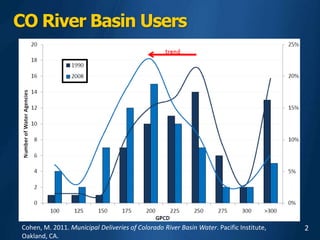
CO River Basin Users
Cohen, M. 2011. Municipal Deliveries of Colorado River Basin Water. Pacific Institute,
Oakland, CA.
3
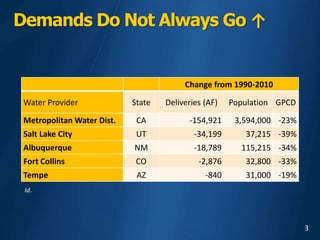
Demands Do Not Always Go ↑
Change from 1990-2010
Water Provider State Deliveries (AF) Population GPCD
Metropolitan Water Dist. CA -154,921 3,594,000 -23%
Salt Lake City UT -34,199 37,215 -39%
Albuquerque NM -18,789 115,215 -34%
Fort Collins CO -2,876 32,800 -33%
Tempe AZ -840 31,000 -19%
Id.
4
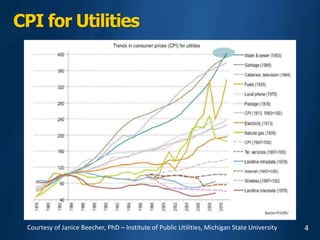
CPI for Utilities
Courtesy of Janice Beecher, PhD – Institute of Public Utilities, Michigan State University
5
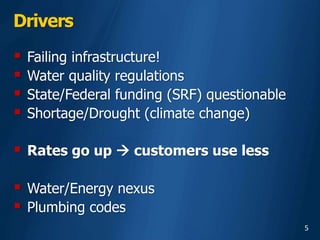
Drivers
 Failing infrastructure!
 Water quality regulations
 State/Federal funding (SRF) questionable
 Shortage/Drought (climate change)
 Rates go up  customers use less
 Water/Energy nexus
 Plumbing codes
6
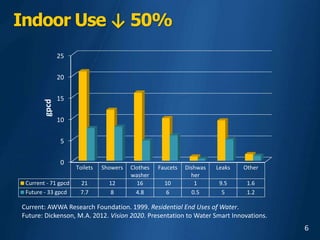
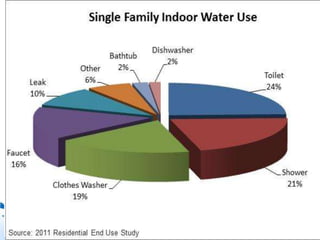
Indoor Use ↓ 50%
0
5
10
15
20
25
Toilets Showers Clothes
washer
Faucets Dishwas
her
Leaks Other
Current - 71 gpcd 21 12 16 10 1 9.5 1.6
Future - 33 gpcd 7.7 8 4.8 6 0.5 5 1.2
gpcd
Current: AWWA Research Foundation. 1999. Residential End Uses of Water.
Future: Dickenson, M.A. 2012. Vision 2020. Presentation to Water Smart Innovations.
7
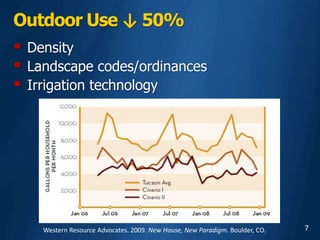
Outdoor Use ↓ 50%
 Density
 Landscape codes/ordinances
 Irrigation technology
Western Resource Advocates. 2009. New House, New Paradigm. Boulder, CO.
8
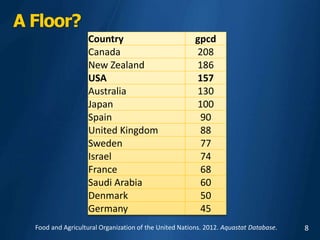
A Floor?
Country gpcd
Canada 208
New Zealand 186
USA 157
Australia 130
Japan 100
Spain 90
United Kingdom 88
Sweden 77
Israel 74
France 68
Saudi Arabia 60
Denmark 50
Germany 45
Food and Agricultural Organization of the United Nations. 2012. Aquastat Database.
Defining Efficient Use
• Efficiency vs. Reduction
• Levels of efficiency
• Tools for changing the discussion
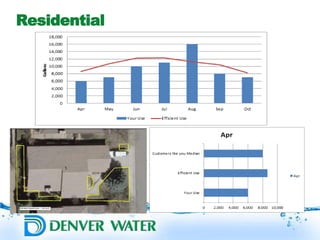
Residential
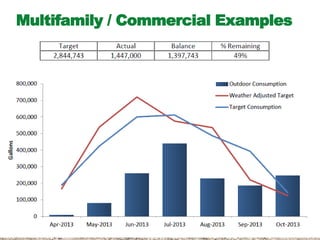
Multifamily / Commercial Examples
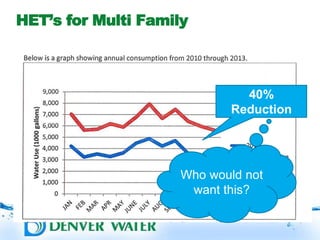
HET’s for Multi Family
Property Name Redacted
40%
Reduction
Who would not
want this?
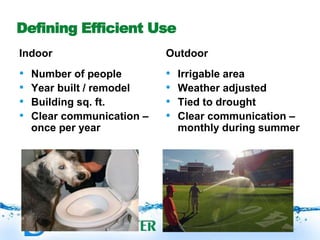
Defining Efficient Use
Indoor Outdoor
• Irrigable area
• Weather adjusted
• Tied to drought
• Clear communication –
monthly during summer
• Number of people
• Year built / remodel
• Building sq. ft.
• Clear communication –
once per year
Overview of CWCB’s Conservation Program
• Office of Water Conservation and Drought Planning provides
technical and financial assistance for:
o Drought Planning and Implementation
o Water Efficiency Planning and Implementation
• Water Efficiency Grant Program
o Drought Planning and Implementation
o Water Efficiency Planning and Implementation
o Public Education/Outreach
• C.R.S. 137-60-126 requires covered entities (retail water delivery >
2000 AF annually) to create a state approved water conservation plan
Grant Funds
• Water Efficiency
Planning
• Drought Mitigation &
Response Planning
• Implementation of
Efficiency/Drought
Plans
• Public Education/
Outreach Programs
Regional Plans
• CWCB has been promoting regional approaches in areas with many
small providers who have a common interest but won’t necessarily do
a water efficiency plan alone
• Roaring Fork Valley Regional Conservation Plan
o Glenwood Springs, Carbondale, Basalt, Snowmass Village and Aspen
o Tie into the Roaring Fork Watershed Plan; using water efficiency to
help manage environmental flows through their watershed
What does a regional plan look
like for the Roaring Fork?
 The major factor that characterizes the plans is usually the individual
water system (municipal water system) but…
 This plan could have a watershed level set of goals
 Overall plan with individual chapters (for each provider)
 Individual water provider goals could satisfy local water system needs
but also complement watershed level goals
Nexus with the Roaring Fork
Watershed Plan
 RWM B2. Investigate mechanisms for consolidating and coordinating
the Roaring Fork Valley’s involvement in regional water management
and to advise local governments on participation in regional water
management planning
 RWM C. Objective: Ensure coordination of local land use actions to
prevent or mitigate water resource impacts throughout the watershed
 SW C1. Factor in water quantity needs when making land use decisions
 SW E. Objective: Reduce the negative impacts of drought and floods
20
Questions & Comments
Drew Beckwith
drew.beckwith@westernresources.org
(720) 763-3726
Jeff Tejral
jeff.tejral@denverwater.org
(303) 628-6301
Kevin Reidy
kevin.reidy@state.co.us
(303) 866-3441 x3252

Efficient Use of Water - Drew Beckwith, Western Resources Associates

  • 1.
    Efficient Use ofWater River Management Society Symposium Denver, CO – April 15, 2014
  • 2.
    2 CO River BasinUsers Cohen, M. 2011. Municipal Deliveries of Colorado River Basin Water. Pacific Institute, Oakland, CA.
  • 3.
    3 Demands Do NotAlways Go ↑ Change from 1990-2010 Water Provider State Deliveries (AF) Population GPCD Metropolitan Water Dist. CA -154,921 3,594,000 -23% Salt Lake City UT -34,199 37,215 -39% Albuquerque NM -18,789 115,215 -34% Fort Collins CO -2,876 32,800 -33% Tempe AZ -840 31,000 -19% Id.
  • 4.
    4 CPI for Utilities Courtesyof Janice Beecher, PhD – Institute of Public Utilities, Michigan State University
  • 5.
    5 Drivers  Failing infrastructure! Water quality regulations  State/Federal funding (SRF) questionable  Shortage/Drought (climate change)  Rates go up  customers use less  Water/Energy nexus  Plumbing codes
  • 6.
    6 Indoor Use ↓50% 0 5 10 15 20 25 Toilets Showers Clothes washer Faucets Dishwas her Leaks Other Current - 71 gpcd 21 12 16 10 1 9.5 1.6 Future - 33 gpcd 7.7 8 4.8 6 0.5 5 1.2 gpcd Current: AWWA Research Foundation. 1999. Residential End Uses of Water. Future: Dickenson, M.A. 2012. Vision 2020. Presentation to Water Smart Innovations.
  • 7.
    7 Outdoor Use ↓50%  Density  Landscape codes/ordinances  Irrigation technology Western Resource Advocates. 2009. New House, New Paradigm. Boulder, CO.
  • 8.
    8 A Floor? Country gpcd Canada208 New Zealand 186 USA 157 Australia 130 Japan 100 Spain 90 United Kingdom 88 Sweden 77 Israel 74 France 68 Saudi Arabia 60 Denmark 50 Germany 45 Food and Agricultural Organization of the United Nations. 2012. Aquastat Database.
  • 9.
    Defining Efficient Use •Efficiency vs. Reduction • Levels of efficiency • Tools for changing the discussion
  • 11.
  • 12.
  • 13.
    HET’s for MultiFamily Property Name Redacted 40% Reduction Who would not want this?
  • 14.
    Defining Efficient Use IndoorOutdoor • Irrigable area • Weather adjusted • Tied to drought • Clear communication – monthly during summer • Number of people • Year built / remodel • Building sq. ft. • Clear communication – once per year
  • 15.
    Overview of CWCB’sConservation Program • Office of Water Conservation and Drought Planning provides technical and financial assistance for: o Drought Planning and Implementation o Water Efficiency Planning and Implementation • Water Efficiency Grant Program o Drought Planning and Implementation o Water Efficiency Planning and Implementation o Public Education/Outreach • C.R.S. 137-60-126 requires covered entities (retail water delivery > 2000 AF annually) to create a state approved water conservation plan
  • 16.
    Grant Funds • WaterEfficiency Planning • Drought Mitigation & Response Planning • Implementation of Efficiency/Drought Plans • Public Education/ Outreach Programs
  • 17.
    Regional Plans • CWCBhas been promoting regional approaches in areas with many small providers who have a common interest but won’t necessarily do a water efficiency plan alone • Roaring Fork Valley Regional Conservation Plan o Glenwood Springs, Carbondale, Basalt, Snowmass Village and Aspen o Tie into the Roaring Fork Watershed Plan; using water efficiency to help manage environmental flows through their watershed
  • 18.
    What does aregional plan look like for the Roaring Fork?  The major factor that characterizes the plans is usually the individual water system (municipal water system) but…  This plan could have a watershed level set of goals  Overall plan with individual chapters (for each provider)  Individual water provider goals could satisfy local water system needs but also complement watershed level goals
  • 19.
    Nexus with theRoaring Fork Watershed Plan  RWM B2. Investigate mechanisms for consolidating and coordinating the Roaring Fork Valley’s involvement in regional water management and to advise local governments on participation in regional water management planning  RWM C. Objective: Ensure coordination of local land use actions to prevent or mitigate water resource impacts throughout the watershed  SW C1. Factor in water quantity needs when making land use decisions  SW E. Objective: Reduce the negative impacts of drought and floods
  • 20.
    20 Questions & Comments DrewBeckwith drew.beckwith@westernresources.org (720) 763-3726 Jeff Tejral jeff.tejral@denverwater.org (303) 628-6301 Kevin Reidy kevin.reidy@state.co.us (303) 866-3441 x3252