KANSAS WATER VISION
IMPLEMENTATION –
A REGIONAL APPROACH
SCC SpringWorkshop – Area III
March 9, 2017
REGIONAL ADVISORY
COMMITTEES
KWA Approves RAC Action Plans
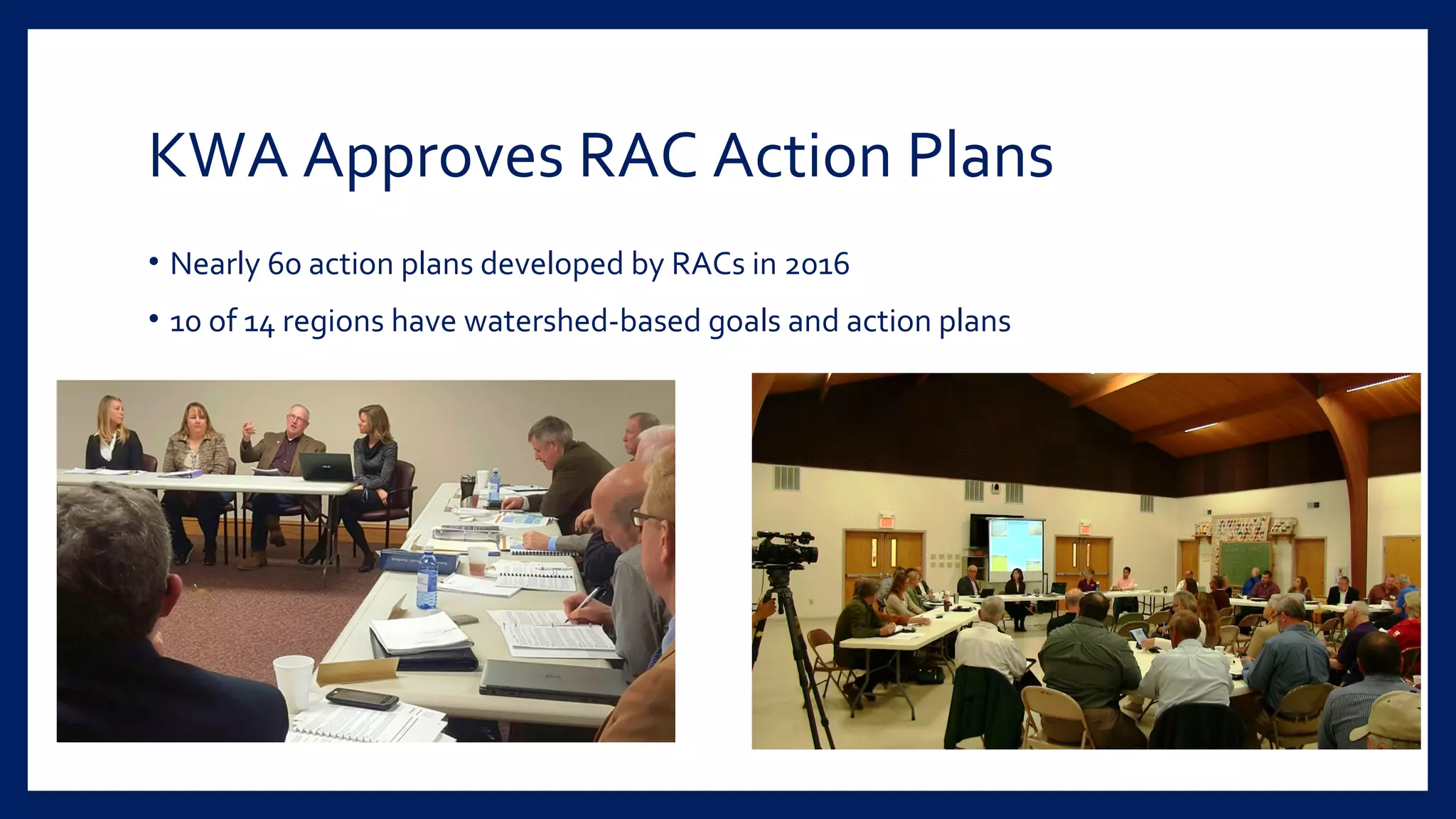
• Nearly 60 action plans developed by RACs in 2016
• 10 of 14 regions have watershed-based goals and action plans
VISIONSupply
Water
Conservation
Local
TechnologyAction
FutureResearch
BLUE RIBBON
FUNDINGTASK FORCE
Vision for the Future ofWater Supply in Kansas
##
VISIONSupply
Water
Conservation
Local
TechnologyAction
FutureResearch
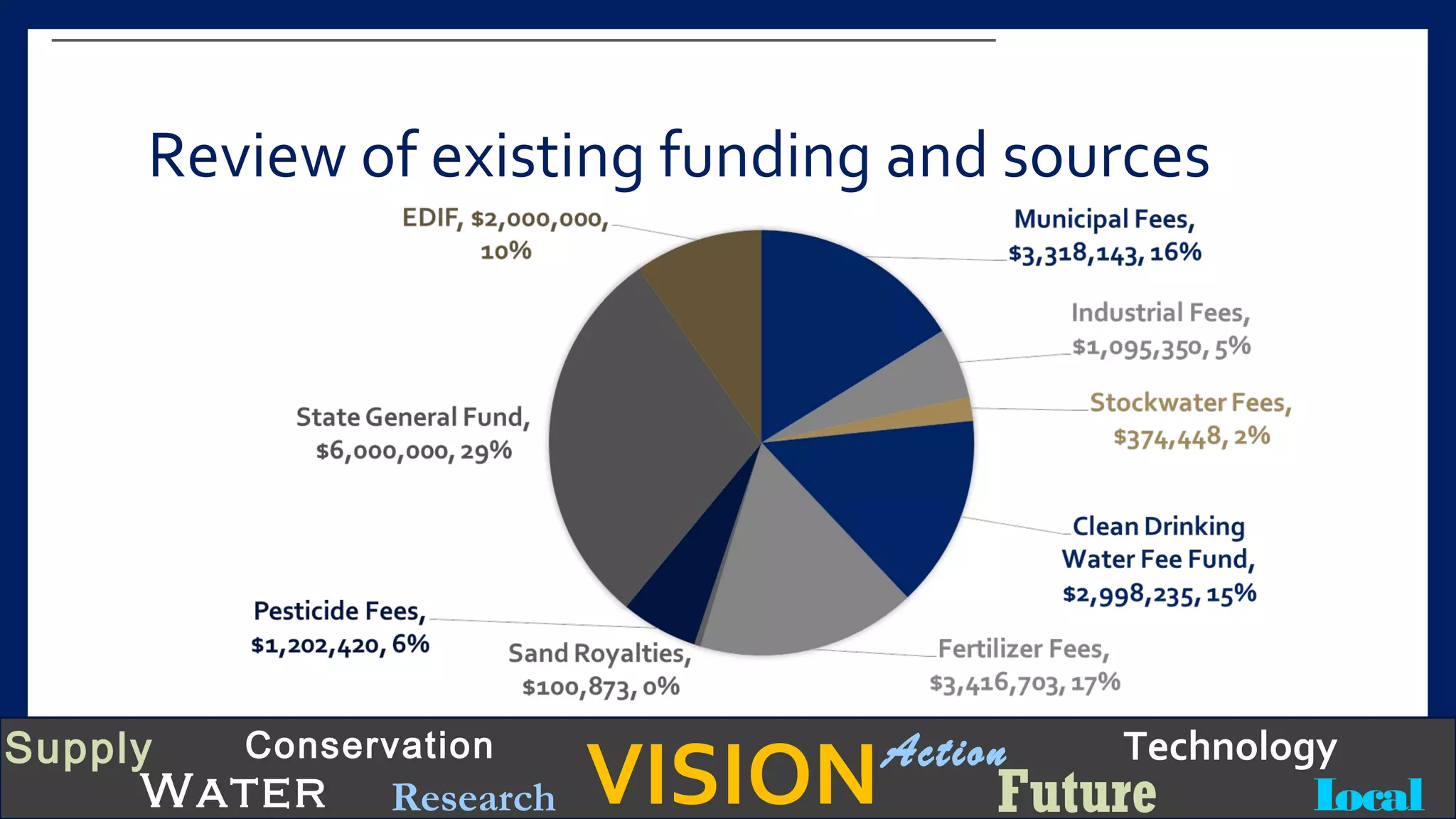
Review of existing funding and sources
VISIONSupply
Water
Conservation
Local
TechnologyAction
FutureResearch
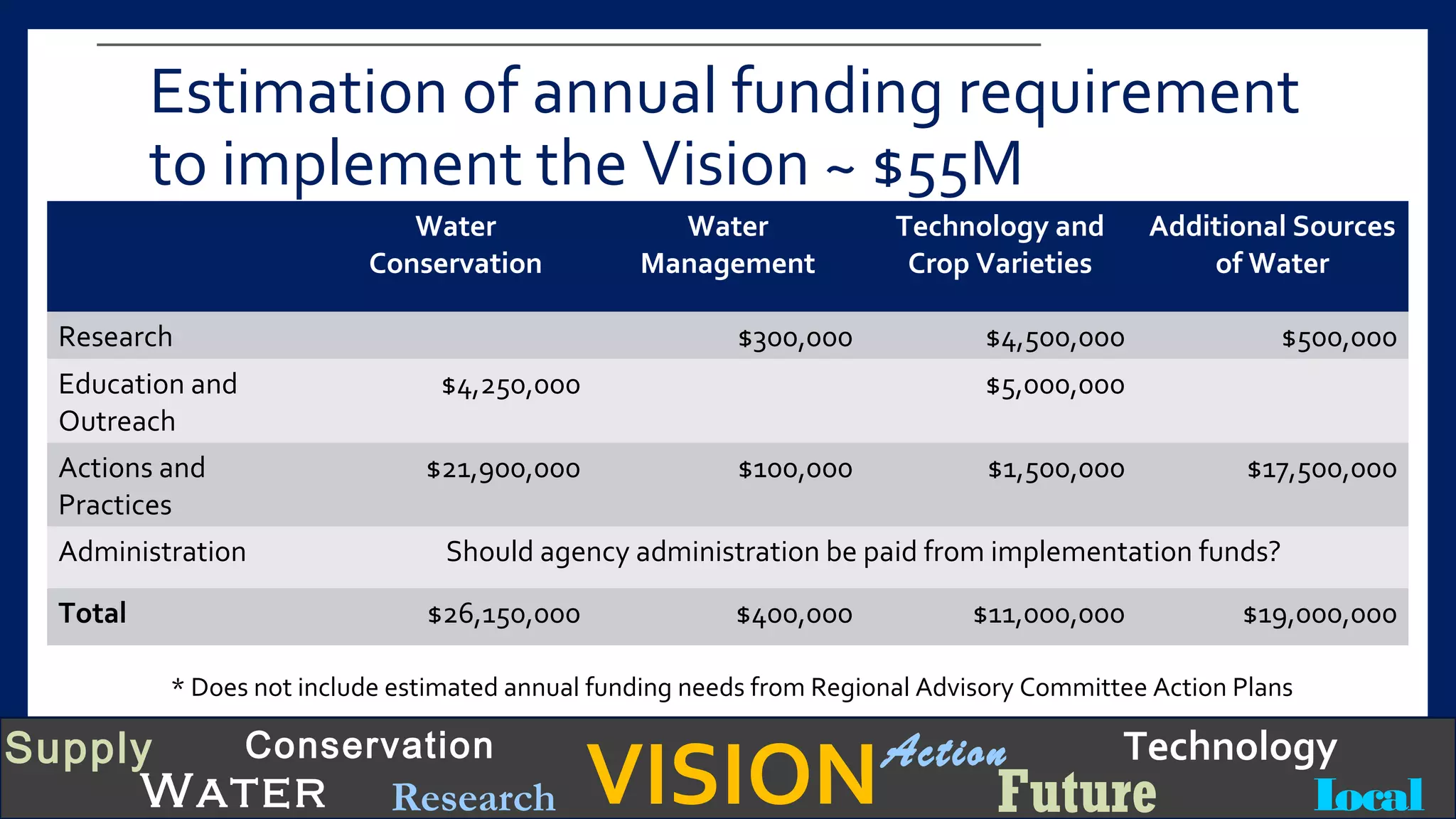
Estimation of annual funding requirement
to implement the Vision ~ $55M
Water
Conservation
Water
Management
Technology and
Crop Varieties
Additional Sources
of Water
Research $300,000 $4,500,000 $500,000
Education and
Outreach
$4,250,000 $5,000,000
Actions and
Practices
$21,900,000 $100,000 $1,500,000 $17,500,000
Administration Should agency administration be paid from implementation funds?
Total $26,150,000 $400,000 $11,000,000 $19,000,000
* Does not include estimated annual funding needs from Regional Advisory Committee Action Plans
VISIONSupply
Water
Conservation
Local
TechnologyAction
FutureResearch
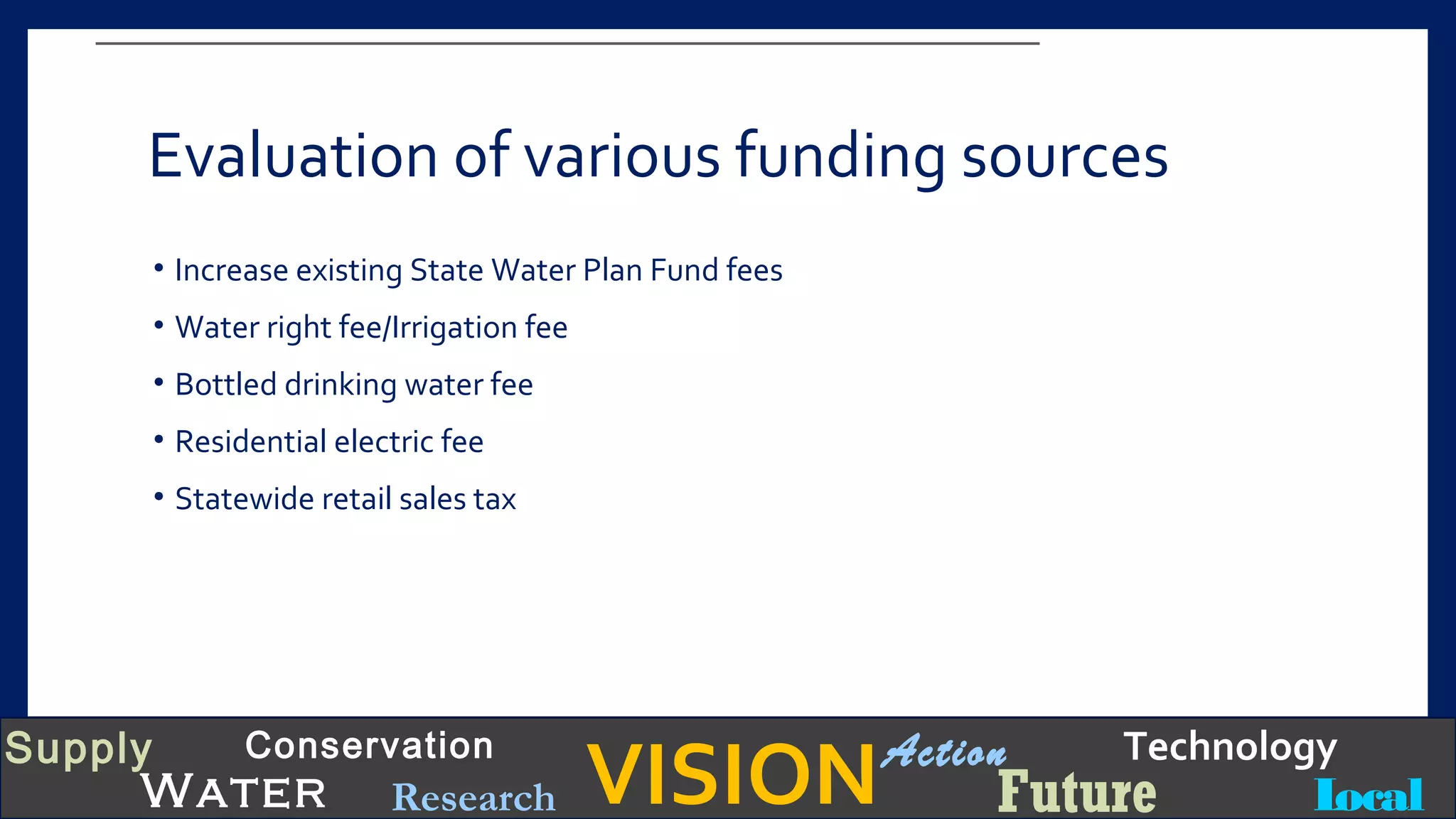
Evaluation of various funding sources
• Increase existing State Water Plan Fund fees
• Water right fee/Irrigation fee
• Bottled drinking water fee
• Residential electric fee
• Statewide retail sales tax
Vision Implementation – New BMP $
Key Concepts
•New funding not utilized to restore
prior SWP reductions
•Projects “come towards the money”
•Kansas Basin Watershed Management
System (KBWM) to serve as framework
for allocation of new $
•KWO will serve as the initial repository
for new BMP funds
Key Concepts
•Increased technical assistance to
facilitate BMP implementation is
critical
•Additional on-the-ground
coordination needs determined by
KDHE
•Effective contract management
system needed for administration of
individual funded projects
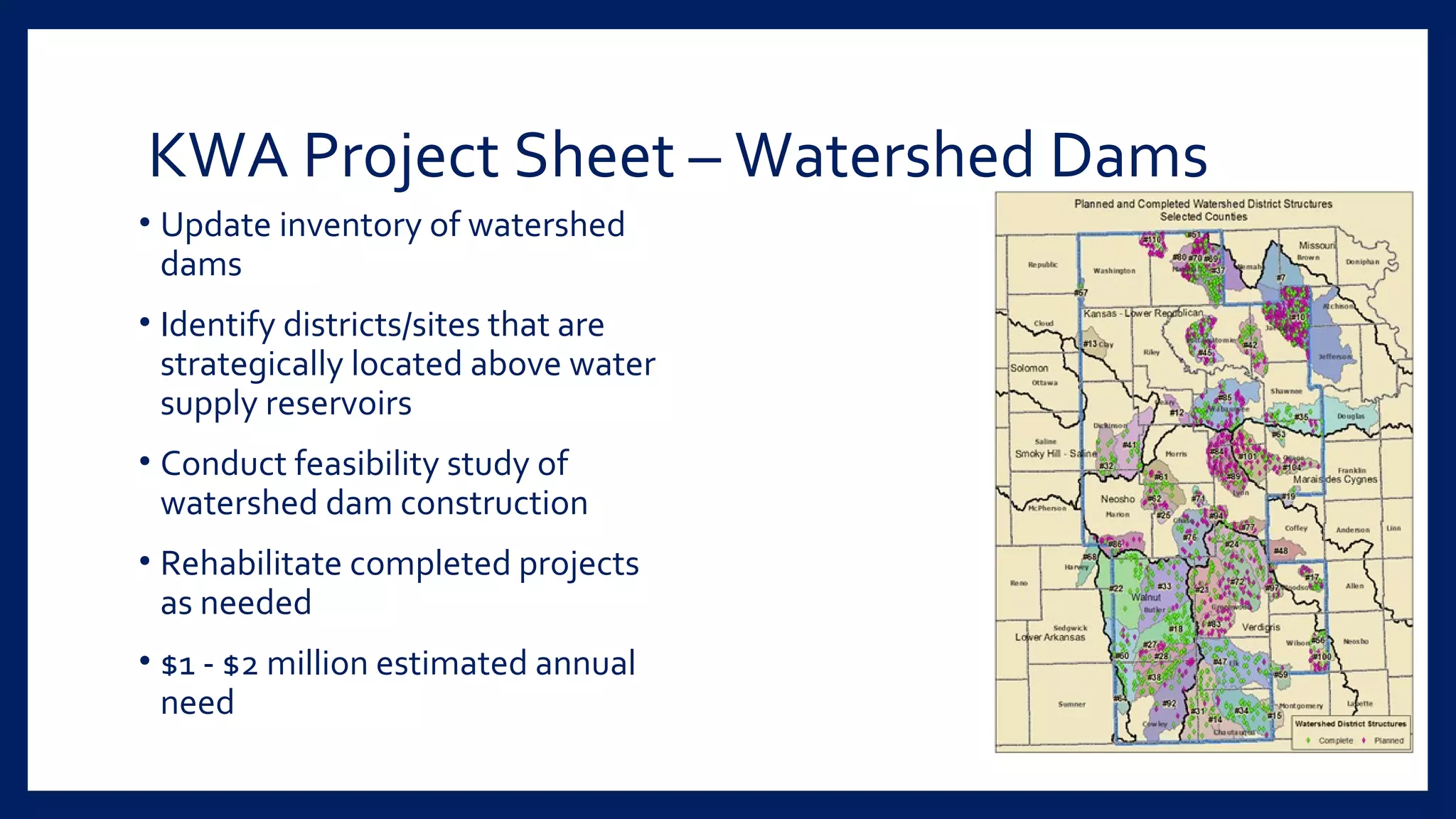
KWA Project Sheet – Watershed Dams
• Update inventory of watershed
dams
• Identify districts/sites that are
strategically located above water
supply reservoirs
• Conduct feasibility study of
watershed dam construction
• Rehabilitate completed projects
as needed
• $1 - $2 million estimated annual
need
CURRENT
IMPLEMENTATION
ACTIONS
WATER TECHNOLOGY
FARMS
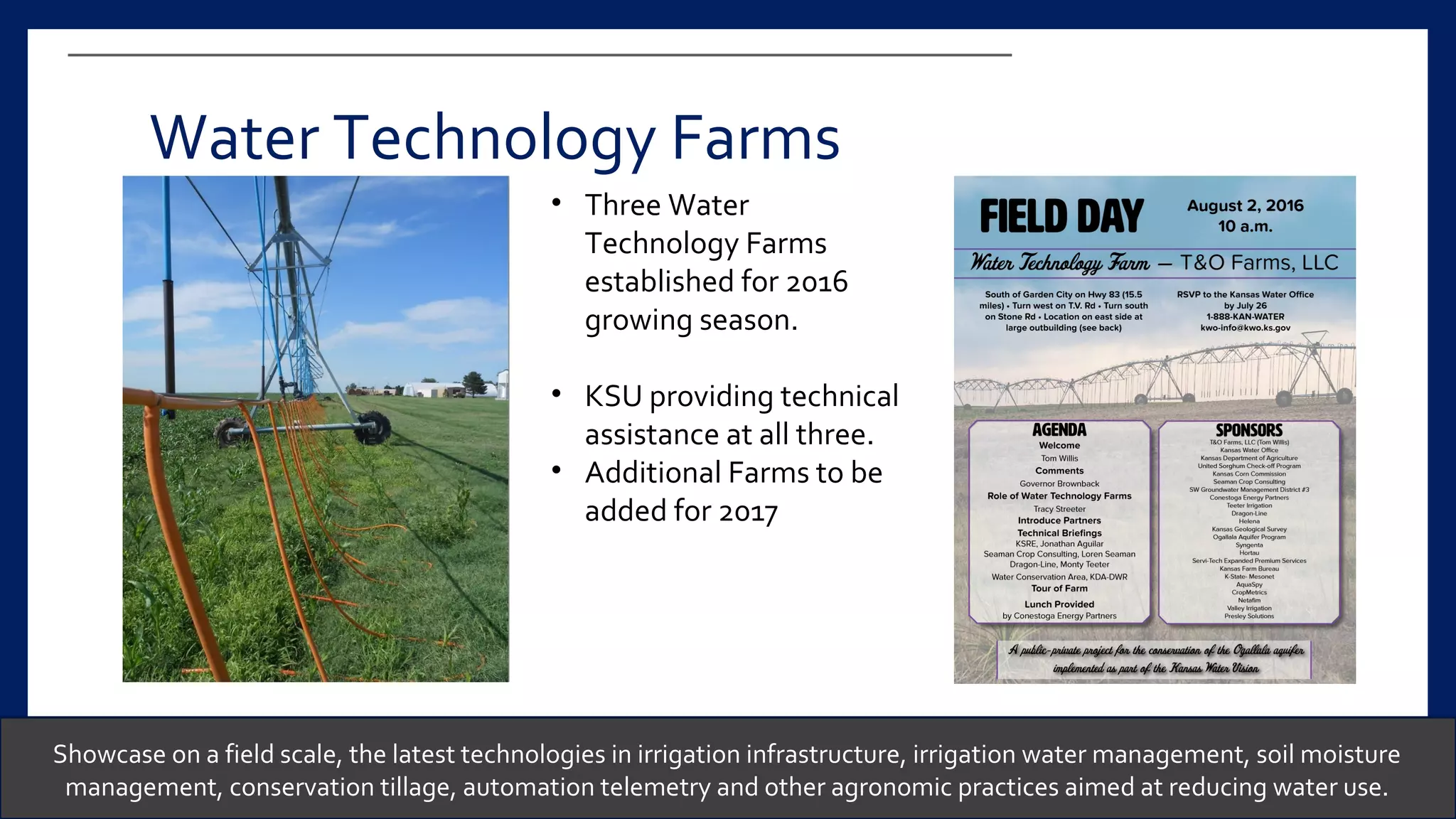
Showcase on a field scale, the latest technologies in irrigation infrastructure, irrigation water management, soil moisture
management, conservation tillage, automation telemetry and other agronomic practices aimed at reducing water use.
Water Technology Farms
• Three Water
Technology Farms
established for 2016
growing season.
• KSU providing technical
assistance at all three.
• Additional Farms to be
added for 2017
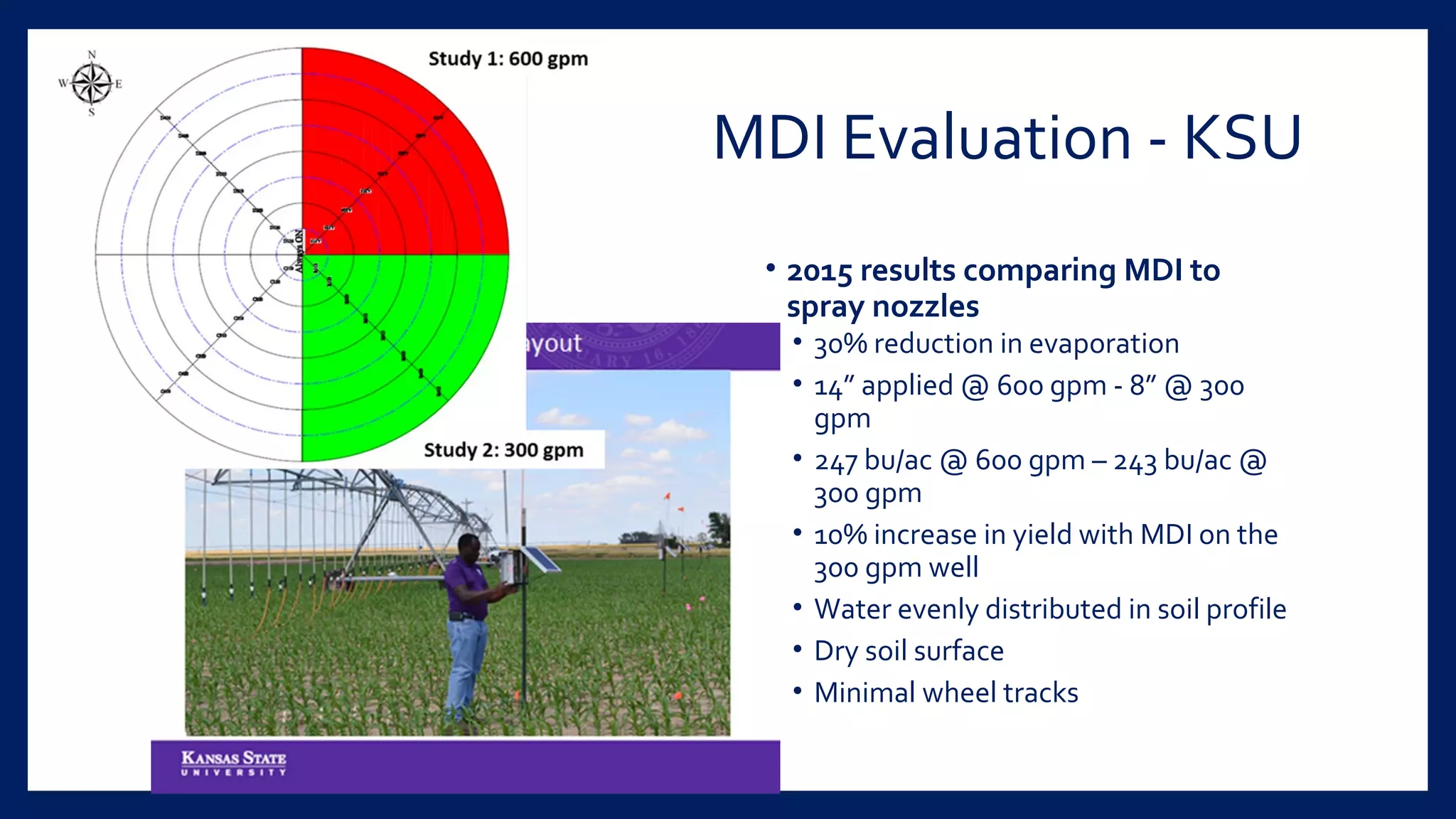
MDI Evaluation - KSU
• 2015 results comparing MDI to
spray nozzles
• 30% reduction in evaporation
• 14” applied @ 600 gpm - 8” @ 300
gpm
• 247 bu/ac @ 600 gpm – 243 bu/ac @
300 gpm
• 10% increase in yield with MDI on the
300 gpm well
• Water evenly distributed in soil profile
• Dry soil surface
• Minimal wheel tracks
REPUBLICAN RIVER
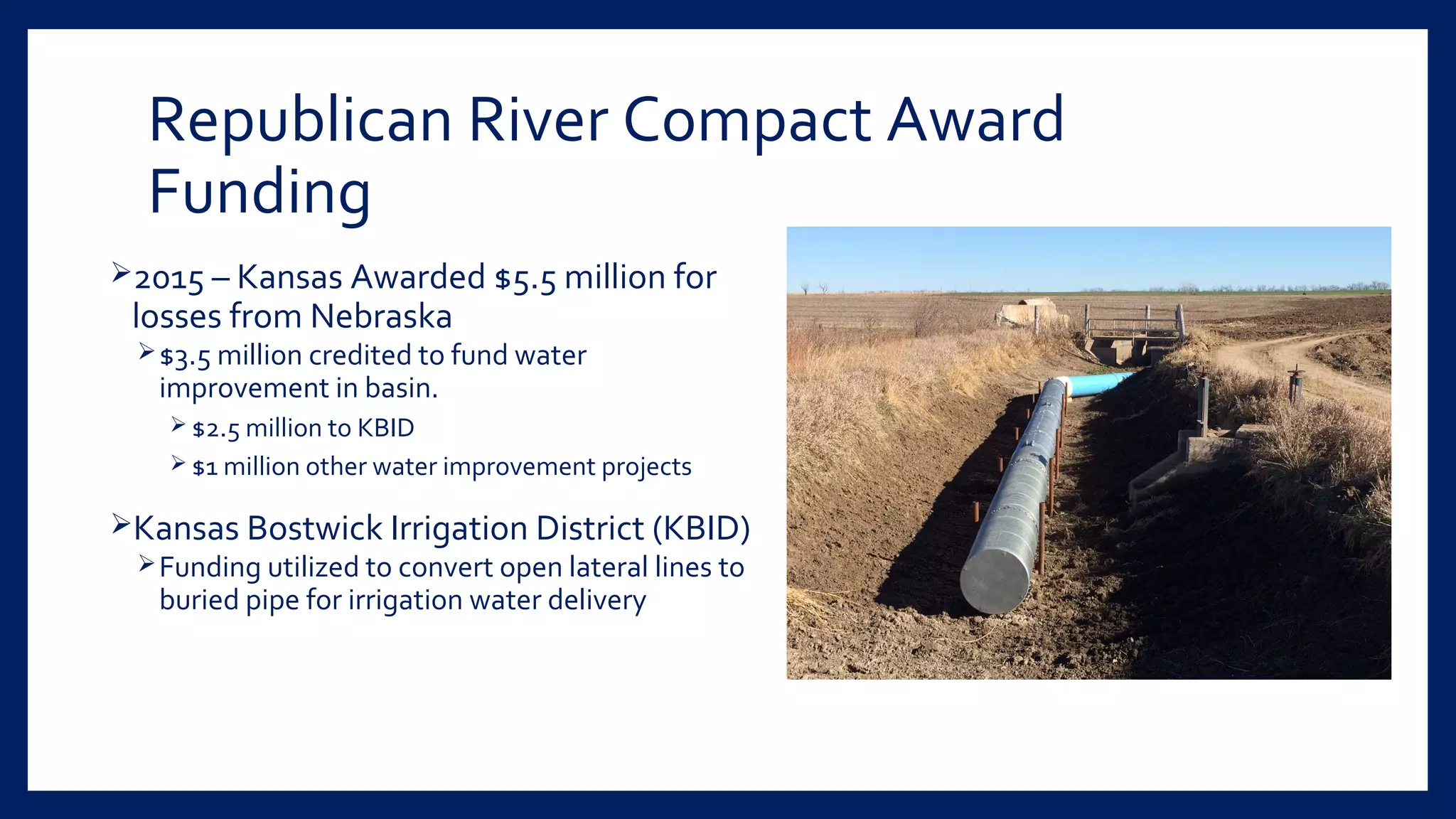
Republican River Compact Award
Funding
2015 – Kansas Awarded $5.5 million for
losses from Nebraska
$3.5 million credited to fund water
improvement in basin.
 $2.5 million to KBID
 $1 million other water improvement projects
Kansas Bostwick Irrigation District (KBID)
Funding utilized to convert open lateral lines to
buried pipe for irrigation water delivery
LOWER QUALITY WATER
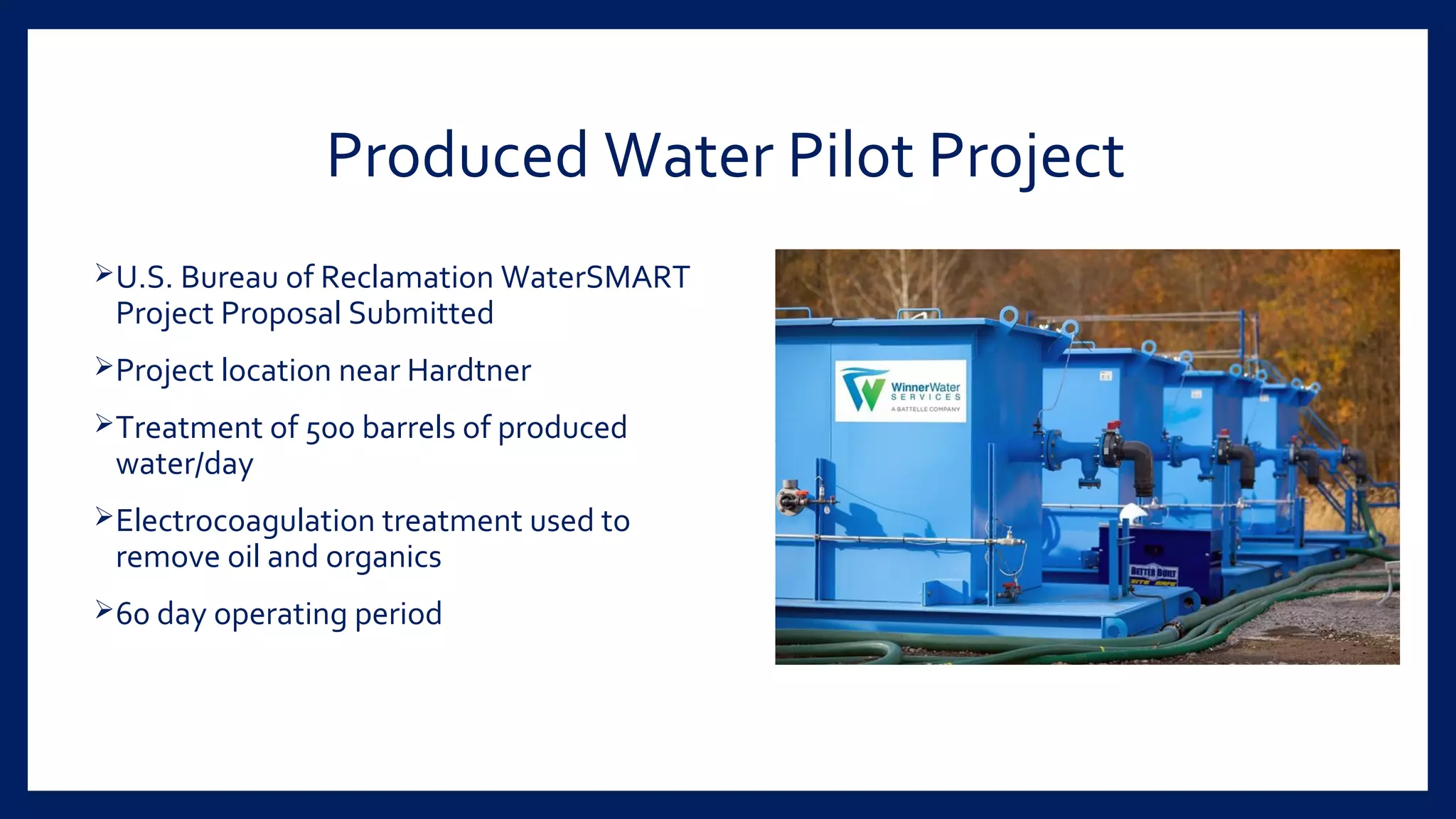
Produced Water Pilot Project
U.S. Bureau of Reclamation WaterSMART
Project Proposal Submitted
Project location near Hardtner
Treatment of 500 barrels of produced
water/day
Electrocoagulation treatment used to
remove oil and organics
60 day operating period
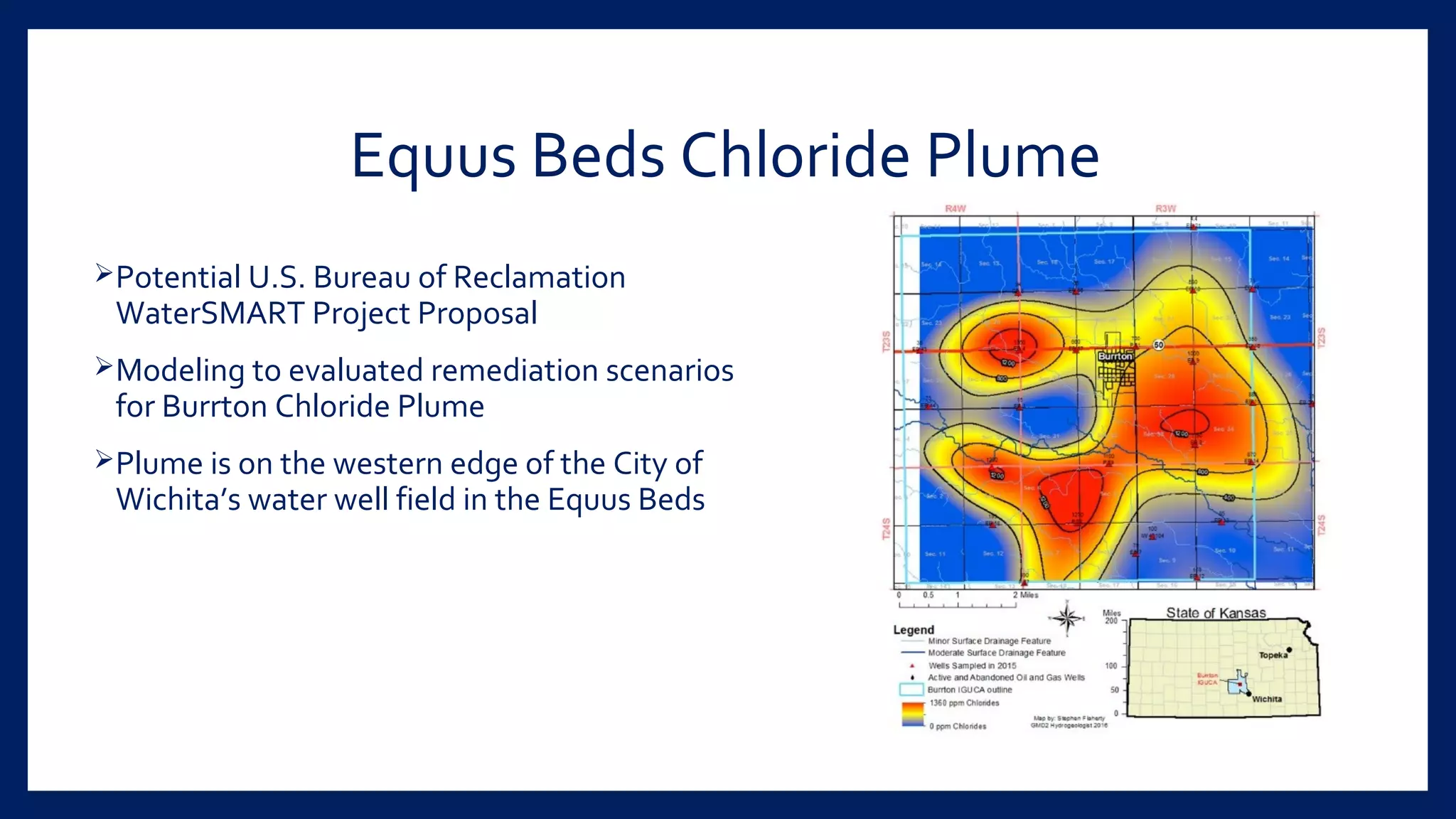
Equus Beds Chloride Plume
Potential U.S. Bureau of Reclamation
WaterSMART Project Proposal
Modeling to evaluated remediation scenarios
for Burrton Chloride Plume
Plume is on the western edge of the City of
Wichita’s water well field in the Equus Beds
AQUIFER SUSTAINABILITY
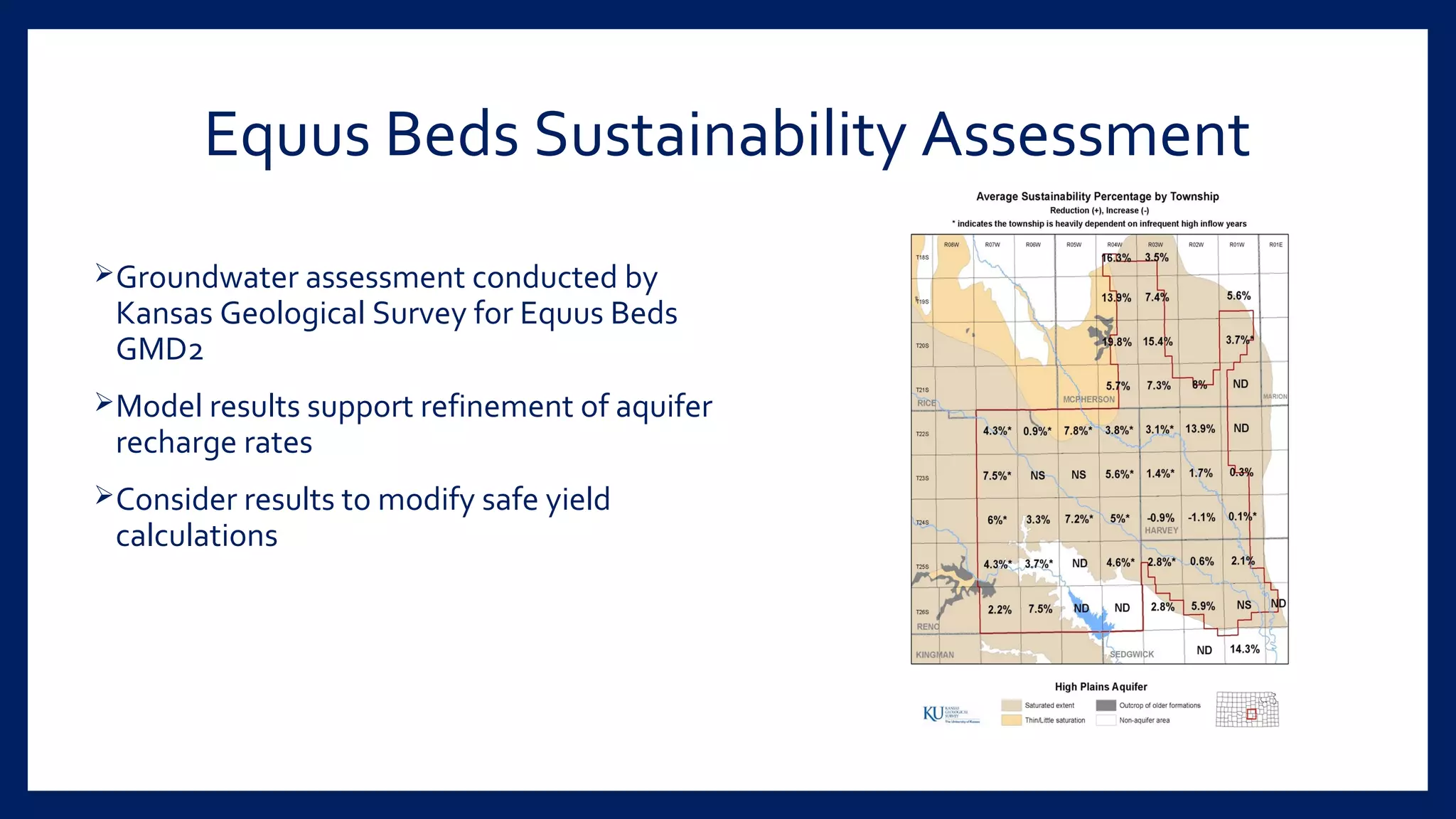
Equus Beds Sustainability Assessment
Groundwater assessment conducted by
Kansas Geological Survey for Equus Beds
GMD2
Model results support refinement of aquifer
recharge rates
Consider results to modify safe yield
calculations
RESERVOIR ACTIVITIES
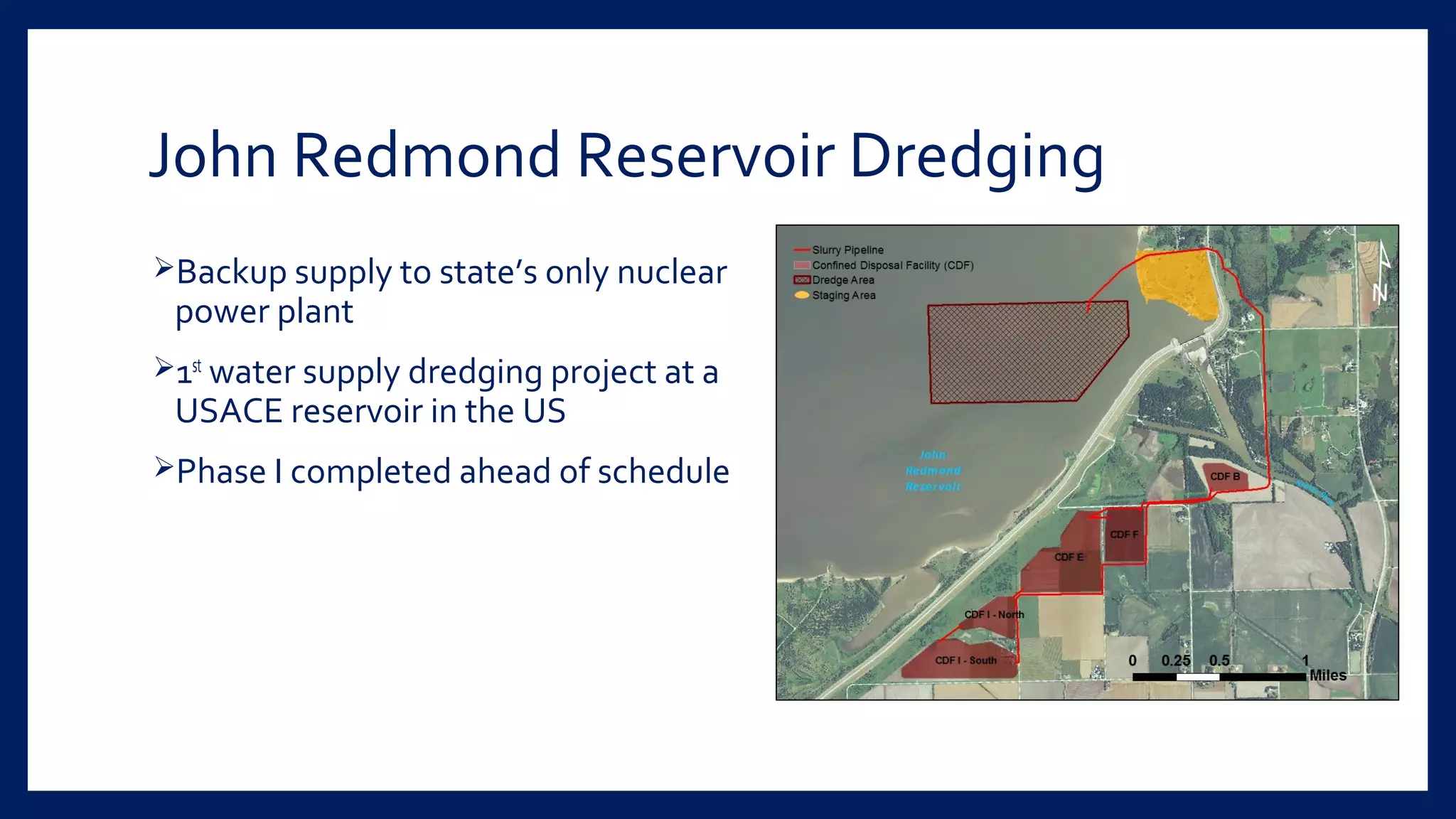
John Redmond Reservoir Dredging
Backup supply to state’s only nuclear
power plant
1st
water supply dredging project at a
USACE reservoir in the US
Phase I completed ahead of schedule
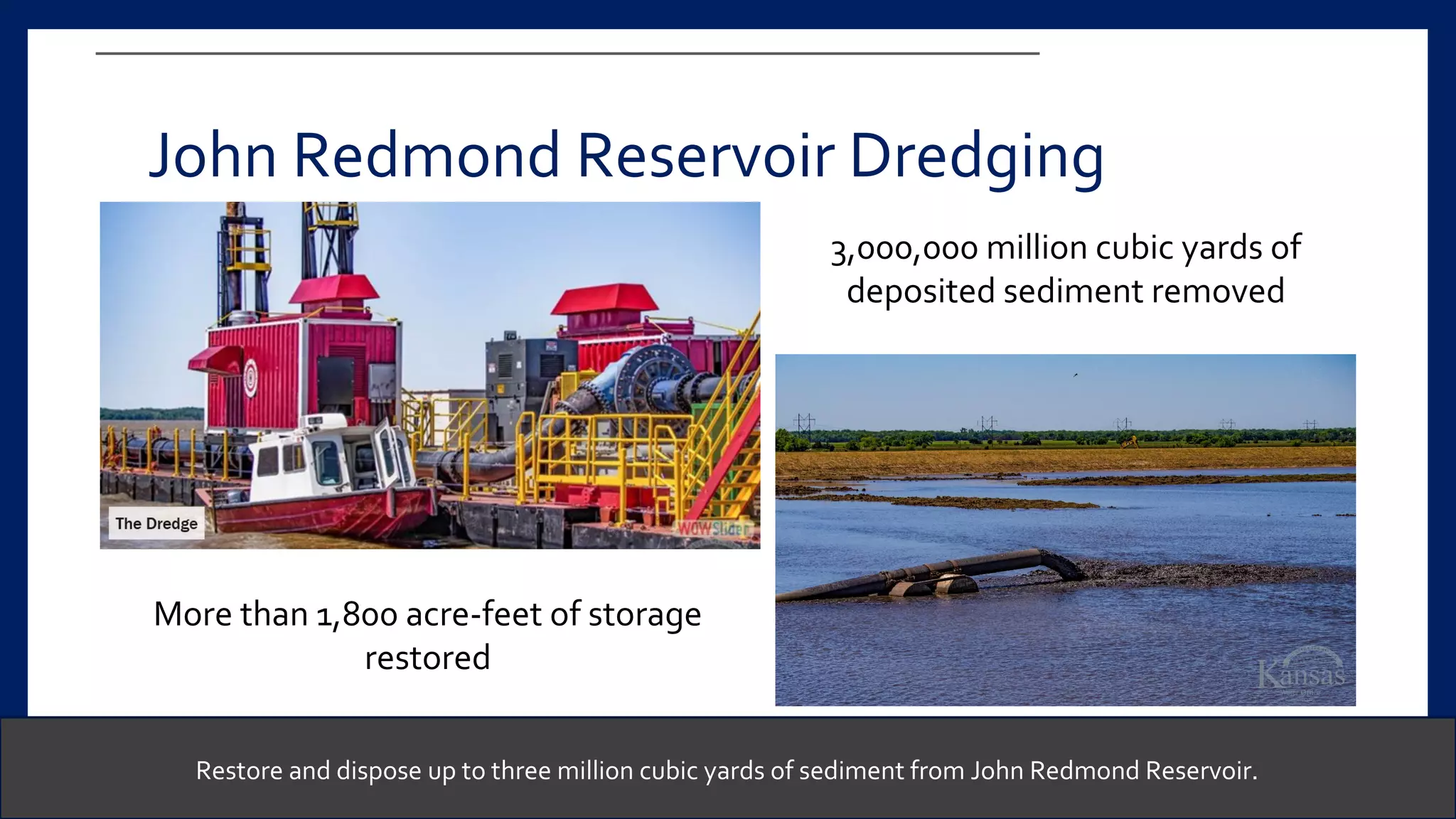
John Redmond Reservoir Dredging
3,000,000 million cubic yards of
deposited sediment removed
More than 1,800 acre-feet of storage
restored
Restore and dispose up to three million cubic yards of sediment from John Redmond Reservoir.
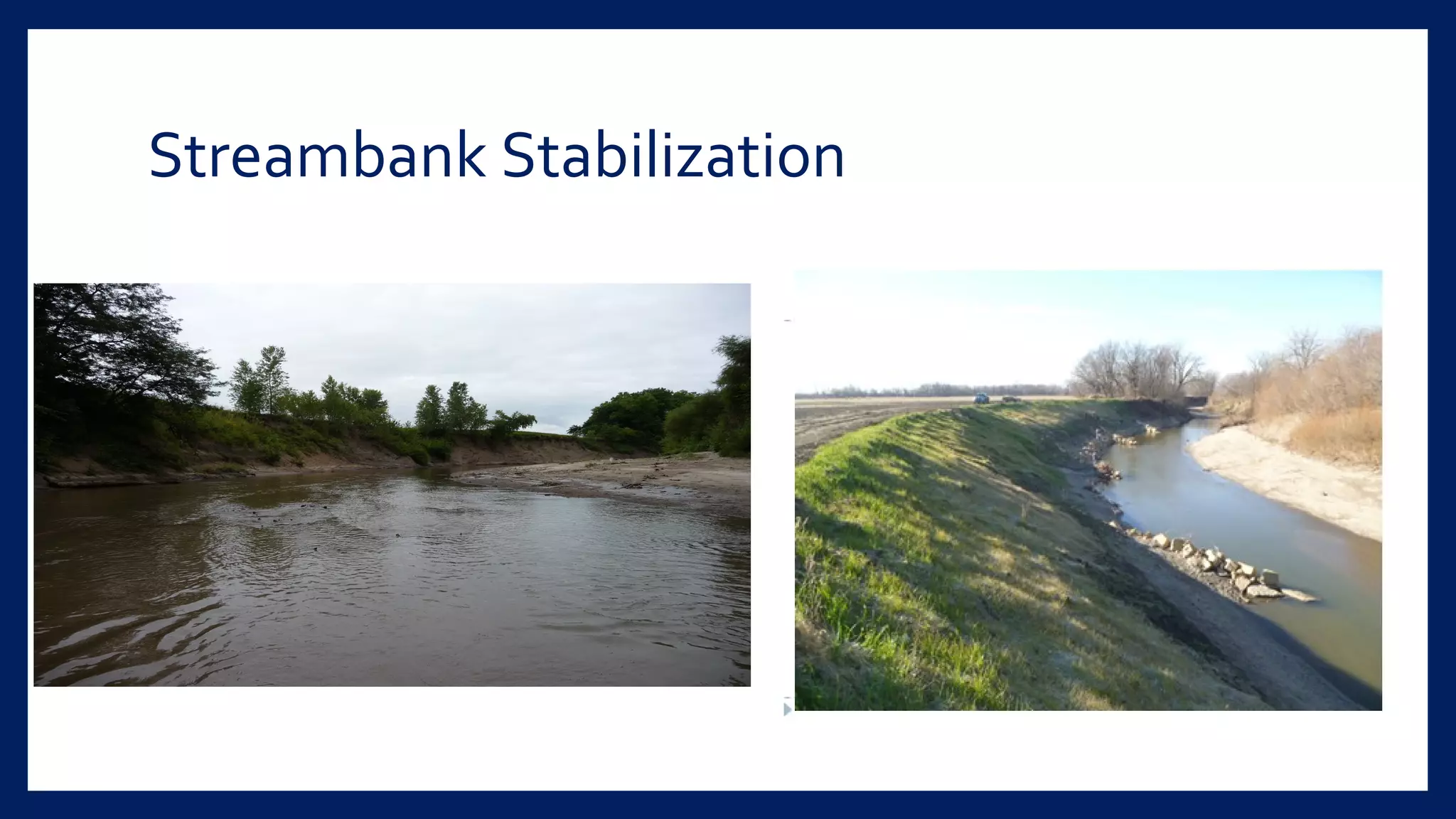
Streambank Stabilization
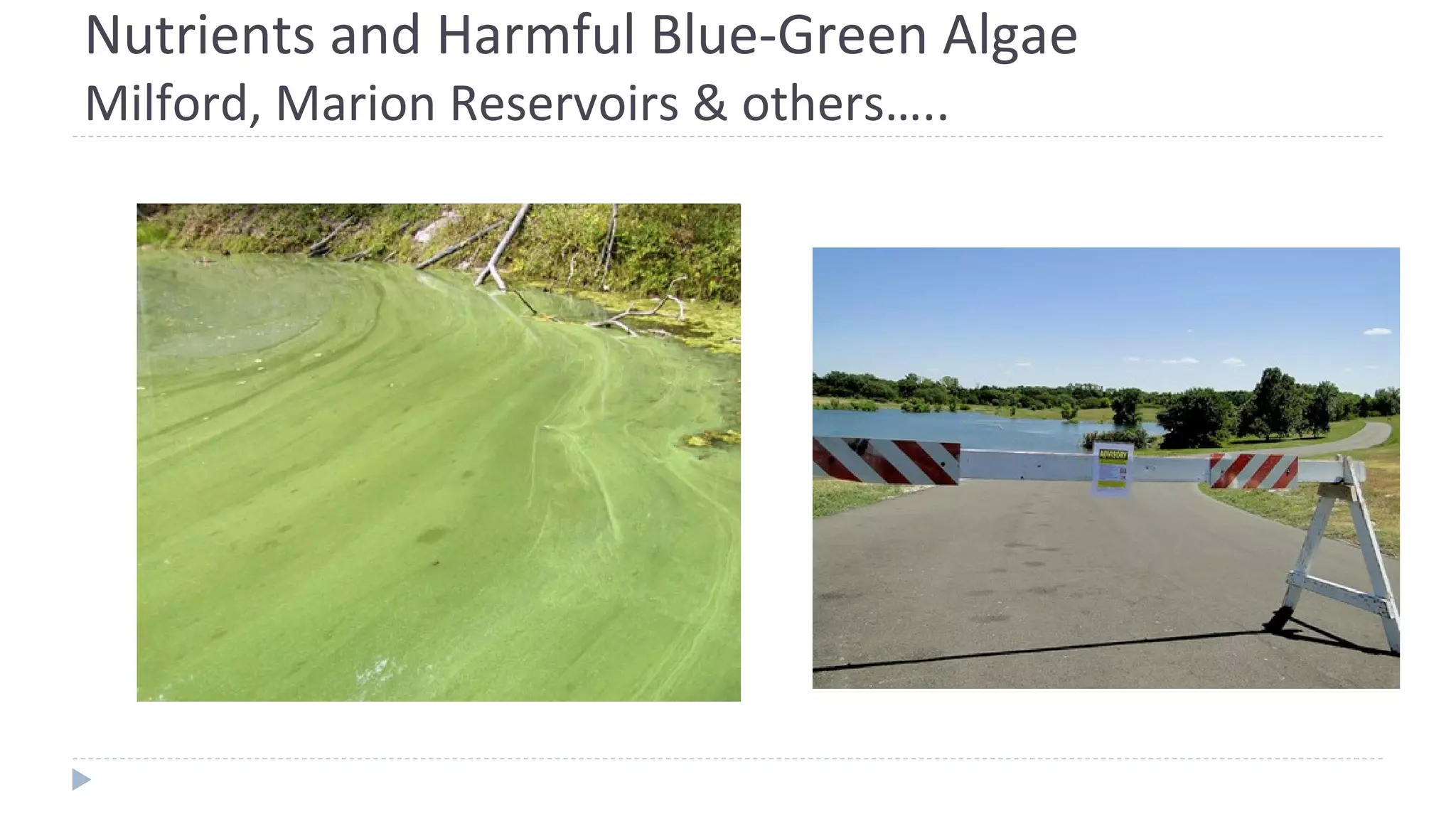
Nutrients and Harmful Blue-Green Algae
Milford, Marion Reservoirs & others…..
QUESTIONS &
DISCUSSION
Tracy Streeter, Director
Kansas Water Office
900 SW Jackson, Suite 404
Topeka, KS 66612
785-296-3185
tracy.streeter@kwo.ks.gov
Earl Lewis, Assistant Director
Kansas Water Office
900 SW Jackson, Suite 404
Topeka, KS 66612
785-296-3185
earl.lewis@kwo.ks.gov
Matt Unruh, Water Resource Planner
Kansas Water Office
900 SW Jackson, Suite 404
Topeka, KS 66612
785-296-3185
matt.unruh@kwo.ks.gov

Kansas Water Vision Implementation - A Regional Approach

  • 1.
    KANSAS WATER VISION IMPLEMENTATION– A REGIONAL APPROACH SCC SpringWorkshop – Area III March 9, 2017
  • 2.
  • 4.
    KWA Approves RACAction Plans • Nearly 60 action plans developed by RACs in 2016 • 10 of 14 regions have watershed-based goals and action plans
  • 5.
  • 6.
  • 7.
    VISIONSupply Water Conservation Local TechnologyAction FutureResearch Estimation of annualfunding requirement to implement the Vision ~ $55M Water Conservation Water Management Technology and Crop Varieties Additional Sources of Water Research $300,000 $4,500,000 $500,000 Education and Outreach $4,250,000 $5,000,000 Actions and Practices $21,900,000 $100,000 $1,500,000 $17,500,000 Administration Should agency administration be paid from implementation funds? Total $26,150,000 $400,000 $11,000,000 $19,000,000 * Does not include estimated annual funding needs from Regional Advisory Committee Action Plans
  • 8.
    VISIONSupply Water Conservation Local TechnologyAction FutureResearch Evaluation of variousfunding sources • Increase existing State Water Plan Fund fees • Water right fee/Irrigation fee • Bottled drinking water fee • Residential electric fee • Statewide retail sales tax
  • 9.
    Vision Implementation –New BMP $ Key Concepts •New funding not utilized to restore prior SWP reductions •Projects “come towards the money” •Kansas Basin Watershed Management System (KBWM) to serve as framework for allocation of new $ •KWO will serve as the initial repository for new BMP funds Key Concepts •Increased technical assistance to facilitate BMP implementation is critical •Additional on-the-ground coordination needs determined by KDHE •Effective contract management system needed for administration of individual funded projects
  • 10.
    KWA Project Sheet– Watershed Dams • Update inventory of watershed dams • Identify districts/sites that are strategically located above water supply reservoirs • Conduct feasibility study of watershed dam construction • Rehabilitate completed projects as needed • $1 - $2 million estimated annual need
  • 11.
  • 12.
  • 13.
    Showcase on afield scale, the latest technologies in irrigation infrastructure, irrigation water management, soil moisture management, conservation tillage, automation telemetry and other agronomic practices aimed at reducing water use. Water Technology Farms • Three Water Technology Farms established for 2016 growing season. • KSU providing technical assistance at all three. • Additional Farms to be added for 2017
  • 14.
    MDI Evaluation -KSU • 2015 results comparing MDI to spray nozzles • 30% reduction in evaporation • 14” applied @ 600 gpm - 8” @ 300 gpm • 247 bu/ac @ 600 gpm – 243 bu/ac @ 300 gpm • 10% increase in yield with MDI on the 300 gpm well • Water evenly distributed in soil profile • Dry soil surface • Minimal wheel tracks
  • 16.
  • 17.
    Republican River CompactAward Funding 2015 – Kansas Awarded $5.5 million for losses from Nebraska $3.5 million credited to fund water improvement in basin.  $2.5 million to KBID  $1 million other water improvement projects Kansas Bostwick Irrigation District (KBID) Funding utilized to convert open lateral lines to buried pipe for irrigation water delivery
  • 18.
  • 19.
    Produced Water PilotProject U.S. Bureau of Reclamation WaterSMART Project Proposal Submitted Project location near Hardtner Treatment of 500 barrels of produced water/day Electrocoagulation treatment used to remove oil and organics 60 day operating period
  • 20.
    Equus Beds ChloridePlume Potential U.S. Bureau of Reclamation WaterSMART Project Proposal Modeling to evaluated remediation scenarios for Burrton Chloride Plume Plume is on the western edge of the City of Wichita’s water well field in the Equus Beds
  • 21.
  • 22.
    Equus Beds SustainabilityAssessment Groundwater assessment conducted by Kansas Geological Survey for Equus Beds GMD2 Model results support refinement of aquifer recharge rates Consider results to modify safe yield calculations
  • 23.
  • 24.
    John Redmond ReservoirDredging Backup supply to state’s only nuclear power plant 1st water supply dredging project at a USACE reservoir in the US Phase I completed ahead of schedule
  • 25.
    John Redmond ReservoirDredging 3,000,000 million cubic yards of deposited sediment removed More than 1,800 acre-feet of storage restored Restore and dispose up to three million cubic yards of sediment from John Redmond Reservoir.
  • 26.
  • 27.
    Nutrients and HarmfulBlue-Green Algae Milford, Marion Reservoirs & others…..
  • 28.
    QUESTIONS & DISCUSSION Tracy Streeter,Director Kansas Water Office 900 SW Jackson, Suite 404 Topeka, KS 66612 785-296-3185 tracy.streeter@kwo.ks.gov Earl Lewis, Assistant Director Kansas Water Office 900 SW Jackson, Suite 404 Topeka, KS 66612 785-296-3185 earl.lewis@kwo.ks.gov Matt Unruh, Water Resource Planner Kansas Water Office 900 SW Jackson, Suite 404 Topeka, KS 66612 785-296-3185 matt.unruh@kwo.ks.gov

Editor's Notes

  • #14 Phase I: Showcase on a field scale, the latest technologies in irrigation infrastructure, irrigation water management, soil moisture management, conservation tillage, automation telemetry and other agronomic practices aimed at reducing water use. Phase II: Develop Water Technology Farms at locations throughout the Ogallala-High Plains Region, targeting Local Enhanced Management Areas (LEMAs) by working in concert with irrigation technology manufacturers and the irrigations research community.