BE GOING TO

5 FANTÁSTICOS

TRIANA    JESÚS
   RAQUEL
SILVIA  JOSÉ
USOS DEL BE GOING TO
Para hablar de nuestros planes, proyectos a intenciones
para un futuro inmediato o cercano.
Ej. I'm going to celebrate my birthday next Sunday.


# N O T A Fíjate que al hablar de planes fijos se puede
también usar el “Present continuos”, siempre que
indiquemos el momento en el que se va a celebrar nuestro
plan y nuestras intenciones.
Utilizaremos adverbios de tiempo que nos indicarán que nos
referimos que es un futuro.
Be going to (future)

         Affirmative                           Negative
                                    I´m not going to play basketball
I´m going to play basketball
                                    You aren´t going to play basketball
He is going to play basketball
                                    He isn´t going to play basketball
She is going to play basketball
                                    She isn´t going to play basketball
It is going to play basketball
                                    It isn´t going to play basketball
We are going to play basketball
                                    We aren´t going to play basketball
You are going to play basketball
                                    You aren´t going to play basketball
They are going to play basketball
                                    They aren´t going to play basketball
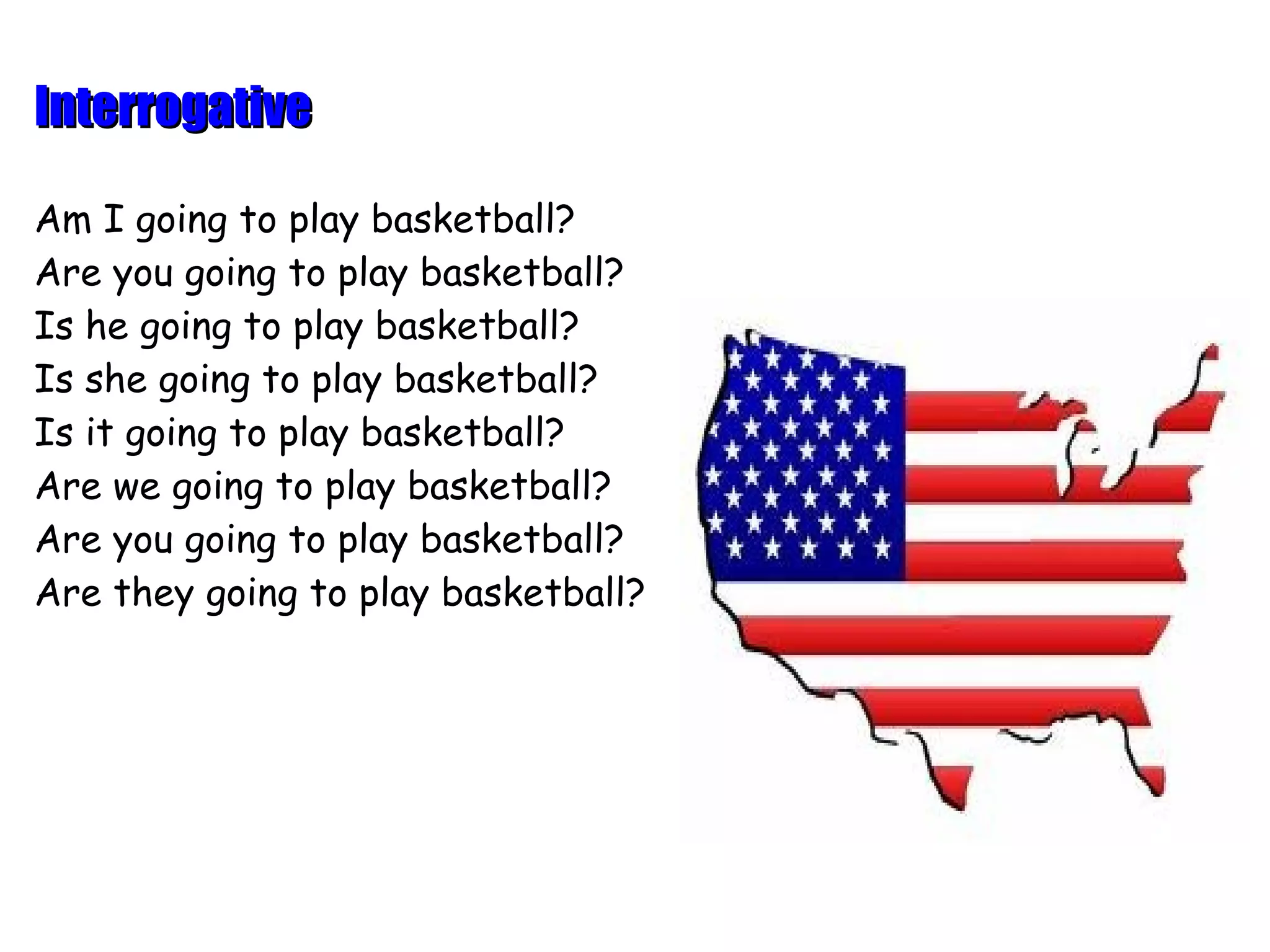
Interrogative

Am I going to play basketball?
Are you going to play basketball?
Is he going to play basketball?
Is she going to play basketball?
Is it going to play basketball?
Are we going to play basketball?
Are you going to play basketball?
Are they going to play basketball?
WILL WON´T

5 FANTÁSTICOS

TRIANA    JESÚS
   RAQUEL
SILVIA  JOSÉ
WILL WON´T


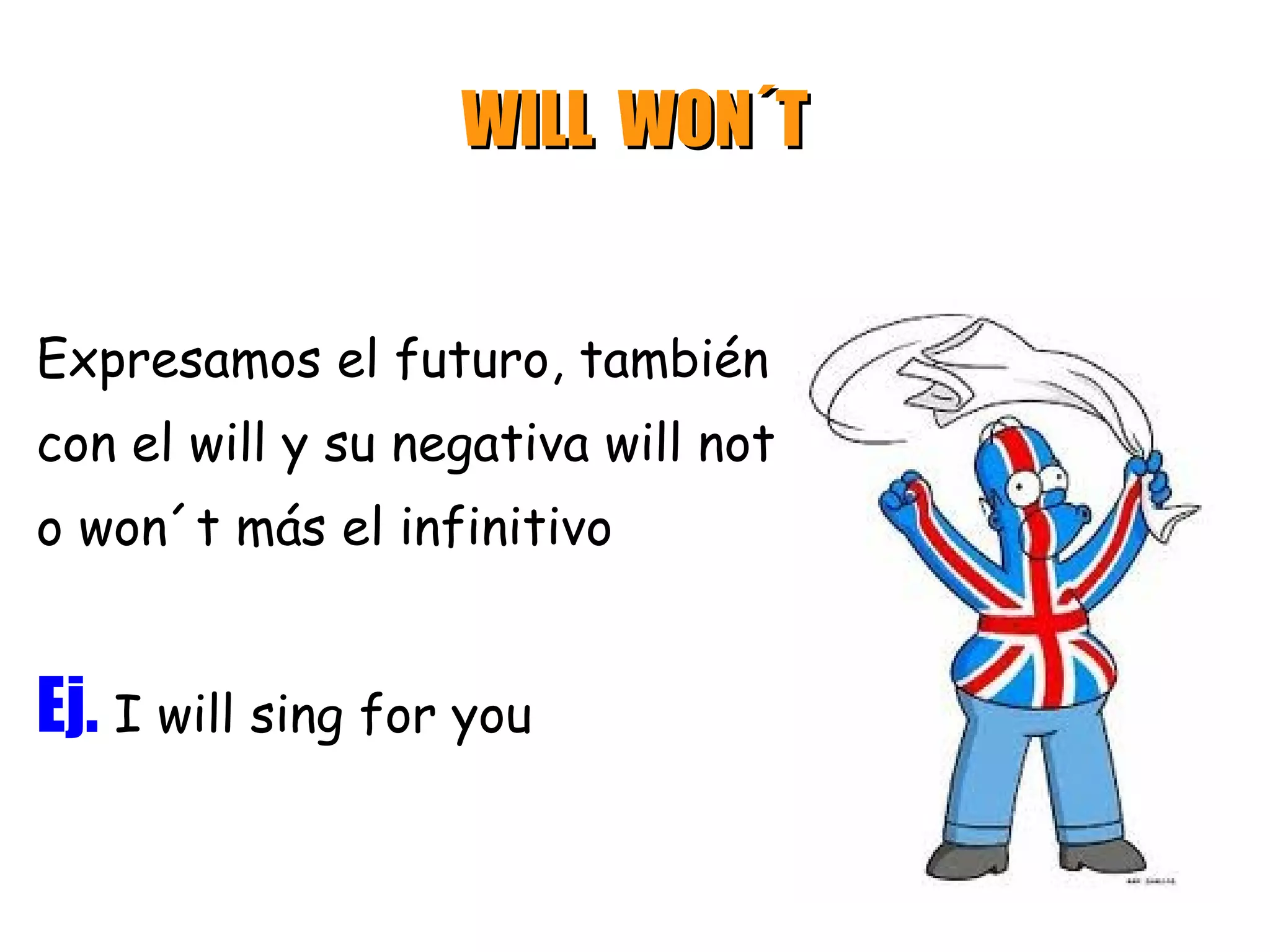
Expresamos el futuro, también
con el will y su negativa will not
o won´t más el infinitivo


Ej. I will sing for you
WILL WON´T
Utilizamos el will + infinitivo para lo siguiente


1.- Para predecir el futuro
2.- Siempre que tomemos una decisión
espontanea
3.- Para planes no planificados
4.- Siempre que nos ofrecemos a hacer algo por
alguien
WILL WON´T

# N O T A En la forma
interrogativa en la
primera persona del
singular y del plural
utilizaría para
preguntar la expresión
“Shall I + infinitive” o
para también
ofrecernos ha hacer
algo por alguien.
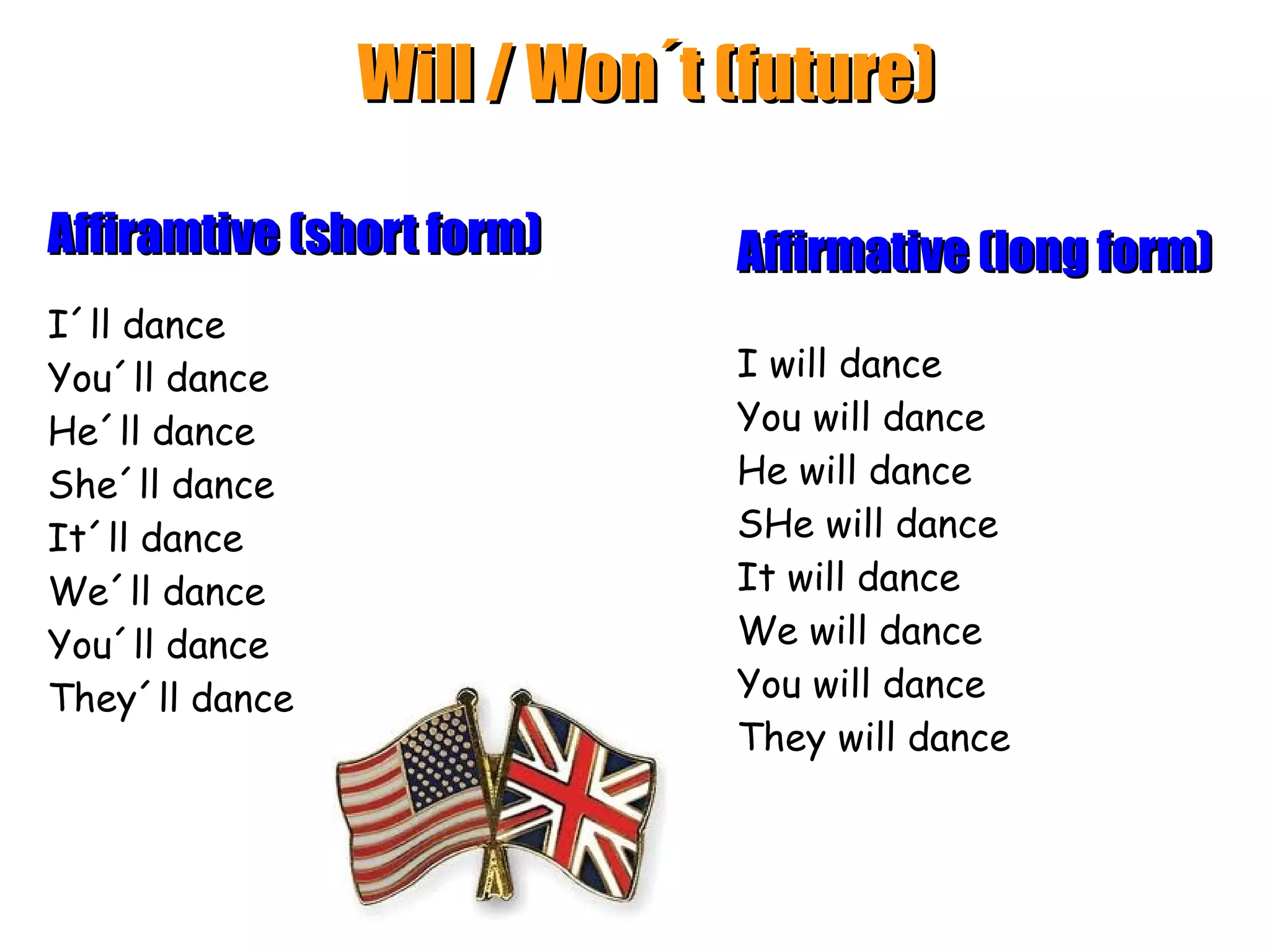
Will / Won´t (future)

Affiramtive (short form)     Affirmative (long form)
I´ll dance
You´ll dance                 I will dance
He´ll dance                  You will dance
She´ll dance                 He will dance
It´ll dance                  SHe will dance
We´ll dance                  It will dance
You´ll dance                 We will dance
They´ll dance                You will dance
                             They will dance
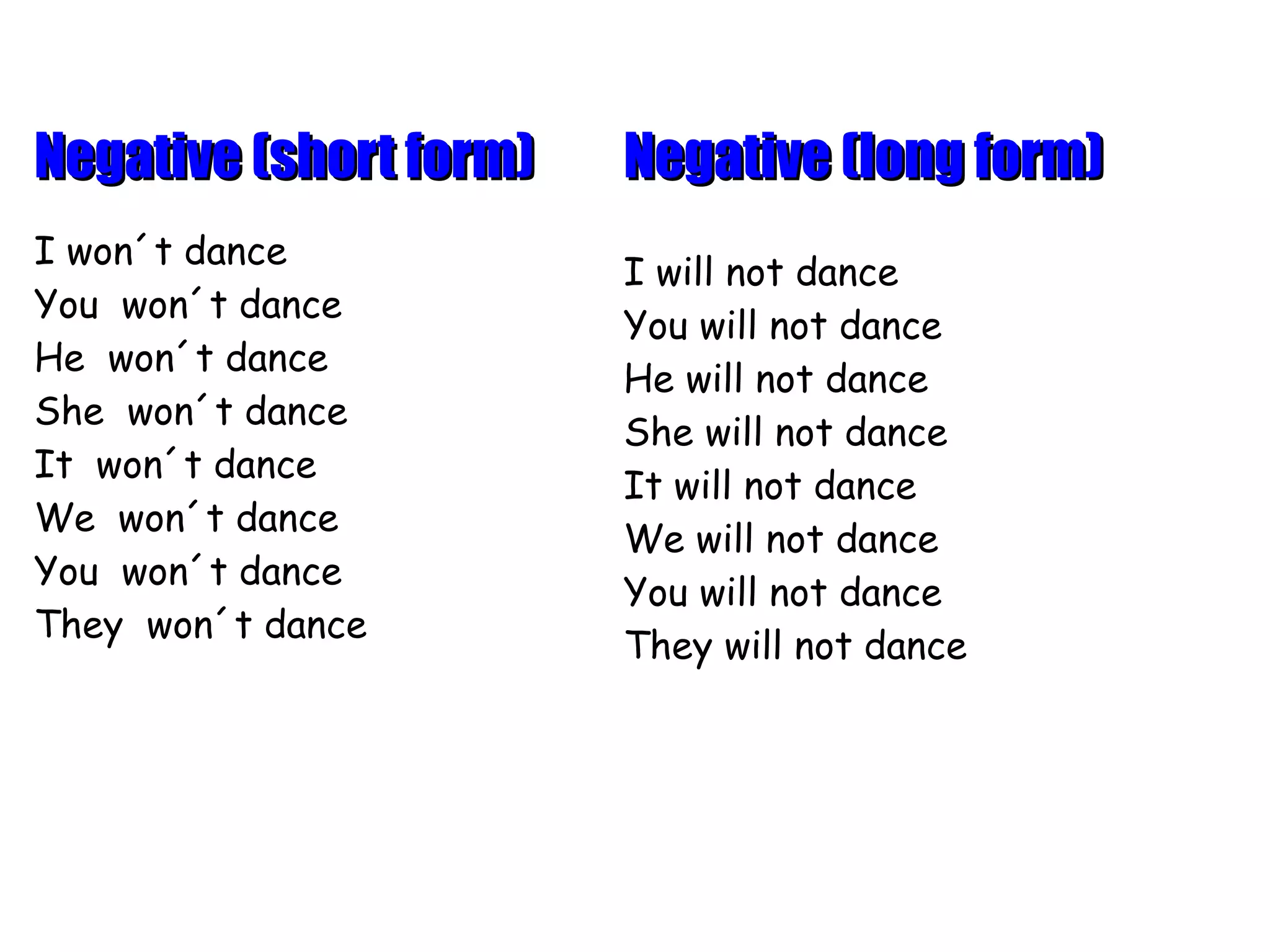
Negative (short form)   Negative (long form)
I won´t dance
                        I will not dance
You won´t dance
                        You will not dance
He won´t dance
                        He will not dance
She won´t dance
                        She will not dance
It won´t dance
                        It will not dance
We won´t dance
                        We will not dance
You won´t dance
                        You will not dance
They won´t dance
                        They will not dance
Interrogative
Will I dance?
Will you dance?
Will he dance?
Will she dance?
Will it dance?
Will we dance?
Will you dance?
Wiil they dance?
VÍDEOS

         Aquí teneis el video

http://www.youtube.com/watch?v=gDQjKjK5qbk
ACTIVIDADES
                            Will/Won´t:
            http://www.saberingles.com.ar/exercises/103.html

inglesmundial.com/Ingles_Basico_Leccion16/Ingles_Basico_Leccion16_Grama


                             Begoingto:

          http://www.theyellowpencil.com/tofutintencion1.html

.inglesmundial.com/Ingles_Basico_Leccion14/Ingles_Basico_Leccion14_Grama
BE GOING TO

BE GOING TO

  • 1.
    BE GOING TO 5FANTÁSTICOS TRIANA JESÚS RAQUEL SILVIA JOSÉ
  • 2.
    USOS DEL BEGOING TO Para hablar de nuestros planes, proyectos a intenciones para un futuro inmediato o cercano. Ej. I'm going to celebrate my birthday next Sunday. # N O T A Fíjate que al hablar de planes fijos se puede también usar el “Present continuos”, siempre que indiquemos el momento en el que se va a celebrar nuestro plan y nuestras intenciones. Utilizaremos adverbios de tiempo que nos indicarán que nos referimos que es un futuro.
  • 3.
    Be going to(future) Affirmative Negative I´m not going to play basketball I´m going to play basketball You aren´t going to play basketball He is going to play basketball He isn´t going to play basketball She is going to play basketball She isn´t going to play basketball It is going to play basketball It isn´t going to play basketball We are going to play basketball We aren´t going to play basketball You are going to play basketball You aren´t going to play basketball They are going to play basketball They aren´t going to play basketball
  • 4.
    Interrogative Am I goingto play basketball? Are you going to play basketball? Is he going to play basketball? Is she going to play basketball? Is it going to play basketball? Are we going to play basketball? Are you going to play basketball? Are they going to play basketball?
  • 5.
    WILL WON´T 5 FANTÁSTICOS TRIANA JESÚS RAQUEL SILVIA JOSÉ
  • 6.
    WILL WON´T Expresamos elfuturo, también con el will y su negativa will not o won´t más el infinitivo Ej. I will sing for you
  • 7.
    WILL WON´T Utilizamos elwill + infinitivo para lo siguiente 1.- Para predecir el futuro 2.- Siempre que tomemos una decisión espontanea 3.- Para planes no planificados 4.- Siempre que nos ofrecemos a hacer algo por alguien
  • 8.
    WILL WON´T # NO T A En la forma interrogativa en la primera persona del singular y del plural utilizaría para preguntar la expresión “Shall I + infinitive” o para también ofrecernos ha hacer algo por alguien.
  • 9.
    Will / Won´t(future) Affiramtive (short form) Affirmative (long form) I´ll dance You´ll dance I will dance He´ll dance You will dance She´ll dance He will dance It´ll dance SHe will dance We´ll dance It will dance You´ll dance We will dance They´ll dance You will dance They will dance
  • 10.
    Negative (short form) Negative (long form) I won´t dance I will not dance You won´t dance You will not dance He won´t dance He will not dance She won´t dance She will not dance It won´t dance It will not dance We won´t dance We will not dance You won´t dance You will not dance They won´t dance They will not dance
  • 11.
    Interrogative Will I dance? Willyou dance? Will he dance? Will she dance? Will it dance? Will we dance? Will you dance? Wiil they dance?
  • 12.
    VÍDEOS Aquí teneis el video http://www.youtube.com/watch?v=gDQjKjK5qbk
  • 13.
    ACTIVIDADES Will/Won´t: http://www.saberingles.com.ar/exercises/103.html inglesmundial.com/Ingles_Basico_Leccion16/Ingles_Basico_Leccion16_Grama Begoingto: http://www.theyellowpencil.com/tofutintencion1.html .inglesmundial.com/Ingles_Basico_Leccion14/Ingles_Basico_Leccion14_Grama