Trabajo del BE GOING TO Y WILL Y
               WON'T

        Dark Knights 6ºA:
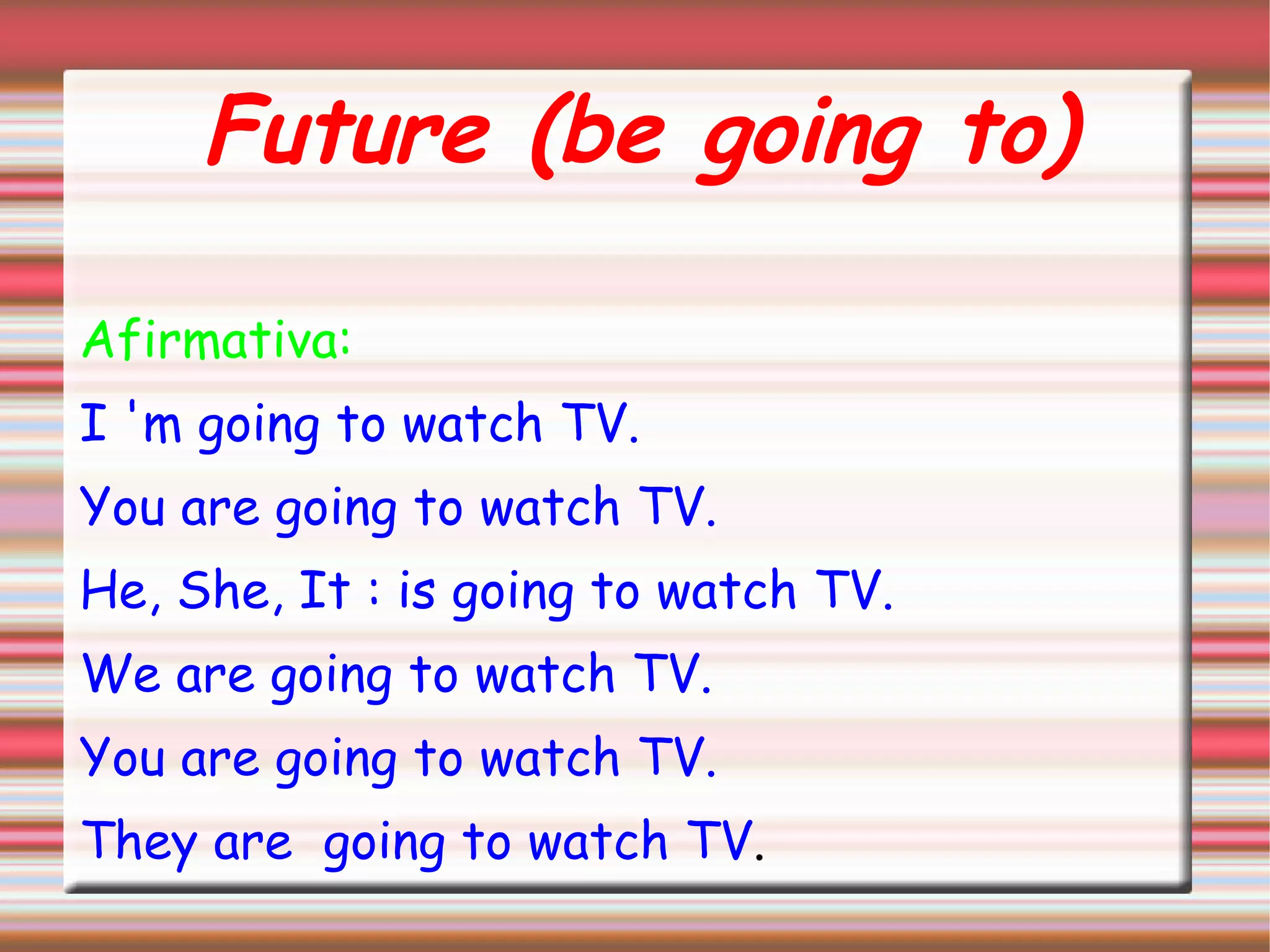
Future (be going to)

Afirmativa:
I 'm going to watch TV.
You are going to watch TV.
He, She, It : is going to watch TV.
We are going to watch TV.
You are going to watch TV.
They are going to watch TV.
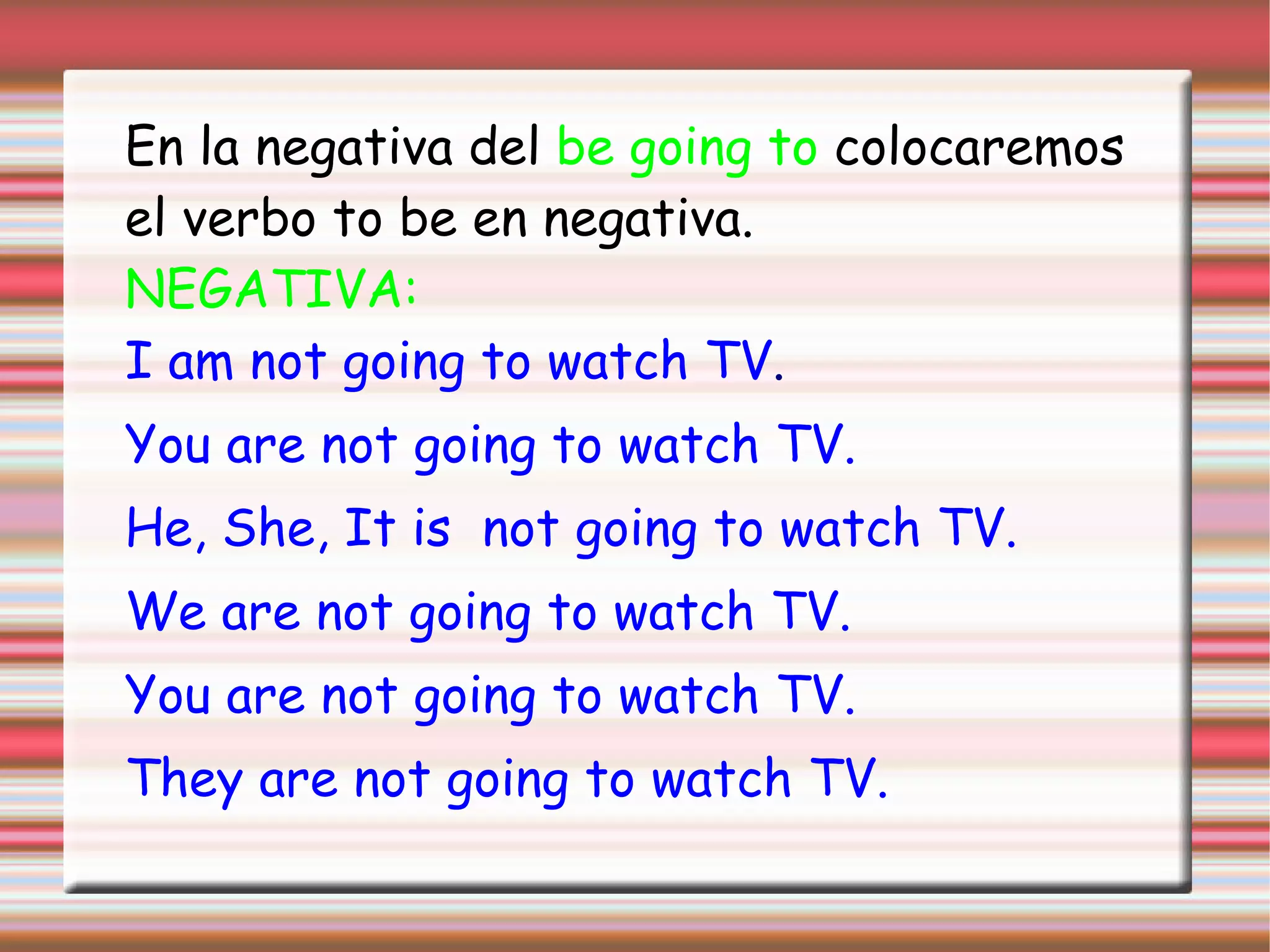
En la negativa del be going to colocaremos
el verbo to be en negativa.
NEGATIVA:
I am not going to watch TV.
You are not going to watch TV.
He, She, It is not going to watch TV.
We are not going to watch TV.
You are not going to watch TV.
They are not going to watch TV.
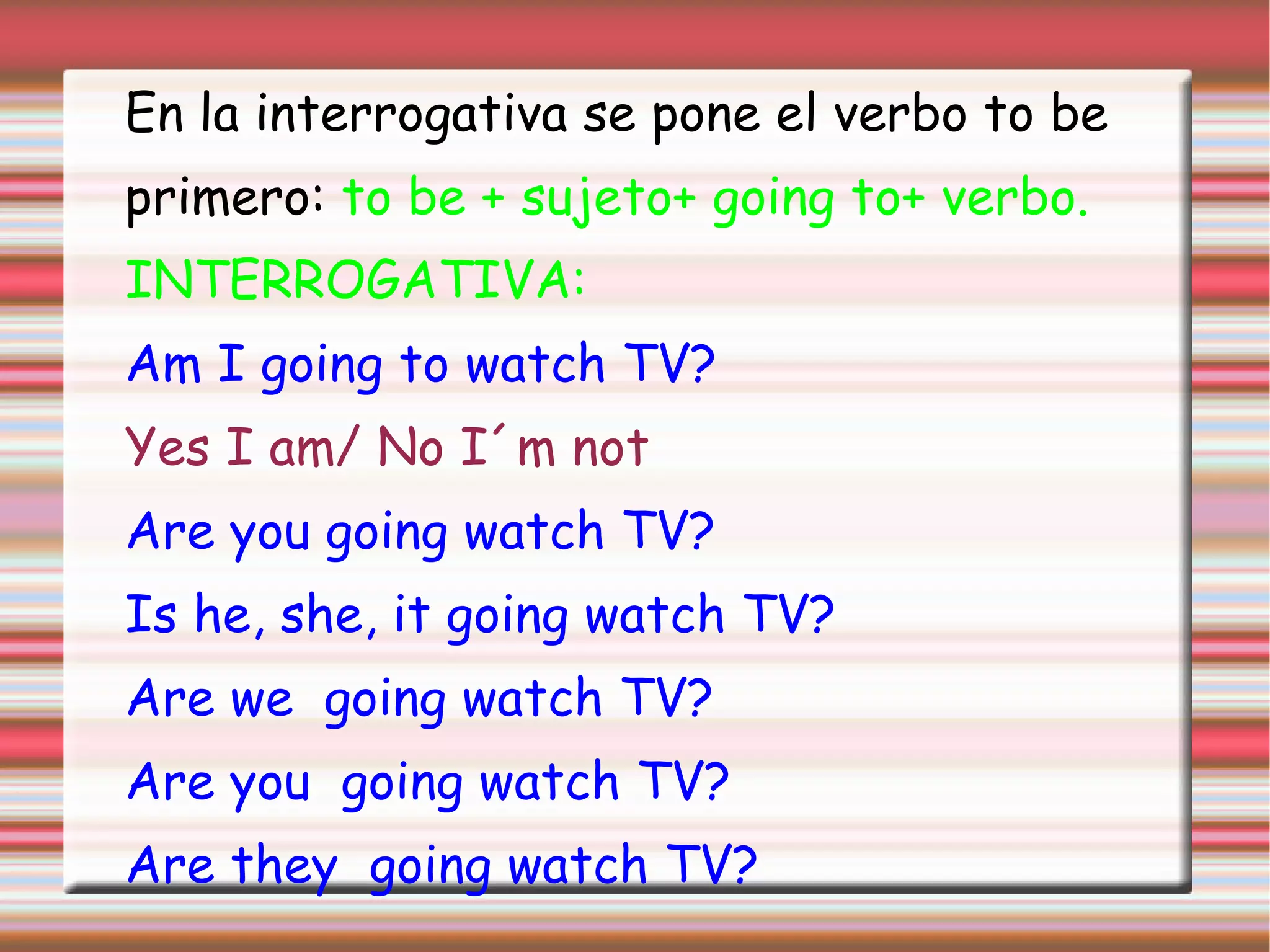
En la interrogativa se pone el verbo to be
primero: to be + sujeto+ going to+ verbo.
INTERROGATIVA:
Am I going to watch TV?
Yes I am/ No I´m not
Are you going watch TV?
Is he, she, it going watch TV?
Are we going watch TV?
Are you going watch TV?
Are they going watch TV?
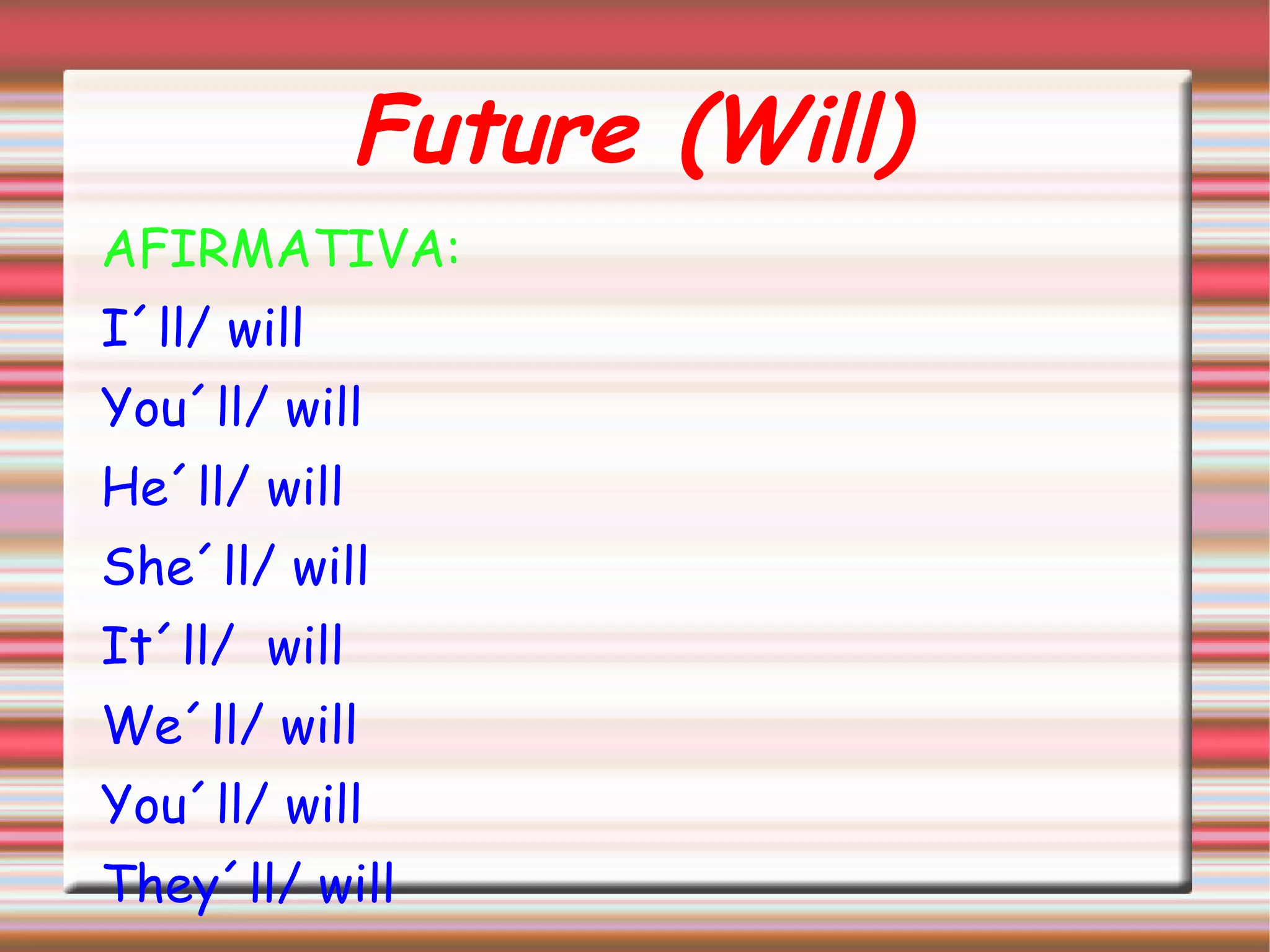
Future (Will)
AFIRMATIVA:
I´ll/ will
You´ll/ will
He´ll/ will
She´ll/ will
It´ll/ will
We´ll/ will
You´ll/ will
They´ll/ will
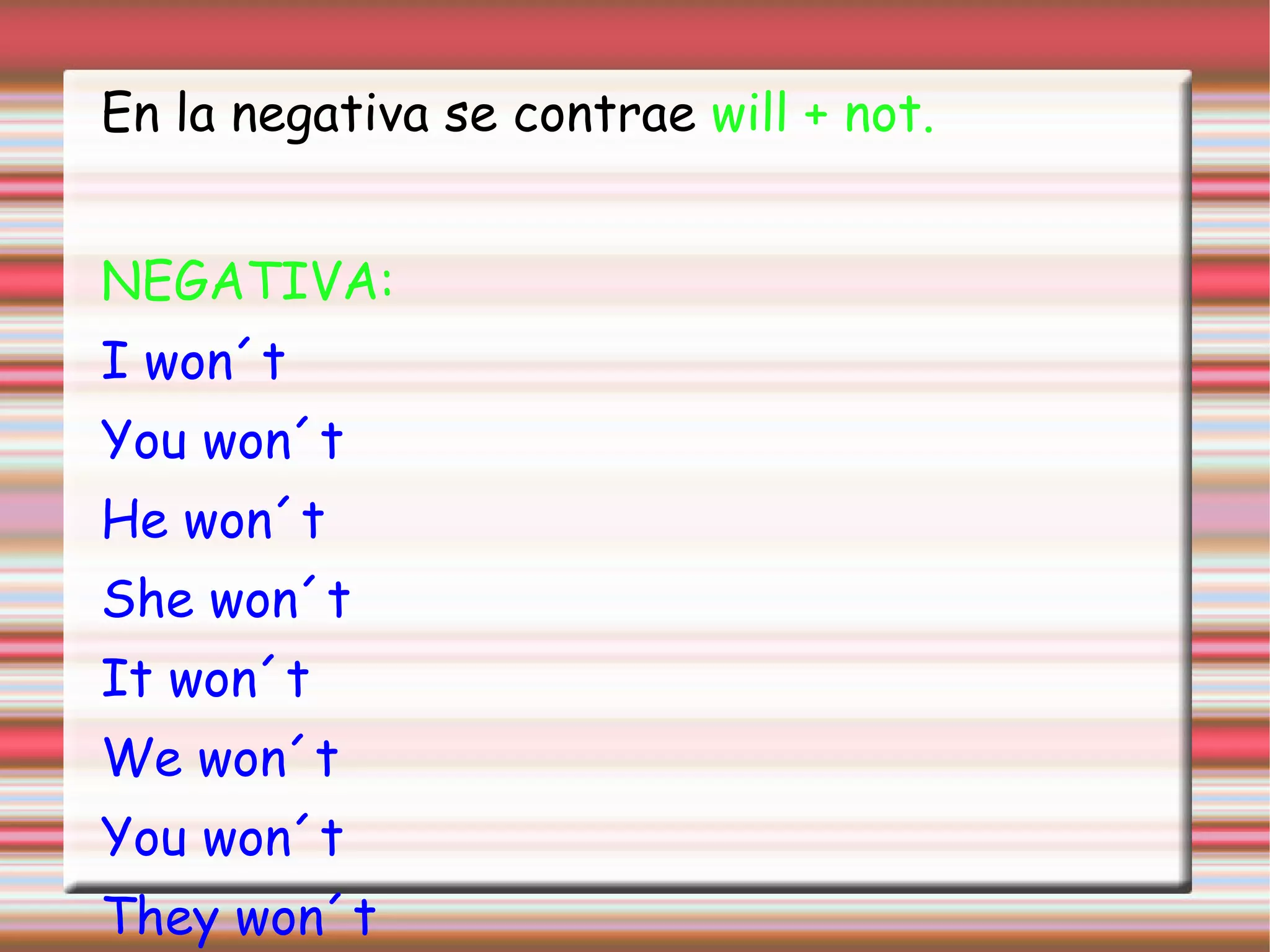
En la negativa se contrae will + not.


NEGATIVA:
I won´t
You won´t
He won´t
She won´t
It won´t
We won´t
You won´t
They won´t
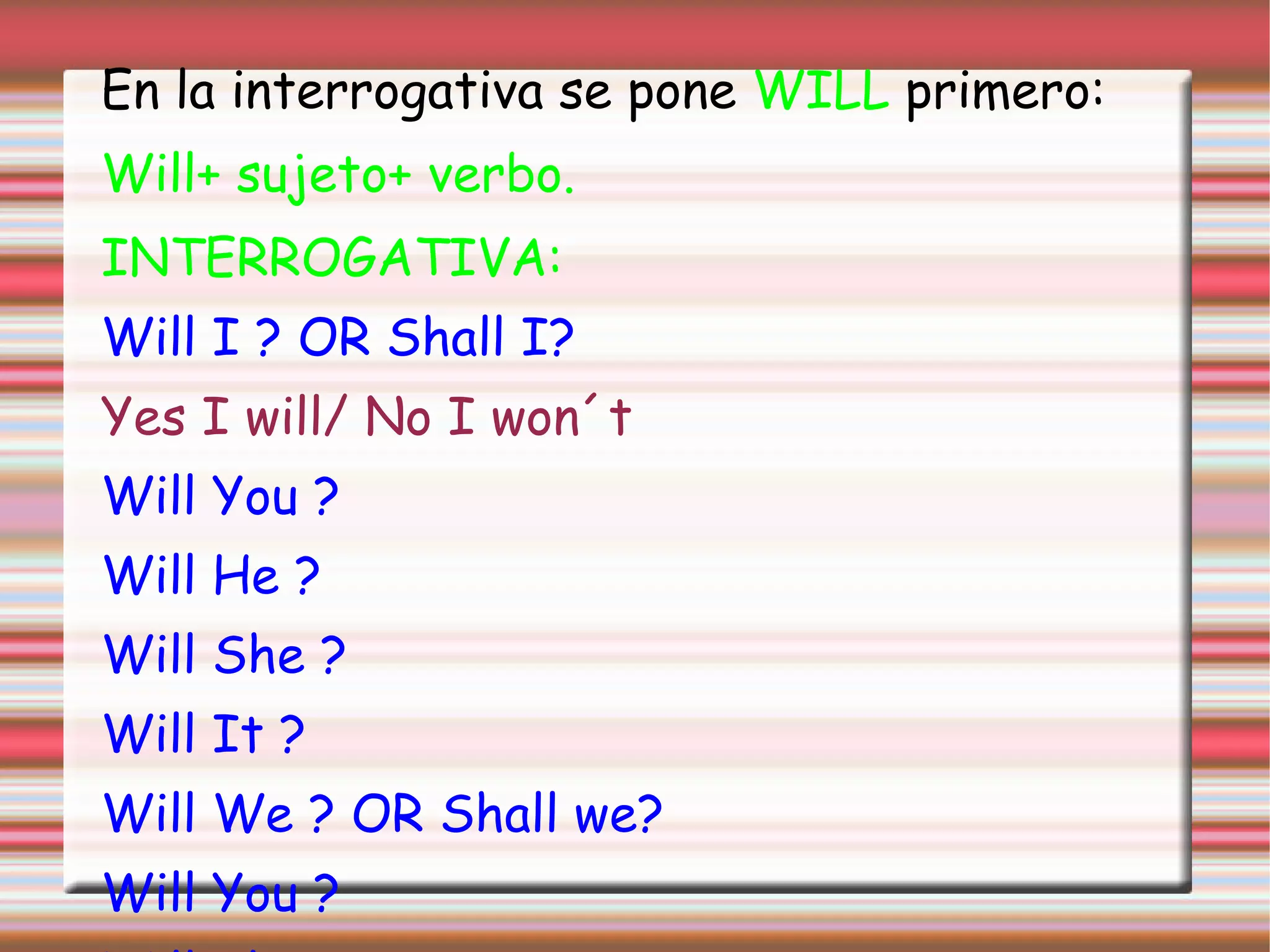
En la interrogativa se pone WILL primero:
Will+ sujeto+ verbo.
INTERROGATIVA:
Will I ? OR Shall I?
Yes I will/ No I won´t
Will You ?
Will He ?
Will She ?
Will It ?
Will We ? OR Shall we?
Will You ?
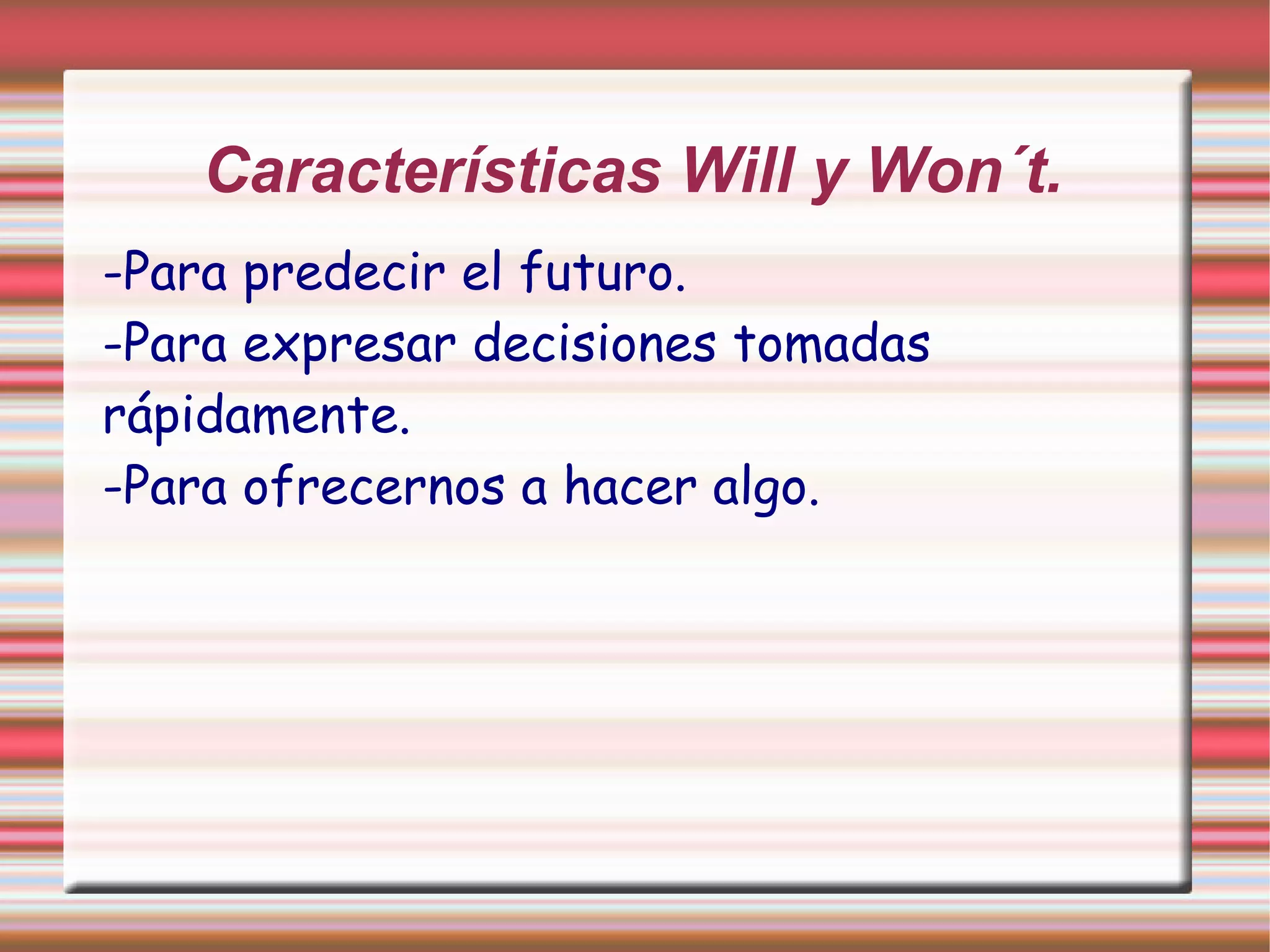
Características Will y Won´t.
-Para predecir el futuro.
-Para expresar decisiones tomadas
rápidamente.
-Para ofrecernos a hacer algo.
Características del Be going to
-Para hablar de nuestros planes de un
futuro inmediato.
-Se usan adverbios como next.
Enlaces
                Vídeo completo
http://www.youtube.com/watch?v=RItHKHW0P1I


                 Will y going to
http://edu.jccm.es/ies/cifuentes/index.php?op-
 tion=com_content&view=article&id=315:mas
 -ejercicios-qwillq-qgoing-toq&catid=48:ingles
Be going to 2

Be going to 2

  • 1.
    Trabajo del BEGOING TO Y WILL Y WON'T Dark Knights 6ºA:
  • 2.
    Future (be goingto) Afirmativa: I 'm going to watch TV. You are going to watch TV. He, She, It : is going to watch TV. We are going to watch TV. You are going to watch TV. They are going to watch TV.
  • 3.
    En la negativadel be going to colocaremos el verbo to be en negativa. NEGATIVA: I am not going to watch TV. You are not going to watch TV. He, She, It is not going to watch TV. We are not going to watch TV. You are not going to watch TV. They are not going to watch TV.
  • 4.
    En la interrogativase pone el verbo to be primero: to be + sujeto+ going to+ verbo. INTERROGATIVA: Am I going to watch TV? Yes I am/ No I´m not Are you going watch TV? Is he, she, it going watch TV? Are we going watch TV? Are you going watch TV? Are they going watch TV?
  • 5.
    Future (Will) AFIRMATIVA: I´ll/ will You´ll/will He´ll/ will She´ll/ will It´ll/ will We´ll/ will You´ll/ will They´ll/ will
  • 6.
    En la negativase contrae will + not. NEGATIVA: I won´t You won´t He won´t She won´t It won´t We won´t You won´t They won´t
  • 7.
    En la interrogativase pone WILL primero: Will+ sujeto+ verbo. INTERROGATIVA: Will I ? OR Shall I? Yes I will/ No I won´t Will You ? Will He ? Will She ? Will It ? Will We ? OR Shall we? Will You ?
  • 8.
    Características Will yWon´t. -Para predecir el futuro. -Para expresar decisiones tomadas rápidamente. -Para ofrecernos a hacer algo.
  • 9.
    Características del Begoing to -Para hablar de nuestros planes de un futuro inmediato. -Se usan adverbios como next.
  • 10.
    Enlaces Vídeo completo http://www.youtube.com/watch?v=RItHKHW0P1I Will y going to http://edu.jccm.es/ies/cifuentes/index.php?op- tion=com_content&view=article&id=315:mas -ejercicios-qwillq-qgoing-toq&catid=48:ingles