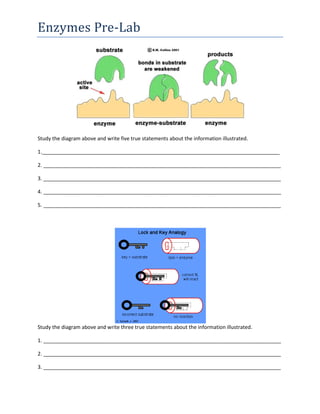
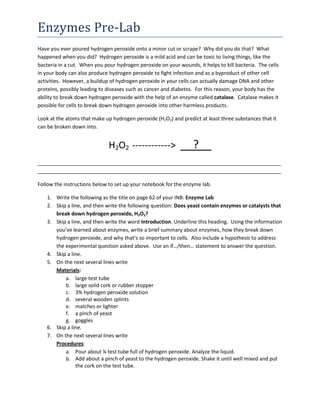
Study the diagram above and write five true statements about the information illustrated.<br />1.___________________________________________________________________________________<br />2. ___________________________________________________________________________________<br />3. ___________________________________________________________________________________<br />4. ___________________________________________________________________________________<br />5. ___________________________________________________________________________________<br />Study the diagram above and write three true statements about the information illustrated.<br />1. ___________________________________________________________________________________<br />2. ___________________________________________________________________________________<br />3. ___________________________________________________________________________________<br />Have you ever poured hydrogen peroxide onto a minor cut or scrape?  Why did you do that?  What happened when you did?  Hydrogen peroxide is a mild acid and can be toxic to living things, like the bacteria in a cut.  When you pour hydrogen peroxide on your wounds, it helps to kill bacteria.  The cells in your body can also produce hydrogen peroxide to fight infection and as a byproduct of other cell activities.  However, a buildup of hydrogen peroxide in your cells can actually damage DNA and other proteins, possibly leading to diseases such as cancer and diabetes.  For this reason, your body has the ability to break down hydrogen peroxide with the help of an enzyme called catalase.  Catalase makes it possible for cells to break down hydrogen peroxide into other harmless products.<br />Look at the atoms that make up hydrogen peroxide (H2O2) and predict at least three substances that it can be broken down into.<br />H2O2  ------------>  __?__   <br />__________________________________________________________________________________________________________________________________________________________________________<br />Follow the instructions below to set up your notebook for the enzyme lab.<br />Write the following as the title on page 62 of your INB: Enzyme Lab
Skip a line, and then write the following question: Does yeast contain enzymes or catalysts that break down hydrogen peroxide, H2O2?
Skip a line, and then write the word Introduction. Underline this heading.  Using the information you’ve learned about enzymes, write a brief summary about enzymes, how they break down hydrogen peroxide, and why that’s so important to cells.  Also include a hypothesis to address the experimental question asked above.  Use an if…/then… statement to answer the question.

Enzymes pre lab

  • 1.
    Study the diagramabove and write five true statements about the information illustrated.<br />1.___________________________________________________________________________________<br />2. ___________________________________________________________________________________<br />3. ___________________________________________________________________________________<br />4. ___________________________________________________________________________________<br />5. ___________________________________________________________________________________<br />Study the diagram above and write three true statements about the information illustrated.<br />1. ___________________________________________________________________________________<br />2. ___________________________________________________________________________________<br />3. ___________________________________________________________________________________<br />Have you ever poured hydrogen peroxide onto a minor cut or scrape? Why did you do that? What happened when you did? Hydrogen peroxide is a mild acid and can be toxic to living things, like the bacteria in a cut. When you pour hydrogen peroxide on your wounds, it helps to kill bacteria. The cells in your body can also produce hydrogen peroxide to fight infection and as a byproduct of other cell activities. However, a buildup of hydrogen peroxide in your cells can actually damage DNA and other proteins, possibly leading to diseases such as cancer and diabetes. For this reason, your body has the ability to break down hydrogen peroxide with the help of an enzyme called catalase. Catalase makes it possible for cells to break down hydrogen peroxide into other harmless products.<br />Look at the atoms that make up hydrogen peroxide (H2O2) and predict at least three substances that it can be broken down into.<br />H2O2 ------------> __?__ <br />__________________________________________________________________________________________________________________________________________________________________________<br />Follow the instructions below to set up your notebook for the enzyme lab.<br />Write the following as the title on page 62 of your INB: Enzyme Lab
  • 2.
    Skip a line,and then write the following question: Does yeast contain enzymes or catalysts that break down hydrogen peroxide, H2O2?
  • 3.
    Skip a line,and then write the word Introduction. Underline this heading. Using the information you’ve learned about enzymes, write a brief summary about enzymes, how they break down hydrogen peroxide, and why that’s so important to cells. Also include a hypothesis to address the experimental question asked above. Use an if…/then… statement to answer the question.