PRAGMATICS
What is Pragmatics?
• The study of practical aspects of human action and thought. The study of the
use of linguistics signs, words and sentences, in actual situation.
• Pragmatics is the explanation about utterance meaning. It means that
pragmatics is the science of studying about the meaning delivered by the
speaker (writer)and interpreted by the listener.
• Pragmatics outlines the study of meaning in the interactional context.
• It looks beyond the literal meaning of an utterance and considers how
meaning is constructed as well as focusing on implied meaning.
• It considers language as an instruments of interaction, what people mean
when they use language and how we communicate and understand each
other.
What would happen to language if pragmatics
did not exist?
• Pragmatics acts as the basis for all language interaction and contact.
• It is a key feature to the understanding of language and the responses
that follow this.
• Therefore, without the function of pragmatics, there would be very
little understanding of intention and meaning.
Syntax, semantics, and pragmatics
• Syntax is explanation about relation among linguistics forms. This type
usually happens without considering reference world or other form.
• Semantics is explanation among linguistics forms with something
literally.
• Pragmatics is the clarification about relationship among the
appearance user.
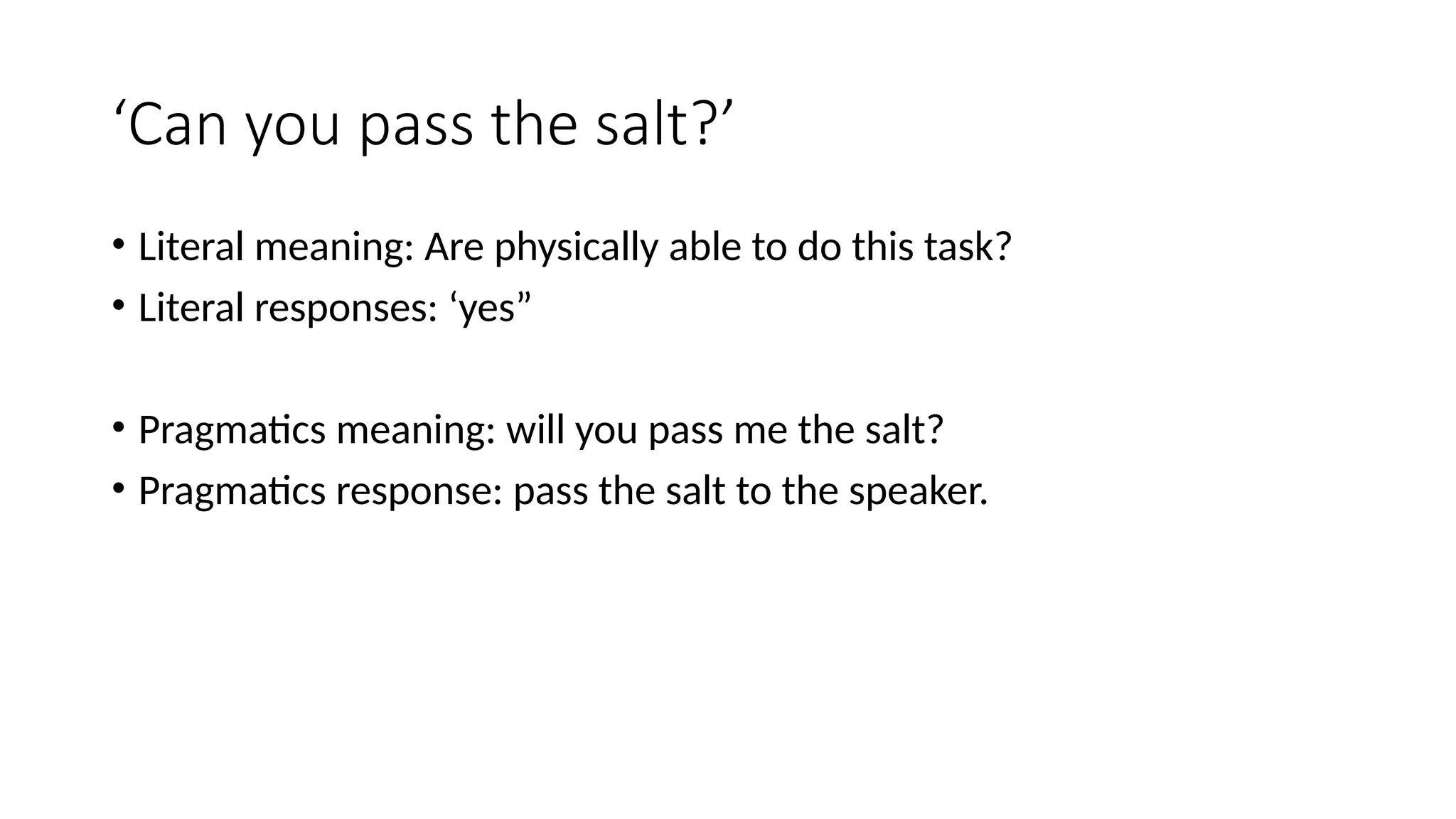
‘Can you pass the salt?’
• Literal meaning: Are physically able to do this task?
• Literal responses: ‘yes”
• Pragmatics meaning: will you pass me the salt?
• Pragmatics response: pass the salt to the speaker.
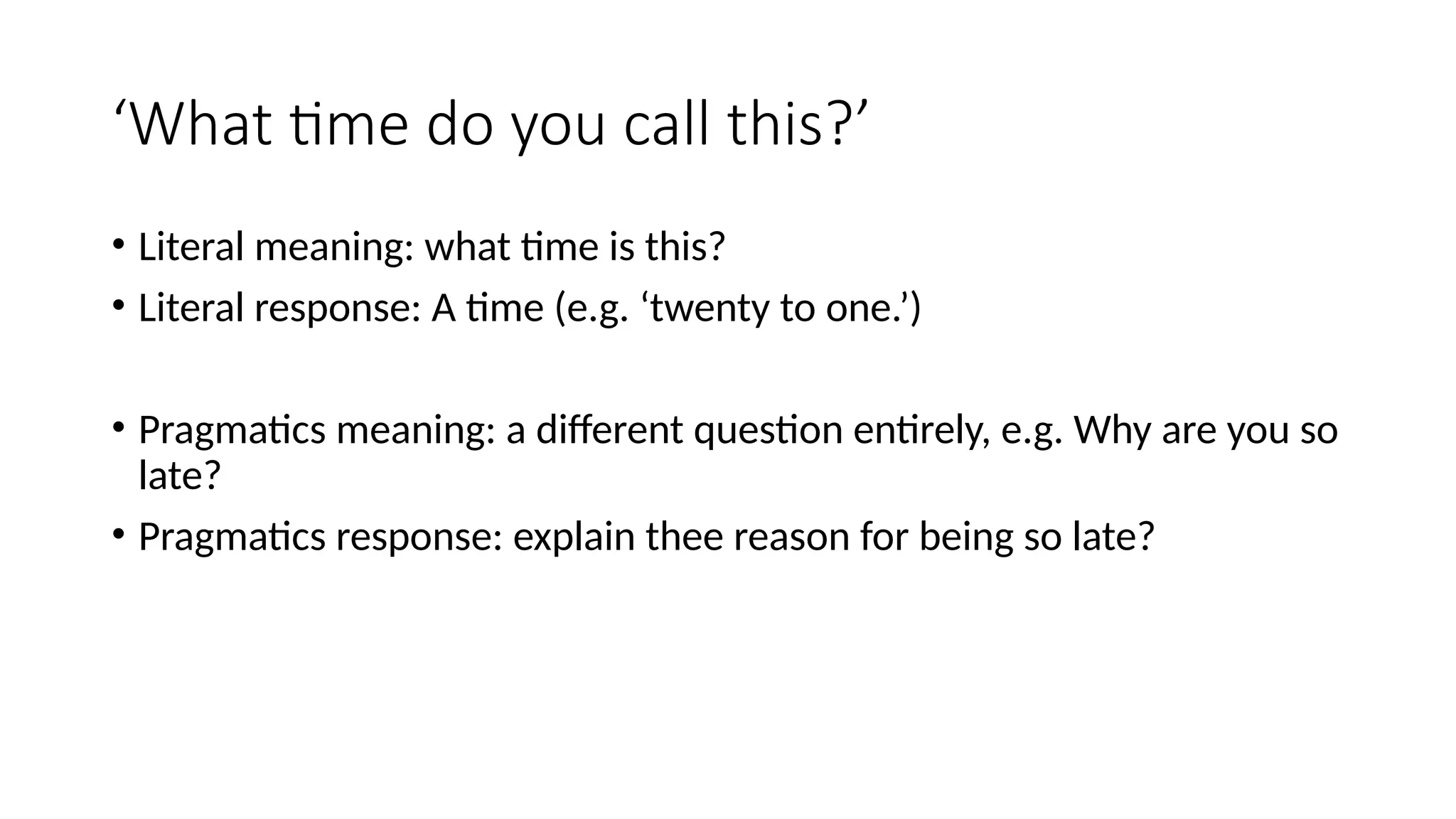
‘What time do you call this?’
• Literal meaning: what time is this?
• Literal response: A time (e.g. ‘twenty to one.’)
• Pragmatics meaning: a different question entirely, e.g. Why are you so
late?
• Pragmatics response: explain thee reason for being so late?

Basic Theory of PRAGMATICS for Language learner

  • 1.
  • 2.
    What is Pragmatics? •The study of practical aspects of human action and thought. The study of the use of linguistics signs, words and sentences, in actual situation. • Pragmatics is the explanation about utterance meaning. It means that pragmatics is the science of studying about the meaning delivered by the speaker (writer)and interpreted by the listener. • Pragmatics outlines the study of meaning in the interactional context. • It looks beyond the literal meaning of an utterance and considers how meaning is constructed as well as focusing on implied meaning. • It considers language as an instruments of interaction, what people mean when they use language and how we communicate and understand each other.
  • 3.
    What would happento language if pragmatics did not exist? • Pragmatics acts as the basis for all language interaction and contact. • It is a key feature to the understanding of language and the responses that follow this. • Therefore, without the function of pragmatics, there would be very little understanding of intention and meaning.
  • 4.
    Syntax, semantics, andpragmatics • Syntax is explanation about relation among linguistics forms. This type usually happens without considering reference world or other form. • Semantics is explanation among linguistics forms with something literally. • Pragmatics is the clarification about relationship among the appearance user.
  • 6.
    ‘Can you passthe salt?’ • Literal meaning: Are physically able to do this task? • Literal responses: ‘yes” • Pragmatics meaning: will you pass me the salt? • Pragmatics response: pass the salt to the speaker.
  • 7.
    ‘What time doyou call this?’ • Literal meaning: what time is this? • Literal response: A time (e.g. ‘twenty to one.’) • Pragmatics meaning: a different question entirely, e.g. Why are you so late? • Pragmatics response: explain thee reason for being so late?