

Basic Physics of ultrasound imaging
Why ultrasound?
• Inexpensive
• Portable
• Safe, devoid of radiation risk
• Real time, cross sectional views
• Interventions, regional anesthesia
“dr. karl theo dussik austrian neurologist”
TITANIC
Crit care med 2007 vol.35,no.5(suppl)
Ultrasound
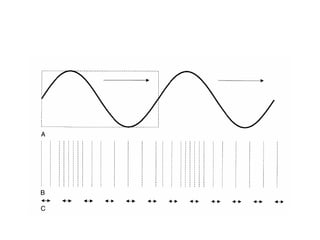
• Audible range 20hz – 20khz
• SOUND: waves travelling parallel to the energy
progression
• SOUND has work, energy and power
• Decibles – ratio measurement (logarithmic)
• Velocity – m/sec
• Sound velocity in body 1540 m/sec.
Crit care med 2007 vol.35,no.5(suppl)
Ultrasound
• Frquency: 2-10Mhz
• Propagarion speed: tissues
• Pulsed ultrasound
• Angle of incidence
• Attenuation
Ultrasound
• Pulsed ultrasound: means of emitting
ultrasound waves from a source.
• depth of resolution
• pulses are a millisecond or so long on
Crit care med 2007 vol.35,no.5(suppl)
Ultrasound
• Interaction with tissues:
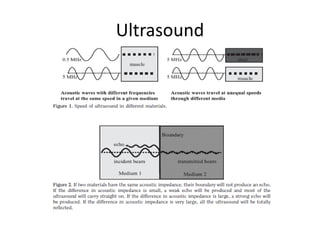
• Reflection: echo
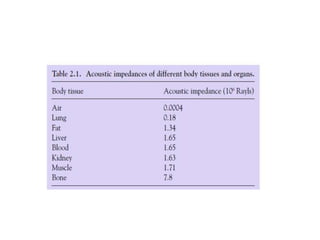
• Acoustic impedence: physical property of the
tissue
resistance offered by a tissue to the
ultrasound beam while traversing through
- Depends on density of the tissue and velocity
of the ultrasound wave Z = d x c
Ultrasound
• Same acoustic impedence between two
tissues no image is produced
• Large difference: soft tissue and bone –
produce large echos, may cause not enough
ultrasound waves beyond the tissue
• Crit care med 2007 vol.35,no.5(suppl)
Ultrasound
Ultrasound
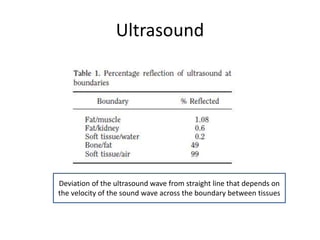
Deviation of the ultrasound wave from straight line that depends on
the velocity of the sound wave across the boundary between tissues
Ultrasound
Ultrasound
• Attenuation:
• The intensity of the beam is reduced by
refection, refraction, scattering and absorption
- Reflection and refraction at surface of the tissue
- Objects lesser than the wavelength of the US
scattering occur
- Final eventual fate of US is absorption and
transforming heat in the tissues
- Crit care med 2007 vol.35,no.5(suppl)
Ultrasound
• Piezoelectric crystals: interconnected
electronically and vibrate in response to an
applied electric current
• 1880 Curie brothers : piezoelectric effect and
reverse piezoelectric effect
• Frequency, wavelength, amplitude
• Atlas of Ultrasound-Guided Procedures in Interventional Pain Manag ement
Ultrasound
• US waves wavelength and frequency are inversely
related
• High frequency - Better penetration of tissues –
good resolution of deeper structures
• Low frequency probes used for superficial
structures visualization
• Higher frequency waves are more attenuated
than lower frequency for a given distance
• 1-20Mhz probes
• Atlas of Ultrasound-Guided Procedures in Interventional Pain Manag ement
Ultrasound
• Pulsed wave: Ultrasound waves are generated
in pulses (intermittent trains of pressure) that
commonly consist of two or three sound
cycles of the same frequency
• PRF: pulse repeteation frequecy
• 1-10khz
• Atlas of Ultrasound-Guided Procedures in Interventional Pain Manag ement
Ultrasound
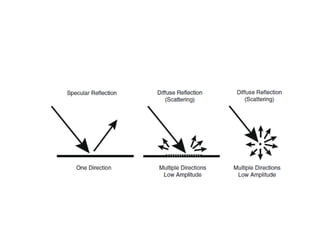
• Specular reflection:
incident ultra sound pulse encounters a
smooth and large interface of different
acoustic impedance the sound wave reflects
back to transducer
Ultrasound
• Conclusion:
1.Ultrasound is a sound wave out of range of
audible range of human being
2. Sound wave undergoes changes while
travelling through the tissues
3.Resoution of the image depends on the
reflexion,rarefaction and attenuation of the
waves in the tissues.
• ENERGY NEITHER BE DESTROYED NOR BE
CREATED
CAN BE TRANSFORMED INTO
ANOTHER FORM OF ENERGY.
THANK YOU
Basic physics of ultrasound imaging

Basic physics of ultrasound imaging

  • 1.
    Basic Physics ofultrasound imaging
  • 2.
    Why ultrasound? • Inexpensive •Portable • Safe, devoid of radiation risk • Real time, cross sectional views • Interventions, regional anesthesia “dr. karl theo dussik austrian neurologist” TITANIC Crit care med 2007 vol.35,no.5(suppl)
  • 3.
    Ultrasound • Audible range20hz – 20khz • SOUND: waves travelling parallel to the energy progression • SOUND has work, energy and power • Decibles – ratio measurement (logarithmic) • Velocity – m/sec • Sound velocity in body 1540 m/sec. Crit care med 2007 vol.35,no.5(suppl)
  • 5.
    Ultrasound • Frquency: 2-10Mhz •Propagarion speed: tissues • Pulsed ultrasound • Angle of incidence • Attenuation
  • 6.
    Ultrasound • Pulsed ultrasound:means of emitting ultrasound waves from a source. • depth of resolution • pulses are a millisecond or so long on Crit care med 2007 vol.35,no.5(suppl)
  • 7.
    Ultrasound • Interaction withtissues: • Reflection: echo • Acoustic impedence: physical property of the tissue resistance offered by a tissue to the ultrasound beam while traversing through - Depends on density of the tissue and velocity of the ultrasound wave Z = d x c
  • 9.
    Ultrasound • Same acousticimpedence between two tissues no image is produced • Large difference: soft tissue and bone – produce large echos, may cause not enough ultrasound waves beyond the tissue • Crit care med 2007 vol.35,no.5(suppl)
  • 10.
  • 11.
    Ultrasound Deviation of theultrasound wave from straight line that depends on the velocity of the sound wave across the boundary between tissues
  • 12.
  • 13.
    Ultrasound • Attenuation: • Theintensity of the beam is reduced by refection, refraction, scattering and absorption - Reflection and refraction at surface of the tissue - Objects lesser than the wavelength of the US scattering occur - Final eventual fate of US is absorption and transforming heat in the tissues - Crit care med 2007 vol.35,no.5(suppl)
  • 14.
    Ultrasound • Piezoelectric crystals:interconnected electronically and vibrate in response to an applied electric current • 1880 Curie brothers : piezoelectric effect and reverse piezoelectric effect • Frequency, wavelength, amplitude • Atlas of Ultrasound-Guided Procedures in Interventional Pain Manag ement
  • 15.
    Ultrasound • US waveswavelength and frequency are inversely related • High frequency - Better penetration of tissues – good resolution of deeper structures • Low frequency probes used for superficial structures visualization • Higher frequency waves are more attenuated than lower frequency for a given distance • 1-20Mhz probes • Atlas of Ultrasound-Guided Procedures in Interventional Pain Manag ement
  • 16.
    Ultrasound • Pulsed wave:Ultrasound waves are generated in pulses (intermittent trains of pressure) that commonly consist of two or three sound cycles of the same frequency • PRF: pulse repeteation frequecy • 1-10khz • Atlas of Ultrasound-Guided Procedures in Interventional Pain Manag ement
  • 18.
    Ultrasound • Specular reflection: incidentultra sound pulse encounters a smooth and large interface of different acoustic impedance the sound wave reflects back to transducer
  • 19.
    Ultrasound • Conclusion: 1.Ultrasound isa sound wave out of range of audible range of human being 2. Sound wave undergoes changes while travelling through the tissues 3.Resoution of the image depends on the reflexion,rarefaction and attenuation of the waves in the tissues.
  • 20.
    • ENERGY NEITHERBE DESTROYED NOR BE CREATED CAN BE TRANSFORMED INTO ANOTHER FORM OF ENERGY. THANK YOU