Amit Agrawal
 Some of the financial ratios/terms to look for in
bank annual reports for self analysis.
 This presentation is made for information
purpose only.
 This might help people who do their own
research regarding bank performances.
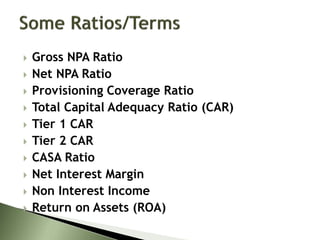
 Gross NPA Ratio
 Net NPA Ratio
 Provisioning Coverage Ratio
 Total Capital Adequacy Ratio (CAR)
 Tier 1 CAR
 Tier 2 CAR
 CASA Ratio
 Net Interest Margin
 Non Interest Income
 Return on Assets (ROA)
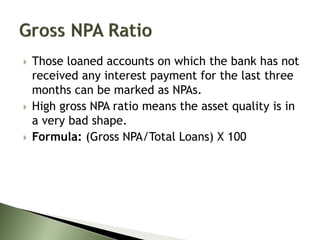
 Those loaned accounts on which the bank has not
received any interest payment for the last three
months can be marked as NPAs.
 High gross NPA ratio means the asset quality is in
a very bad shape.
 Formula: (Gross NPA/Total Loans) X 100
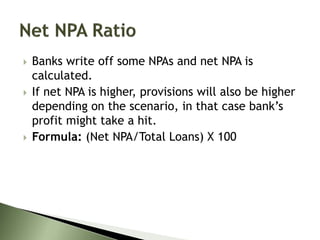
 Banks write off some NPAs and net NPA is
calculated.
 If net NPA is higher, provisions will also be higher
depending on the scenario, in that case bank’s
profit might take a hit.
 Formula: (Net NPA/Total Loans) X 100
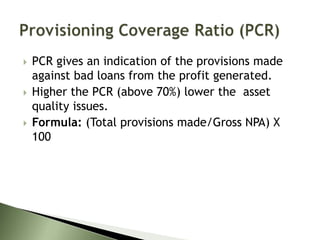
 PCR gives an indication of the provisions made
against bad loans from the profit generated.
 Higher the PCR (above 70%) lower the asset
quality issues.
 Formula: (Total provisions made/Gross NPA) X
100
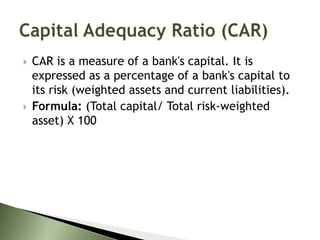
 CAR is a measure of a bank's capital. It is
expressed as a percentage of a bank's capital to
its risk (weighted assets and current liabilities).
 Formula: (Total capital/ Total risk-weighted
asset) X 100
 Tier 1 capital consists of shareholders' equity and
retained earnings.
 It is the primary funding source of the bank.
 Risk-weighted assets (RWA) measures a bank's
exposure to credit risk from the loans it
underwrites.
 Formula: ( Tier 1 capital/Total RWA) X 100
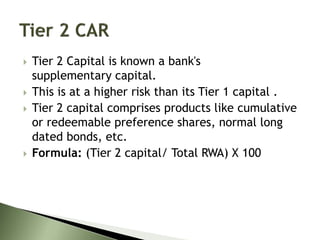
 Tier 2 Capital is known a bank's
supplementary capital.
 This is at a higher risk than its Tier 1 capital .
 Tier 2 capital comprises products like cumulative
or redeemable preference shares, normal long
dated bonds, etc.
 Formula: (Tier 2 capital/ Total RWA) X 100
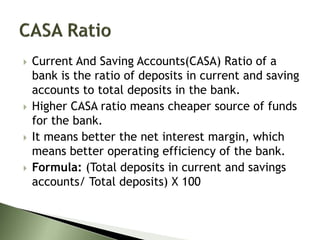
 Current And Saving Accounts(CASA) Ratio of a
bank is the ratio of deposits in current and saving
accounts to total deposits in the bank.
 Higher CASA ratio means cheaper source of funds
for the bank.
 It means better the net interest margin, which
means better operating efficiency of the bank.
 Formula: (Total deposits in current and savings
accounts/ Total deposits) X 100
 NIM is the difference between the interest
income generated by banks and the amount of
interest paid out to their lenders.
 High NIM and low NPA is a good combination.
 Formula: ((Interest received – interest paid)/
Average interest earning assets) X 100
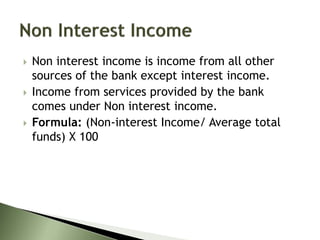
 Non interest income is income from all other
sources of the bank except interest income.
 Income from services provided by the bank
comes under Non interest income.
 Formula: (Non-interest Income/ Average total
funds) X 100
 In general terms ROA is the ratio between net
income reported for a period and total assets.
 It is an important performance indicator for
measuring the performance of the banks.
 It also gives an idea as how efficiently the
management is using its assets to generate
earnings.
 Formula : (Net Income/ Average total assets) X
100
 Thanks folks !!
 Courtesy :- Google

Basic Financial Banking terms

  • 1.
  • 2.
     Some ofthe financial ratios/terms to look for in bank annual reports for self analysis.  This presentation is made for information purpose only.  This might help people who do their own research regarding bank performances.
  • 3.
     Gross NPARatio  Net NPA Ratio  Provisioning Coverage Ratio  Total Capital Adequacy Ratio (CAR)  Tier 1 CAR  Tier 2 CAR  CASA Ratio  Net Interest Margin  Non Interest Income  Return on Assets (ROA)
  • 4.
     Those loanedaccounts on which the bank has not received any interest payment for the last three months can be marked as NPAs.  High gross NPA ratio means the asset quality is in a very bad shape.  Formula: (Gross NPA/Total Loans) X 100
  • 5.
     Banks writeoff some NPAs and net NPA is calculated.  If net NPA is higher, provisions will also be higher depending on the scenario, in that case bank’s profit might take a hit.  Formula: (Net NPA/Total Loans) X 100
  • 6.
     PCR givesan indication of the provisions made against bad loans from the profit generated.  Higher the PCR (above 70%) lower the asset quality issues.  Formula: (Total provisions made/Gross NPA) X 100
  • 7.
     CAR isa measure of a bank's capital. It is expressed as a percentage of a bank's capital to its risk (weighted assets and current liabilities).  Formula: (Total capital/ Total risk-weighted asset) X 100
  • 8.
     Tier 1capital consists of shareholders' equity and retained earnings.  It is the primary funding source of the bank.  Risk-weighted assets (RWA) measures a bank's exposure to credit risk from the loans it underwrites.  Formula: ( Tier 1 capital/Total RWA) X 100
  • 9.
     Tier 2Capital is known a bank's supplementary capital.  This is at a higher risk than its Tier 1 capital .  Tier 2 capital comprises products like cumulative or redeemable preference shares, normal long dated bonds, etc.  Formula: (Tier 2 capital/ Total RWA) X 100
  • 10.
     Current AndSaving Accounts(CASA) Ratio of a bank is the ratio of deposits in current and saving accounts to total deposits in the bank.  Higher CASA ratio means cheaper source of funds for the bank.  It means better the net interest margin, which means better operating efficiency of the bank.  Formula: (Total deposits in current and savings accounts/ Total deposits) X 100
  • 11.
     NIM isthe difference between the interest income generated by banks and the amount of interest paid out to their lenders.  High NIM and low NPA is a good combination.  Formula: ((Interest received – interest paid)/ Average interest earning assets) X 100
  • 12.
     Non interestincome is income from all other sources of the bank except interest income.  Income from services provided by the bank comes under Non interest income.  Formula: (Non-interest Income/ Average total funds) X 100
  • 13.
     In generalterms ROA is the ratio between net income reported for a period and total assets.  It is an important performance indicator for measuring the performance of the banks.  It also gives an idea as how efficiently the management is using its assets to generate earnings.  Formula : (Net Income/ Average total assets) X 100
  • 14.
     Thanks folks!!  Courtesy :- Google