RATIO ANALYSIS IN
BANKS
SOME KEY RATIOS
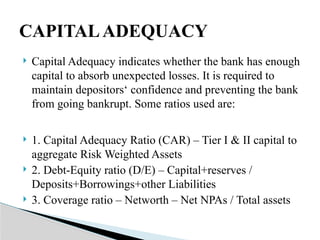
 Capital Adequacy indicates whether the bank has enough
capital to absorb unexpected losses. It is required to
maintain depositors‘ confidence and preventing the bank
from going bankrupt. Some ratios used are:
 1. Capital Adequacy Ratio (CAR) – Tier I & II capital to
aggregate Risk Weighted Assets
 2. Debt-Equity ratio (D/E) – Capital+reserves /
Deposits+Borrowings+other Liabilities
 3. Coverage ratio – Networth – Net NPAs / Total assets
CAPITALADEQUACY
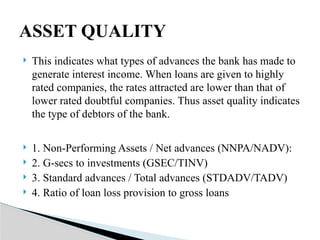
 This indicates what types of advances the bank has made to
generate interest income. When loans are given to highly
rated companies, the rates attracted are lower than that of
lower rated doubtful companies. Thus asset quality indicates
the type of debtors of the bank.
 1. Non-Performing Assets / Net advances (NNPA/NADV):
 2. G-secs to investments (GSEC/TINV)
 3. Standard advances / Total advances (STDADV/TADV)
 4. Ratio of loan loss provision to gross loans
ASSET QUALITY
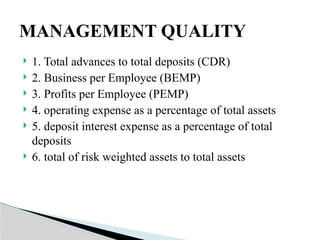
 1. Total advances to total deposits (CDR)
 2. Business per Employee (BEMP)
 3. Profits per Employee (PEMP)
 4. operating expense as a percentage of total assets
 5. deposit interest expense as a percentage of total
deposits
 6. total of risk weighted assets to total assets
MANAGEMENT QUALITY
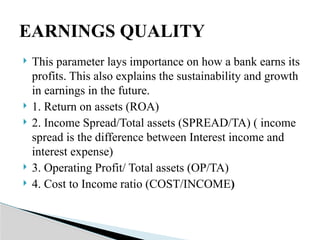
 This parameter lays importance on how a bank earns its
profits. This also explains the sustainability and growth
in earnings in the future.
 1. Return on assets (ROA)
 2. Income Spread/Total assets (SPREAD/TA) ( income
spread is the difference between Interest income and
interest expense)
 3. Operating Profit/ Total assets (OP/TA)
 4. Cost to Income ratio (COST/INCOME)
EARNINGS QUALITY
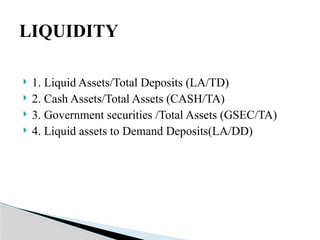
 1. Liquid Assets/Total Deposits (LA/TD)
 2. Cash Assets/Total Assets (CASH/TA)
 3. Government securities /Total Assets (GSEC/TA)
 4. Liquid assets to Demand Deposits(LA/DD)
LIQUIDITY

RATIO ANALYSIS IN BANKS for performance evaluation

  • 1.
  • 2.
     Capital Adequacyindicates whether the bank has enough capital to absorb unexpected losses. It is required to maintain depositors‘ confidence and preventing the bank from going bankrupt. Some ratios used are:  1. Capital Adequacy Ratio (CAR) – Tier I & II capital to aggregate Risk Weighted Assets  2. Debt-Equity ratio (D/E) – Capital+reserves / Deposits+Borrowings+other Liabilities  3. Coverage ratio – Networth – Net NPAs / Total assets CAPITALADEQUACY
  • 3.
     This indicateswhat types of advances the bank has made to generate interest income. When loans are given to highly rated companies, the rates attracted are lower than that of lower rated doubtful companies. Thus asset quality indicates the type of debtors of the bank.  1. Non-Performing Assets / Net advances (NNPA/NADV):  2. G-secs to investments (GSEC/TINV)  3. Standard advances / Total advances (STDADV/TADV)  4. Ratio of loan loss provision to gross loans ASSET QUALITY
  • 4.
     1. Totaladvances to total deposits (CDR)  2. Business per Employee (BEMP)  3. Profits per Employee (PEMP)  4. operating expense as a percentage of total assets  5. deposit interest expense as a percentage of total deposits  6. total of risk weighted assets to total assets MANAGEMENT QUALITY
  • 5.
     This parameterlays importance on how a bank earns its profits. This also explains the sustainability and growth in earnings in the future.  1. Return on assets (ROA)  2. Income Spread/Total assets (SPREAD/TA) ( income spread is the difference between Interest income and interest expense)  3. Operating Profit/ Total assets (OP/TA)  4. Cost to Income ratio (COST/INCOME) EARNINGS QUALITY
  • 6.
     1. LiquidAssets/Total Deposits (LA/TD)  2. Cash Assets/Total Assets (CASH/TA)  3. Government securities /Total Assets (GSEC/TA)  4. Liquid assets to Demand Deposits(LA/DD) LIQUIDITY