COMMUNICATION
Communication is the art of
transmitting information, ideas and
attitudes from one person to another.
Communication is the process of
meaningful talk among human beings.
What are the most common ways
we communicate?
Communication Goals
To change behavior
To get action
To ensure understanding
To build trust
To get and give
Information
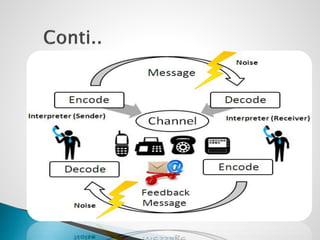
 Sender : The person or entity originating the
communication
 Message : The information that the sender wishes to
convey.
 Encoding: How the sender choose to bring the message
into a form appropriate for sending.
 Channel : The means by which the message is sent.
The Communication Process
 Receiver: The person or entity to whom the
message is sent.
 Decoding: How the receiver interprets and
understands the message.
 Feedback: The receivers response to the message.
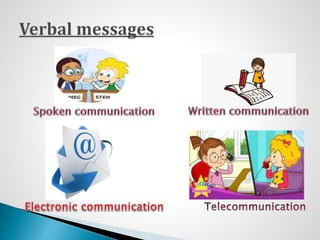
VERBAL MESSAGES- Use of
words to convey message.
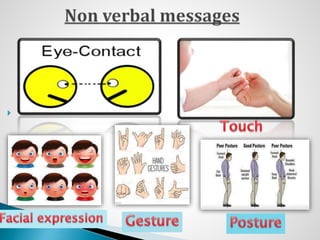
NON VERBAL MESSAGES-
Use of our
body language

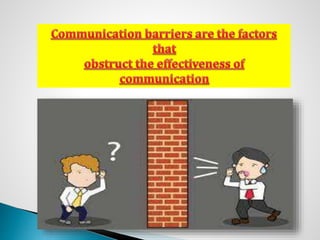
 Physiological barriers
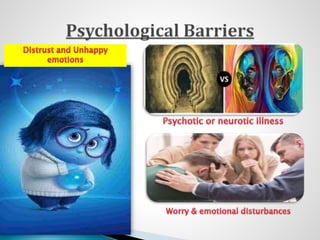
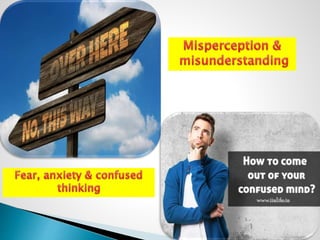
 Psychological barriers
 Social barriers
 Cultural barriers
 Environmental barriers
 Semantic barriers
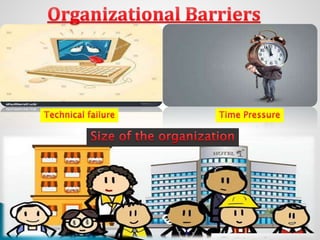
 Organizational barriers
 Communication process related barriers
1. Active listening
2. Ensure each other comfort
3. Pay attention during the sharing of
information
4. Information overload must avoid
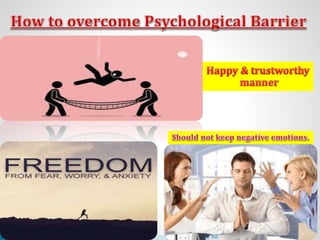
1. Happy & trustworthy manner
2. Free from fear, anxiety & confusion.
3. Should not keep negative emotions.
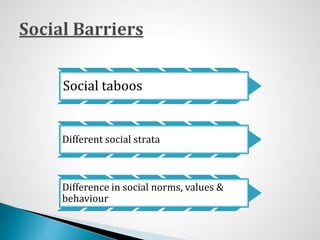
Social taboos
Different social strata
Difference in social norms, values &
behaviour
1. Social beliefs must
be kept in mind
2. The difference in social norms
values & behaviour must be
given consideration
Ethnic, religious & cultural
differences
Cultural tradition, values &
behaviour
1. Consider cultural differences
2. Consider cultural traditions,
values, & behaviour.
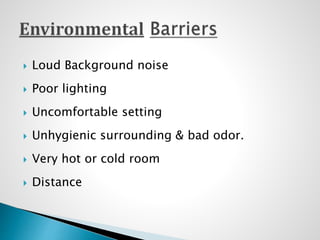
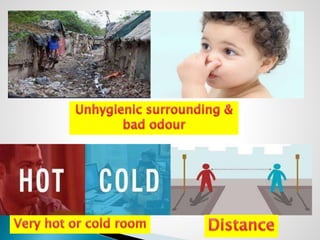
 Loud Background noise
 Poor lighting
 Uncomfortable setting
 Unhygienic surrounding & bad odor.
 Very hot or cold room
 Distance
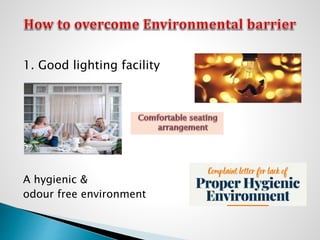
1. Good lighting facility
A hygienic &
odour free environment
Language barriers
Faulty long translation
Past experiences of and individual failure to
listen
Individual differences in expression &
Understanding
1. Use the same language
2. Focus on translation
3. Considered difference in the expression &
perception of message.
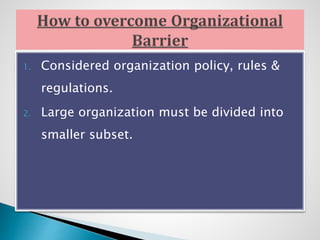
1. Considered organization policy, rules &
regulations.
2. Large organization must be divided into
smaller subset.
Basic Communication skills in clinical setup

Basic Communication skills in clinical setup

  • 2.
    COMMUNICATION Communication is theart of transmitting information, ideas and attitudes from one person to another. Communication is the process of meaningful talk among human beings.
  • 3.
    What are themost common ways we communicate?
  • 4.
    Communication Goals To changebehavior To get action To ensure understanding To build trust To get and give Information
  • 5.
     Sender :The person or entity originating the communication  Message : The information that the sender wishes to convey.  Encoding: How the sender choose to bring the message into a form appropriate for sending.  Channel : The means by which the message is sent. The Communication Process
  • 6.
     Receiver: Theperson or entity to whom the message is sent.  Decoding: How the receiver interprets and understands the message.  Feedback: The receivers response to the message.
  • 8.
    VERBAL MESSAGES- Useof words to convey message. NON VERBAL MESSAGES- Use of our body language
  • 10.
  • 12.
     Physiological barriers Psychological barriers  Social barriers  Cultural barriers  Environmental barriers  Semantic barriers  Organizational barriers  Communication process related barriers
  • 15.
    1. Active listening 2.Ensure each other comfort 3. Pay attention during the sharing of information 4. Information overload must avoid
  • 19.
    1. Happy &trustworthy manner 2. Free from fear, anxiety & confusion. 3. Should not keep negative emotions.
  • 21.
    Social taboos Different socialstrata Difference in social norms, values & behaviour
  • 22.
    1. Social beliefsmust be kept in mind 2. The difference in social norms values & behaviour must be given consideration
  • 23.
    Ethnic, religious &cultural differences Cultural tradition, values & behaviour
  • 24.
    1. Consider culturaldifferences 2. Consider cultural traditions, values, & behaviour.
  • 25.
     Loud Backgroundnoise  Poor lighting  Uncomfortable setting  Unhygienic surrounding & bad odor.  Very hot or cold room  Distance
  • 28.
    1. Good lightingfacility A hygienic & odour free environment
  • 29.
    Language barriers Faulty longtranslation Past experiences of and individual failure to listen Individual differences in expression & Understanding
  • 30.
    1. Use thesame language 2. Focus on translation 3. Considered difference in the expression & perception of message.
  • 32.
    1. Considered organizationpolicy, rules & regulations. 2. Large organization must be divided into smaller subset.