
BARRIERS OF
COMMUNICATION
The term 'barriers of
communication' is usually used
when one party is having
difficulty communicating with
another party, and there can be
many things that affect and act
as 'the barriers of
communication'.
TYPES OF
BARRIERS OF
COMMUNICATION
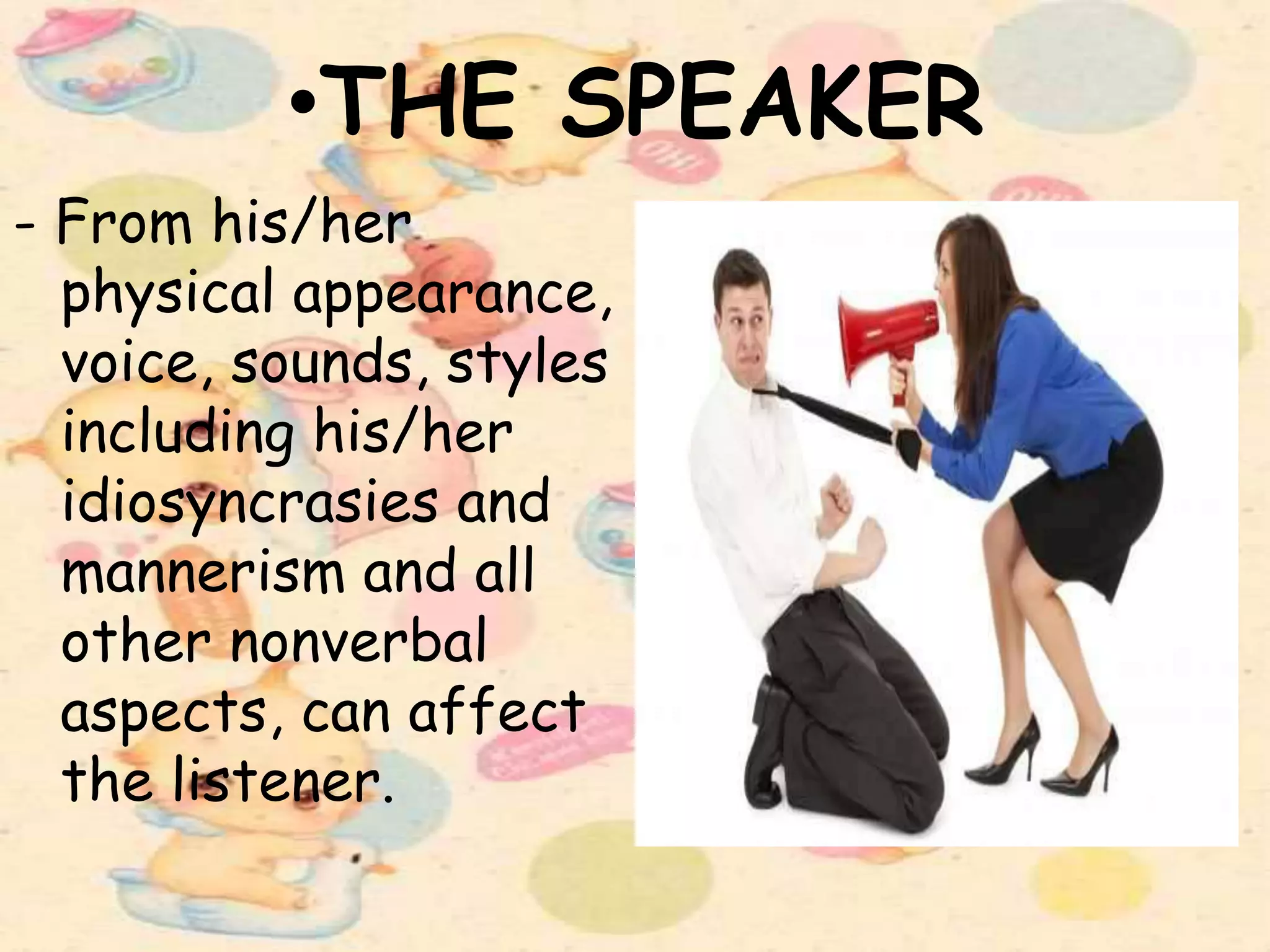
•THE SPEAKER
- From his/her
physical appearance,
voice, sounds, styles
including his/her
idiosyncrasies and
mannerism and all
other nonverbal
aspects, can affect
the listener.
•THE MESSAGE
- When it does not meet
the requirements of
clarity, conciseness,
concreteness,
completeness,
correctness, and
coherence, will suffer
from delay or a half in
the communication
process.
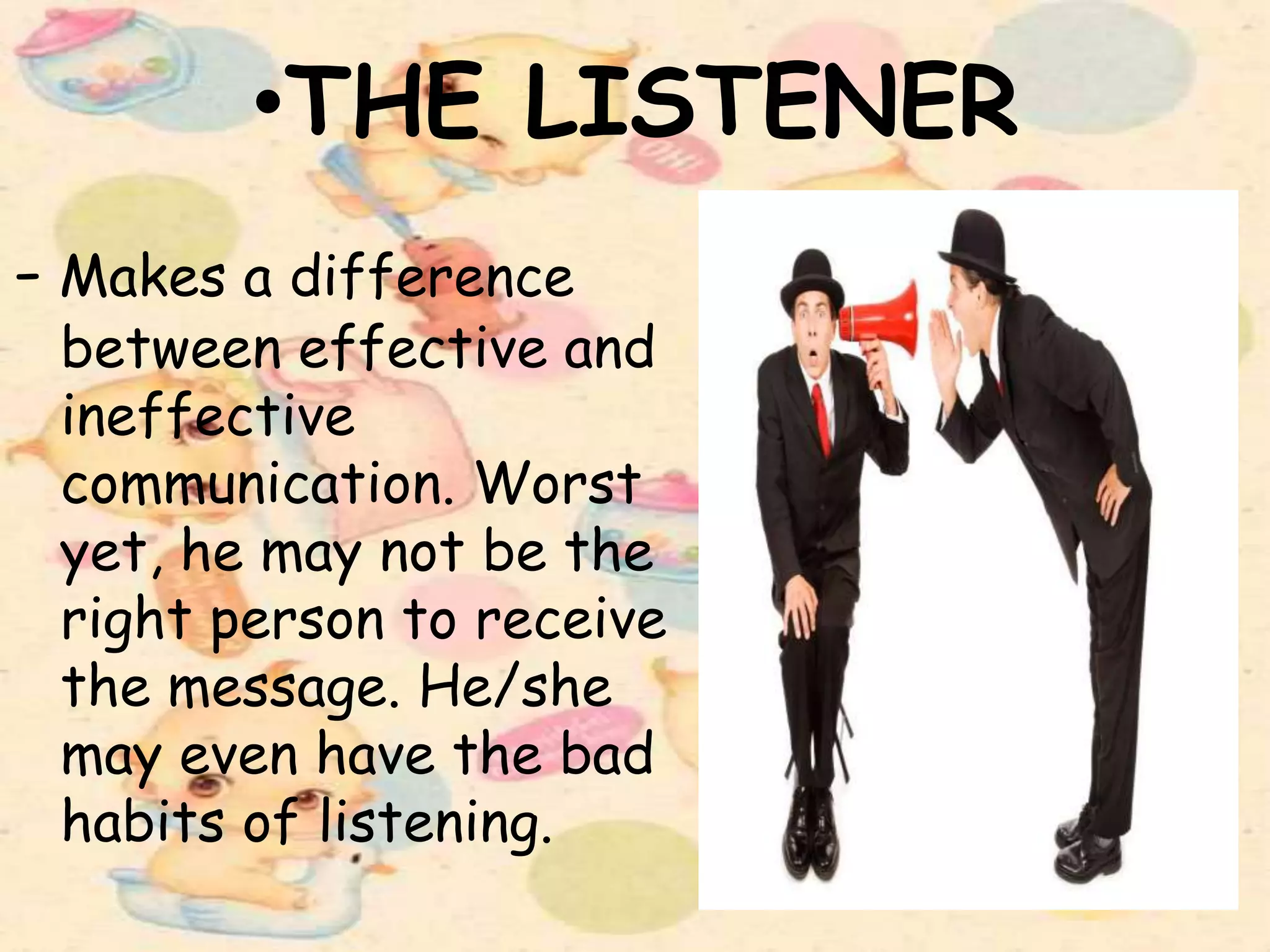
•THE LISTENER
- Makes a difference
between effective and
ineffective
communication. Worst
yet, he may not be the
right person to receive
the message. He/she
may even have the bad
habits of listening.
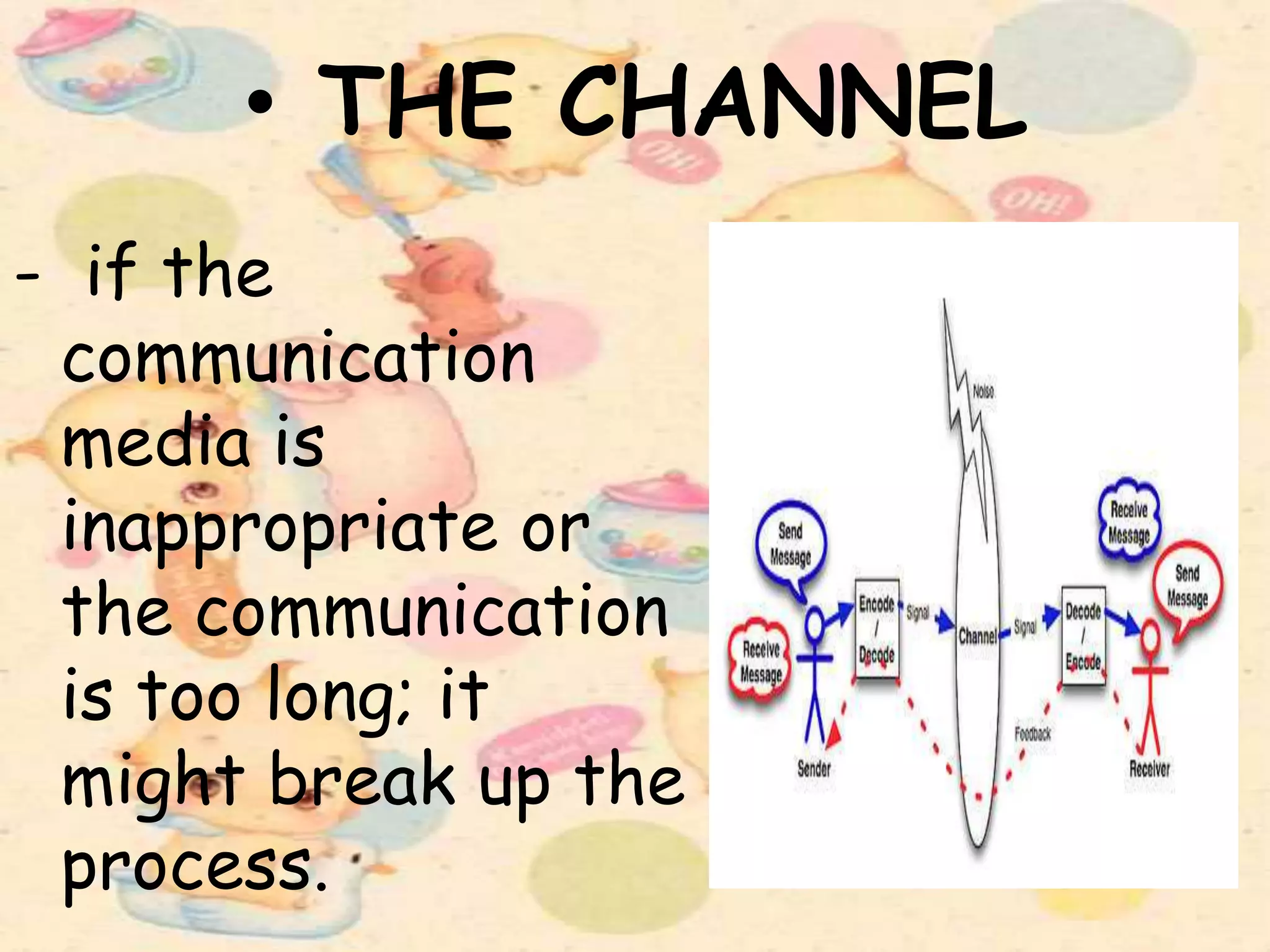
• THE CHANNEL
- if the
communication
media is
inappropriate or
the communication
is too long; it
might break up the
process.
HOW CAN WE BREAK THESE
BARRIERS?
• Be a good listener. You can solve
lots of interpersonal barriers
through this. Remember to
filter any information you
received before pass it to
someone else. Also use clear
expressions, accurate words and
avoid using absolute words.
• Noise is the term used to
refers the barriers to the
effective communication. The
barriers will reduce
productivity within a firm.
There are many factors that
might cause the failure of
successful communication.
Thank you!

Barriers of communication

  • 1.
  • 2.
    The term 'barriersof communication' is usually used when one party is having difficulty communicating with another party, and there can be many things that affect and act as 'the barriers of communication'.
  • 3.
  • 4.
    •THE SPEAKER - Fromhis/her physical appearance, voice, sounds, styles including his/her idiosyncrasies and mannerism and all other nonverbal aspects, can affect the listener.
  • 5.
    •THE MESSAGE - Whenit does not meet the requirements of clarity, conciseness, concreteness, completeness, correctness, and coherence, will suffer from delay or a half in the communication process.
  • 6.
    •THE LISTENER - Makesa difference between effective and ineffective communication. Worst yet, he may not be the right person to receive the message. He/she may even have the bad habits of listening.
  • 7.
    • THE CHANNEL -if the communication media is inappropriate or the communication is too long; it might break up the process.
  • 8.
    HOW CAN WEBREAK THESE BARRIERS? • Be a good listener. You can solve lots of interpersonal barriers through this. Remember to filter any information you received before pass it to someone else. Also use clear expressions, accurate words and avoid using absolute words.
  • 9.
    • Noise isthe term used to refers the barriers to the effective communication. The barriers will reduce productivity within a firm. There are many factors that might cause the failure of successful communication.
  • 10.