Barriers
in
Communicati
on
Imagine a world where messages get lost in translation, ideas
remain unshared, and understanding is hindered. This is the
reality when communication barriers come into play
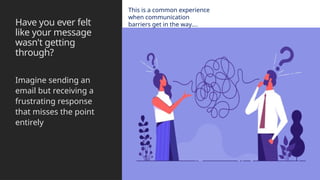
Have you ever felt
like your message
wasn't getting
through?
Imagine sending an
email but receiving a
frustrating response
that misses the point
entirely
This is a common experience
when communication
barriers get in the way….
Communication barriers are
anything that hinders the clear and
effective transmission and
understanding of a message
between a sender and receiver.
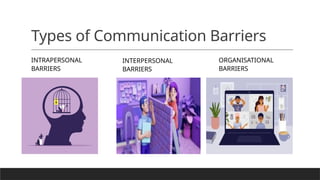
Types of Communication Barriers
INTRAPERSONAL
BARRIERS
INTERPERSONAL
BARRIERS
ORGANISATIONAL
BARRIERS
Intrapersonal Barriers: The Hurdles
Within
Intrapersonal barriers are internal factors within an individual that hinder their ability to effectively
communicate with themselves and others. These barriers stem from our unique perspectives and
experiences.
They include-
1. Wrong Assumptions: Making incorrect assumptions about the sender, receiver, or message.
2. Varied Perceptions: Different interpretations of information based on individual experiences and backgrounds.
3. Differing Background: Cultural, educational, and personal differences that influence communication styles and
understanding.
4. Wrong Inferences: Drawing incorrect conclusions based on incomplete information or personal biases.
5. Blocked Categories (Prejudices): Preconceived negative beliefs about individuals or groups, hindering objective
communication.
6. Categorical Thinking (Stereotypes): Relying on overgeneralized assumptions about groups, leading to
miscommunication and unfair judgments
Interpersonal Barriers:
Communication Gaps Between
People
Interpersonal barriers arise between individuals during communication, hindering the clear and effective
transmission of a message. These barriers stem from issues in how people interact and communicate with
each other.
•Inefficient communication skills: This includes poor listening skills, unclear articulation, and lack of
nonverbal communication awareness.
•Negative communication climate: A hostile, distrustful, or judgmental environment discourages open and
honest communication.
•Language barriers: Differences in spoken or written language can lead to misunderstandings and
misinterpretations.
•Conflicting cultural backgrounds: Cultural differences in communication styles, values, and nonverbal cues
can create challenges.
•Emotional states: Strong emotions like anger, fear, or sadness can cloud judgment and hinder clear
communication
Organizational/Institutional Barriers:
Roadblocks Within the System
Organizational/Institutional barriers are structural issues within organizations/institutions that hinder the
flow of information and effectiveness of communication. These barriers stem from the way organizations
are structured and operate.
•Too many communication channels/transfer stations: An excessive number of communication channels
(especially hierarchical) can lead to confusion and missed messages.
•Fear of superiors hindering open communication: Employees may be hesitant to express themselves
openly due to fear of negative consequences from superiors.
•Negative company culture: A culture of distrust, lack of transparency, or siloed departments can discourage
communication and collaboration.
•Use of inappropriate communication media: Relying solely on email for complex discussions or relying on
informal channels for crucial information can lead to misunderstandings.
•Information overload: Bombarding employees with excessive information can lead to confusion and hinder
their ability to process and utilize the information effectively.
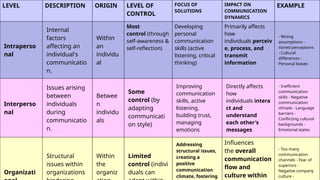
LEVEL DESCRIPTION ORIGIN LEVEL OF
CONTROL
FOCUS OF
SOLUTIONS
IMPACT ON
COMMUNICATION
DYNAMICS
EXAMPLE
Intraperso
nal
Internal
factors
affecting an
individual's
communicatio
n.
Within
an
individu
al
Most
control (through
self-awareness &
self-reflection)
Developing
personal
communication
skills (active
listening, critical
thinking)
Primarily affects
how
individuals perceiv
e, process, and
transmit
information
- Wrong
assumptions -
Varied perceptions
- Cultural
differences -
Personal biases
Interperso
nal
Issues arising
between
individuals
during
communicatio
n.
Betwee
n
individu
als
Some
control (by
adapting
communicati
on style)
Improving
communication
skills, active
listening,
building trust,
managing
emotions
Directly affects
how
individuals intera
ct and
understand
each other's
messages
- Inefficient
communication
skills - Negative
communication
climate - Language
barriers -
Conflicting cultural
backgrounds -
Emotional states
Organizati
Structural
issues within
organizations
Within
the
organiz
Limited
control (indivi
duals can
Addressing
structural issues,
creating a
positive
communication
climate, fostering
Influences
the overall
communication
flow and
culture within
- Too many
communication
channels - Fear of
superiors -
Negative company
culture -
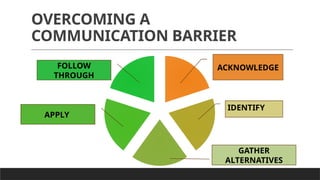
OVERCOMING A
COMMUNICATION BARRIER
IDENTIFY
ACKNOWLEDGE
GATHER
ALTERNATIVES
FOLLOW
THROUGH
APPLY
TIPS
TO AVOID
COMMUNICATION
BARRIERS
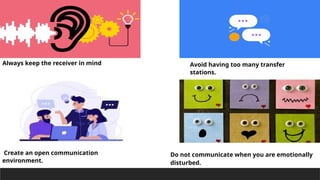
Always keep the receiver in mind
Create an open communication
environment.
Avoid having too many transfer
stations.
Do not communicate when you are emotionally
disturbed.
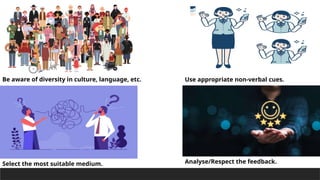
Analyse/Respect the feedback.
Use appropriate non-verbal cues.
Select the most suitable medium.
Be aware of diversity in culture, language, etc.

Barriers in communication.pptx in society

  • 1.
  • 2.
    Imagine a worldwhere messages get lost in translation, ideas remain unshared, and understanding is hindered. This is the reality when communication barriers come into play
  • 3.
    Have you everfelt like your message wasn't getting through? Imagine sending an email but receiving a frustrating response that misses the point entirely This is a common experience when communication barriers get in the way….
  • 4.
    Communication barriers are anythingthat hinders the clear and effective transmission and understanding of a message between a sender and receiver.
  • 5.
    Types of CommunicationBarriers INTRAPERSONAL BARRIERS INTERPERSONAL BARRIERS ORGANISATIONAL BARRIERS
  • 6.
    Intrapersonal Barriers: TheHurdles Within Intrapersonal barriers are internal factors within an individual that hinder their ability to effectively communicate with themselves and others. These barriers stem from our unique perspectives and experiences. They include- 1. Wrong Assumptions: Making incorrect assumptions about the sender, receiver, or message. 2. Varied Perceptions: Different interpretations of information based on individual experiences and backgrounds. 3. Differing Background: Cultural, educational, and personal differences that influence communication styles and understanding. 4. Wrong Inferences: Drawing incorrect conclusions based on incomplete information or personal biases. 5. Blocked Categories (Prejudices): Preconceived negative beliefs about individuals or groups, hindering objective communication. 6. Categorical Thinking (Stereotypes): Relying on overgeneralized assumptions about groups, leading to miscommunication and unfair judgments
  • 7.
    Interpersonal Barriers: Communication GapsBetween People Interpersonal barriers arise between individuals during communication, hindering the clear and effective transmission of a message. These barriers stem from issues in how people interact and communicate with each other. •Inefficient communication skills: This includes poor listening skills, unclear articulation, and lack of nonverbal communication awareness. •Negative communication climate: A hostile, distrustful, or judgmental environment discourages open and honest communication. •Language barriers: Differences in spoken or written language can lead to misunderstandings and misinterpretations. •Conflicting cultural backgrounds: Cultural differences in communication styles, values, and nonverbal cues can create challenges. •Emotional states: Strong emotions like anger, fear, or sadness can cloud judgment and hinder clear communication
  • 8.
    Organizational/Institutional Barriers: Roadblocks Withinthe System Organizational/Institutional barriers are structural issues within organizations/institutions that hinder the flow of information and effectiveness of communication. These barriers stem from the way organizations are structured and operate. •Too many communication channels/transfer stations: An excessive number of communication channels (especially hierarchical) can lead to confusion and missed messages. •Fear of superiors hindering open communication: Employees may be hesitant to express themselves openly due to fear of negative consequences from superiors. •Negative company culture: A culture of distrust, lack of transparency, or siloed departments can discourage communication and collaboration. •Use of inappropriate communication media: Relying solely on email for complex discussions or relying on informal channels for crucial information can lead to misunderstandings. •Information overload: Bombarding employees with excessive information can lead to confusion and hinder their ability to process and utilize the information effectively.
  • 9.
    LEVEL DESCRIPTION ORIGINLEVEL OF CONTROL FOCUS OF SOLUTIONS IMPACT ON COMMUNICATION DYNAMICS EXAMPLE Intraperso nal Internal factors affecting an individual's communicatio n. Within an individu al Most control (through self-awareness & self-reflection) Developing personal communication skills (active listening, critical thinking) Primarily affects how individuals perceiv e, process, and transmit information - Wrong assumptions - Varied perceptions - Cultural differences - Personal biases Interperso nal Issues arising between individuals during communicatio n. Betwee n individu als Some control (by adapting communicati on style) Improving communication skills, active listening, building trust, managing emotions Directly affects how individuals intera ct and understand each other's messages - Inefficient communication skills - Negative communication climate - Language barriers - Conflicting cultural backgrounds - Emotional states Organizati Structural issues within organizations Within the organiz Limited control (indivi duals can Addressing structural issues, creating a positive communication climate, fostering Influences the overall communication flow and culture within - Too many communication channels - Fear of superiors - Negative company culture -
  • 10.
  • 11.
  • 12.
    Always keep thereceiver in mind Create an open communication environment. Avoid having too many transfer stations. Do not communicate when you are emotionally disturbed.
  • 13.
    Analyse/Respect the feedback. Useappropriate non-verbal cues. Select the most suitable medium. Be aware of diversity in culture, language, etc.