AJIL P ACHANKUNJU
Roll No. 7
2014 MBBS
GMC KOTTAYAM
CONTRACEPTIVE METHODS
Spacing methods
1. Barrier methods
2. Intra-uterine devices
3. Hormonal methods
4. Post-conceptional methods
5. Miscellaneous
 Terminal methods
1. Male sterilization
2. Female sterilization
Barrier methods
 Physical methods
1. Condom(male & female)
2.Diaphragm
3.Vaginal sponge
 Chemical methods
(a)foams (b) creams, jellies & pastes
(c) suppositories (d) soluble films
 Combined methods
Condoms( ) e.g. NIRODH
 No side effects
 Protects from STD
 Conventional contraceptive (action @ the time of
sexual intercourse)
 Used in conjugation with spermicidal jelly(combined)
 Highly effective but should be used correctly at every
coitus.
 Failure rates vary from 2-3/100 women to more than 14
per typical users.
Condom cntd..
Advantages Disadvantages
 Easily available
 Safe and inexpensive.
 Easy to use; no need of
medical supervision
 No side effects
 Light compact and disposable
 Protection from STD
 It may slip off or tear during
coitus due to incorrect use
 Interferes with sex sensation
Usage(condom)
 Fitted on the erect penis before coitus
 Air must be expelled from the teat end to make room
for the ejaculate
 The condom must be held carefully when withdrawing
from the vagina to avoid spilling seminal fluid into
vagina after intercourse
Male condom
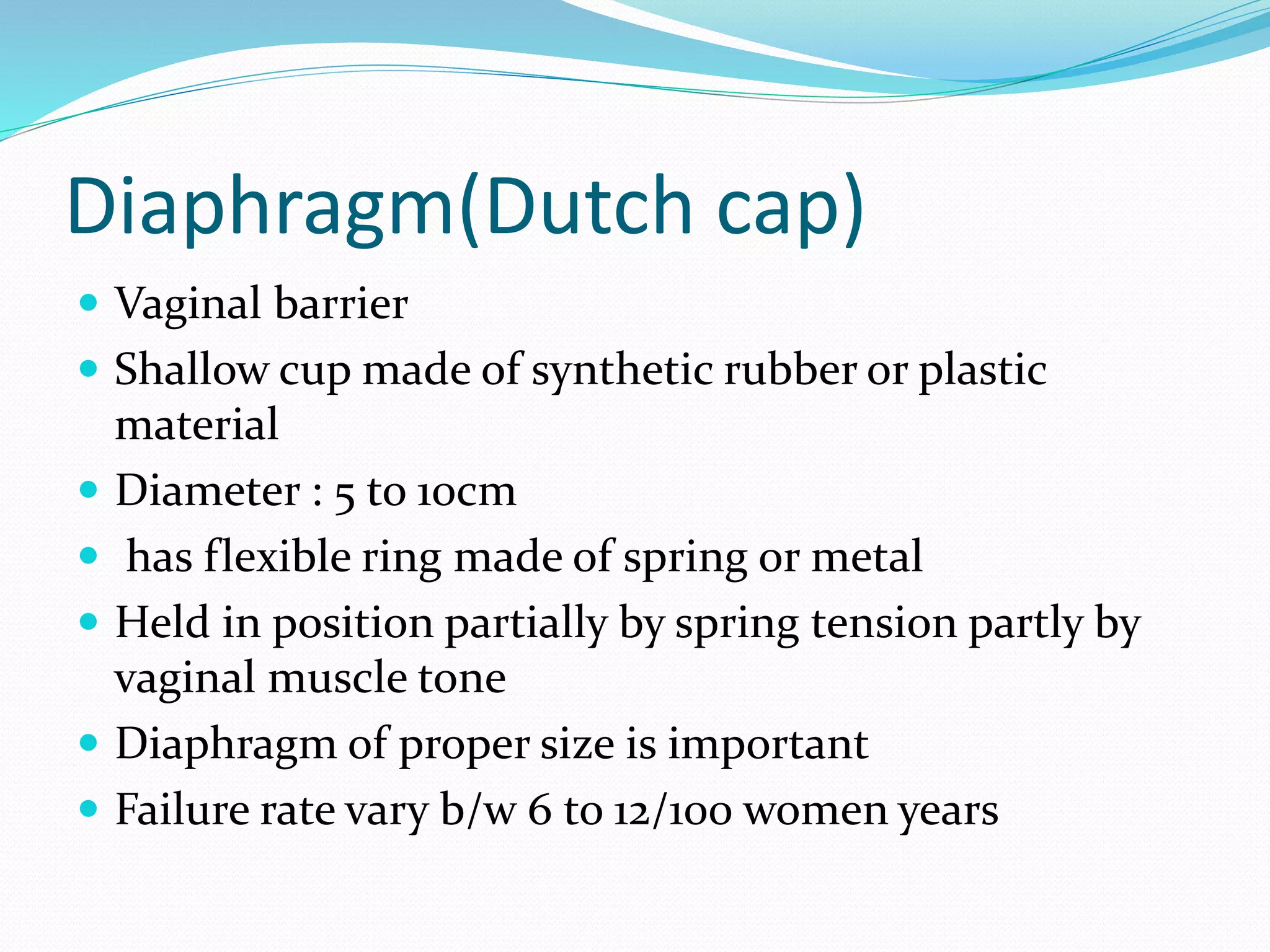
Female condom
 Pouch made of polyurethane
 Lines the vagina
 Internal ring(at closed end) covers the cervix and
external ring remains outside the vagina.
 Is prelubricated with silicon
 Effective against STD
 High cost and poor acceptability are the major
problems
 Failure rate 5/100 women to 21/typical user
Female condom
Diaphragm(Dutch cap)
 Vaginal barrier
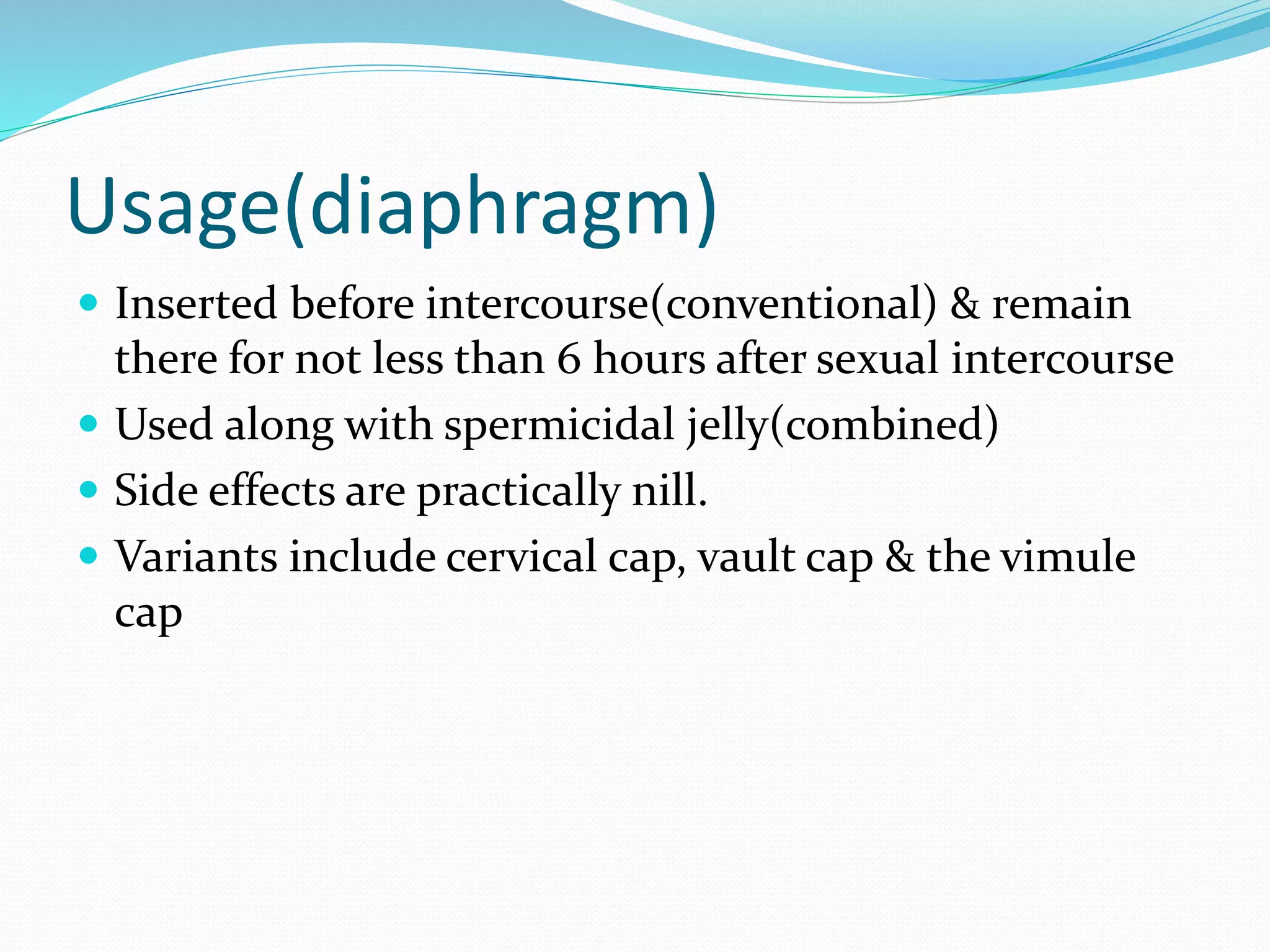
 Shallow cup made of synthetic rubber or plastic
material
 Diameter : 5 to 10cm
 has flexible ring made of spring or metal
 Held in position partially by spring tension partly by
vaginal muscle tone
 Diaphragm of proper size is important
 Failure rate vary b/w 6 to 12/100 women years
Diaphragm
Usage(diaphragm)
 Inserted before intercourse(conventional) & remain
there for not less than 6 hours after sexual intercourse
 Used along with spermicidal jelly(combined)
 Side effects are practically nill.
 Variants include cervical cap, vault cap & the vimule
cap
Diaphragm cntd.
Advantages Disadvantages
 No risks & medical
contraindications.
 Trained person needed for
demonstration.
 After delivery, used only after
involution of uterus.
 Lack of facilities for washing
and storing in privacy
precludes its use.
 Remote possibility of toxic
shock syndrome.
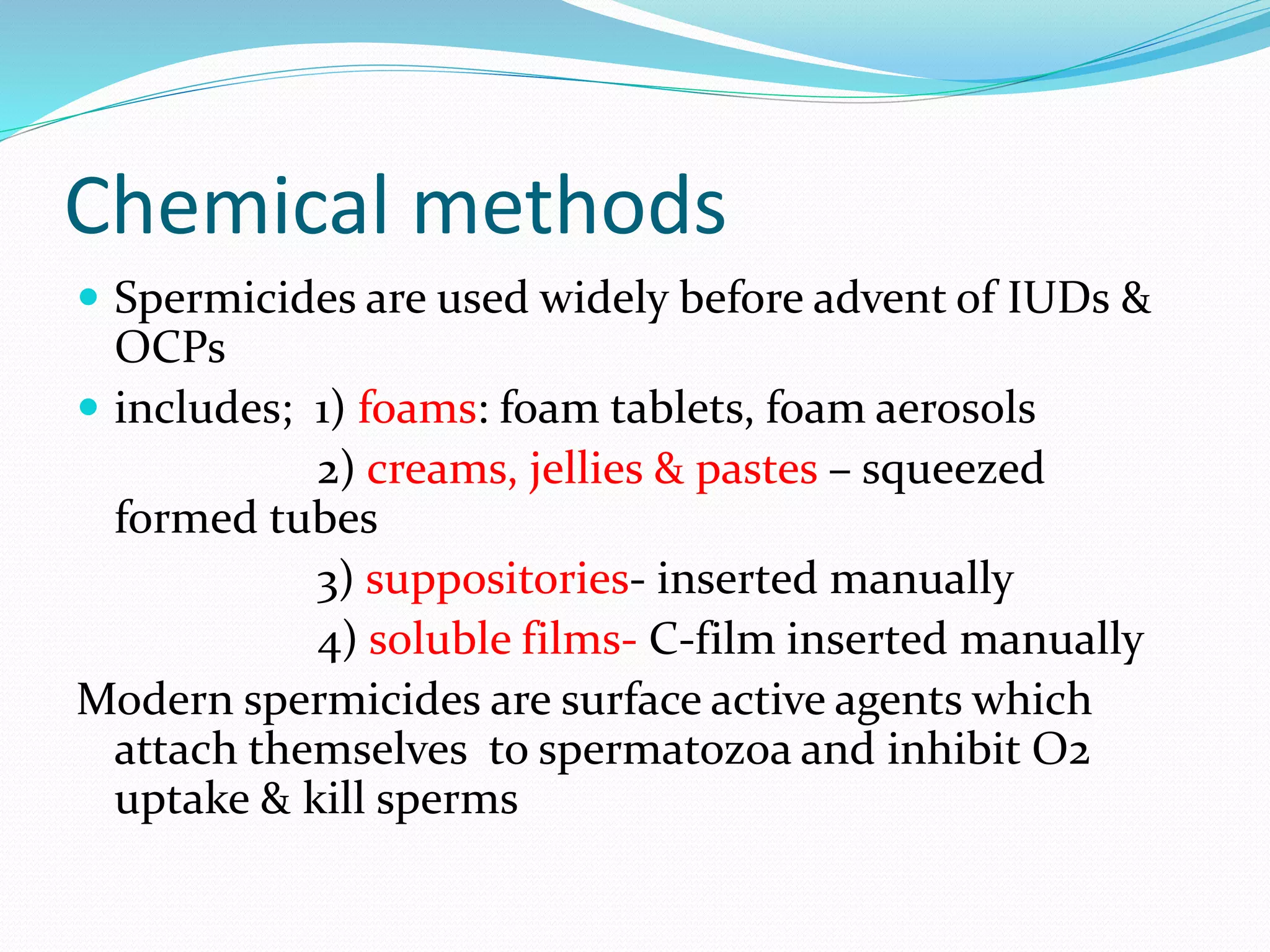
Vaginal sponge e.g. TODAY
 Device employed for hundreds of years as sponge
soaked with vinegar or olive oil
 TODAY is a small polyurethane foam sponge
measuring 5cm x 2.5cm, saturated with a spermicide,
nonoxynol-9.
 High failure rate 20-40/100 parous women & 9-20/100
nulliparous women.
Vaginal sponge(TODAY)
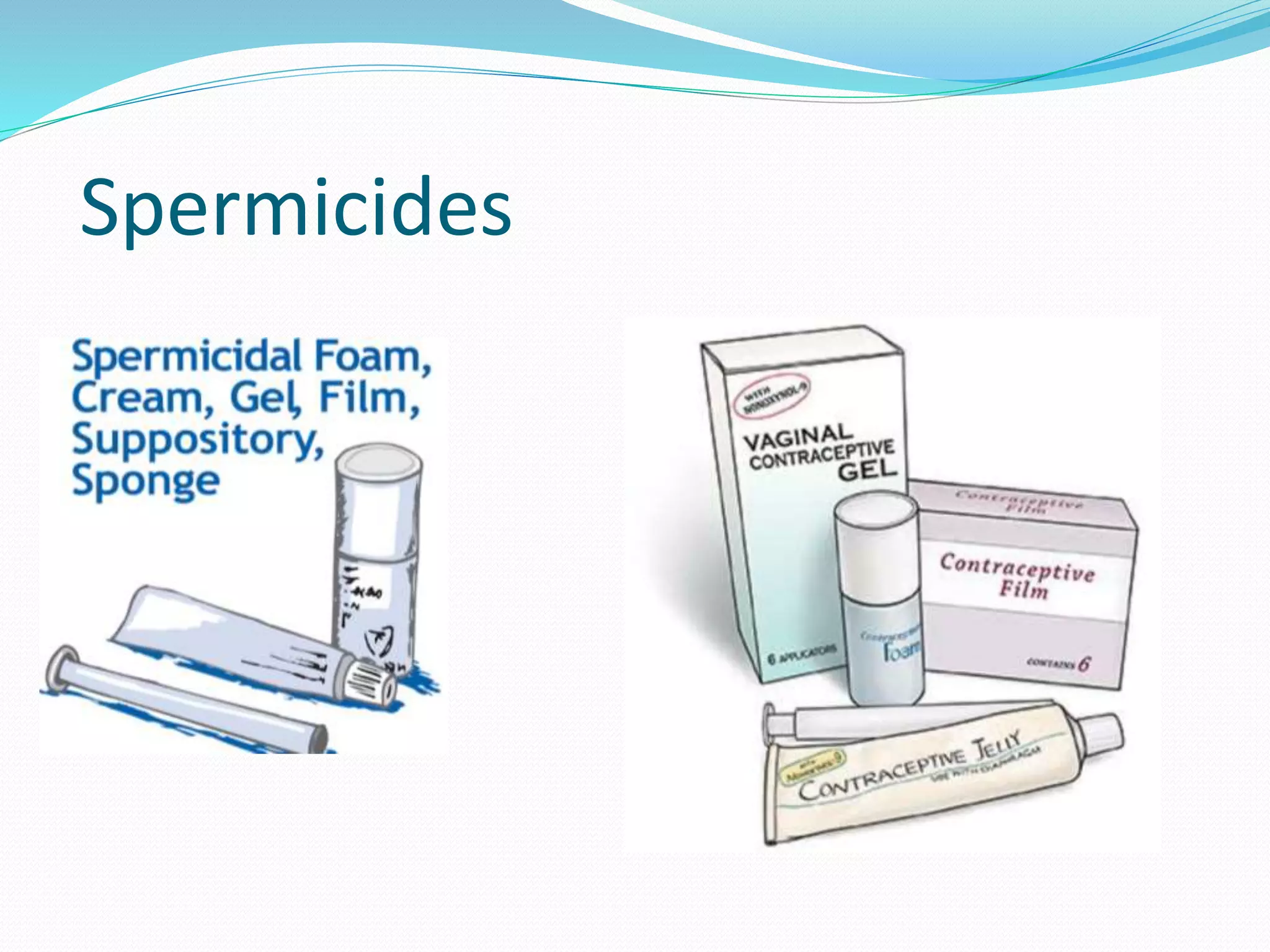
Chemical methods
 Spermicides are used widely before advent of IUDs &
OCPs
 includes; 1) foams: foam tablets, foam aerosols
2) creams, jellies & pastes – squeezed
formed tubes
3) suppositories- inserted manually
4) soluble films- C-film inserted manually
Modern spermicides are surface active agents which
attach themselves to spermatozoa and inhibit O2
uptake & kill sperms
Spermicides
Drawbacks of spermicides
 High failure rate
 Used immediately before coitus & repeated before
each sexual act.
 Must be introduced to the regions of the vagina where
sperms are likely to be deposited
 Cause mild burning and irritation
 Best used with other barrier methods than alone
 No spermicides which is safe to use is yet found.
Barrier methods for Contraception

Barrier methods for Contraception

  • 1.
    AJIL P ACHANKUNJU RollNo. 7 2014 MBBS GMC KOTTAYAM
  • 2.
    CONTRACEPTIVE METHODS Spacing methods 1.Barrier methods 2. Intra-uterine devices 3. Hormonal methods 4. Post-conceptional methods 5. Miscellaneous  Terminal methods 1. Male sterilization 2. Female sterilization
  • 3.
    Barrier methods  Physicalmethods 1. Condom(male & female) 2.Diaphragm 3.Vaginal sponge  Chemical methods (a)foams (b) creams, jellies & pastes (c) suppositories (d) soluble films  Combined methods
  • 4.
    Condoms( ) e.g.NIRODH  No side effects  Protects from STD  Conventional contraceptive (action @ the time of sexual intercourse)  Used in conjugation with spermicidal jelly(combined)  Highly effective but should be used correctly at every coitus.  Failure rates vary from 2-3/100 women to more than 14 per typical users.
  • 5.
    Condom cntd.. Advantages Disadvantages Easily available  Safe and inexpensive.  Easy to use; no need of medical supervision  No side effects  Light compact and disposable  Protection from STD  It may slip off or tear during coitus due to incorrect use  Interferes with sex sensation
  • 6.
    Usage(condom)  Fitted onthe erect penis before coitus  Air must be expelled from the teat end to make room for the ejaculate  The condom must be held carefully when withdrawing from the vagina to avoid spilling seminal fluid into vagina after intercourse
  • 7.
  • 8.
    Female condom  Pouchmade of polyurethane  Lines the vagina  Internal ring(at closed end) covers the cervix and external ring remains outside the vagina.  Is prelubricated with silicon  Effective against STD  High cost and poor acceptability are the major problems  Failure rate 5/100 women to 21/typical user
  • 9.
  • 10.
    Diaphragm(Dutch cap)  Vaginalbarrier  Shallow cup made of synthetic rubber or plastic material  Diameter : 5 to 10cm  has flexible ring made of spring or metal  Held in position partially by spring tension partly by vaginal muscle tone  Diaphragm of proper size is important  Failure rate vary b/w 6 to 12/100 women years
  • 11.
  • 12.
    Usage(diaphragm)  Inserted beforeintercourse(conventional) & remain there for not less than 6 hours after sexual intercourse  Used along with spermicidal jelly(combined)  Side effects are practically nill.  Variants include cervical cap, vault cap & the vimule cap
  • 13.
    Diaphragm cntd. Advantages Disadvantages No risks & medical contraindications.  Trained person needed for demonstration.  After delivery, used only after involution of uterus.  Lack of facilities for washing and storing in privacy precludes its use.  Remote possibility of toxic shock syndrome.
  • 14.
    Vaginal sponge e.g.TODAY  Device employed for hundreds of years as sponge soaked with vinegar or olive oil  TODAY is a small polyurethane foam sponge measuring 5cm x 2.5cm, saturated with a spermicide, nonoxynol-9.  High failure rate 20-40/100 parous women & 9-20/100 nulliparous women.
  • 15.
  • 16.
    Chemical methods  Spermicidesare used widely before advent of IUDs & OCPs  includes; 1) foams: foam tablets, foam aerosols 2) creams, jellies & pastes – squeezed formed tubes 3) suppositories- inserted manually 4) soluble films- C-film inserted manually Modern spermicides are surface active agents which attach themselves to spermatozoa and inhibit O2 uptake & kill sperms
  • 17.
  • 18.
    Drawbacks of spermicides High failure rate  Used immediately before coitus & repeated before each sexual act.  Must be introduced to the regions of the vagina where sperms are likely to be deposited  Cause mild burning and irritation  Best used with other barrier methods than alone  No spermicides which is safe to use is yet found.